The four feedback board use cases below are the ones people actually arrive looking for, and every one of them has a real cost on the other side of it. This page is one paragraph each, saying what the case is for and what running it asks of you.
None of them is a feature list. The thing that decides whether one of these works is almost never the software, and each page under this one leads with that.
Which cases collect from customers?
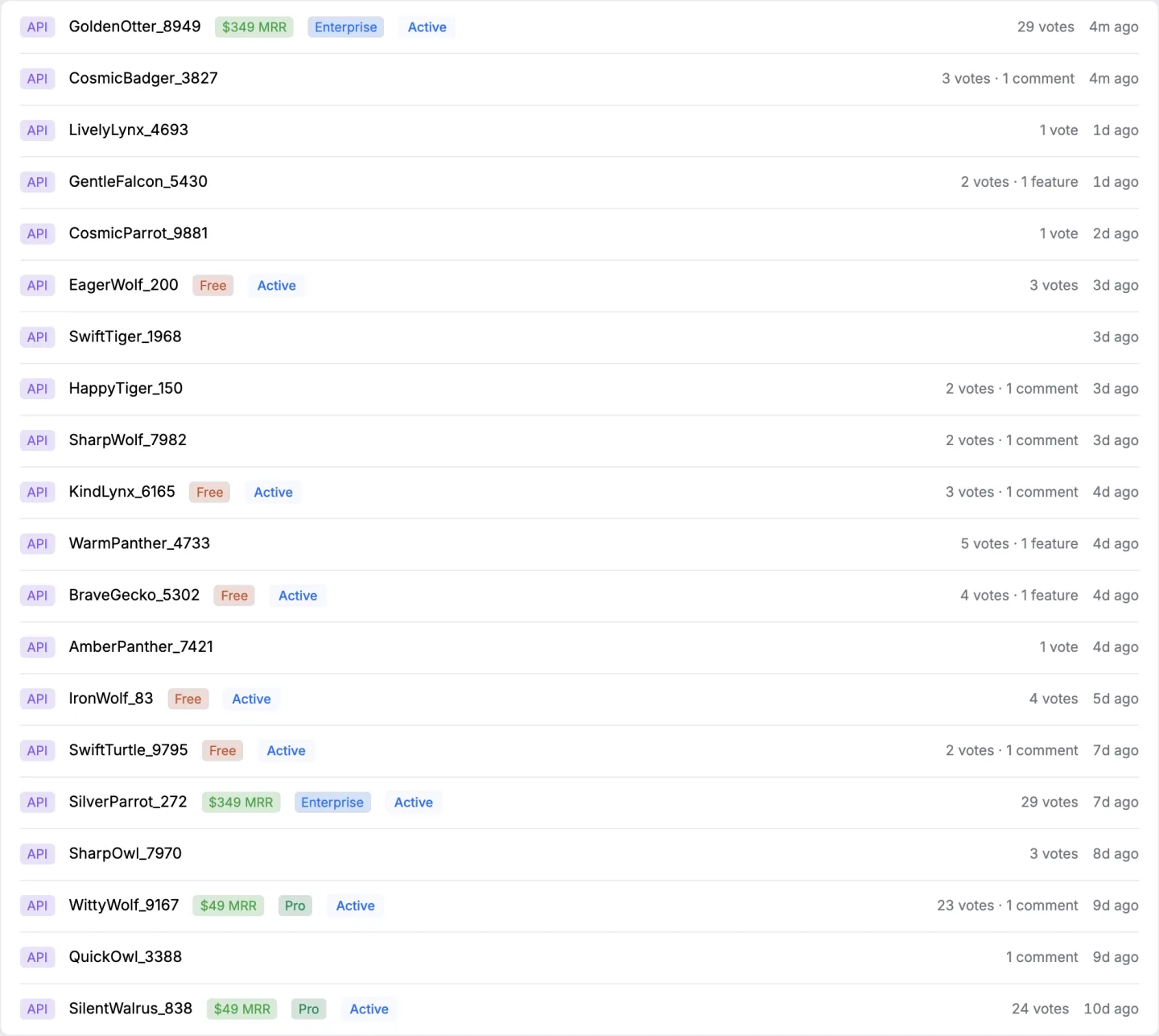
A feature voting tool. For a team that has already decided voting is the mechanism, rather than a survey or a support inbox. The trade is that a vote count is a headcount, and the people who pay you are almost never the most people, which is why that page is written around weighting.
Anonymous voting on a roadmap. For a team that wants people to vote without signing up first. Ten of the thirteen tools we checked allow it and three deliberately do not, so the question is not who has it. The trade is that you learn who nobody is, and the page is about what that costs.

Which cases collect from staff?
A digital suggestion box. For an office or a team where people need somewhere to put an idea without finding the right person to tell first. The hard part has never been the box, it is what happens after somebody drops something in, and the page is a list of the boxes that survive that.
A free online suggestion box for employees. For a team that does not want to pay for one. There are three ways to build it and only one of them stays free. The page names all three before it mentions the product it is published on, because two of them are probably the right answer.
14 days, a card at signup, then $9 or $39 a month.
Which of these is the same case wearing a different word?
Two of the four, and it is worth knowing before you read them.
A suggestion box and a feedback board are the same object with different readers. One is aimed inward at staff and the other outward at customers, and the software underneath is identical.
What changes is who may post, what appears without approval, and whether a name is attached, which are three settings rather than three products.
The two that genuinely differ are the voting case and the anonymous case, because they pull in opposite directions. Weighting a vote needs to know who cast it, and an anonymous vote refuses to say. You can run both on one board and you cannot run both on one request.
What is on the other side of the trade?
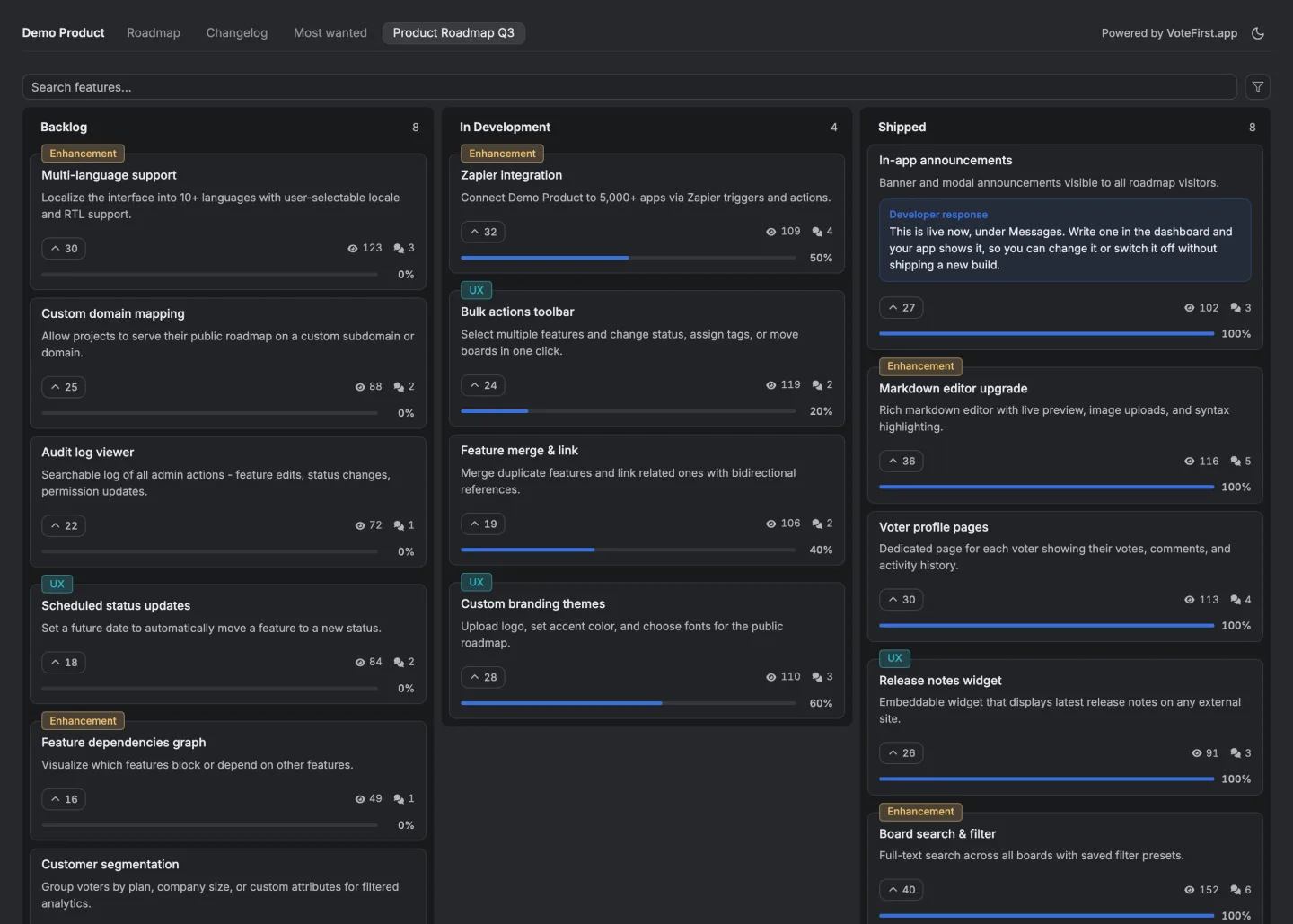
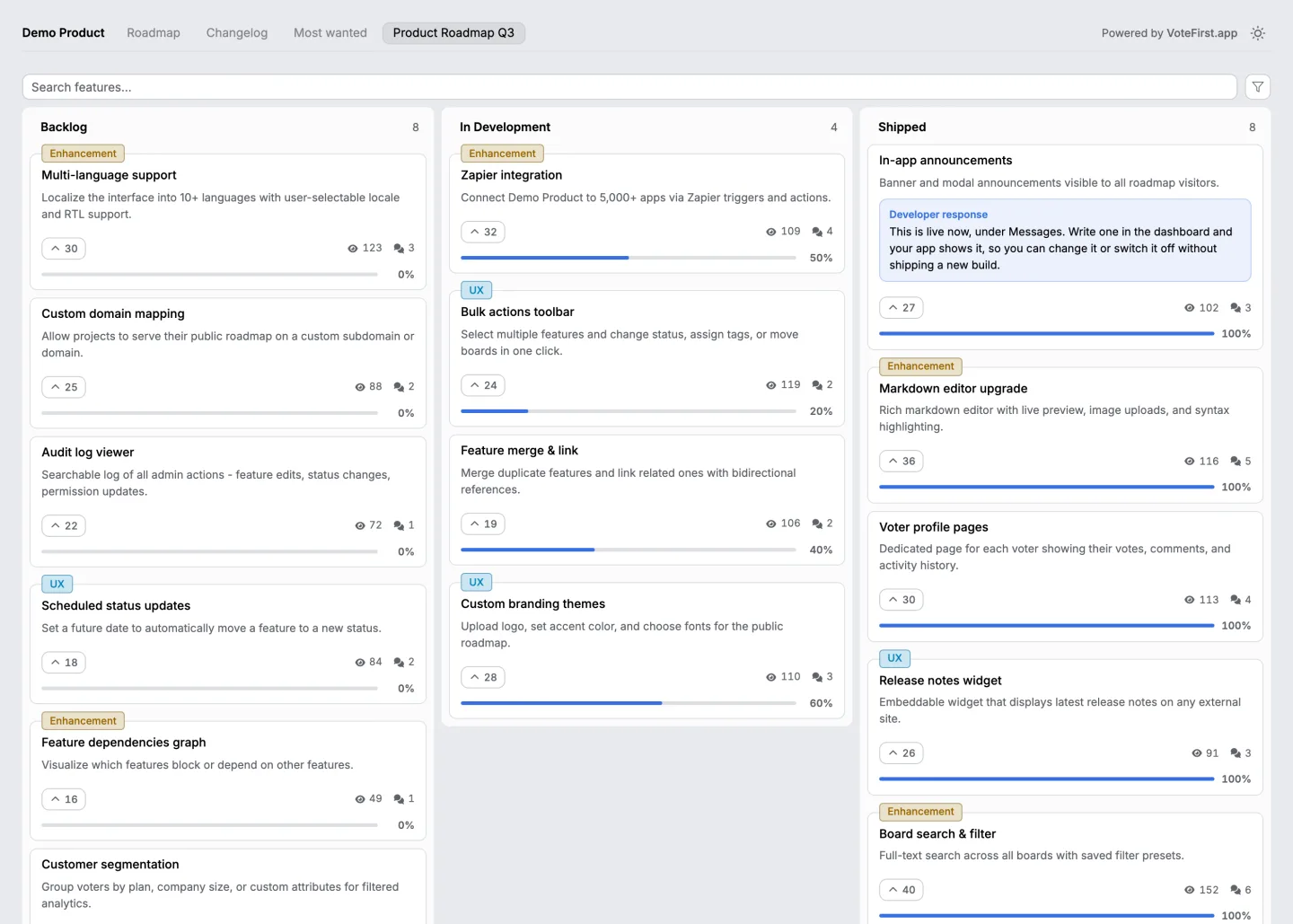
Every case above asks for the same thing and the pages say so. Somebody has to answer. A board where requests arrive and nothing comes back is worse than no board, because it is a published record of being ignored.
The changelog and the public roadmap exist for that half, and the reason they are part of the same product is that the answering is the part that fails.