A feature request tool has nine moving parts here, and the useful question about each one is not whether it exists but what it costs you and what it refuses to do. This page is one paragraph per part, with the page that goes into it.
Two plans exist. Nine dollars a month buys one project with everything on this page except two things, and thirty nine buys more projects, a custom domain, a team and the two exceptions. Every paragraph below says which side of that line its part sits on.
What collects the feedback?
Three parts, and the first of them is the reason the other two have anything to work with.
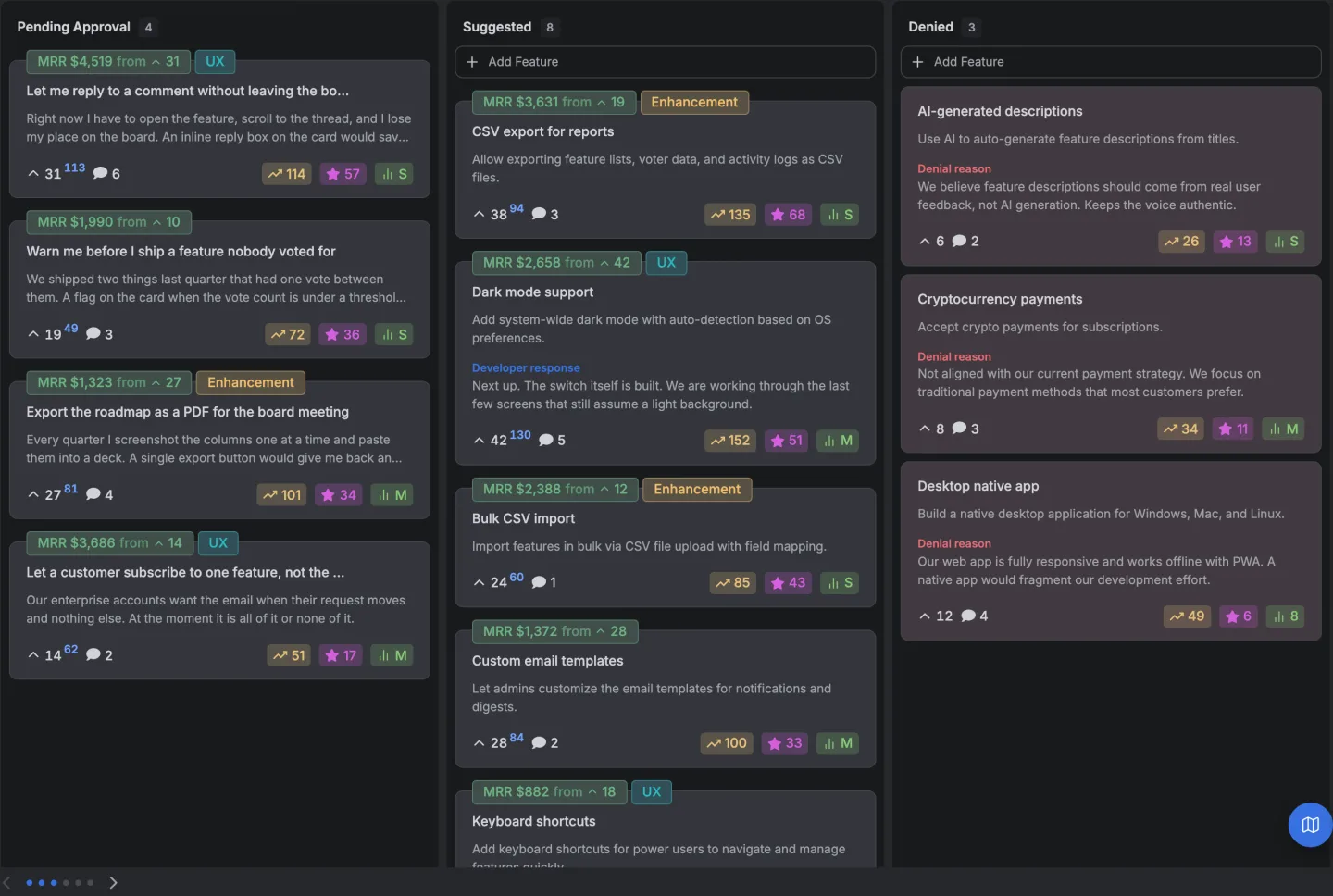
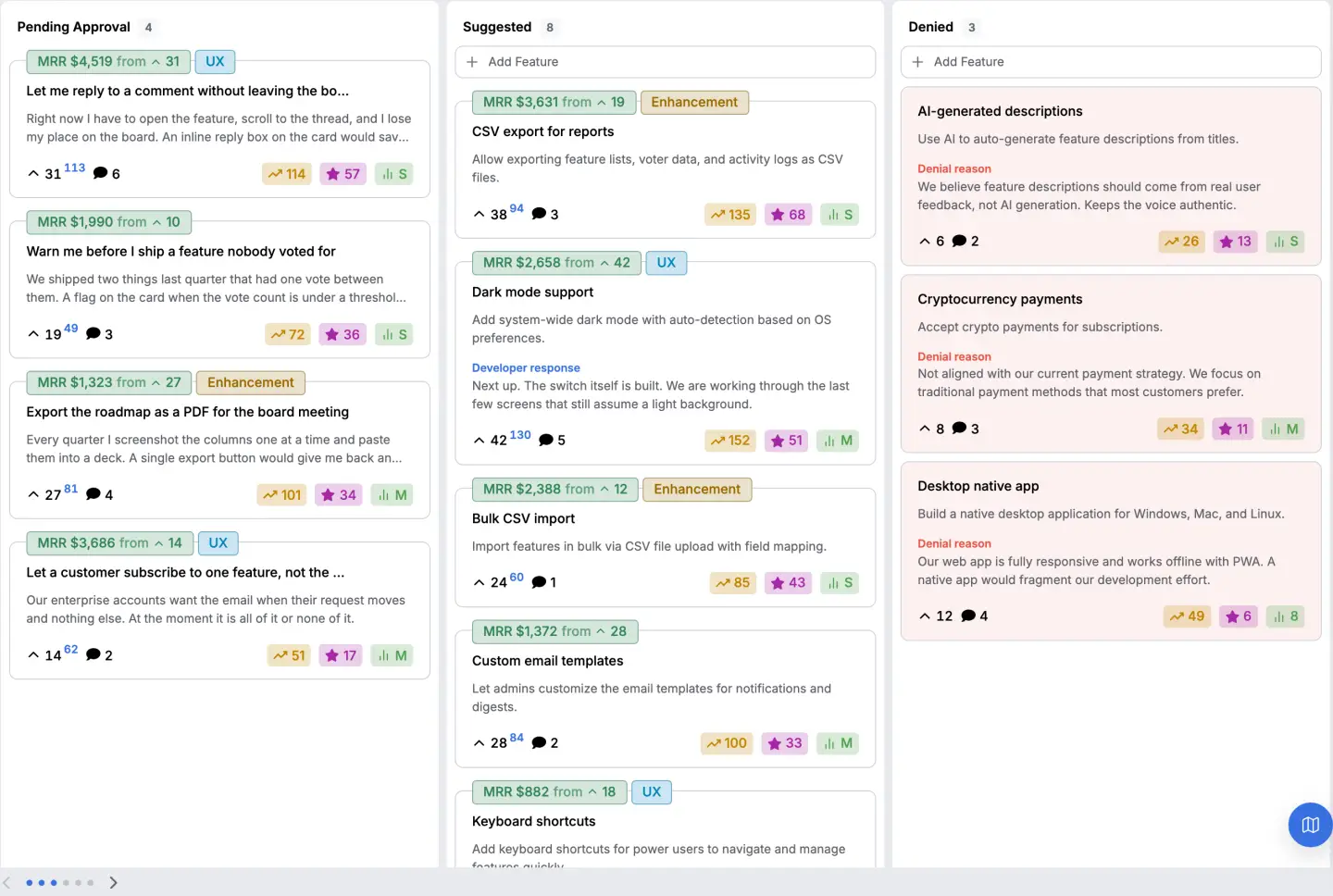
The feature request board. The board itself, where a visitor posts a request and votes on somebody else's without making an account. Asking for a password before an idea is the fastest way to collect fewer of them, and the board is built so nobody has to.
Comments and replies. A vote says somebody agrees and a comment says why, and the why is the half that changes what you build rather than only what order you build it in. The page also names the one response that is not a comment.
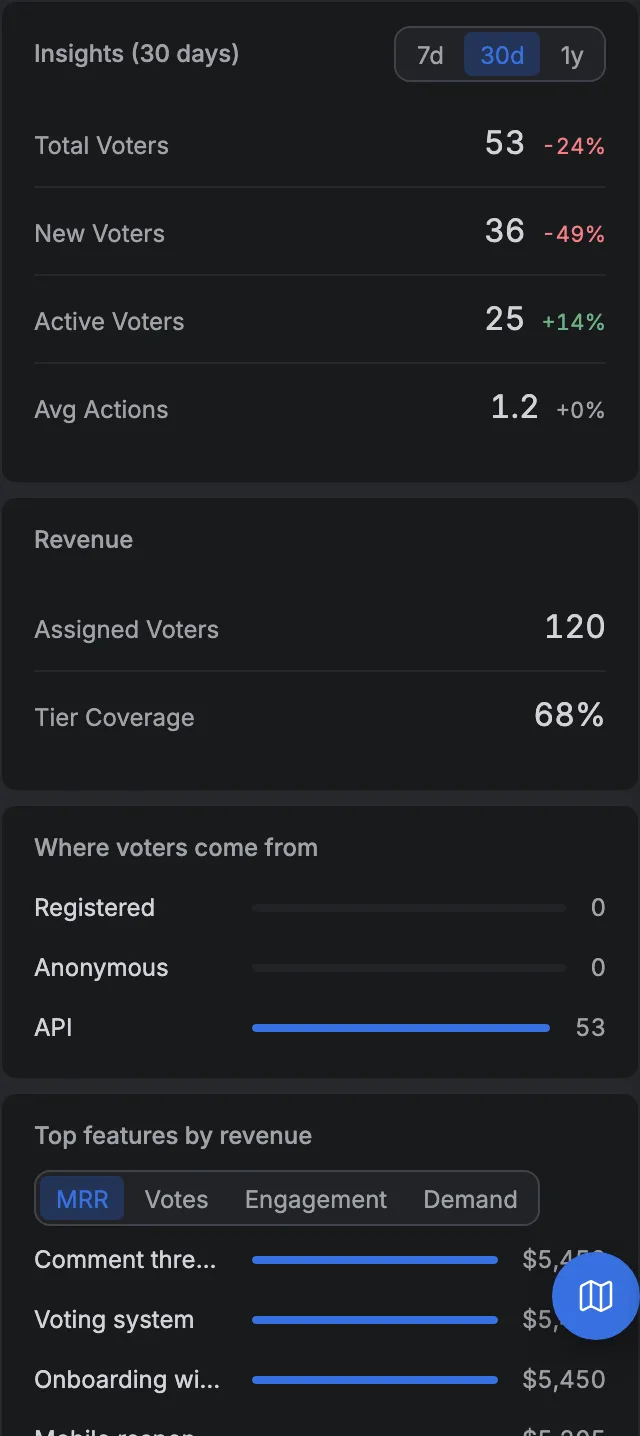
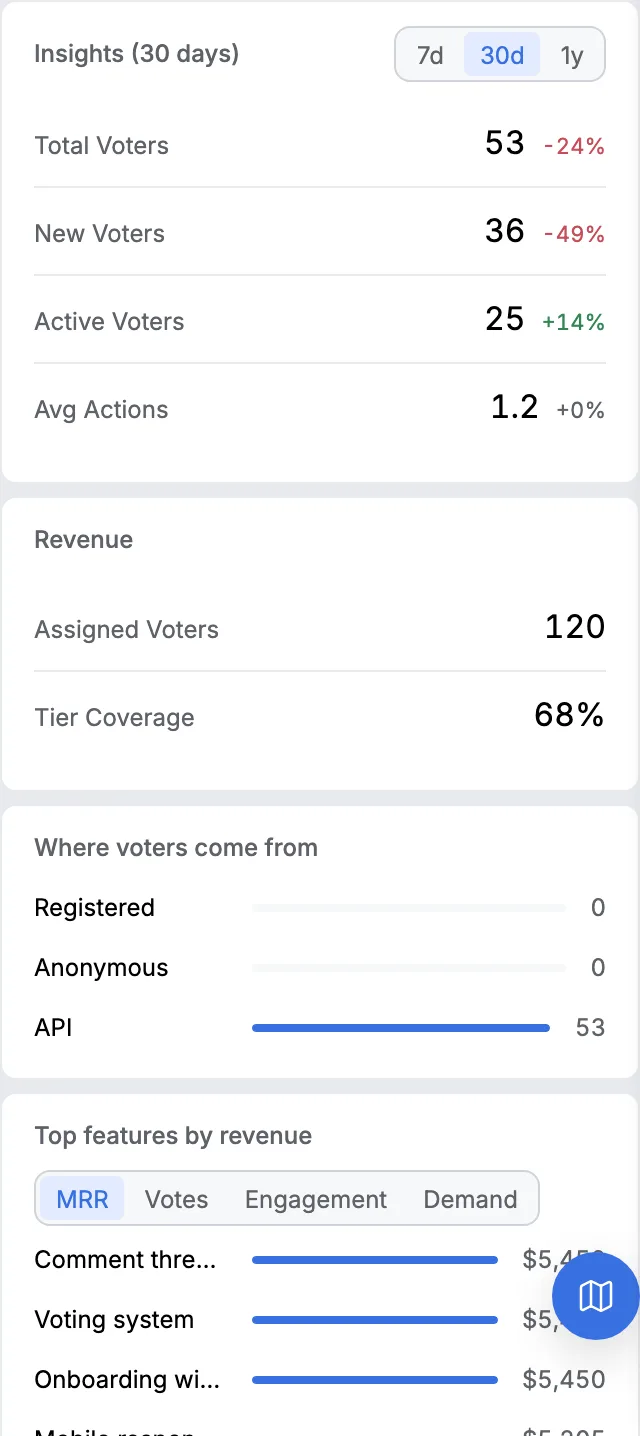
The voter list. Every vote has a person behind it, and the list is what turns forty votes into forty people you can put in a tier and tell when something ships. Customer feedback segmentation on this board means that tier and the revenue beside it, and the page says so rather than dressing it up.
All three are on the nine dollar plan.
What decides the order?
Two parts, and they are the ones the category argues about.
Revenue weighted voting. The requests with the most votes are the ones the most people wanted, and the people who pay you are almost never the most people. This is the arithmetic that lets a vote from a paying tier count for more, with the plain headcount still visible beside it.
Demand, effort and priority. Three numbers on every request. Demand is computed from what people did, effort is the one figure you type, and priority is demand divided by effort. The page prints the formula rather than describing it.
Both are on the nine dollar plan. Weighted voting is not a Pro feature here, which is unusual in this category and is the reason it is worth saying twice.
What gets the revenue in?
Import MRR from Stripe, Paddle or a CSV. Weighting a vote by what somebody pays needs you to know what they pay first. Three ways in, and the page is honest that none of them changes anything on your board by itself until you set the tiers.
On the nine dollar plan, imports included.
What goes back out to the customer?
Two parts, and they are the half of this product most teams underuse.
The public roadmap. A public roadmap is a promise you have to keep, which is why most of them quietly stop being updated. This one is updated by the same action as running the board, which is the only version that survives.
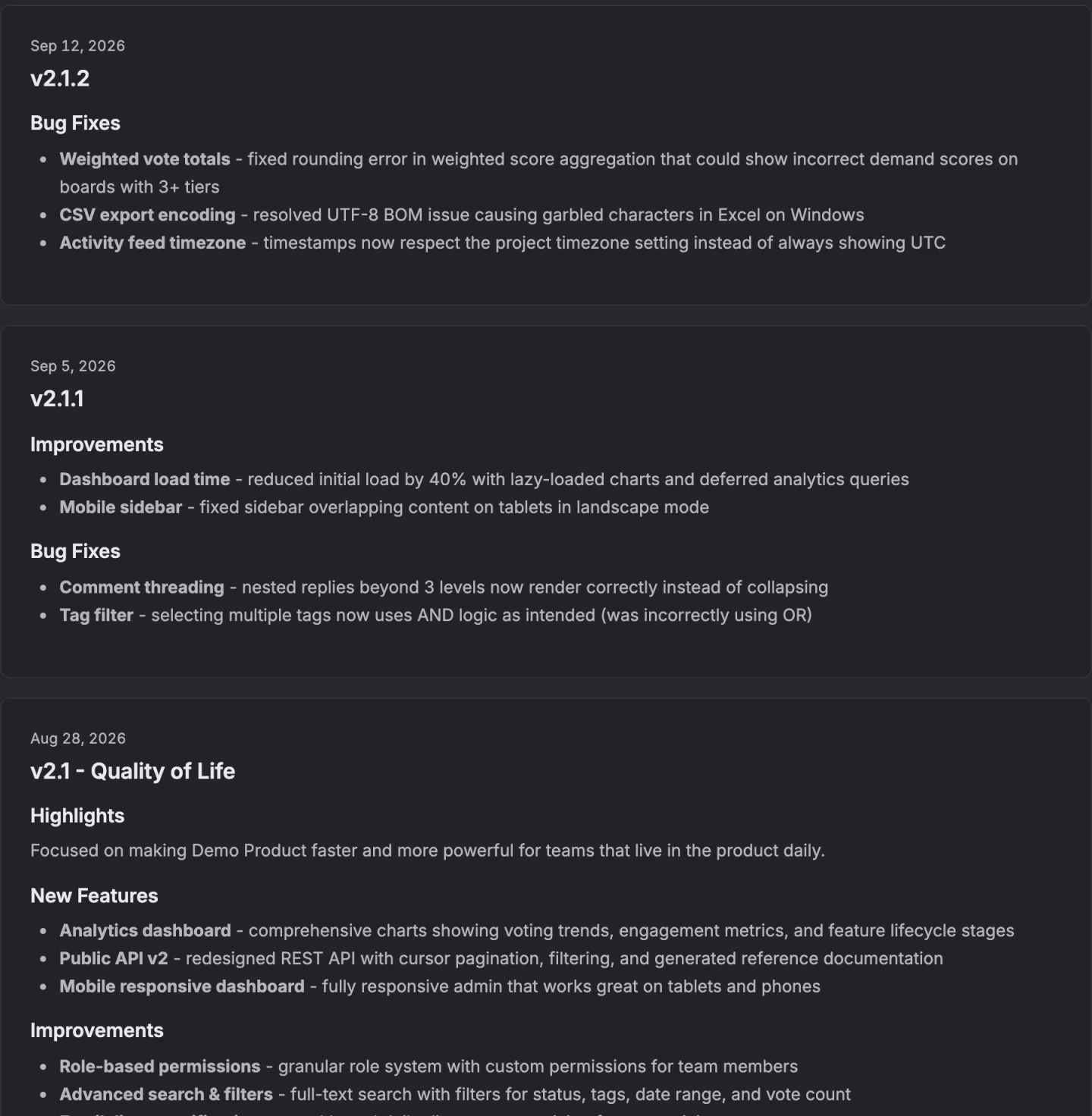
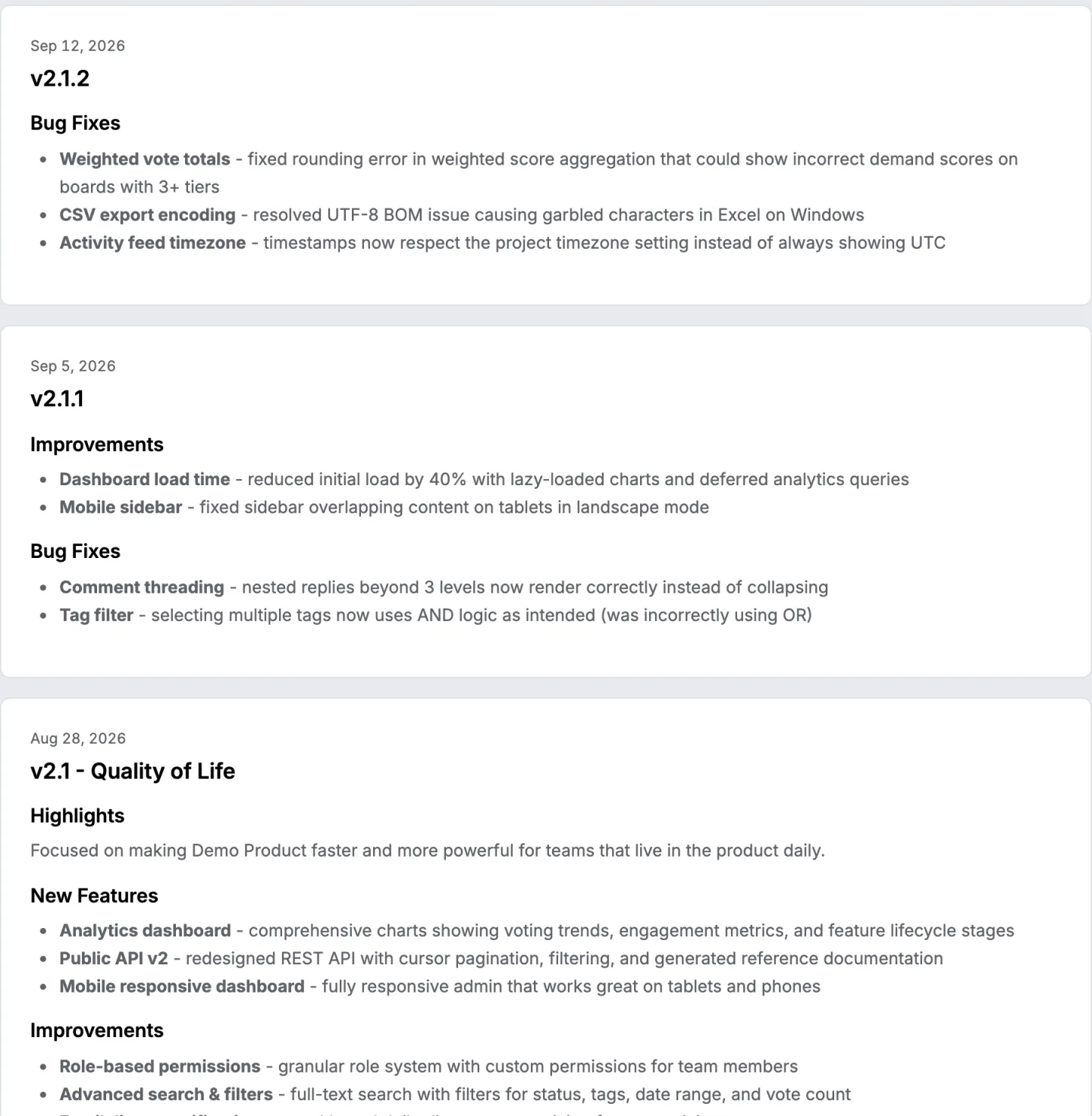
The changelog. Publishing what shipped is easy and making it pointless is easier. The thing that decides whether a changelog does anything is who finds out, so this one emails the people who asked for the thing.
Both on the nine dollar plan.
What lets you build on it?
The API. Every endpoint listed rather than described. A list is the only thing that answers what somebody with an API in mind is asking, which is whether the thing they want to build is possible.
Sixteen of its eighteen board routes answer to the embed key already in your page. The two that read your voters and your per feature revenue need a secret key.
The embed key routes work on the nine dollar plan. The secret key is on Pro, and so is the custom domain.
14 days, a card at signup, then $9 or $39 a month.


What is not here?
The list is shorter to read than the one above and more useful before you commit.
There are no outgoing webhooks. There is no Slack app and no Zapier listing. There is nothing that writes an issue into your tracker. The integrations page is the whole of what connects to what, and it leads with the absences for the same reason this section does.
There is also no artificial intelligence anywhere in this product, and that is a decision rather than a gap.
If what you need today is a file rather than a board, seven free tools and templates are printed in full on their own pages with no form in front of any of them.
Which of these parts you need depends on what you are collecting and from whom, and the four cases people arrive with is the page that sorts that out. Where a word on this page is doing more work than it looks like, the glossary defines it.
Where do I put all this?
On your own site, with one script tag. The seven widgets are the board, the roadmap, the changelog and four smaller pieces, each embeddable on a page you already own, and none of them is behind the higher plan.