Customer feedback arrives as a vote count, which is a number. A voter list is the reason that number can be acted on, because it turns forty into forty people you can put in a tier, tell when something ships, and recognise when one of them leaves.
Segmentation on this board means that tier and the revenue beside it, and nothing more elaborate.
What is in the voter list?
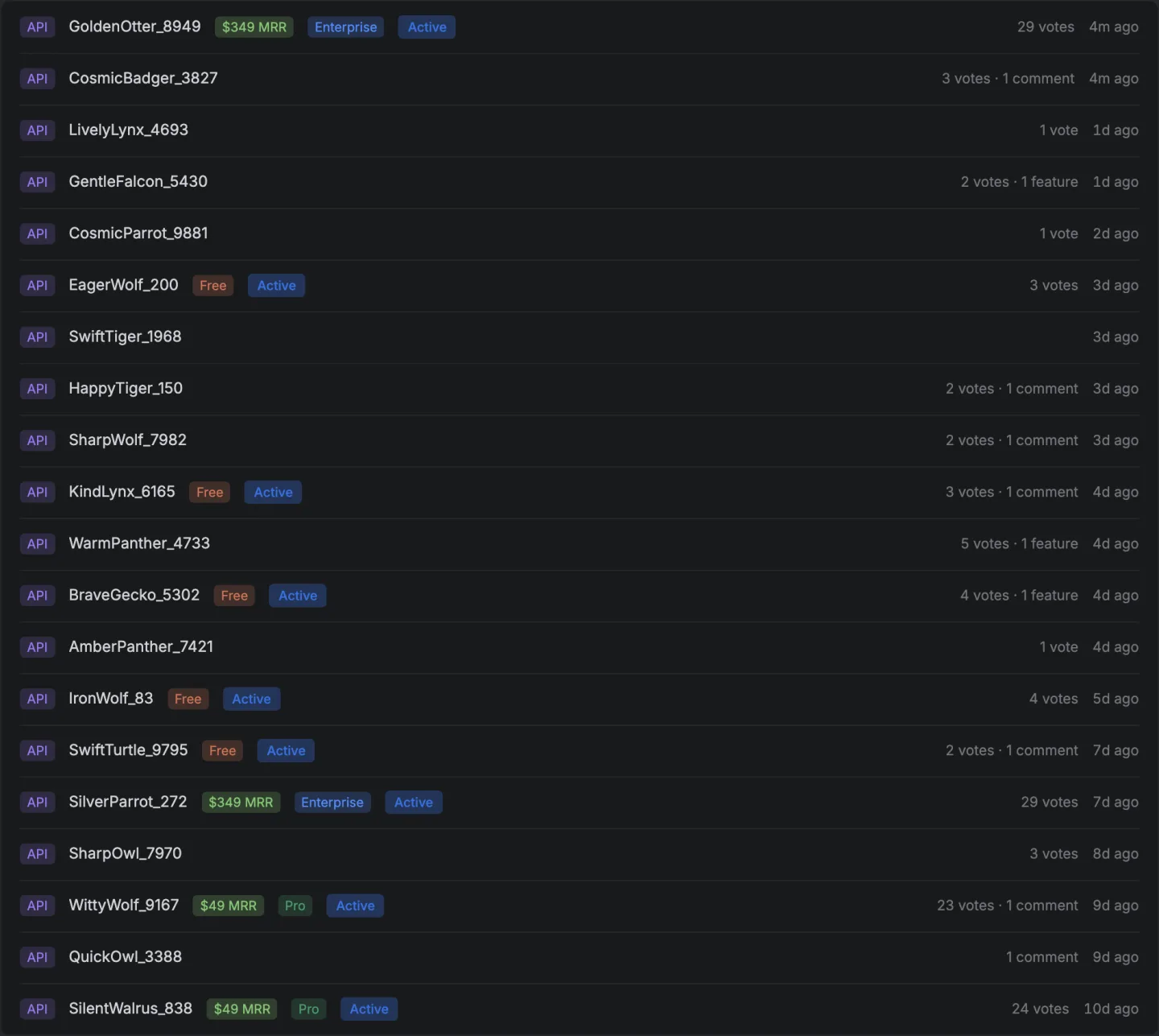
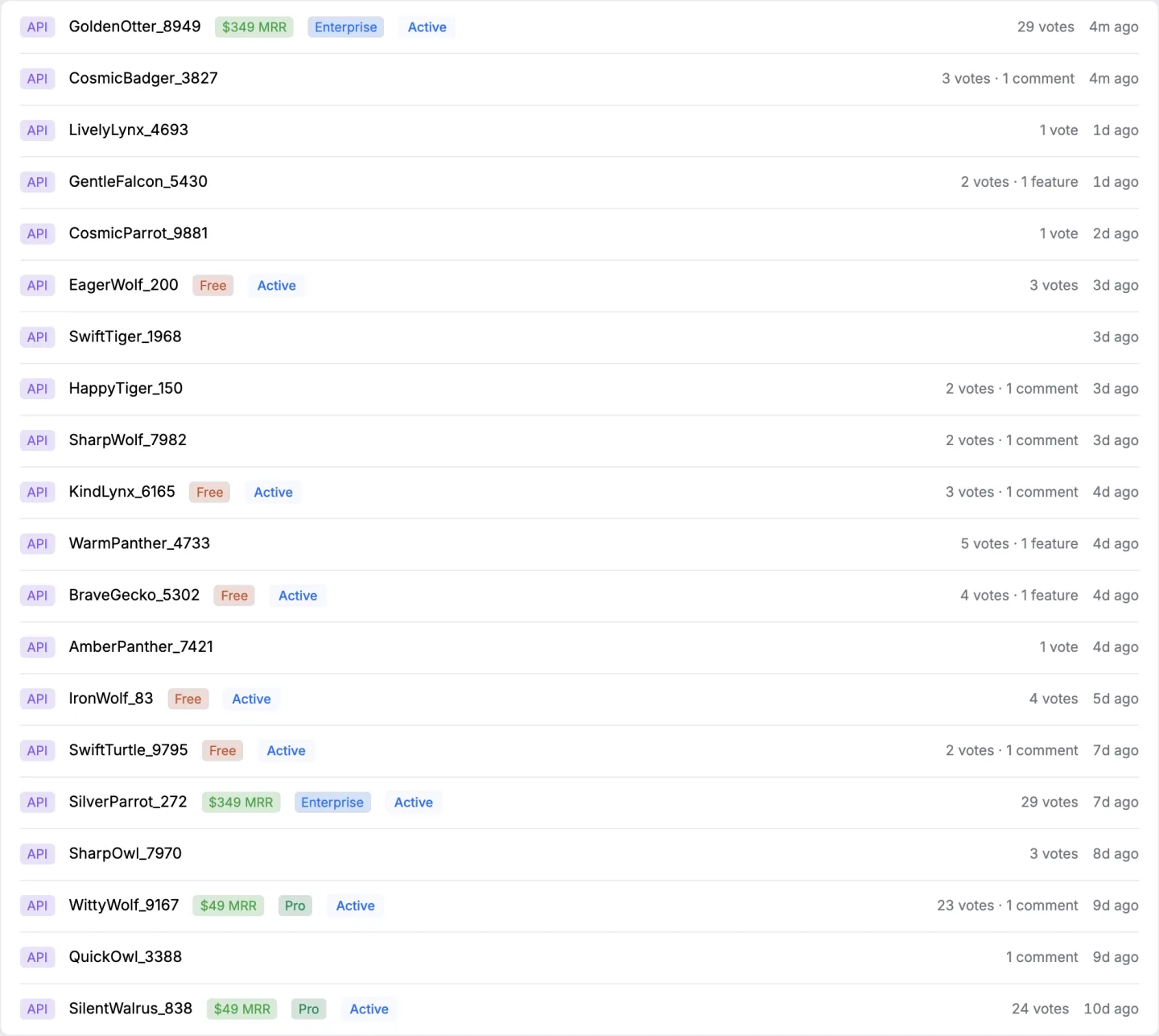
One row per person, showing where they arrived from and what they have done.
The source badge is the part people underestimate. A voter who came through the API from your own application is a different kind of evidence from an anonymous visitor who found the board through a search, and the list says which without you having to work it out.
How each of those identities is established is documented, and signing your own users in so their votes arrive named is its own page.
That is the list as it ships, and a trial runs 14 days with a card at signup if you would rather open one than read about it.
Beside that sits what each person has done, being how many requests they have voted on, how many comments they have left, and when they were last seen.
What does a voter profile hold?
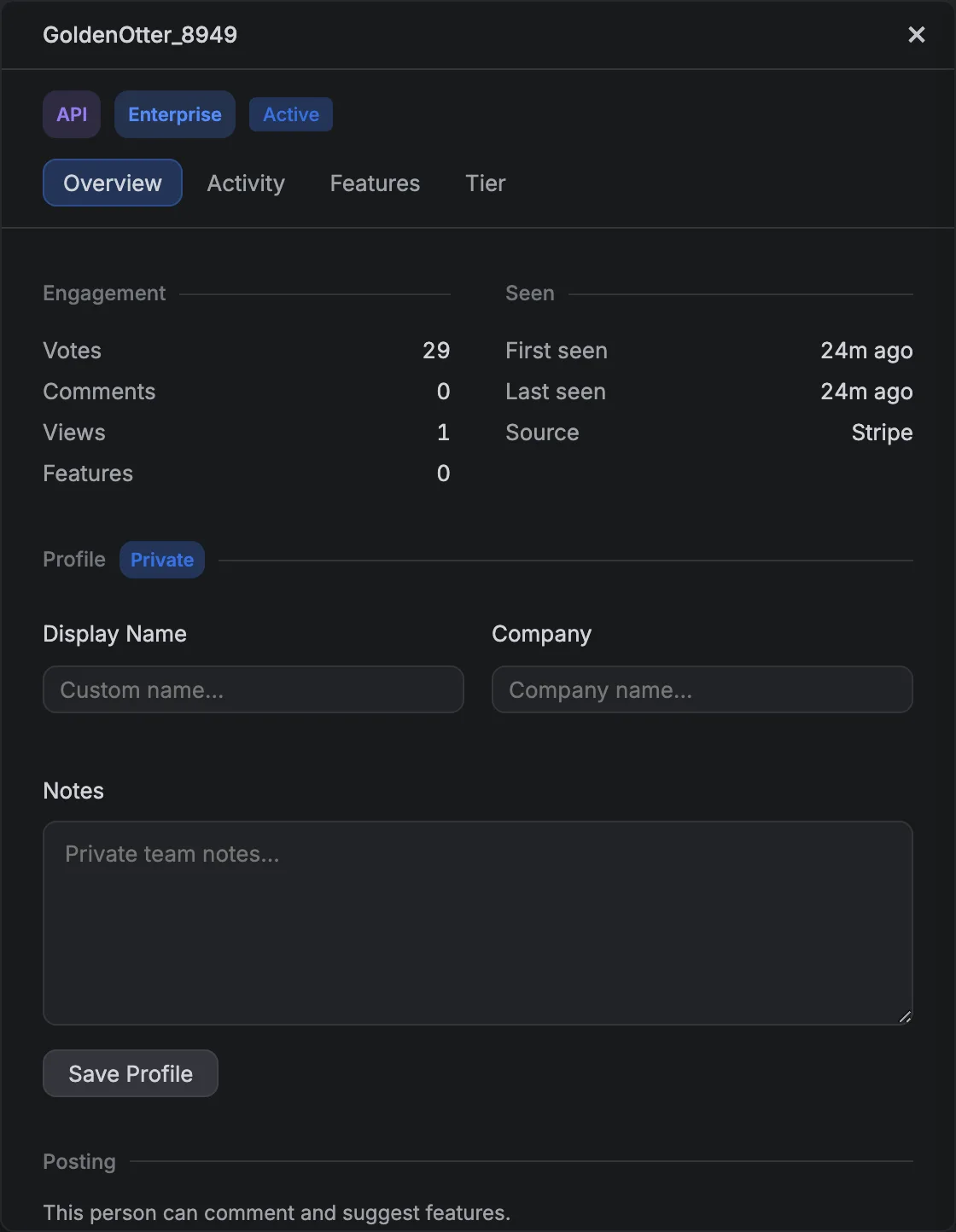
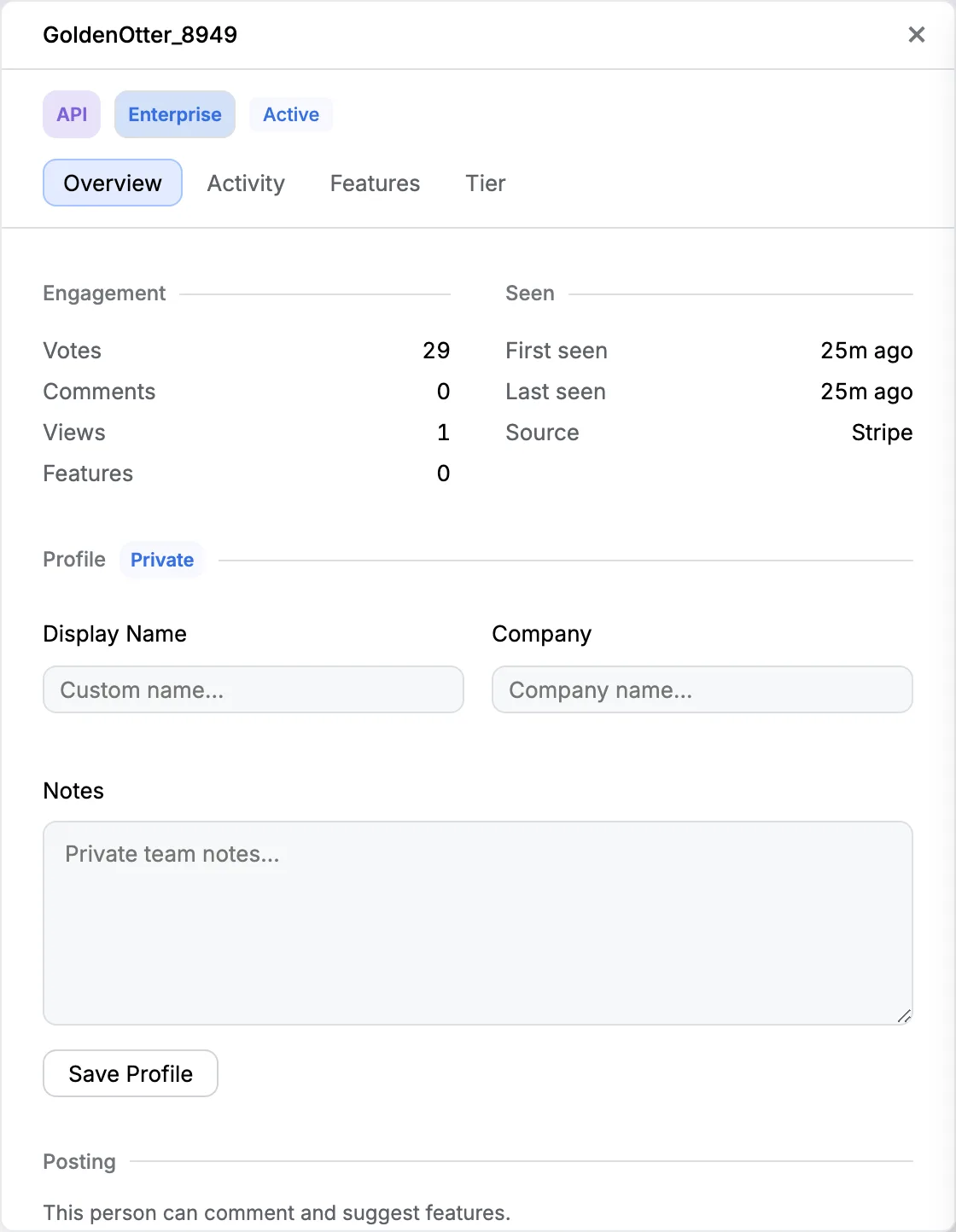
A display name, an email, a company, and private notes only your team reads.
The notes field is the one that earns its place. A person votes for something, somebody on your team has a call with them three weeks later and learns why, and the why belongs on the person rather than in a document nobody opens.
It is private by construction, so nothing in it appears on the public board.
The profile is also where the two blunt controls live. A person can be banned from posting, with a reason recorded for your own records, and a person can be marked as churned.
What does marking somebody churned do?
It moves them out of your active counts without deleting anything they said.
That distinction is the whole point. A customer who leaves takes their revenue with them, and their votes should stop counting toward what you build next.
But the request they filed, the comment they left and the thing they said on their way out are the most useful feedback a product ever receives, and deleting the person would delete the evidence with them.
Churn can be marked by hand, and it can arrive on its own if a payment provider is connected, because a cancellation there is a churn signal without anybody typing anything.
How do people get into tiers?
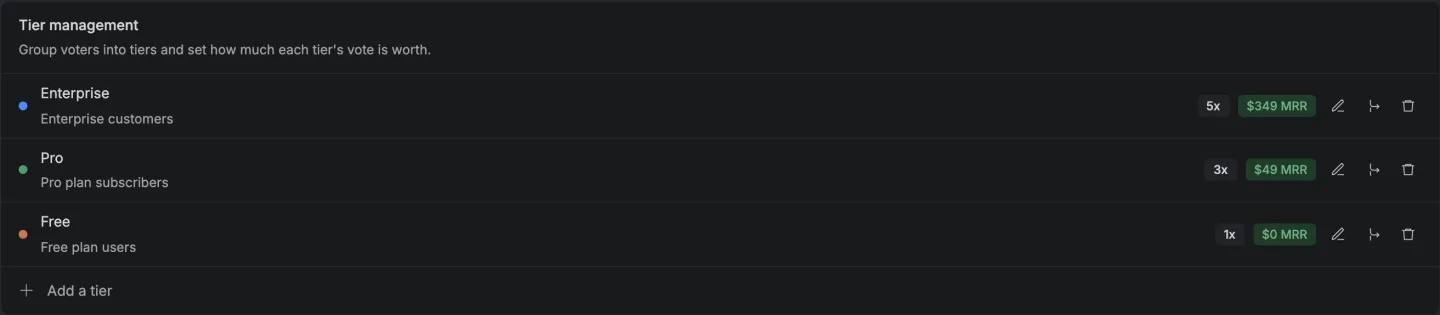
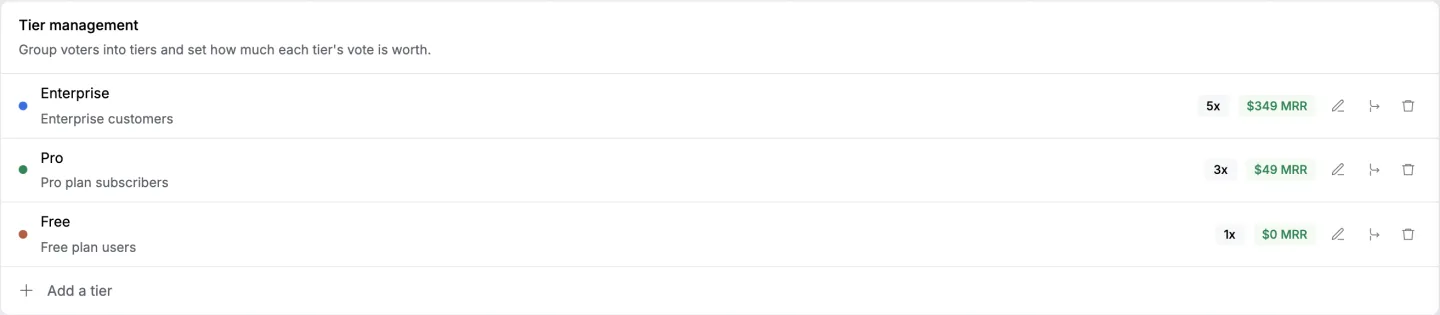
By assignment, and the assignment records where it came from.
Every tier change carries its source, which is one of manual, Stripe, Paddle, CSV or the API. So a tier somebody typed and a tier that arrived from a billing import are distinguishable a year later, which matters the first time the two disagree.
The tier is what makes a vote weigh more than one, and it is also what makes the insights rail able to answer which part of your customer base is behind a request.
What does the insights rail show?
Counts, where people came from, and what is behind each request.
Total, new and active voters over seven days, thirty or a year. A breakdown of where voters arrived from, which is the registered, anonymous and API split.
And a tier coverage figure, which is the share of your voters you have actually placed in a tier, and it is the number that tells you whether any of your weighting means anything yet.
Where this stops
Four things this deliberately does not do.
It does not collect anything a person did not give you. There is no enrichment, no lookup against a third party, and no inference. A company name is there because somebody typed it or an import carried it.
It cannot tell you about people who never voted. The list is built out of participation. The customers who never visit your board are not in it, and they are usually the majority.
Tier coverage is usually low and the number says so. A board with most voters in no tier is a board where weighting has nothing to weigh, and the rail shows that plainly rather than hiding it in an average.
Notes are not a CRM. One field per person, private, and no history of who wrote what.
What this costs
The voter list and the profiles are on every plan, including Lite. The pricing page lists activity and voters, and weighted voting, under the Lite column.
The trial runs 14 days with a card at signup, then $9 a month for Lite or $39 for Pro.
The honest summary
The list turns a count into people. The profile gives each person a tier, a private note and a churn flag. The rail says how much of your base you have actually classified, which is the number that decides whether any of the weighting on your board is real yet.
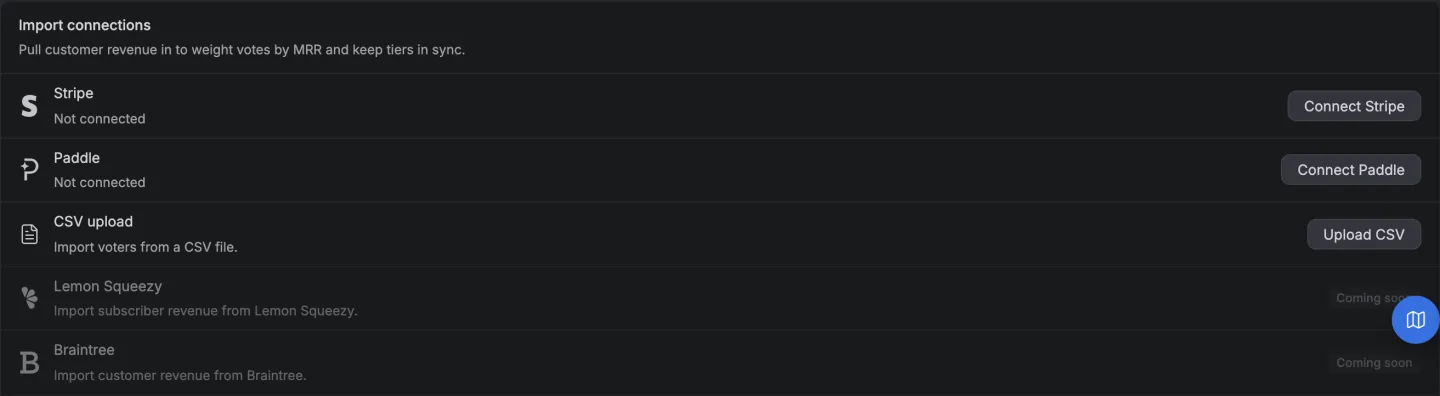
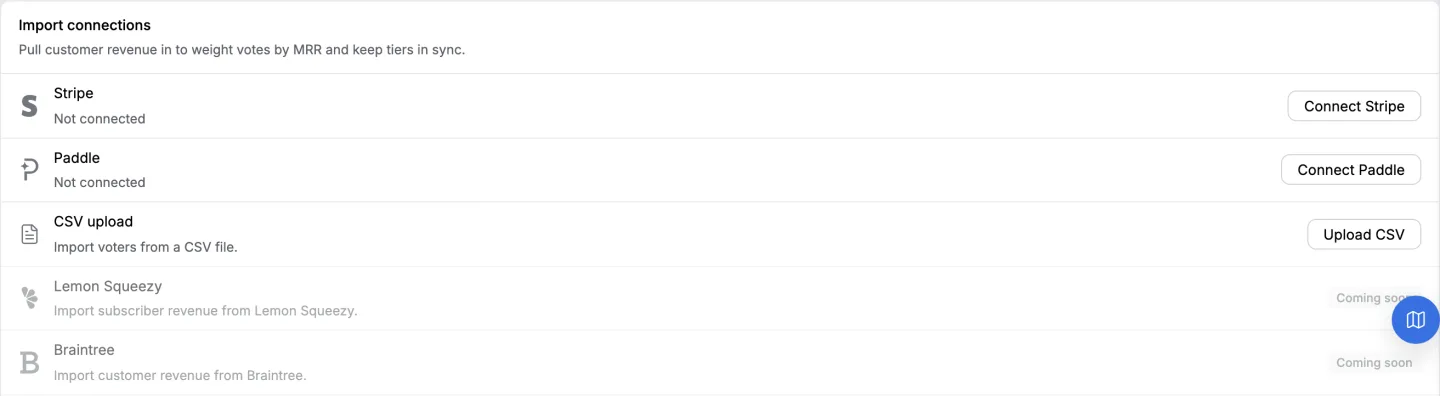
If you want the votes themselves to carry that weight, weighting is the page for it. If you want the revenue to arrive rather than be typed, the import page covers Stripe, Paddle and CSV.
14 days, a card at signup, then $9 or $39 a month.