A vote on a feature request says somebody agrees. A comment says why, and the why is the part that changes what you build rather than just what order you build it in.
Can people reply to each other?
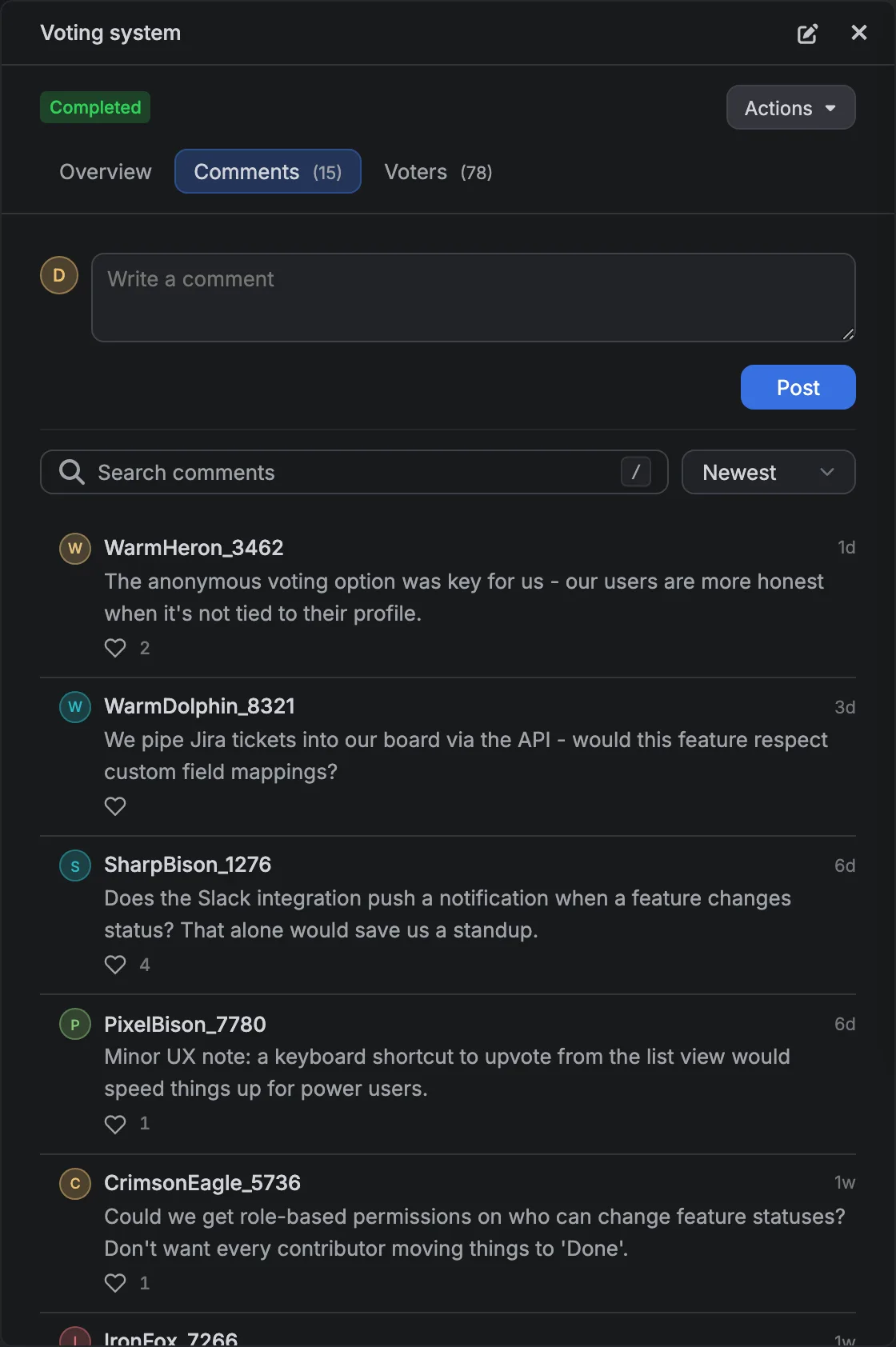
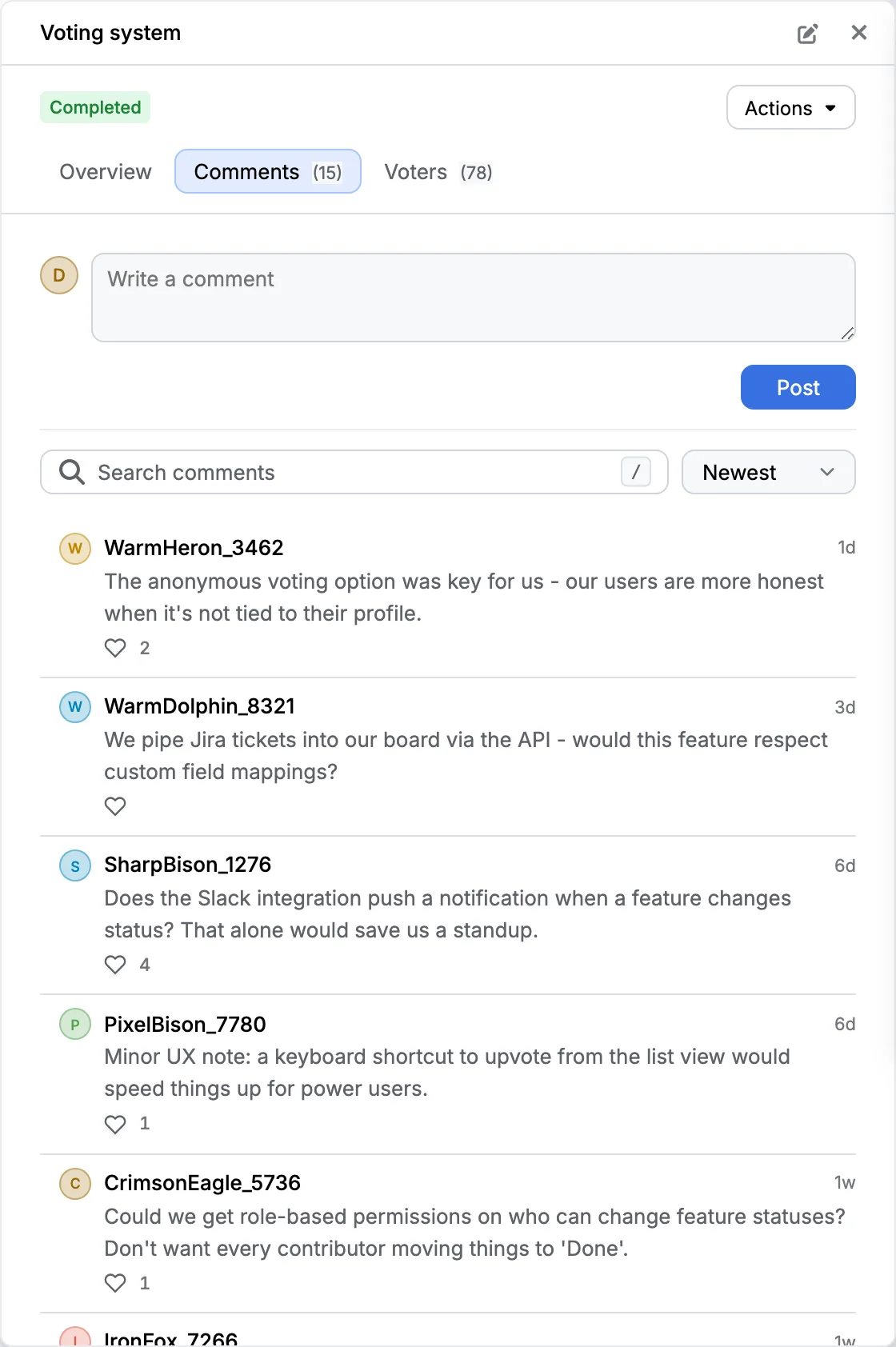
Yes. A comment can have a parent, so a thread is a tree rather than a flat list.
That matters more than it sounds on a board. Without replies, a disagreement about a request becomes ten separate comments that each restate the whole argument, and the next reader has to reconstruct the conversation. With them, a specific objection sits under the specific claim it objects to.
That is the behaviour as it ships, and a trial runs 14 days with a card at signup if you would rather use it than read about it.
Comments also carry a like count, which is the cheapest way for the twentieth person to say the fourth comment already said it.
Who can leave one?
Anybody who can see the board, unless you have banned them.
There is no account requirement to participate, which is the same design as the vote. A person who found your board through a search and has something useful to say should be able to say it without registering first. The board's own page covers what that costs you and what it buys.
The control on the other side is per person rather than per comment. A voter profile carries a ban flag with a reason your team records, and a banned person stops being able to post.
What is the developer response?
A separate field on the request, shown apart from the thread and labelled as yours.
This is deliberately not a comment. A team's answer to a request is not one voice among twenty, and burying it in position fourteen of a thread is how a board ends up looking unanswered while somebody answered it.
It matters most on a denial. Denied is one of the five columns a new project starts with, and the response field is what turns a denial from a silent rejection into a decision with a reason attached.
The reason then sits on the public card, visible to the person who asked and to everybody who was about to ask the same thing.


Do comments affect what gets built?
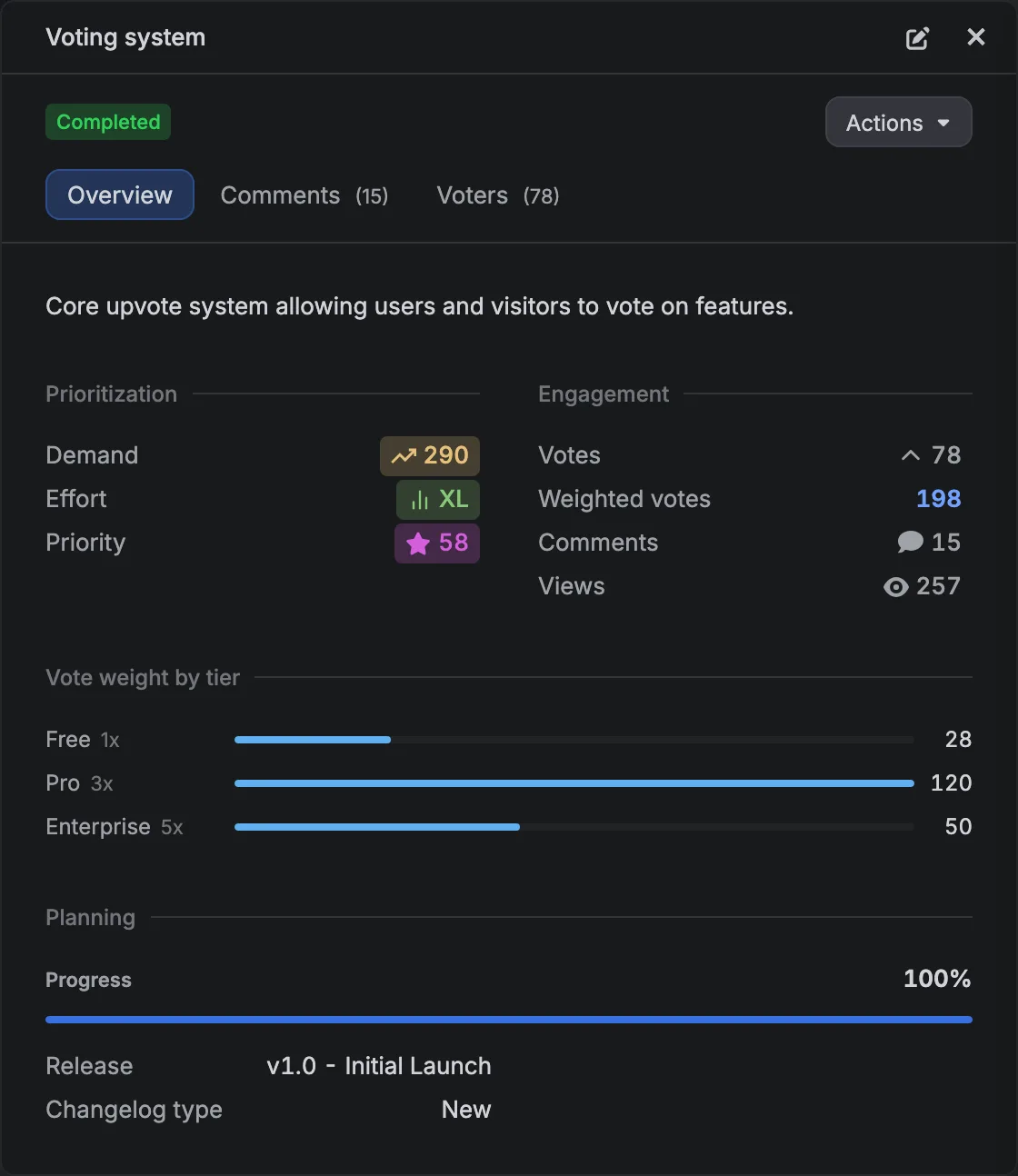
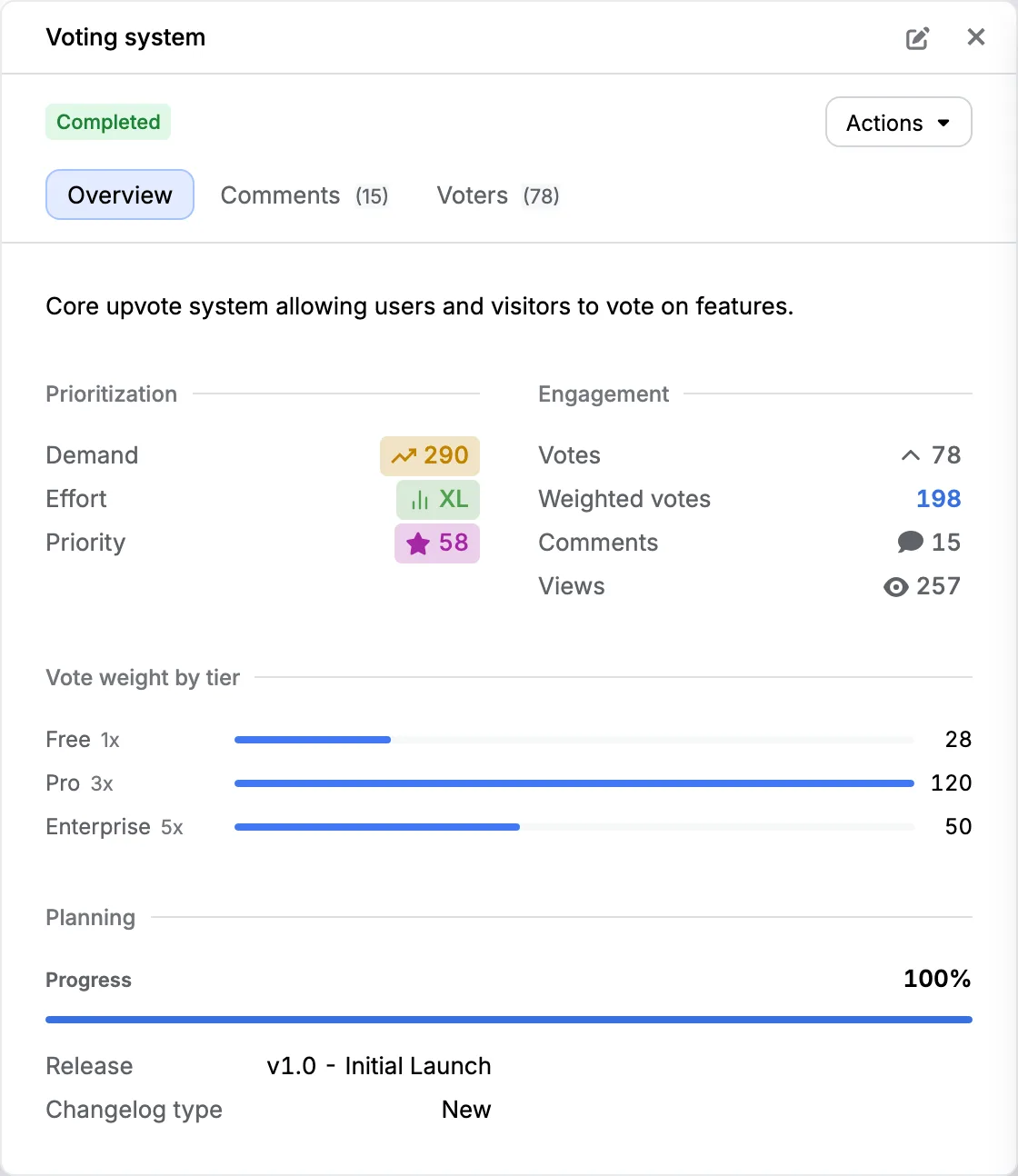
Yes, directly. They are the second term of the demand score.
demand = (votes × 3) + (comments × 2) + (views × 0.1)
A comment counts double a vote by design, because a comment costs a paragraph and a vote costs a click.
A request with a long thread on it and a modest vote count can outscore a request with more votes and nothing said, and that is the arithmetic saying what people actually did. The whole formula, and its four limits, is on its own page.
Can I read and write them from my own application?
Yes. Four of the twenty one API endpoints are about comments.
Reading a thread, adding to it, liking a comment and removing one are all available to a key, which is what makes a board embedded in your own product feel like part of it. The API page lists all twenty one endpoints and the reference documents each one with its fields.
Where this stops
Four limits.
Moderation is per person, not per comment. You can ban somebody and you can delete a comment. There is no queue where comments wait for approval the way a new request does, so the first bad comment is visible before you remove it.
There is no editing window described here. What a person posted is what stands until somebody removes it.
Likes are a count, not a signal you can sort by. They feed nothing. The demand score counts comments, not the likes on them.
A thread is not a conversation with your team. The developer response is one field, not a reply your customer can answer in kind. If you want a discussion, it happens in the thread, at the same level as everybody else's.
This suits a board where the disagreement about scope is worth publishing. A team that needs every comment held for approval before anybody sees it should not rely on this, because moderation here is per person rather than per comment.
What this costs
Comments are on every plan. They are part of the board rather than an upgrade.
The trial runs 14 days with a card at signup, then $9 a month for Lite or $39 for Pro.
The honest summary
Threaded replies, likes, no account needed to post, a ban control per person rather than a queue per comment, and a developer response that deliberately sits outside the thread.
Comments are worth double a vote in the demand score, which is the clearest statement this product makes about what it thinks a paragraph is worth next to a click.
14 days, a card at signup, then $9 or $39 a month.