The fastest way to get less out of a feature request board is to ask for a password first. Somebody arrives with an idea, meets a sign up form, and leaves with the idea still in their head.
VoteFirst puts an anonymous cookie on the visitor instead. They can vote, comment and suggest a feature without an account, and you still get a stable identity to attribute all three to. Exactly how a visitor is recognised, in order, is documented.
This page covers what a visitor can do, what happens to what they write, and the handful of things about the board that we would rather you read here than discover later.
Can people vote without an account?
Yes. An anonymous cookie is set on every public page load, the visitor gets an identity derived from it, and voting is open from that moment.
The same is true of commenting and of suggesting a feature. Nothing on the public board asks for an email address, and you can switch any of the three off independently if you want a board that is read only, or one that takes votes but not comments.
Voting has a second layer on top of that, which is a choice of which columns accept a vote, and it has its own section below.
Anonymous voters get a readable name rather than a number. It is generated from their id, so the same person is the same name every time they come back, and it stays consistent across the board, the activity log and the digest emails.
A vote is a toggle. Pressing it again takes the vote back and the count drops. One person can hold one vote on one card and no more, and that is a unique index in the database rather than a check in the code, so a double press or a retried request cannot produce two.
The fastest way to know whether it does what you need is to switch it on, and a trial is 14 days with a card.
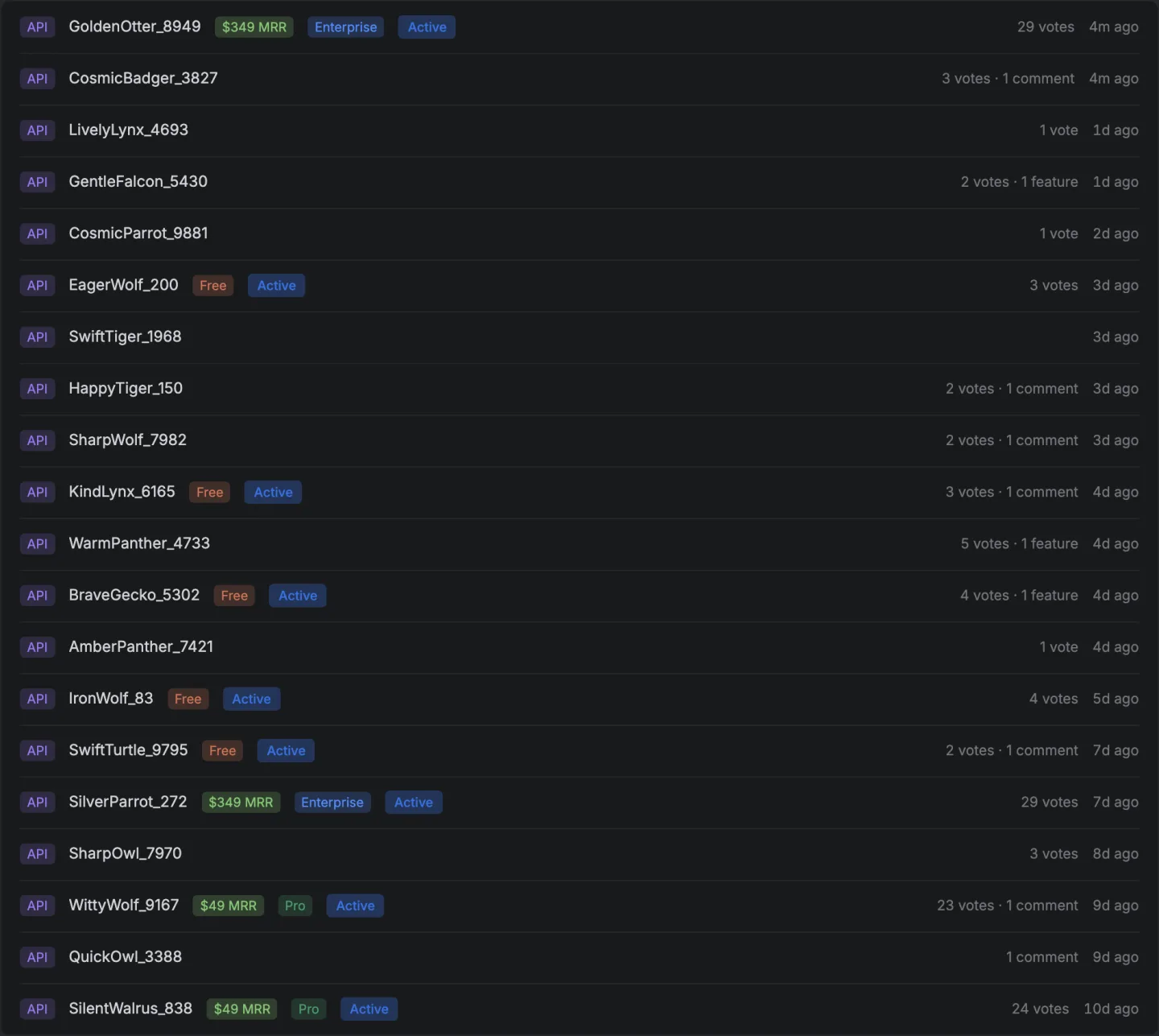
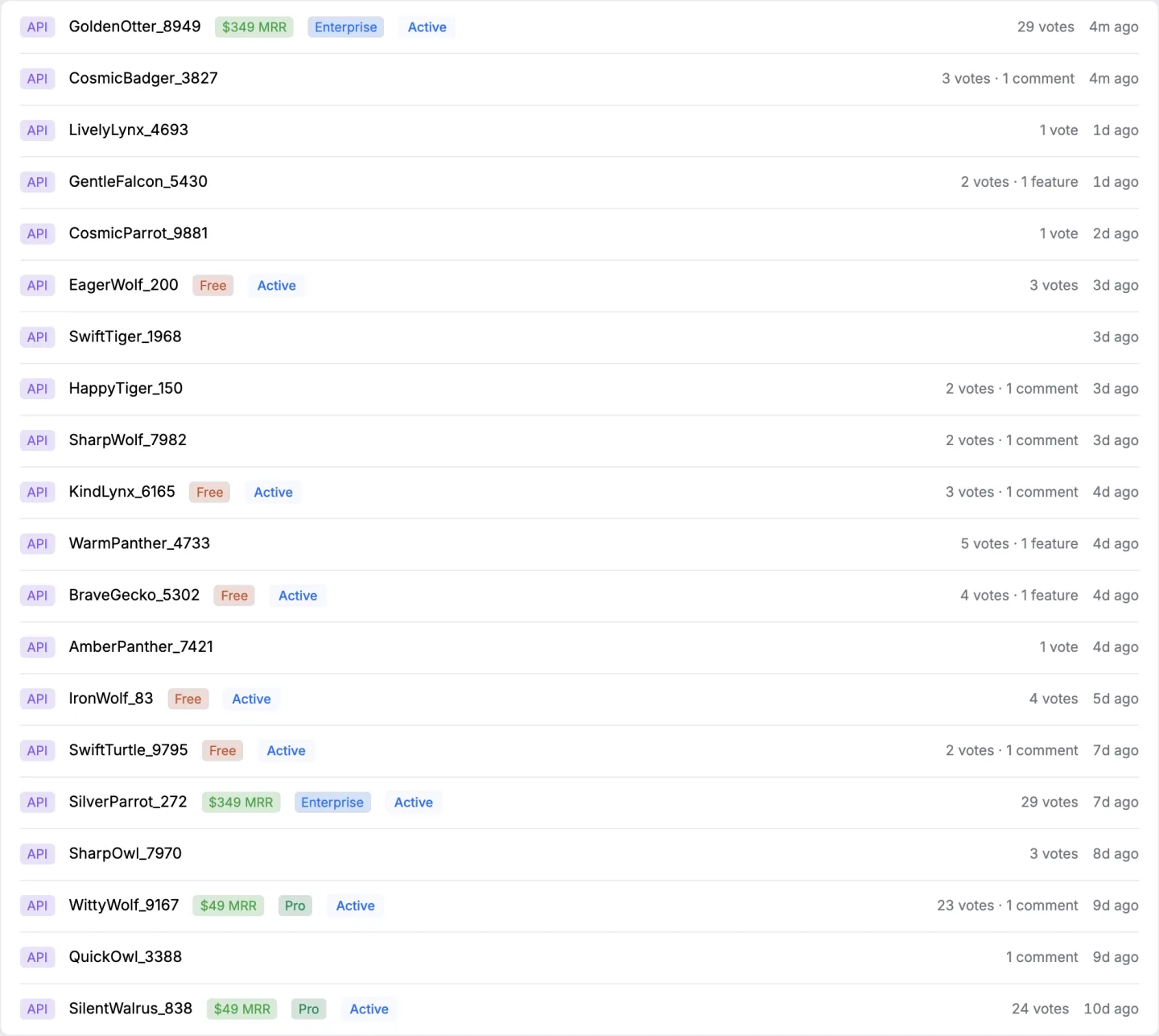
Does every suggestion go straight onto the board?
No. Every suggestion from a visitor is held for review, and it is invisible on the public board until you approve it.
This is worth being precise about because it is the single most common surprise. All three ways a suggestion can arrive, the public board, the suggestion form and the API, create it unapproved.
You approve, deny, undeny or unapprove from the dashboard, and a denied item can be shown publicly in its own column if you want your no to be visible, or hidden if you do not.
There is no setting that turns the review gate off. We looked for one before writing this sentence, because plenty of people will want it. The only related switch turns suggestions off entirely.
So if your board gets busy, the queue is work you have agreed to do, and you should know that before you open the board rather than after.
The first thing that queue makes you decide is whether each item is a bug or a feature request, because the two are worth ranking by different measures.
Comments are the other way round. A visitor comment is public the moment it is posted. There is no approval step for comments and no hidden state on them, so a board with comments enabled is a board you are watching rather than one you are gatekeeping.
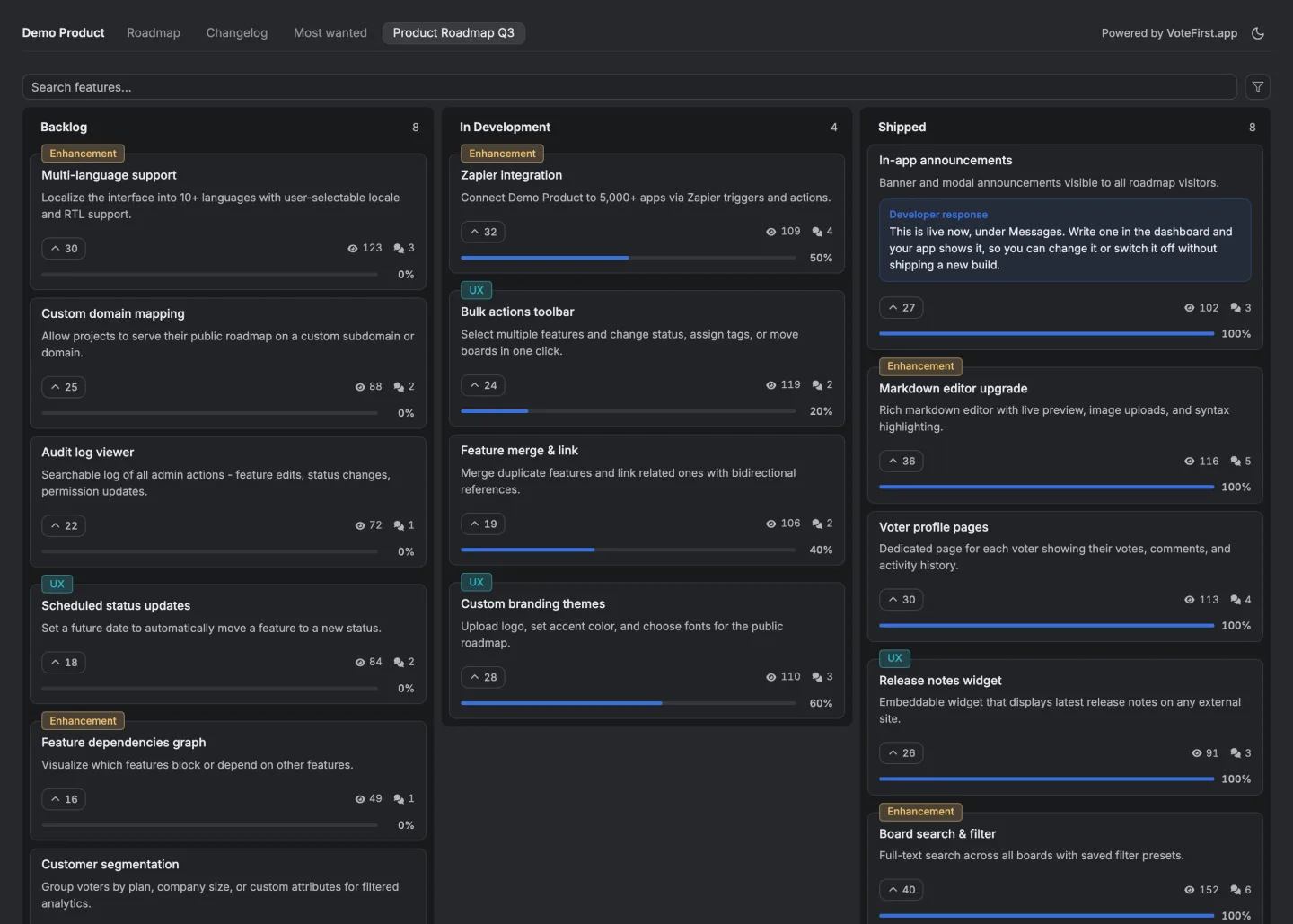
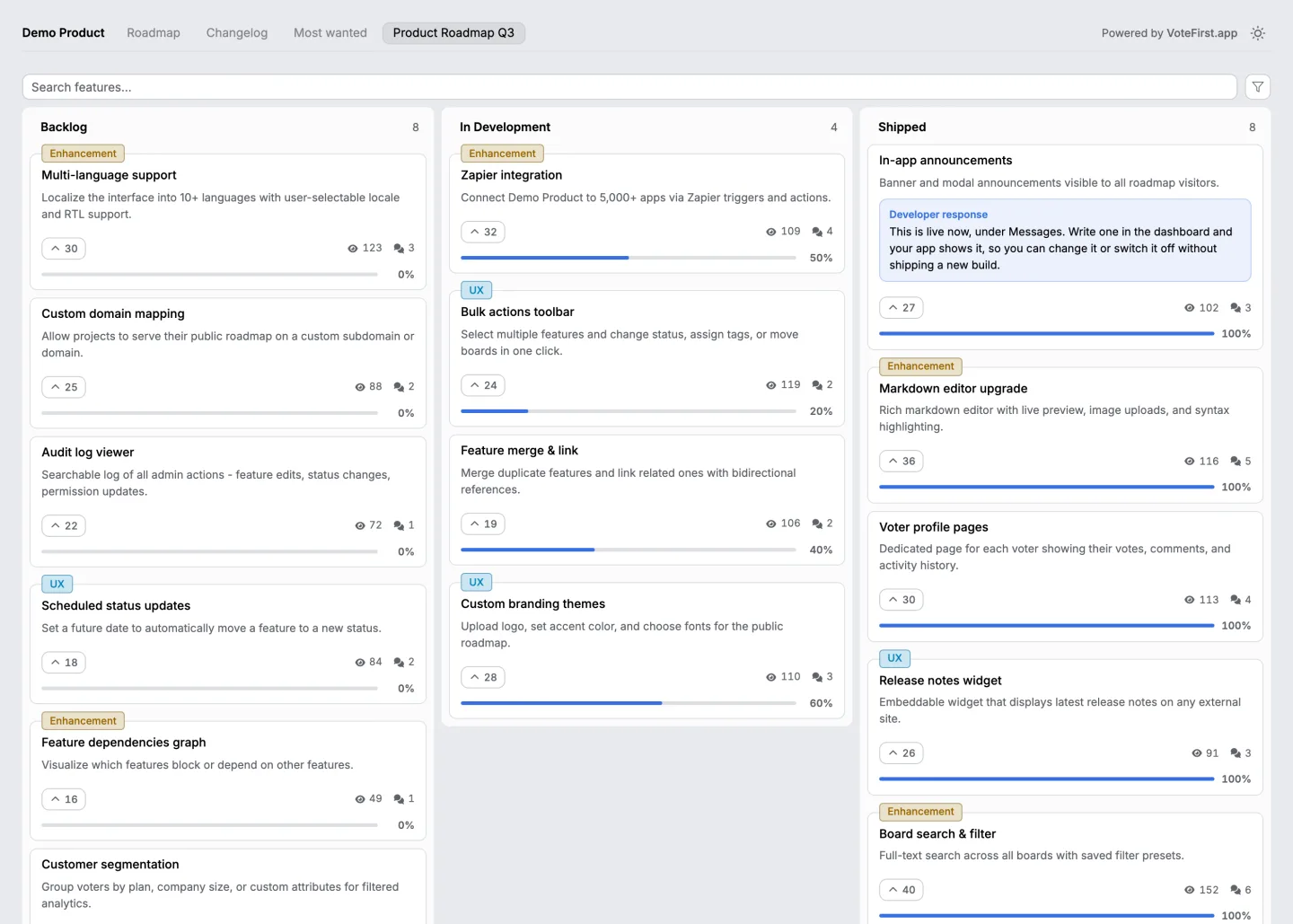
Which columns can people vote on?
Three of them, until you say otherwise. Suggested, In Review and In Progress.
This surprises people who expect voting to be one switch, so it is worth its own heading. Voting is set per column and there are six boxes to tick.
The three above start ticked and Completed, Denied and Archived start clear, which means a visitor cannot vote for something you already shipped or something you already turned down.
That default is a judgement rather than an accident. A vote on a completed card tells you nothing you can act on, and a vote on a denied one is a protest rather than a request.
If you want either of those, tick the box, and if you want people voting on your archive, that box is there too.
The refusal happens on the server rather than in the page. The button is not drawn on a column you have not opened, and a request that arrives anyway is turned down, so a visitor cannot vote by talking to the endpoint directly.
What stops the board filling with spam?
Three things, and none of them is a spam filter, because there is not one.
We want to be straight about this rather than let the word moderation do quiet work. There is no profanity list, no keyword blocklist and no third party spam service anywhere in the product.
We searched for all of it before writing this section. The only automatic checks on what somebody writes are length limits and whitespace tidying.
What does exist is the review gate above, which means no suggestion reaches your public board without a person approving it. That is a stronger guarantee than a filter, and it costs you the time a filter would have saved.
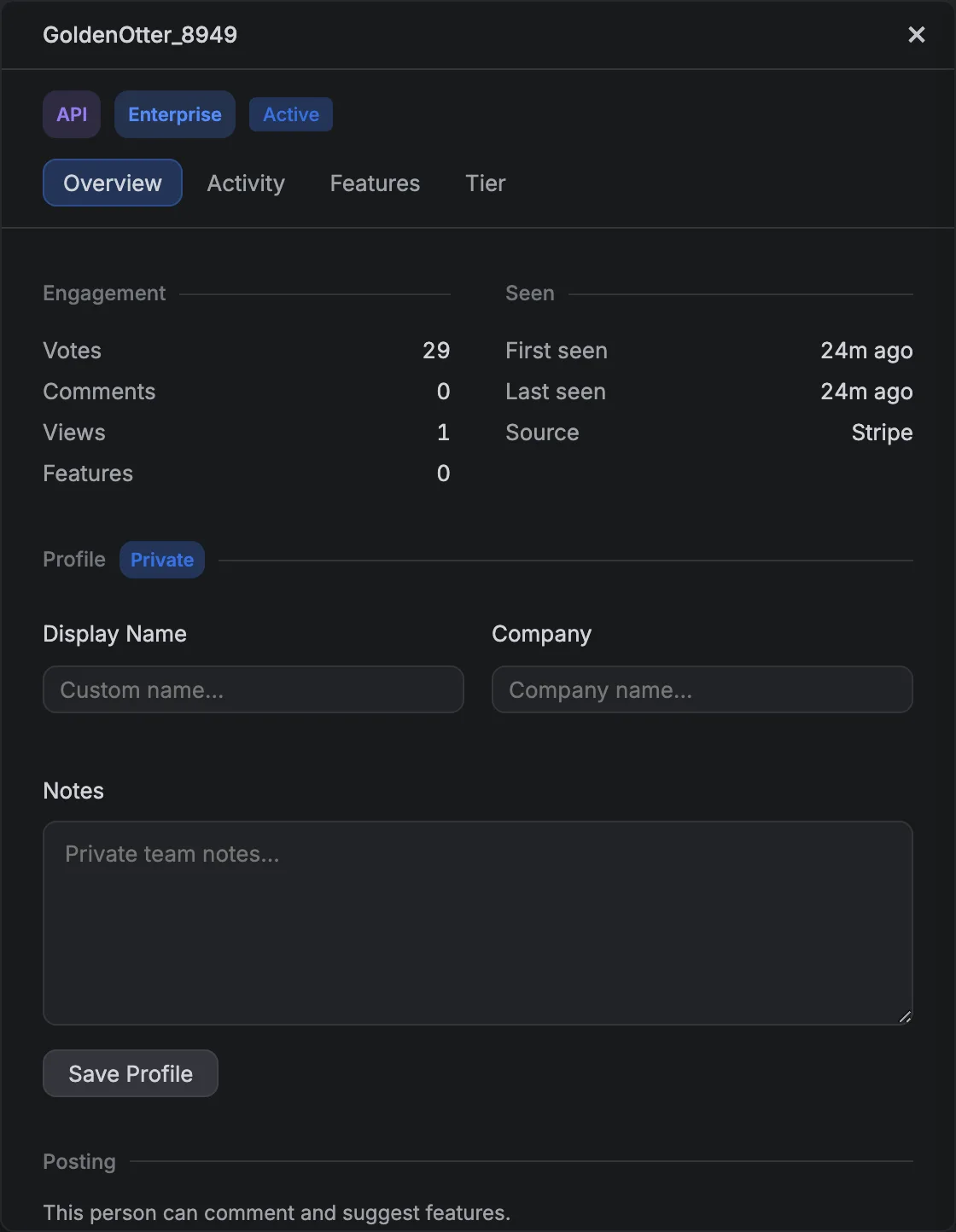
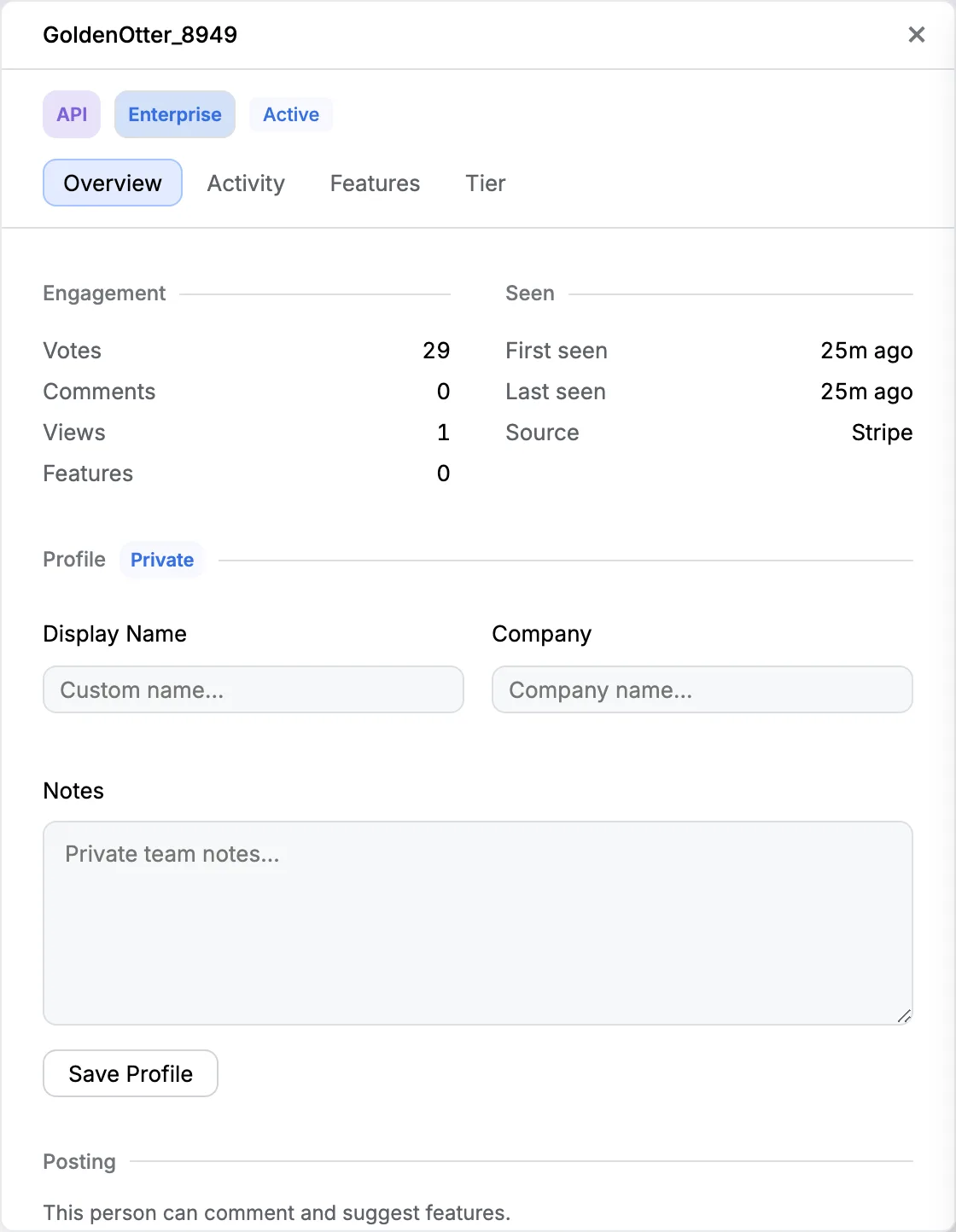
Second is the ban. You can ban a voter from writing, and it applies to comments, votes and suggestions. A banned voter can still read the board, which is deliberate, because the alternative is a person who cannot see the thing they are being told about.
A ban also requires the voter to have activity on your project already, so you cannot pre emptively ban an identity that has never appeared.
Third is a bot trap that has nothing to do with your content. Requests for the usual probe paths, the WordPress login, the environment file and similar, get the address blocked for an hour. It is there to keep the noise out of the logs.
Can I stop someone posting without banning them from voting?
Not separately. The ban covers writing as a whole, so it stops comments and suggestions and votes together, and it leaves reading alone.
If what you want is a board where nobody can comment but everybody can vote, that is a board setting rather than a per person one, and it is one switch.
14 days, a card at signup, then $9 or $39 a month.
What does the board actually look like to a visitor?
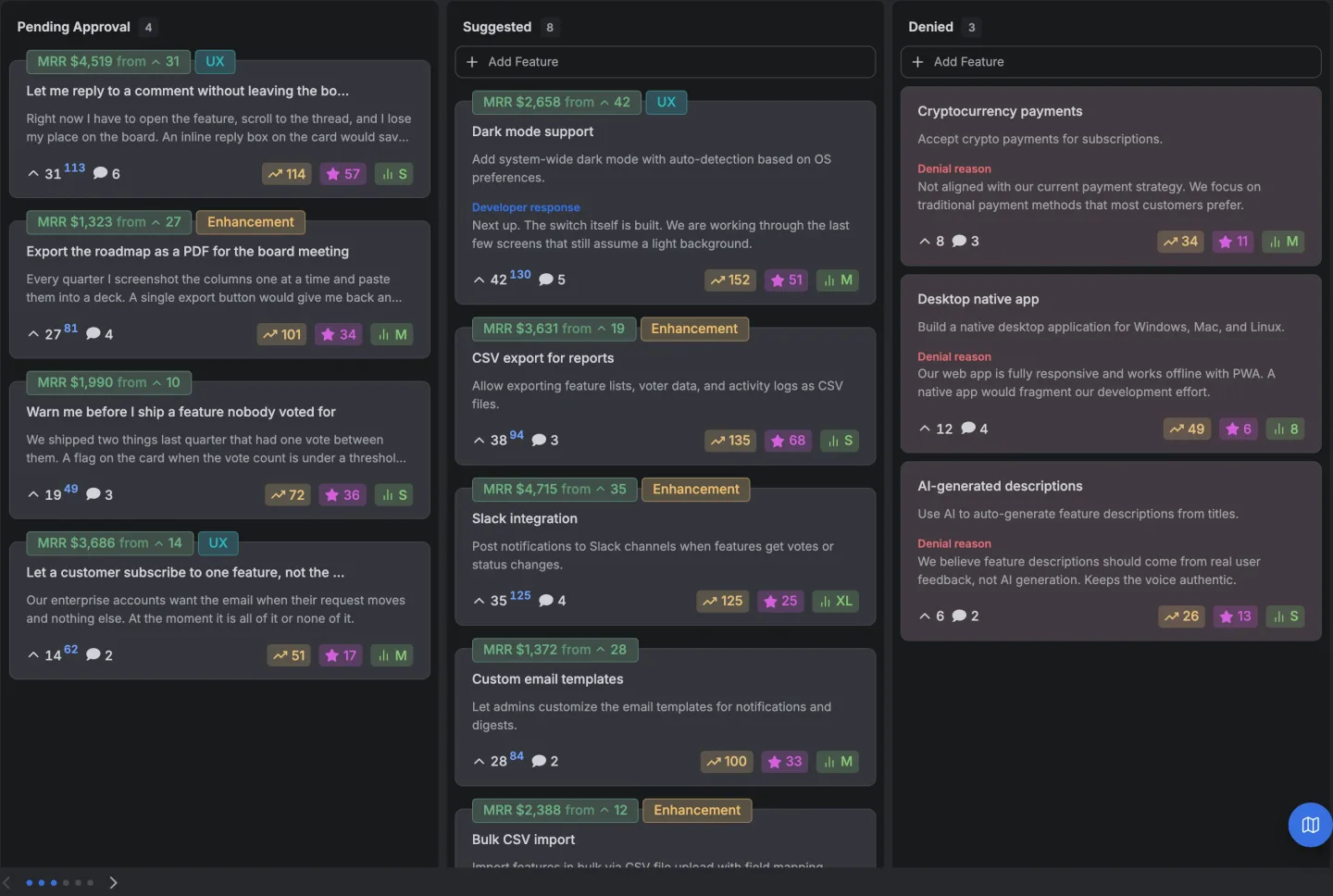
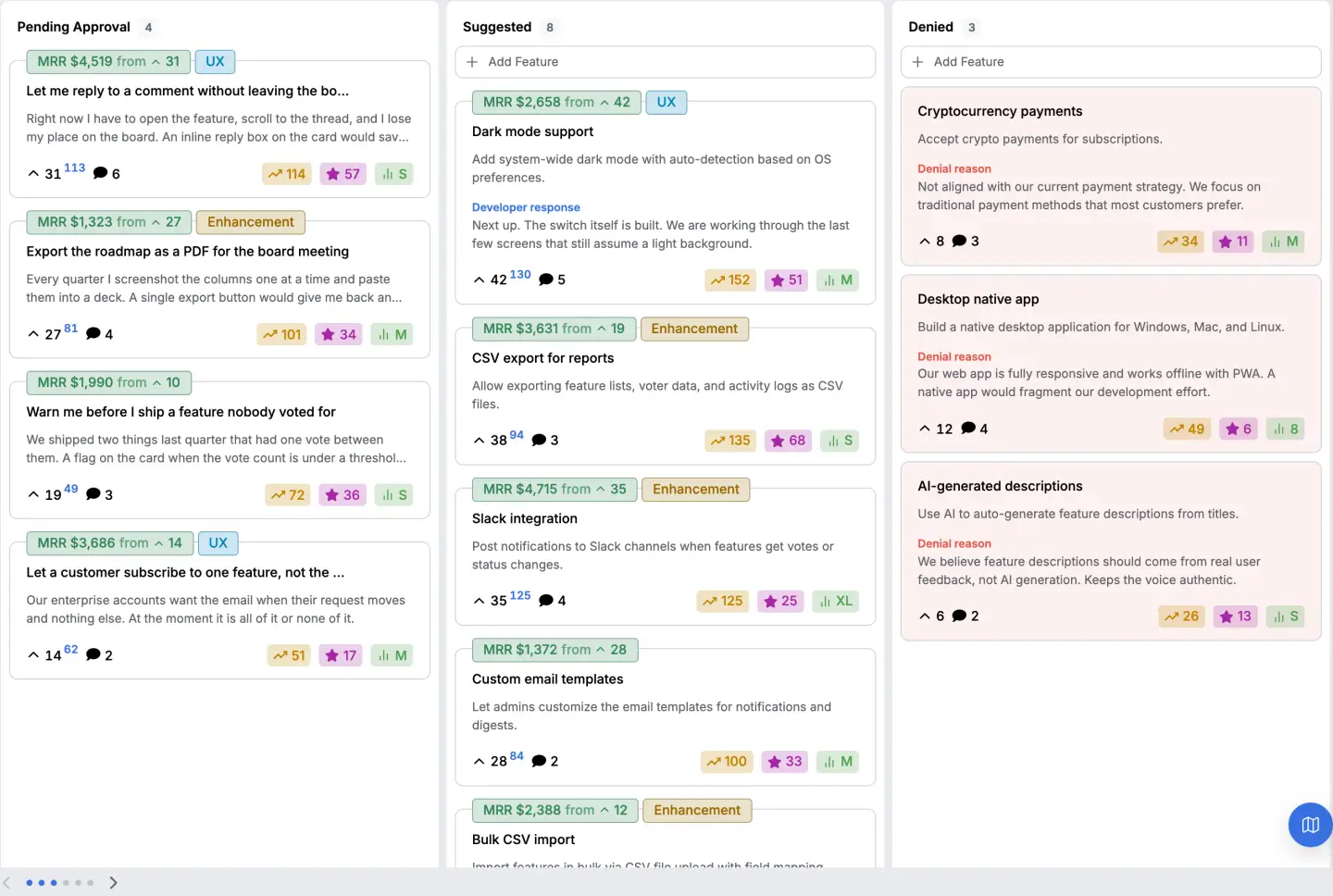
Five columns by default, in this order. Suggested, Denied, In Review, In Progress and Completed. The board is where most votes are cast, and what a vote is worth is a separate question from where it happens.
Visitors can sort by most voted, least voted, most viewed, or by the order you set yourself. They can search, which needs two characters and matches on the heading and the description, and they can filter by tag. Columns page at twenty cards.
Two things about that sort are worth knowing, because plenty of boards get both wrong. It runs in the database over the whole column rather than in the browser over the twenty cards it happens to be holding, so most voted means most voted and not most voted of the ones on screen.
And a card you pinned leads every one of the four sorts, without exception. Pinning is the only way to put something above the order a visitor chose, which makes it useful and makes it worth using sparingly.
The board is dark by default with a light theme available, and you set the background, both text colours, the accent, the card background, the border, the font and the corner radius separately for each theme.
The font list runs to twenty one, in five groups, from twelve sans serif faces through display, serif and monospace to the visitor's own system font.
Can I make the board private?
No. A board is public or it is not, and there is nothing in between.
There is no password protection and no invite list. We checked the project record field by field before writing that, because it is the kind of thing people assume exists. If your feedback has to be behind a login, this is not the product for that.
What you can do on PRO is run more than one board, each with its own address, its own public flag and its own columns, so an internal one can simply stay unpublished.
Where the weighting comes in
The board counts one vote per person by default, and that is the right default. It becomes the wrong one when your voters pay you very different amounts, because a headcount cannot tell the loudest group from the largest account.
Turning weighted voting on lets a vote carry a multiplier from the tier its voter sits in, while the plain headcount stays visible beside it. Your visitors never see any of it. The public board shows the plain count and nothing else, which is a deliberate line rather than a limitation we are working around.
What this costs
Nine dollars a month on LITE covers one project with the board, the roadmap, the changelog and weighted voting. PRO is thirty nine and adds more projects, the API and a custom domain.
There is a fourteen day trial on whichever plan you choose, and a card is required to start it.
One thing to know before you start rather than after. If the plan lapses, your board stays up and stays readable, votes keep working and the badge saying it runs on VoteFirst appears at the bottom.
Comments are the part that stops. They are switched off and hidden while the plan is lapsed, and a comment posted anyway is refused, so a board that had a conversation on it goes quiet until you are paying again.