Most product demos are a video of somebody else using software. This one is the software, running, with data in it, and you do not have to sign up to open it.
It takes about four minutes if you do all five. Here is the order that actually shows you something.
1. Vote on something without signing in
Open the board and vote on any card. Notice what did not happen. No form, no email address, no confirmation link.
That is the default behaviour of every board built here, and it is the single biggest difference between this and the best known product in the category, which requires a name and an email before anybody can post, vote or comment.
Whether that trade is right for you is a real question. An identity gives you attribution and segments. A cookie gives you the vote from the person who would not have bothered to sign up. Try it and see which side you land on.
If you want to see the product rather than read about it, the demo board is open without an account.
2. Suggest something, then look for it
Add a suggestion. Then go and look for it on the board.
It will not be there, and that is correct. Every suggestion from a visitor is held for review until somebody approves it. There is no way to switch that off, which means the board you show your customers is always one a person has looked at, and it means somebody has to look.
If you are evaluating this for a busy product, that queue is the thing to think hardest about.
3. Sort by most voted, then read the top three
The ranking is the product. Everything else is furniture.
Look at what floats to the top of a board where every vote counts as one. That is what the most people wanted. On your own board, whether that is the same as what you should build next depends entirely on whether the people voting are the people paying.
4. Open the roadmap and find the declined column
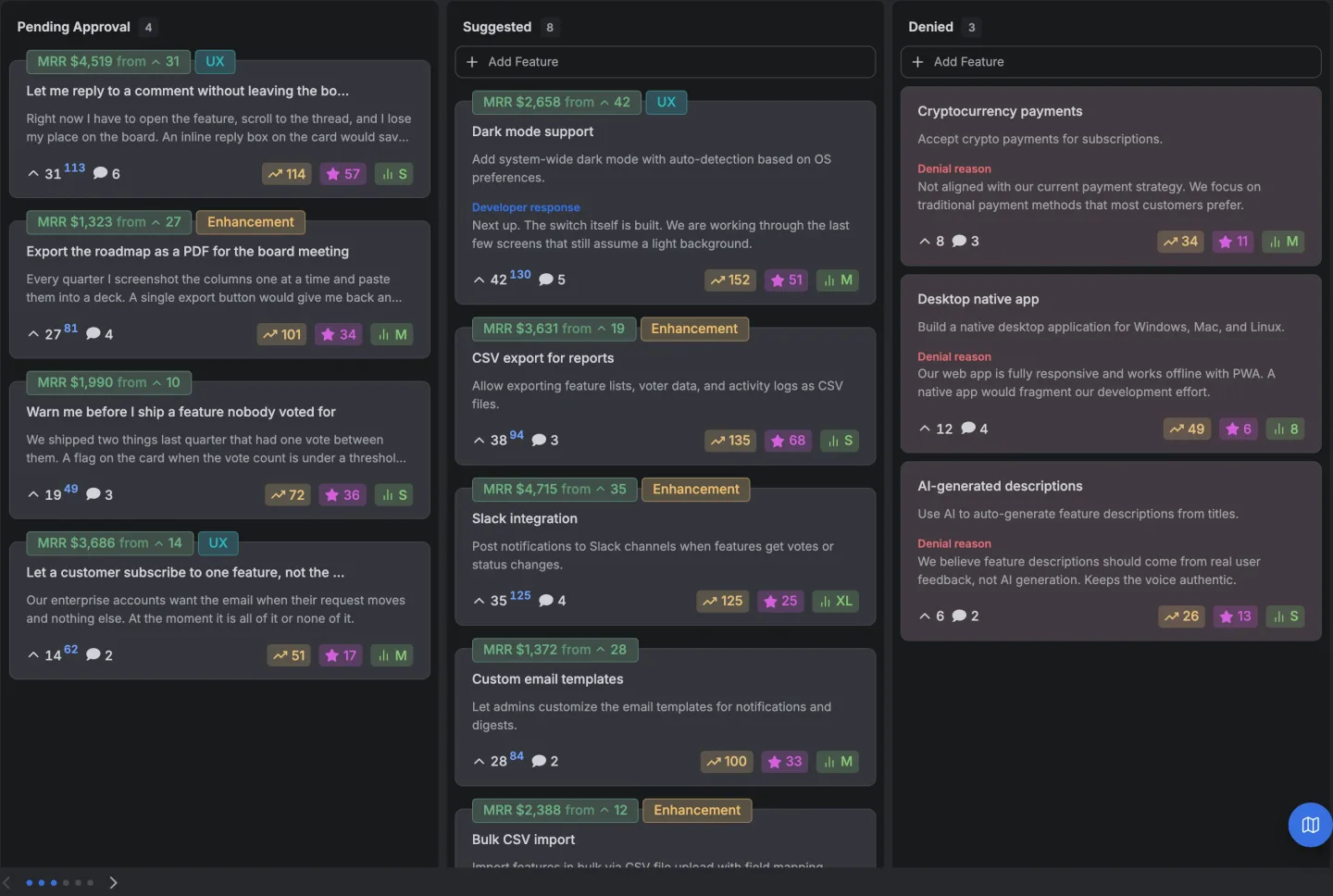
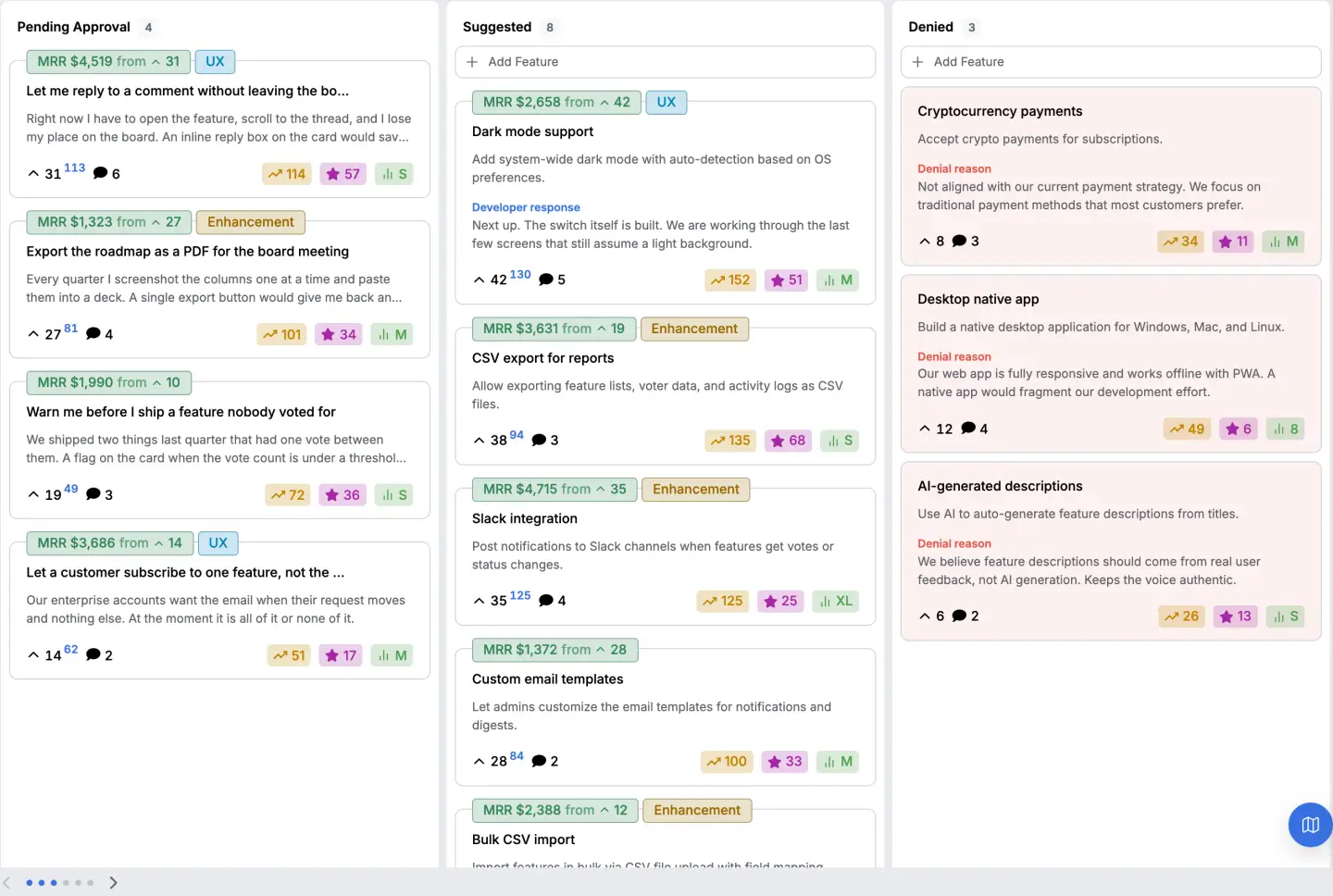
Most public roadmaps show only the work that went well. The demo board has a column for work that was considered and turned down, and it is switched on there, read on 15 September 2026. Our own roadmap does not have it on, which the page about our roadmap says plainly.
A roadmap without one answers the question you want to ask. A roadmap with one answers the question your customers are actually asking, which is not what are you building, it is what about my thing.
You can hide it on your own board. We would rather you did not.
5. Read the changelog and work out who got told
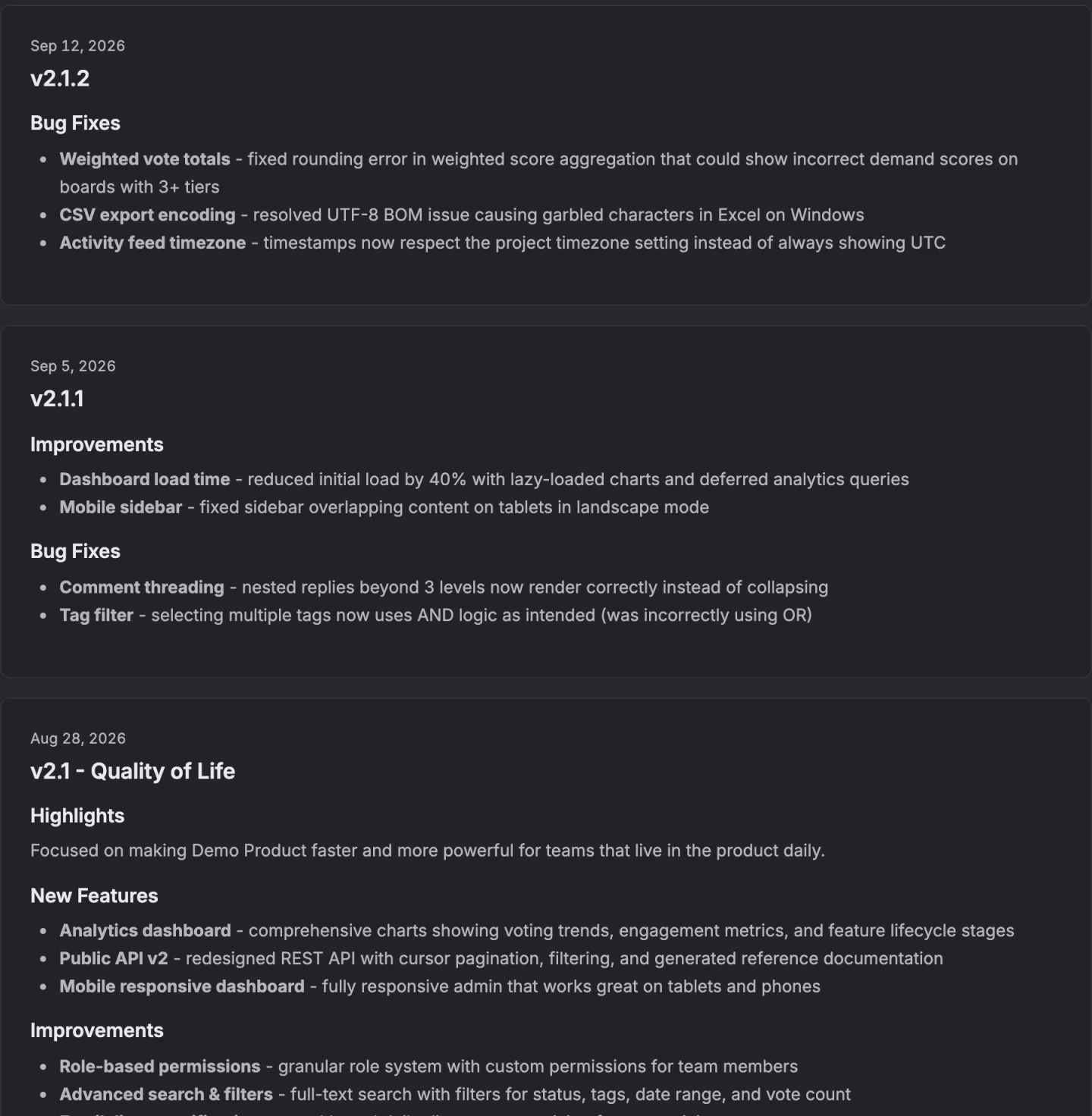
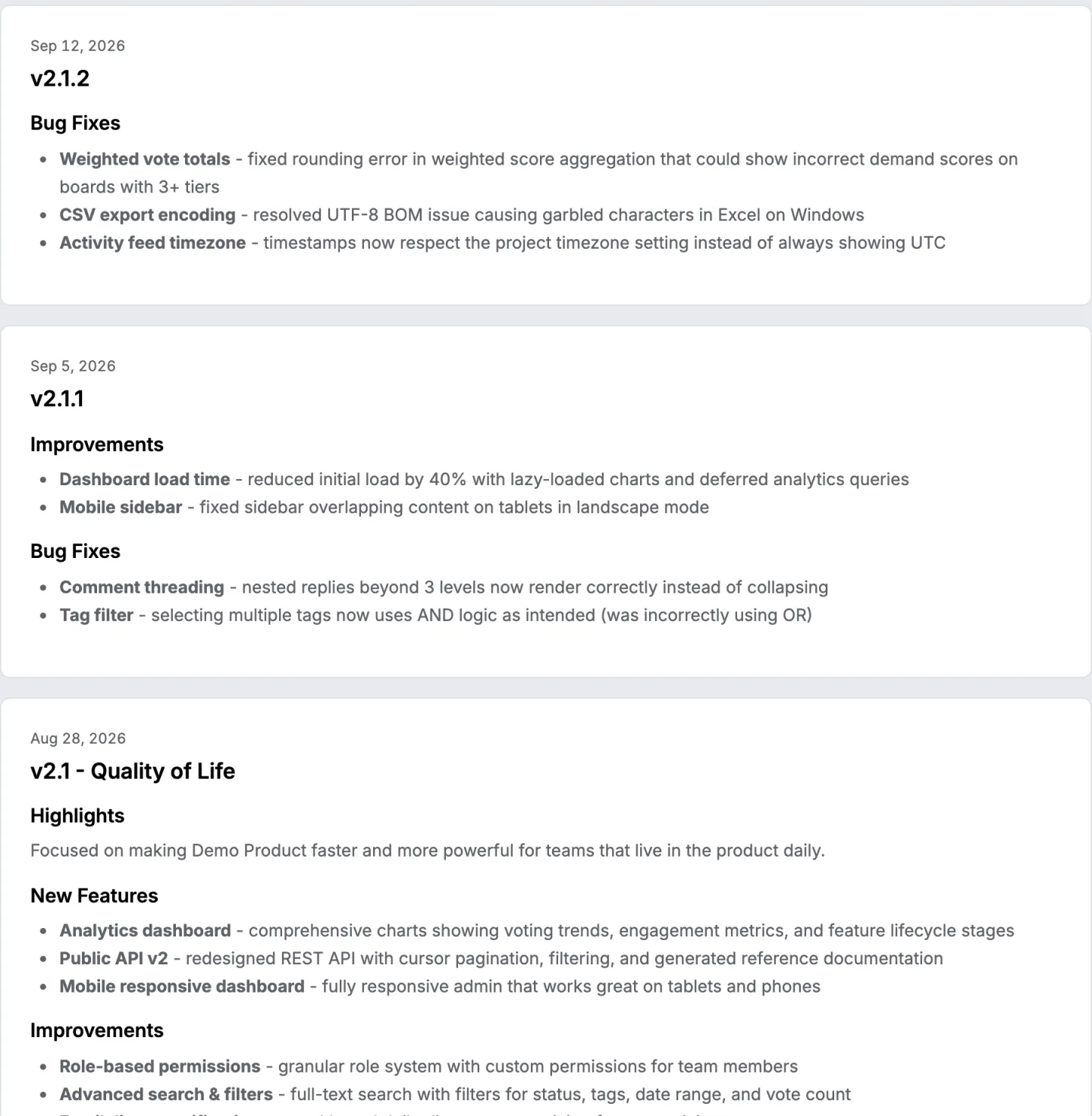
The changelog is the same board from the other end. A card that reaches Completed is what a release note is made of.
The part worth understanding is who receives the email. It goes to signed in voters whose own vote is in that release, and to nobody further. There is no subscriber list.
Every public changelog does answer an Atom feed at its own address, added on 14 September 2026, which is in the code and reaches this demo board when the next release goes out.
The absence of a subscriber list is a limit, and it is deliberate. It is also the thing most likely to make this the wrong product for you, so it is better found now than in month three.
What the demo does not show you
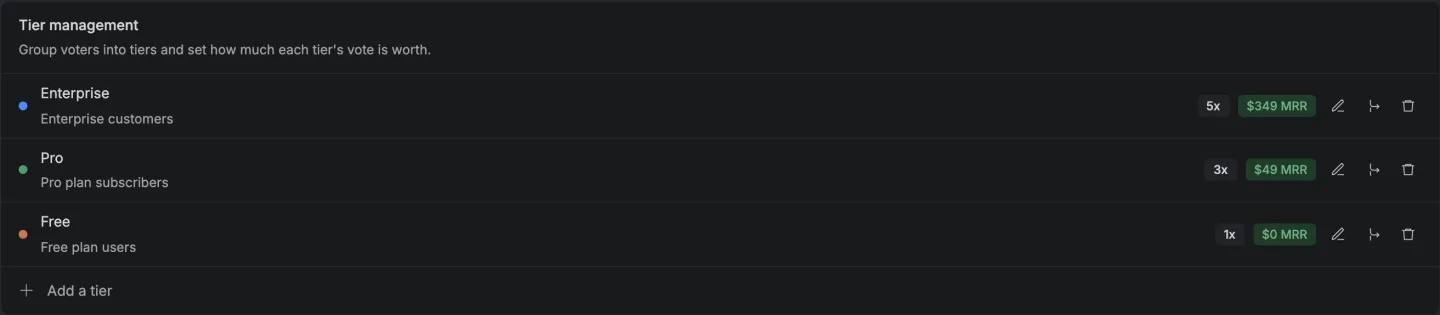
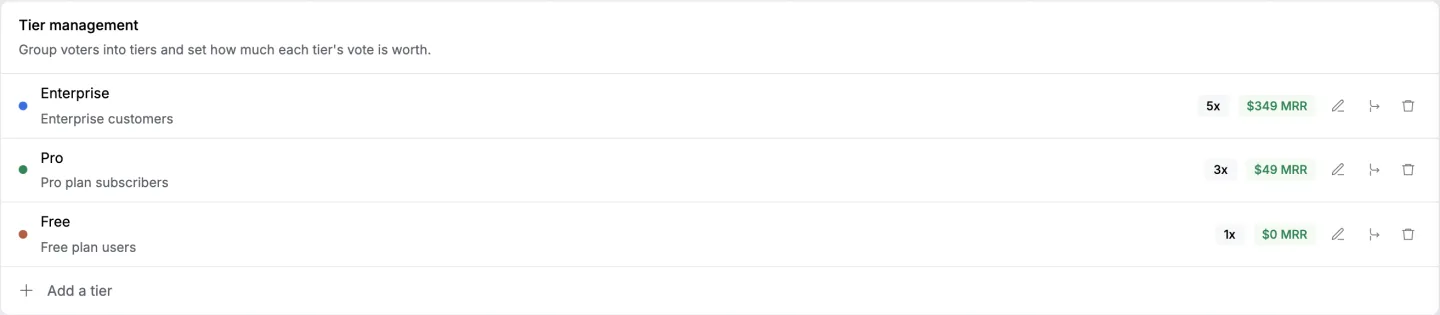
The owner side of weighted voting. Setting up tiers, assigning voters and reading the weighted total beside the plain one all happen in the dashboard, and the demo is the public board. Your visitors never see a multiplier, a tier or a revenue figure anywhere.
The dashboard, the review queue and the tier setup are behind the trial rather than the demo.
14 days, a card at signup, then $9 or $39 a month.
After the demo
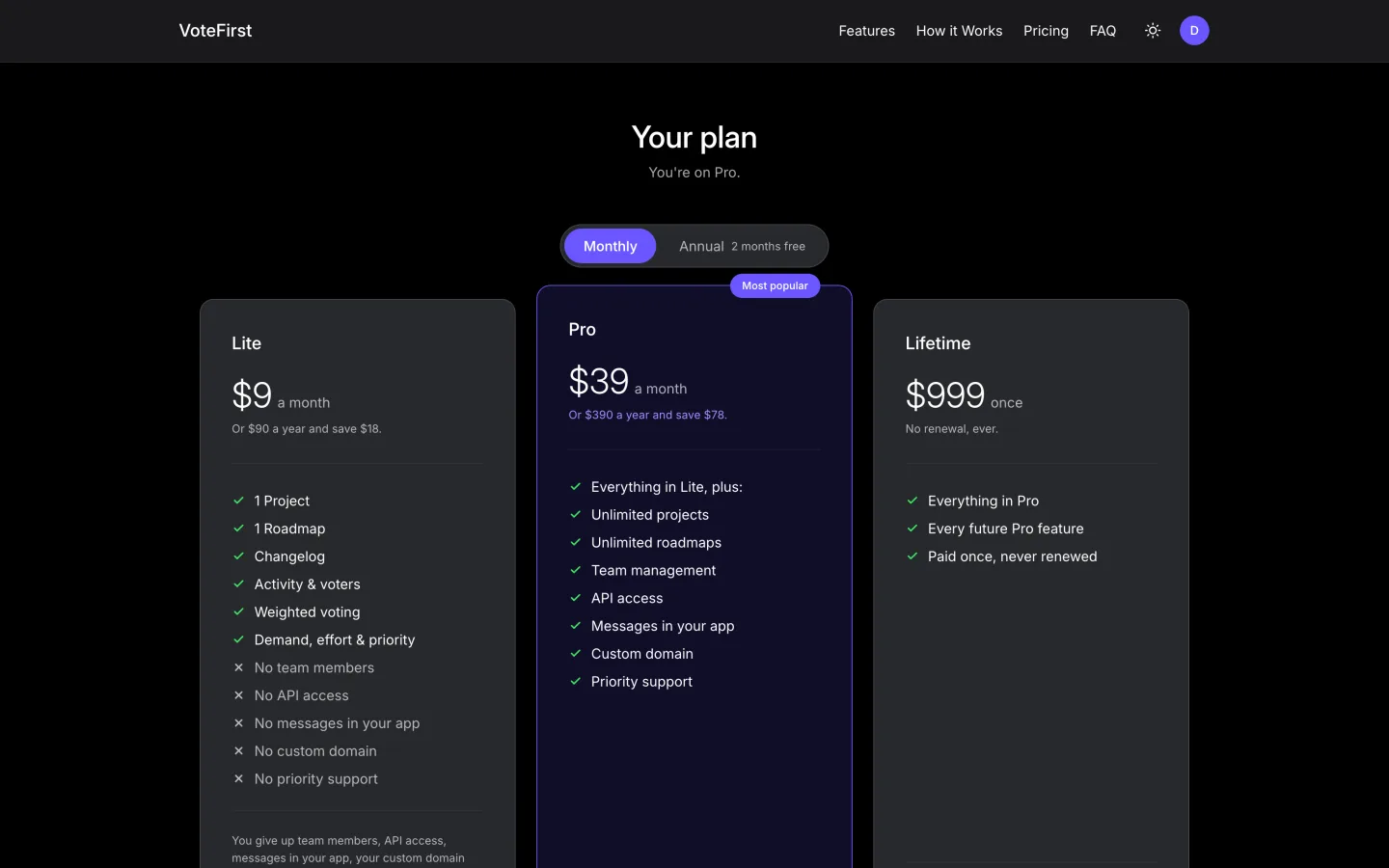
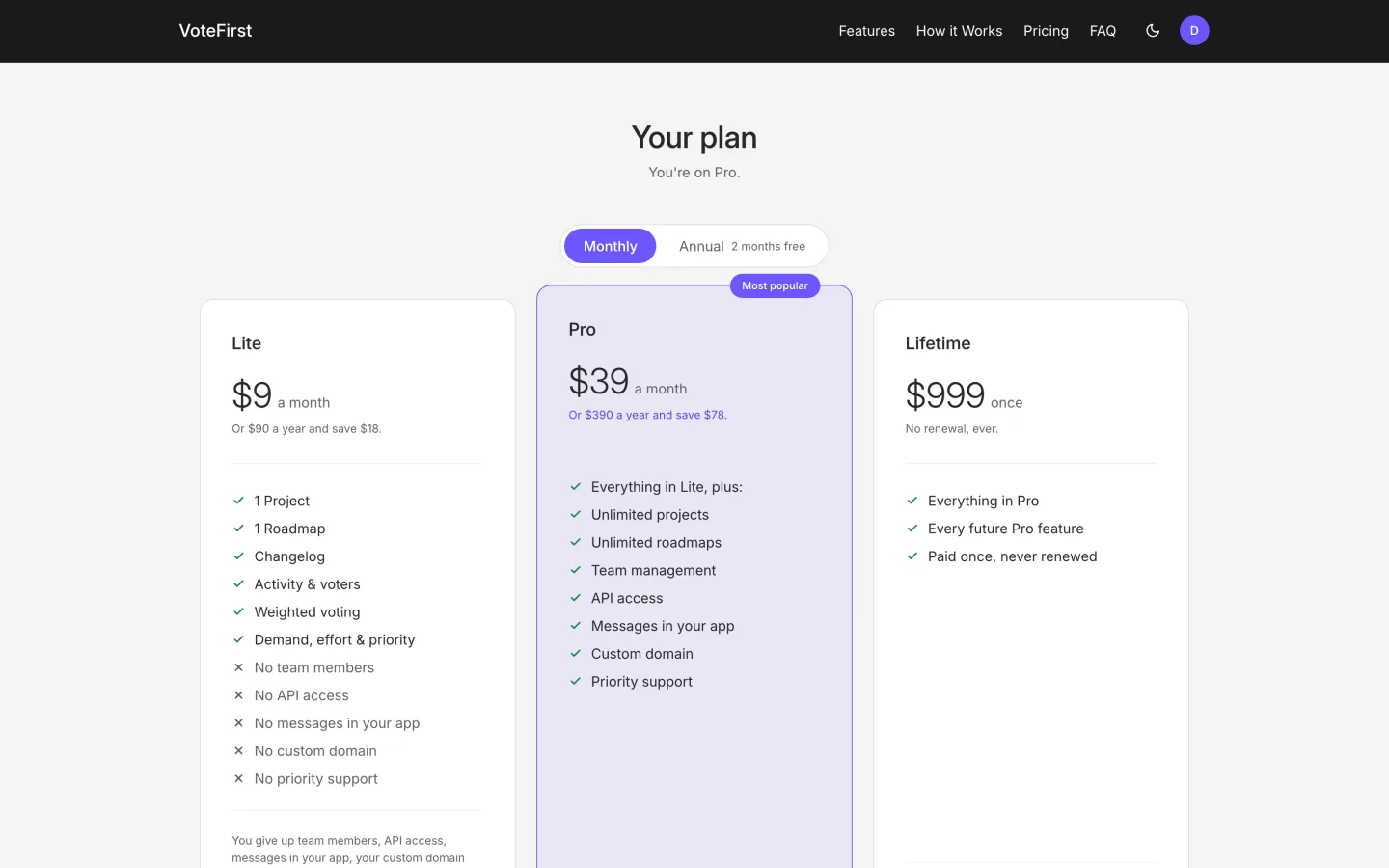
If the five things above were what you wanted, the trial is fourteen days on whichever plan you pick, and a card is required to start it. Nine dollars a month for one project, thirty nine for more, the API and a custom domain.
If one of them was a dealbreaker, that is a useful outcome and it cost you four minutes. The comparison pages say plainly which competitor is the better answer in which situation.