Churn rate is the share of customers you had at the start of a period who were gone by the end of it.
We are not going to spend a thousand words on that, because it is four lines of arithmetic and every metrics tool on the internet has already written it up. What is worth your time is the part almost nobody covers, which is what your feedback board knows about the people in that number.
What is churn rate?
Customers lost during a period, divided by customers at the start of it.
Start the month with two hundred customers, finish with a hundred and ninety after ten cancellations, and you churned five percent. Revenue churn is the same shape with money instead of headcount, and the two can point in opposite directions when the customers leaving are much larger or much smaller than average.
Two honest notes before the useful part. There is no correct churn rate, and anybody quoting you an industry average is quoting somebody who quoted somebody.
And the rate is a result. By the time it moves, everything that caused it already happened, several months ago, mostly in conversations you either had or did not have.
We do not calculate this number for you. Our product marks individual voters as having left, which is a different and in some ways more useful thing, and the rest of this page is about what that makes possible.
The demo board shows the same idea in use, open with no account.
Why does a feedback board care about churn?
Because the metric holds the result and the board holds the reasons.
A churn number is a count of departures with the reasons stripped out. Your feedback board is the one place in the company where people wrote down, in their own words, what they wanted and could not have.
Those two datasets are usually in different tools owned by different people, and joining them by hand is nobody's job.
The join is worth doing because it turns a lagging number into a list you can act on. Not a theory about why people leave. The actual requests, with the actual names, from the actual people who are no longer paying.
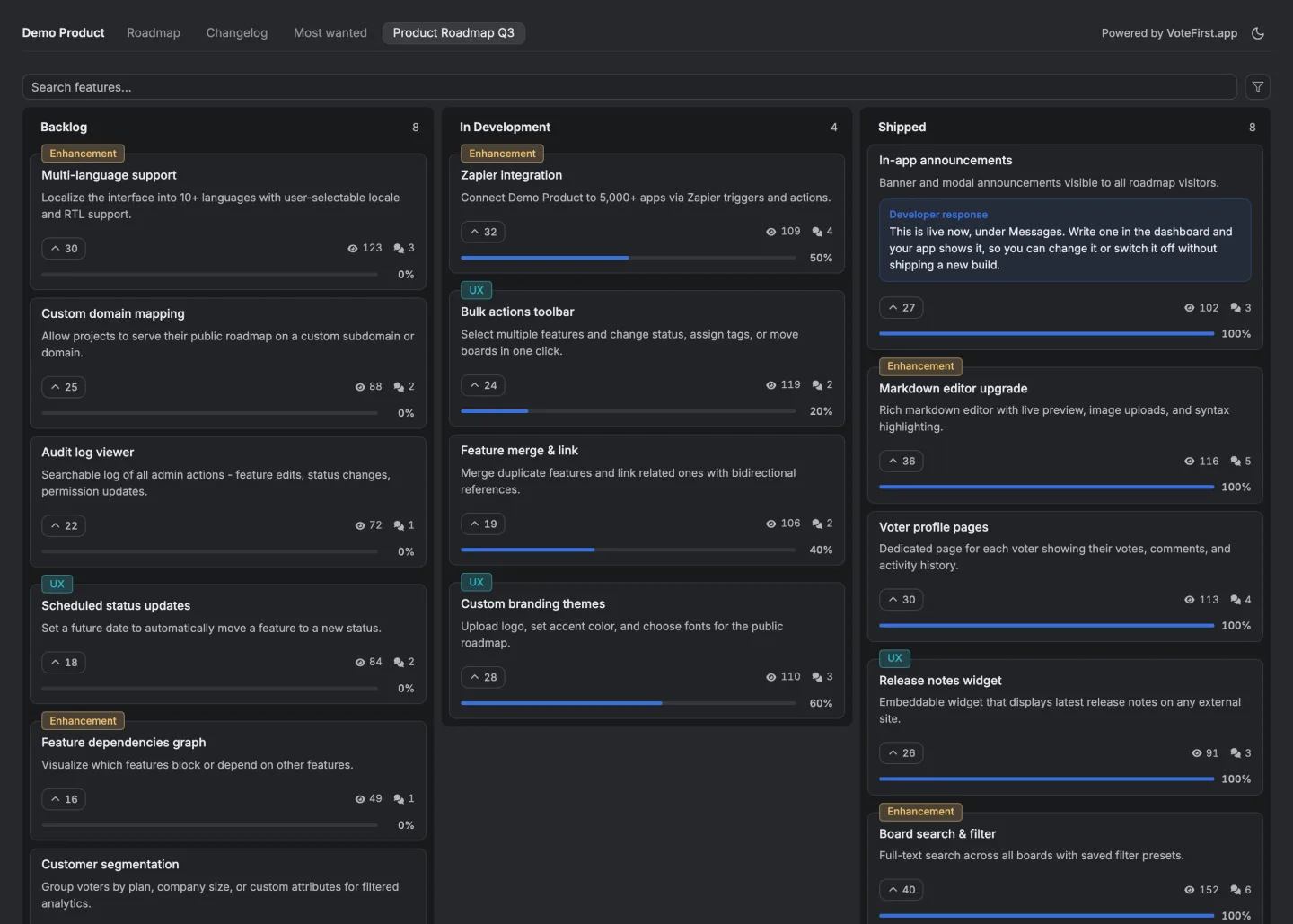
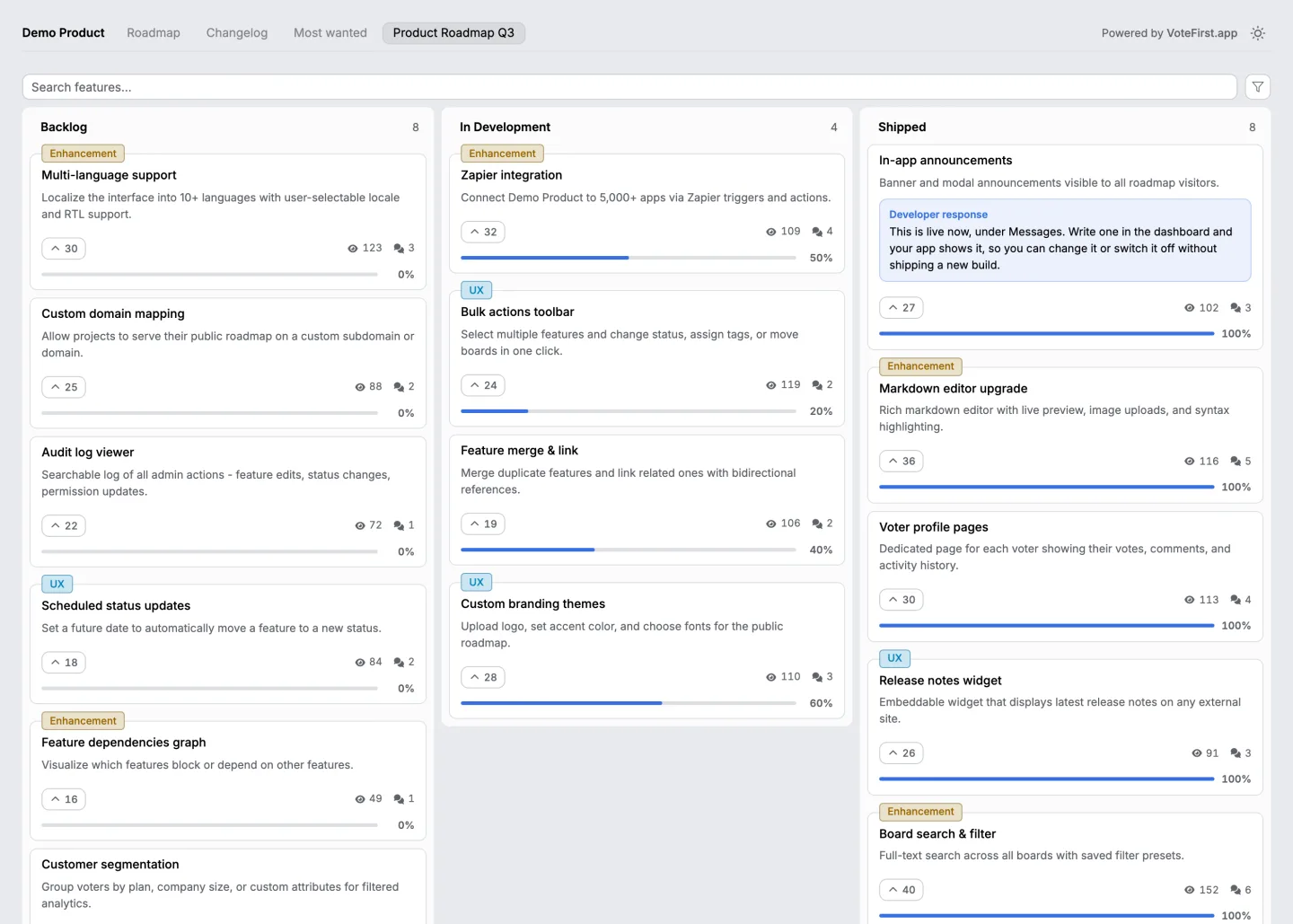
Can you see which requests came from customers who left?
Yes, and this is the part worth the page.
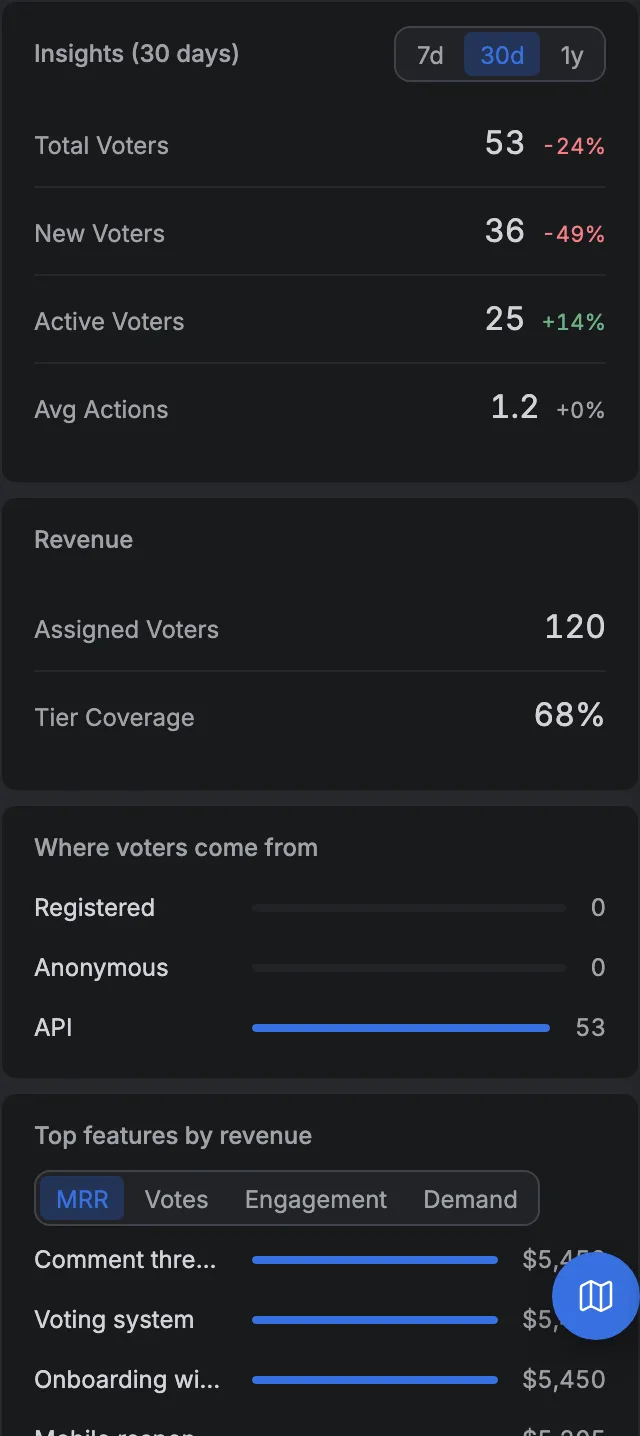
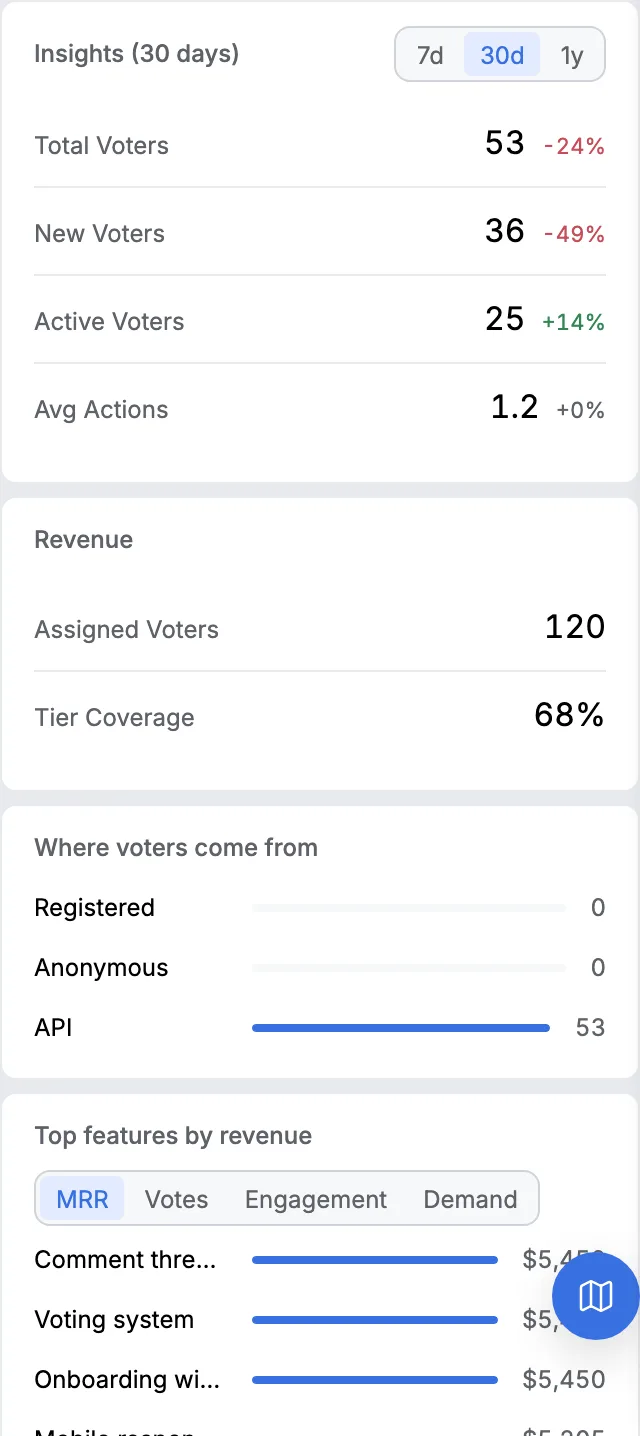
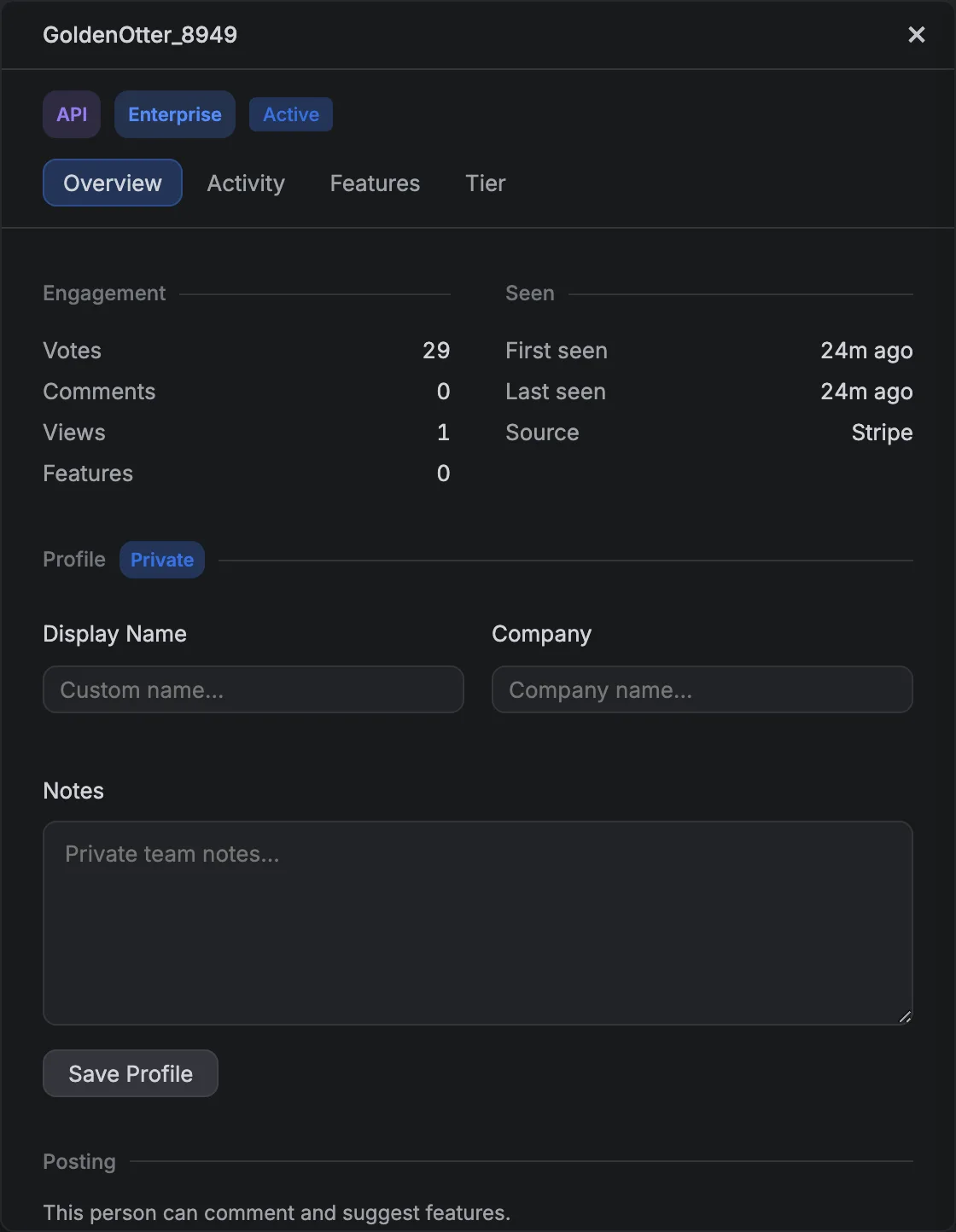
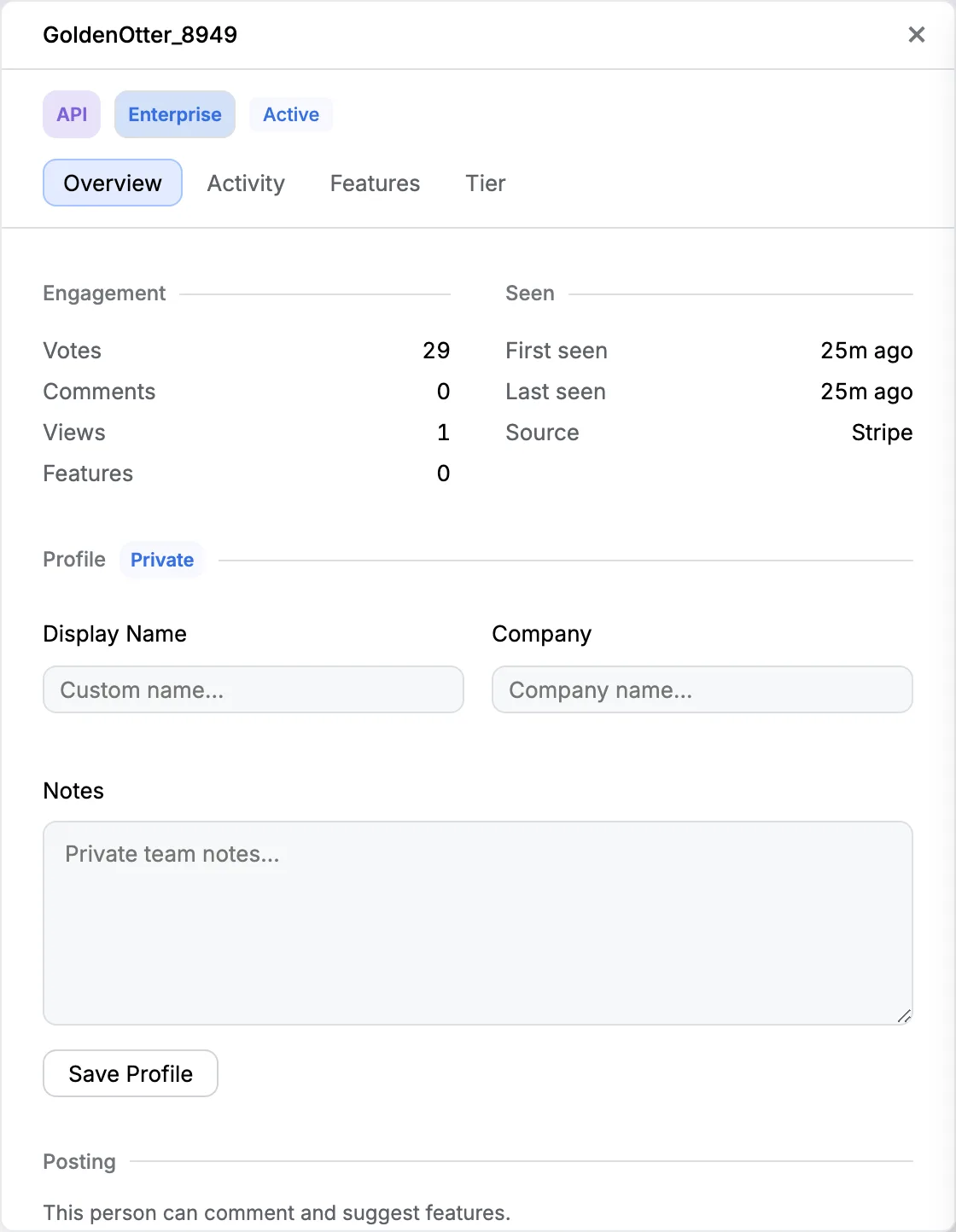
Every voter on our boards can carry a churn mark, and the revenue API lets you filter voters by it. Combine that filter with a feature and you get the answer to a specific question. Of the people who asked for this, how many have already gone.
There is also a per feature summary that carries a churned voter count beside the vote count, the weighted total and the money behind it.
So a request can be read four ways at once, being how many asked, what they are worth, how much revenue is attached, and how many of them are no longer customers.
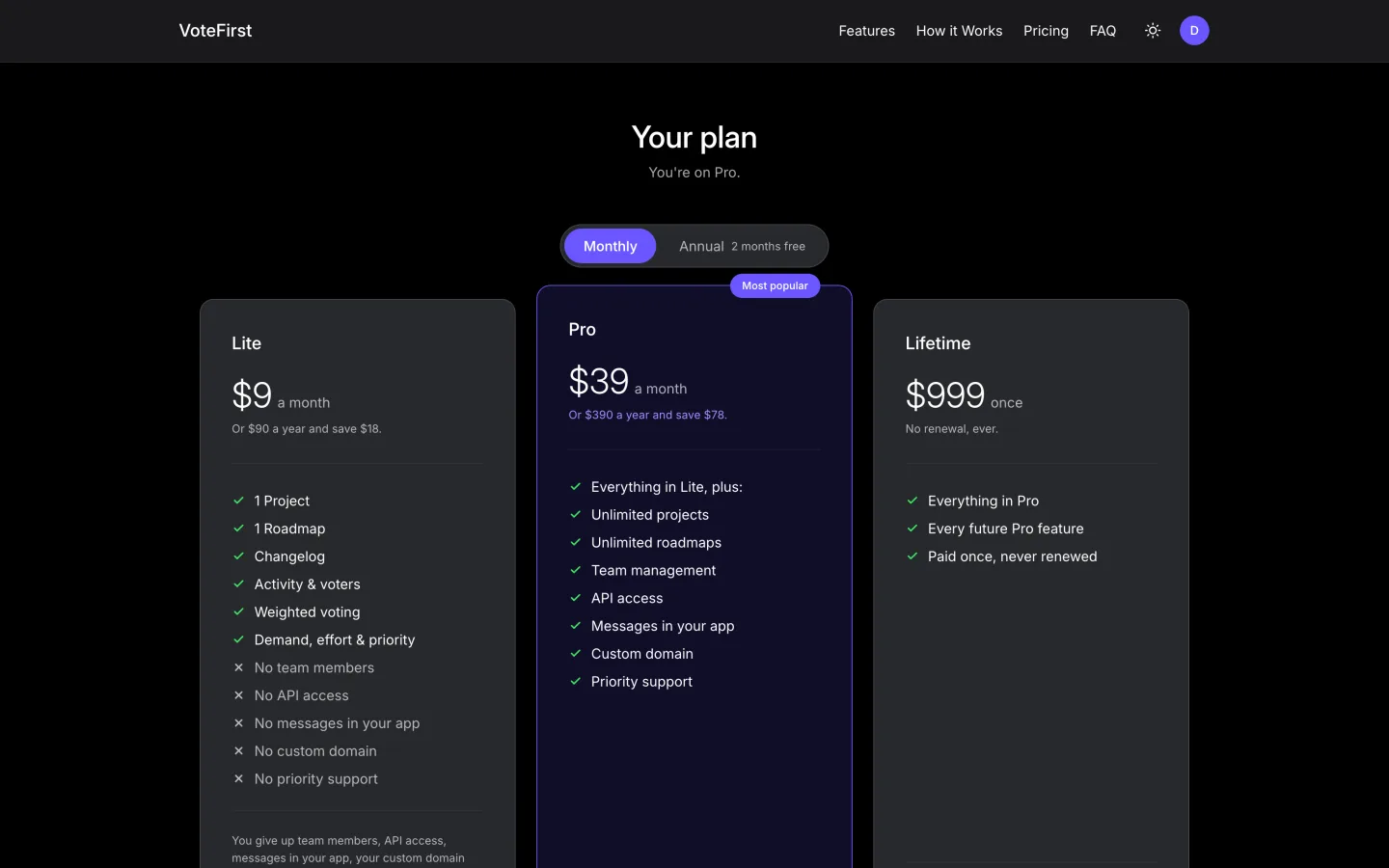
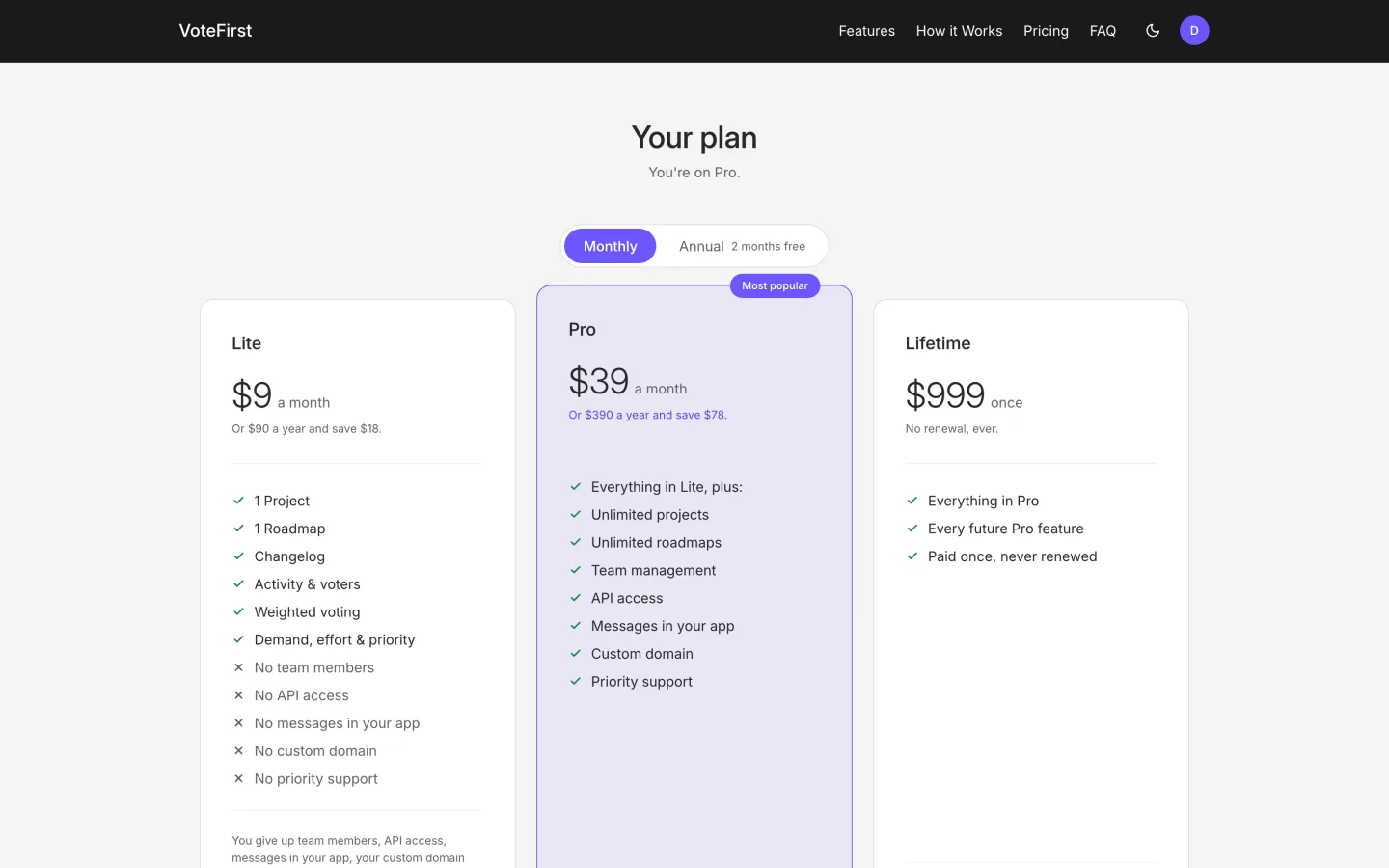
Two limits, in the same breath as the capability. This lives on the thirty nine dollar plan rather than the nine dollar one, because it is the only money data in our API and it is gated accordingly.
And it refuses the published embed key outright, so it cannot be read by anything you have shipped into a browser.
How does the board know somebody left?
From your billing system, or from you.
When a subscription is cancelled, the webhook marks that voter as churned and records what marked them. When an active subscription arrives for the same person, the mark is cleared again, so somebody who leaves and comes back is not stuck in the wrong column.
A subscription being deleted outright marks them too. There is also a manual switch, and when you use it the record says the mark came from a person rather than from a system.
The honest limitation is the source. That automation exists for Stripe and for Paddle, and nothing else. Those are the two billing systems we connect to. If you invoice by hand, or bill through anything else, the mark is something you set yourself or something you do without.
The mark also has a date on it, which matters more than it sounds. A request supported by people who left eighteen months ago is a different object from one supported by people who left last month.
The reader this matters to runs a paid product and already has a churn figure. A team whose customers have not been paying long enough to leave has no reasons to read back yet, and the board is still worth keeping for the people who stayed.
Is all churn the same?
No, and the split that matters is whether they meant to go.
Voluntary churn is somebody cancelling. Involuntary churn is a card expiring, a payment failing or a bank refusing, and the customer often does not know it happened until they try to sign in. A product change addresses only the first of those.
Our own mark does not tell you which one you are looking at. It records that a subscription was cancelled or deleted and which system said so, being stripe, paddle or a person, and never the reason behind it.
So a board full of churned voters is worth reading beside your billing system's own failed payment report rather than instead of it.
What does that change about what you build?
It splits your board into two kinds of evidence that used to look identical.
A request whose supporters have mostly cancelled is an autopsy. It is still worth reading, because it may be part of why they went, but it is not demand. Building it wins back nobody automatically, and the votes on it are a record of a market you already lost rather than one waiting for you.
A request whose supporters are all still paying is the opposite. It is a retention argument with names and invoice amounts attached, and it is the strongest case you will ever be able to make internally for building something. Weight those votes by what each person pays and the case gets sharper again.
The trap in the middle is the request with many votes, most of them from people who have gone. Without the churn mark it looks like your most wanted feature. That is the same failure that makes a loud handful look like a market, with time added to it.
Our board is nine dollars a month, the revenue and churn data is on the thirty nine dollar plan, and a card is required for the fourteen day trial.
The same fraction read from the other end is customer retention, and that entry is about the half of your board this one cannot see, being the people who asked for something and are still paying you.
14 days, a card at signup, then $9 or $39 a month.