Vocal minority bias is the moment a small group of loud customers stops looking like a small group and starts looking like your market.
It is a structural problem rather than a failure of attention. The people who write in are, almost by definition, not typical. They are the ones with the strongest opinions, the most spare time, or the worst week.
Read enough of them in a row and the pattern in front of you starts to feel like consensus, because it is the only pattern you can see.
What is vocal minority bias?
It is mistaking the loudest customers for the most customers. It is the specific case of a more general problem, which is that every number built from customer feedback is a sample of the people who chose to speak.
Every source of feedback is a self selecting sample. A support inbox, a forum, a feedback board, a founder's direct messages. Nobody who is quietly happy fills anything in, so the record you end up reading is a record of people who chose to speak, weighted by how much they wanted to.
That would be manageable if the sample stayed obviously small. What makes it a bias rather than an inconvenience is that intensity and volume look the same once they are written down. Ten messages from one person and ten messages from ten people fill the same amount of screen.
The product this site is about does this part on a board, and the demo is open without an account.
Why does a feedback board make it worse?
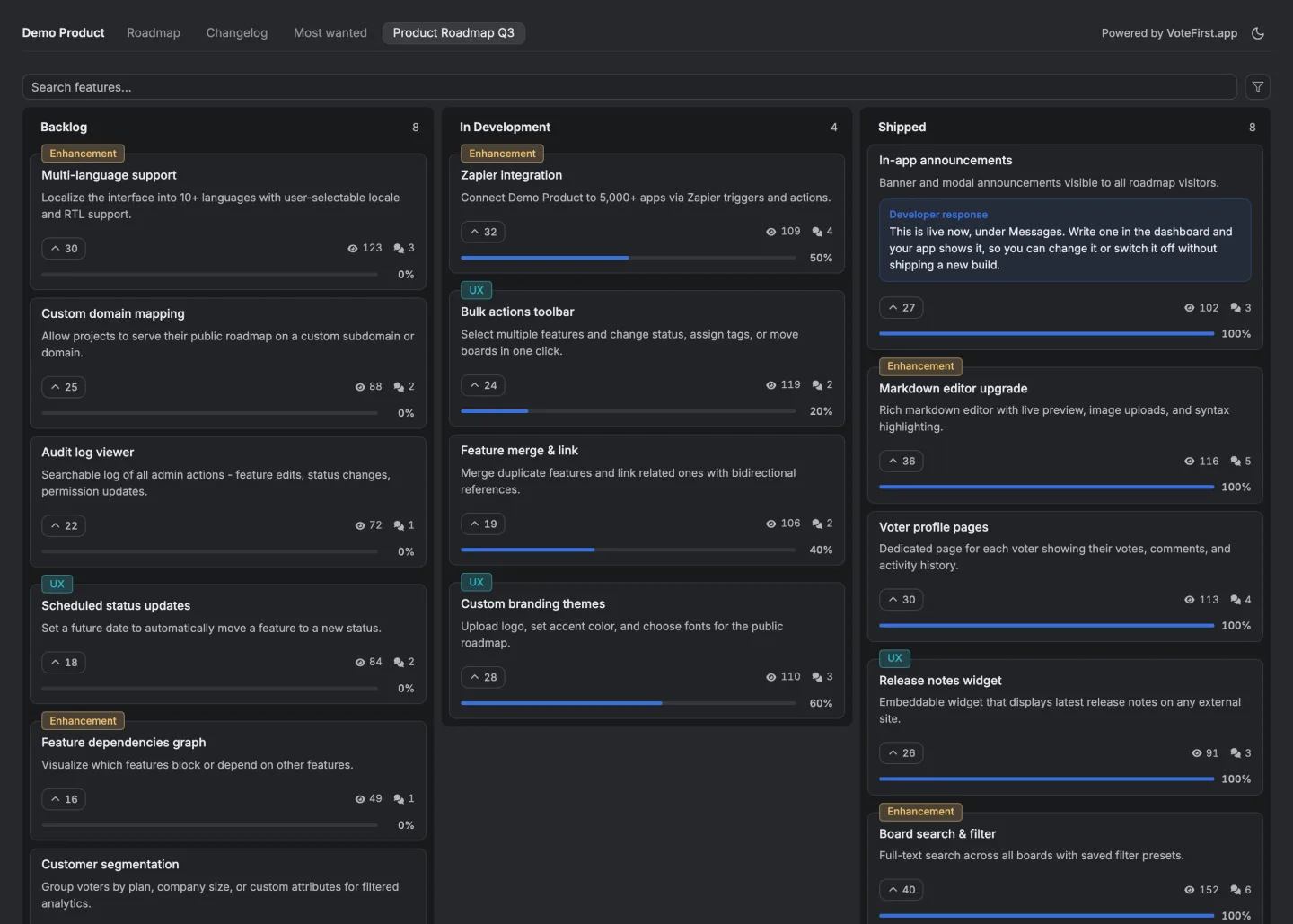
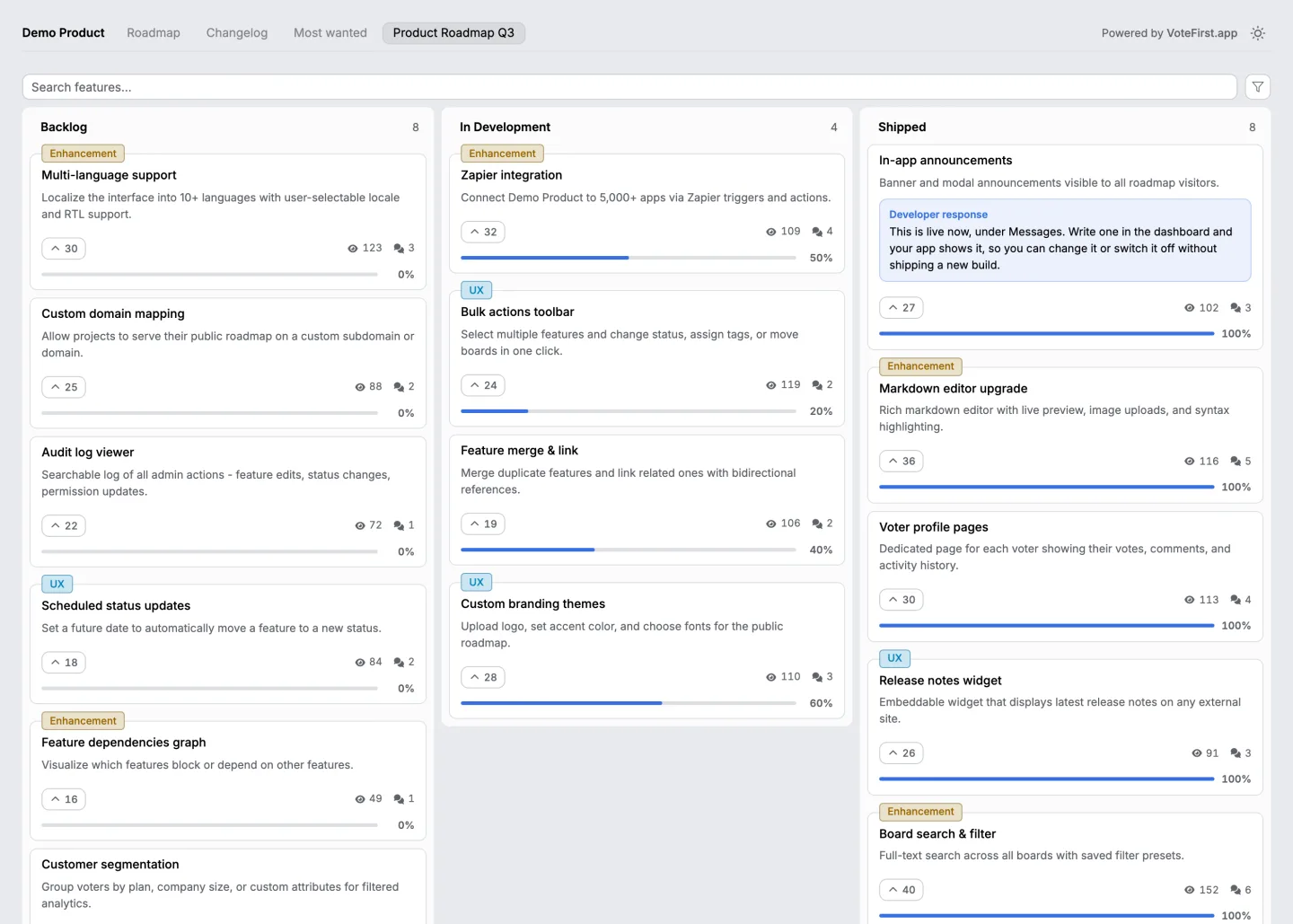
Because a board turns intensity into a number, and a number looks like evidence.
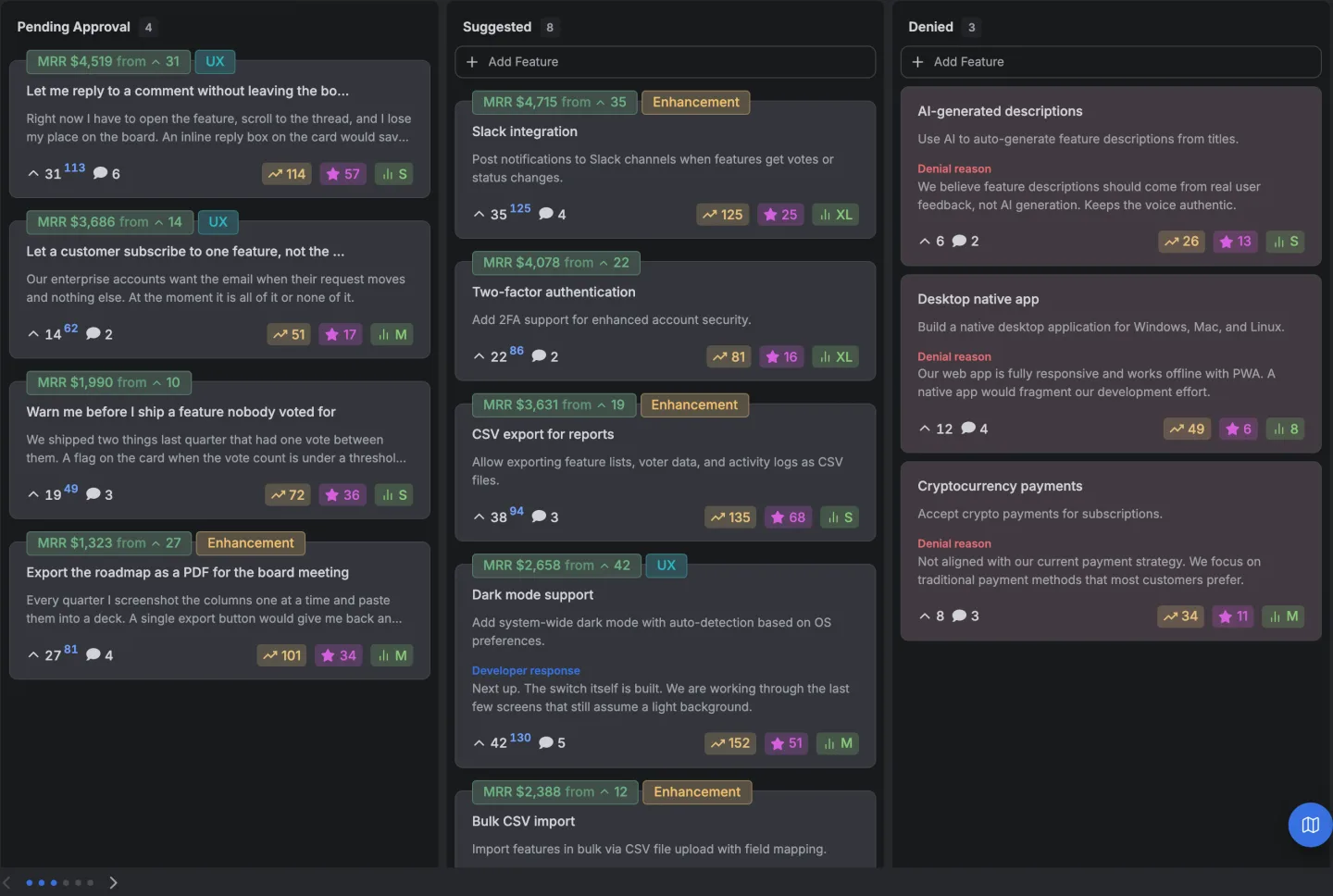
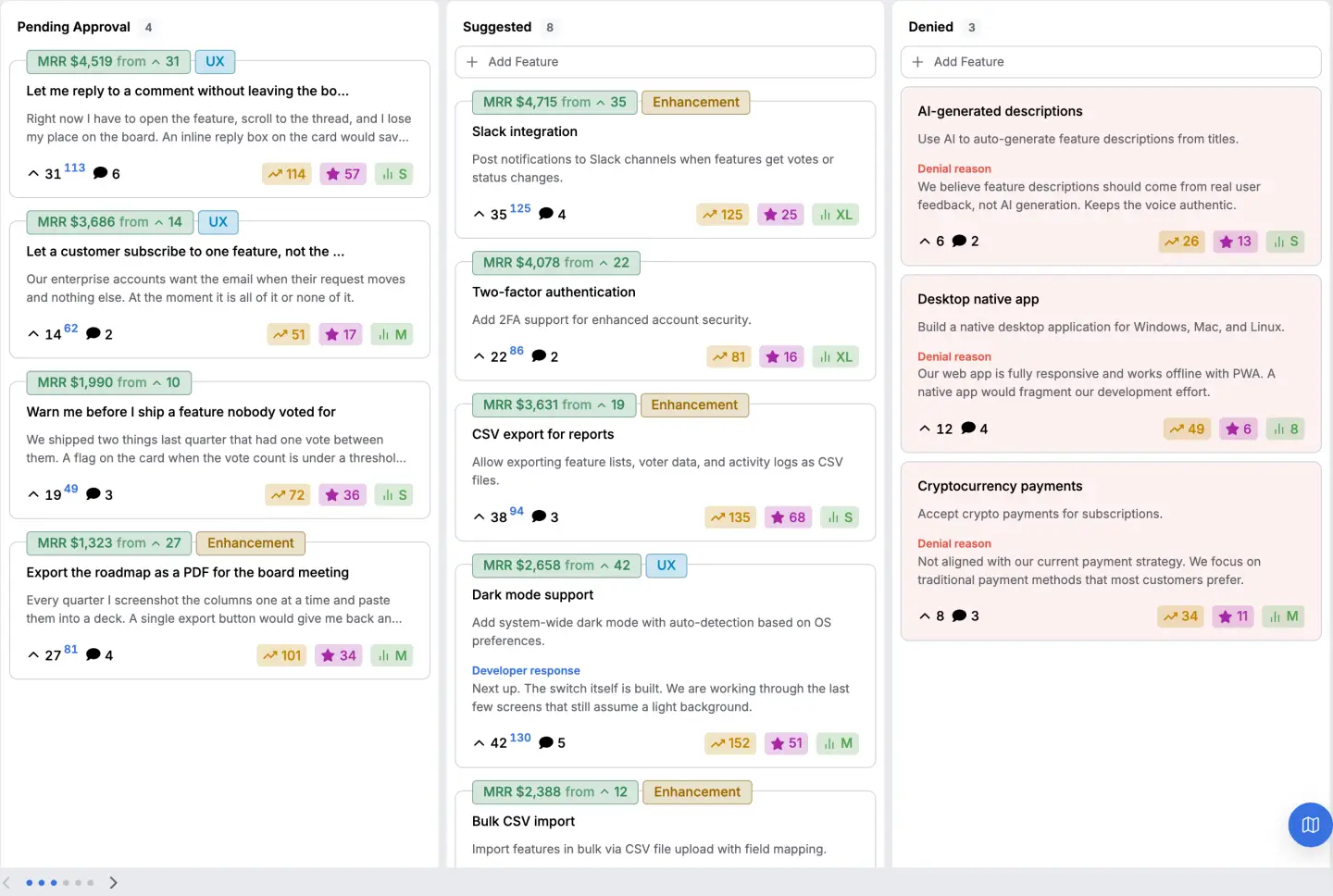
An inbox at least feels anecdotal. A board gives you a sorted list with counts beside every row, and a sorted list is very hard to argue with in a planning meeting.
The trouble is that the sort is a popularity contest among people who chose to enter it, which is not the same thing as a measure of demand.
So a board can make the bias worse by making it look rigorous. This is worth saying out loud on a page published by a company that sells one. The list is only as honest as what the count actually counts.
Two structural fixes come before any clever weighting, and any board worth using should already do both.
The first is that a person can vote on a thing once. On ours that is not a rule in a document, it is a unique index across the voter and the feature in the database, so a second vote from the same person on the same request cannot exist.
One customer asking ten times is one vote, and the tenth message is intensity rather than demand.
The second is that the number of distinct people is always visible. A count that quietly folds several signals from one account into a bigger number is the bias with a spreadsheet in front of it.
How do you actually correct for it?
By deciding, in the open, that some voices count for more, and by writing down how much more.
Most advice about this problem stops one step short. Segment your feedback, it says. Do not treat every user the same. That is correct and it is unactionable, because segmenting a list you cannot re sort changes nothing on the screen you actually look at.
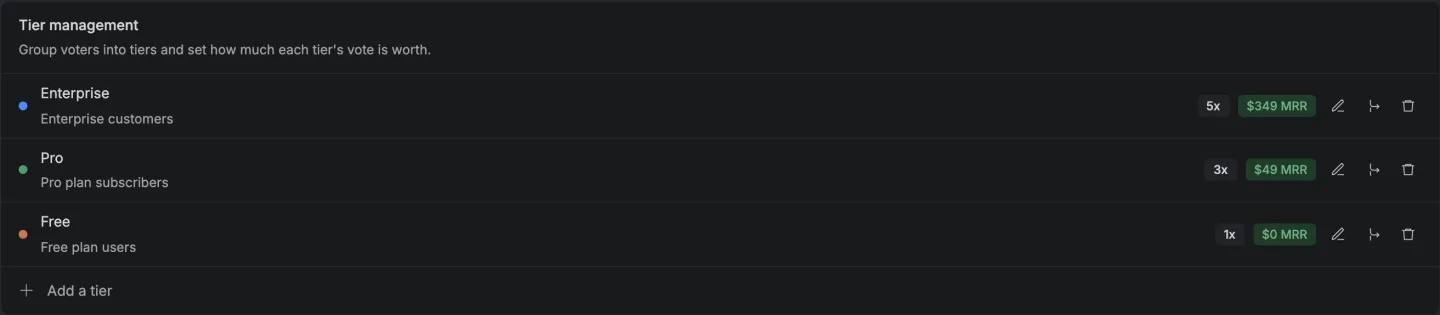
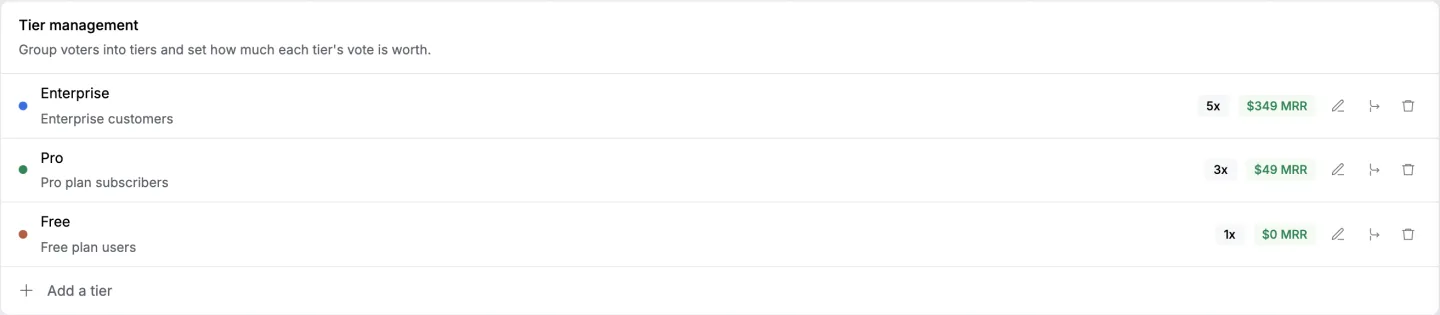
The mechanism underneath it is simple arithmetic. Put each voter in a tier. Give each tier a small whole number multiplier.
Store the multiplier on the vote at the moment it is cast, then keep two totals for every request rather than one. The plain count is how many people. The weighted total is how much they are worth by the policy you wrote.
On ours the multiplier is an integer of at least one, refused above one hundred, and the tier a customer lands in can be worked out from what they actually pay rather than typed in one at a time.
An import reads their active subscriptions, divides an annual price by twelve and a quarterly one by three, and puts them in a band you wrote, so a tier boundary means the same thing for every customer.
One thing to know about that import, because it catches people out. It files the tier against the customer's email address, and a vote is weighted through the identity that cast it, so the import sets up the money picture and the assignment is what reaches a vote.
The important part is the pair of totals rather than the weighting. Both numbers sit on the same card and the gap between them is the finding.
A request with a high weighted total and a low headcount is one big customer. A request with a high headcount and a modest weighted total is a crowd of small ones. Before the second number existed, those two looked identical.
Does weighting silence the loud ones?
No, and this is the part that decides whether the correction is fair.
A voter who is not matched to any tier gets a weight of one. Not zero.
That is the fallback everywhere in our code, including when we cannot match their email, when the tier lookup fails, and when weighting is switched off entirely, in which case every existing vote is reset to one and the plain count and the weighted total become the same number again.
So nobody is muted. The loud free user still counts exactly as much as they did before, which is one. What changes is that the quiet paying customer who voted once and never came back stops being invisible next to them.
That is amplification of the silent majority rather than suppression of the noisy few, and the difference matters, because the loud minority is often right. They are usually the people who found the bug first.
The honest caveat belongs here rather than in a footnote. The multiplier is a policy you write, not a fact about your business. Set your top tier to forty because that account pays forty times your smallest one, and you have not modelled anything, you have handed one customer a veto.
Everything they want goes to the top, everything they do not care about sinks, and in a month the roadmap is theirs. Small integers do the work. Three or five lifts paying customers above the noise while still letting four mid tier customers outweigh one enterprise account, which is what a real contest looks like.
What does it look like on a real board?
Two numbers that disagree, and a decision that got easier.
Say a request shows six voters and a weighted total of fourteen. Six people asked, and by your own tiers they are worth fourteen. Another request shows eleven voters and a weighted total of thirteen. More people asked for the second one, and the first one carries more of your revenue.
Neither number decides for you. What they do is stop the two situations looking identical on the same screen, which is the exact confusion that makes a board slowly stop being trusted.
Put your own tiers and customers in and watch the two totals move apart, because the gap is much easier to see than to describe.
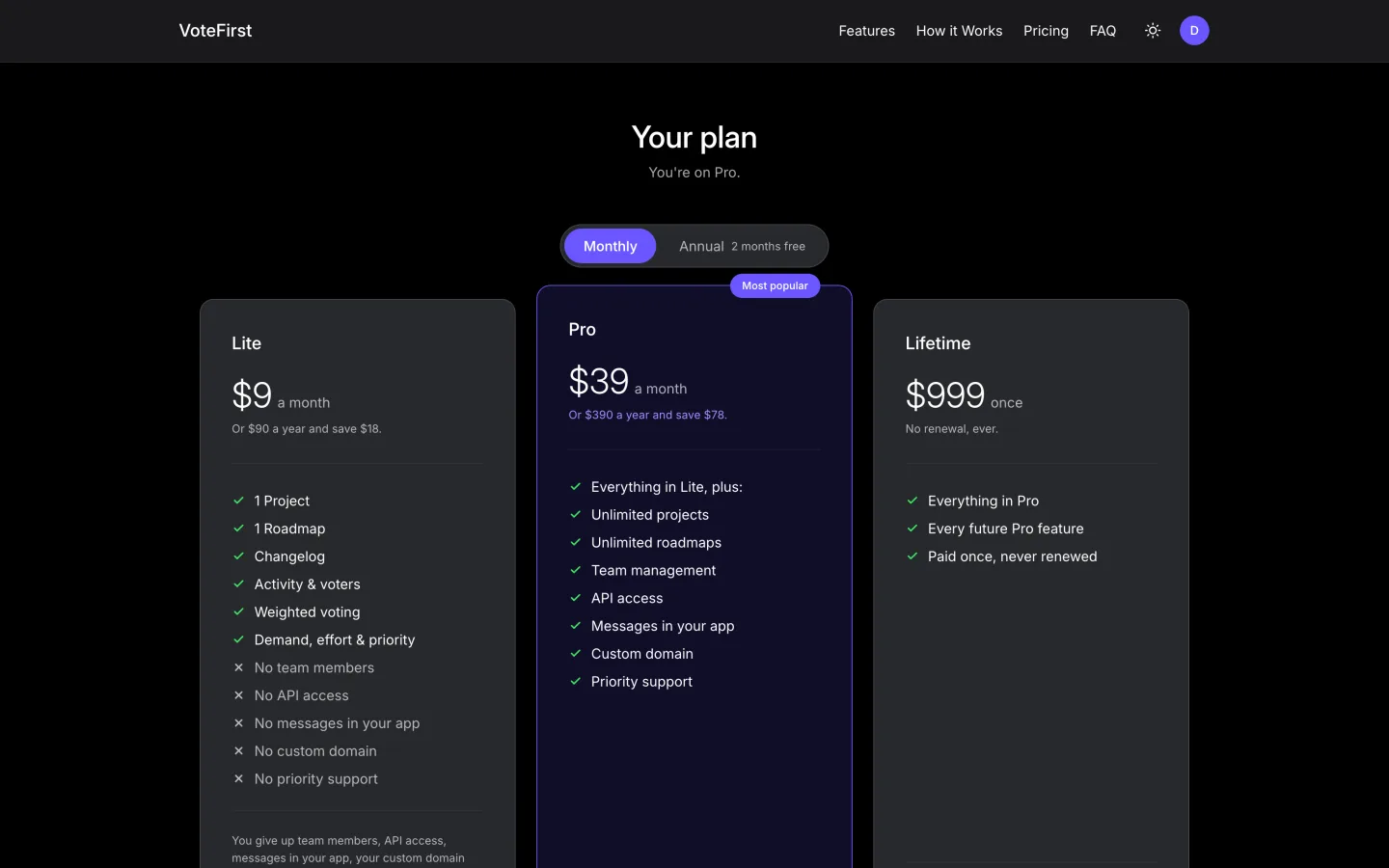
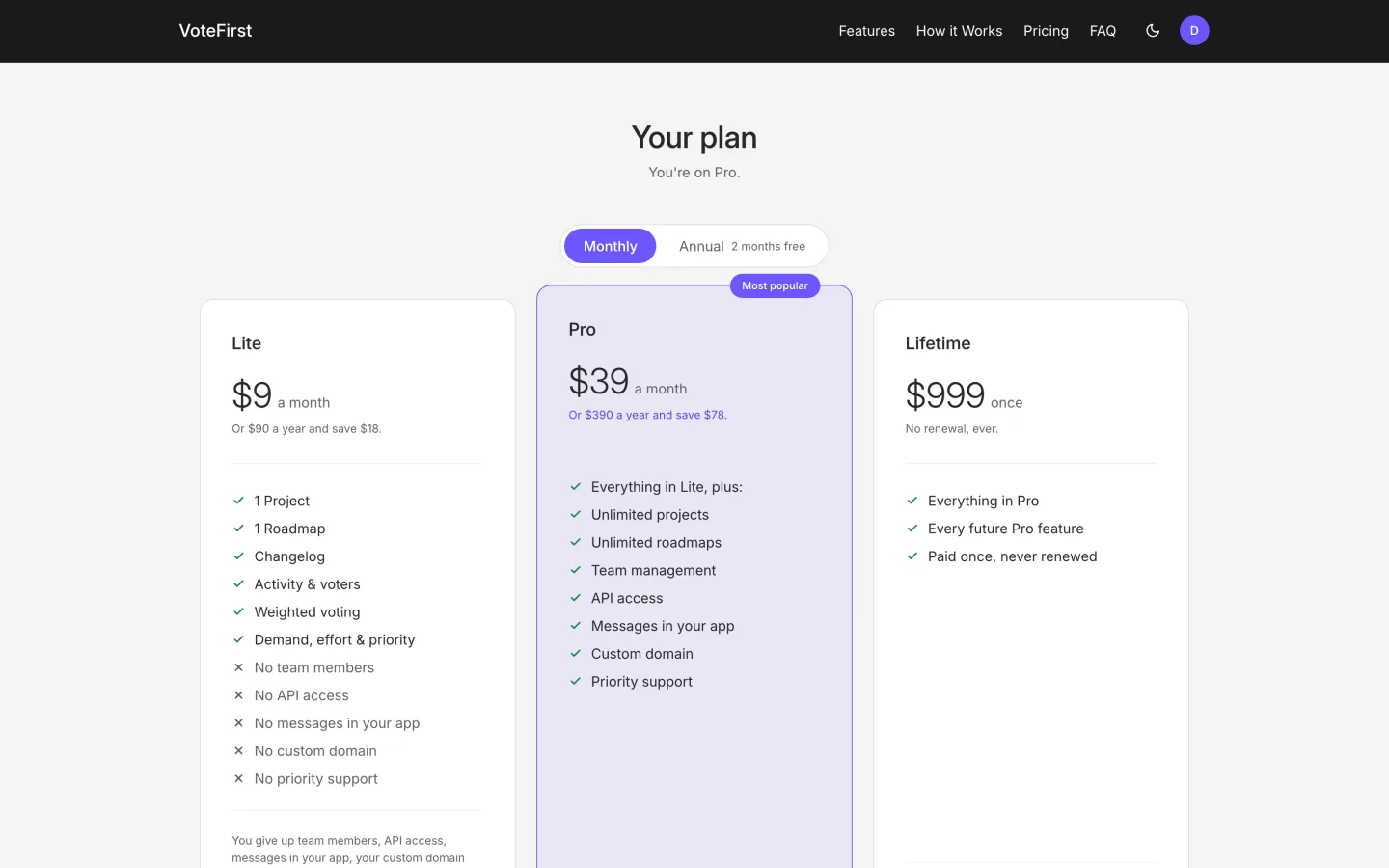
If you are still working out whether a voting board is the right instrument at all, that is a fair question and it is answered here. If it is, weighting is included on our nine dollar plan rather than sold as an upgrade, and a card is required for the fourteen day trial.
14 days, a card at signup, then $9 or $39 a month.