Customer feedback is anything the people who use or buy your product tell you about using it, whether you asked or not, from a bug report to a cancellation reason to a vote on a board.
It is easy to define and hard to read. The definition takes a sentence. Working out what a number built from it is actually telling you takes rather longer, and almost nobody does it.
Everything you collect is a sample. Not a survey sample with a method behind it, but the accidental kind, made of whoever happened to be there and happened to feel strongly enough to act.
The number on a card is a count of those people. It is not a count of the people who want the thing.
This page is about the gap between those two sentences, and about the mechanics underneath, because the mechanics decide the size of the gap.
What is customer feedback?
Customer feedback is anything the people who use your product tell you about it, solicited or not.
That covers a support ticket, a feature request, a churn reason, a review, a reply to a survey and a complaint on somebody else's website. The forms differ in how much work they cost the person giving them, and that cost is the single biggest thing shaping who you hear from.
A one press vote costs almost nothing, so you hear from a broad and shallow group. A written request costs a few minutes, so you hear from a narrower and more motivated one.
A scheduled call costs an hour, so you hear from almost nobody, and the almost nobody is disproportionately your largest customers and your angriest ones.
None of that is a flaw to fix. It is the shape of the instrument, and knowing the shape is what stops you reading the output wrong.
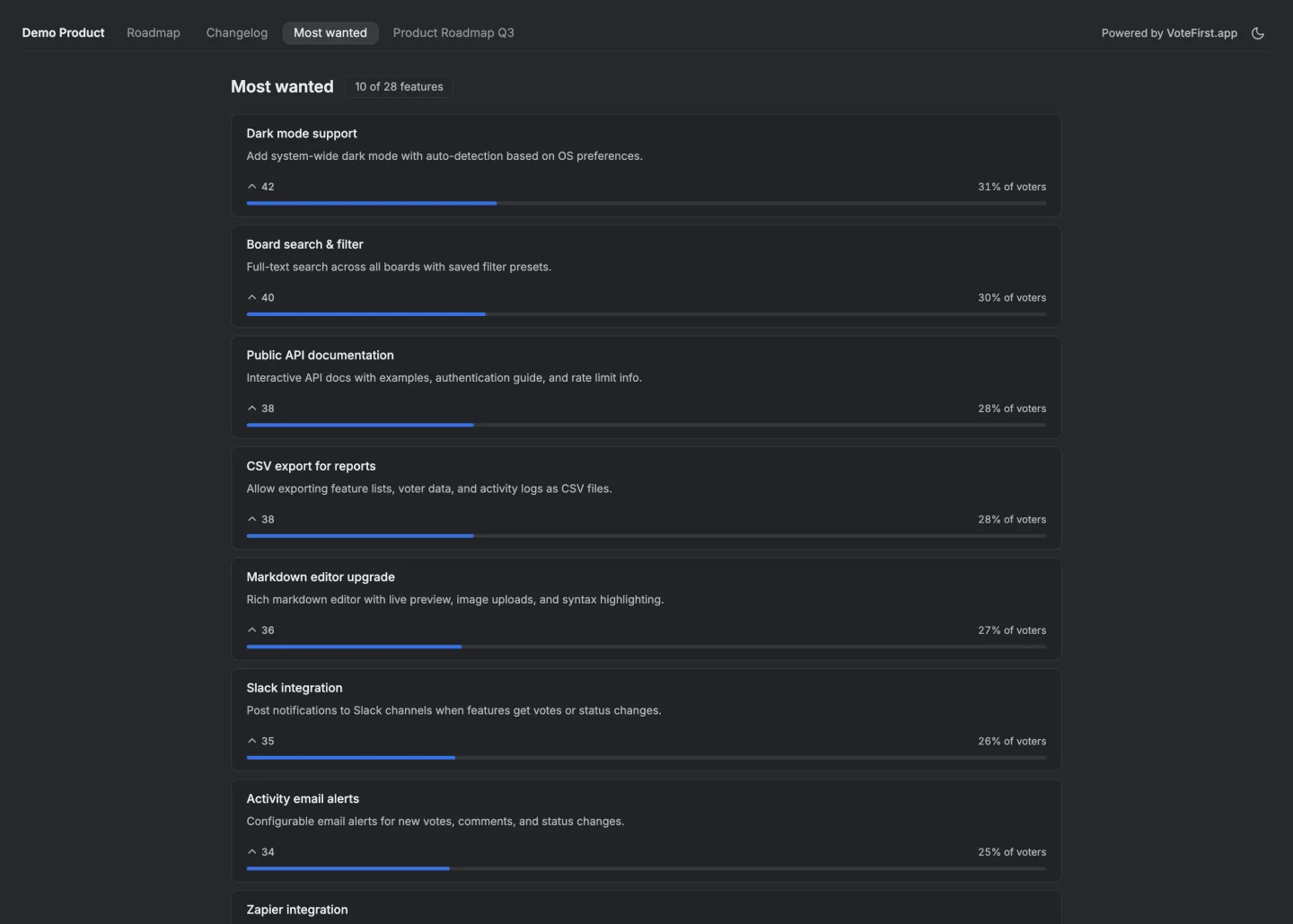
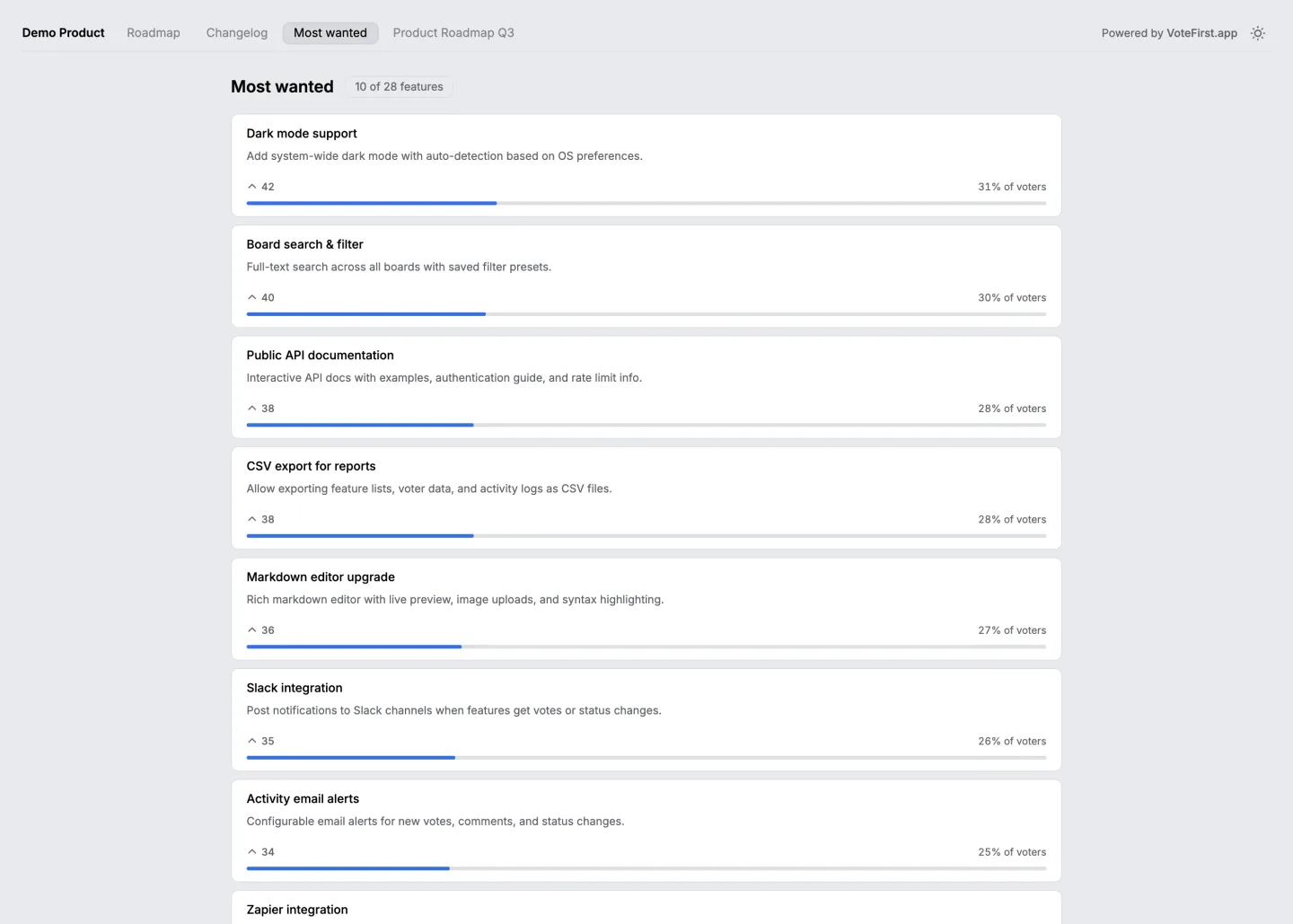
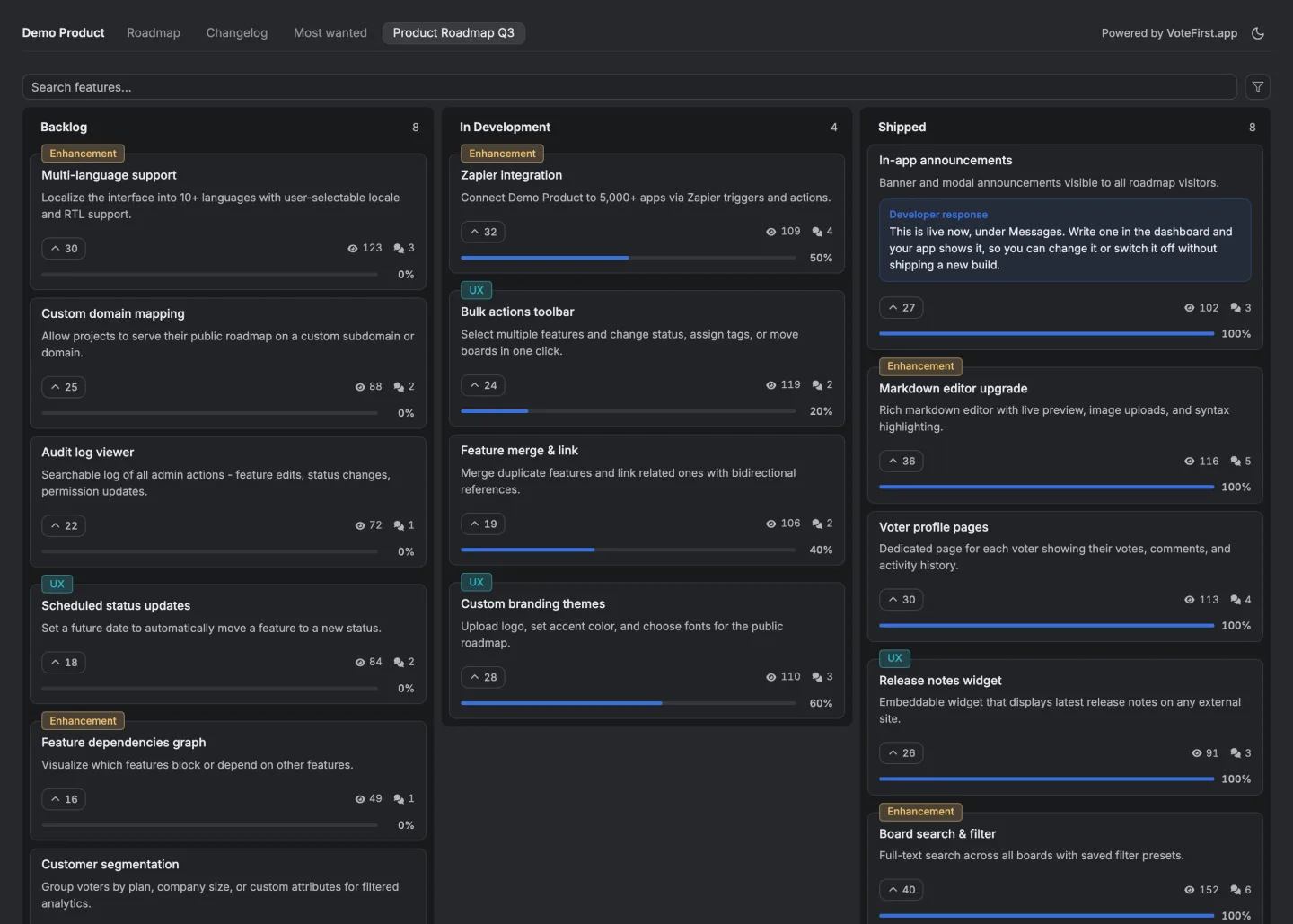
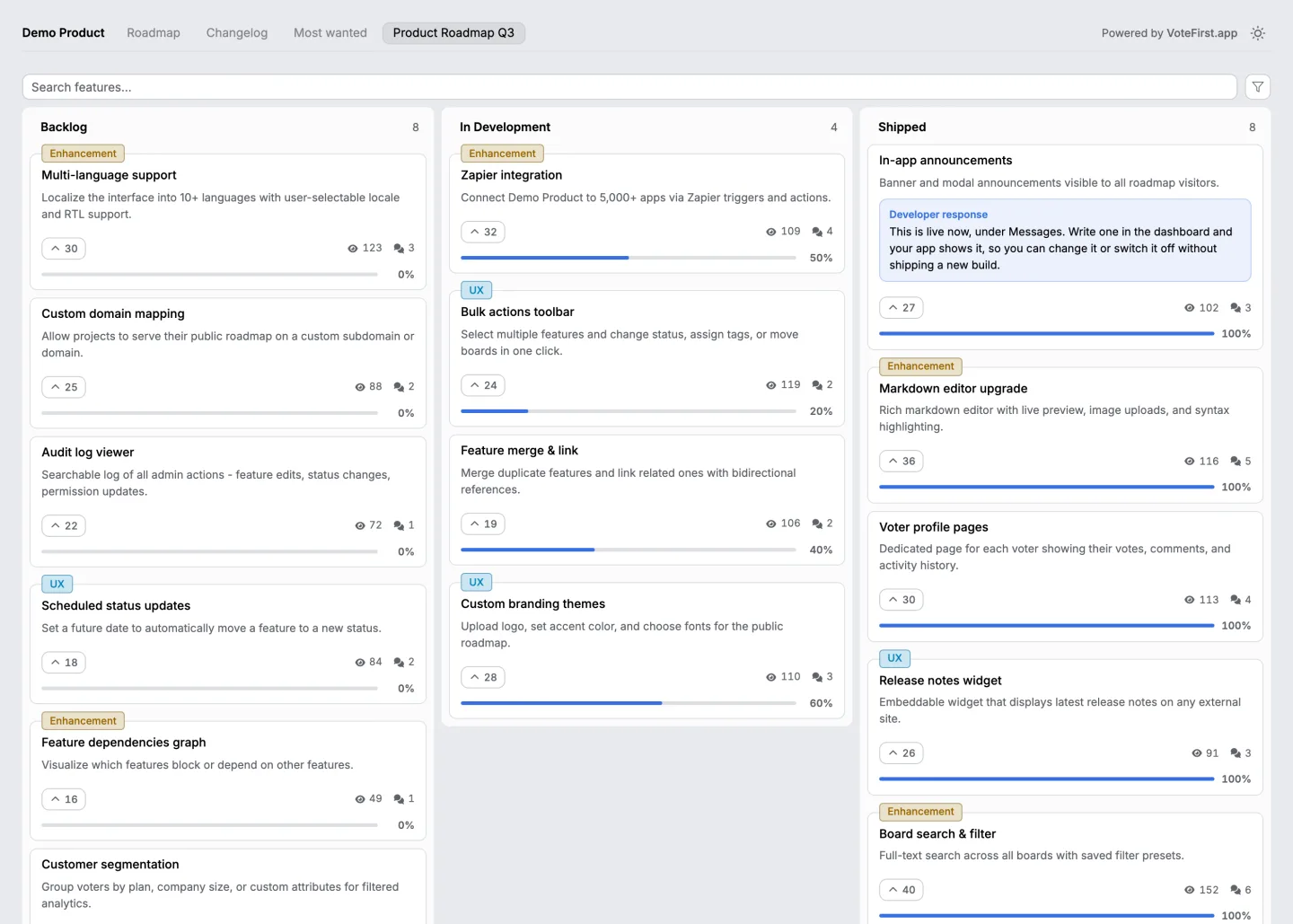
If the definition is easier to see than to read, the demo board is open with no account and no email.
Why is feedback always a sample?
Because giving feedback is voluntary, and the decision to give it is not random.
The people who write to you differ from the people who do not, in ways that correlate with exactly the thing you are trying to measure. They are more engaged, more technical, more invested and more annoyed.
A count of them is a real measurement of a real population. It is just not a measurement of your customers, it is a measurement of your customers who write.
That is the bias with a name, and the reason it is worth naming is that it is invisible in the output. A card with forty votes looks like a fact.
Nothing on it tells you the forty came from a population of two hundred people who were on the page that month, and nothing tells you the other nine thousand customers were never asked.
The fix is not a better instrument. There is no instrument that hears from people who do not speak. The fix is reading the number as what it is and putting something beside it that comes from a different source, which is usually money.
Who is actually in your sample?
On our board, one of three kinds of person, and it is worth knowing which because they behave differently.
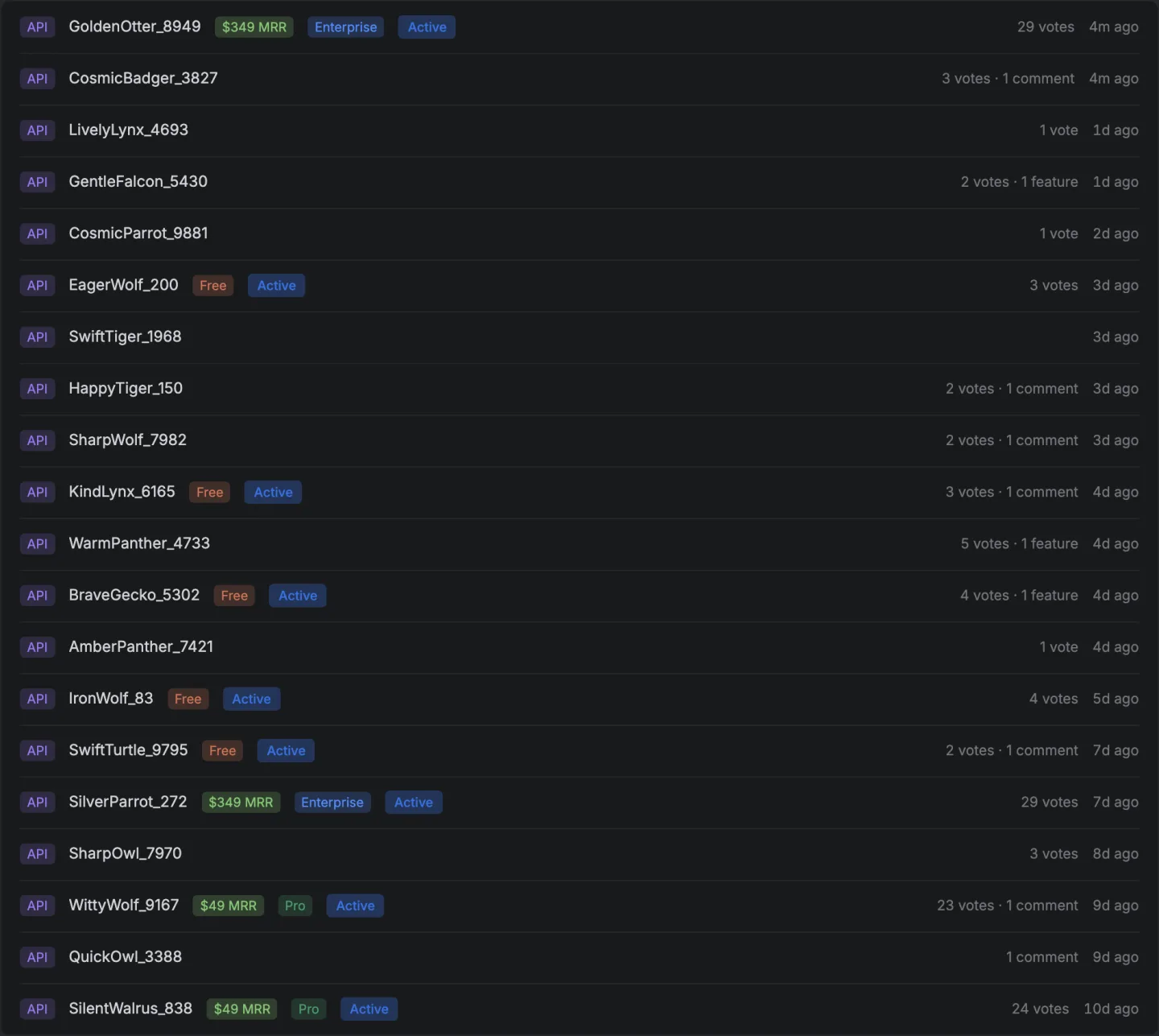
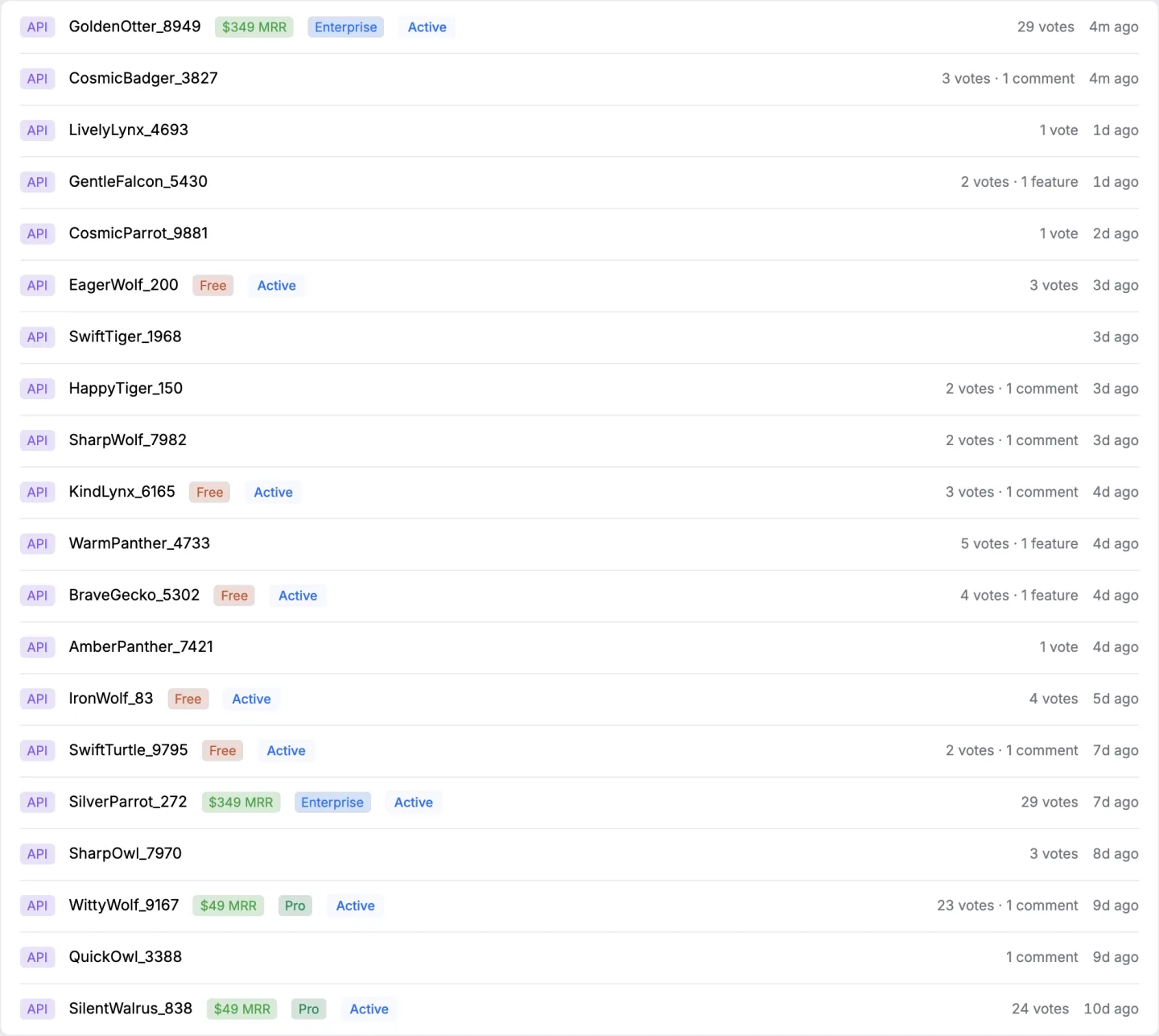
Somebody signed in to a VoteFirst account is identified by that account, and they are the same person on every device.
Somebody who is not signed in gets an anonymous identity from a cookie set on their browser the first time they land. It lasts a year, it holds sixteen random bytes and nothing about them, and it is the identity everything they do is attributed to.
Somebody with no cookie at all, because they blocked it or cleared it, is identified by their network address instead.
That last one deserves a sentence of its own, because it has a consequence people do not expect. Everybody sitting behind one office connection with cookies turned off looks like one person.
It is the fallback rather than the normal case and most visitors never reach it, but if you are collecting feedback from inside a single company, it is the case you are most likely to hit.
Does a vote count mean the number of people?
Close, and not exactly, and the difference is always in the same direction.
One person on a laptop and a phone is two identities, so they can vote twice for the same thing and the count says two.
Somebody who clears their cookies and comes back is a new person as far as the board is concerned. Neither is fraud and neither is common, and both push the count up rather than down.
Pushing the other way, the office case above collapses several real people into one. And the largest effect of all is the one that is not a mechanism at all, which is that most of the people who wanted the feature never opened the page.
So treat a vote count as a floor with noise on it. It is a good relative measure, which is what you actually use it for, because you are comparing two cards rather than estimating a population.
It is a poor absolute one, and a sentence that starts with forty of our customers wanted is a sentence that has quietly changed the subject.
What does a view count actually count?
Every time the card is opened, with nothing stopping the same person counting again.
We would rather write that here than let you build a plan on it. A view is recorded when somebody opens the detail of a request, and there is no per person guard on it, so one interested reader opening the same card five times adds five.
Views feed the demand score at the lowest weight of the three inputs, which is the right place for a number built this way.
Read views as a rough measure of attention rather than a count of people. High views with low votes is the genuinely useful signal in there, because it means the idea is drawing eyes and not persuading anybody, which is usually a sign the card is badly written rather than that the idea is bad.
What are some customer feedback board ideas?
Start with the requests people have already sent you, not with a blank board.
Most customer feedback board ideas lists are categories somebody invented. The useful version is the opposite. Take the last fifty support conversations, pull out the sentences that are asking for something rather than reporting something broken, and post those as the first cards.
A board that opens with twenty real requests gets voted on. A board that opens empty gets looked at once.
The demo board is what that looks like at rest. Twenty requests, two hundred and fifty seven voters, and the spread runs from thirty one voters on dark mode down to two on data residency in the EU.
The small ones matter as much as the large, because the five with the fewest voters carry twenty eight percent of the weight.
What to leave off is a shorter list. Bugs, because whether to fix a defect is not a popularity question.
Anything you have already decided against, unless you are willing to say so in public under its own card. And your own internal work, which nobody outside asked for and which makes the board read as a status page.
What customer feedback tools for business are worth paying for?
The ones whose price does not rise with the number of people who take part.
That is a short answer to a long question and it is the one thing that separates the field in practice. Several vendors meter tracked users, so the bill grows exactly as the board starts working.
What that unit is and which six vendors use the word differently is worth reading before a shortlist, and every published price in the field sits in one directory with the date each was read.
For a business the second question is what happens to the data. A board is a public asset, the requests on it are your customers' words, and an export you can take away is the difference between a tool and a hostage situation.
When is a dedicated customer feedback platform the strongest choice?
When more people ask than one person can hold in their head.
Under that line a shared inbox and a spreadsheet genuinely work, and buying software to keep eleven requests tidy is buying a filing cabinet for one folder. The threshold is not a headcount. It arrives the first week two people ask for the same thing and neither of you notices.
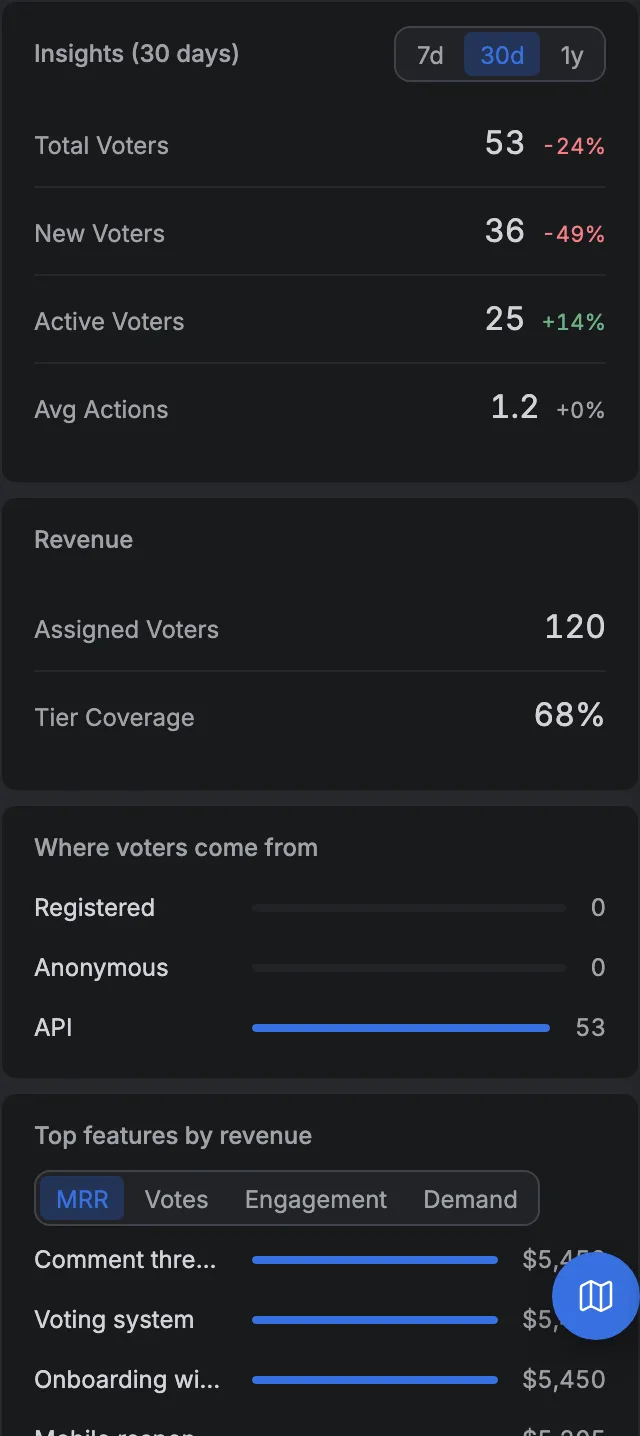
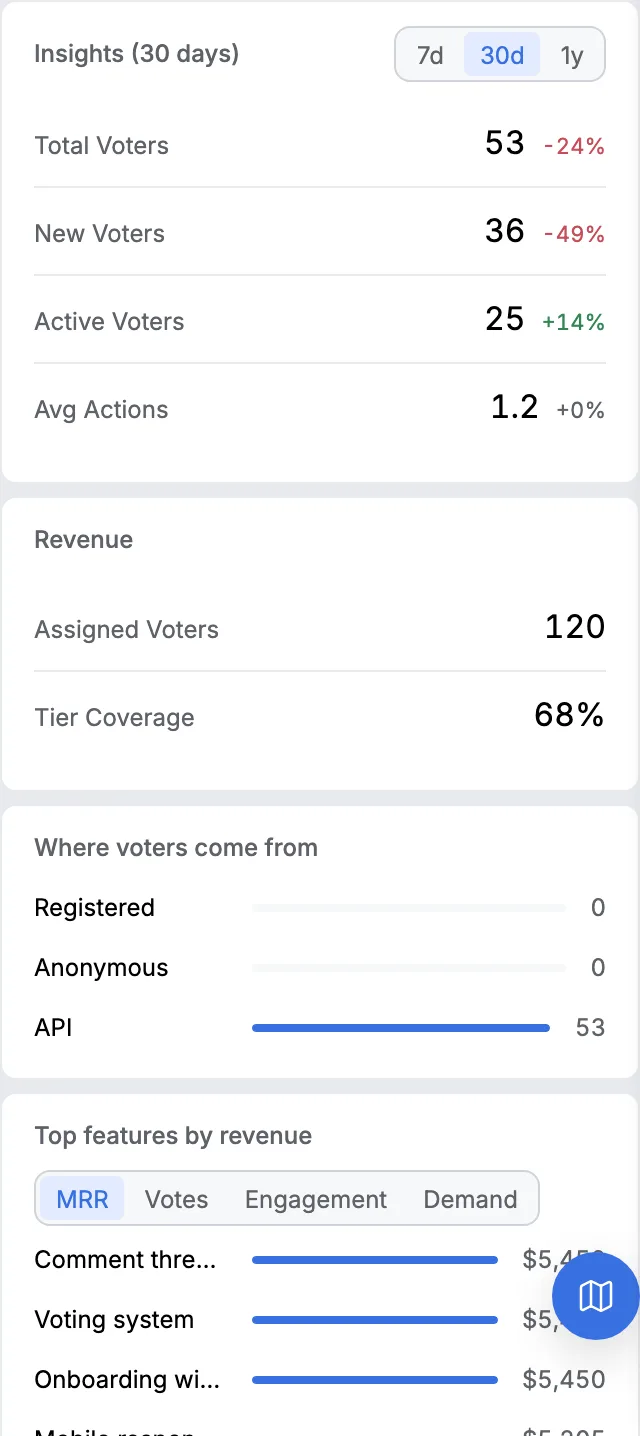
Above it, three things a spreadsheet cannot do start to matter. The person who asked can see that you heard them, which no internal document does.
The count is people rather than mentions, so one customer emailing four times stops looking like four customers. And when the thing ships, the people who asked hear about it without anybody keeping a list.
Everything above is the counting half of the job. The four jobs a customer feedback management system has to do, and the two no software does for you, is where the other half is written out.
How do you hear from the people who never write?
Through them, rather than from them, which is a smaller thing than it sounds but is not nothing.
The people who never write still pay, cancel, and sit in a plan tier. That is a different instrument reading the same population, and it does not care whether somebody felt like typing.
Putting revenue beside the vote count is not a way of hearing the silent majority. It is a way of stopping the loud minority being the only thing on the screen.
The other half is asking directly, which means going to specific people rather than waiting on a page. Nothing about a board helps with that, and a tool that claims otherwise is selling you the easy half again.
The standing version of asking directly is a customer advisory board, which fails in the opposite direction to this one, and the distinction between what people said and how many said it has its own entry.
14 days, a card at signup, then $9 or $39 a month.
In brief
Customer feedback is what your users tell you, and every count of it is a sample of the people who chose to speak. On our board that person is a signed in account, a year long cookie or, if neither exists, a network address, and each of those bends the count a little.
Use the numbers to compare cards, not to estimate how many people want something. Put money beside them so the loudest group and the largest customer stop looking identical.
And read a view count as attention rather than as people. The board itself is nine dollars a month, and what every request on it is is the next thing worth reading.