A customer feedback management system is the arrangement by which feedback arrives in one place, gets counted, gets decided, and gets answered. It is a system in the ordinary sense, being people plus a habit plus a tool, and the tool is the smallest part of it.
The phrase gets used as a synonym for the software, which is where the trouble starts. Buying the software gives you the first two jobs on a good day. The third and the fourth are somebody's work every week, and no product on the market does them for you.
What is a feedback system, and what is a feedback management system?
Four jobs in a fixed order, and the order is what makes it a system rather than a pile.
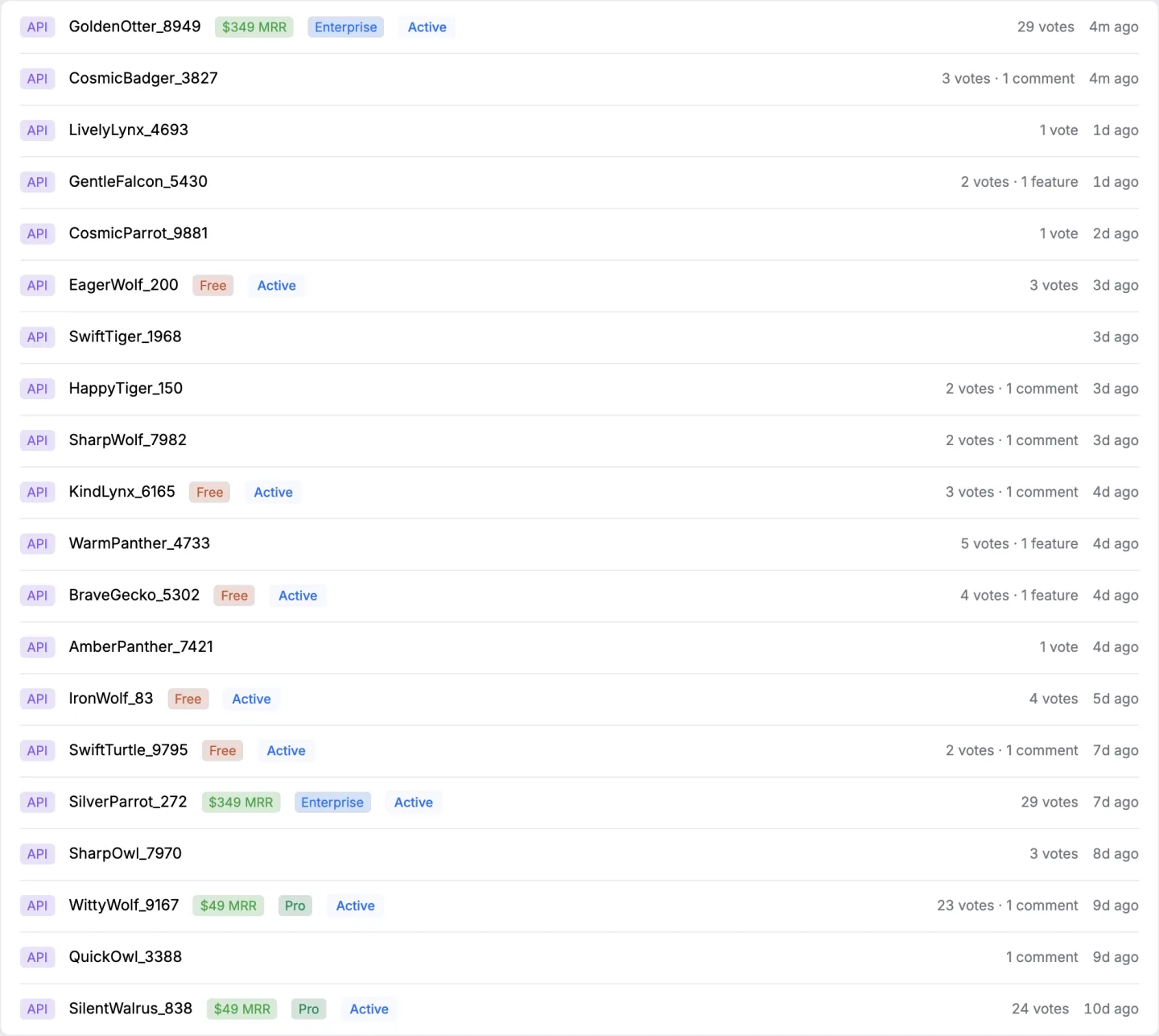
Arriving. Everything lands in one place, whether it came through a board, a support inbox, a sales call or a widget. Feedback in four places is four systems and none of them has the whole picture.
Counting. The same request arriving eleven times becomes one entry with eleven people behind it. Without this step the loudest week wins, and the loudest week is rarely the biggest one.
Deciding. Somebody says yes, no or not yet, and writes it where the person who asked can read it. This is the job the word management is actually pointing at.
Answering. When something ships, the people who asked for it find out. When something is refused, they find that out too.
The system is broken at the first step you skip. A board with a thousand requests and nobody deciding is step one and two done well and the system failing, which is the most common shape by a long way.

Is customer feedback management software the same as a customer feedback management tool?
The words are interchangeable and neither one is a system.
Software and tool are used for the same category on every vendor's site, and the distinction people reach for, that a tool is smaller than a platform, is a marketing distinction rather than a real one. What matters is which of the four jobs the thing actually does.
Every product in this category does arriving and counting. Most of them help with answering, because emailing the voters on a shipped request is easy to automate once the votes are attached to people. None of them decides, and any page implying otherwise is selling you a judgement it cannot make.
Which tools do this well?
The tools are comparable and the systems are not.
Tools can be lined up against each other because they publish prices and features, and seven of them are compared on their meters and their entry prices, with the wider feature request field and its eight billing units on a second page. Those are the pages to read when the question is what to buy.
A system cannot be ranked, because three quarters of it is your team's habits. Two companies running the same software have different systems, and the one that answers its board every Friday has a better system than the one with the more expensive subscription.
That is not a platitude, it is the reason the software comparison is the easy half of the decision.
Is product feedback management software a different thing?
Same software, narrower input.
Product feedback management software means the feedback is about the product rather than about the service, the delivery or the person who answered the phone. In practice the vendors are identical, because a feature request board does not care what kind of company is running it.
The distinction is worth keeping for one reason. A product feedback system feeds a roadmap, so its output is an order of work. A customer experience system feeds a service, so its output is usually a score.
What a score actually costs you in signal, and why a count of people beats a rating, is a different argument on a different page.
Is a voice of customer process the same thing?
A voice of customer process is the same four jobs with the first one done differently, and this product does two of them by default, the third with a column, and the fourth automatically.
The voice of customer name usually comes with surveys attached. The arriving step is something you send out, a questionnaire or an interview, rather than something people bring to you.
Everything after it is identical, because a survey answer still has to be counted, decided on and replied to, and a process that collects without deciding fails at the same step a board does.
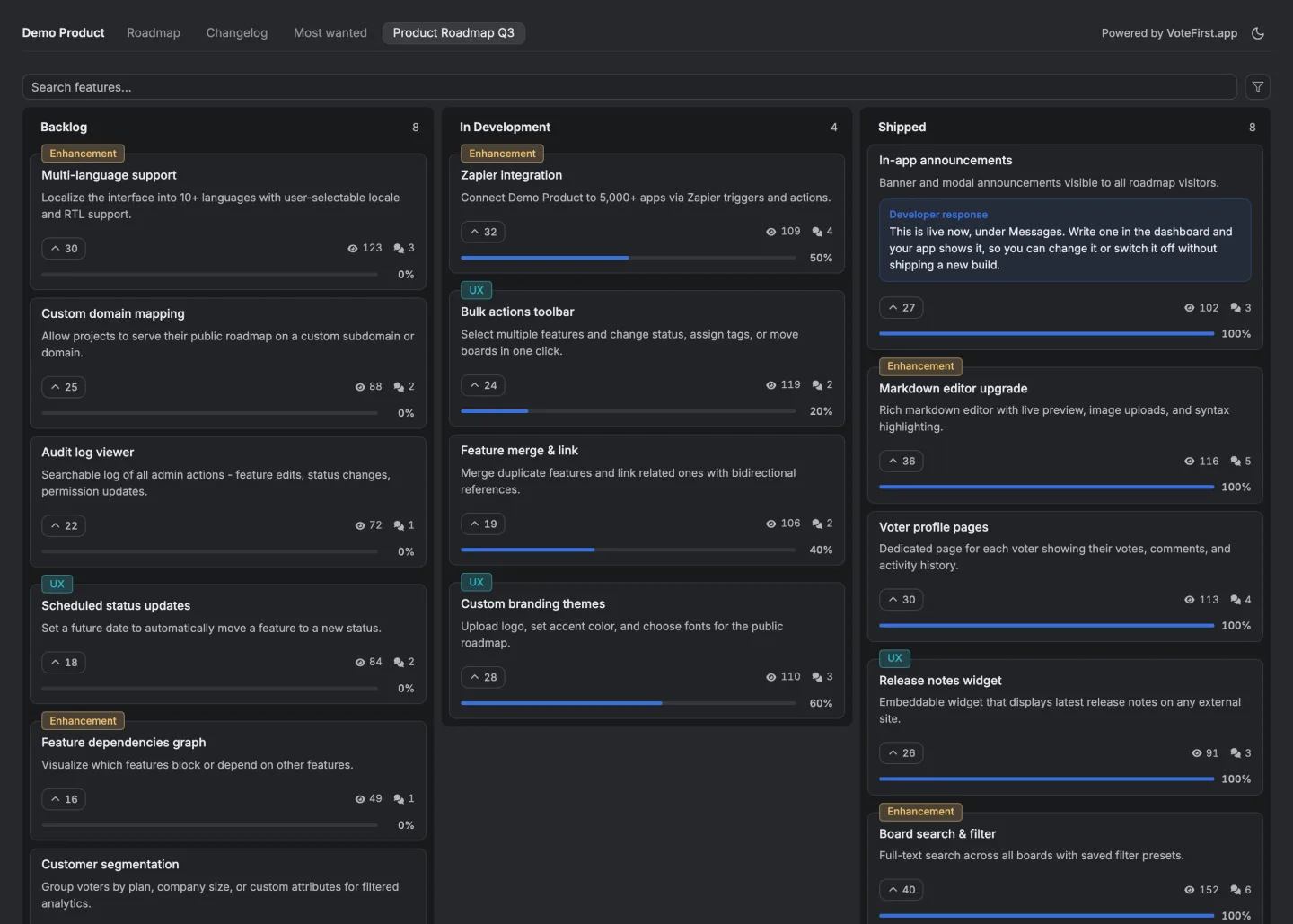
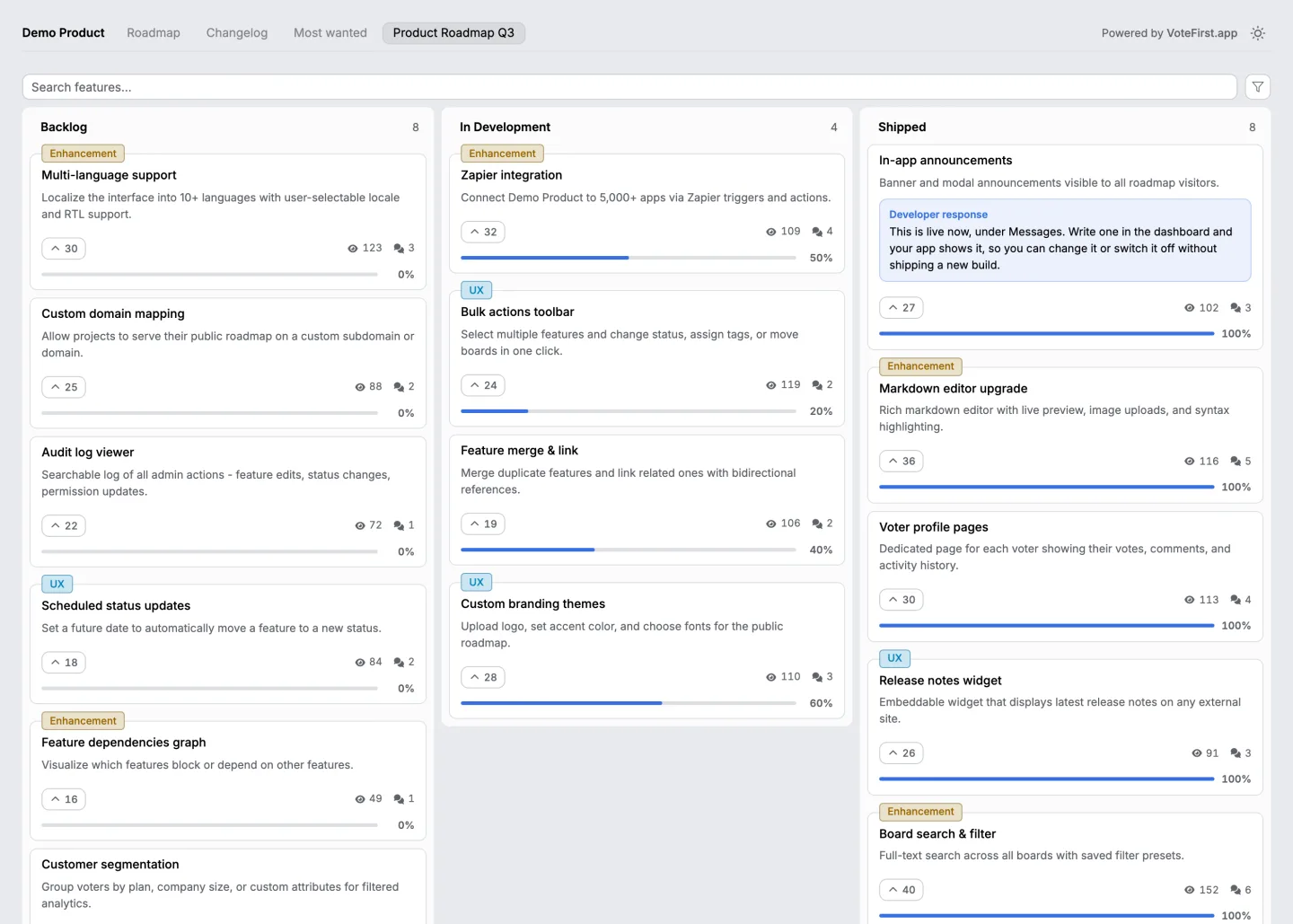
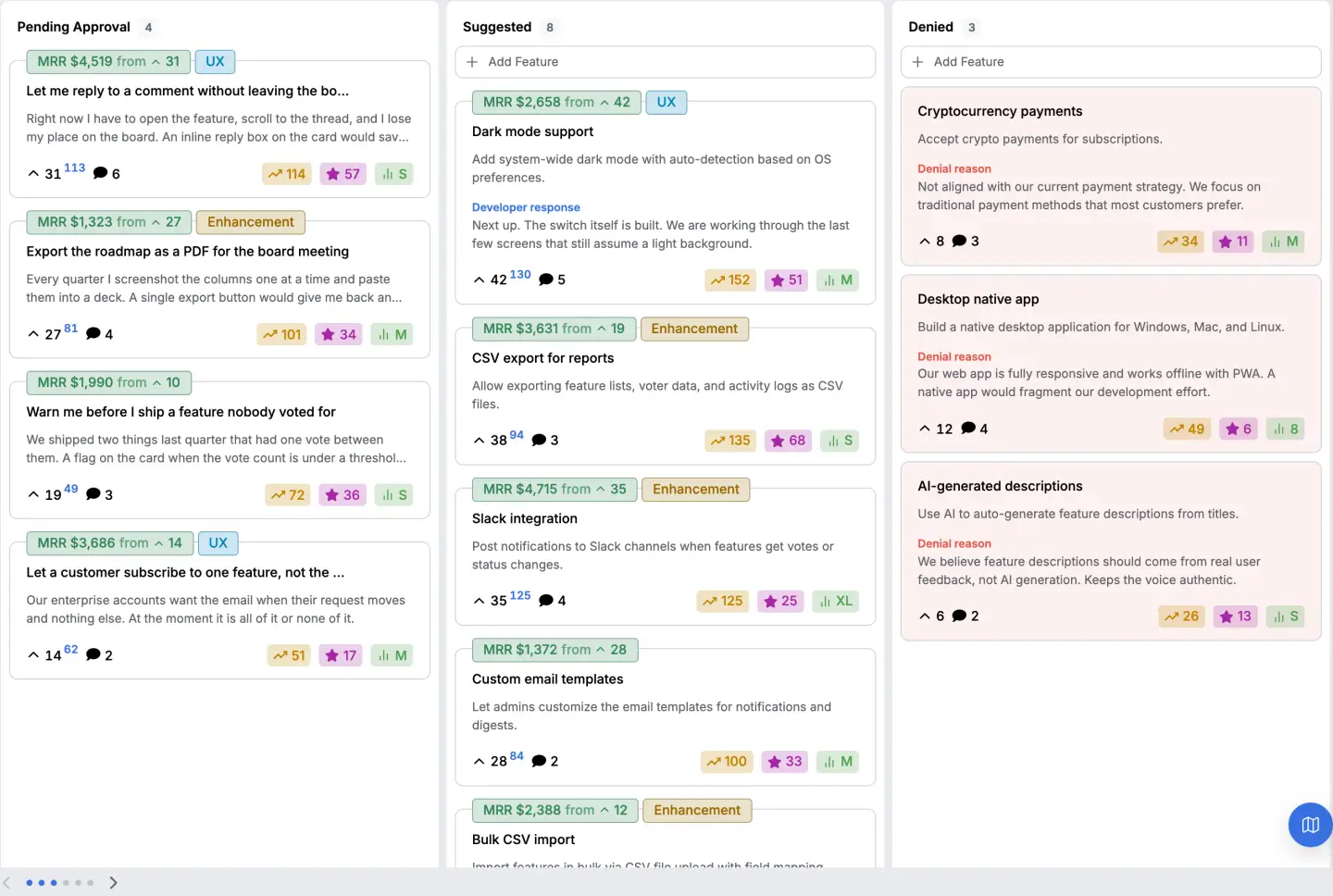
Arriving and counting are the board. The demo board holds twenty eight requests across five columns on 15 September 2026, with 115 comments and 3,374 views between them, and it opens with no account.
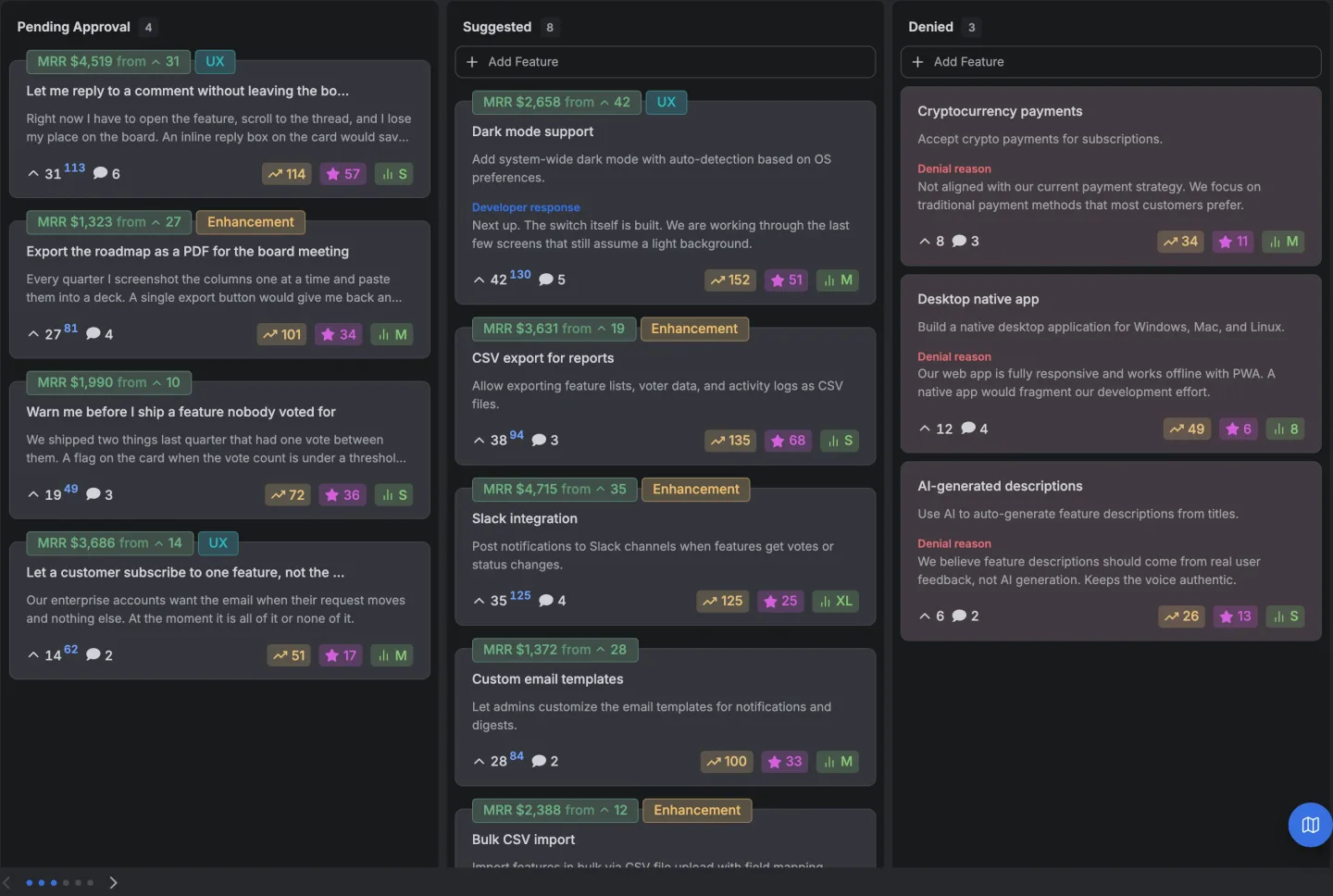
Deciding has a column with a name on it. A new project starts with Suggested, Denied, In Review, In Progress and Completed, so refusing something in public is a move rather than a decision to build a feature for. Three of the demo board's twenty eight sit in Denied with the reason on the card.
Answering happens when a release is published, which emails the voters on every request inside it, though only the ones who were signed in, since an anonymous voter leaves no address behind.
The honest limit is the one at the top of this page. None of that decides anything. The columns make the decision visible and somebody still has to make it.
The board and the roadmap are nine dollars a month, both figures are published, and a card is required for the fourteen day trial.
14 days, a card at signup, then $9 or $39 a month.
In brief
A feedback management system is arriving, counting, deciding and answering. Software does the first two, helps with the fourth, and never does the third. When a vendor's page describes a system, read it for which of the four it is actually talking about, because most of them stop after two.