This product feedback glossary holds thirty three entries, and they are grouped below by the decision they belong to rather than sorted by first letter. An alphabetical list is a list you can only use if you already know the word.
Each entry answers its own term in its first sentence and then says what the term hides, because most of the vocabulary in this category is a real idea wearing a word that flatters it.
What is the thing a customer sends you?
Six terms, and the distinctions between them decide what you are allowed to do with each.
- Feature request, a customer saying what they cannot do yet, and every step one takes from the form to the release.
- Customer feedback, the whole of it, and the question of who is actually in your sample.
- User feedback, the same thing with a different word, and who it actually comes from.
- Client feedback, what the people paying you for work say about that work, which is a narrower and more political thing.
- Bug vs feature request, the question that decides which one you are holding.
- Qualitative and quantitative feedback, the two shapes and the join between them.
What is the thing you decide with?
Seven terms, and six of them are arithmetic wearing a name.
- Feature prioritization, and which of the inputs you actually measured rather than invented.
- Weighted scoring, and what our own weights actually are.
- RICE scoring, and the four guesses it asks you for.
- Kano model, and what it does to a backlog.
- Cost of delay, and the number nobody has.
- Jobs to be done, and what it does to a request once you apply it.
- Vocal minority bias, and what actually fixes it.
14 days, a card at signup, then $9 or $39 a month.
What is the list you decide over?
Five terms about the place requests wait.
- Product backlog, and the three ways a request leaves one.
- Backlog grooming, for when the list is customer requests rather than engineering tickets.
- Idea management, and what happens to the duplicates.
- Feature creep, and the board that quietly causes it.
- Feature factory, and the metric that creates one.
What do you show people afterwards?
Six terms, and this is the half of the category most teams underuse.
- Product roadmap, and why the public one has no dates on it.
- Public roadmap, and what belongs on one.
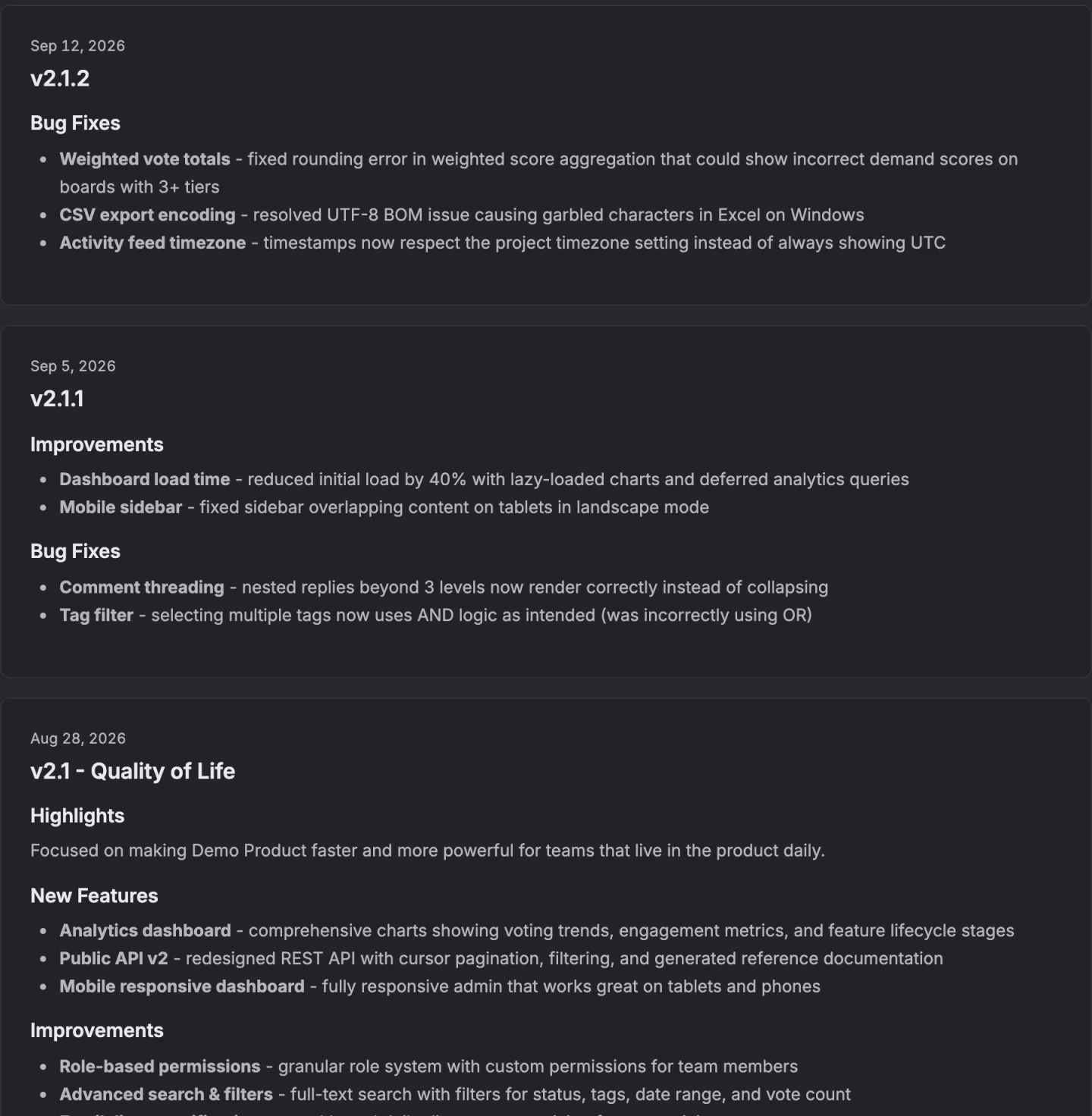
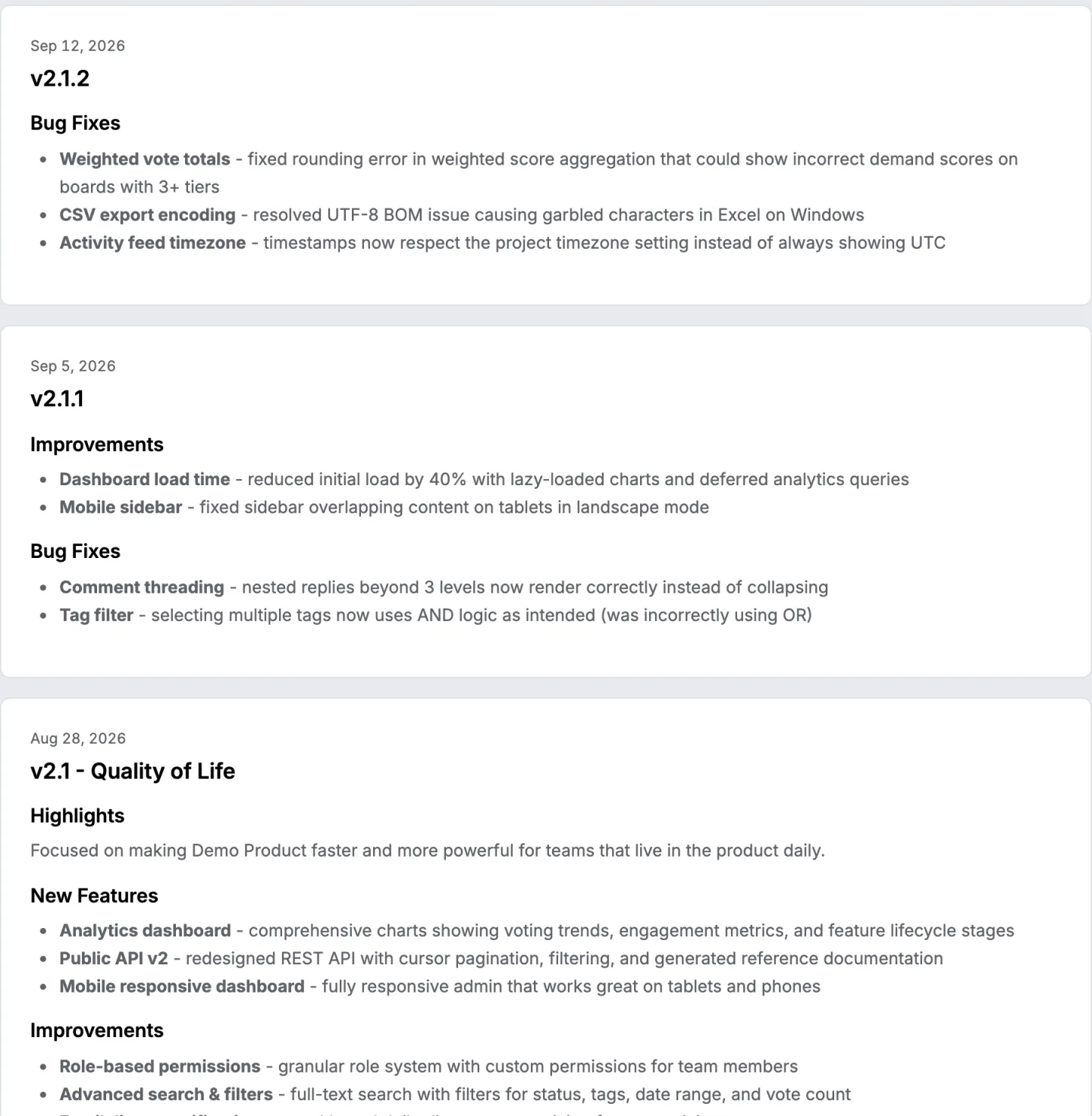
- Release notes, and who actually gets told.
- Changelog vs release notes, and which one you owe your customers.
- Changelog types, and the four that earn a read.
- Release management, and where the changelog fits in it.
What are the research habits around it?
Four terms that describe how the feedback gets collected in the first place.
- Continuous discovery, and the habit behind the phrase.
- Opportunity solution tree, and where votes sit on one.
- Customer advisory board, and who ends up on it.
- The customer feedback loop, and why it rarely closes.
What are the numbers people put beside it?
Five terms from the measurement side, where the category borrows most heavily from elsewhere.
- Churn rate, and how many of your askers already left.
- Customer retention, and what your board saw coming.
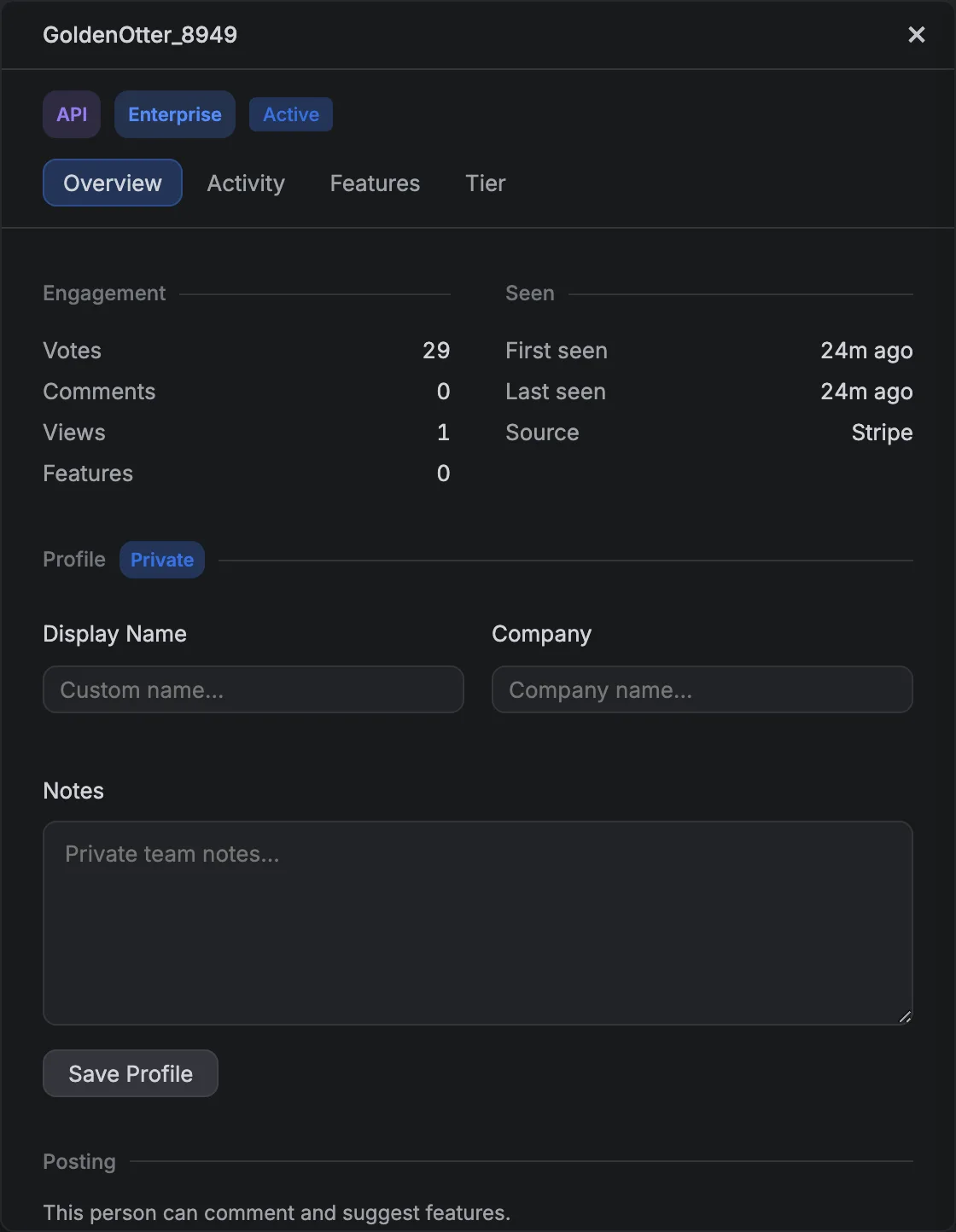
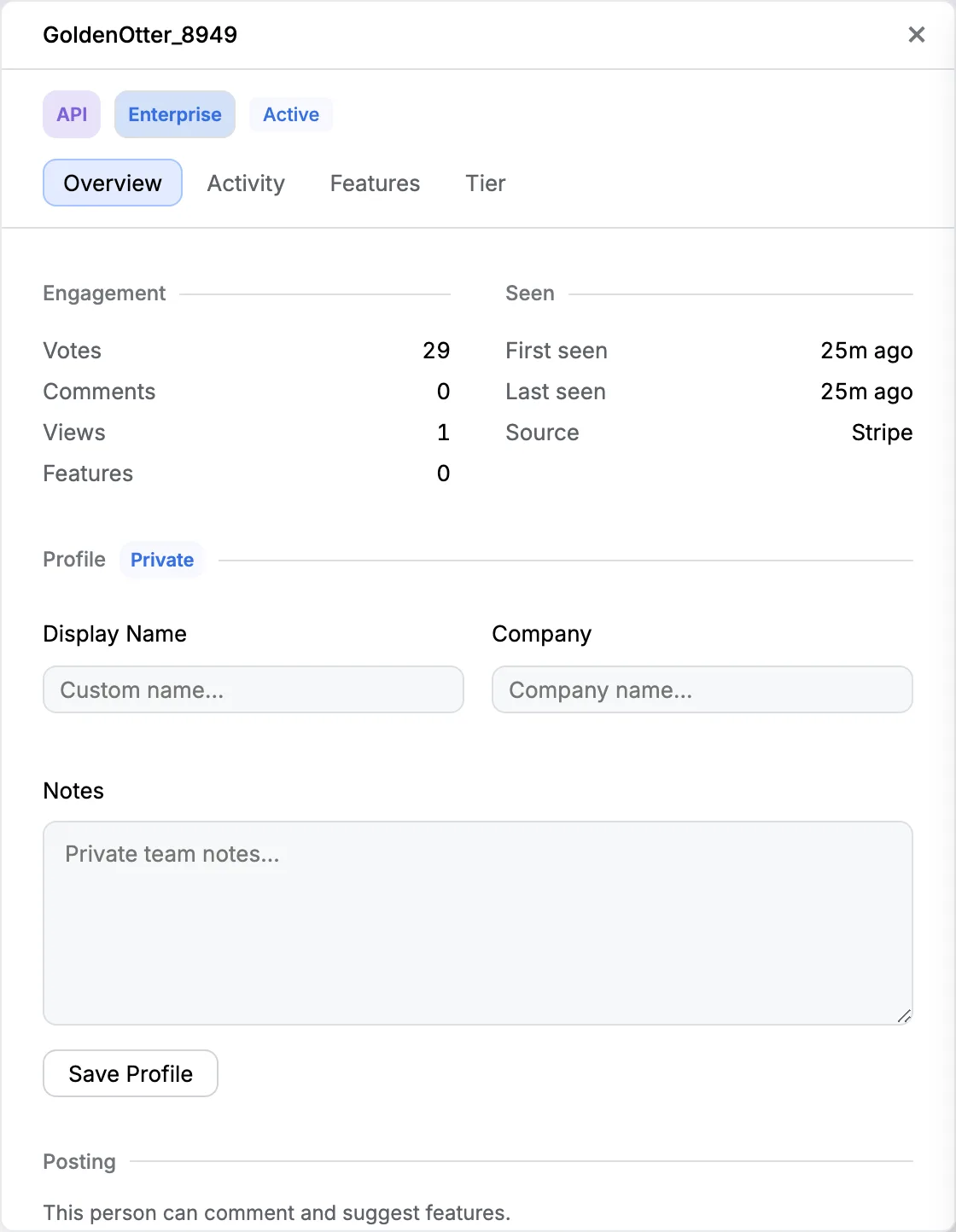
- Feature adoption, and what a board cannot see.
- North star metric, and what it quietly hides.
- Feature flag, and what it changes about shipping.
Why is this not alphabetical?
Because nobody arrives at a glossary knowing the word they need.
A reader who already knows the term goes straight to its page from a search result and never sees this one.
A reader who arrives here is holding a problem rather than a word, and the six groups above are the six problems. That is the only arrangement that helps the second reader without hurting the first.