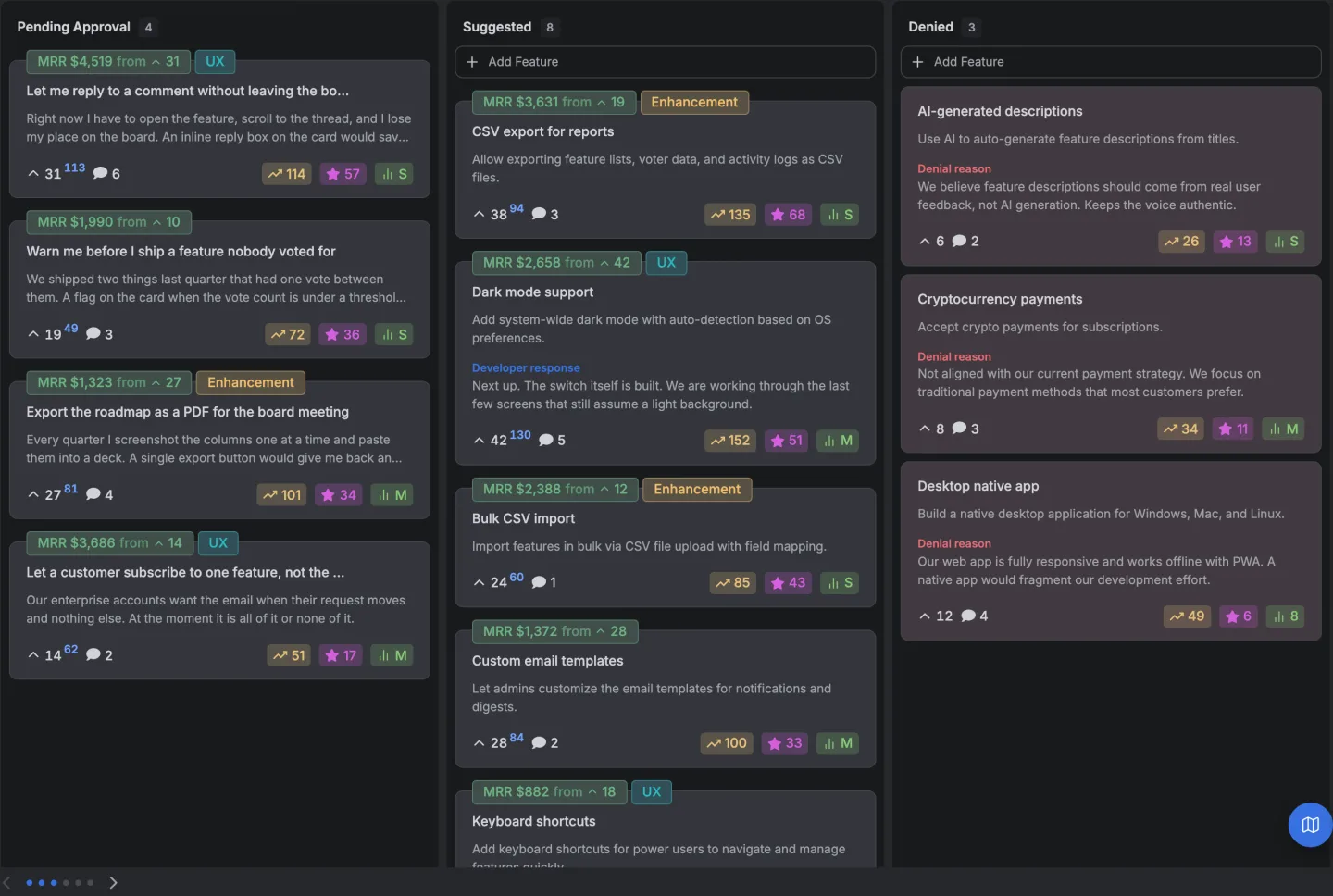
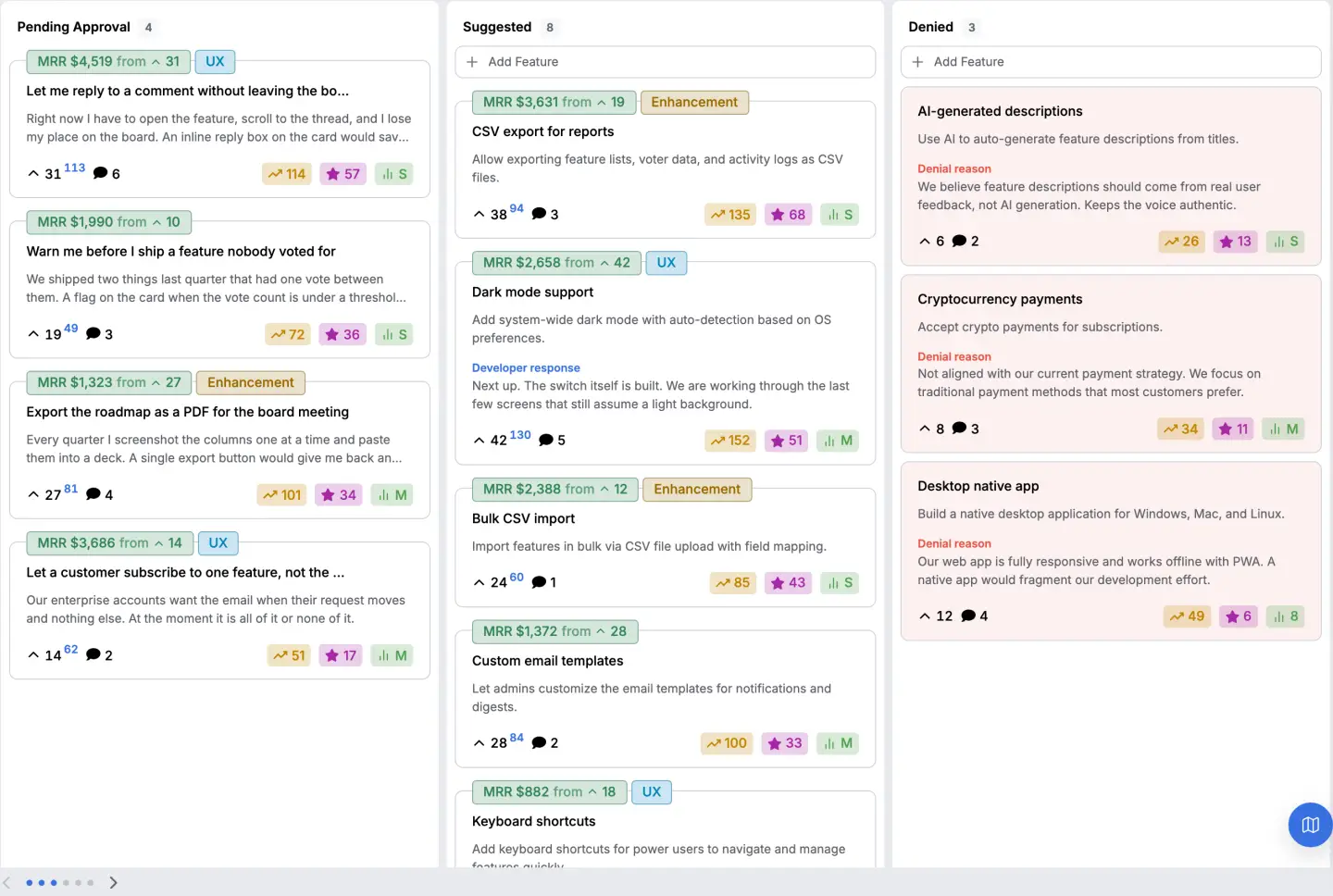
Jobs to be done is the idea that people do not buy products, they hire them to make progress on a task in a particular situation.
The payoff is a change in what counts as a competitor and what counts as a requirement. If somebody hires your product to stop being surprised by what customers want, then a spreadsheet, a shared inbox and doing nothing are all competing for that job, and none of them appears in a feature comparison table.
What is a job, exactly?
A description of progress somebody is trying to make, framed by the situation they are in rather than by the tool they used.
A well written job has three parts and no product names. The situation, which is when this happens. The motivation, which is what the person wants to do. And the expected outcome, which is what it lets them do afterwards.
Keeping product names out is the discipline that makes the idea work, because the moment a job mentions a feature it has stopped describing the person and started describing the solution.
The common failure is writing a task list and calling it jobs. Export a report is a task. Proving to a manager that the quarter went the way it was forecast is a job, and only one of those explains why somebody would accept a clumsy export.
How do you find out what the job is?
By asking about the last time it happened rather than about what people want.
The interview that produces this sort of answer is retrospective. What were you doing just before you went looking for something. What did you try first. What was the moment the current arrangement stopped working. Those questions produce stories, and stories contain the situation that a feature request leaves out.
It is slow work and it does not scale, which is the honest cost. Nobody runs these interviews weekly, and a team that claims to is usually running satisfaction surveys with a different name on them.
How does it change a feature request?
It turns one line into a question worth asking, and the question is usually not answered on the board.
A request says add a filter for tags. The job question is what the person was trying to see when the list was too long, which might be finding everything one customer asked for before a renewal call.
Read that way, the filter is one answer and possibly not the best one, and a completely different feature might do the job better.
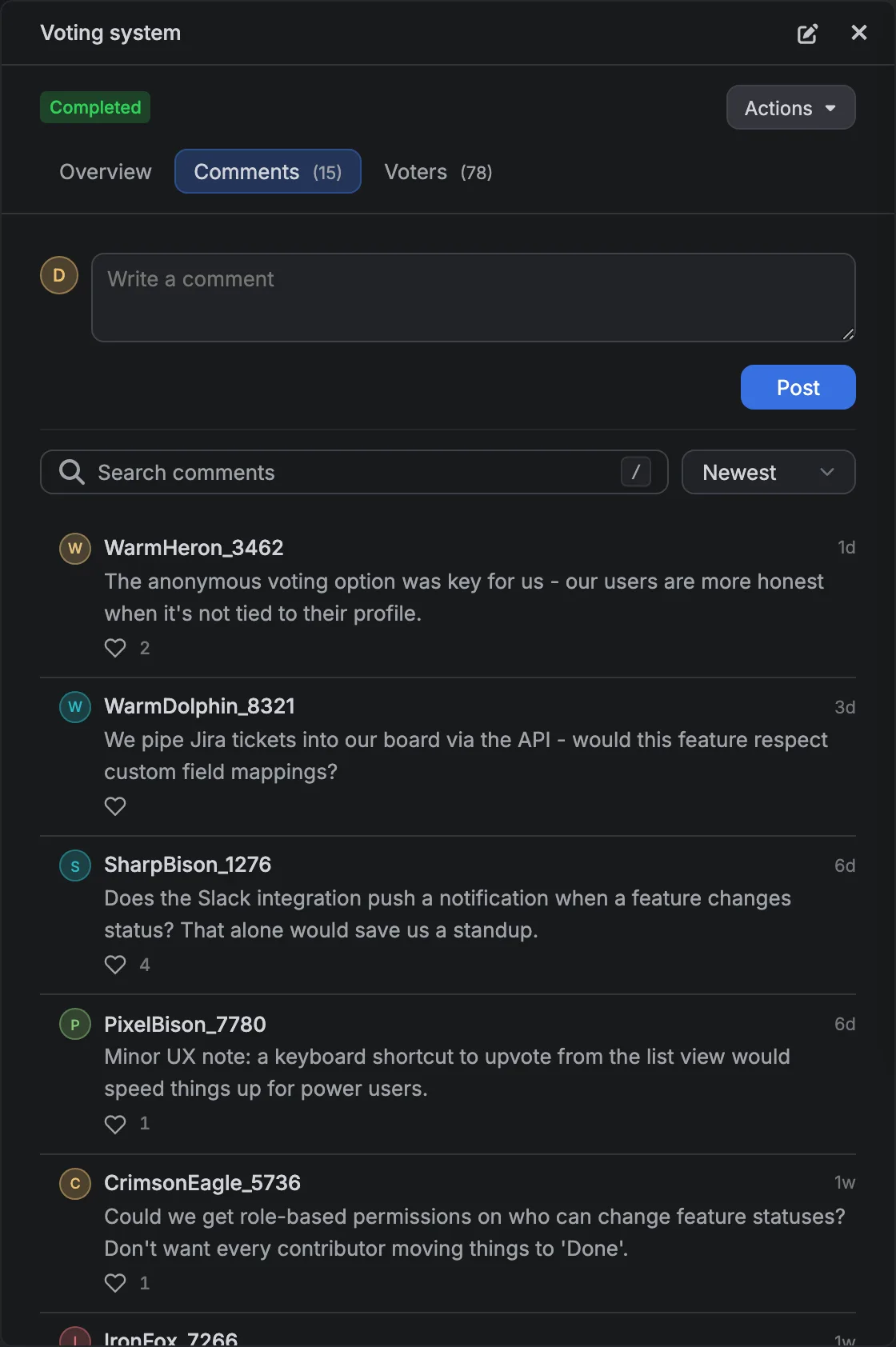
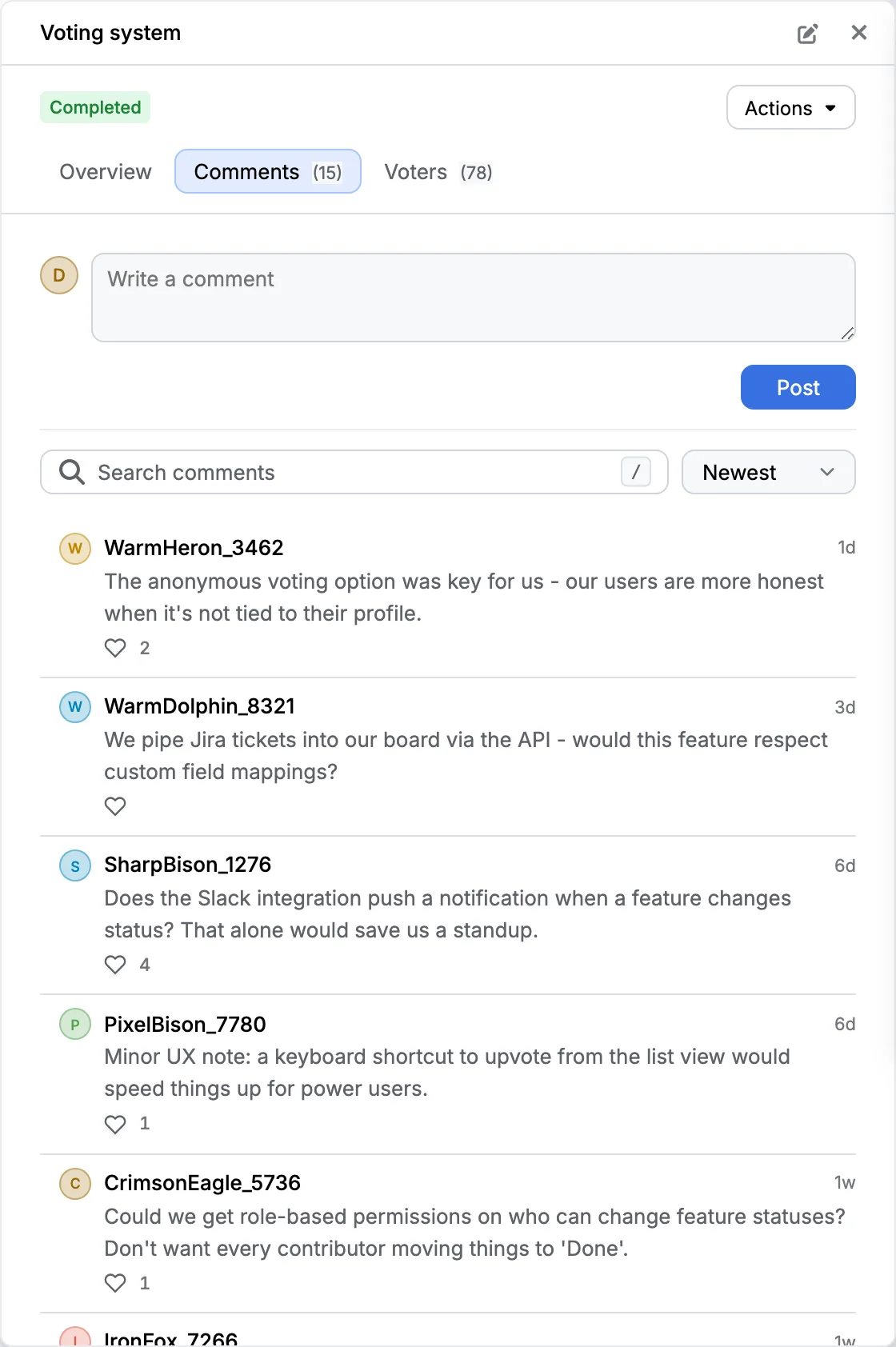
That does not make requests useless. It makes them the start of a conversation rather than a specification, which is exactly what the comment thread on a request is for.
The comments are part of the request here rather than a separate system, and what a request is in the first place has its own entry.
Does a feedback board capture jobs?
Not by itself, and any tool claiming otherwise is describing a form.
What arrives on a board is solutions. People write what they think should be built, because that is easier than describing a situation and because they are being helpful. The situation behind it stays in their head unless somebody asks, and asking is a reply from your side rather than a field on a form.
What a board does add is the pattern. Twenty requests for different features that all turn out to be the same job is a discovery no single interview would produce, and it is visible when duplicates are merged rather than closed.
That is the strongest argument for keeping requests in one place with a count, and it is a different argument from the popularity one.
Is it worth the effort for a small team?
The interviews usually are not. The habit of asking one question back usually is.
A team of three cannot run a research programme. It can reply to a request with a sentence asking what the person was doing when they needed it, and that single question, asked consistently, produces most of the value with almost none of the cost.
The answers arrive in public on the request, where the next person to read it can see them.
The ordering of what to build stays a separate question, and here it is answered by what people ask for weighted by what they pay rather than by how well a job was written. The formula and the code behind it are published.
14 days, a card at signup, then $9 or $39 a month.