A customer advisory board is a standing group of customers a company meets regularly to test direction against, usually a handful of accounts and usually quarterly.
It exists because the alternative is worse. Deciding a year of product direction from support tickets and the last three sales calls is how a roadmap ends up being written by whoever complained most recently.
A room of customers who agreed to think about the question in advance is better than that, and it comes with one structural problem that almost nobody writes down.
What is a customer advisory board for?
Testing direction before it is built, rather than collecting requests.
The useful question in that room is never what should we build next. It is whether the thing you are already planning solves a problem those people actually have, and what it would break for them.
A group of five customers is far too small to tell you what is in demand and exactly the right size to tell you that your plan misunderstands how their team works.
The second use is early warning. Customers with a standing relationship say things about a renewal that never appear in a ticket, usually sideways and usually six months before the decision is made.
Who ends up on a customer advisory board?
The accounts that are engaged, friendly and available, which is a very specific group.
That is the selection problem. Advisory boards are built from customers who like you enough to give up an afternoon every quarter. They are, almost by definition, not the customers who are quietly unhappy or the ones about to leave, and those two groups hold most of the information you are missing.
It is the same structural effect that makes a public board misleading if you read it as a census, written up as vocal minority bias. The difference is that an advisory board is skewed toward the content rather than the loud, which is harder to notice because the meetings go so well.
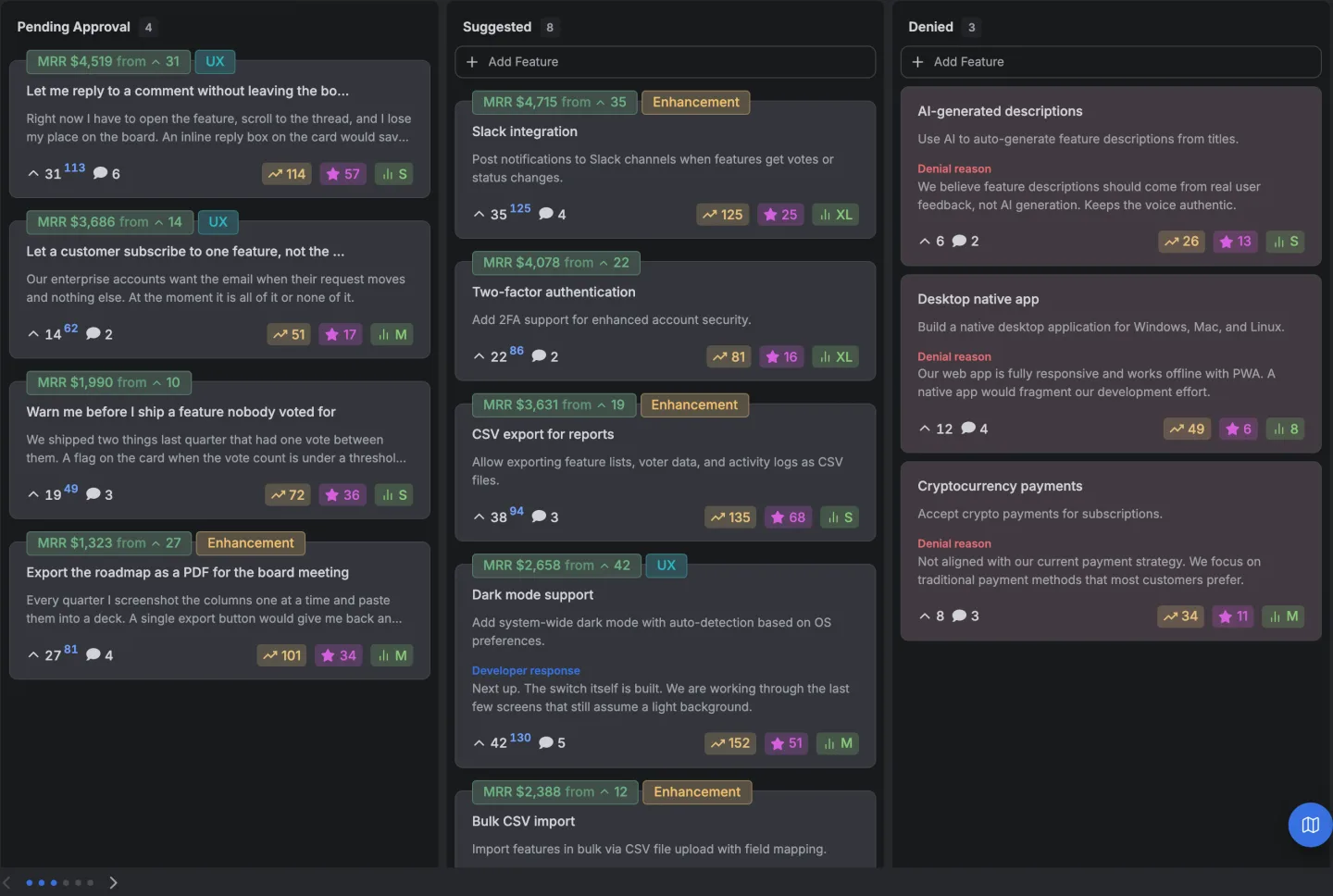
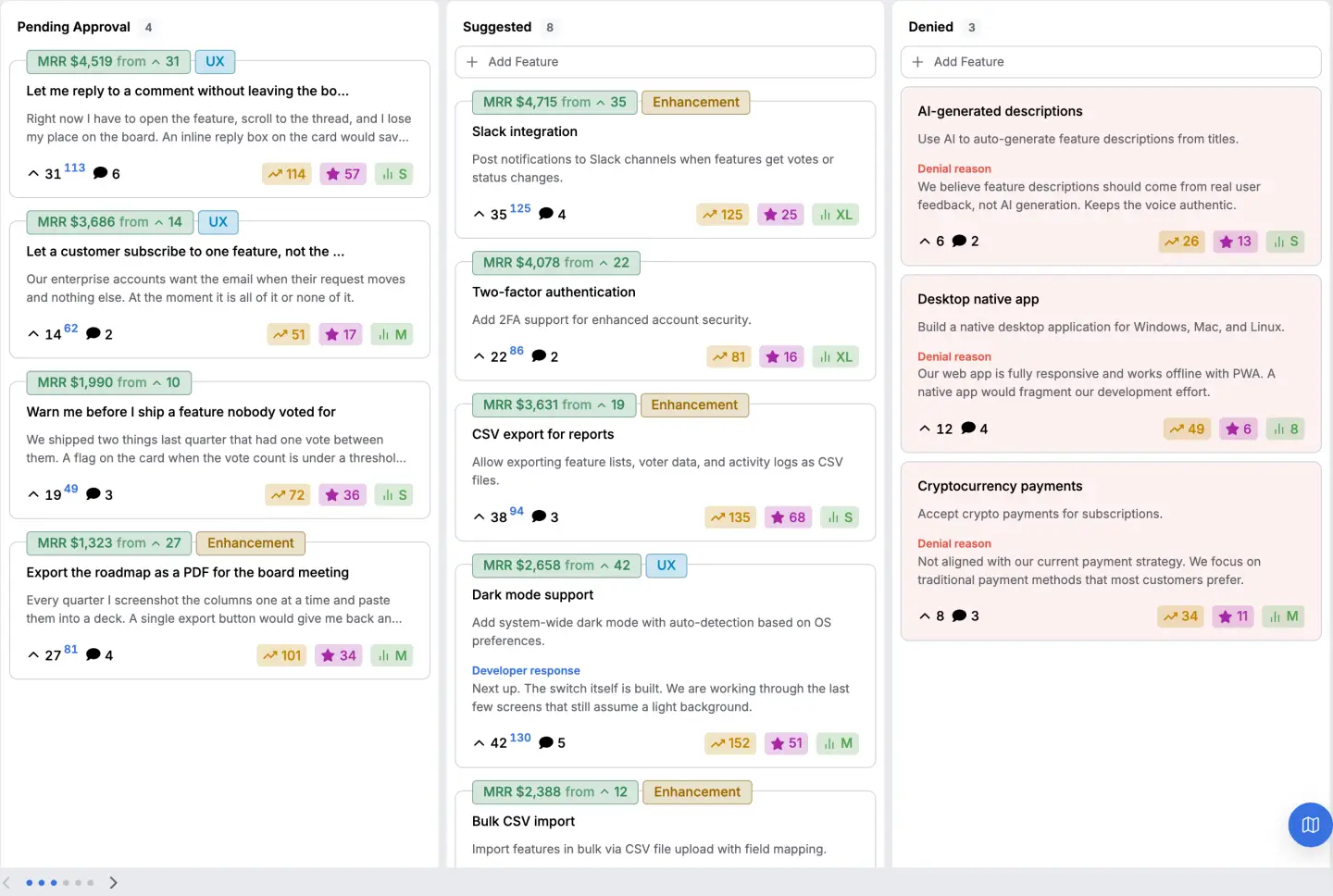
How is it different from a feedback board?
One is a small room with a schedule. The other is an open door with a counter on it.
An advisory board gives depth and loses breadth. Five accounts, several hours, reasoning you could never extract from a form, and no way at all to know whether the sixth account agrees.
A public board gives breadth and loses depth. Hundreds of people, one click each, and a count you can sort by, with the reasoning usually reduced to a sentence.
They fail in opposite directions, which is why teams that can afford both run both. Use the room to find out whether you understand the problem, and use the board to find out how many people have it. What a board is and is not is written out here.
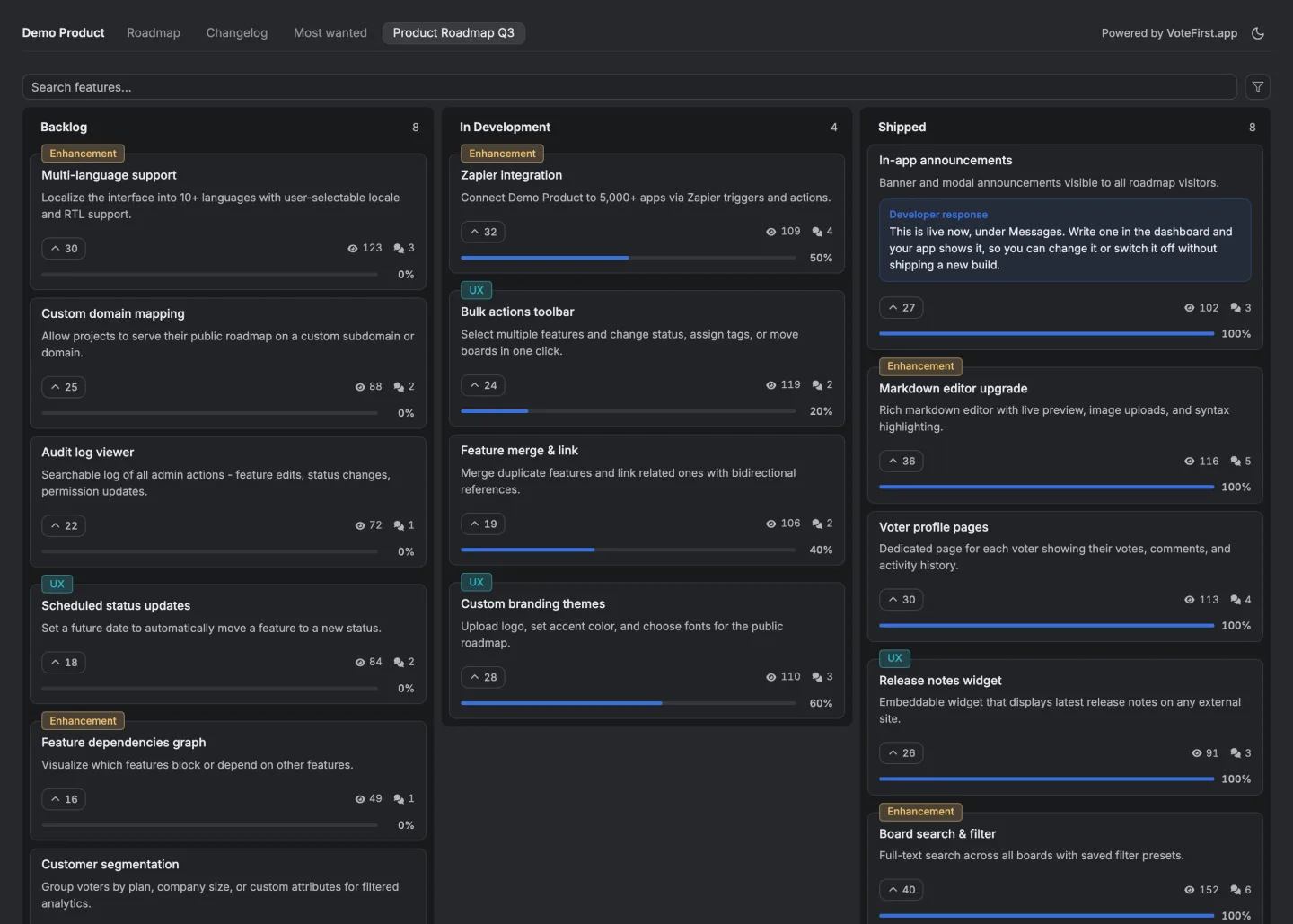
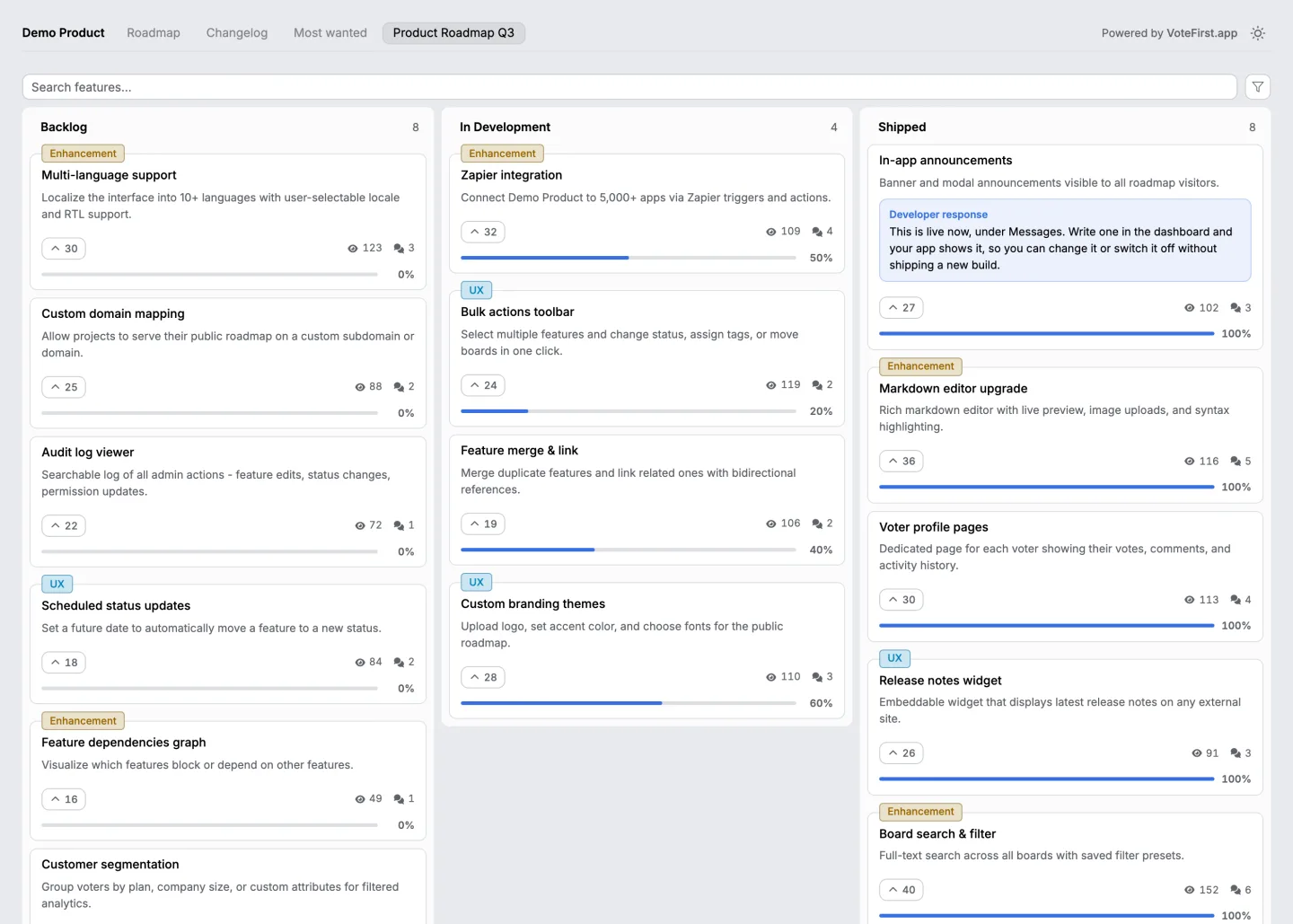
How do you pick members without picking only friends?
Choose against a list of properties rather than a list of names.
Decide first what you need represented, which is usually a mix of sizes, a mix of how long they have been customers, at least one account that has complained seriously in the last year, and at least one that uses the product in a way you find inconvenient.
Then find accounts that fit the properties. Picking names first and rationalising afterwards produces a room that agrees with you.
This is where a board with revenue attached helps more than it looks.
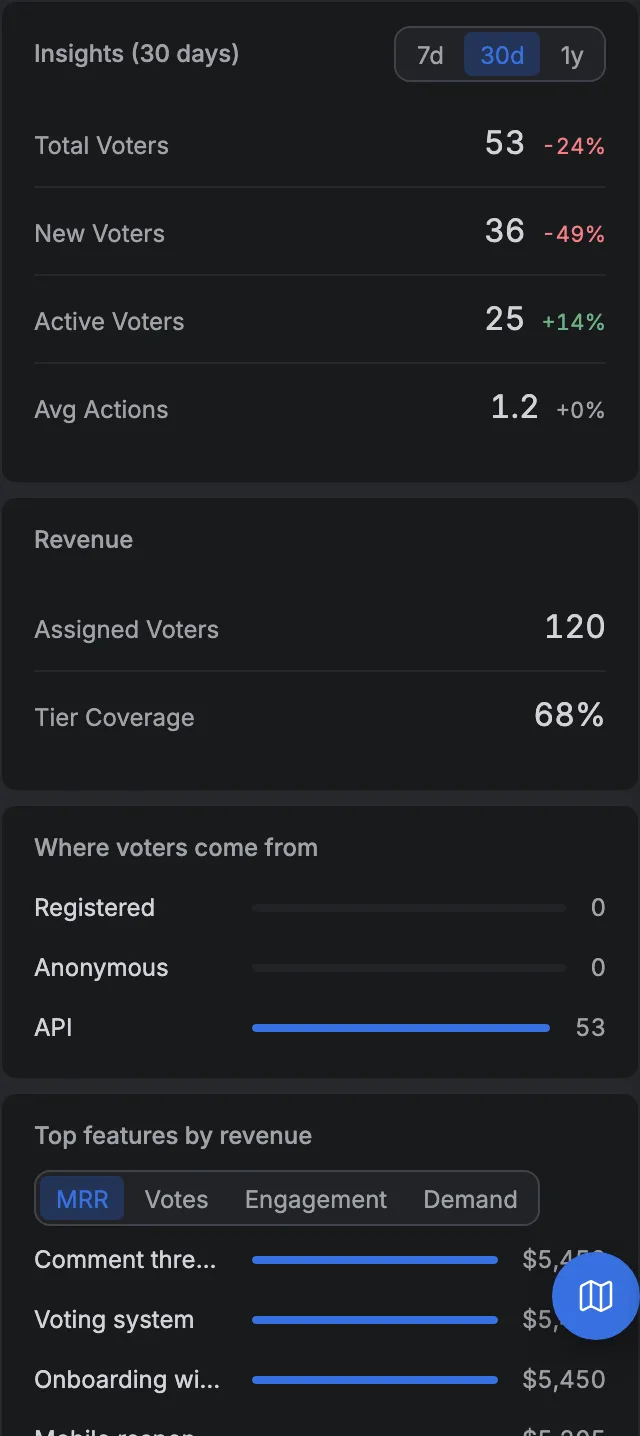
Because voters here carry the plan they are on and what they pay, the list of accounts that asked for a particular thing is already sorted by what they are worth, which makes an invitation list an evidence question rather than a memory exercise.
How the revenue gets onto the voter is written out with the import behind it.
What do you do with what the room says?
Put it somewhere the rest of the company can read it, with the account attached.
The failure mode of advisory boards is that the best insight of the quarter lives in one person's notes and dies there. Whatever the mechanism, the test is whether somebody who was not in the room can find the reasoning six months later when the decision comes up again.
A board handles the public half of that well, because a request carries its comments, its status and the reason it was refused if it was refused.
The private half, being what one named account said about their renewal, does not belong on a public page and should not be pushed there by a tool. How to say no in public, and what to keep private, is written up separately.
14 days, a card at signup, then $9 or $39 a month.