Qualitative feedback is what people said in their own words. Quantitative feedback is how many of them said it, or how they answered on a scale.
Both words get used as if they described quality, which they do not. They describe form. A single sentence from one customer can be worth more than a thousand ratings, and a thousand ratings can settle an argument that no amount of sentences will.
What can qualitative feedback decide?
What the problem is, and nothing about how common it is.
Words carry situation, motivation and consequence, which is everything a number leaves out. When somebody describes what they were doing before they went looking for a workaround, that description contains the actual requirement, usually more accurately than any feature request they would write.
What it cannot do is establish scale. Three vivid accounts of the same problem feel like a trend and are three accounts. This is the failure mode of research heavy teams, where the sample that shaped the quarter was whoever happened to answer, and it is the same structural skew as vocal minority bias.

What can quantitative feedback decide?
How common something is, and nothing about why.
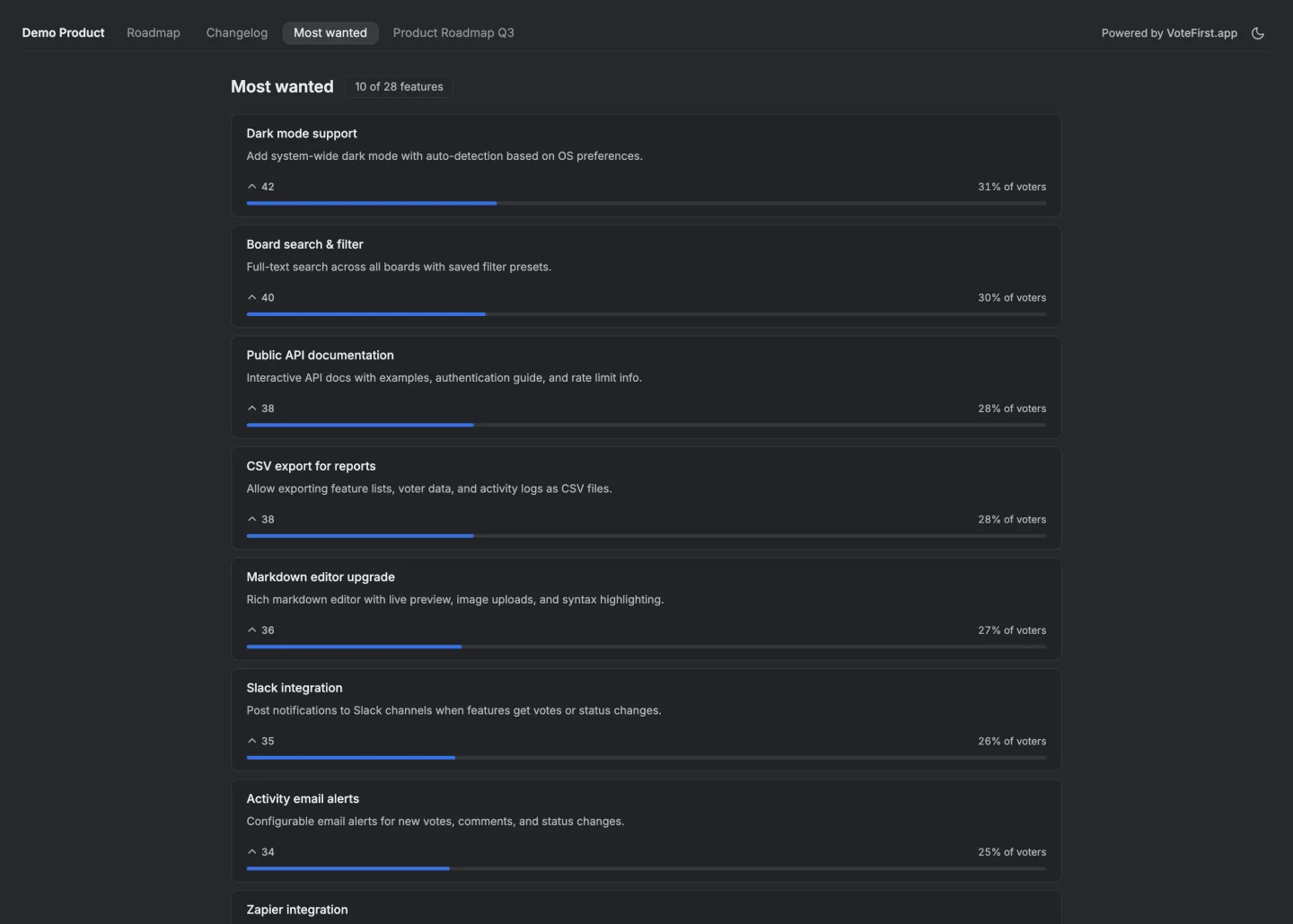
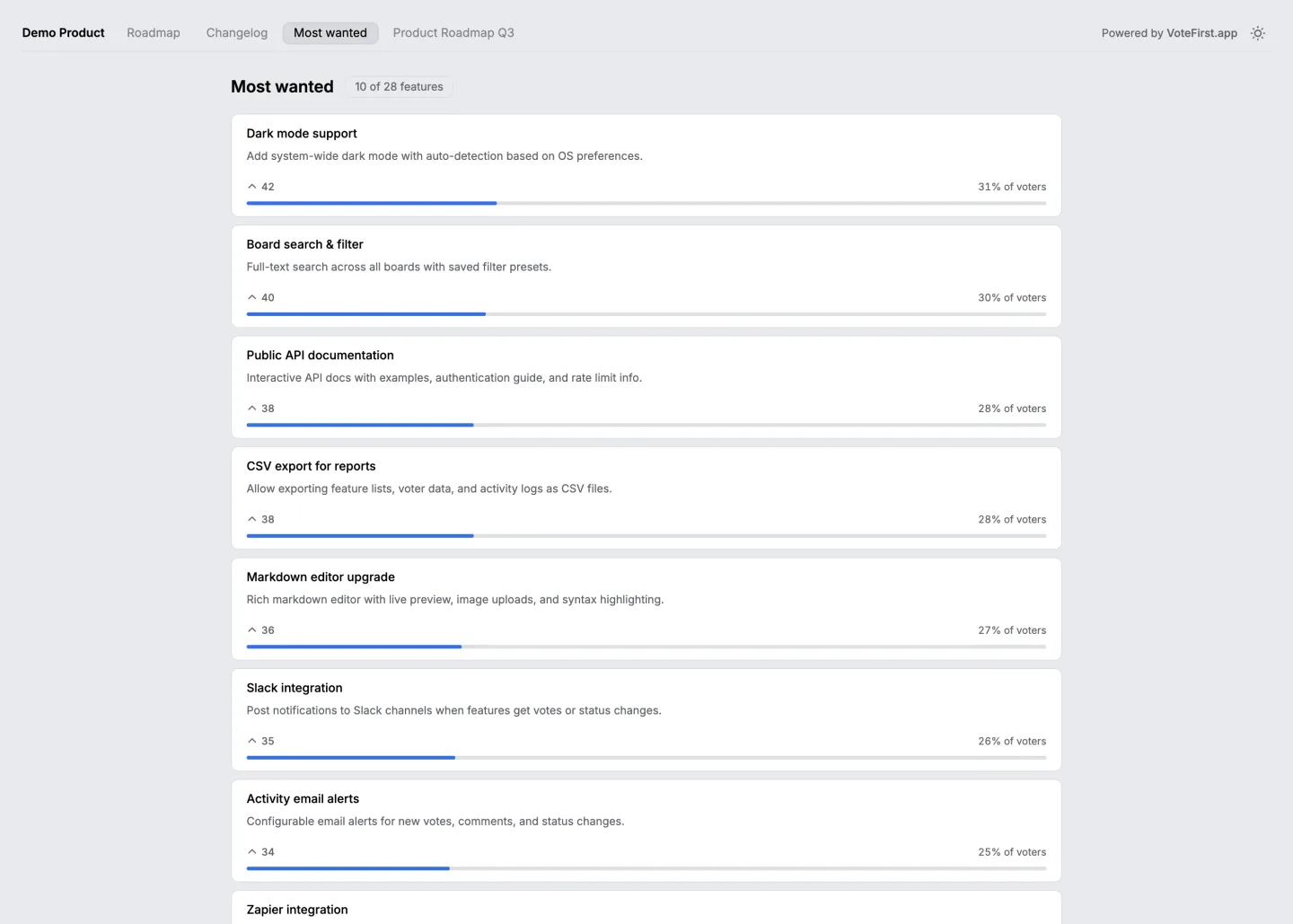
A count settles the argument about scale and only that. Forty votes on a request is good evidence that a problem exists at some size, and it contains no information at all about what those forty people were trying to do or whether the proposed fix would help them.
The trap is that numbers are easier to defend in a meeting. A figure on a slide beats an anecdote every time, including when the anecdote was right and the figure was measuring the wrong thing. What our own demand figure is made of is printed in full, precisely so it can be argued with.
How do you join them?
Put the count and the words on the same object, so neither can be read alone.
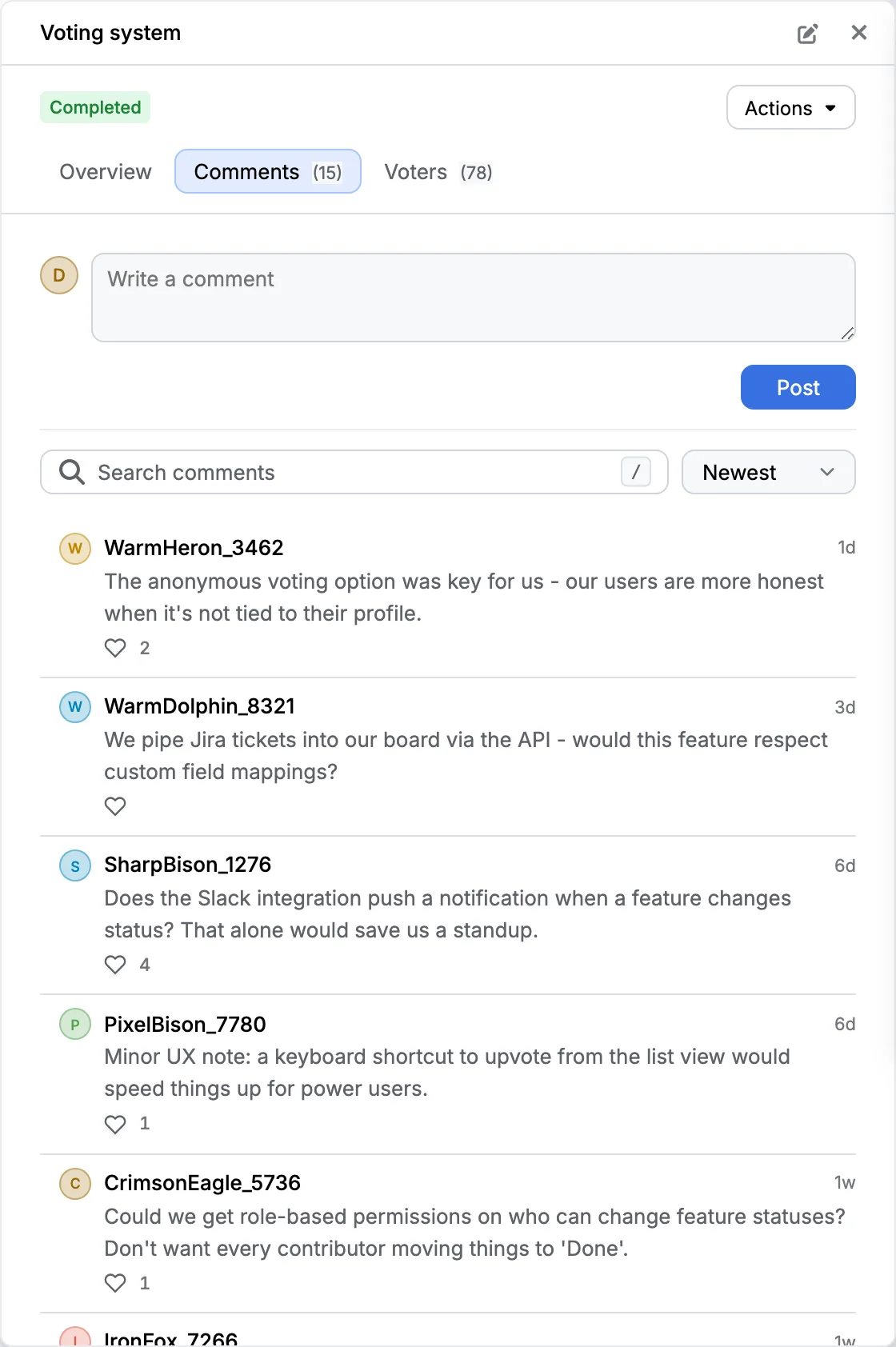
That is what a request on a board is. The count is the vote total and the words are the description plus every comment underneath it. Nobody has to reconcile a spreadsheet with an interview folder, because they are two properties of the same row.
The join is what makes the pair usable weekly rather than quarterly. Read the top of the list by count, then read the sentences under the top few, and the ordinary case is that the words change what you think the request is.
The comments are part of the request here rather than a separate system.
Is a vote count qualitative or quantitative?
Quantitative, and weaker than it looks, which is worth admitting on a voting product's own site.
A vote is one bit of information from one person. It says wanted and nothing else. It does not say how badly, in what situation, or whether the person would pay for it, and stacking a thousand of them does not recover any of that.
The improvement available is not more votes but better weighting. When each vote is multiplied by what the voter pays you, the count starts measuring something connected to the business rather than to the size of your audience, and the order changes when customers act. The formula and the code behind it are published.
Which one should a small team start with?
The words, because a small team can read all of them and cannot generate a useful sample.
With a hundred customers, no survey returns a number worth trusting, and every one of them can be read individually by one person in an afternoon. The counting becomes valuable later, when there are too many to read and the question changes from what is wrong to which of these things is most wrong.
The useful thing is that starting with words costs nothing if the words are already being collected somewhere with a count attached.
A board that keeps both means the transition from reading everything to sorting by demand happens without changing tools or losing the history. What a board is and is not is written out here.
14 days, a card at signup, then $9 or $39 a month.