The meaning of client feedback is narrow. It is what the people paying you for work say about that work, usually to your face and usually while the engagement is still running.
The word client is the whole meaning. A customer buys a product that already exists. A client hires you for work that does not exist yet, which means the feedback arrives during the job rather than after it, and acting on it is part of the job rather than an input to a roadmap.
What does client feedback mean?
The response of the person paying for a piece of work to that work, given while it can still change.
Three things separate it from the feedback a software product collects. It usually comes from one named person rather than from a crowd.
It usually arrives in a meeting or a document rather than in a form. And it usually carries an expectation of a reply, because the person giving it is paying for the next version.
That last property is the one people underestimate. Product feedback can sit unanswered for a quarter without anybody cancelling. Client feedback that sits unanswered for a fortnight becomes a different conversation.
Why is client feedback important?
Because it arrives from the only opinion that funds the work, and because it arrives early enough to be useful.
A studio, an agency or a contractor does not have the luxury of a big sample. There is one client on this project and their view of whether the work is right is the view that decides whether there is a next project.
Treating that as data to be weighed against a general trend is a category error. It is not a sample, it is the terms.
The second reason is timing. Product feedback describes something already built. Client feedback usually describes something half built, and the cost of changing course is at its lowest exactly while the feedback is being given.
Is client feedback the same as customer feedback?
No, and the difference is who carries the risk if the work is wrong.
When a customer dislikes a product, they leave and the loss is one subscription. When a client dislikes a piece of work, the work is redone and somebody absorbs the cost of redoing it, which is why the word carries an urgency the other one does not.
Customer feedback has its own page and user feedback a third, and the three words describe three different relationships rather than three moods.
In practice many businesses have both. An agency has clients and the software it builds has users. The vocabulary only becomes a problem when a team uses one word for both and then cannot work out why the priorities keep fighting each other.
Does a feedback board work for client feedback?
Partly, and it is worth being straight about which part.
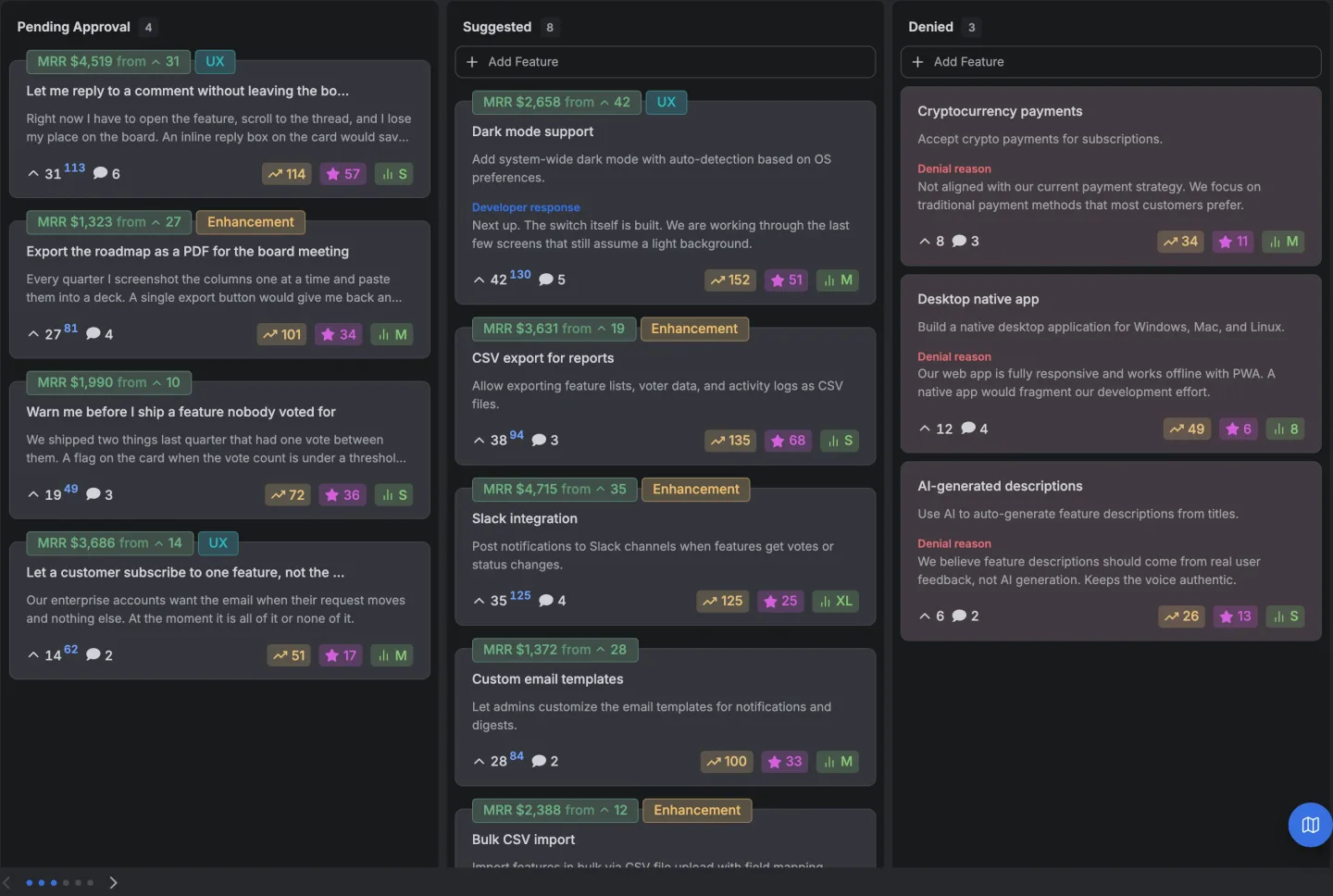
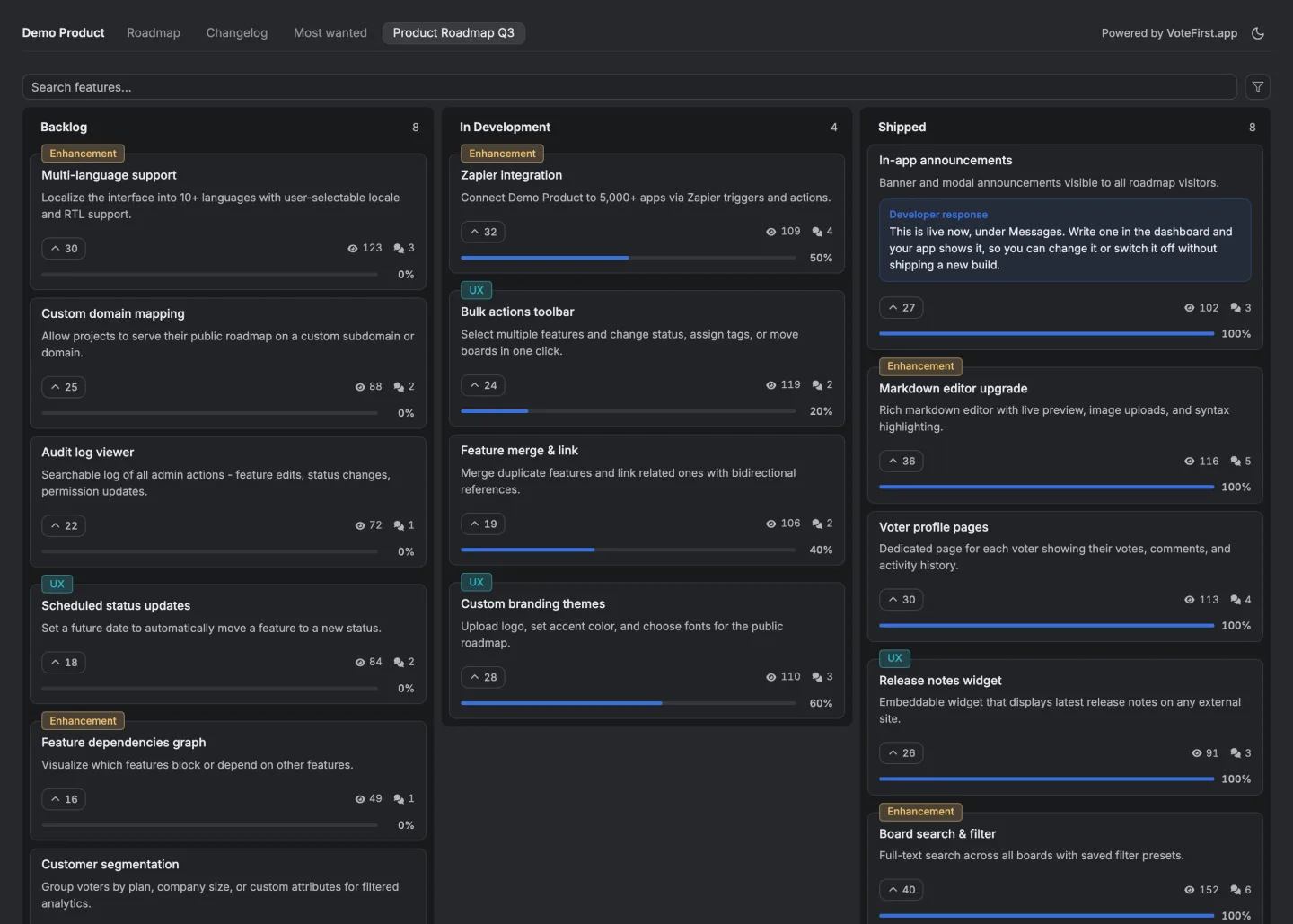
The part that works is the record. Requests from a named account sit in one place with dates, status and a written reason for every refusal, which turns a year of scattered conversations into something you can open in a meeting.
If several clients keep asking for the same thing, a board is the fastest way to notice that they are.
The part that does not work is the collection. Clients do not file tickets on a public board. They send an email, or they say it on a call, and somebody on your side writes it down afterwards.
A board here is a place to put client feedback, not a place to gather it, and any tool claiming otherwise has not worked with clients.
How do you keep the biggest client from setting the whole roadmap?
By making the size of each account visible instead of letting it be argued.
When every request carries the account behind it and what that account is worth, the conversation stops being about who shouted most recently.
A request that comes from a third of your revenue should probably win, and it should win because the number says so rather than because the last call was loud. How the weighting works is written out with the code behind it.
The opposite failure is just as common, which is a single large client quietly steering a product the rest of the market does not want. Seeing that written down is the first step to deciding whether it is a product or a bespoke build, and that is a business decision rather than a tooling one.
14 days, a card at signup, then $9 or $39 a month.