Cost of delay is the money a piece of work loses you for every week it is not finished, expressed as a rate rather than as a total.
It is the most honest prioritisation idea in wide use and the least used, and both facts have the same cause. Stating it forces a team to say out loud what a feature is worth in money, which is a conversation most backlogs are carefully arranged to avoid.
How is cost of delay calculated?
Value per unit of time, and the unit is the part people forget.
The question is not what this feature is worth. It is what it is worth per week, for each week it is late. A feature worth a lot but equally worth it next quarter has a low cost of delay.
A feature worth less in total but worth nothing at all after a deadline has a very high one right up to the deadline and zero afterwards.
That reframing is the value of the idea. It separates important from urgent using arithmetic instead of adjectives, and it explains why the biggest item in a backlog is often the wrong thing to do first.
What makes cost of delay hard to use?
The number is an estimate of a counterfactual, and nobody has it.
To know what a week of delay costs you would need to know what happens in the world where the feature exists, which has not happened.
Every figure is therefore a guess with a currency symbol on it, and a guess with a currency symbol is more persuasive than a guess without one, which is the trap.
There are three places the guess usually fails. Revenue attributed to one feature almost never survives contact with reality, because customers buy products rather than features.
Churn avoided is invisible by construction, since the customers who did not leave do not tell you. And the compounding cases, where a delay makes the next three things slower, are real and nearly impossible to size.
The usable version is comparative rather than absolute. You do not need to know that a feature costs four thousand a week. You need to know whether it costs more or less per week than the other thing, and ranking is a far easier question than measuring.
How is it different from a prioritisation score?
A score is a ranking invented by the team. Cost of delay is a claim about the world that can be wrong.
That difference sounds academic and is not. RICE and similar methods produce a number whose inputs are all opinions, so the output cannot be checked against anything afterwards. A cost of delay estimate can be revisited when the feature ships, and the estimate can be shown to have been nonsense, which is uncomfortable and educational.
The honest summary is that scores are cheap and unfalsifiable, cost of delay is expensive and falsifiable, and most teams need a bit of both.
What does this product use instead?
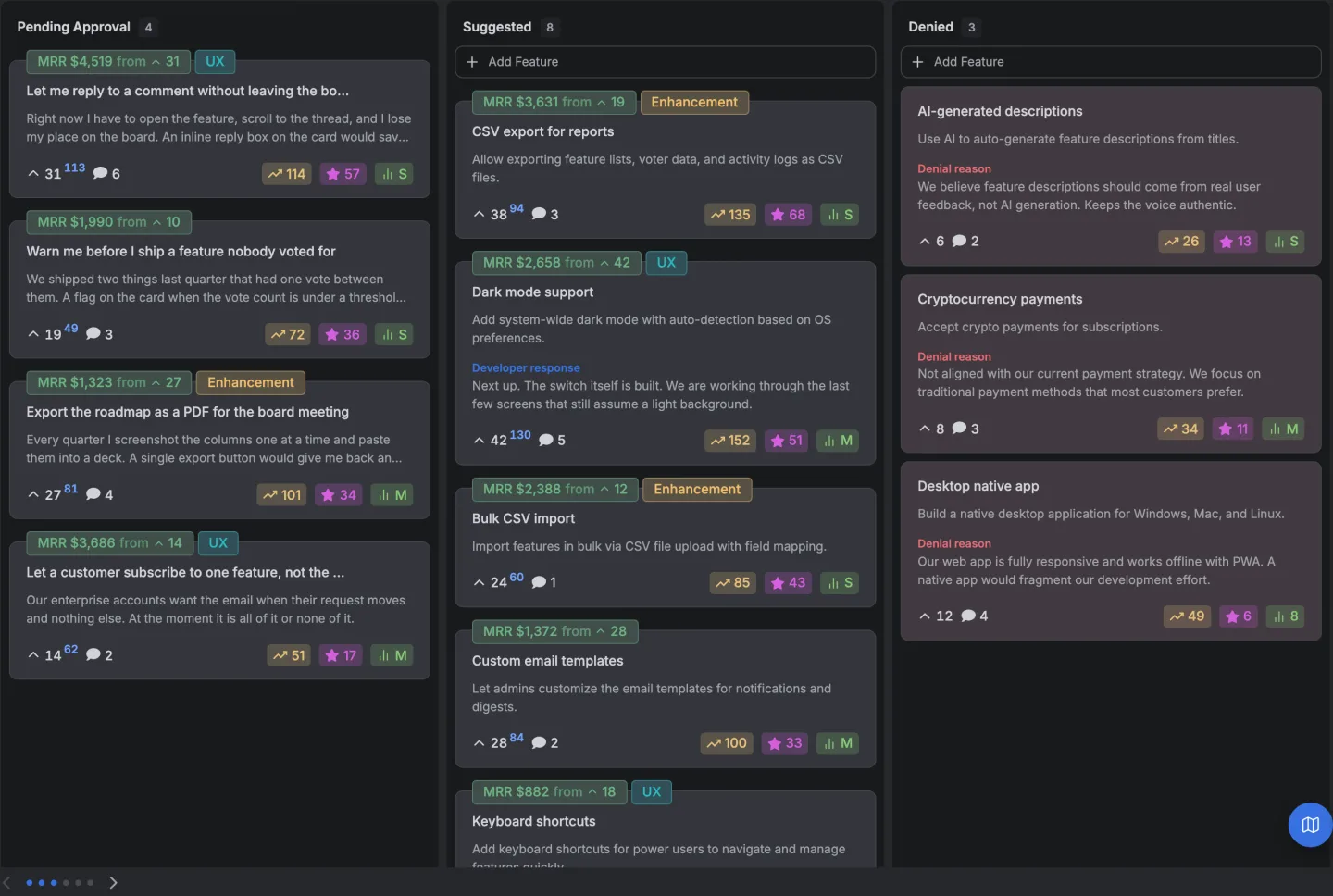
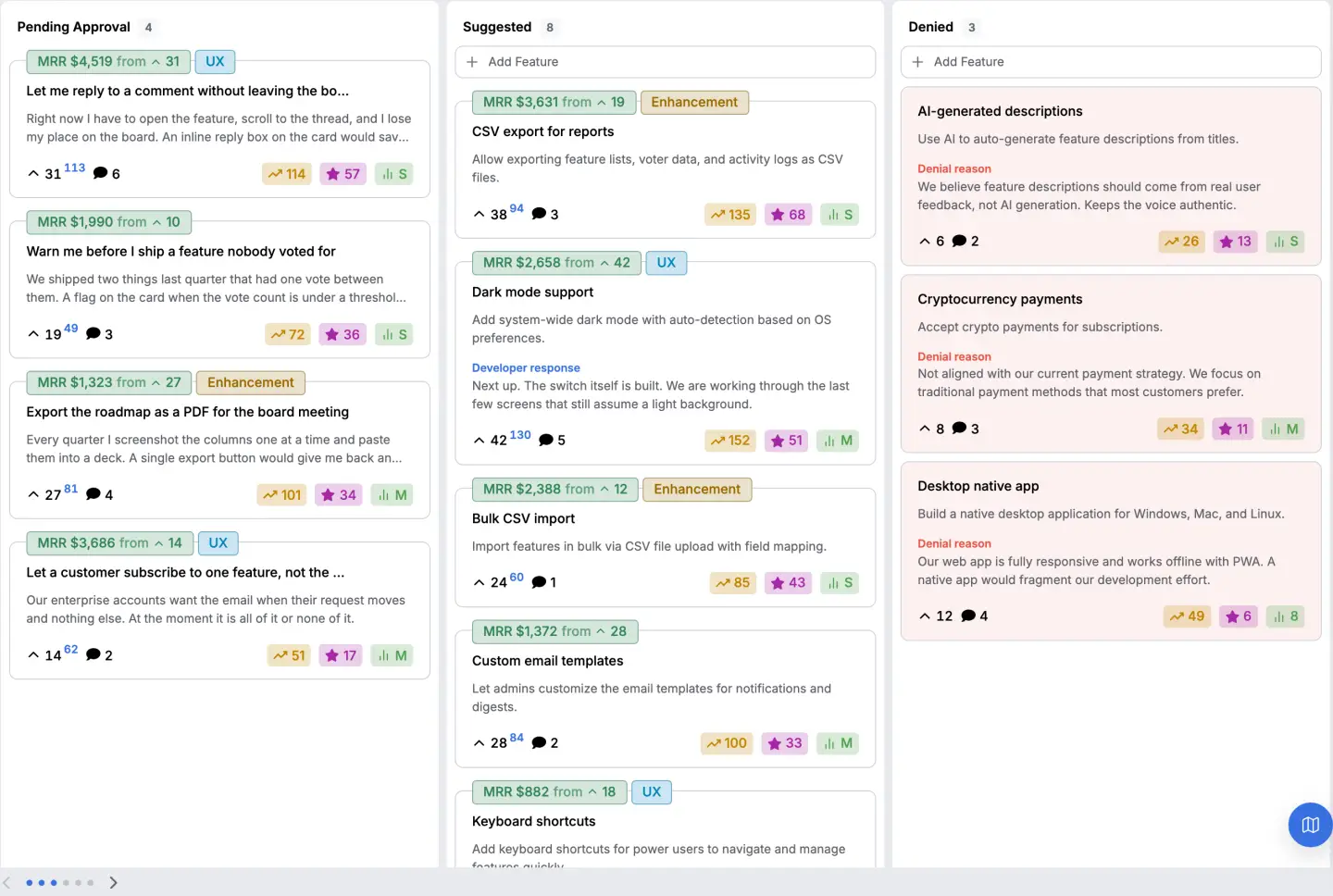
An arithmetic demand figure with an effort estimate divided into it, and it is published rather than described.
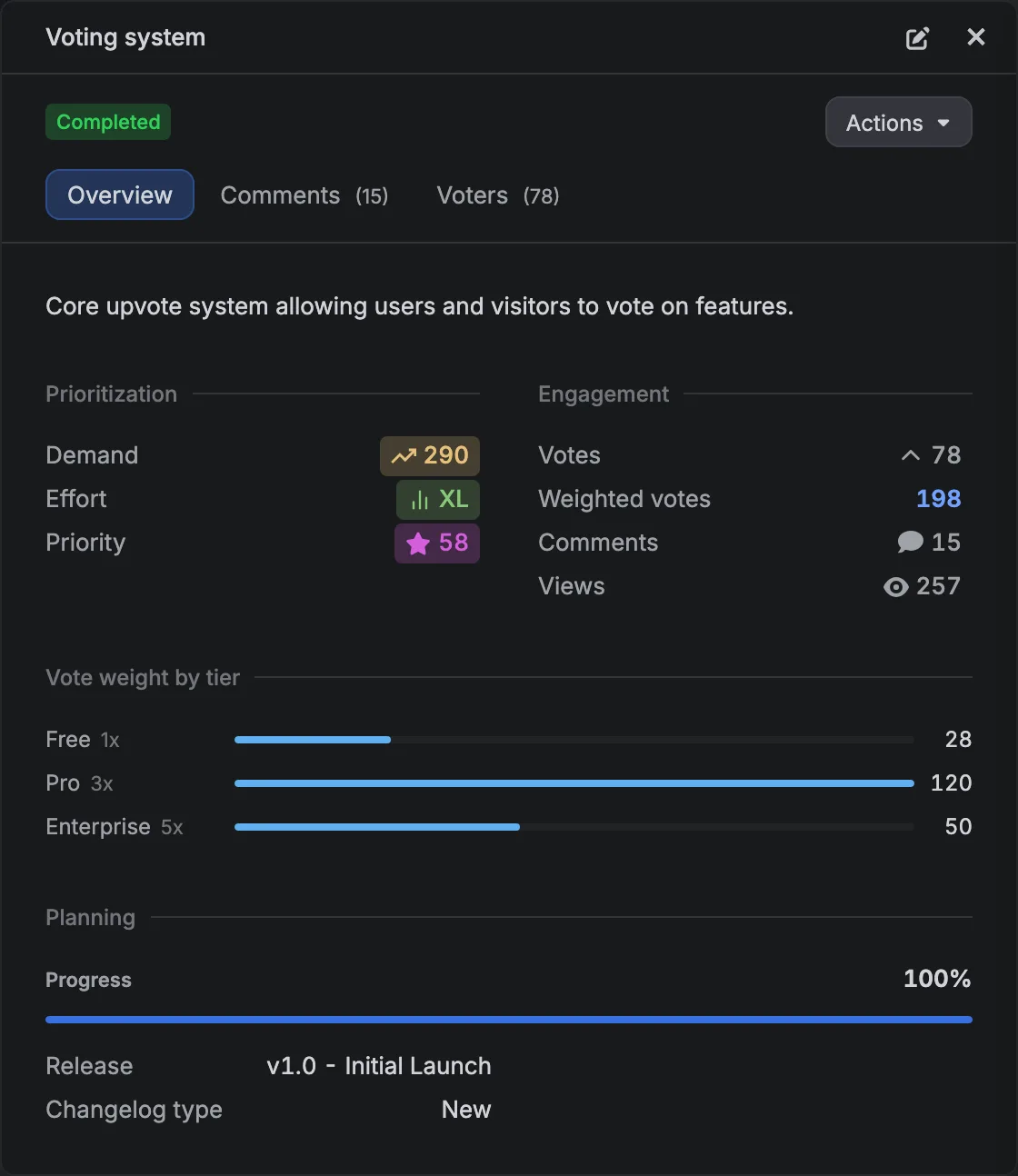
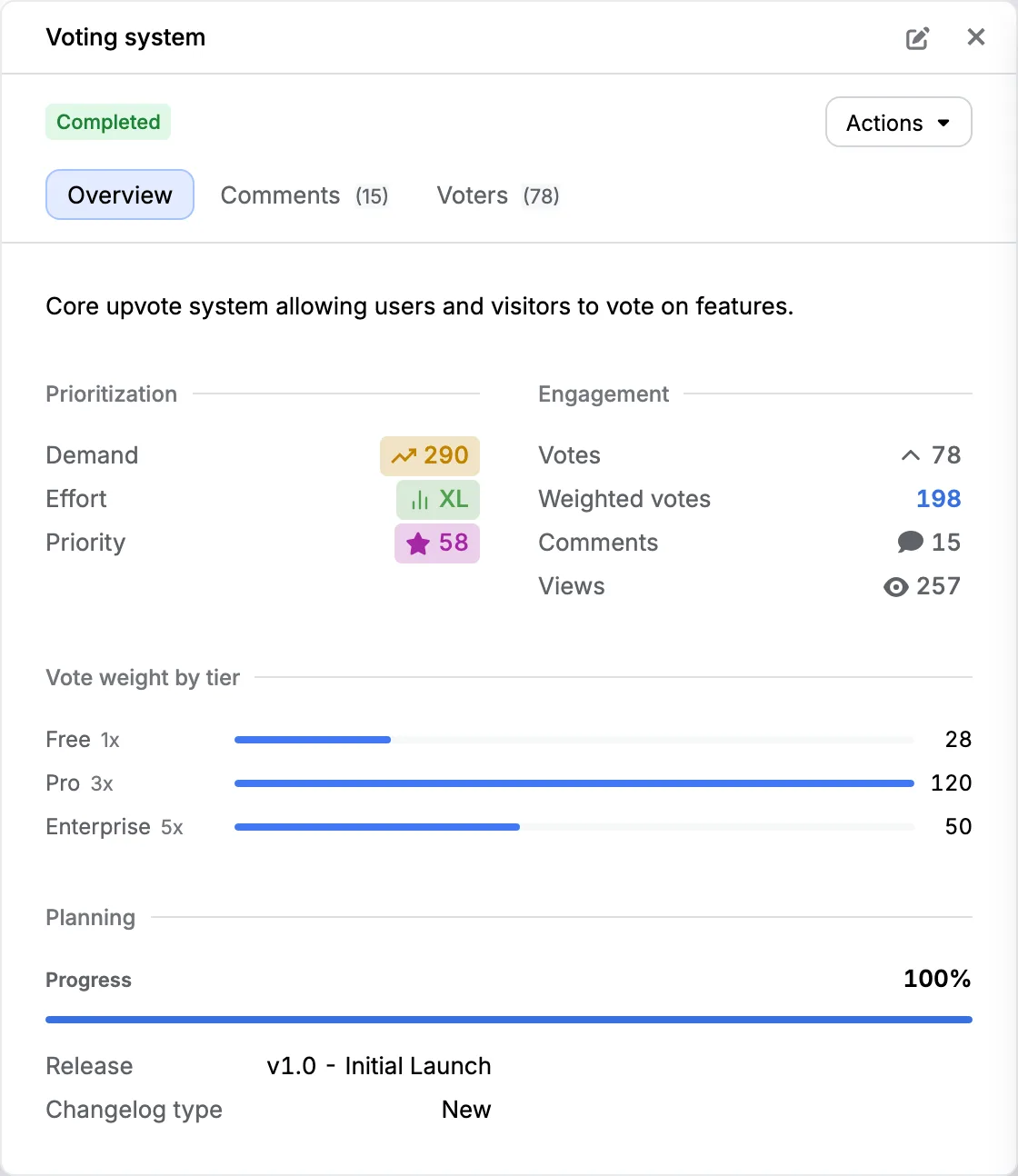
The demand on a request is the votes multiplied by three, plus the comments multiplied by two, plus a tenth of the views. When you type an effort estimate against the request, priority is that demand divided by the effort.
That is a ratio of interest to work, which is the same shape as cost of delay over effort and made of completely different material.
The material is the limitation. Every term in it counts an action a person took before anything was built, so it measures asking rather than money. The full formula and the four places it misleads are written out separately.
Can a feedback board get closer to a money figure?
Closer, and not all the way, and the gap is worth naming.
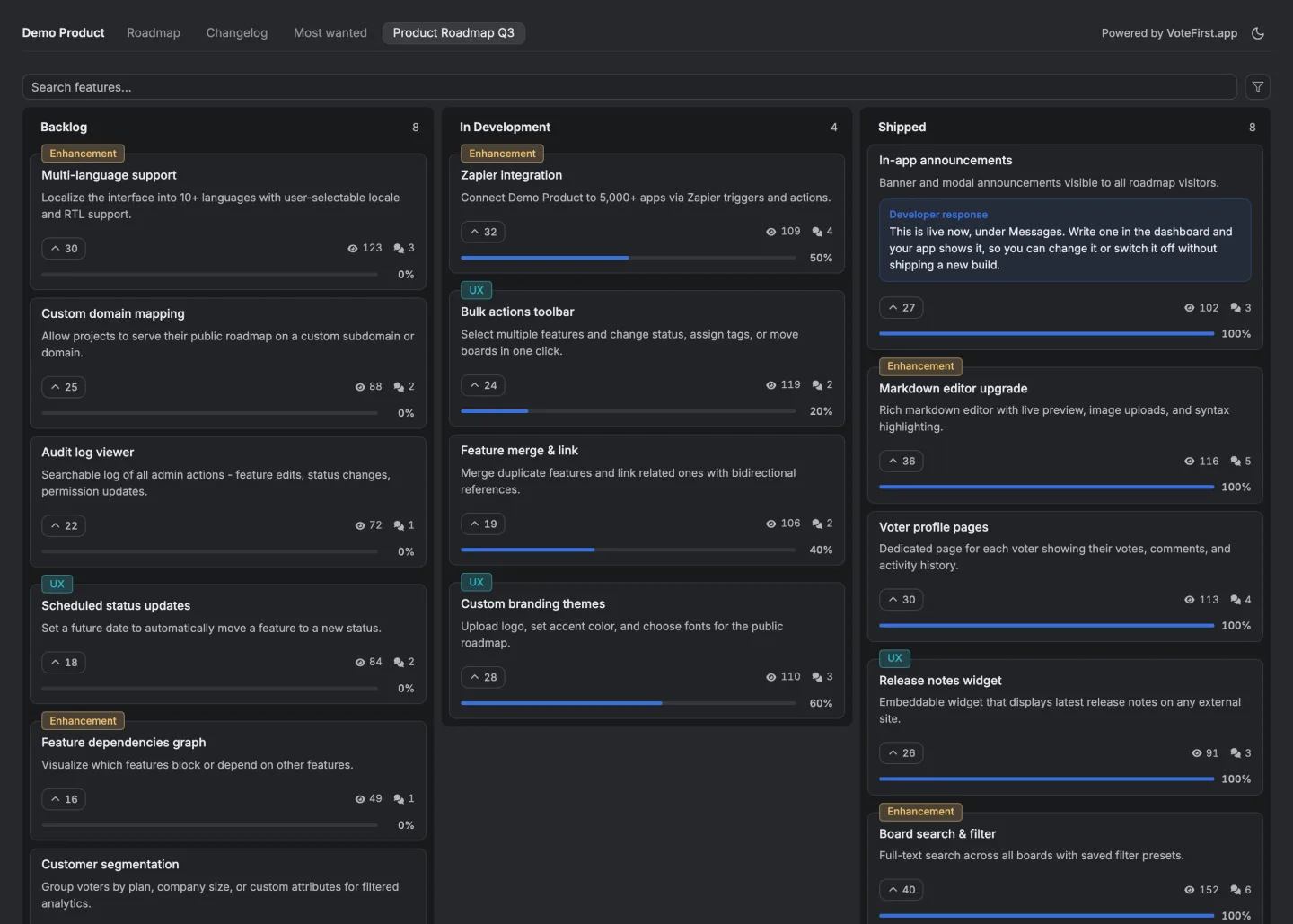
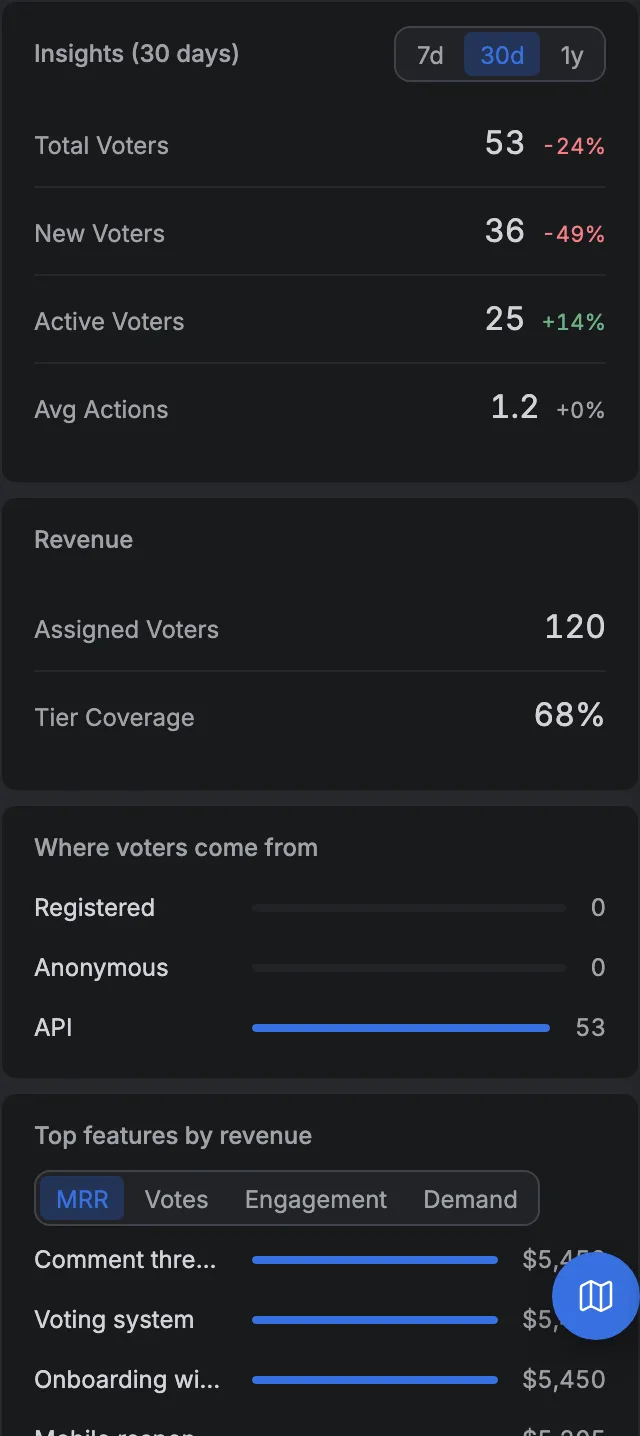
When billing is connected, every voter carries the plan they are on and what they pay, so a request can be read as the revenue sitting behind the people who asked for it.
That is a real number rather than an estimate. What it is not is a cost of delay, because revenue behind a request is money you already have rather than money you will lose by being late.
Used carefully it answers the comparative question that matters most weeks, which is whether the accounts asking for this are bigger than the accounts asking for that. How the revenue reaches the voter is written out with the import behind it.
14 days, a card at signup, then $9 or $39 a month.