A north star metric is the single number a company picks to steer by, chosen because it is supposed to rise only when customers are getting more of what they came for.
The idea is a reaction to teams drowning in dashboards. One number, agreed in advance, that every team can point their work at. It works when the number is chosen well, and when it is chosen badly it becomes the most efficient way ever invented to align a whole company behind the wrong thing.
What makes a good north star metric?
Three properties, and most candidates fail on the third.
It has to move when customers get value, not when the company works harder. A count of things your team shipped fails this immediately.
It has to be something the product can actually change. Revenue is the obvious candidate and a poor one, because it moves for pricing, sales and seasonal reasons that no product decision touches.
And it has to be hard to inflate. Any number a team can raise without making the product better will eventually be raised that way, without anybody deciding to cheat. That is not cynicism, it is what happens when a number is reported monthly for two years.
What is the difference between a north star metric and revenue?
Revenue is the result. A north star metric is supposed to be the thing that causes it, measured earlier.
That is the entire reason for having one. Revenue tells you what already happened, and by the time it moves the decision that moved it is a quarter old. A well chosen leading number moves first, which gives a team something to steer by rather than something to report.
The failure is picking a leading number that leads nowhere. If the number goes up for a year and revenue does not follow, the metric was a proxy for activity rather than for value, and the quiet damage is that everybody spent the year optimising it.
Does a feature request count as a north star metric?
No, and this page is on a feedback board's website, so it is worth saying clearly.
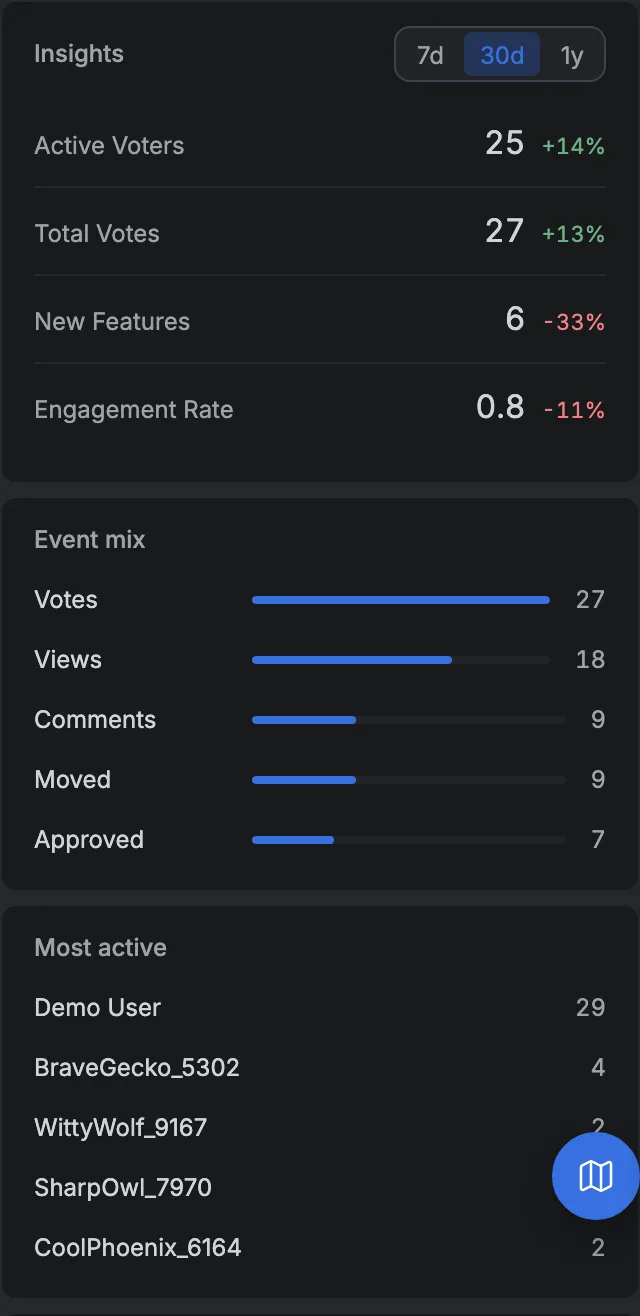
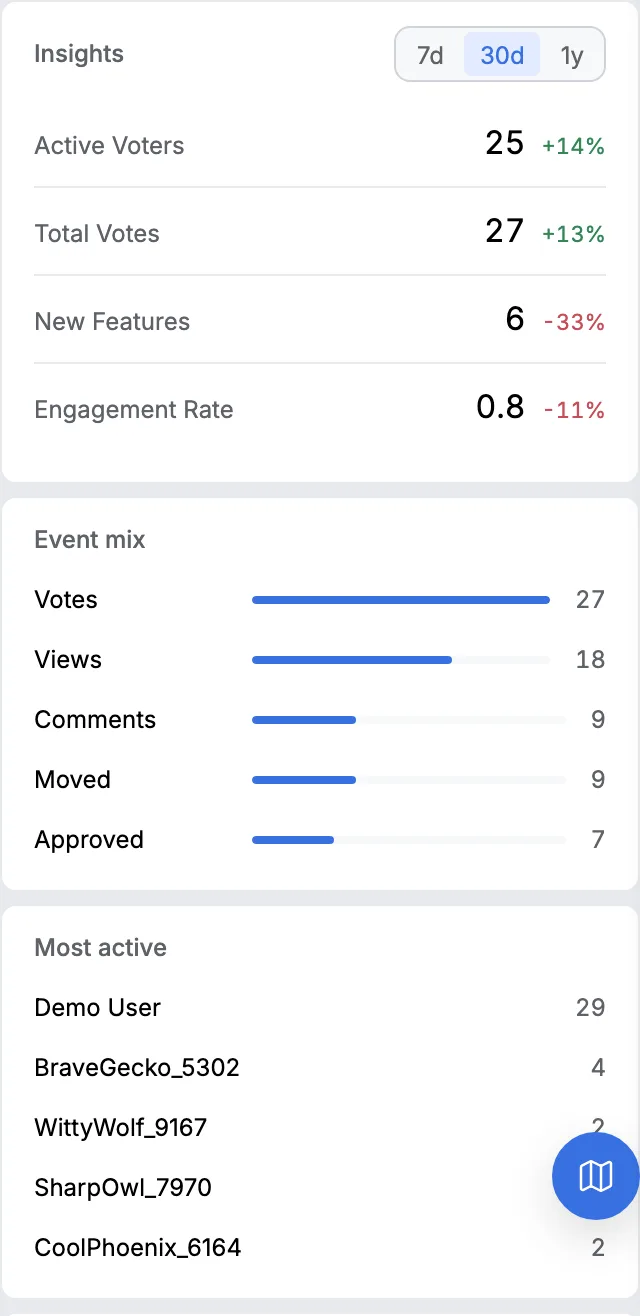
Counts of votes, requests and comments are counts of asking. They measure that people wanted something before you built it. They cannot move as a consequence of the thing you shipped being good, because the board stops counting when the card moves to shipped.
A vote count is an output metric with a friendly face, which is the mechanism written up as the feature factory.
The same is true of our own demand figure, and what it is made of is printed rather than described. Anybody putting that number on a company dashboard as a north star is measuring their own inbox.
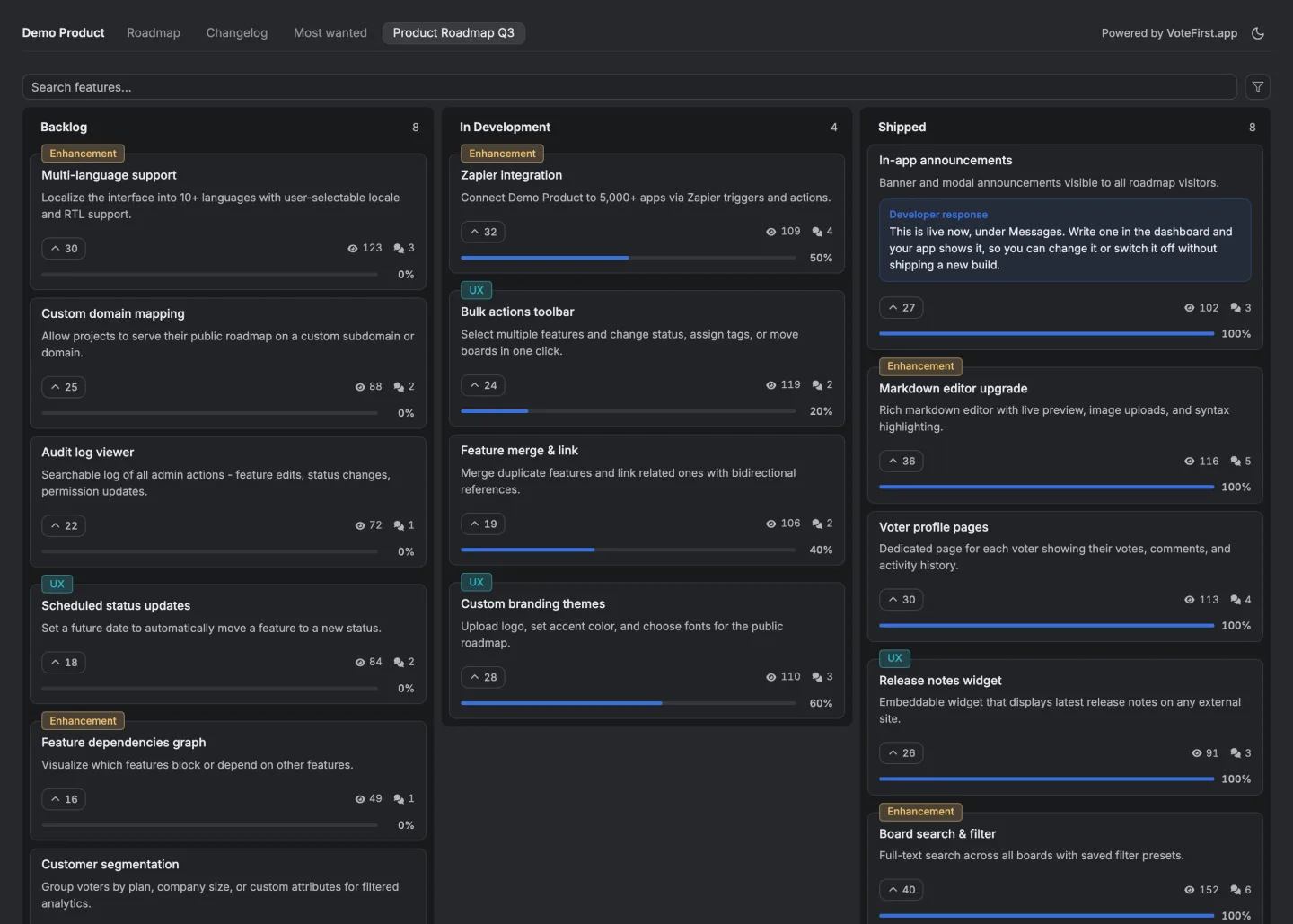
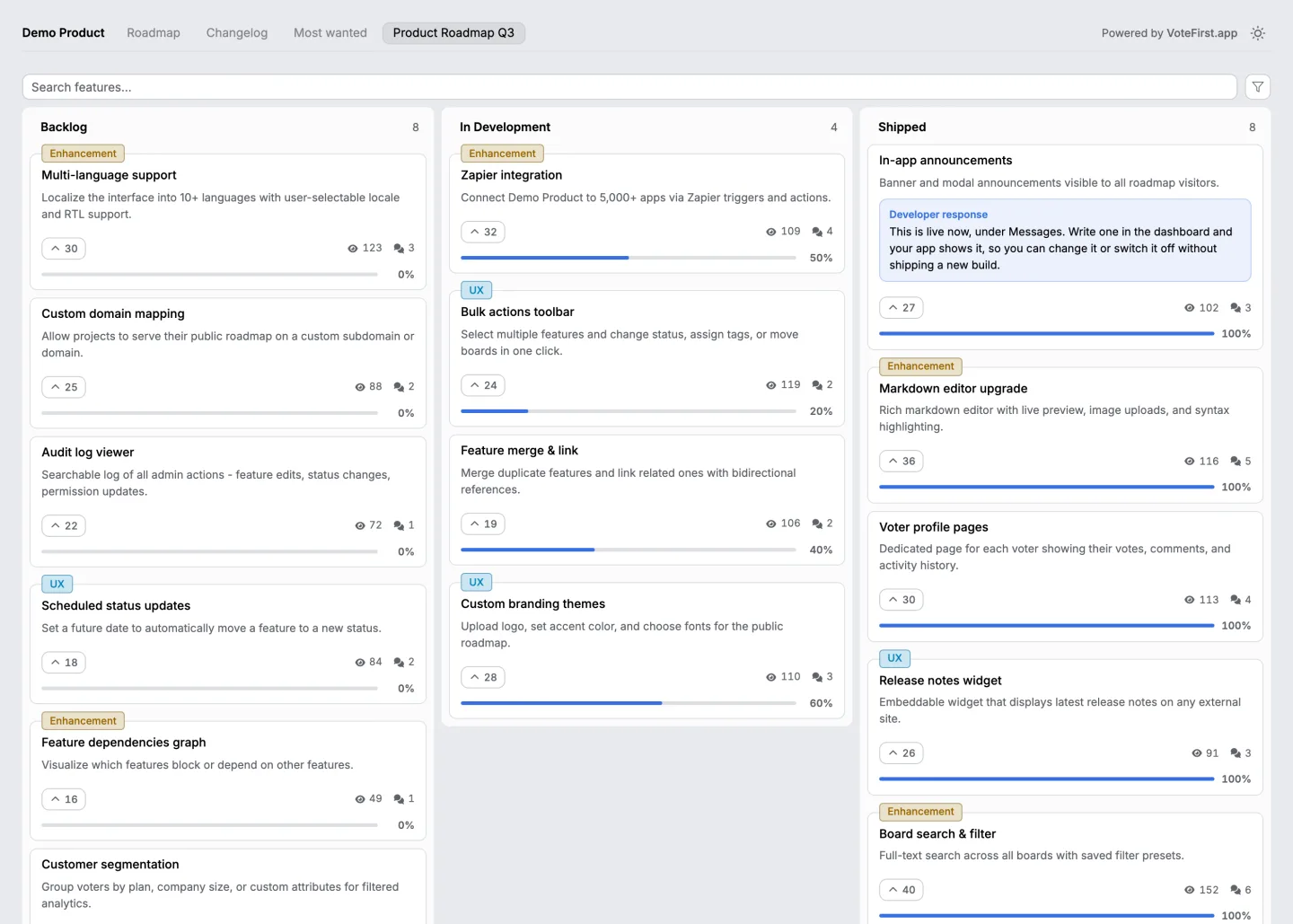
Where does a feedback board fit under a north star metric?
Underneath it, as the place the reasons live.
A single number tells you which direction things moved and nothing at all about why. When it falls, the useful next step is the set of things customers were asking for while it fell, and when it rises the useful question is whether anything you shipped is plausibly responsible.
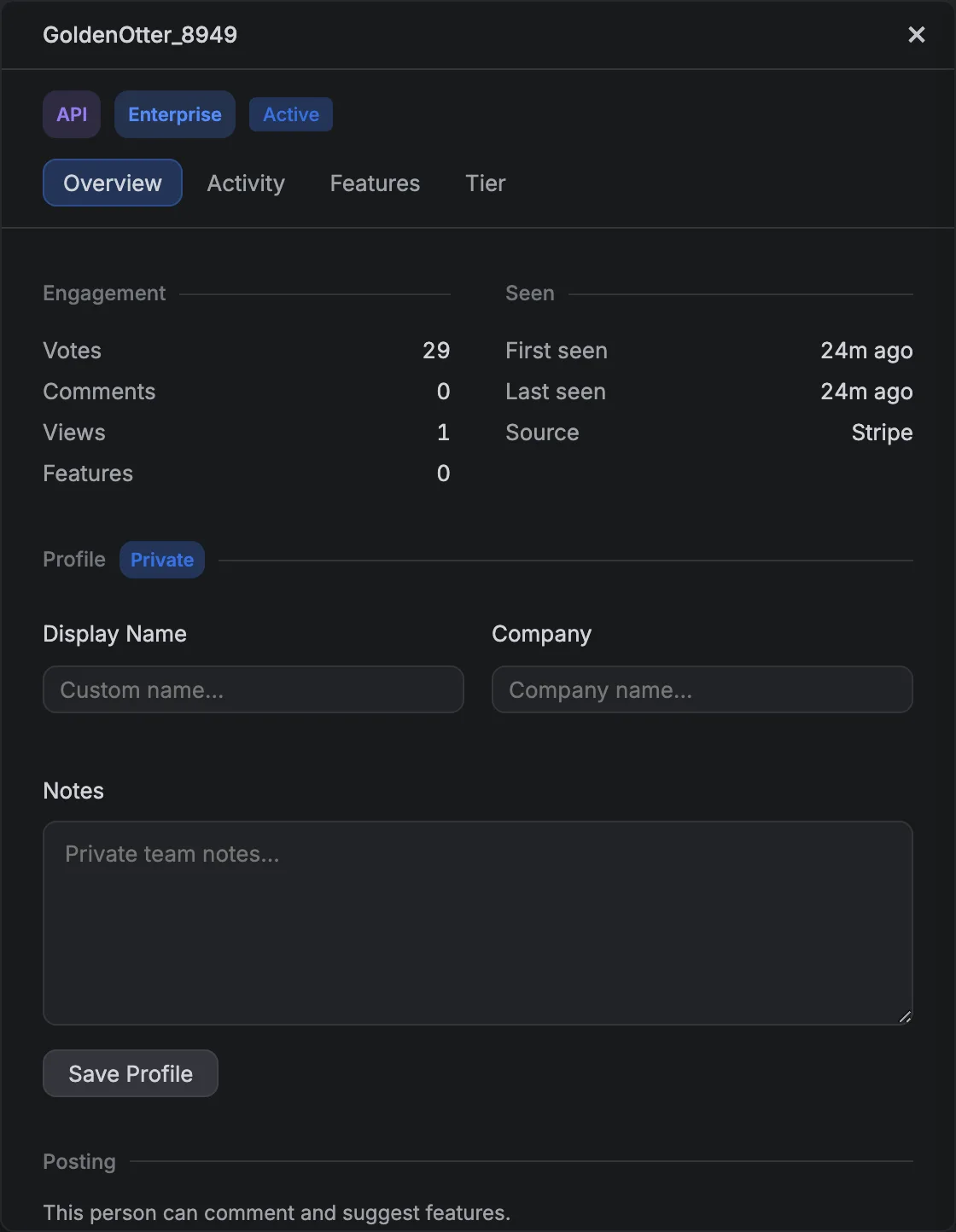
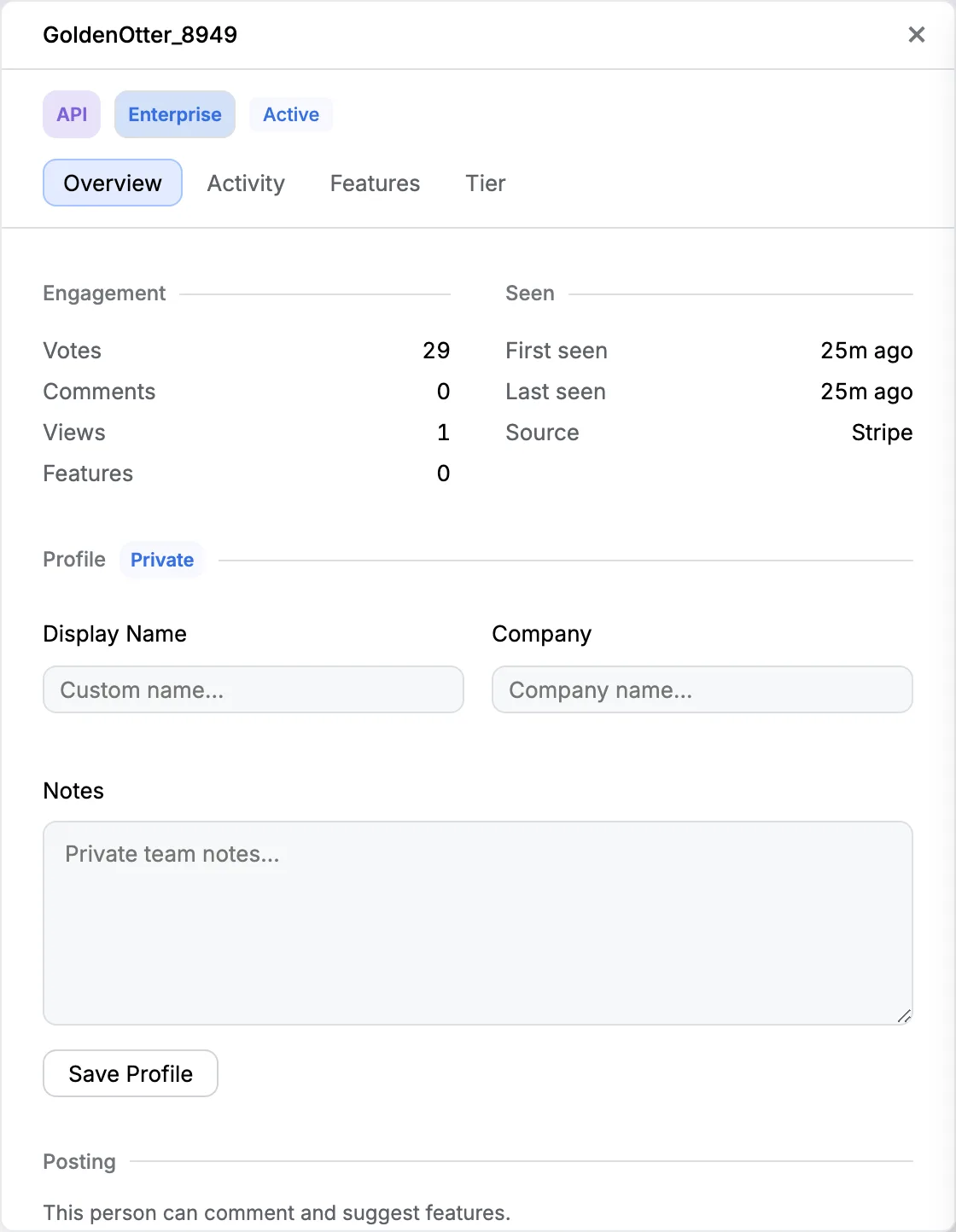
What this product adds to that is the account behind each request. Because voters carry the plan they are on and what they pay once billing is connected, a drop in the number can be read against what the accounts that left had been asking for.
That is a lead rather than a proof, and the weighting that makes it readable is written out with its code.
How do you avoid the classic north star failure?
Write down, in advance, what would make you abandon the number.
A metric with no falsification condition is a slogan. Before it goes on the wall, agree what pattern would prove it wrong, usually the number rising for two or three quarters while retention and revenue do not follow.
Then check that condition on a schedule, because nobody ever volunteers to retire a metric their bonus is attached to.
The second habit is cheaper and rarer, which is keeping one countervailing number beside it. Whatever the star measures, something can be sacrificed to raise it. Naming that thing and reporting it in the same place is what stops a whole company optimising in one direction for a year. Churn is usually the honest candidate.
14 days, a card at signup, then $9 or $39 a month.