If you are here you want anonymous voting on a product roadmap, meaning people vote without signing up first, and the question is what that costs you.
Anonymous voting is not a feature that separates one product in this category from another. Ten of the thirteen tools we checked allow it, ours included, and the three that do not are making a deliberate choice rather than lagging.
So the useful question is not who has it. It is what you are agreeing to when you turn it on, and that is a genuine trade with something real on both sides.
What does anonymous voting actually mean here?
That a visitor can press vote with nothing asked of them, and that the board still knows they are the same person next time.
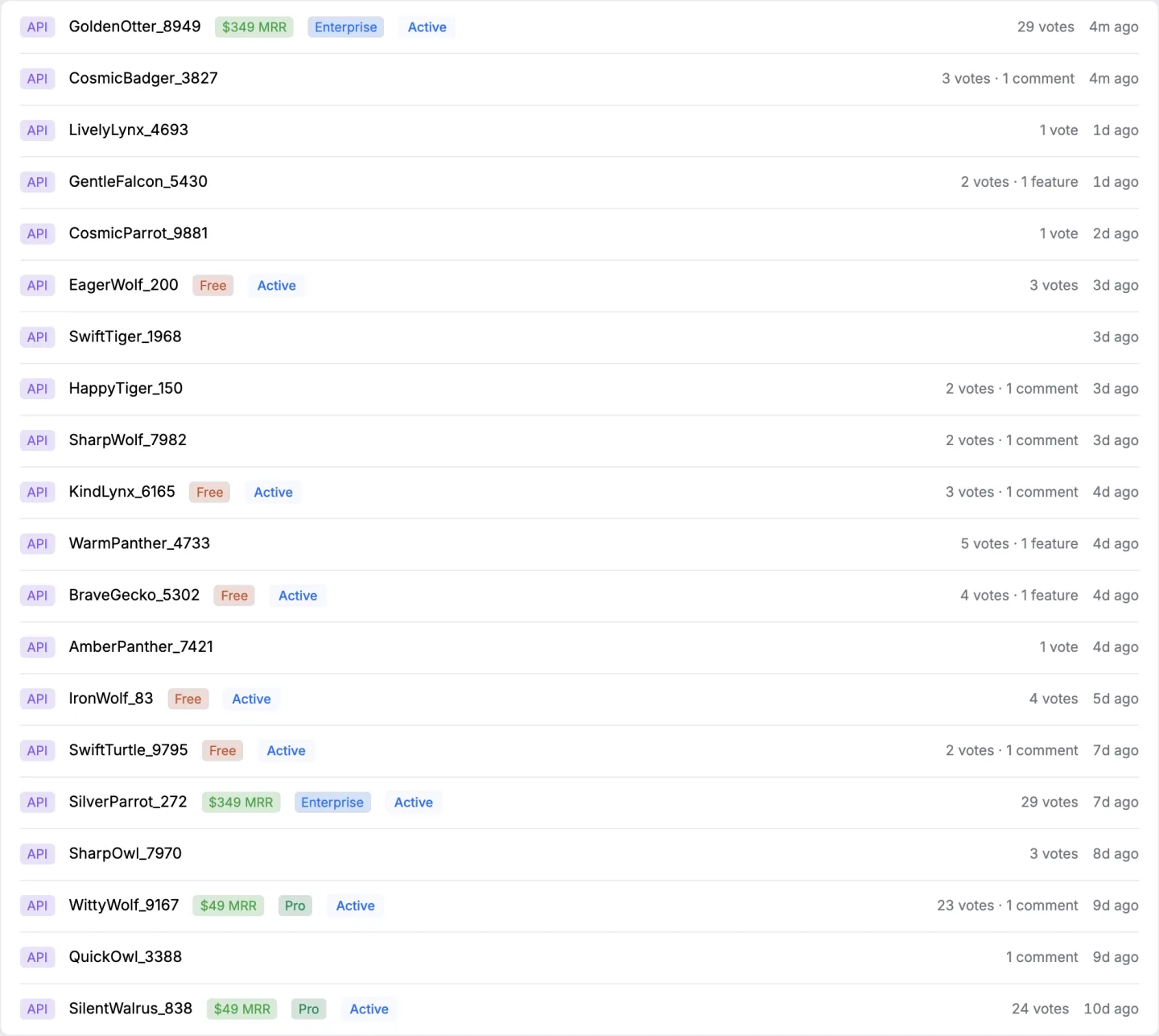
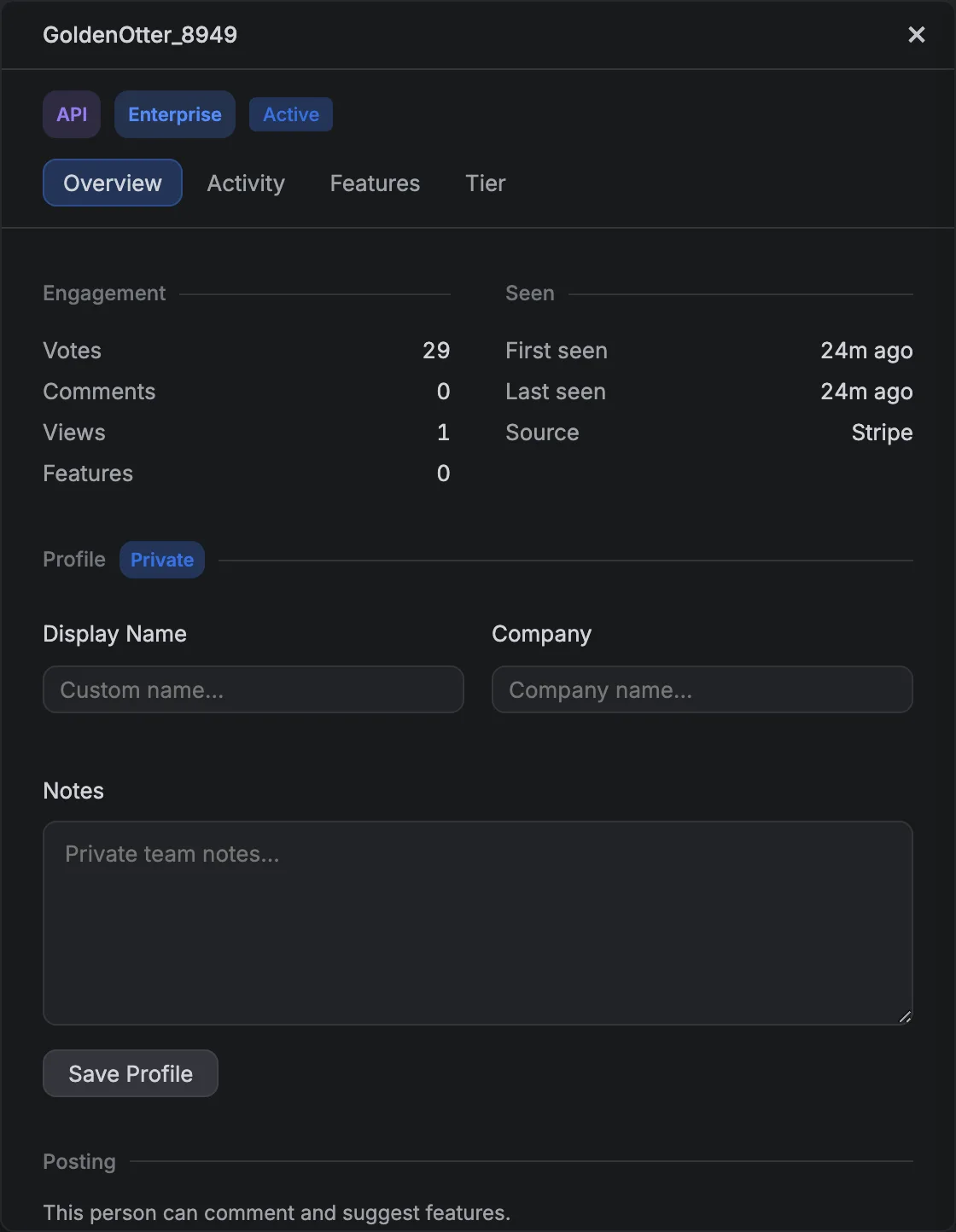
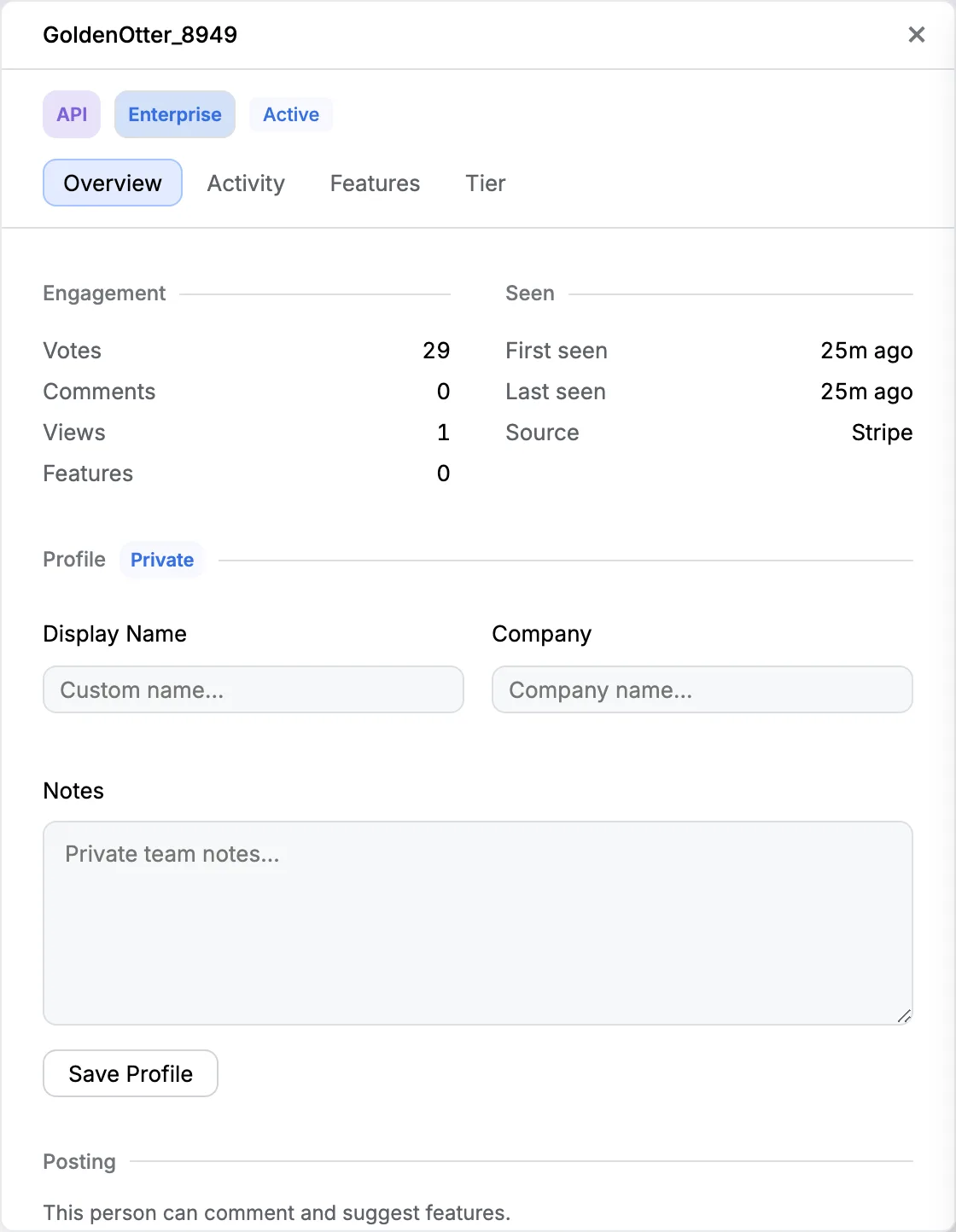
An identity is minted in their browser the first time they land. It holds sixteen random bytes and nothing about them, it lasts a year, and everything they do is attributed to it. That is enough to stop one person voting twice for the same thing, and it is not enough to write to them.
If the cookie is missing, because it was blocked or cleared, the fallback is their network address. Everybody behind one office connection then looks like one person. It is the rare case rather than the normal one, and it is worth knowing if the people you are collecting from all sit in the same building.
If that is the job you have, a trial is 14 days with a card at signup and $9 a month after it.
What do you get for it?
Volume, and a different kind of volume than you expect.
Every step between having an opinion and recording it loses people, and the losses are not random. A sign up form does not filter out the frivolous, it filters out the busy. What survives a form is the unusually motivated, which is a real population and not the one you were trying to measure.
Turning the barrier off does not just give you more votes. It gives you votes from people who would never have made an account and were never going to write in, which is the group your roadmap is least likely to be hearing from otherwise.
What do you give up?
The ability to write back, which is a bigger loss than it sounds.
When a release ships, we write to the people whose vote is in it and name what they asked for. That message can only go to somebody who has an account with an address on it.
An anonymous voter is skipped, not by choice but because there is nowhere to send it. So the loop closes for some of your voters and not for others, and the ones it does not close for are exactly the ones the anonymous option brought in.
The public answer still reaches them if they come back. The card moves, the release appears on a page anybody can read. What they do not get is the arrival, and arriving is most of what a notification is for.

Does anonymous voting work with revenue weighting?
Mostly not, and this is the part nobody in the category writes down.
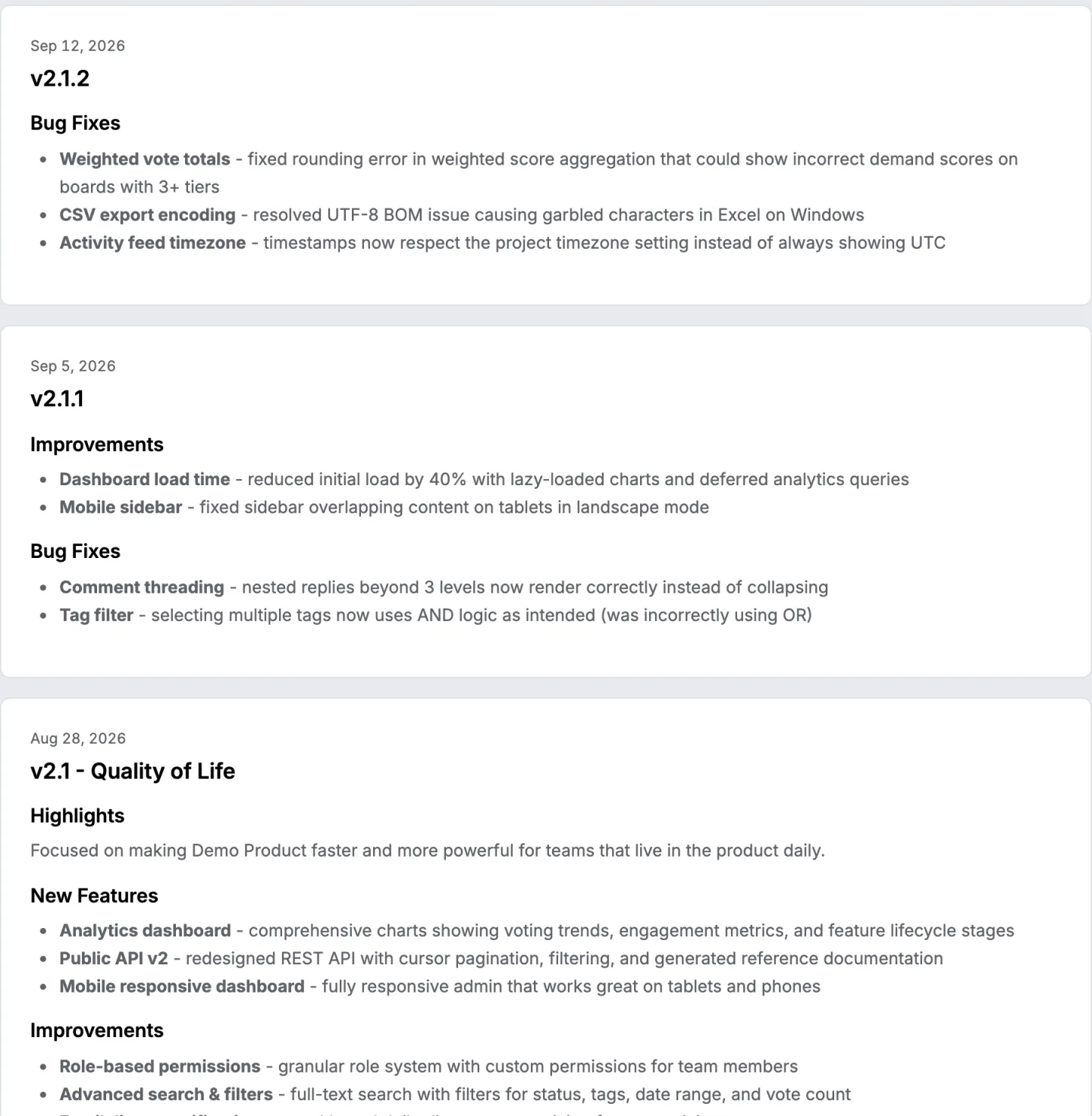
A weighted vote carries the multiplier of the tier its voter sits in. An anonymous visitor sits in no tier, because a tier is something you assign to somebody you can identify. So their vote weighs one, which is the correct and deliberate floor, and no amount of weighting will move it.
That means the two ideas pull against each other in the same product. Anonymous voting widens the sample and revenue weighting sharpens it, and a vote can be inside one or the other but rarely both. Worth knowing before you build a plan on having both at once.
The way through is to let identity be optional and late rather than required and early. A customer who signs in through your own product votes as themselves and carries their tier. Everybody else votes anonymously and counts as one. You get the width and the sharpness in the same board, on different rows.

Does it invite abuse?
It invites less than you would think, and the defences are not the ones people assume.
There is no spam filter in the product, and we would rather say that than let the word moderation do quiet work. What exists instead is a review gate.
Every suggestion from a visitor is held until you approve it, whichever route it arrived through, and there is no setting that turns that off. Nothing embarrassing appears on your board without a person seeing it first.
Votes are different, because a vote is one press with nothing to moderate. One identity holds one vote on one card and that is a rule in the database rather than a check in a handler.
Somebody determined can clear a cookie and vote again. Somebody determined can also make five accounts on a tool that requires them, so this is a smaller difference between the two designs than it is usually sold as.
Should you turn it on?
Yes if you are trying to find out what people want, and no if you are trying to find out who wants it.
Those are different jobs. A board collecting anonymously gives you a wide, cheap, slightly noisy read on demand, and it will not tell you which account is behind any row. A board requiring identity gives you a narrow, expensive, precise one.
Ours is anonymous by default and you can layer identity on top where it matters. The board is nine dollars a month, and what a vote is worth once you can see who cast it is the next thing to read.
14 days, a card at signup, then $9 or $39 a month.

