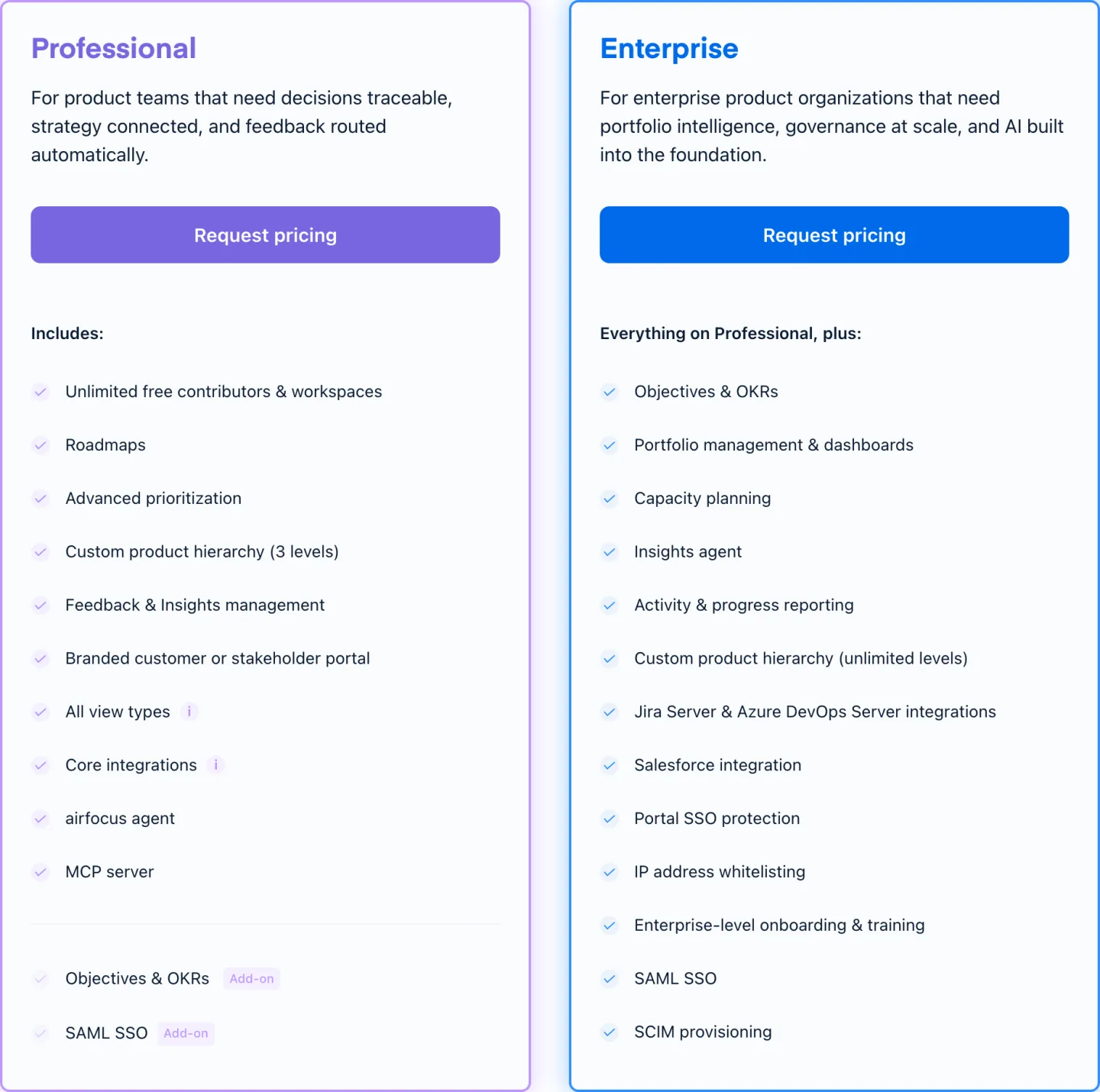
There are two numbers everybody wants before they book a call, and airfocus publishes neither. Their pricing page carries two plans, Professional and Enterprise, and both buttons say Request pricing. The FAQ answers the other question in their own words, which are that airfocus does not offer a free trial.
None of that is a criticism of the product, which is a serious one. The missing figure simply decides whether you can evaluate it on a Tuesday afternoon or whether evaluating it starts with a sales conversation.
Everything on their side of this page was read on airfocus.com/pricing on 14 September 2026.
What does airfocus cost?
Nothing published. Two plans, both asking you to request a price.
| Plan | Price |
|---|---|
| Professional | Not published |
| Enterprise | Not published |
- Professional lists unlimited free contributors and workspaces, roadmaps, advanced prioritization, a custom product hierarchy three levels deep, feedback and insights management, a branded customer or stakeholder portal, all view types, core integrations, the airfocus agent and an MCP server. Objectives and OKRs and SAML SSO are add ons.
- Enterprise lists everything on Professional plus objectives and OKRs, portfolio management and dashboards, capacity planning, an insights agent, activity and progress reporting, an unlimited hierarchy, Jira Server and Azure DevOps Server, Salesforce, portal SSO protection, IP address whitelisting, enterprise onboarding, SAML SSO and SCIM provisioning.
The one unit they do publish is the interesting half. Contributors and workspaces are unlimited and free, so the meter is on the people who make decisions rather than on the people who look. Their own FAQ adds that a subscription includes multiple workspaces under one account.
The page also carries the line "airfocus by Lucid" beside the logo, so the vendor behind it is Lucid rather than an independent company. Everything their pricing page does say, including both feature lists and the trial answer, is set out separately.
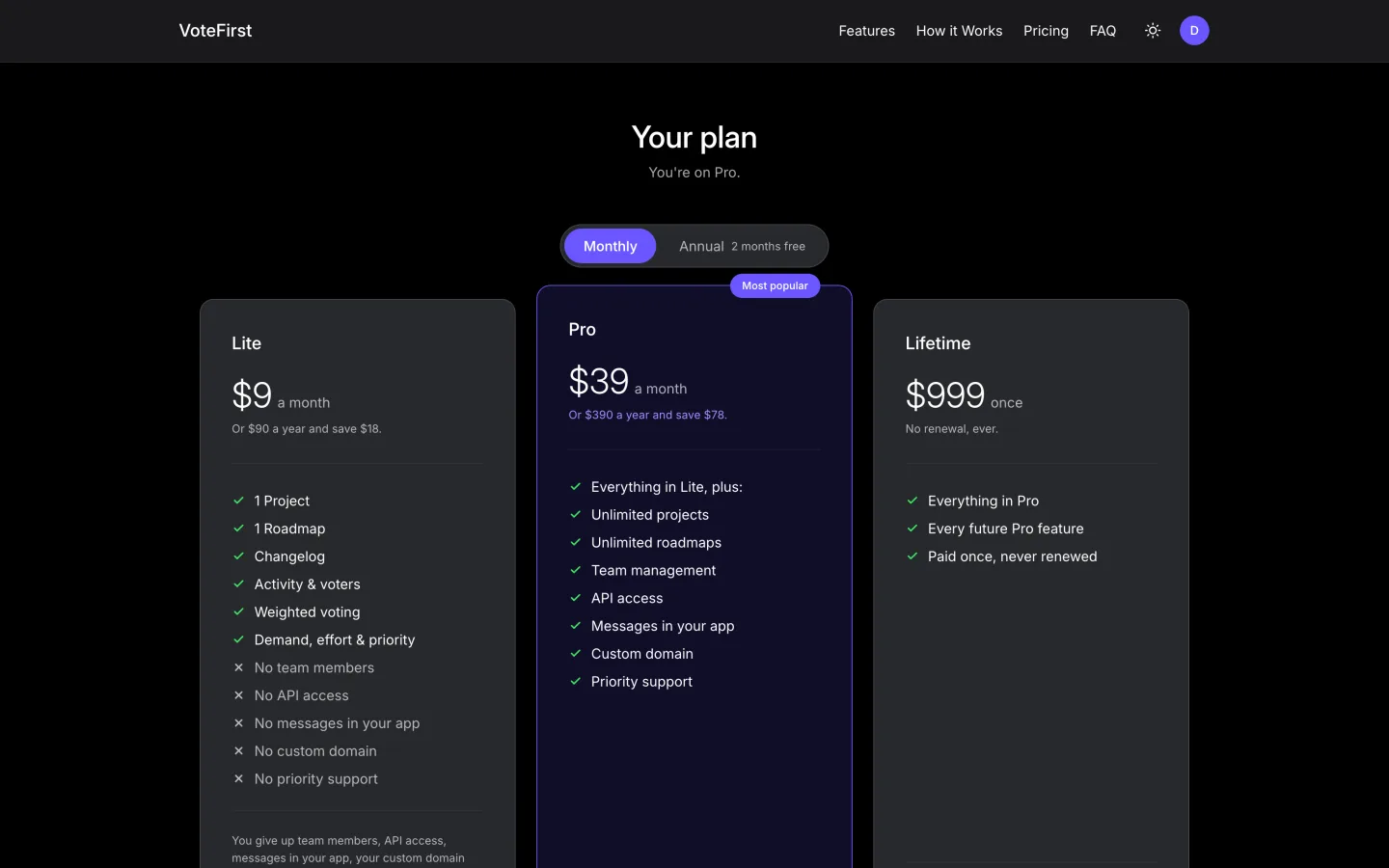
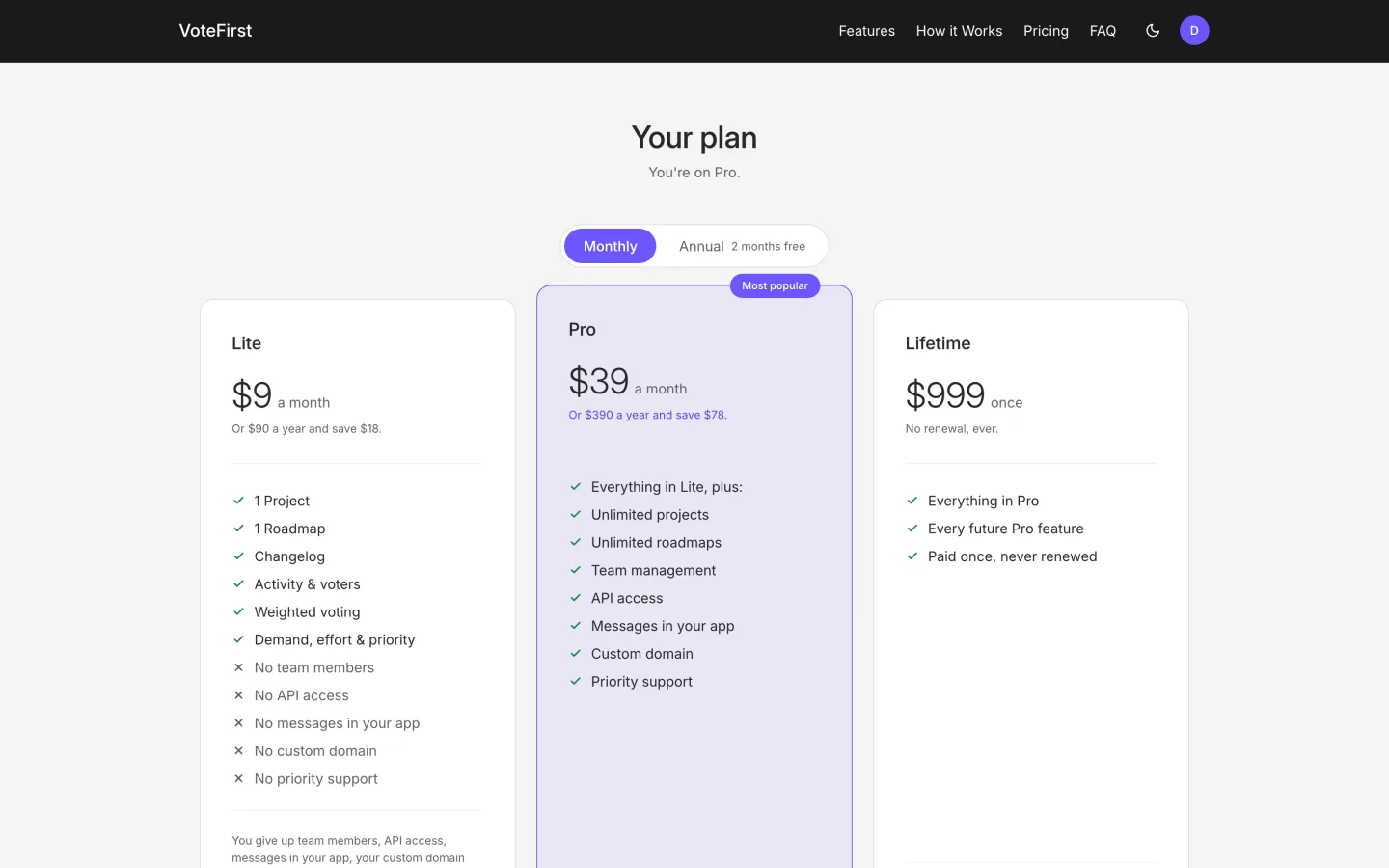
If you would rather see a number than request one, a trial here runs 14 days and asks for a card at signup, and the bill after it is $9 or $39 a month.
What is airfocus?
A product management platform sold by Lucid, built around prioritisation, roadmaps and a feedback and insights module, with a branded customer or stakeholder portal on top of it.
The word platform is doing real work in that sentence. Their own plan list carries portfolio management, capacity planning, objectives and OKRs, a three level product hierarchy and governance features, which is a product organisation's toolkit rather than a feedback board.
Why do people look for an airfocus alternative?
The absent price is the first reason and the trial is the second, and both are on their own page rather than inferred.
The third is scale. Portfolio management, capacity planning, governance and a three level product hierarchy are built for a product organisation with several teams in it. A founder who wants customers to vote on a public board is buying a platform to get a board, and the evaluation ends at the call booking form.
Is there a free airfocus alternative?
Yes, several, and this is not one of them. Fider is open source and free if you host it.
UserJot publishes a free tier with two boards, Supahub and Featurebase each publish one with a single board, and Sleekplan's Indie tier is a single admin workspace that does not expire. All four were read on their own pages on 14 September 2026.
There is no free plan here. A fourteen day trial with a card at signup, then nine or thirty nine dollars a month, is the whole offer.
Where do the public roadmap and single sign on sit?
Both exist, and both are named in a way worth reading closely.
What airfocus sells in place of a public roadmap is a branded customer or stakeholder portal, which is the same idea with the door closed by default and Enterprise carrying portal password and portal SSO protection. SAML SSO on airfocus is an add on to the Professional plan and included on Enterprise, alongside SCIM provisioning.
Here the public roadmap is a page with an address anybody can open, on the nine dollar plan, and single sign on is not sold at all.
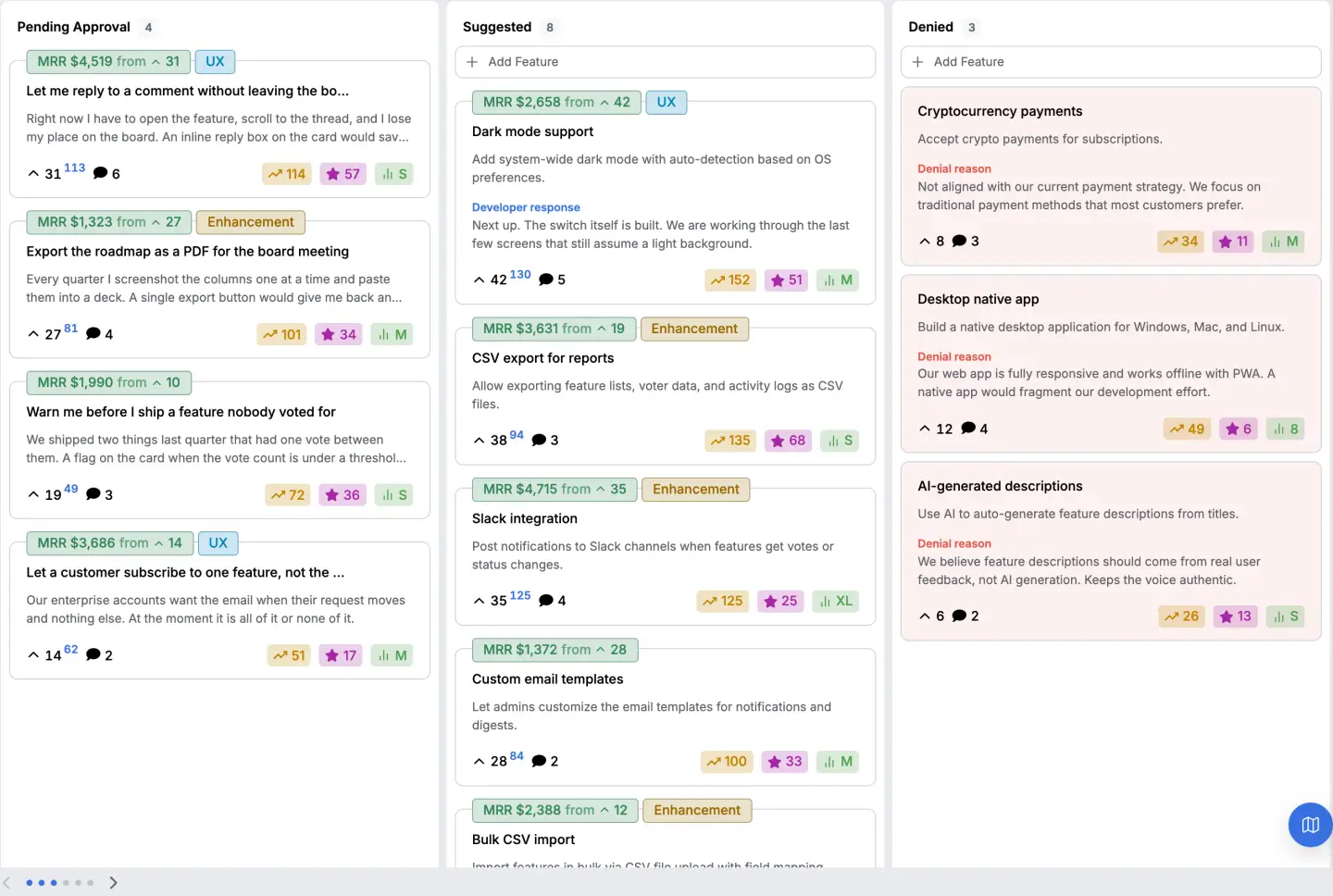
Does airfocus weight votes by revenue?
Their pricing page lists advanced prioritization and feedback and insights management, which is scoring and segmentation over the feedback you have collected.
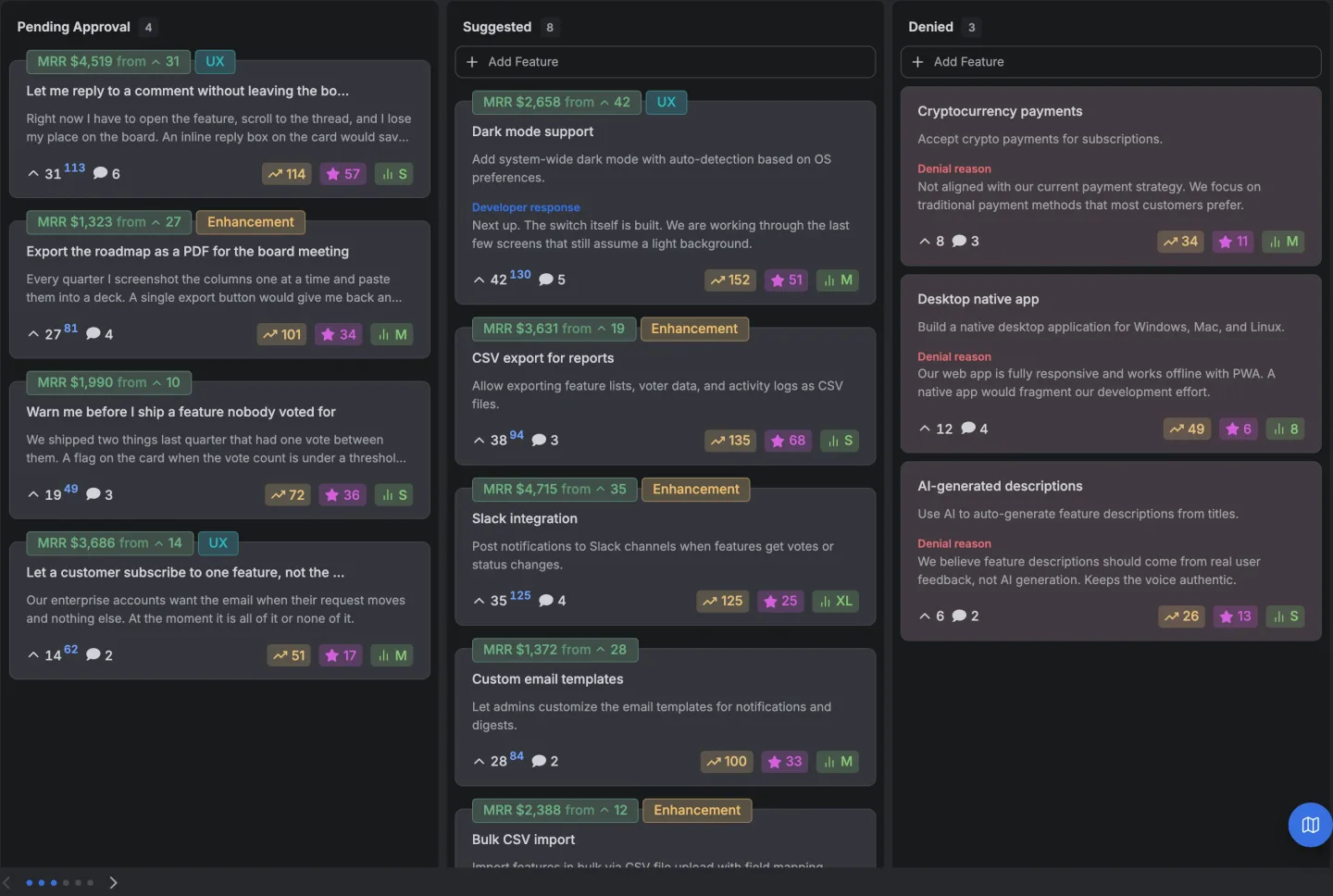
Scoring is a person setting numbers against criteria. Weighted voting is a customer's plan multiplying their vote, so the board reorders when customers act rather than when somebody edits a model. The mechanism here is written out with the code behind it, including where the money comes from and what happens when a customer cancels.
Does airfocus have a free plan?
Not on the page read on 14 September 2026, and no trial either. The route in is a demo booking.
Is airfocus worth it?
For the buyer it is written for, quite possibly, and this page cannot tell you because the price is not published.
That is the honest answer and it is also the whole problem. Worth it is a ratio, and one side of the ratio is behind a demo call.
What can be said is what you are buying into, which is a platform evaluation with a salesperson, several teams' worth of features, and no trial to test any of it on your own time.
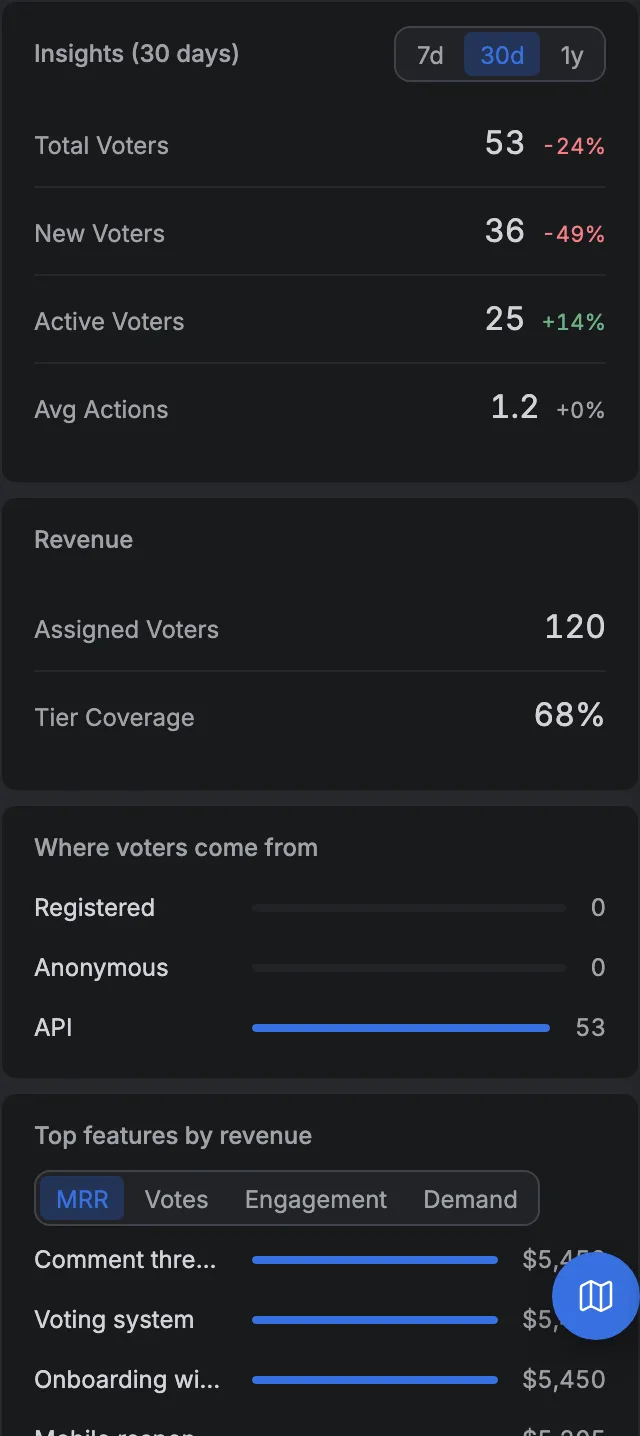
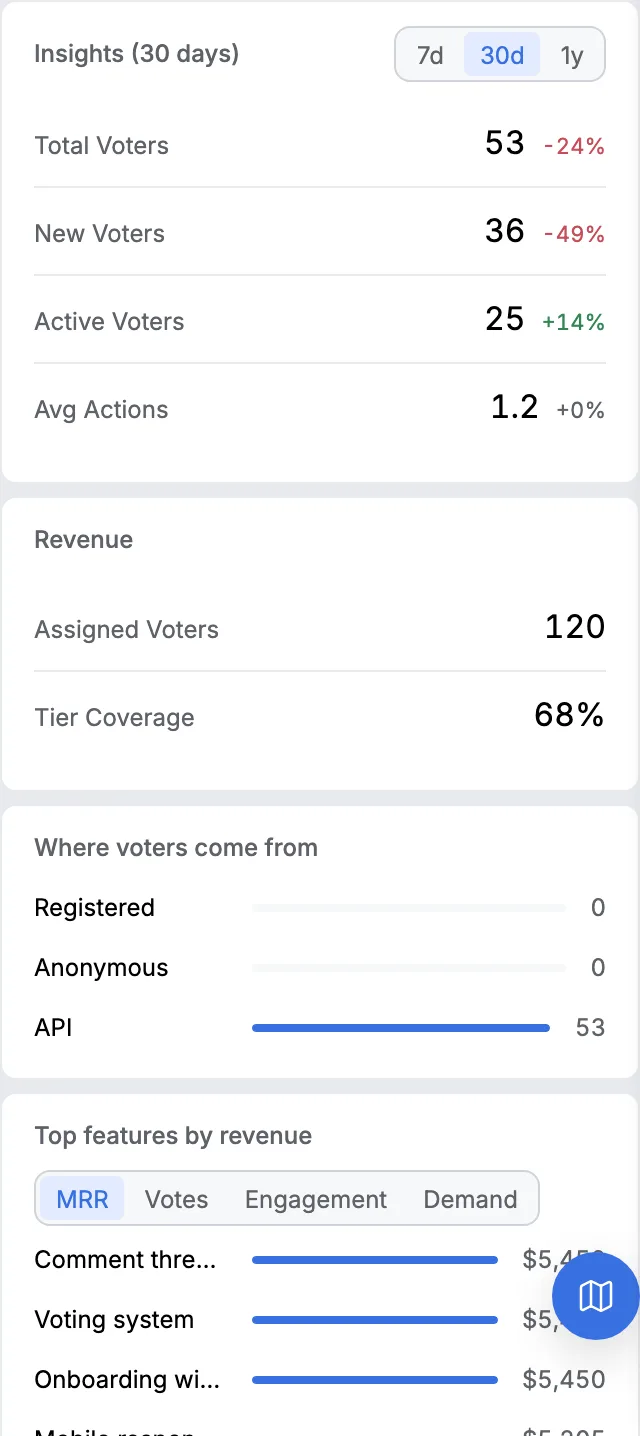
What does ours cost, and where is airfocus the better answer?
Nine dollars a month for one project, thirty nine for unlimited projects, the API, a custom domain and a team.
They are the better answer in one clear case and it is worth saying plainly.
If you run several product teams, need a portfolio view across them, capacity planning, OKRs tied to delivery and governance features an enterprise buyer will ask about, that is what airfocus is built for and this product has none of it. We are one board, one roadmap, one changelog, and votes that carry revenue.
The whole category with every published price puts both of us in the same table, and the airfocus row is the one with no number in it.
14 days, a card at signup, then $9 or $39 a month.
What moving actually involves
More work than a button, and the honest version is short. There is no importer for requests or votes on our side.
Voters and the revenue behind them come in from a CSV or from a billing connection, which is the part the weighting needs. The requests themselves are rebuilt by hand or by a script against the API, and the vote counts start again.
That is a real cost and it is worth naming before anybody moves. The five steps, with the endpoint each one uses, are written out in full, and they are the same five whatever you are leaving.

