Most pages in this directory compare two tools that disagree about what to charge for. This one does not.
Features.Vote charges a flat monthly price, never meters voters, lets people vote without an account and ships a native SwiftUI SDK, and so does this product. If you are choosing between the two on billing shape, you are choosing between two of the same answer.
The difference is narrower and it is worth being exact about. On their board every vote counts once. Here a vote can carry the money behind the person who cast it.
Everything on their side of this page was read on features.vote on 14 September 2026.
What does Features.Vote cost?
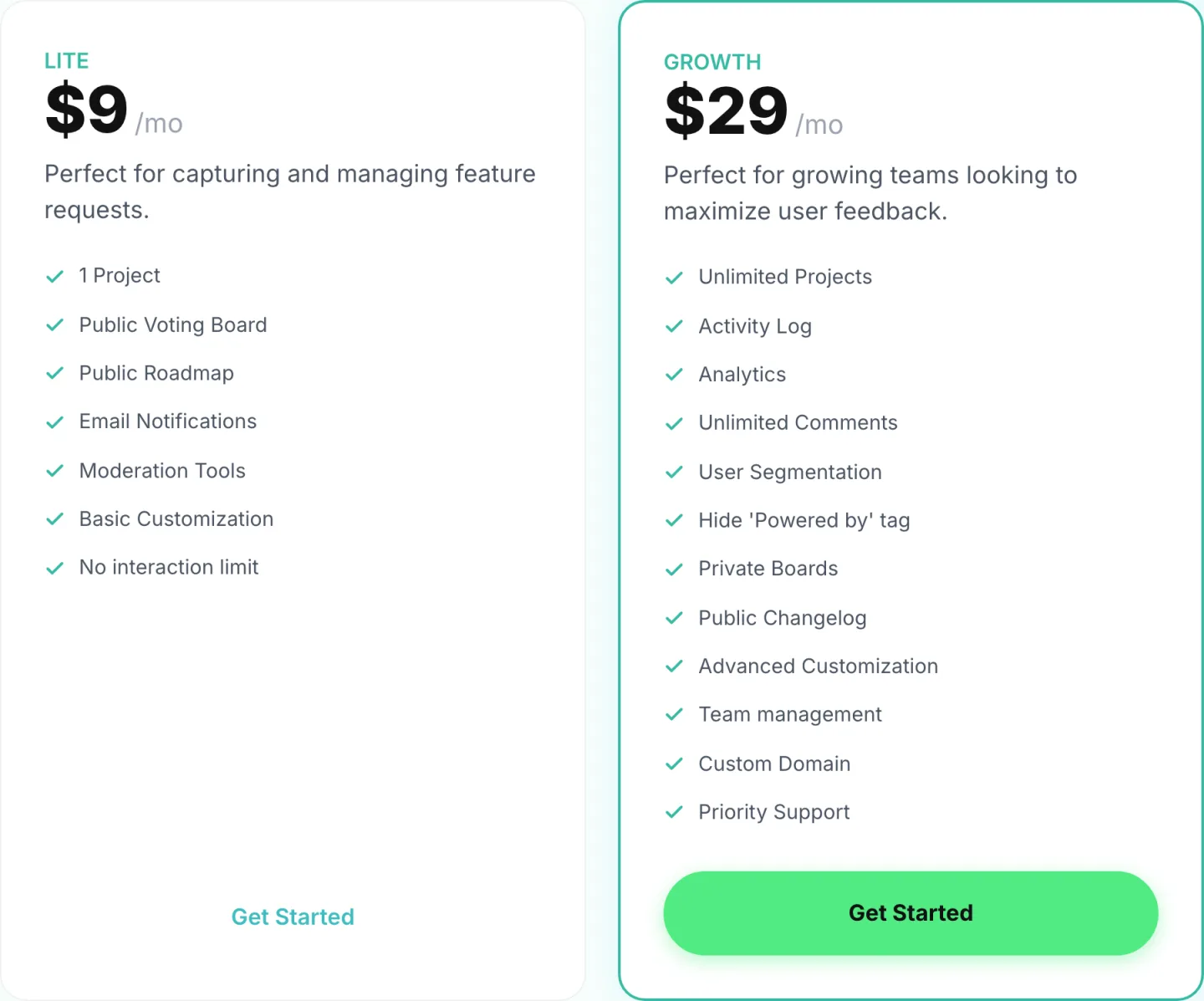
Two plans, flat, with two months free on annual billing.
| Plan | Paid monthly | Paid yearly |
|---|---|---|
| Lite | $9 | $90 |
| Growth | $29 | $290 |
- Lite lists 1 project, public voting board, public roadmap, email notifications, moderation tools, basic customization, no interaction limit.
- Growth lists unlimited projects, activity log, analytics, unlimited comments, user segmentation, hiding the powered by tag, private boards, public changelog, advanced customization, team management, custom domain, priority support.
Their trial is fourteen days and their page says it asks for no card. They also publish a one time setup service starting at ninety nine dollars for people who would rather not do the installation themselves.
Their own words on the unit are worth quoting, because so few vendors in this category will write them down. "Pricing never scales with votes, voters or tracked users." Both plans and that sentence are set out on the pricing page for them.
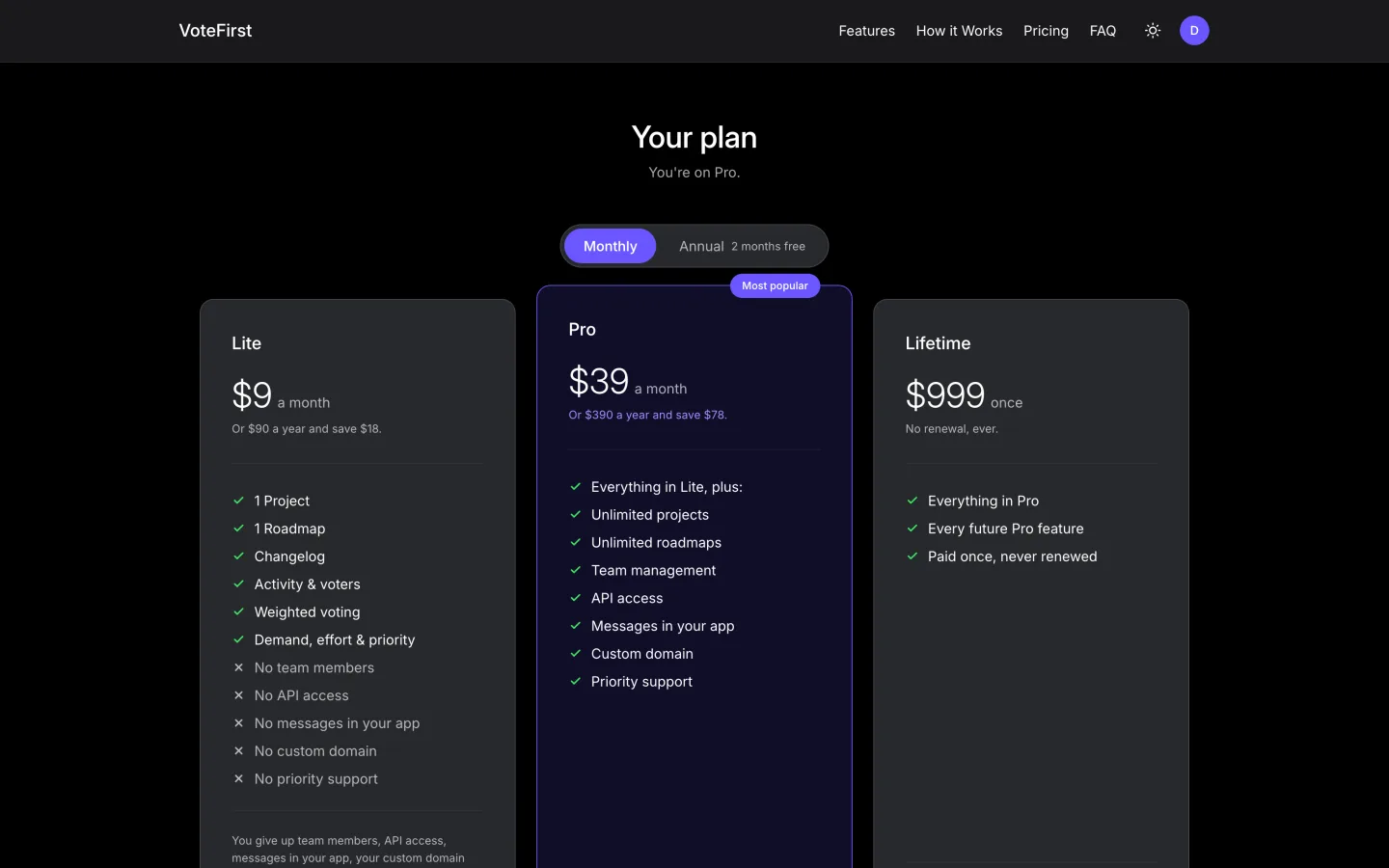
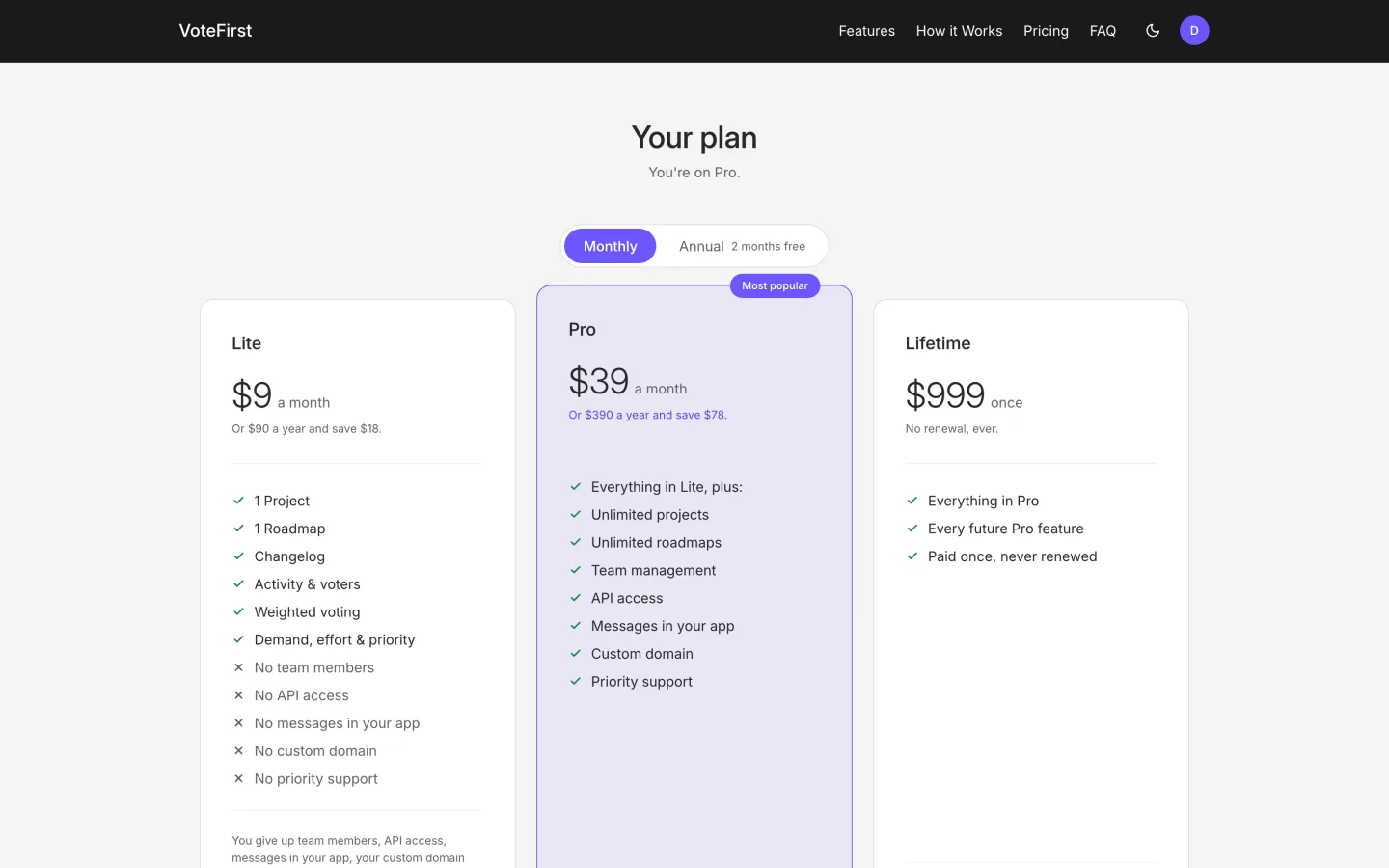
If you want the other side of the comparison rather than another page about it, a trial here runs 14 days and asks for a card at signup, and it is $9 or $39 a month after that.
What is Features.Vote?
A feature voting board with a public roadmap and changelog, embedded in a website or a web app, with a native SwiftUI SDK for iOS, iPadOS and macOS alongside it.
Their own description of the voting model is the part worth reading twice, because voters click once, with no signup, no email and no SSO. This product does the same thing with an anonymous cookie, which is why the two feel so similar to a visitor.
Where is Features.Vote cheaper?
At the top of their ladder, and it is not close.
Features.Vote puts a public changelog on Growth, at twenty nine dollars a month, alongside unlimited projects, private boards, a custom domain and team management. The nearest plan here is thirty nine dollars and carries the same four things.
So a team that needs several boards and a custom domain pays ten dollars a month less over there, which is a hundred and twenty dollars a year.
At the bottom the two are the same number. Nine dollars against nine dollars, one project each.
What does the weighting change?
The order of the board, without anybody re sorting it.
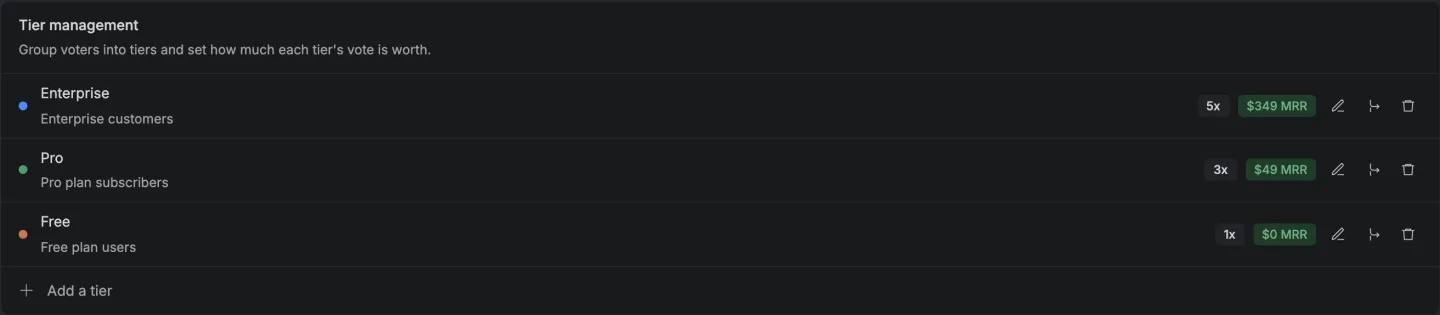
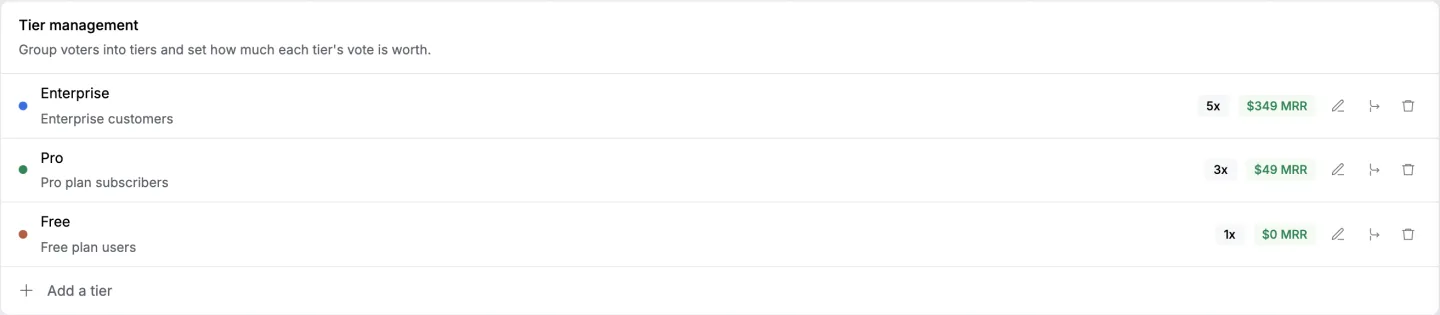
A vote here is multiplied by the tier the voter is on, and the tier comes from Stripe, Paddle or a CSV rather than from a person typing it.
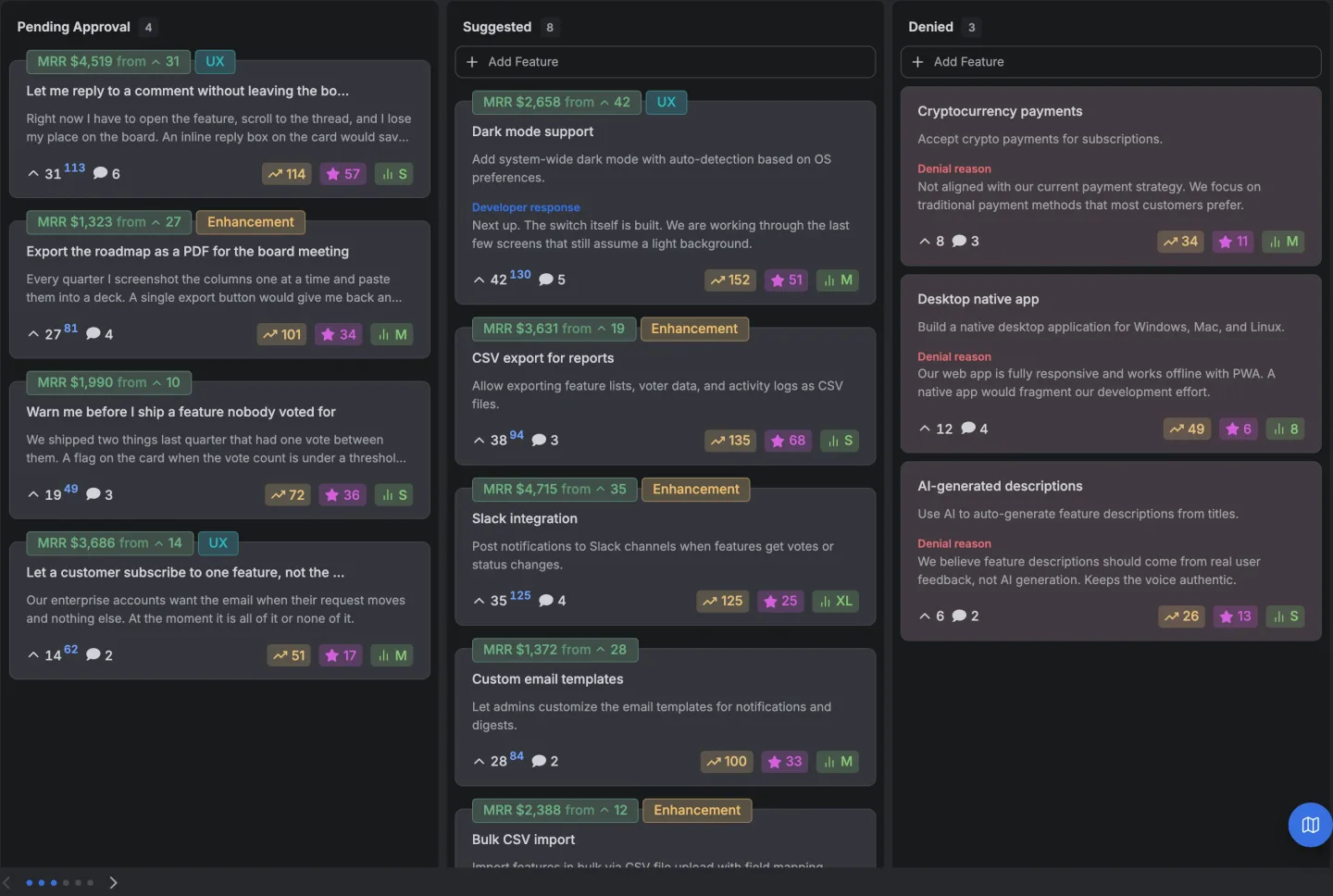
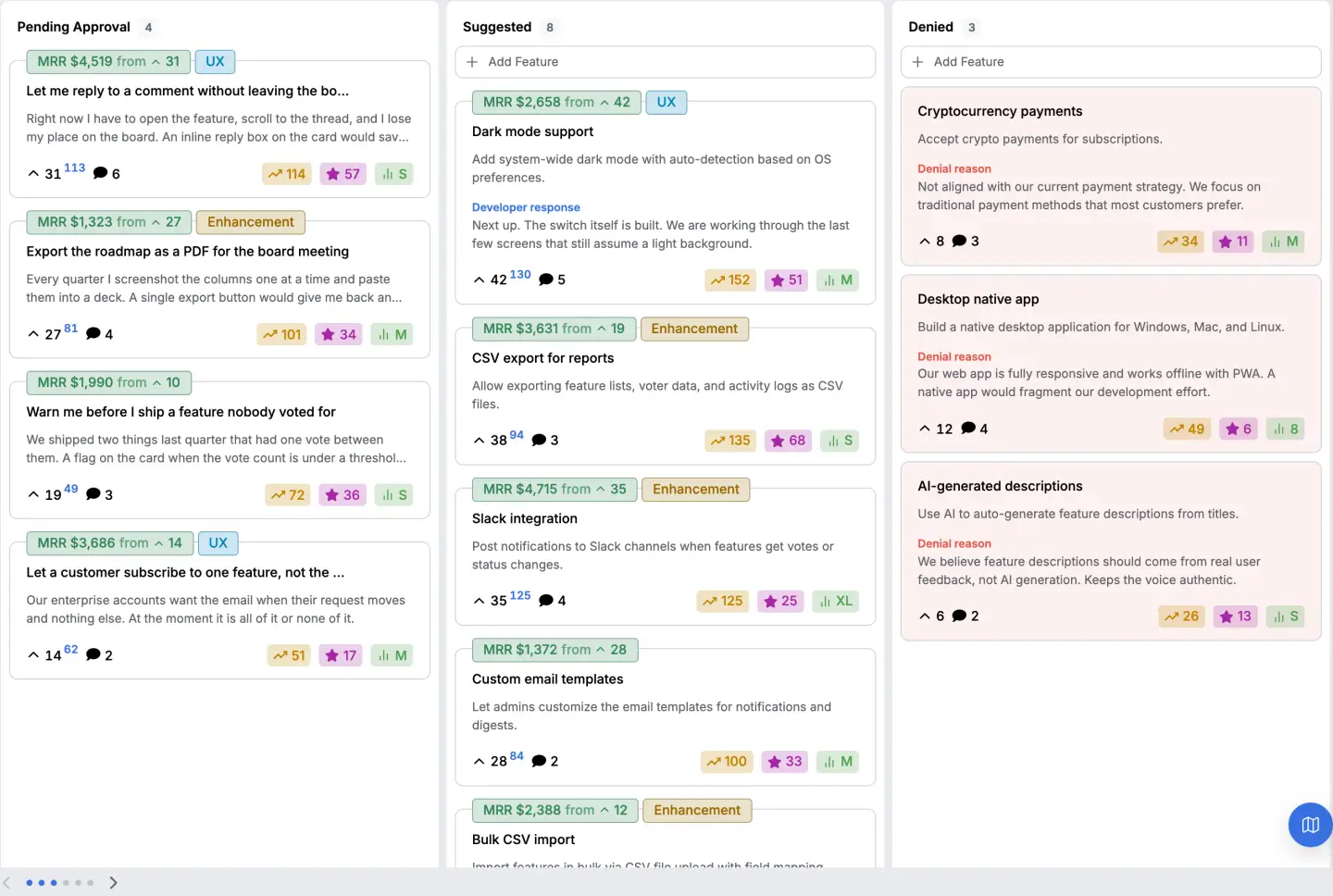
Four votes from four Enterprise accounts can outrank thirty from a free tier, and the board shows both numbers side by side so nobody has to trust the arithmetic.
Nothing on the Features.Vote pages read on 14 September 2026 mentions vote weight, MRR or a customer tier. They do sell user segmentation on Growth, which filters who you are looking at rather than changing what a vote is worth. The mechanism here is written out with the formula and the code.
Do both of them work inside an iOS application?
Yes, and this is the one part of the category where that question has two good answers.
Their page describes a Swift SDK giving SwiftUI board, roadmap and changelog views for iOS 16, iPadOS and macOS with no dependencies. This product publishes a Swift package on GitHub with drop in views for iOS and macOS, and it is one of the integrations listed on its own page.
If you are shipping an Apple application, the third name to look at is WishKit, which is native SwiftUI as well and priced at fifteen dollars a month. The WishKit comparison is written up separately.
Where do the public roadmap and single sign on sit?
One is on the cheaper plan and the other is deliberately absent.
Features.Vote carries a public roadmap on the nine dollar Lite plan, alongside the public voting board, email notifications and moderation tools. Nothing on either Features.Vote plan names SSO, and their own FAQ explains why, because voters click once with no signup and no email.
That is the same answer this product gives. The public roadmap is on the nine dollar plan, voting needs no account, and single sign on is not sold here either.
Does Features.Vote have a free plan?
No. Their page publishes a fourteen day trial that asks for no card, and two paid plans after it.
Neither do we, and our trial does ask for a card at signup. If a free tier is the requirement, the category page names the tools that publish one and neither of us is on that list.
Is there a free Features.Vote alternative?
Fider is the one to know about. It is open source, so hosting it yourself costs a server and nothing else. UserJot publishes a free tier with two boards, and Supahub and Featurebase each publish one with a single board. All three were read on their own pages on 14 September 2026.
Is Features.Vote worth it?
At nine dollars for one project, on the same terms this product charges nine dollars for, yes.
That is an unusual sentence to write about a competitor and it is the honest one. Their price never moves with voters, their trial asks for no card, and their SDK is real.
The question is not whether it is worth the money. It is whether you need a vote that carries the money behind the person casting it, because that is the one thing their published pages do not describe.
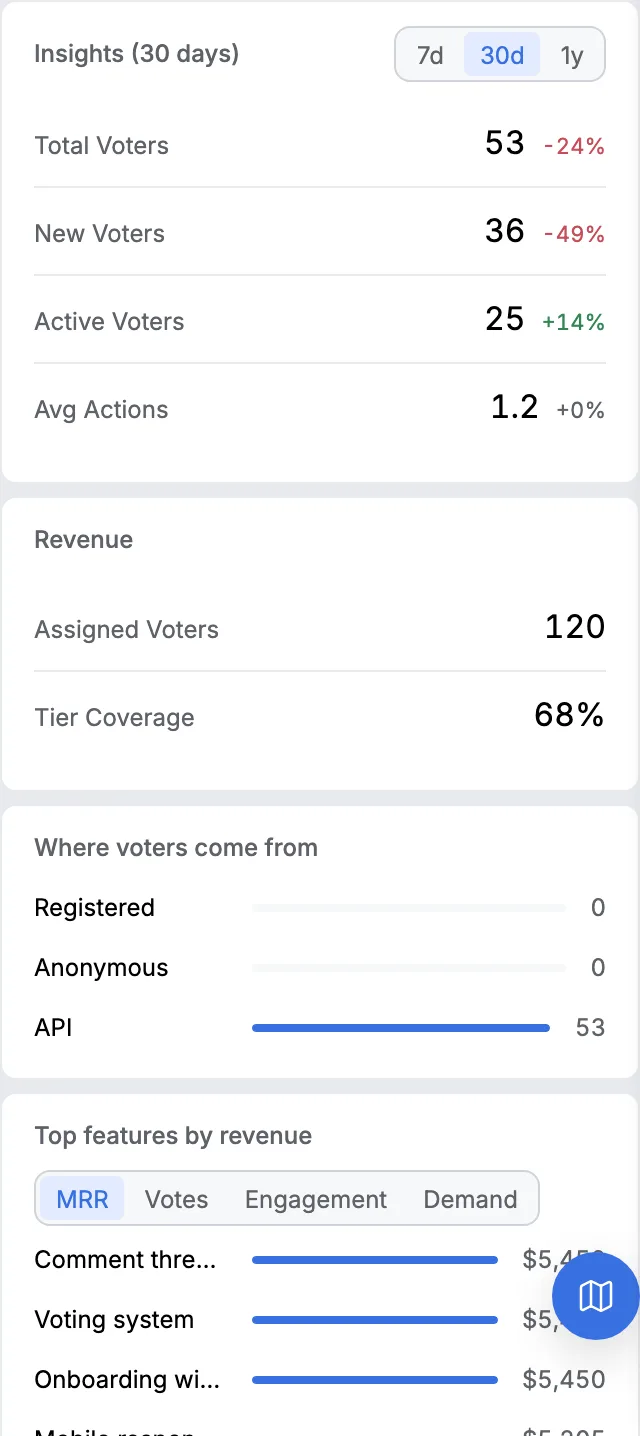
What does ours cost, and when is theirs the better answer?
Nine dollars a month for one project, thirty nine for unlimited projects, the API, a custom domain and a team.
Theirs is the better answer if you need several boards and a custom domain and you do not need the weighting, because twenty nine beats thirty nine and the feature lists at that tier are close.
It is also the better answer if a trial without a card is what gets the decision made this week.
Ours is the better answer if the question you actually have is which of these requests comes from the accounts that pay you. That is the whole reason this product exists, and it is on the nine dollar plan rather than the top one.
14 days, a card at signup, then $9 or $39 a month.
What moving actually involves
More work than a button, and the honest version is short. There is no importer for requests or votes on our side.
Voters and the revenue behind them come in from a CSV or from a billing connection, which is the part the weighting needs. The requests themselves are rebuilt by hand or by a script against the API, and the vote counts start again.
That is a real cost and it is worth naming before anybody moves. The five steps, with the endpoint each one uses, are written out in full, and they are the same five whatever you are leaving.