WishKit prices the tool rather than your reach, which is the same bet this product makes. Unlimited users on every plan including the free one, and the only thing that moves you up a tier is wanting a second board.
Everything below was read on WishKit's own pricing page on 14 September 2026. What a second app costs and what the free plan actually caps are worked out separately.
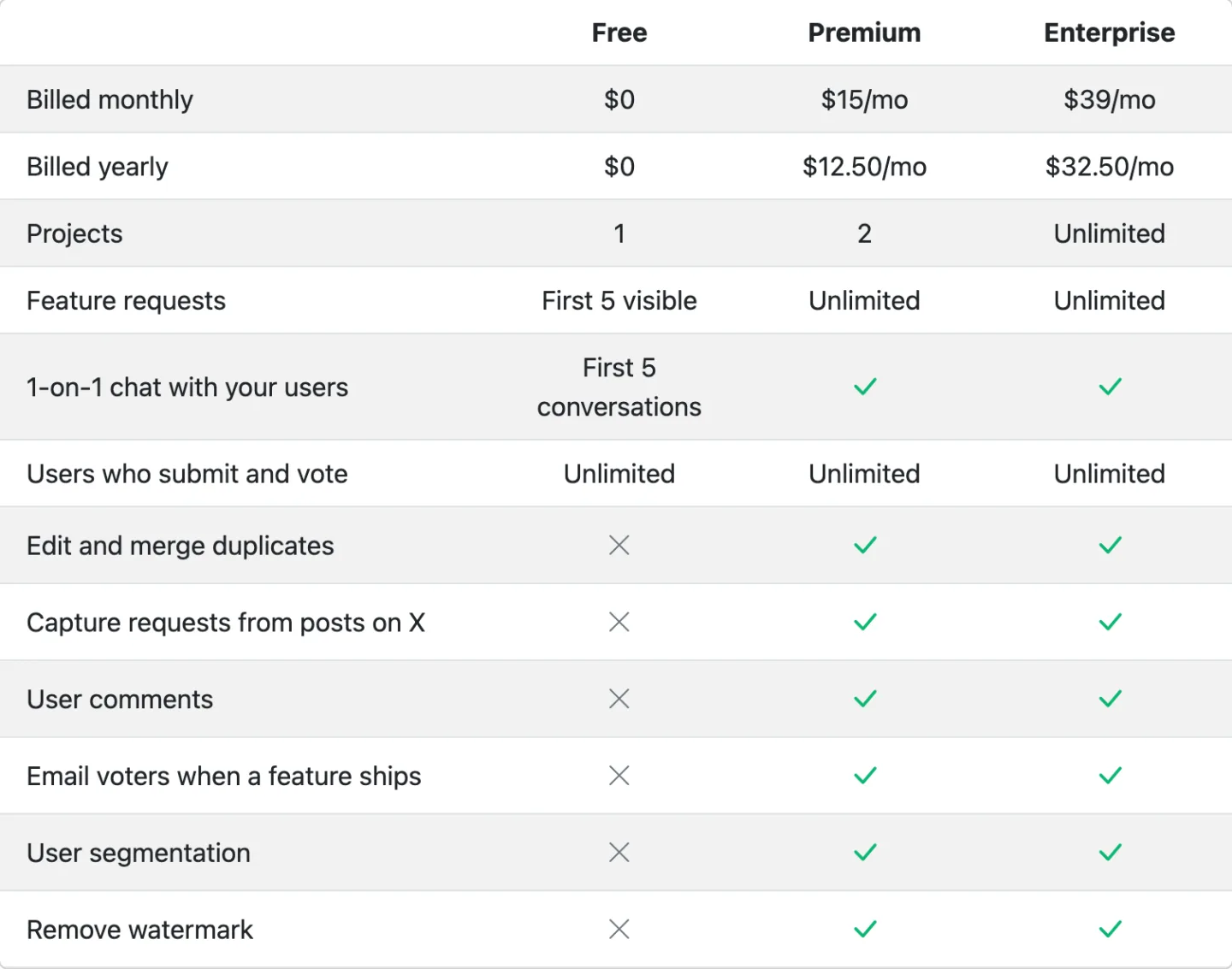
What does WishKit cost?
Three plans, and the meter is the project.
| Plan | Paid monthly | Paid yearly | Projects | Feature requests |
|---|---|---|---|---|
| Free Forever | $0 | $0 | 1 | first 5 visible |
| Premium | $15/mo | $12.50/mo | 2 | unlimited |
| Enterprise | $39/mo | $32.50/mo | Unlimited | unlimited |
Yearly billing gives two months free on their own page. Users who submit and vote are unlimited on all three plans, and the free plan asks for no payment details at signup.
Every plan carries editing and merging duplicates, capturing requests from posts on X, user comments, emailing voters when a feature ships, user segmentation and removing their watermark. The free plan carries all of those too, and what it limits is how many of your requests you can see.
If that arithmetic came out badly, a trial here is 14 days with a card at signup and the bill after it is $9 or $39 a month.
What is a project?
One board with its own API key, and it is the only counter on the list.
One project is one product's board. Two products means two projects, which is the fifteen dollar plan, and more than two is thirty nine. Nothing else on their list steps, not admins, not voters, not requests once you are past the free plan.
That is the cleanest pricing shape in this category and it is worth saying plainly, because most of the field meters at least one thing that grows when your board works.
What is the free plan actually limited to?
Five visible feature requests and five chat conversations, on one project.
The requests still arrive. What the free plan holds back is seeing past the first five, which is an unusual place to put the wall and a defensible one. A board that nobody posts on costs them nothing, and a board that works is the moment the tool earned fifteen dollars.
What is the SDK?
Native Swift, and that is the thing to weigh before price.
Their own description is a SwiftUI SDK for iOS, macOS, visionOS, watchOS and tvOS, and a web SDK that embeds the same board on any site with two lines of HTML. So the board can live inside an Apple application as a real screen rather than a web view bolted on.
If you ship an Apple application, that is a genuine advantage and nothing in this category matches it. Ours embeds through a script and an iframe, which is the right answer on the web and the wrong shape inside a native app.
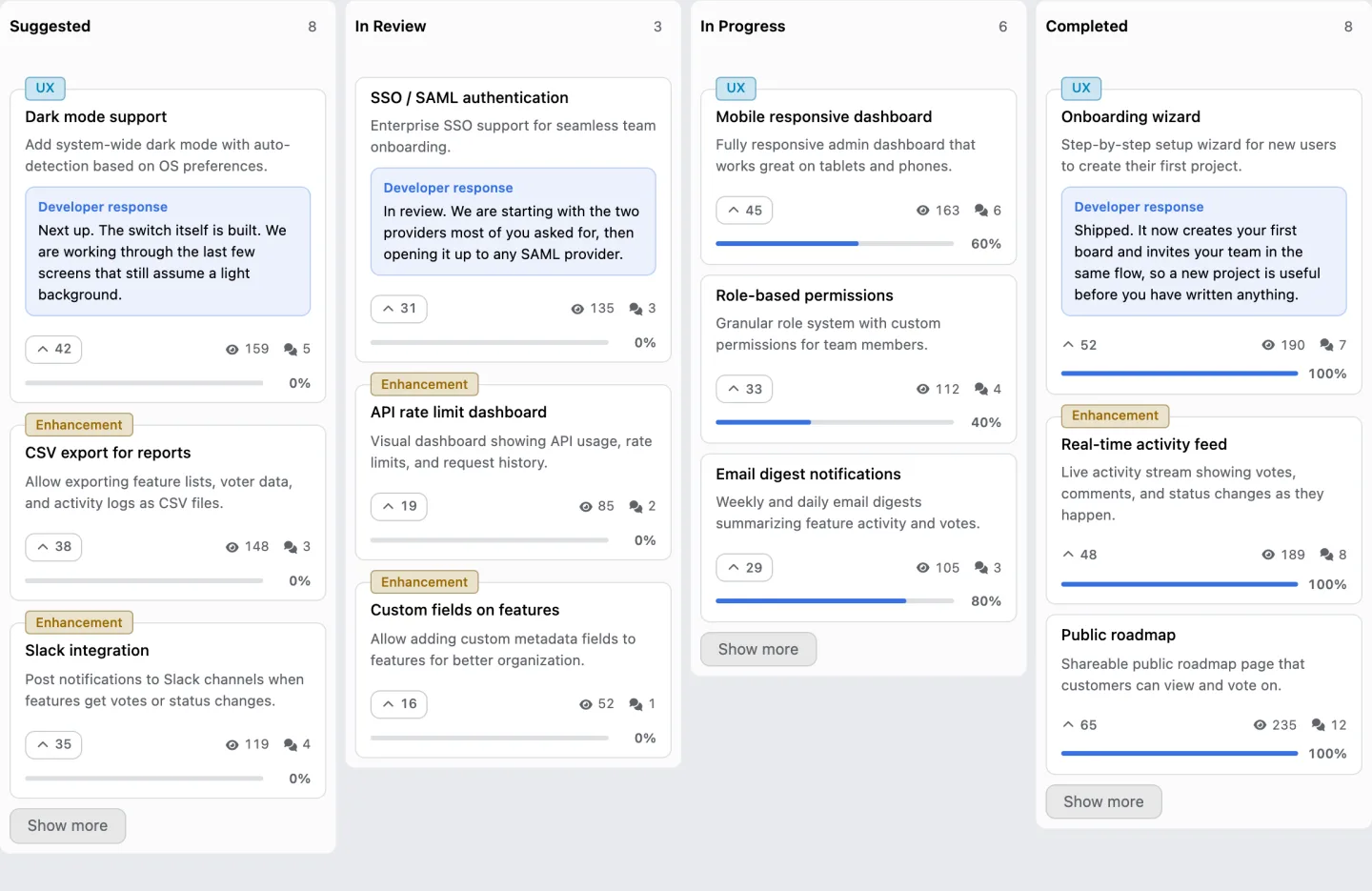
Does WishKit weight votes by revenue?
Nothing on the pages we read on 14 September 2026 mentions weighting a vote by what the voter pays.
They do carry user segmentation on every plan, which groups who a request came from. Grouping is not weighting. It tells you which cohort asked, and it does not move a request up the list on its own.
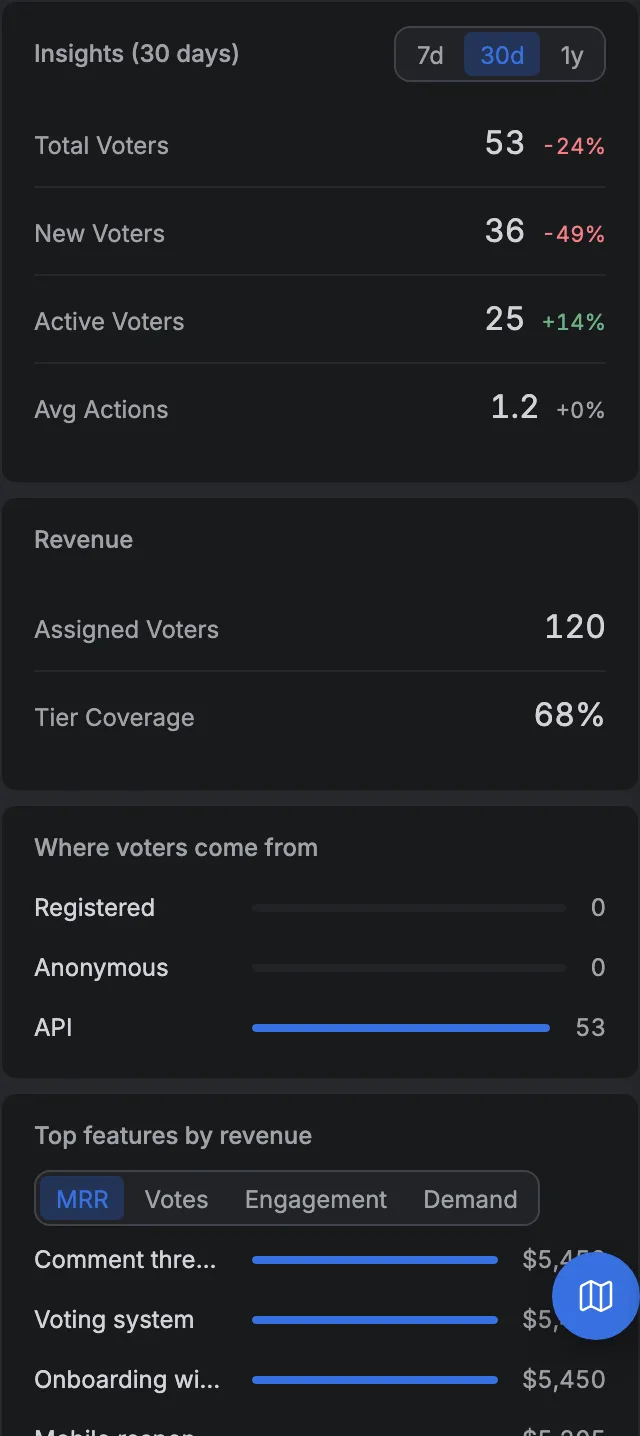
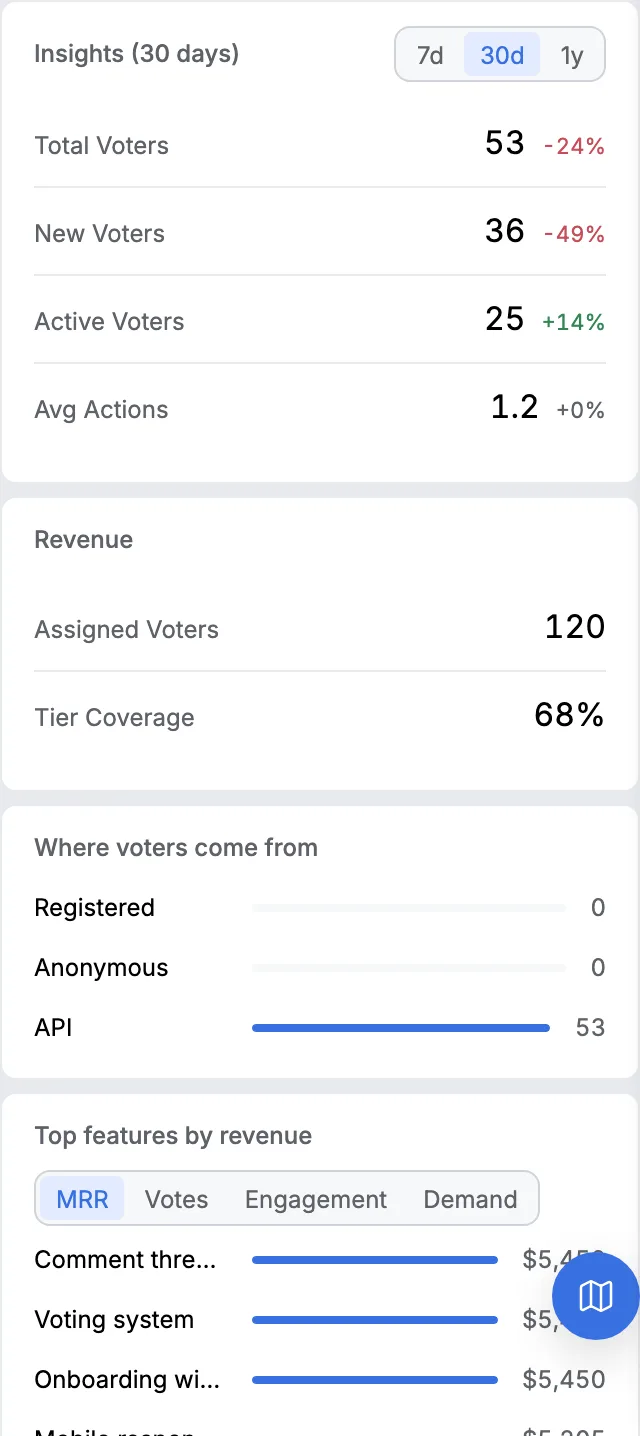
Why look for a WishKit alternative?
Three reasons show up, and two of them are about shape rather than price.
You are not shipping an Apple application. The native SDK is most of what the fifteen dollars buys. On the web their board is a two line embed, which is what everybody in this category offers, so the advantage that makes them distinctive does not apply to you.
You want more than a board. There is no changelog page and no public roadmap page in their plan list, so the thing you announce with and the thing you plan with have to live somewhere else.
The vote should carry the money. Their segmentation groups who asked. It does not change what a request is worth, and if your customers pay you very different amounts that is the whole question.
If none of those is your situation, their free plan is a good place to start and this page is not going to pretend otherwise.
Does WishKit have a public roadmap, single sign on, an API and an export?
WishKit's own pages read on 14 September 2026 never use the word roadmap, which means nobody could read about one rather than that none exists. Single sign on is not published anywhere on WishKit's own pages read on 14 September 2026, so nobody could read whether it exists.
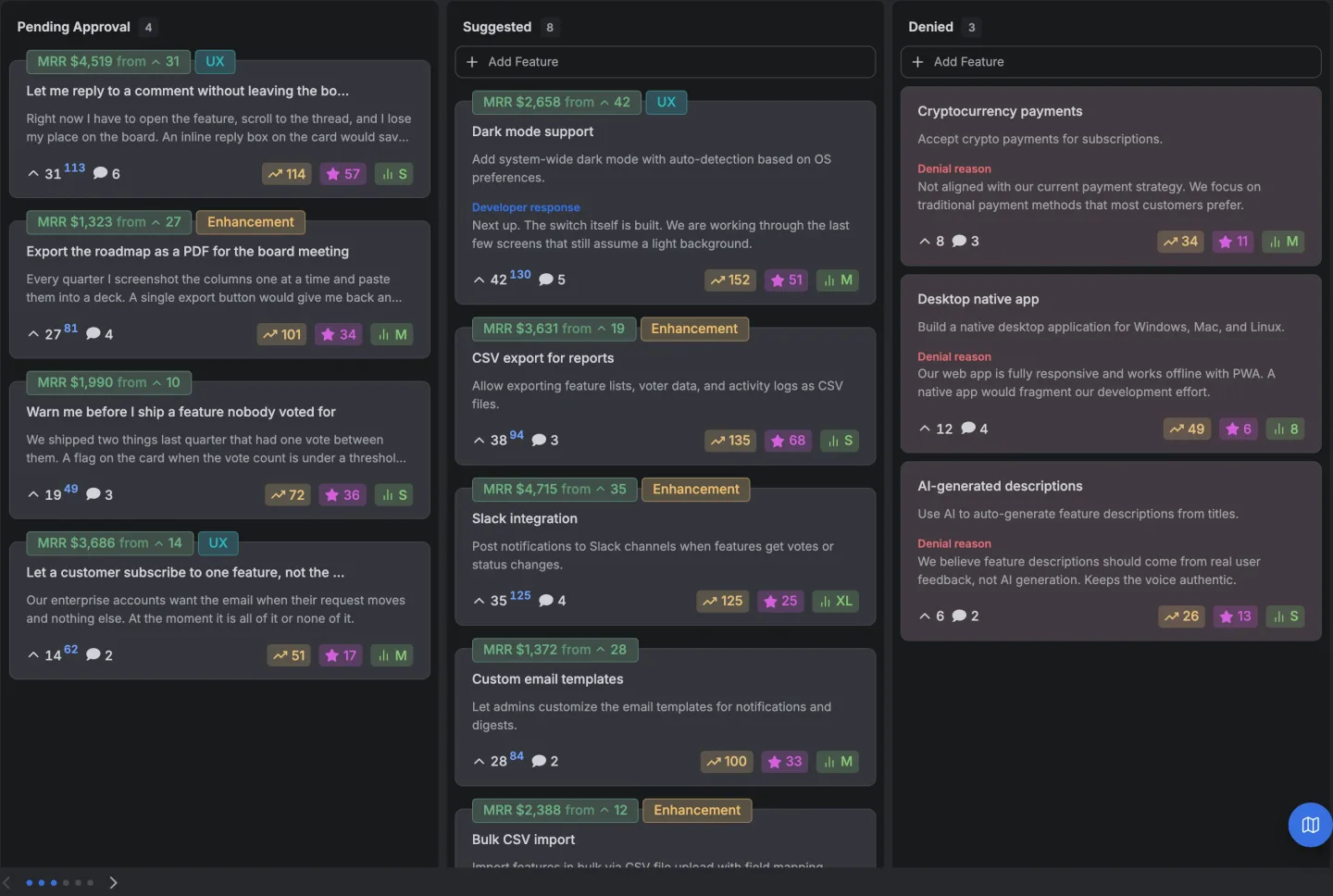
WishKit issues one API key per project, and WishKit's own words are that your data is yours to export. Ours publishes a public roadmap with a Denied column on every plan, and signs a voter in with a token from your own application on the thirty nine dollar plan rather than with SAML.
Is there a free WishKit alternative?
Yes, several, and none of them is WishKit. Fider is the free one to know about, because it is open source and its hosted tier runs to two hundred and fifty feedback items.
UserJot gives two boards and three admin roles, Supahub gives one board and one admin, Featurebase gives one seat, and Sleekplan's Indie tier is a single admin workspace that does not expire.
All five were read on their own pages on 14 September 2026. This product is not one of them. There is no free plan here, only a fourteen day trial that asks for a card at signup.
Is WishKit worth it, and when is it the better answer?
You ship an Apple application. The native SDK is the whole argument and it is a good one.
You want a free board that stays free. One project with unlimited voters and no expiry.
Two products, fifteen dollars. Ours is thirty nine for a second project, so for two boards and no team they are cheaper.
When is ours?
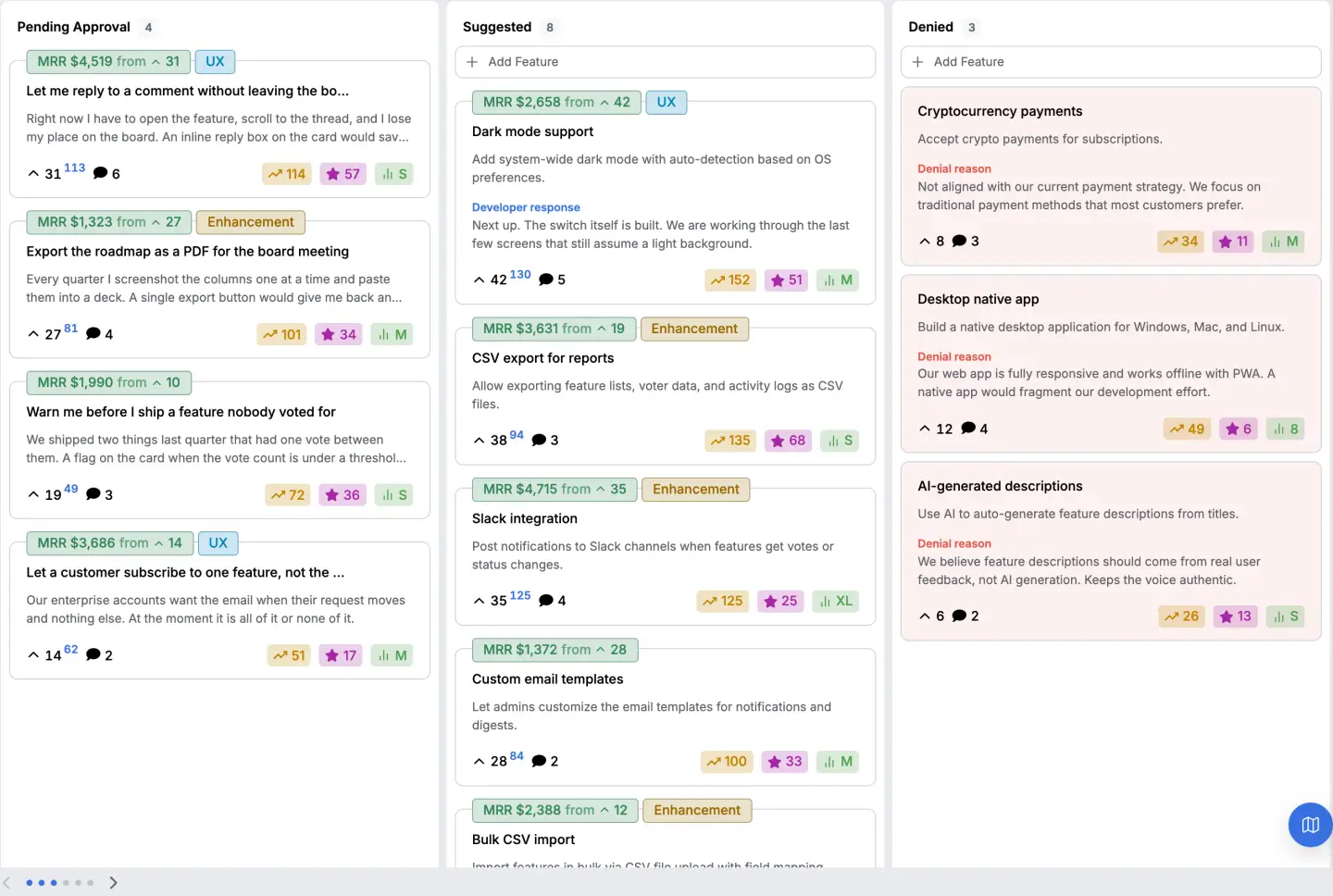
The vote should carry the money. Each voter sits in a tier with a whole number multiplier, the weight is written onto the vote when it is cast, and the plain count stays beside the weighted total. The mechanism is here.
You want the revenue imported rather than typed. Stripe, Paddle or a CSV.
You want a changelog and a roadmap page beside the board. Both are on our nine dollar plan.
What does ours cost?
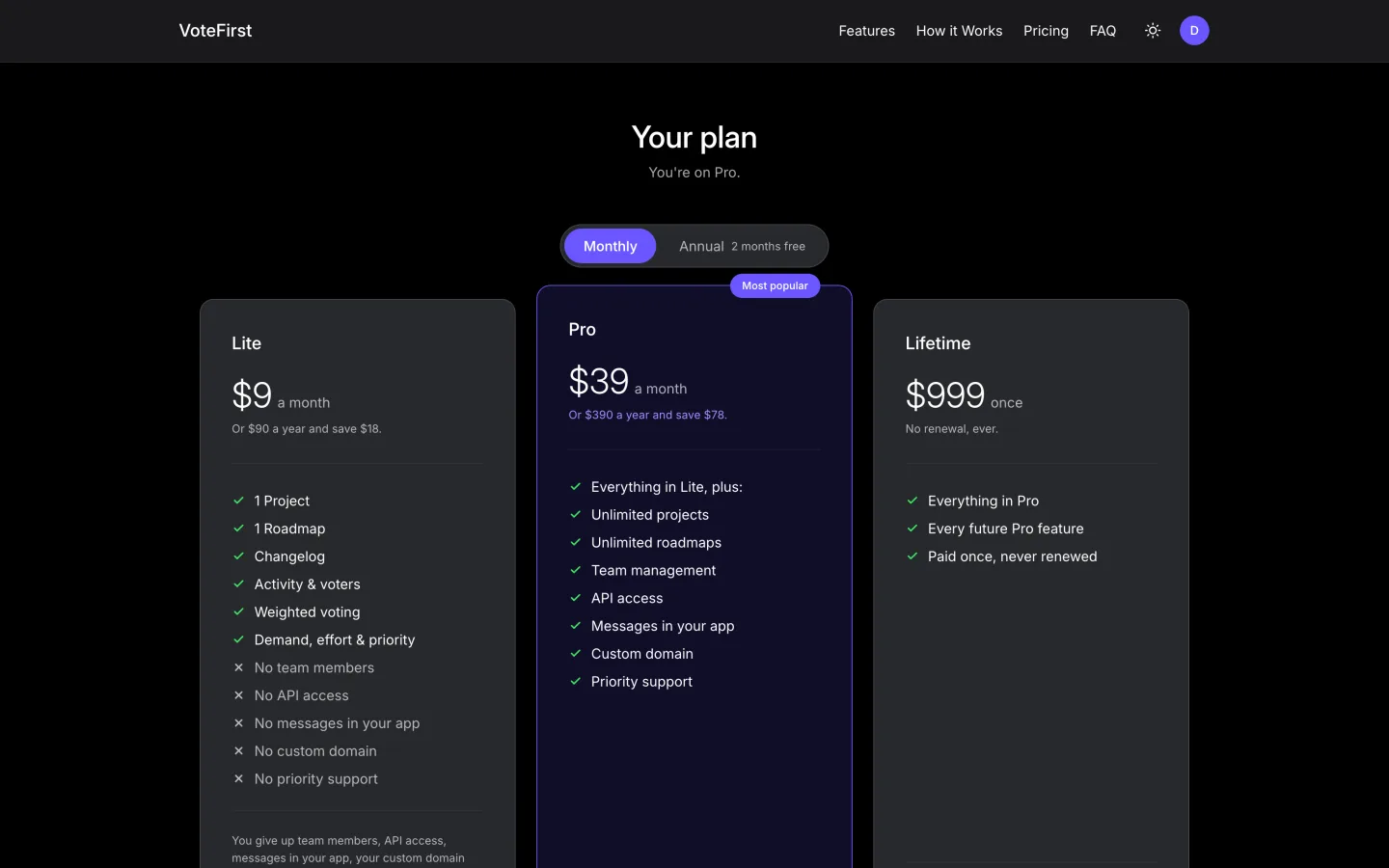
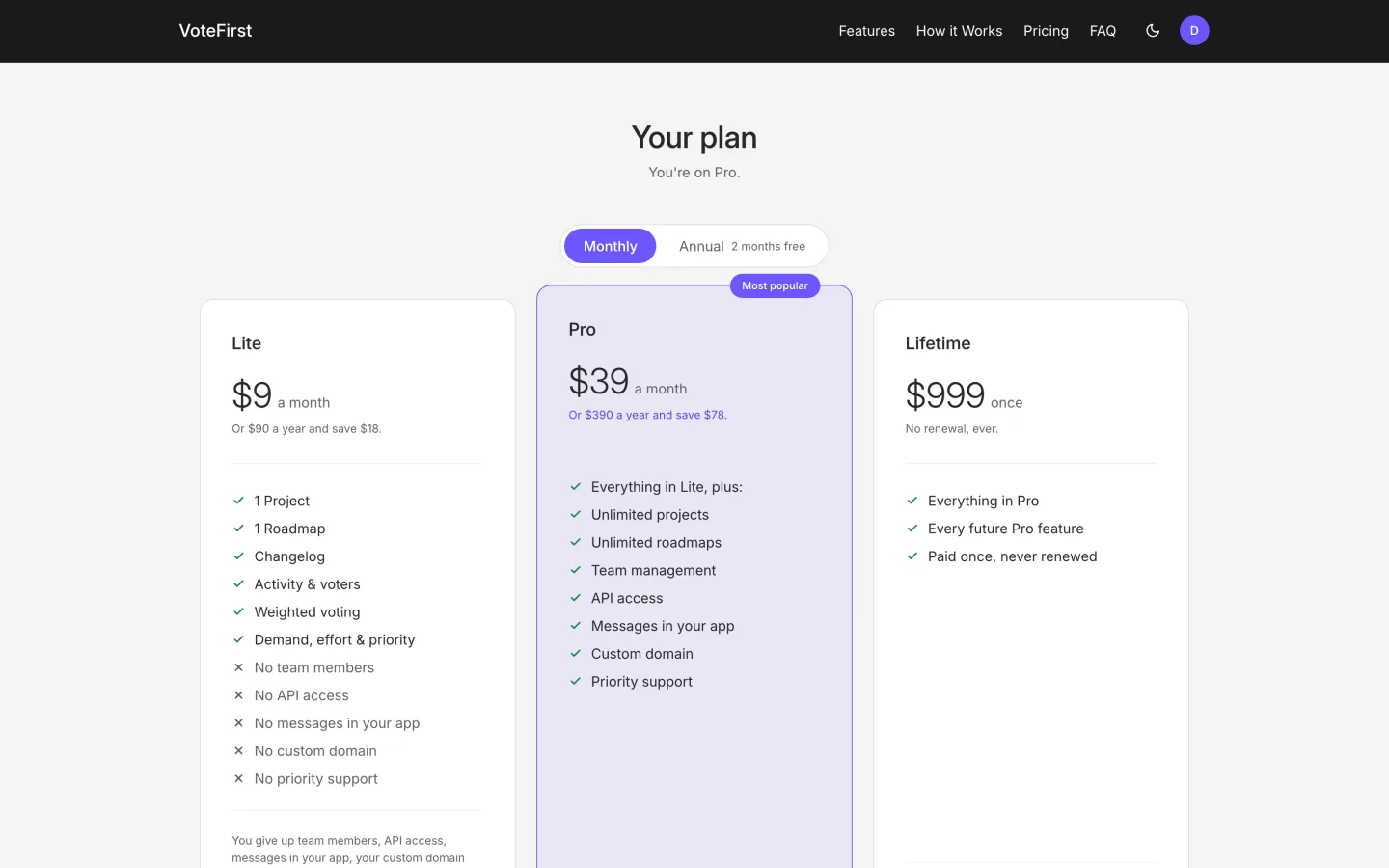
Nine dollars a month for one project, thirty nine for unlimited projects, a team, the API and a custom domain.
One project against one project, we are nine and their free plan is nothing, so theirs wins until the sixth request needs to be visible.
Two projects, they are fifteen and we are thirty nine, so theirs wins again. Unlimited projects with a team, we are thirty nine and they are thirty nine, and the difference is the weighting and the team seats.
That is as close a pricing match as this category has. The whole field's prices and units are on one page.