Olvy is a release notes and feedback product, and its price list is metered on something no other vendor in this category meters. Not seats, not tracked users, not boards. The number of pieces of feedback you are allowed to analyse.
The sixty dollar plan allows a hundred of them. The next plan up is two hundred and forty dollars and allows ten thousand.
There is nothing between those two numbers, so the upgrade is four times the money for a hundred times the allowance, and the thing that triggers it is not how many colleagues you hired.
Everything below was read on their own pricing page on 15 September 2026.
What is Olvy?
A changelog and release notes tool with a feedback widget and an analysis layer attached.
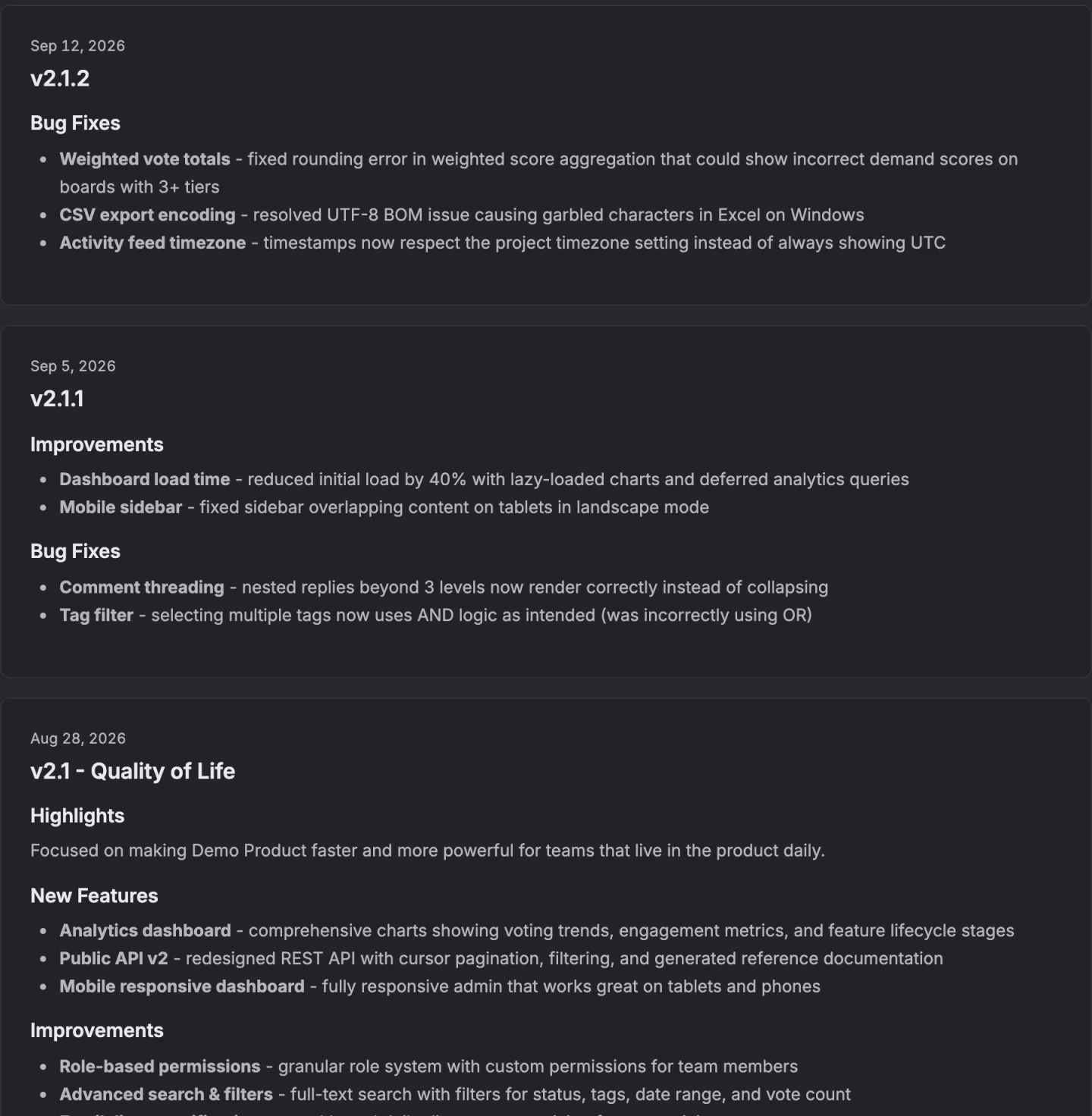
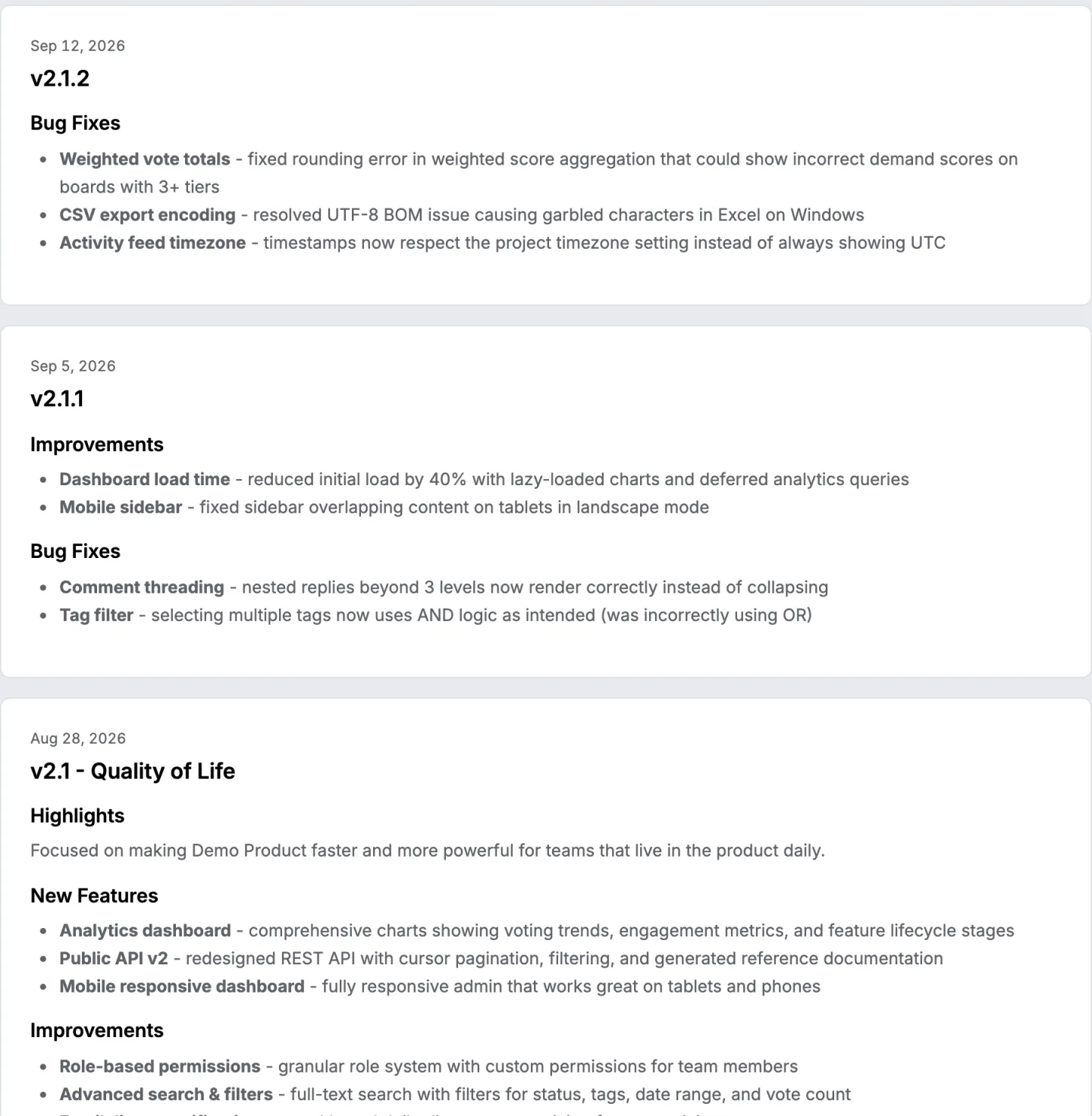
Olvy publishes release notes, embeds an announcement widget and a feedback widget in your product, collects what users send, and summarises it. This site's own changelog roundup already measured its email side and recorded it as present but immature, because their own release notes describe recent fixes to subscriber counts and duplicate sends.
The analysis is the part their price list is built around, which is the unusual thing about them and the reason this page exists.
What does Olvy cost?
Nothing, sixty, two hundred and forty, or a conversation.
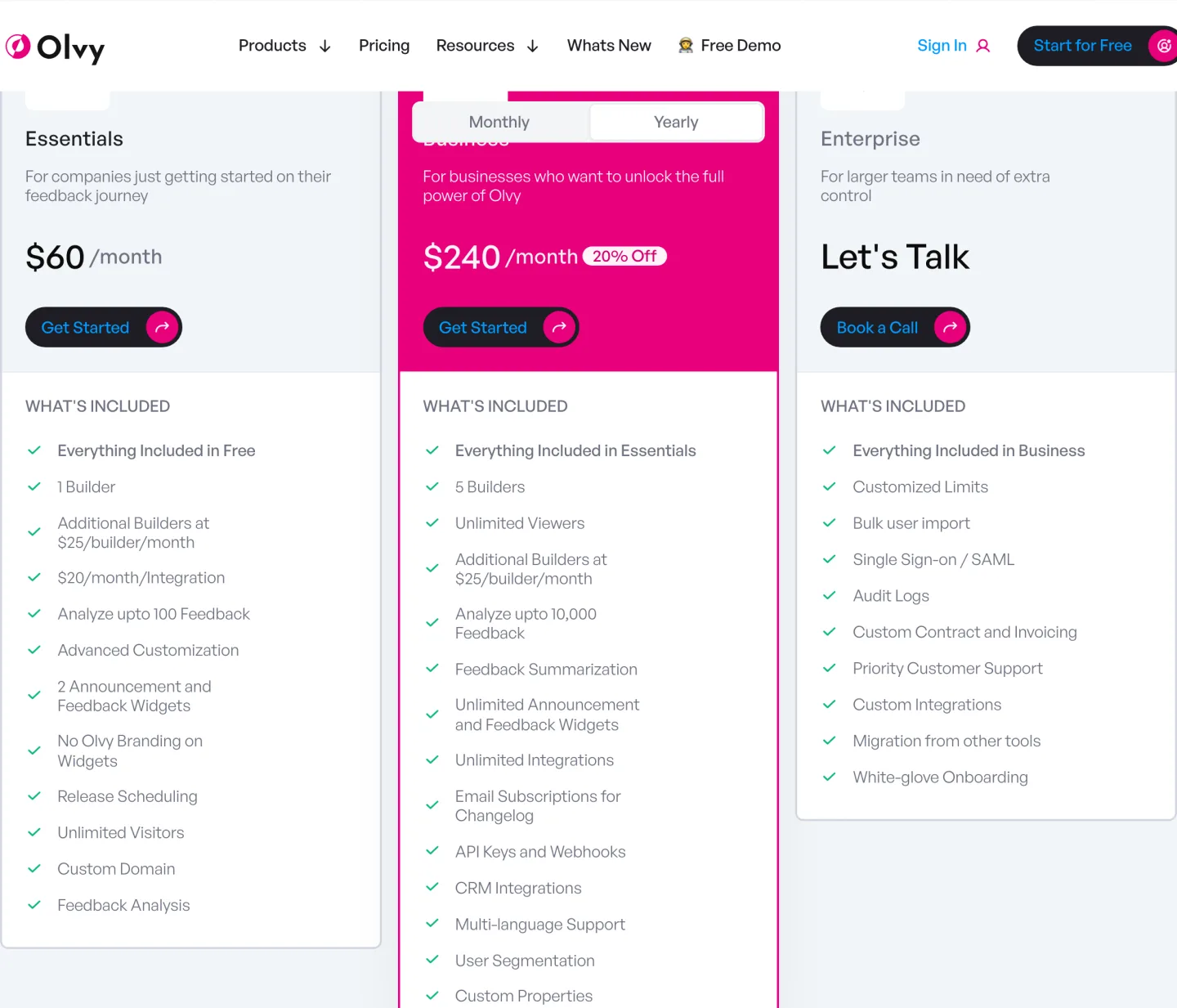
| Plan | Price | Builders | Each extra builder | Integrations | Feedback you may analyse |
|---|---|---|---|---|---|
| Free | Not published | 1 | Not published | Not published | 25 |
| Essentials | $60 | 1 | $25 | $20/mo each | 100 |
| Business | $240 | 5 | $25 | unlimited | 10,000 |
| Enterprise | On request | Not published | Not published | custom | customised |
Their page carries a monthly and yearly switch and the figures above are the position it loaded in, which is monthly. The Business card also carries a badge reading 20% off and the page does not say what it is off.
Free adds a cap the paid plans drop, being 1,000 unique visitors a month. Essentials removes the Olvy branding from the widgets and adds a custom domain and release scheduling.
Business adds unlimited viewers, API keys and webhooks, multi language support and user segmentation. Enterprise is where audit logs and migration from other tools live, and Olvy puts single sign on with SAML there as well rather than on a lower plan.
Nothing on the pricing page read on 15 September 2026 names a public roadmap for Olvy. That is an absence on their published page rather than proof about their software, and it fits a product whose centre is the announcement rather than the plan.
Every plan, the analysis cap and what a real team pays are written out on the pricing page for them.
What does a team of three actually pay?
A hundred and fifty dollars a month on Essentials, and that is before the analysis cap bites.
| Your situation | Essentials | Business |
|---|---|---|
| 3 people, 2 integrations | $150 | $240 |
| 3 people, 7 integrations | $250 | $240 |
| 6 people, 2 integrations | $225 | $265 |
Essentials includes one builder and charges $25 for each of the other two, then $20 a month for each integration. Business includes five builders and charges nothing per integration, so the sixth person is the only extra on it.
Read the middle row twice, because it is the shape of their price list. A team of three crosses over to the dearer plan at seven integrations, on connections rather than on people, and the cheaper plan is still capped at a hundred pieces of analysed feedback the whole way there.
One thing their page does not say is whether that cap is per month or for the life of the account. That matters a great deal at a hundred and it is not answered anywhere on the page.
Does Olvy have a free plan?
Yes, with one builder, unlimited release notes, 25 pieces of analysed feedback and 1,000 unique visitors a month.
It is a real free plan rather than a demonstration, and the visitor cap is the one to watch. A changelog that a thousand people read in a month is a small changelog, and the plan that removes the cap is sixty dollars.
Do they weight a vote by what the customer pays?
Nothing on the pricing page read on 15 September 2026 describes weighting a vote by revenue.
Their segmentation arrives on the two hundred and forty dollar plan and sorts users into groups.
That is a filter rather than a weight, and the difference is whether the order of the board changes or the order of a report does. It is an absence on their published page rather than proof about their software.
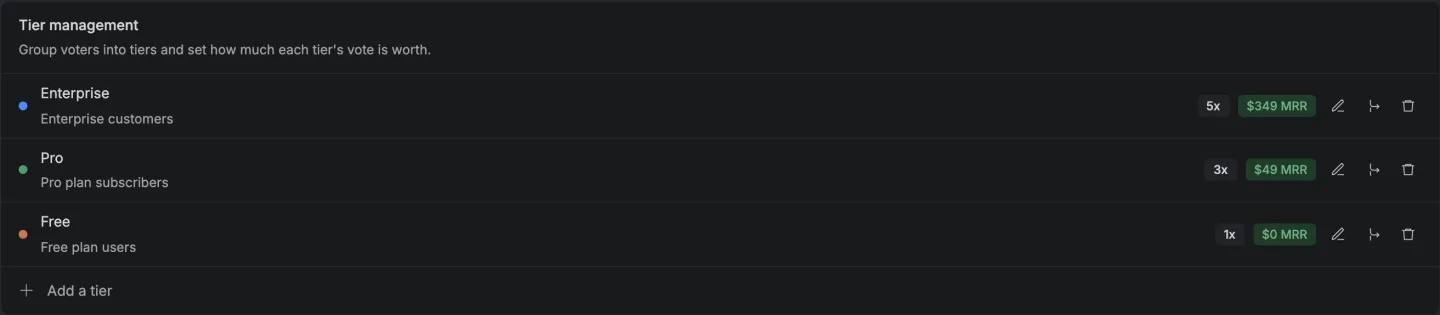
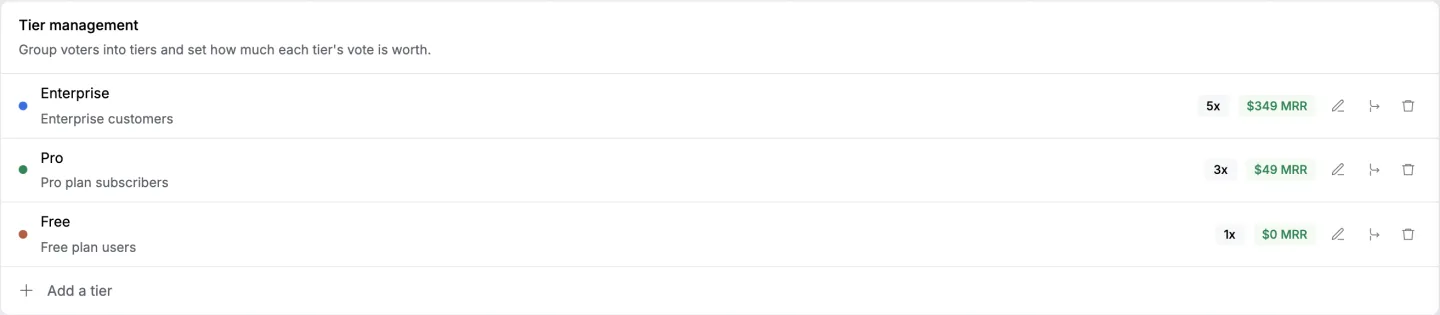
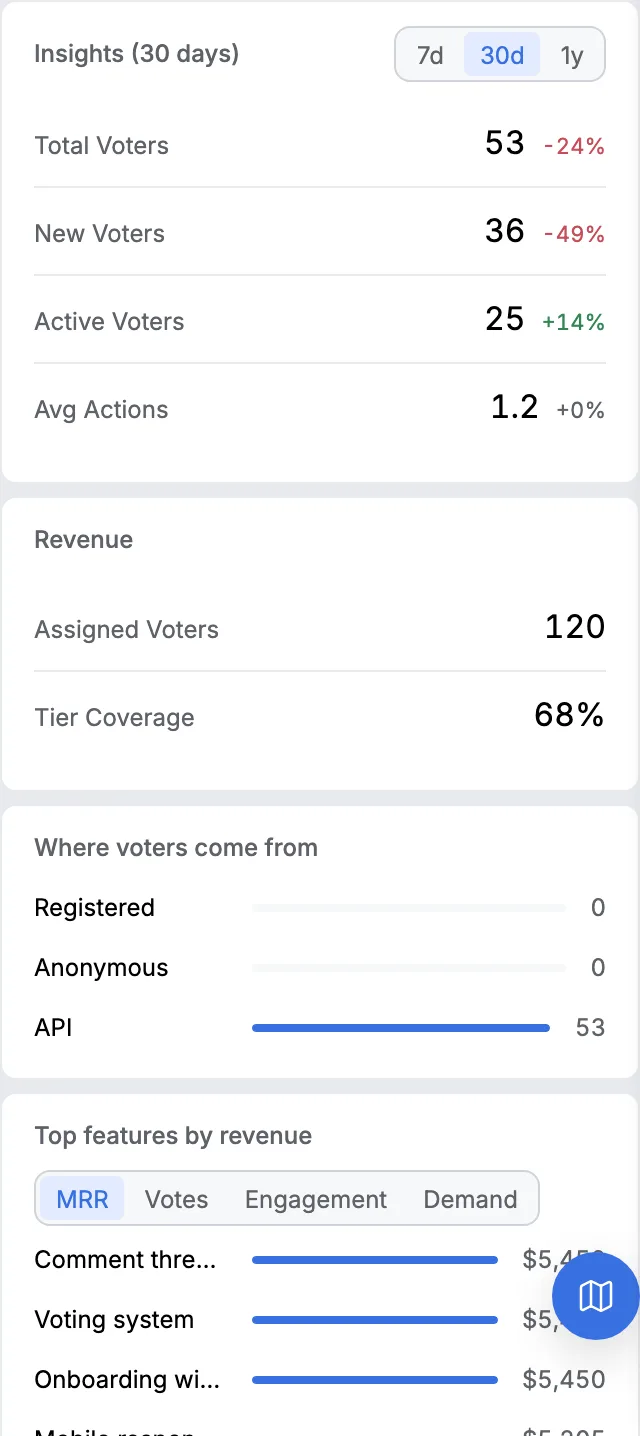
This product does the other thing. Each voter sits in a tier with a whole number multiplier, the weight is written onto the vote as it is cast, and the plain count stays beside the weighted total on the card. How that works is written out in full.
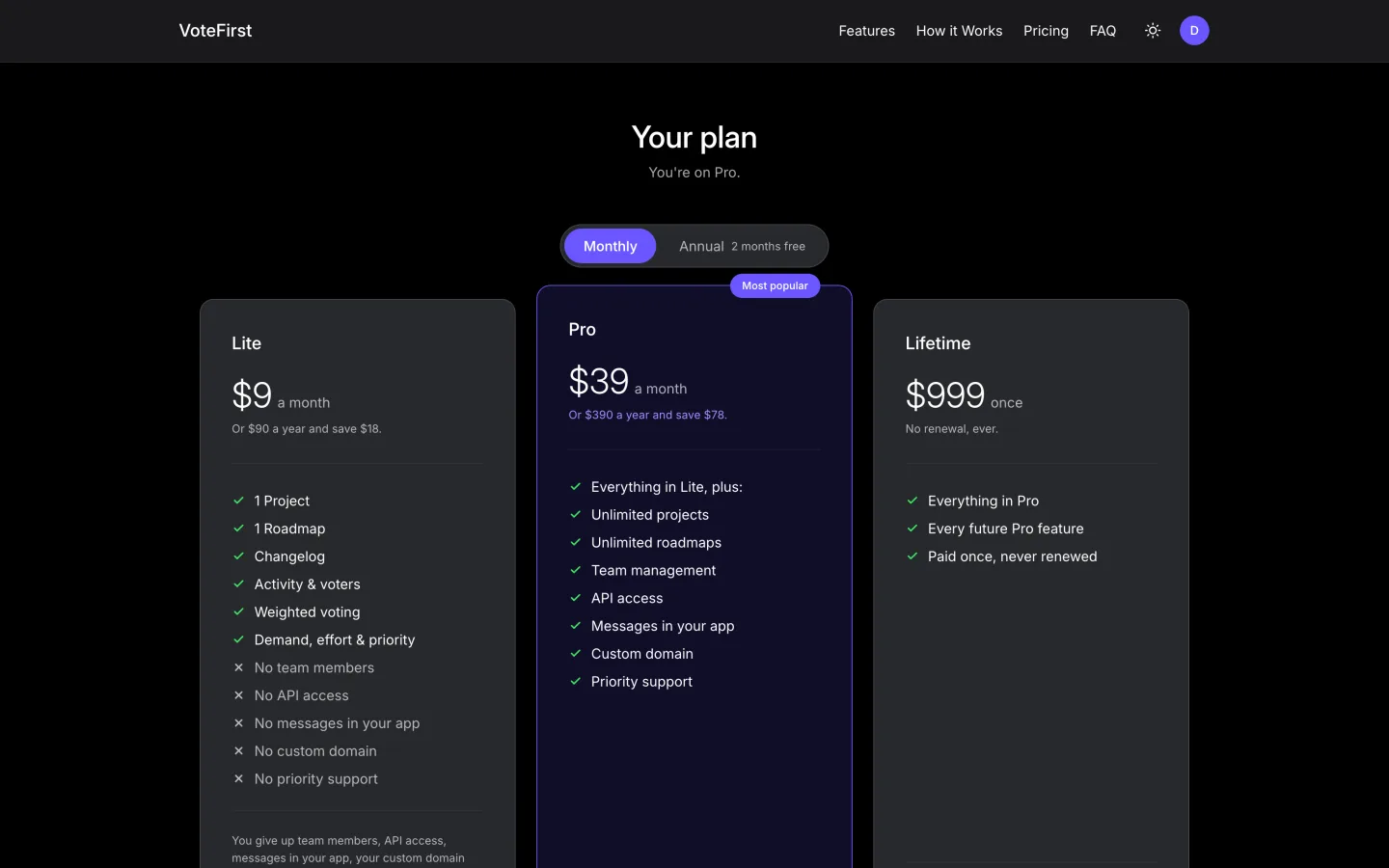
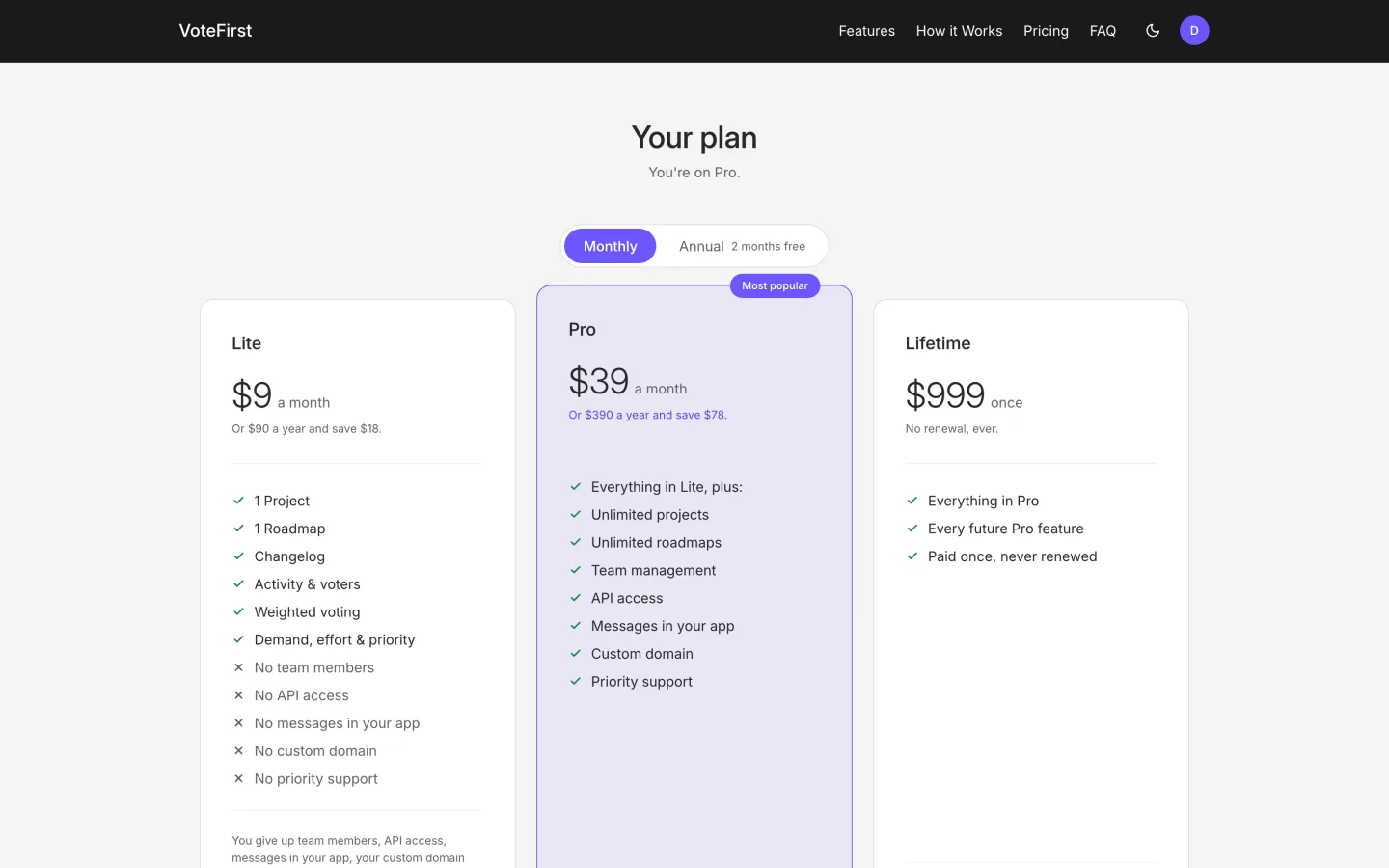
14 days, a card at signup, then $9 or $39 a month.
Is there a free Olvy alternative?
Several, and Olvy's own free plan is one of them.
Fider is the open source one, hosted to 250 feedback items. UserJot gives two boards and three admin roles, Supahub gives one board and one admin, Featurebase gives one seat, and Sleekplan's Indie tier is a single admin workspace that does not expire. All were read on their own pages on 14 September 2026.
This product is not among them. There is no free plan here at any point, only a 14 day trial that asks for a card at signup.
Is Olvy worth it, and who should buy it instead of this?
A team whose main problem is shipping release notes well should buy Olvy.
That is what it is built around. The announcement widget, the scheduling, the email subscriptions and the changelog itself are the centre of the product, and a team that publishes a release every week gets more from that than from a voting board.
A team drowning in feedback should read the analysis cap before anything else. A hundred items is the allowance on the sixty dollar plan, and a product whose whole pitch is summarising feedback is a product you want to point at all of it rather than at the first hundred.
A team that wants customers to vote in public, and wants those votes ordered by what the customers pay, is the reader this product is for.
What does moving actually involve?
More work than a button, and Olvy puts the help on its dearest plan.
Migration from other tools is an Enterprise line on their page, so arriving is supported there and leaving is your own problem. There is no importer here for Olvy feedback, release notes or widgets.
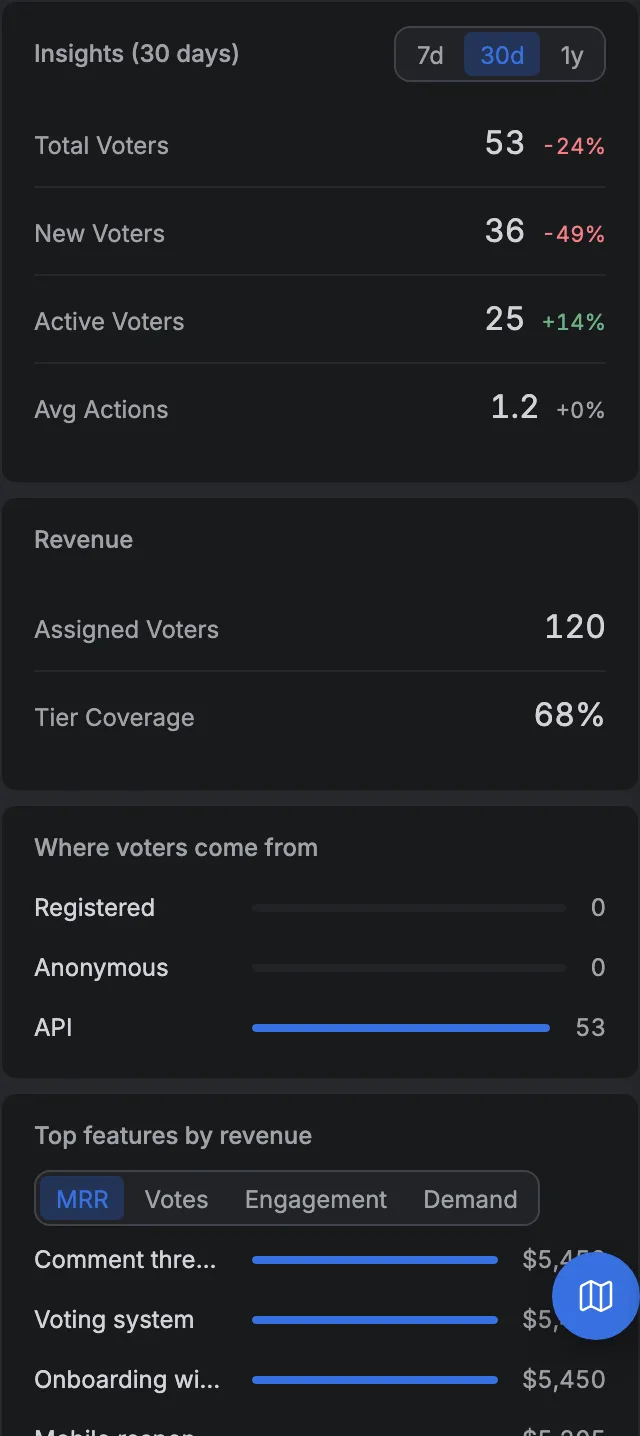
Voters and the revenue behind them arrive from a CSV or from a billing connection, requests are rebuilt against the API, and vote counts start from zero.
The five steps with the endpoint each one uses are written out in full, and they are the same five whatever you are leaving.
What does this one cost?
Nine dollars a month for one project, thirty nine for unlimited projects, colleagues, the API and a custom domain.
Nothing here counts feedback items, integrations, visitors or the people who vote. A board that suddenly works does not produce a bill and there is no allowance to run out of.
Against their sixty dollars the comparison depends on what you are buying. They have a changelog product with an analysis layer and this has a voting board with a changelog beside it.
If the release notes are the job, theirs is the deeper tool. The full field with the unit each vendor bills on is one page.