Supahub is the cheapest tool in this comparison that looks and works like Canny, and for a lot of readers that is the whole pitch. It also has a real free plan, which we do not.
There is one thing to check before you buy, and it is on their own page rather than anything uncovered here.
Everything below was read on their own pricing page on 9 September 2026.
What does Supahub cost?
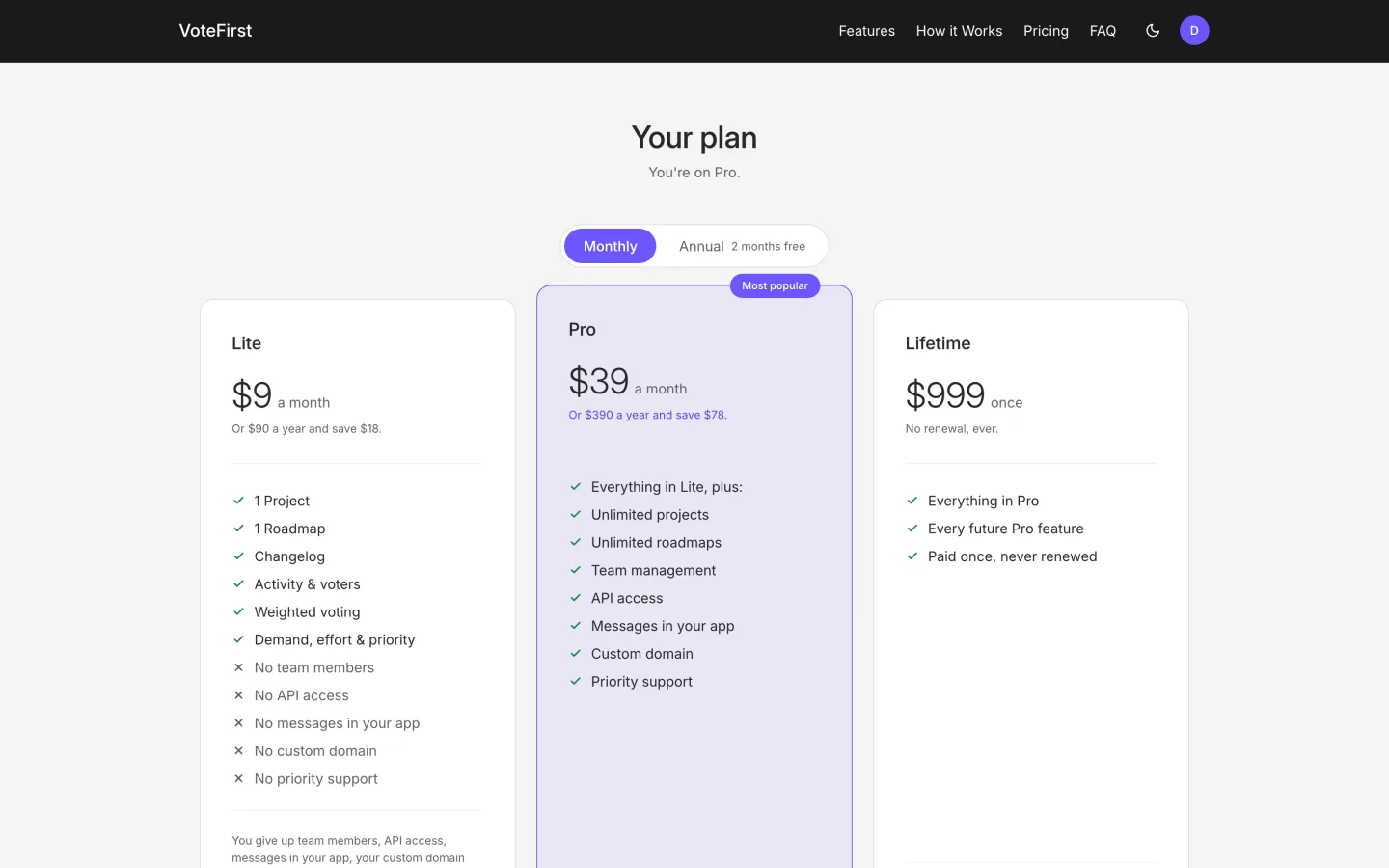
Four plans, priced per workspace with caps inside each, and the caps are written out on our Supahub pricing page.
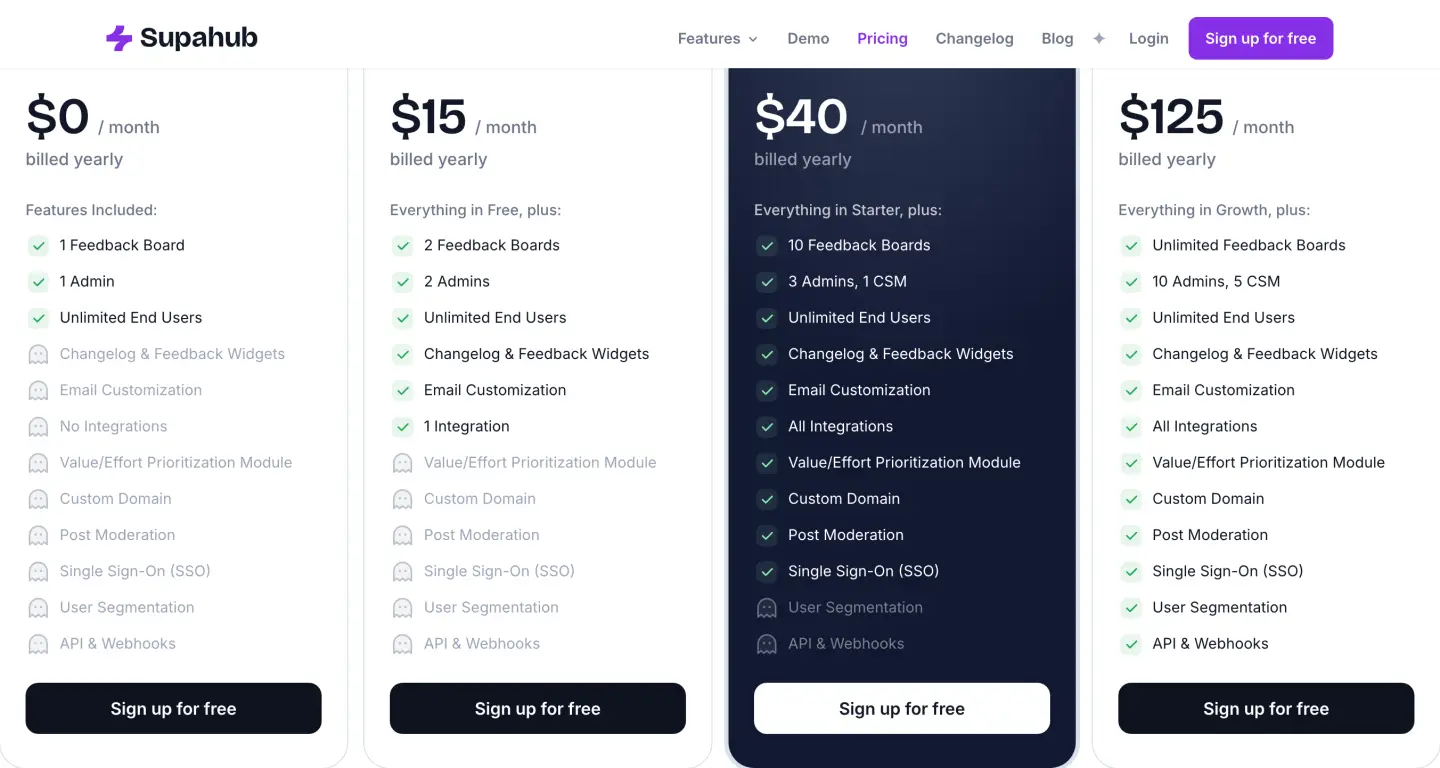
| Plan | Paid monthly | Paid yearly | Feedback boards |
|---|---|---|---|
| Free | $0 | $0 | 1 board, 1 admin, unlimited end users |
| Starter | $19/mo | $15/mo | 2 boards |
| Growth | $49/mo | $40/mo | 10 boards |
| Premium | $149/mo | $125/mo | Unlimited boards |
The free plan carries one board, one admin and unlimited end users, and it greys out the changelog and feedback widgets, email customisation, integrations, the value and effort prioritisation module, and a custom domain. So it is a working public board with nothing around it.
There is also a ten day trial. Neither the free plan nor the trial asks for a card.
The version of this argument worth having is the one you run yourself, and a trial takes 14 days and a card.
What is the thing to check?
Their page describes the Starter limits in more than one place and the descriptions do not line up. The Starter card says two feedback boards and two admins.
The comparison table further down the same page says three boards and one admin. Both were read on 9 September 2026 and again on 14 September 2026, and both still say it.
We are recording that as an observation about a page on two dates rather than as an accusation, because a pricing page can be mid edit and this is the sort of thing that gets fixed quietly.
The practical advice is the same either way. Before you pay, open their pricing page yourself and confirm the board count and the admin count on the plan you are buying, because those two numbers are what you will actually run into.
That advice is worth giving on any vendor. It matters more here because their own page is where the disagreement is.
What runs out first?
The board count, then the admin count.
Free is one board and one admin. Starter is two boards. Growth is ten. If you run one product, the admin count is what you will hit, because the second colleague needs a paid plan.
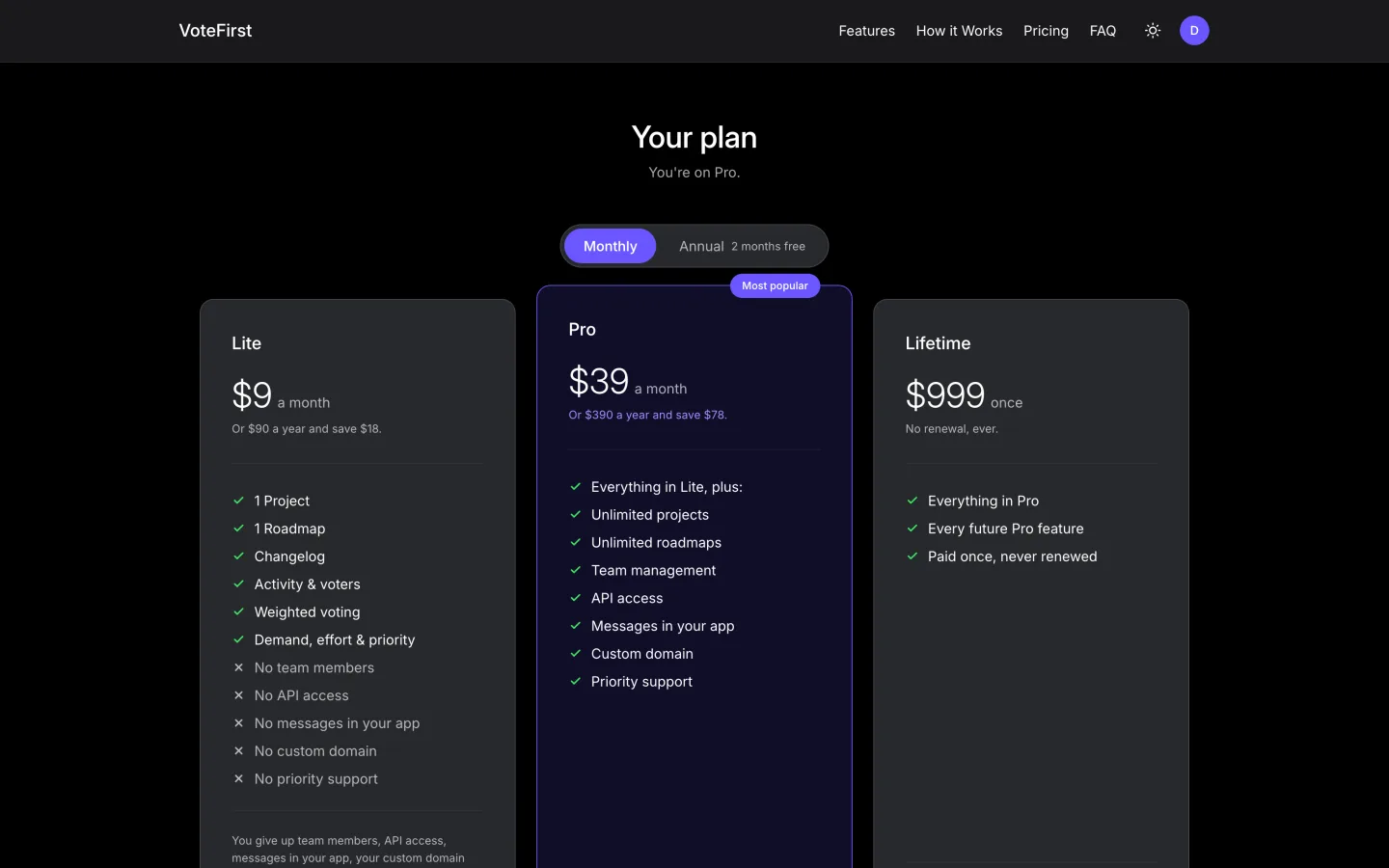
That is the same wall we have, and ours is higher up. Our nine dollar plan has no team members at all and they start at thirty nine, so on colleagues Supahub beats us at every tier including free.
Does Supahub weight votes by revenue?
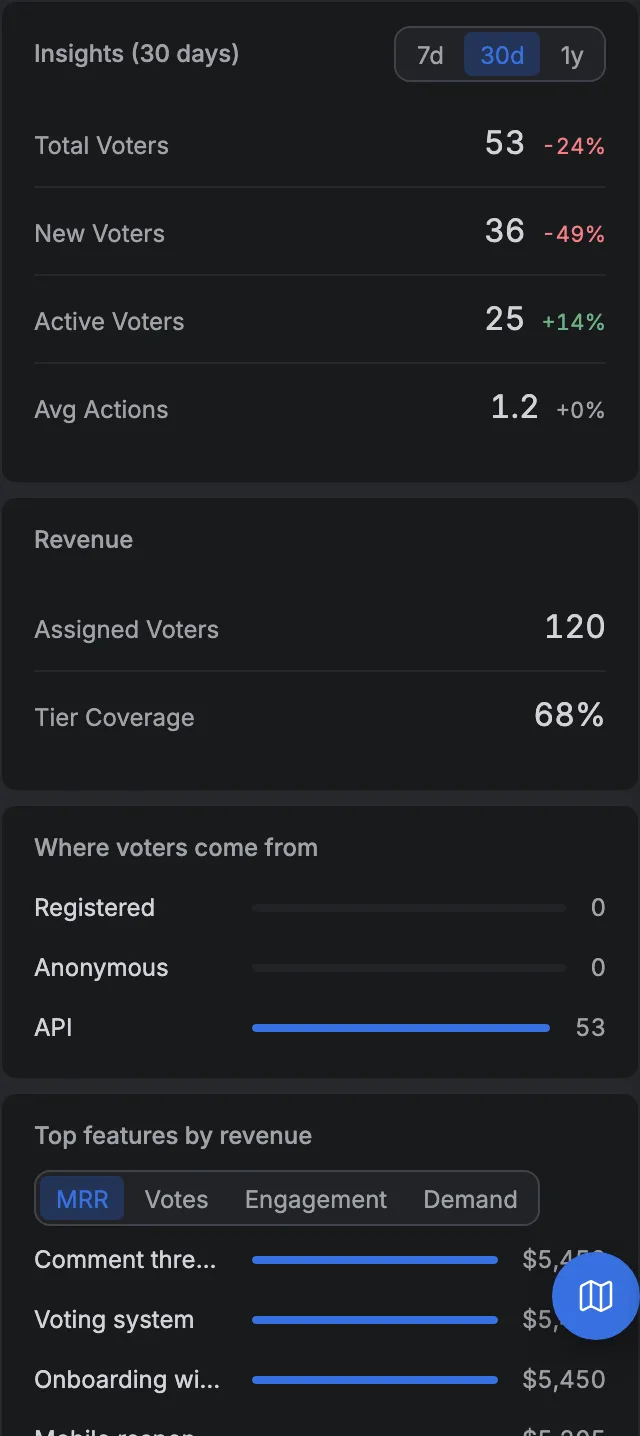
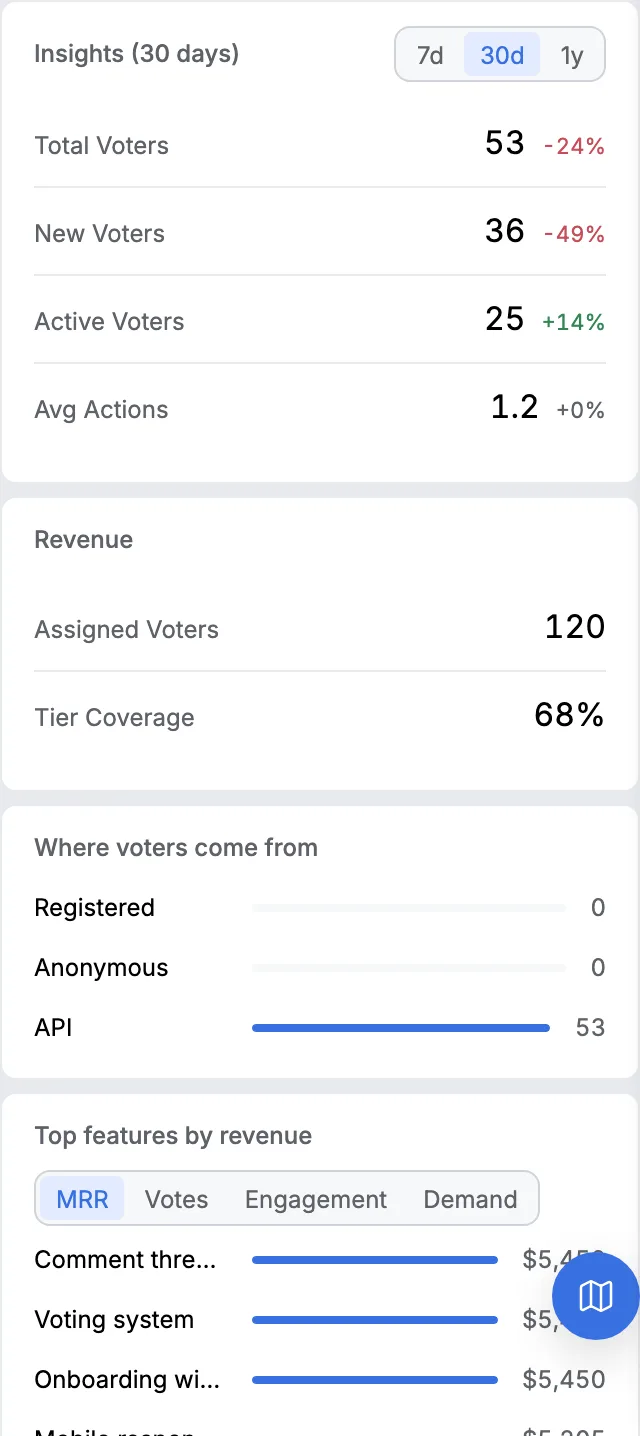
No. They segment feedback by plan and company size, which is a filter rather than a weight.
The difference is worth being precise about, because the words look similar. Segmenting shows you a subset of the board. Weighting changes the order of the board itself.
Ours multiplies each vote by its voter's tier, writes that weight onto the vote when it is cast, and shows the plain count alongside. The mechanism is here.
Seven of the twenty one tools we checked ship some form of revenue weighting. Supahub is not one of them and neither claim is a knock on their product.
14 days, a card at signup, then $9 or $39 a month.
Is Supahub actively maintained?
Their site is live and selling, and their footer carries a 2025 copyright line and a company name of Bruvvv LLC.
A stale copyright line is weak evidence of anything on its own, and we mention it only because we check the same signal on every one of these pages and it would be dishonest to report it for some vendors and skip it for others.
Does Supahub have a free plan?
Yes, one board and one admin on their pricing page read on 14 September 2026, and end users are never counted on any plan. The ceiling is the second board or the second colleague rather than the number of people voting.
Does Supahub have a public roadmap, single sign on and a changelog?
Supahub carries multiple roadmaps with privacy set per roadmap. Supahub puts single sign on on Growth. Supahub carries a changelog alongside the feedback boards its plans are counted in.
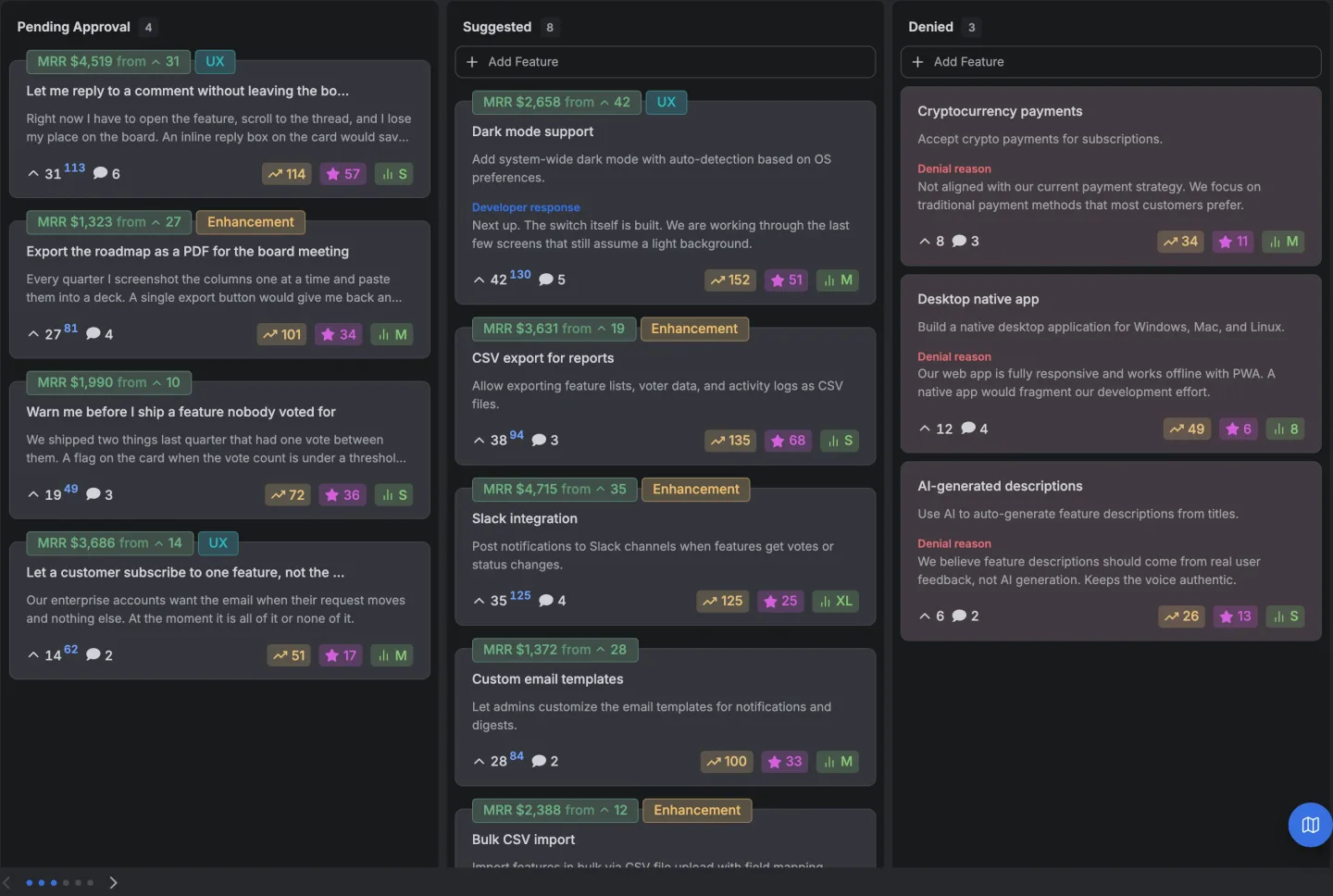
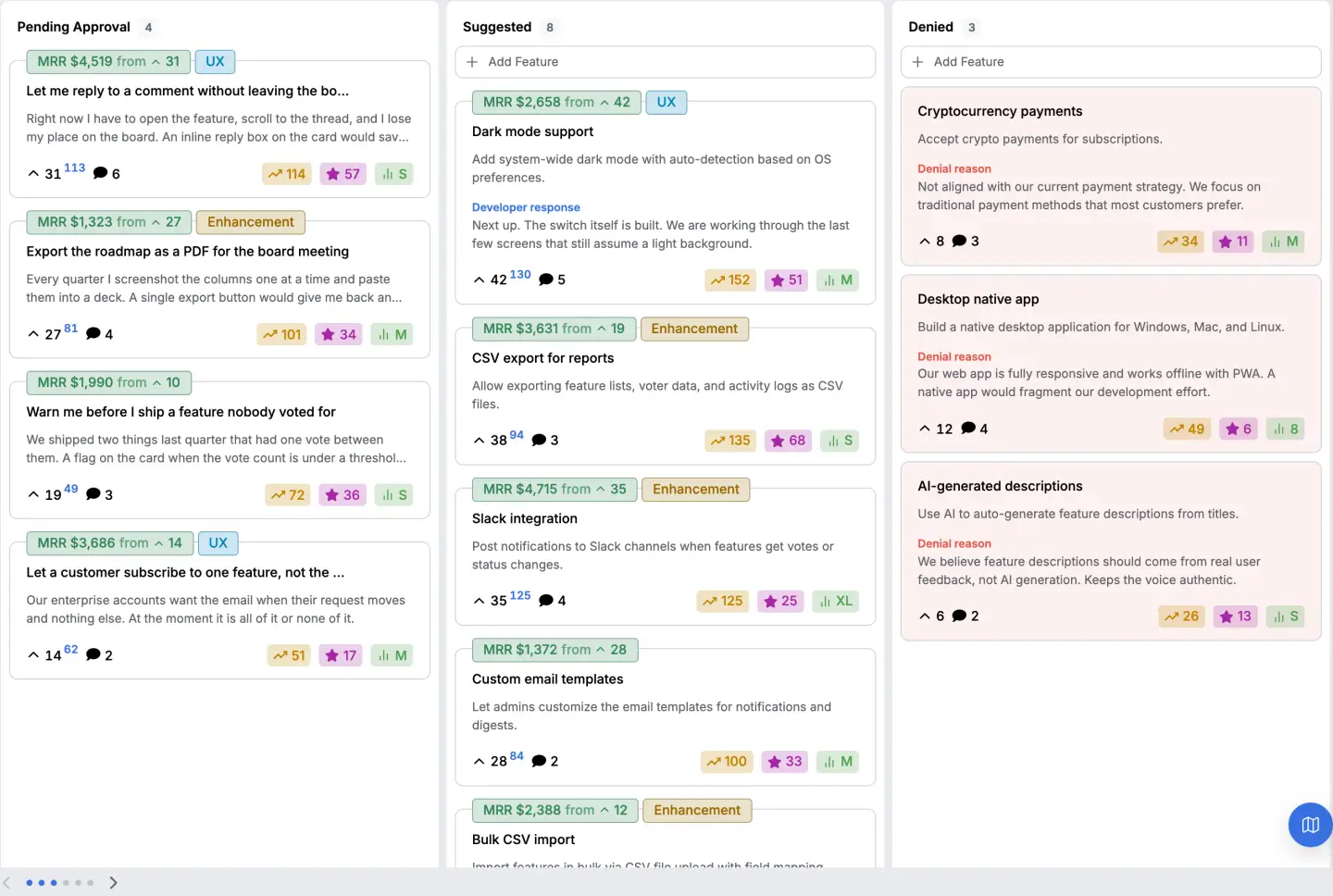
Ours publishes a public roadmap with a Denied column on every plan, and signs a voter in with a token from your own application on the thirty nine dollar plan rather than with SAML.
Is there a free Supahub alternative?
Yes, several, and none of them is Supahub. Fider is the free one to know about, because it is open source and its hosted tier runs to two hundred and fifty feedback items.
UserJot gives two boards and three admin roles, Supahub gives one board and one admin, Featurebase gives one seat, and Sleekplan's Indie tier is a single admin workspace that does not expire.
All five were read on their own pages on 14 September 2026. This product is not one of them. There is no free plan here, only a fourteen day trial that asks for a card at signup.
Is Supahub worth it, and when is it the better answer?
Three cases.
You want to spend nothing. Their free plan runs a real public board with one admin. We have no free tier.
You have colleagues and a small budget. Fifteen dollars a month billed yearly for two boards, against our nine for one project and no team members.
You want the Canny shape at the lowest price. That is what they built and they are good at it.
What does ours cost?
Nine dollars a month for one project, with weighted voting included and no widget held back for the higher plan.
Supahub keeps their widgets off the free plan. Ours are all on the nine dollar plan. What our thirty nine dollar plan adds is the API, a second project, a custom domain, colleagues on the account and signing your own users in.
So the comparison is narrow and it is not really about price. If you need a second colleague they are cheaper. If you need the board to sort by what the customer pays, we are the only one of the two that does it. The full category table is here.
What moving actually involves
More work than a button, and the honest version is short. There is no importer for requests or votes on our side.
Voters and the revenue behind them come in from a CSV or from a billing connection, which is the part the weighting needs. The requests themselves are rebuilt by hand or by a script against the API, and the vote counts start again.
That is a real cost and it is worth naming before anybody moves. The five steps, with the endpoint each one uses, are written out in full, and they are the same five whatever you are leaving.

