Of every UserJot alternative you could pick, VoteFirst is the one with the weakest case against it, and putting that off would be dishonest, so here it is.
UserJot argues in public that charging per user for a feedback tool is wrong. VoteFirst agrees with them. They also have a free plan that is not a trial, and VoteFirst does not have one at all. If price is what decides this for you, you can probably stop reading and go and use theirs.
Everything below was read on their own site on 9 September 2026.
What are the alternatives to UserJot?
UserJot is free forever with two boards and unlimited users, and it never charges per person on any plan. Below is the whole field, with what each free plan holds and where it stops.
| Vendor | From | Billed per | Free plan | Trial |
|---|---|---|---|---|
| Trello | $5/user/mo | user | Yes | – |
| VoteFirst | $7.50/mo | plan | – | 14 days, card |
| Features.Vote | $7.50/mo | project | – | 14 days |
| Jira Product Discovery | $10/creator/mo | creator | 3 creators | – |
| LoopedIn | $12/mo | plan | 1 of each | – |
| WishKit | $12.50/mo | project | 5 requests | – |
| Sleekplan | $13/mo | workspace | 1 admin | 30 days, no card |
| Upvoty | $13.50/mo | project | – | 14 days |
| Noora | $14/mo | workspace | – | 7 days |
| Convas | $15/mo | tracked user | 25 users | – |
| FeedBear | $15/mo | project | – | 14 days |
| Supahub | $15/mo | workspace | 1 board | 10 days |
| ProductLift | $19/mo | workspace | – | 14 days |
| Productboard | $19/maker/mo | maker | 500 notes | – |
| Roadmunk | $19/creator/mo | creator | – | 14 days |
| Ducalis | $20/mo | changelog subscriber | 500 subs | – |
| Frill | $22/mo | workspace | – | 14 days |
| Fider | $25/mo | workspace | 250 items | – |
| Featurebase | $29/seat/mo | seat | 1 seat | – |
| Headway | $29/mo | plan | Yes | – |
| Nolt | $29/mo | board | – | – |
| UserJot | $29/mo | workspace | 2 boards | 14 days |
| Aha! Ideas | $39/user/mo | user | – | Yes |
| Savio | $39/mo | paid user | – | 14 days |
| Beamer | $49/mo | monthly active user | 1,000 MAU | – |
| Feature Upvote | $49/board/mo | board | – | 30 days |
| Rapidr | $49/mo | workspace | – | 14 days |
| Suggested | $49/mo | plan | – | 15 days |
| Gleap | $49/mo | plan | – | 14 days |
| FeatureOS | $50/mo | plan | – | 30 days, no card |
| Olvy | $60/mo | plan | 25 items | – |
| AnnounceKit | $39/mo | module | – | 15 days, no card |
| Canny | $79/mo | tracked user | 25 users | – |
| LaunchNotes | $249/mo | plan | – | 14 days |
| Pendo | Not published | monthly active user | Beta | – |
| ProdPad | Not published | module | – | 7 days |
| UserVoice | Not published | quoted | – | 30 days |
| airfocus | Not published | quoted | – | – |
| ProductPlan | Not published | quoted | – | – |
| Productroad | $9/mo | plan | 50 users | 14 days, no card |
| Quackback | $29/mo | plan | 1 board, 50 posts | 14 days, no card |
| ProdCamp | $99/mo | plan | 2 admins, 1 product | – |
| Harvestr | $65/editor/mo | editor | – | 14 days |
| Productlane | $29/user/mo | user | – | Yes |
| Ideanote | $6/user/mo | user | 10 users, 250 ideas | – |
| Craft.io | $19/editor/mo | editor | – | 14 days, no card |
| HYPE Boards | €79/mo | plan | – | 14 days, no card |
| Noticeable | $24/mo | plan | 1 project, watermarked | 14 days, no card |
Read on each vendor's own pricing page, with the billing switch on the yearly side wherever one is published. From is the cheapest paid rate per month. What each one includes, as well as what it costs, is on one page.
The same two products, line by line
Read on each vendor's own pages on the date in the row above. Not published means nobody could read it on the pages opened that day, never that the feature is absent.
What does UserJot cost?
Three plans, and the first one is genuinely free.
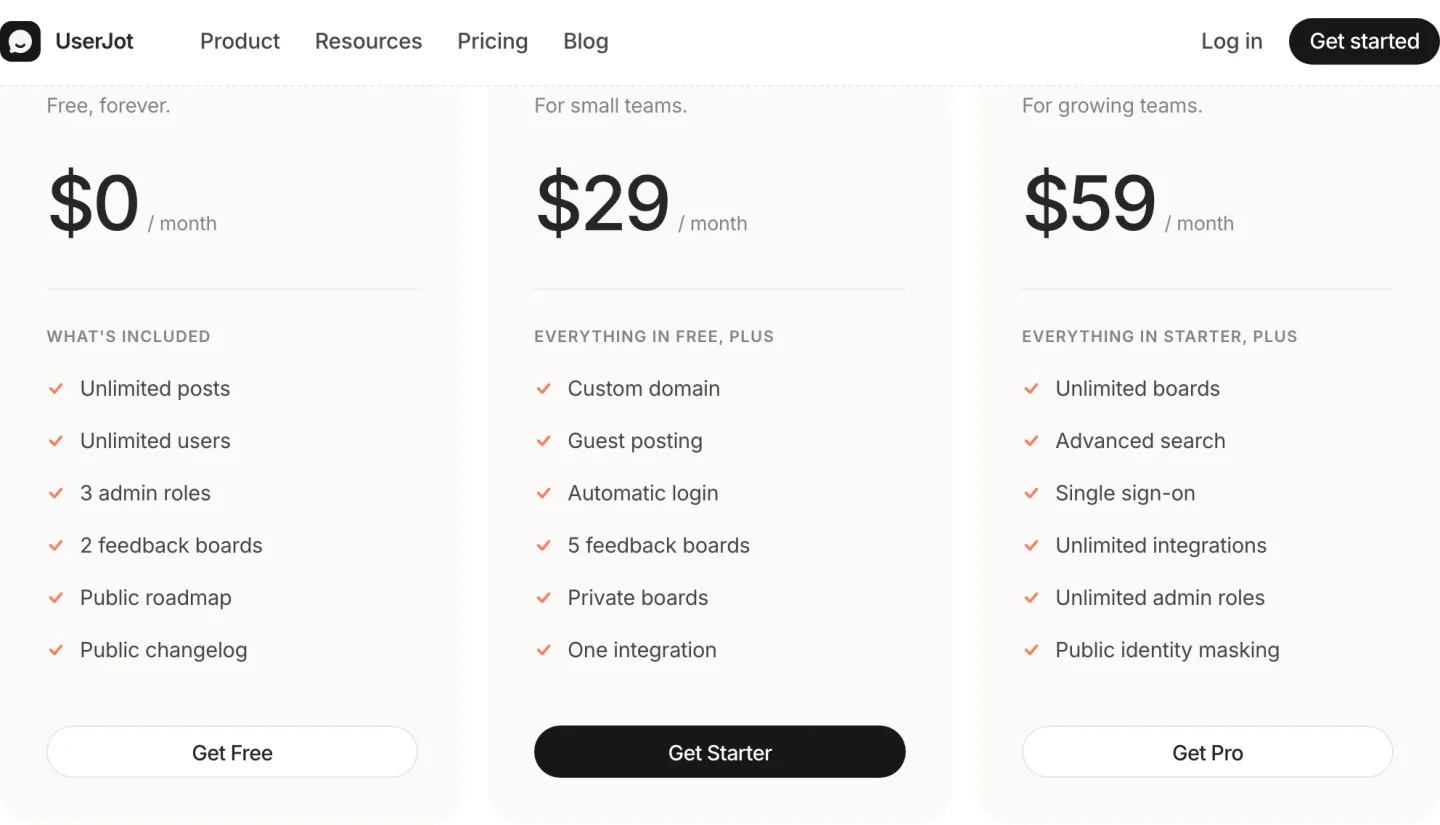
| Plan | Price | What it gives |
|---|---|---|
| Free | $0/mo, forever | Unlimited posts, unlimited users, three admin roles, two feedback boards, public roadmap, public changelog |
| Starter | $29/mo | Adds a custom domain, guest posting, automatic login, five feedback boards, private boards and one integration |
| Professional | $59/mo | Adds unlimited boards, advanced search, single sign on and unlimited integrations |
There is no annual rate published anywhere, so every figure above is a monthly one. Every plan is written out separately on the pricing page for them.
Getting started takes an email and a workspace name. Their own line rules out a card, a sales call and what they call a forty seven field form.
You can check this on a board of your own rather than take the table's word for it, and a trial is 14 days with a card at signup.
Why do they refuse per user pricing?
Because they think the unit is wrong, and they say so on the page.
Their words are that charging per user for a feedback tool is like charging per customer for a store, that it is backwards, and that UserJot prices the tool and not your reach.
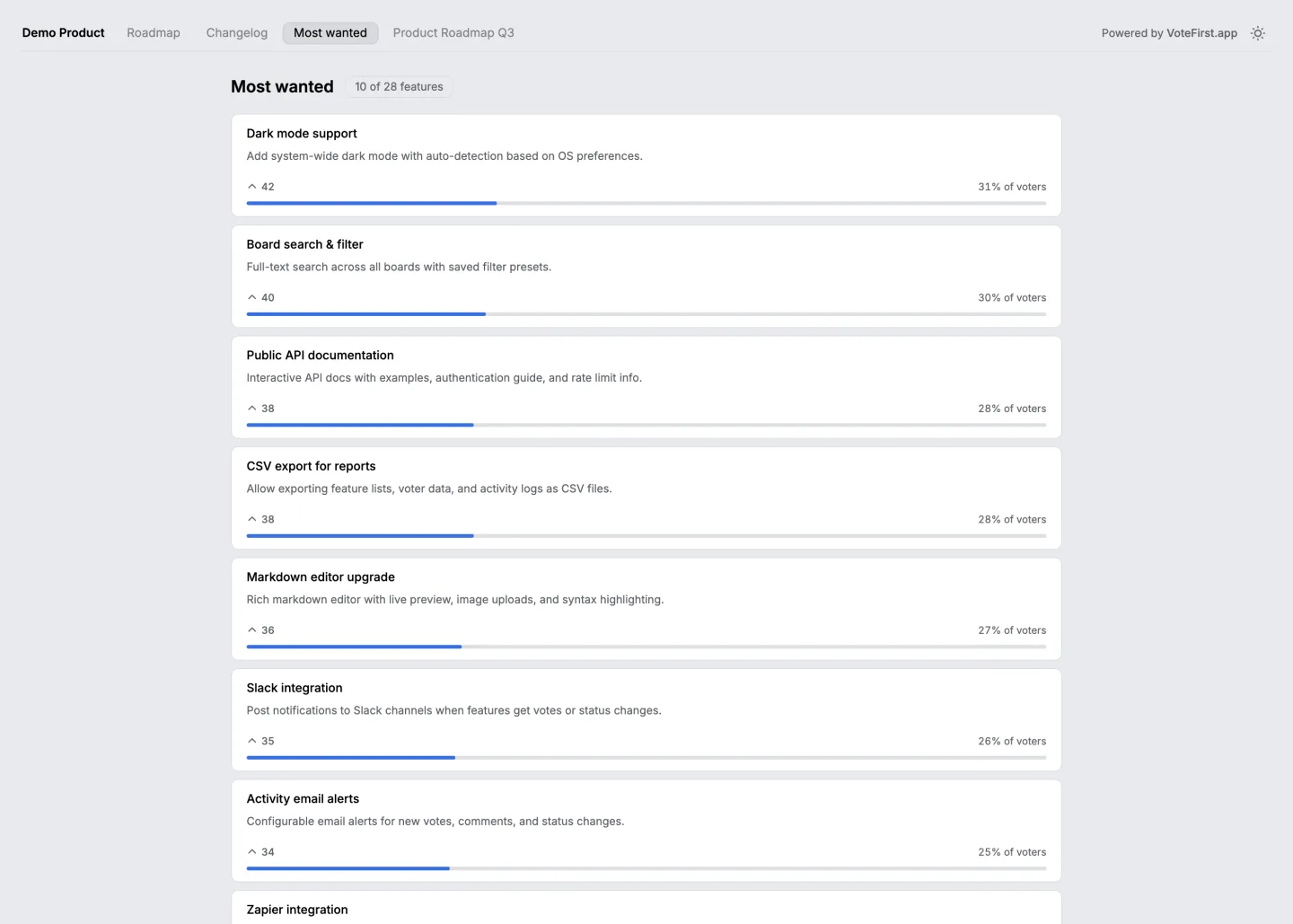
That is the same position this whole site takes. Two of the thirty two tools checked bill by participation on your own board, and a third bills by how many people see your changelog.
On all three, the thing you were hoping for is the thing that raises the invoice. UserJot and VoteFirst are on the same side of that argument, and a reader comparing the two should know the disagreement is elsewhere.
What this costs
Lite
$9 /mo
Pro
$39 /mo
Lifetime
$999 once
Fourteen day trial of Pro, card asked for at signup. Nothing here counts the people who vote, so the bill does not move when the board starts working. The long version, with what happens if you stop paying.
What is actually different between UserJot and VoteFirst?
The difference between the two is two things, one VoteFirst's and one theirs.
They have a free plan and VoteFirst does not. Unlimited posts and unlimited users at zero, with two boards. VoteFirst's lowest plan is nine dollars. For a first product with no budget, that gap is the entire decision and no feature list closes it.
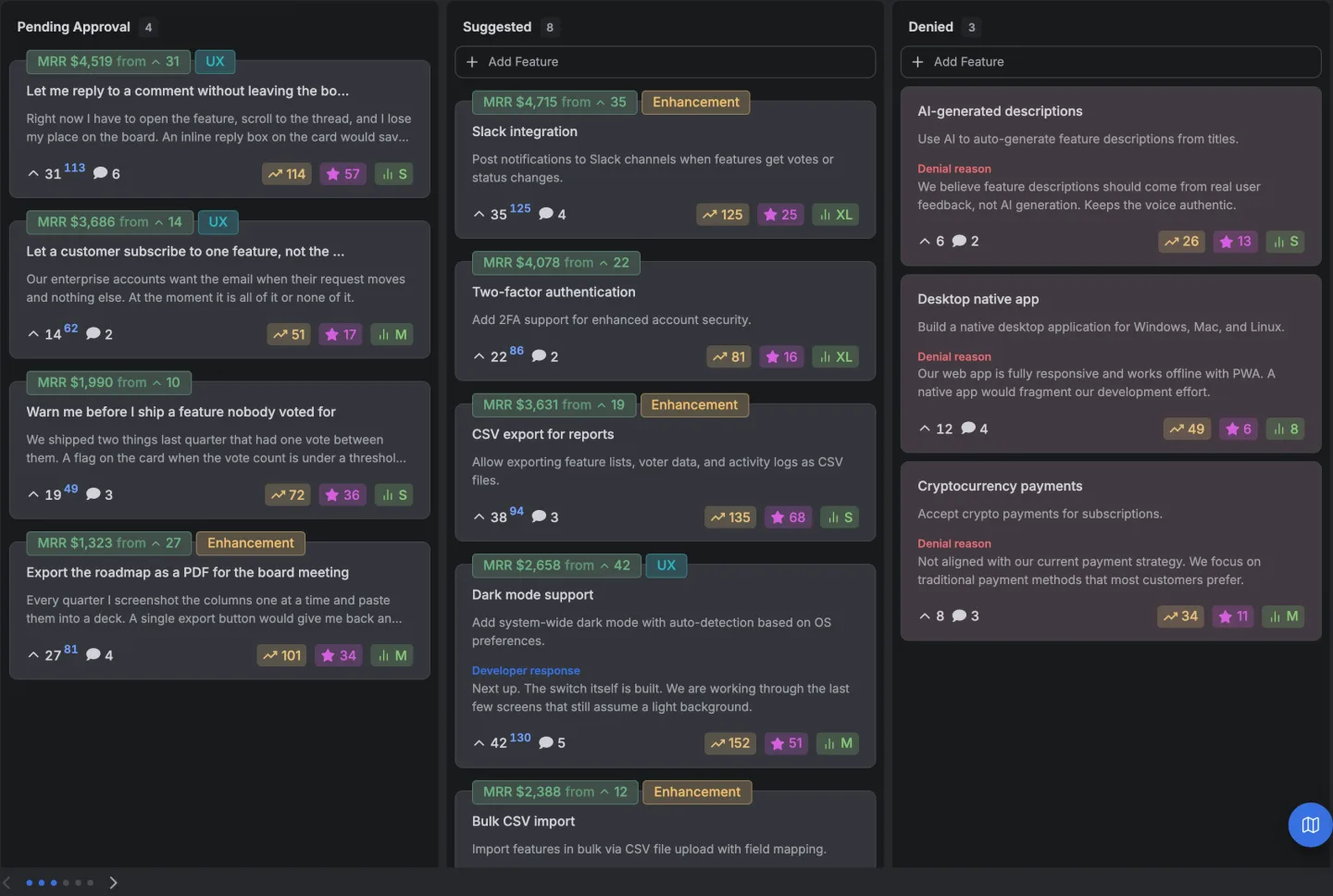
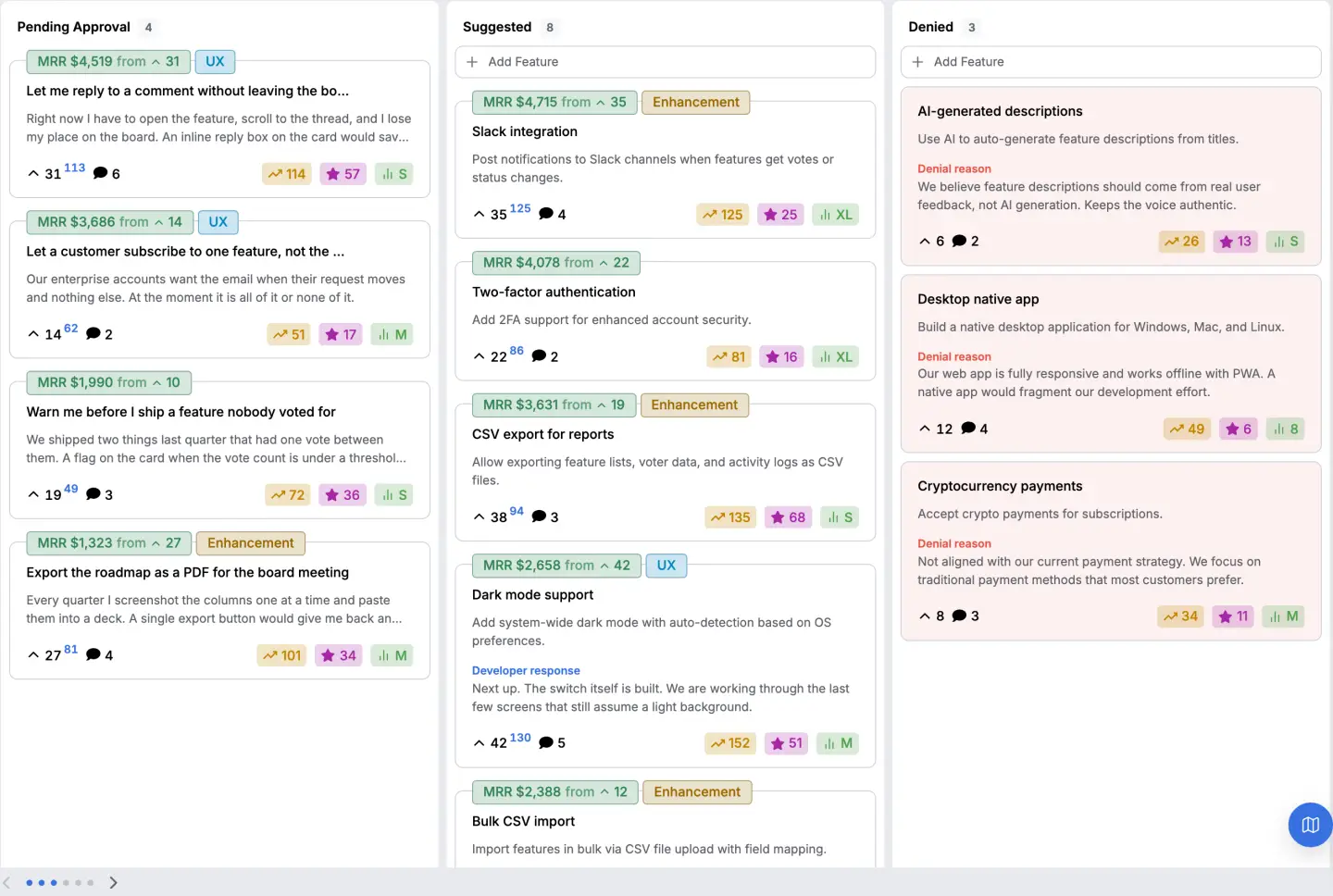
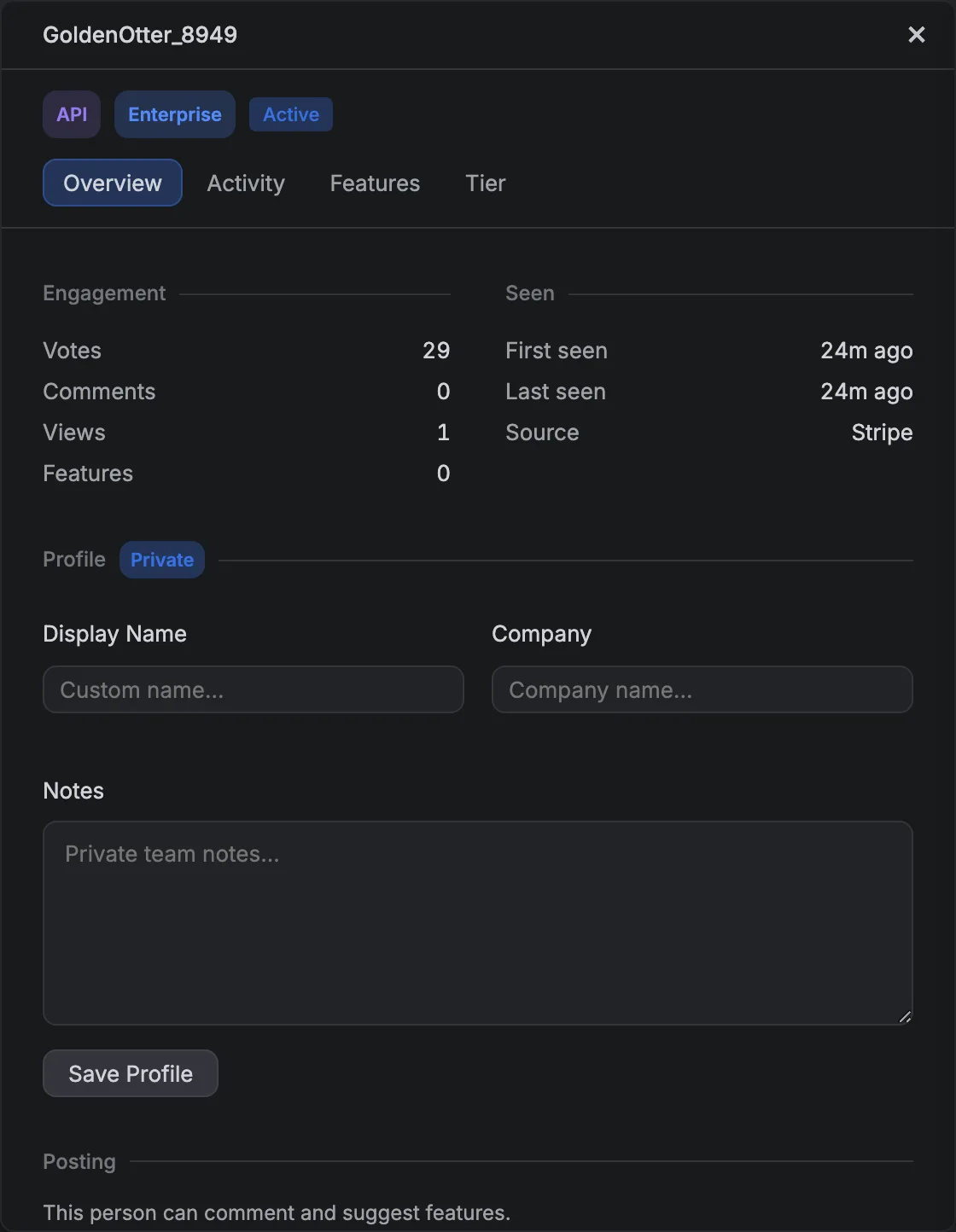
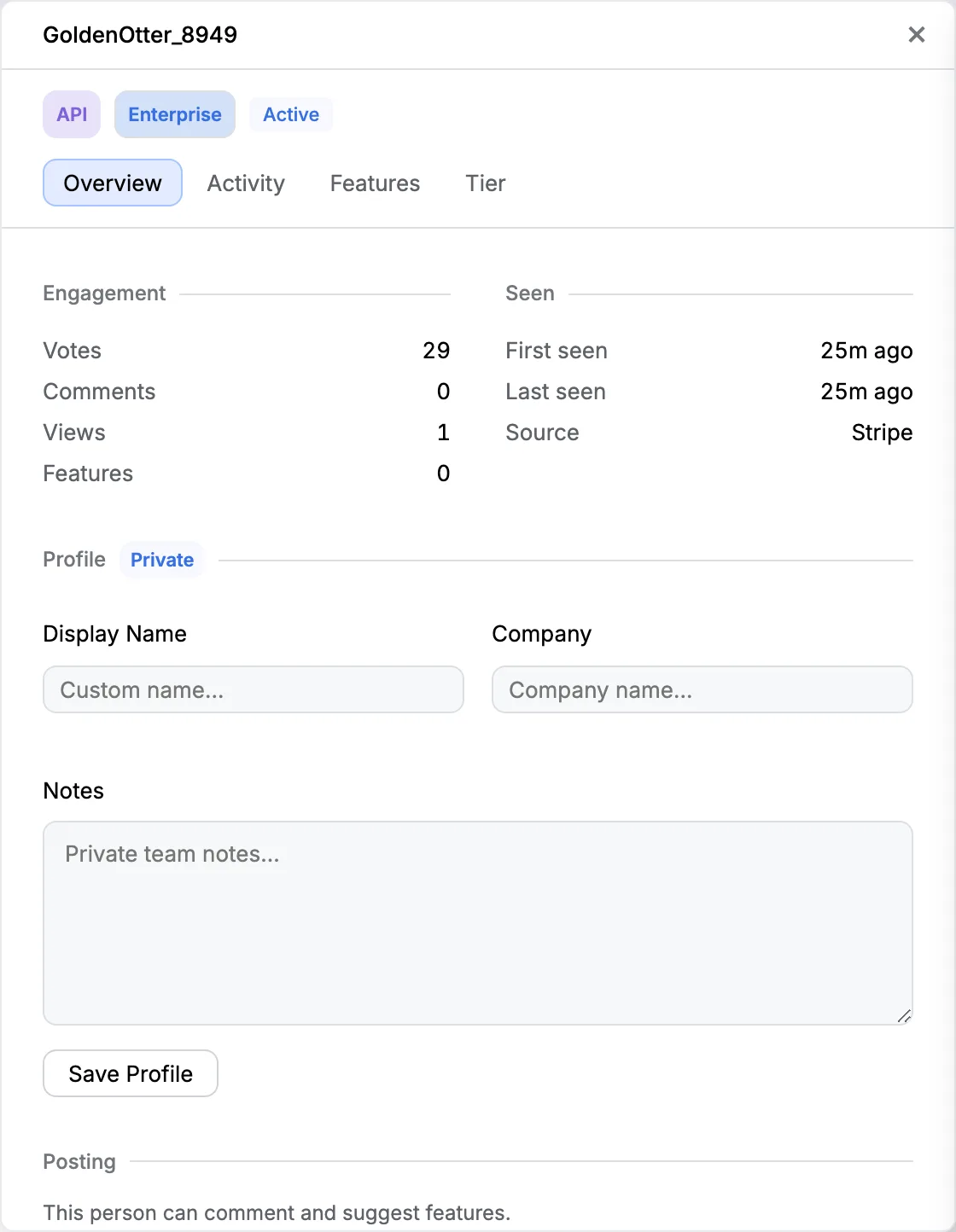
VoteFirst weights votes by what the customer pays and they do not. Nothing on their pages mentions vote weight, MRR or customer tier. It puts each voter in a tier with a whole number multiplier, writes that weight onto the vote when it is cast, and shows the plain count beside the weighted total. The mechanism is here.
So the question is narrow. If every customer of yours is worth about the same, their free plan beats VoteFirst's nine dollars and there is not much more to say.
If one customer pays you two thousand dollars a month and another pays nothing, a plain count cannot tell those two apart, and telling them apart is what VoteFirst does.
14 days, a card at signup, then $9 or $39 a month.
When does their free plan run out?
At the third board, or when you want a custom domain.
Free gives two feedback boards. Starter gives five and adds the custom domain, private boards, guest posting and automatic login. So the wall is the board count and the domain rather than the number of people using it, which is the right way round.
Set that beside VoteFirst's plan. Its nine dollar plan is one project, so on board count their free plan already beats it.
Do they have private boards?
Yes, on Starter at twenty nine dollars a month.
VoteFirst has nothing equivalent. A VoteFirst board is published to everybody or to nobody, with no password and no invite list, so there is no way to admit one named customer. If your feedback has to sit behind a login, theirs does that and VoteFirst's does not.
Does UserJot have a public roadmap and single sign on?
UserJot carries a roadmap beside the boards and the changelog. UserJot puts single sign on on Professional. VoteFirst publishes a public roadmap with a Denied column on every plan, and signs a voter in with a token from your own application on the thirty nine dollar plan rather than with SAML.
Is there a free UserJot alternative?
Yes, several, and none of them is UserJot. Fider is the free one to know about, because it is open source and its hosted tier runs to two hundred and fifty feedback items.
UserJot gives two boards and three admin roles, Supahub gives one board and one admin, Featurebase gives one seat, and Sleekplan's Indie tier is a single admin workspace that does not expire.
All five were read on their own pages on 14 September 2026. VoteFirst is not one of them. There is no free plan here, only a fourteen day trial that asks for a card at signup.
Is UserJot worth it, and when is it the better answer?
Three cases, and the first is most people reading this.
You have no budget yet. Free forever, unlimited users, two boards. VoteFirst charges nine dollars a month once a fourteen day trial ends, and the trial takes a card.
You need private boards or more than one board cheaply. Twenty nine dollars gets five boards and private ones. A second project on VoteFirst needs the thirty nine dollar plan.
You want to start in thirty seconds without a card. VoteFirst asks for a card before a trial starts.
What does VoteFirst cost, and when is it worth it?
Nine dollars a month for one project, with weighted voting included.
The only reason to pay for VoteFirst instead of using their free plan is the weighting. If your voters pay you very different amounts and you need the board itself to reflect that, VoteFirst changes the order of the board and theirs does not.
That is a real reason, and it is the only one claimed here.
If it is not your reason, use theirs. The whole category is on one page and several of them beat VoteFirst at the bottom of the range.
UserJot against the others, one at a time
Four pages here take UserJot and one rival at a time, working out where the two bills cross and what each one does with a vote from a paying customer.