The short version
- Six discovery activities, with the artefact each one actually leaves behind.
- Two of them produce confidence without evidence, and both feel more productive than the four that work.
- A standing request list is the cheapest instrument here, because it runs all the time.
- Interviews into a document, requests into a sheet, cancellations into a third file read monthly.
Product discovery examples are usually compared on how each activity feels to run. The more useful comparison is what each one leaves behind, meaning what you can still point at a month later and what decision it can carry.
Six below, each with the evidence it actually produces. Two of them produce confidence and no evidence, which is the most expensive failure in the set because it feels like the most productive one.
What is a product discovery example?
An activity run to find out what to build, and the artefact it leaves behind.
The artefact is the part to judge it on. An activity that produces a strong feeling and no record can't be checked, can't be revisited when the team changes, and can't be used to settle a disagreement six weeks later.
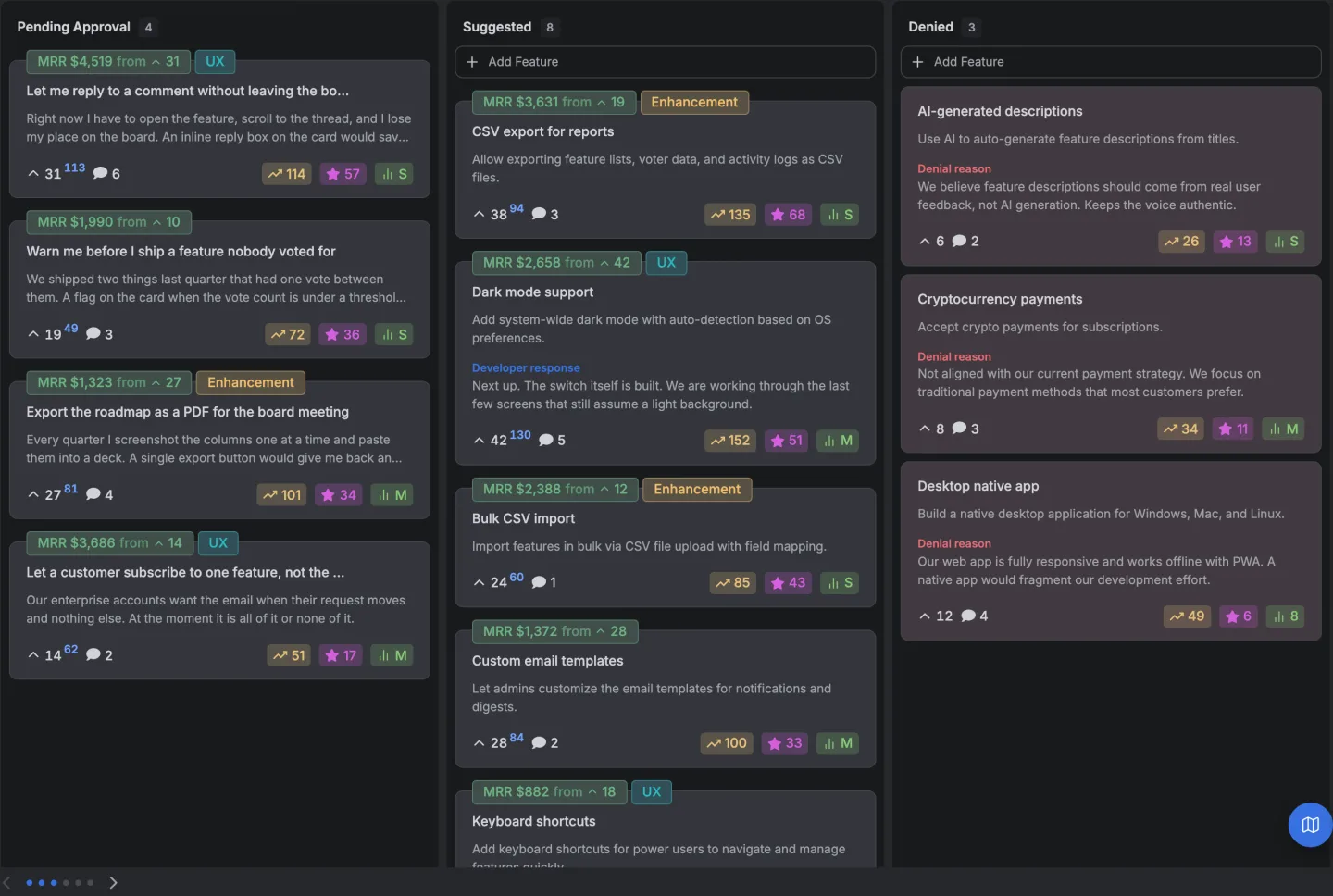
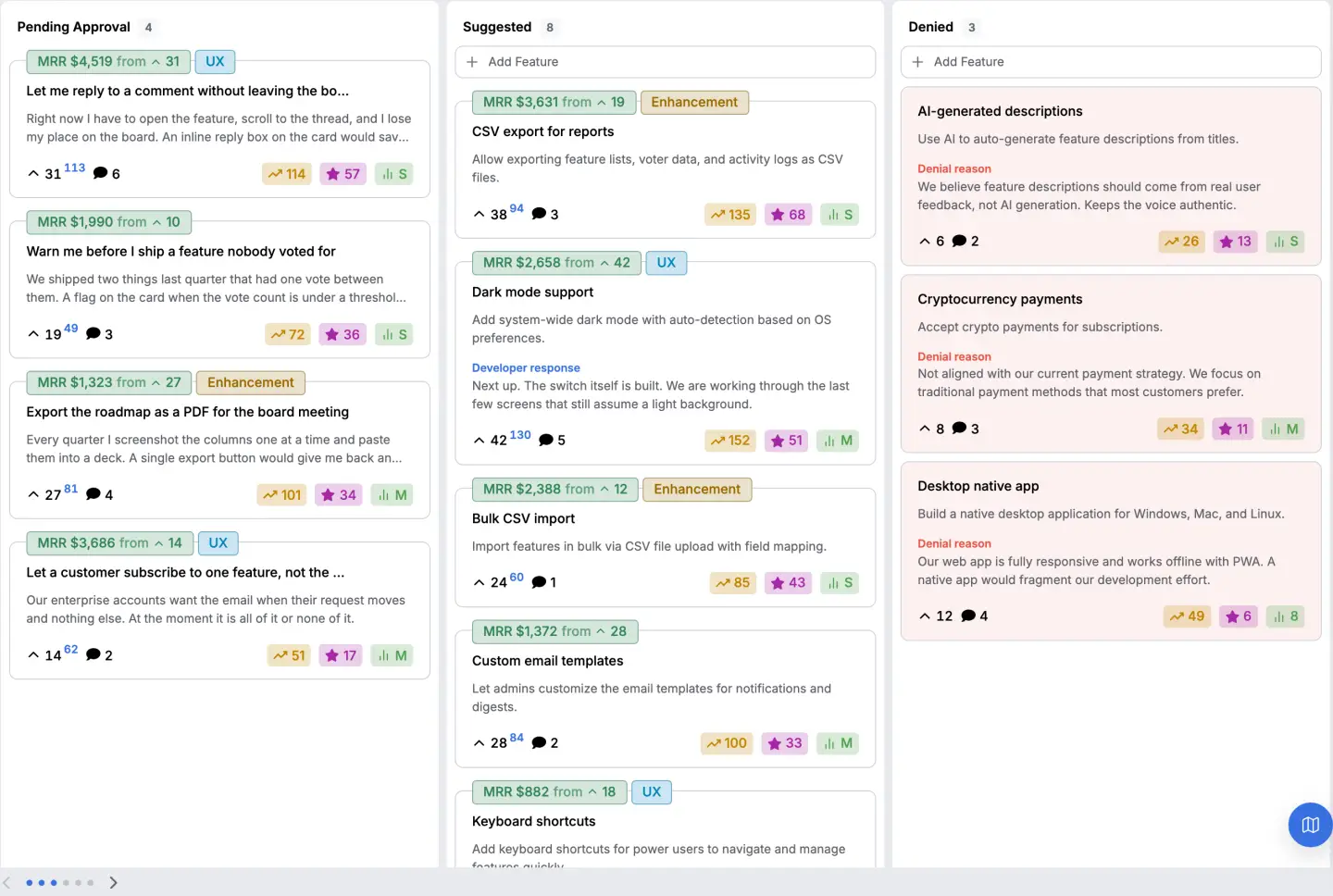
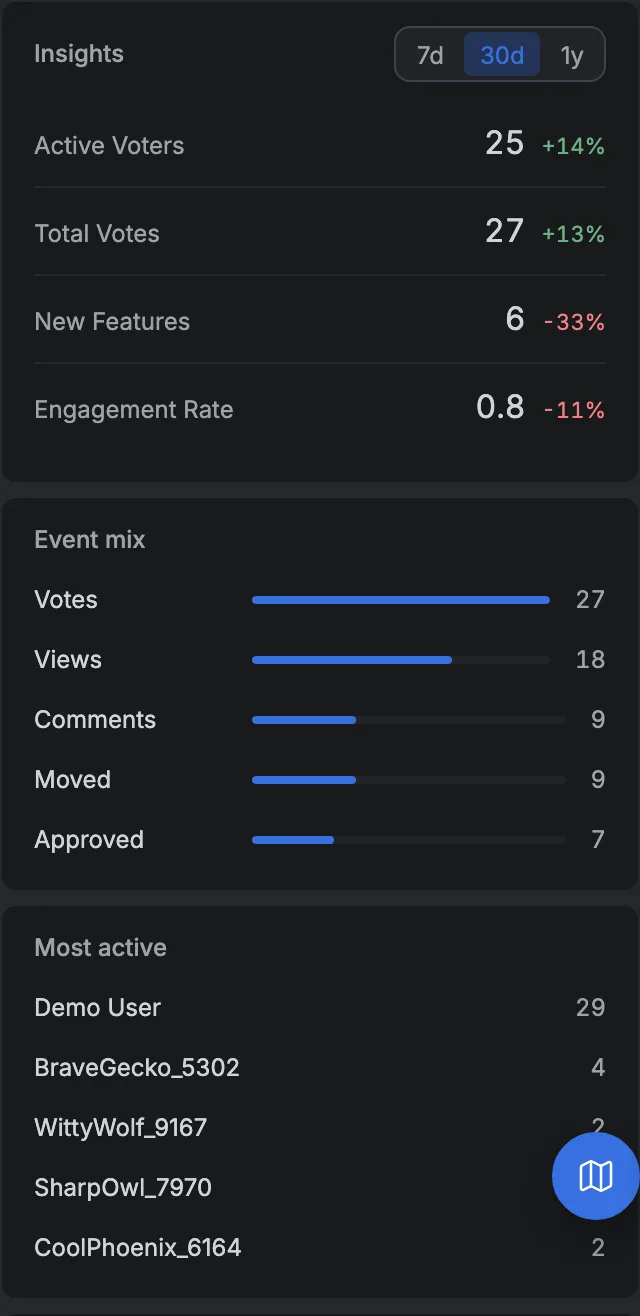
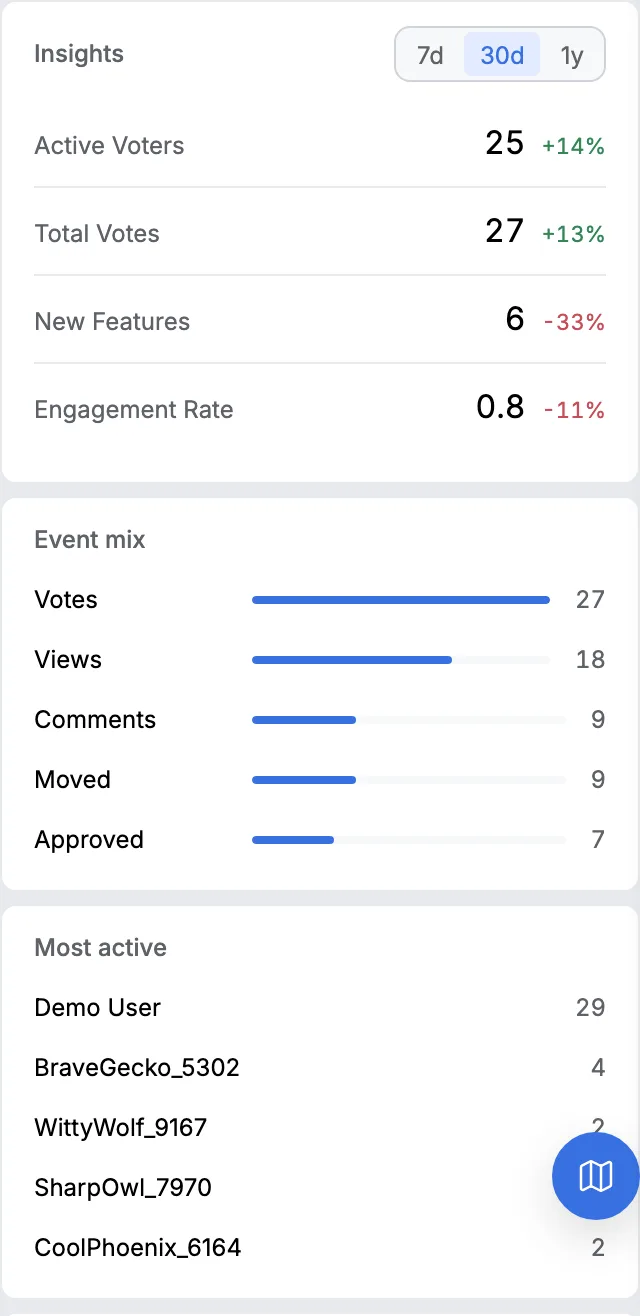
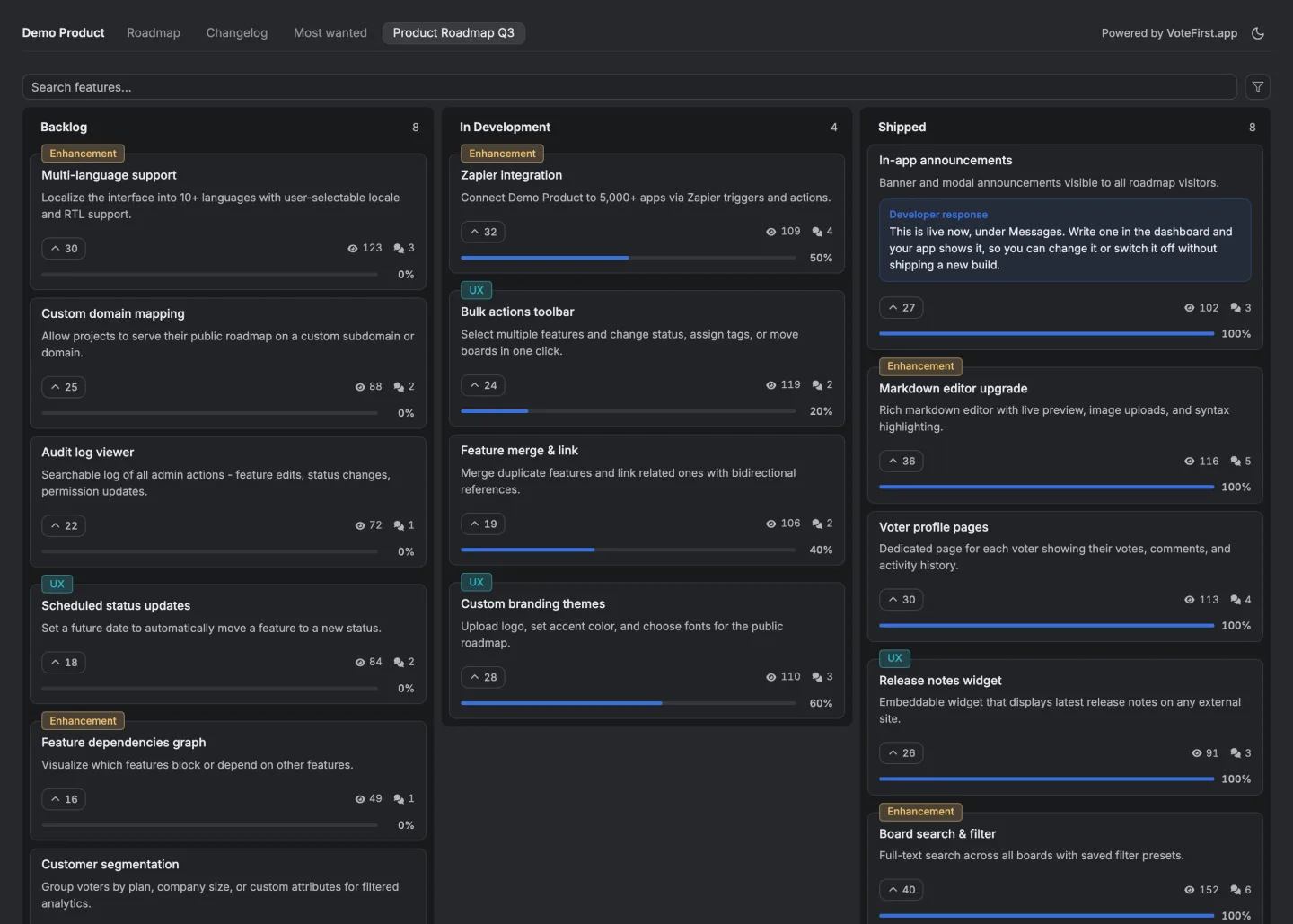
There's a standing collection doing one of these continuously if you want to see the artefact, and the demo is open without an account.
Doing this in a tool rather than a spreadsheet? Twenty one feature request tools and the eight units they bill on. The unit decides the bill, not the headline price.
The six, and what each leaves behind
| Activity | What it produces | What decision it can carry | Evidence or confidence? |
|---|---|---|---|
| Customer interviews | Situations, in their words | What to build, and how | Evidence, if recorded verbatim |
| A standing request list | Counts, per request, over time | Ordering | Evidence |
| Usage analysis | Where behaviour changed | Where to go and look | Evidence, of a narrow kind |
| Cancellation reasons, read in a batch | Where value failed to land | What to fix | Evidence |
| A workshop | Alignment and a wall of notes | Almost nothing on its own | Confidence |
| Competitor teardowns | A list of features other products have | Almost nothing | Confidence |
Customer interviews
Five to eight conversations, each about a specific recent moment, not about the future.
What they produce is the strongest single artefact in discovery, somebody's actual situation in their own words. The failure mode is asking about the future, which produces speculation, and the fix is narrow and well known. Ask what they did last time, not what they would do.
The part that decides whether this is evidence or confidence is whether you wrote down what they said or what you concluded. A quote is evidence. A summary is a memory of a conclusion.
A standing request list
A place customers can write requests and agree with each other's, running all the time rather than in a phase.
What it produces is the only continuous count in discovery. Interviews tell you what one person's situation is. A request list tells you how many people recognised the same situation when it was described to them.
Its weakness is that it can only measure agreement with things somebody thought to write down, so it's a poor instrument for finding problems nobody has articulated. That's what interviews are for, and the two are complementary rather than competing.
Usage analysis
Looking at where behaviour changed or where people stop.
Genuinely evidence, of a narrow kind. It includes the people who never write to you, which nothing else on this list does. It also never tells you why, so on its own it produces a place to look, not a finding.
The pairing worth having is a drop in usage matched to something written. Either alone is weaker than both together.
Cancellation reasons, read in a batch
One open question at cancellation, and the answers read forty at a time, not one at a time.
The batch is the whole method. Individually a cancellation reason is an anecdote arriving months apart. Read together they're the clearest signal a product produces, and almost nobody reads them together because they arrive one at a time by email.
The workshop
A day, a wall of notes, and a feeling of alignment.
A workshop is good at deciding among options that are already on the table, and bad at producing the options. What it leaves behind is a photograph of sticky notes that nobody reads again.
This is an argument against counting it as discovery, not against running one. If the inputs to the workshop were interviews and request counts, the day is a decision meeting with good inputs, which is valuable.
If the inputs were the opinions of the people in the room, the output is those opinions with a process wrapped around them.
The competitor teardown
Reading what other products in the category have and writing it down.
It produces a list of features and a strong feeling of urgency, and it carries almost no information about your own users. The thing it can legitimately tell you is where a capability has become an expectation, not a differentiator, which is worth knowing and is one sentence rather than a project.
The trap is that a teardown produces a to do list that looks like a roadmap and has no demand behind any item on it.
The two that produce confidence without evidence
The workshop and the teardown, and the reason to name them is that both feel more productive than the four above.
A workshop occupies a day, involves everybody and ends with agreement. A teardown produces pages of output in an afternoon. Neither leaves anything a disagreement six weeks later can be settled with, and both are frequently used as the entire discovery input to a quarter's plan.
How do you do this without a tool?
Interviews into a document with verbatim quotes, requests into a spreadsheet with who asked, cancellation reasons into a third file read monthly.
The one that doesn't work on paper is the request list, because the counting requires the people who would agree to be able to see the request. Without that, the count is your own record of who mentioned it to you.
How does this product do it?
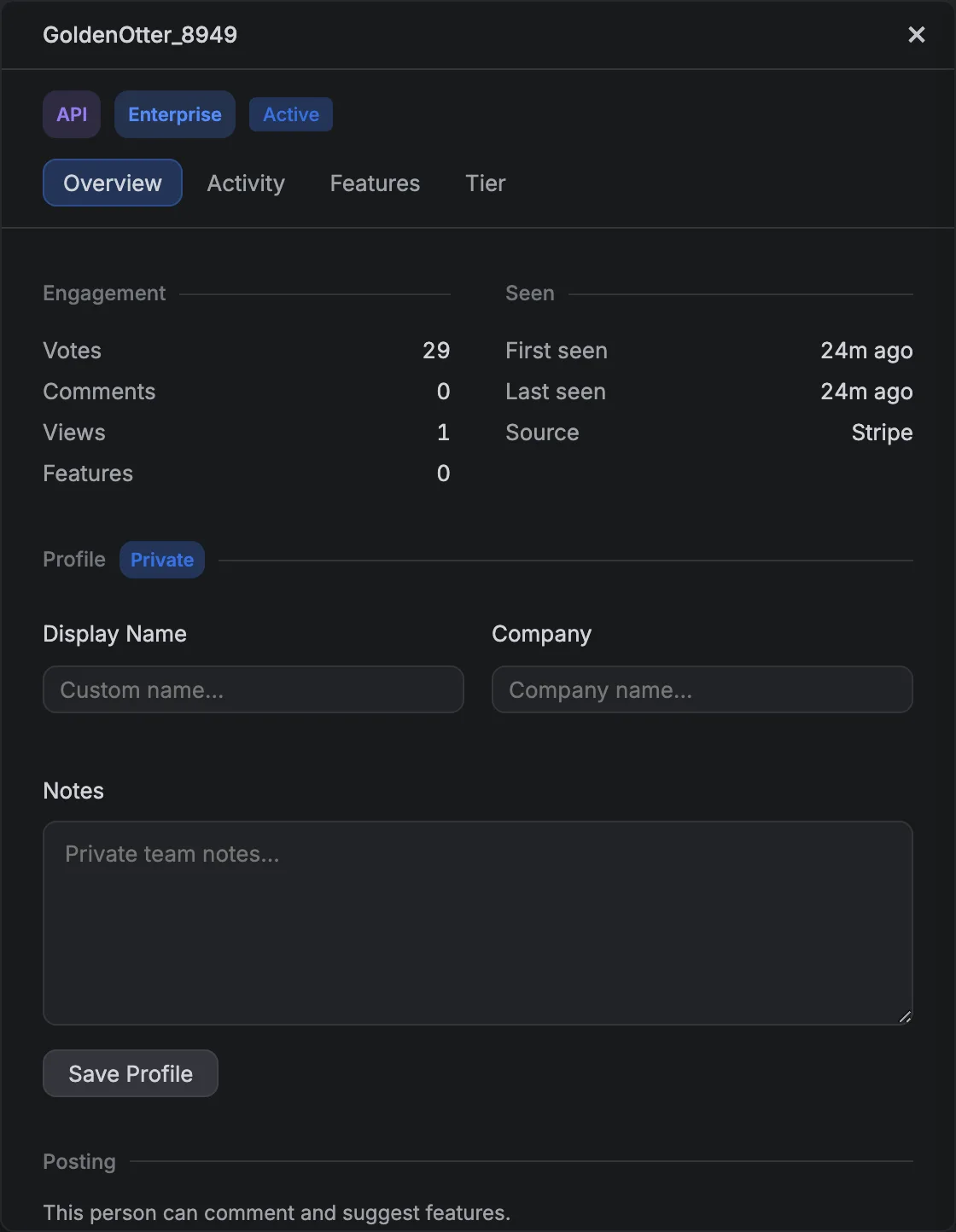
The standing request list is the board. Requests carry the people who asked and the people who agreed, so the count is distinct people, not a tally somebody keeps. Nothing a visitor writes appears publicly until somebody approves it.
Each voter carries whatever you know about them, including the revenue on the account, so the count can be read by weight as well as by headcount, which is the difference between knowing that thirty people want something and knowing what those thirty are worth.
The feedback board page covers the board, and what product discovery is covers the activity around it.
What a prioritisation framework does covers what happens to the counts once discovery produces them.
14 days, a card at signup, then $9 or $39 a month.