Rapidr prices a workspace and counts colleagues, not customers. Forty nine dollars covers five people on your side and any number of people on the board.
Everything below was read on Rapidr's own pricing page on 14 September 2026.
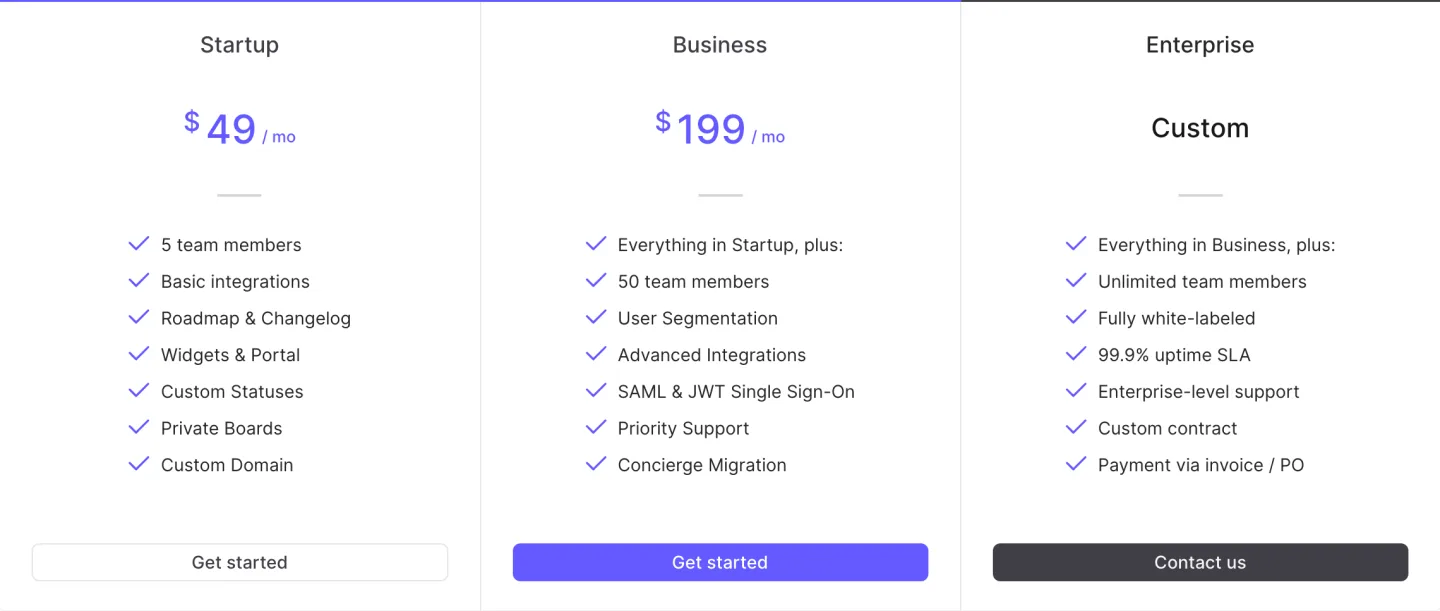
What does Rapidr cost?
Three plans, and the number that steps is the team.
| Plan | Price | Team members |
|---|---|---|
| Startup | $49 | 5 |
| Business | $199 | 50 |
| Enterprise | Custom | Unlimited |
- Startup adds roadmap, changelog, widgets, portal, custom statuses, private boards, a custom domain.
- Business adds user segmentation, advanced integrations, SAML and JWT single sign on, priority support, a concierge migration.
- Enterprise adds full white labelling, a 99.9 percent uptime commitment, a custom contract, payment by invoice.
Their trial is fourteen days and their page says it asks for no card. Their refund answer says any plan can be refunded inside the first thirty days from signup.
If that arithmetic came out badly, a trial here is 14 days with a card at signup and the bill after it is $9 or $39 a month.
Does Rapidr have a free plan?
No. Their pricing page read on 14 September 2026 carries a fourteen day trial that asks for no card, and any plan can be refunded inside the first thirty days from signup.
Who counts as a team member?
Your colleagues, and their own page draws the line clearly.
Rapidr's pricing questions define a user as your customer, who votes, comments or leaves feedback on your portal, and a team member as your teammate invited to your organisation's account. Only the second kind appears on the bill.
That means a board that suddenly works does not produce an invoice, which is the single most important property of a pricing model in this category and it is the opposite of a tracked user plan. Two tools in this field do meter the people who vote.
The step from five to fifty is four times the price, so a sixth colleague costs a hundred and fifty extra a month. There is no published per seat rate in between.
Does Rapidr weight votes by revenue?
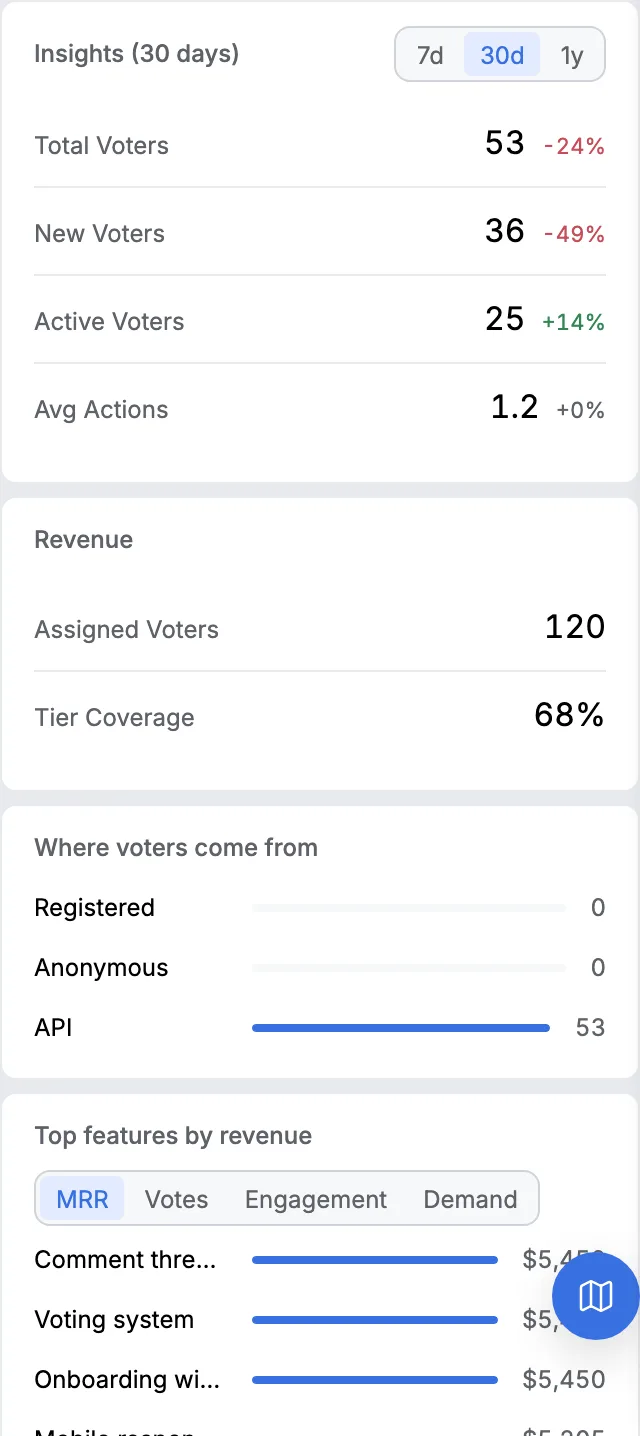
Not today. Their own comparison table carries a row called MRR Filter and it is labelled coming soon.
Five rows on their published table say coming soon, being Zendesk, Salesforce, an admin digest, the MRR filter and a priority filter.
That is a vendor being straight with a buyer about what is on the page and not in the product, which is rarer than it should be, and it is the reason this page says not today rather than no.
It also means a buyer choosing Rapidr because of that row is choosing a promise. When it arrives it will be a filter, in their own wording, which orders what you look at rather than changing what a vote weighs.
What is on the entry plan that usually is not?
Private boards, a custom domain and access controls, all at forty nine.
Most of this category puts private boards and a custom domain two tiers up. Rapidr puts both on Startup, along with vote on behalf, confidential comments, custom statuses, merging similar feedback and translations.
What it holds back is single sign on. SAML, Okta, OneLogin and Azure Active Directory are all on Business at a hundred and ninety nine.
What does this cost on VoteFirst?
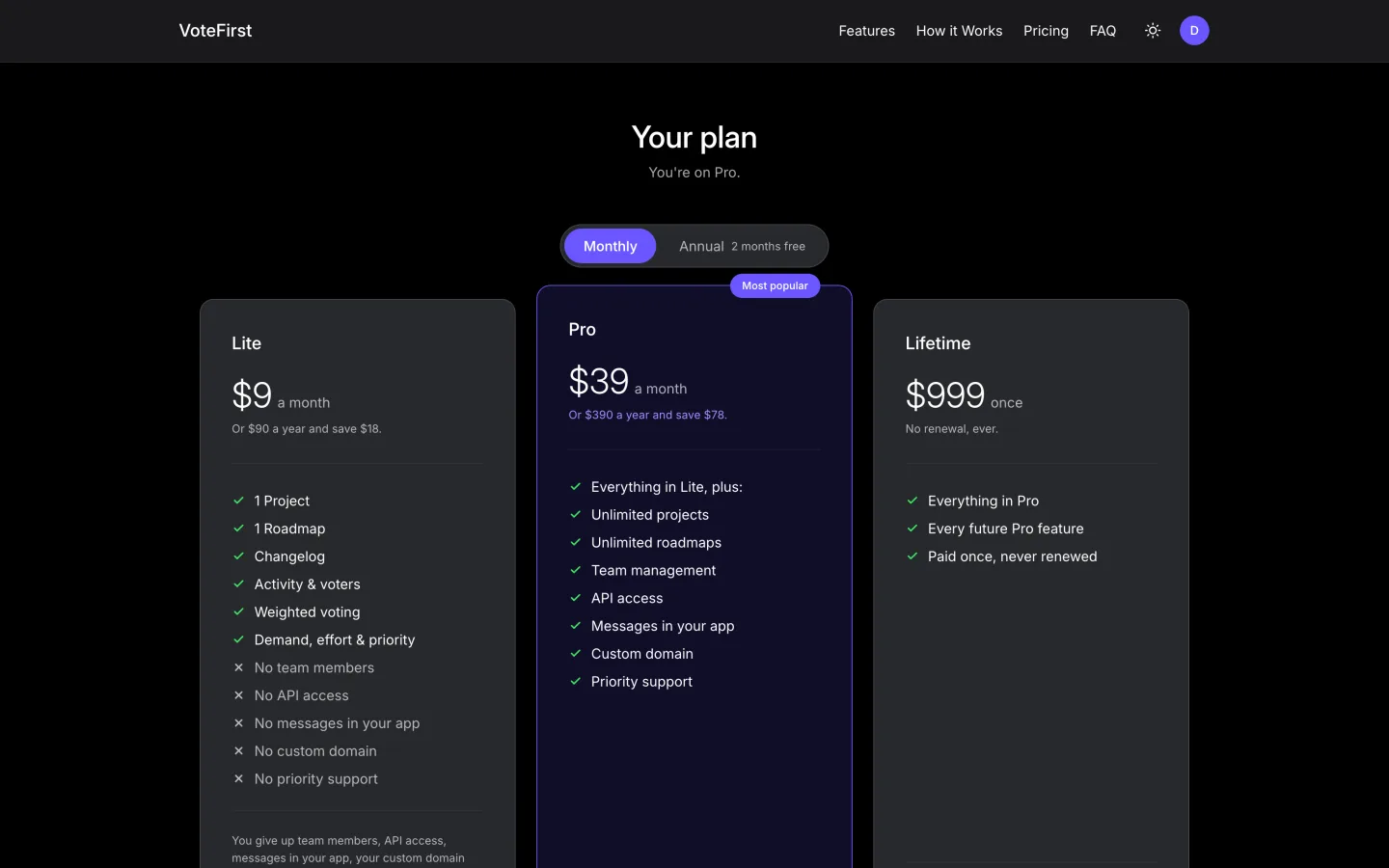
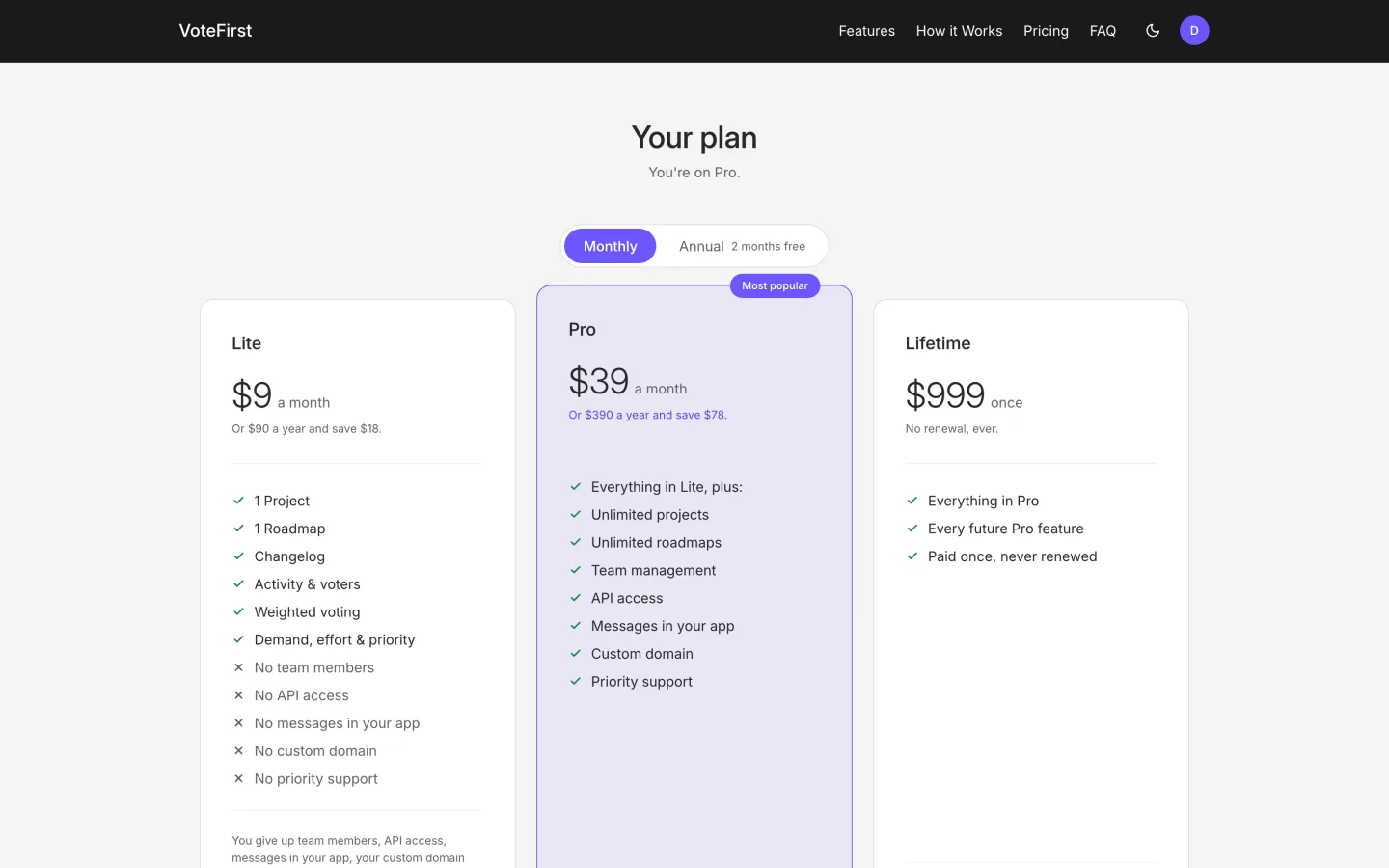
Nine dollars a month for one project, thirty nine for unlimited projects and a team.
We are cheaper and they have things we do not. Rapidr has private boards on its entry plan and we have none at any price, so a board of ours is published to everybody or to nobody. Rapidr has SAML on Business and we have a signed token handoff from your own application instead.
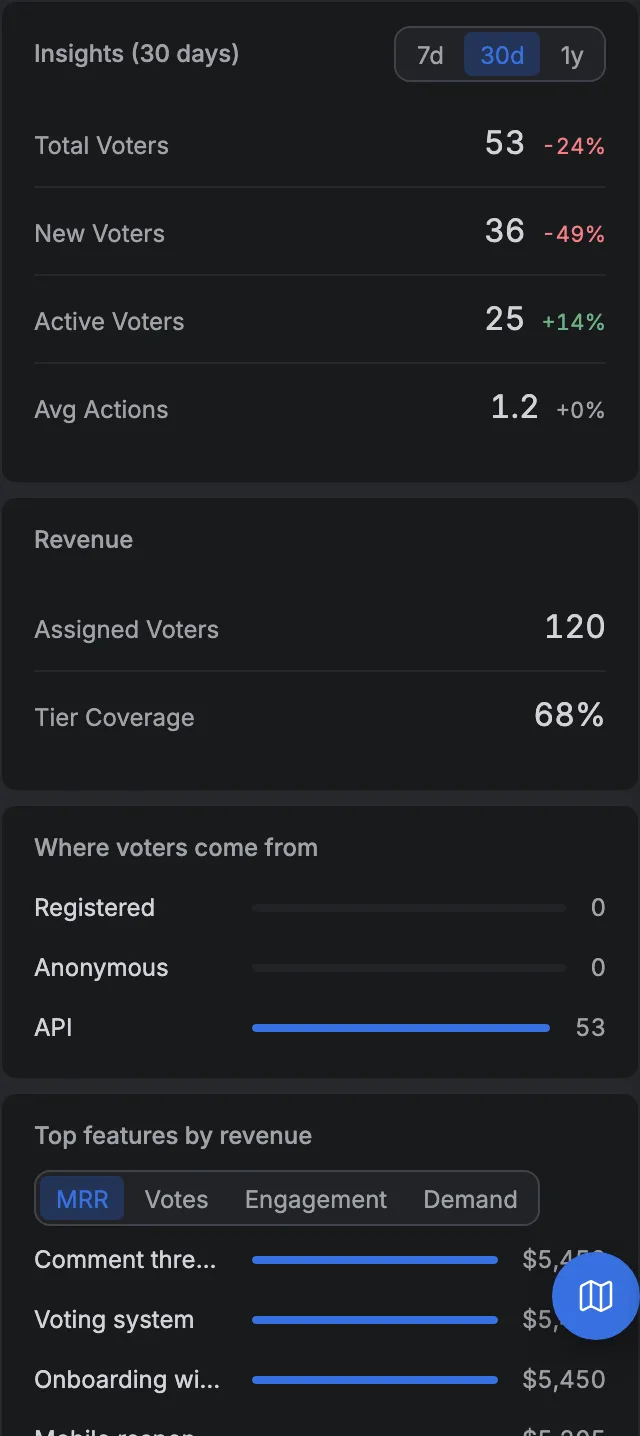
What we have that they have marked as coming is a vote whose weight is the voter's tier, written onto the vote when it is cast, with the plain headcount still beside it. The mechanism is here and the alternative page compares the rest.
14 days, a card at signup, then $9 or $39 a month.