If you found this page looking for a cheaper AnnounceKit, the useful thing to say first is that we may not be the tool you want, because the two products are built around different jobs.
AnnounceKit exists to tell your users what shipped. We exist to work out what to ship next. Both of us have the other half, and in both cases it is the smaller half.
Everything below was read on their own pricing page on 9 September 2026.
What is AnnounceKit?
AnnounceKit is a changelog and release announcement product. It publishes what you shipped to a hosted page, an in app widget and an email list, and feature requests are a separate module that arrives on a higher plan.
What does AnnounceKit cost?
Five plans, with an annual toggle that saves fifteen percent.
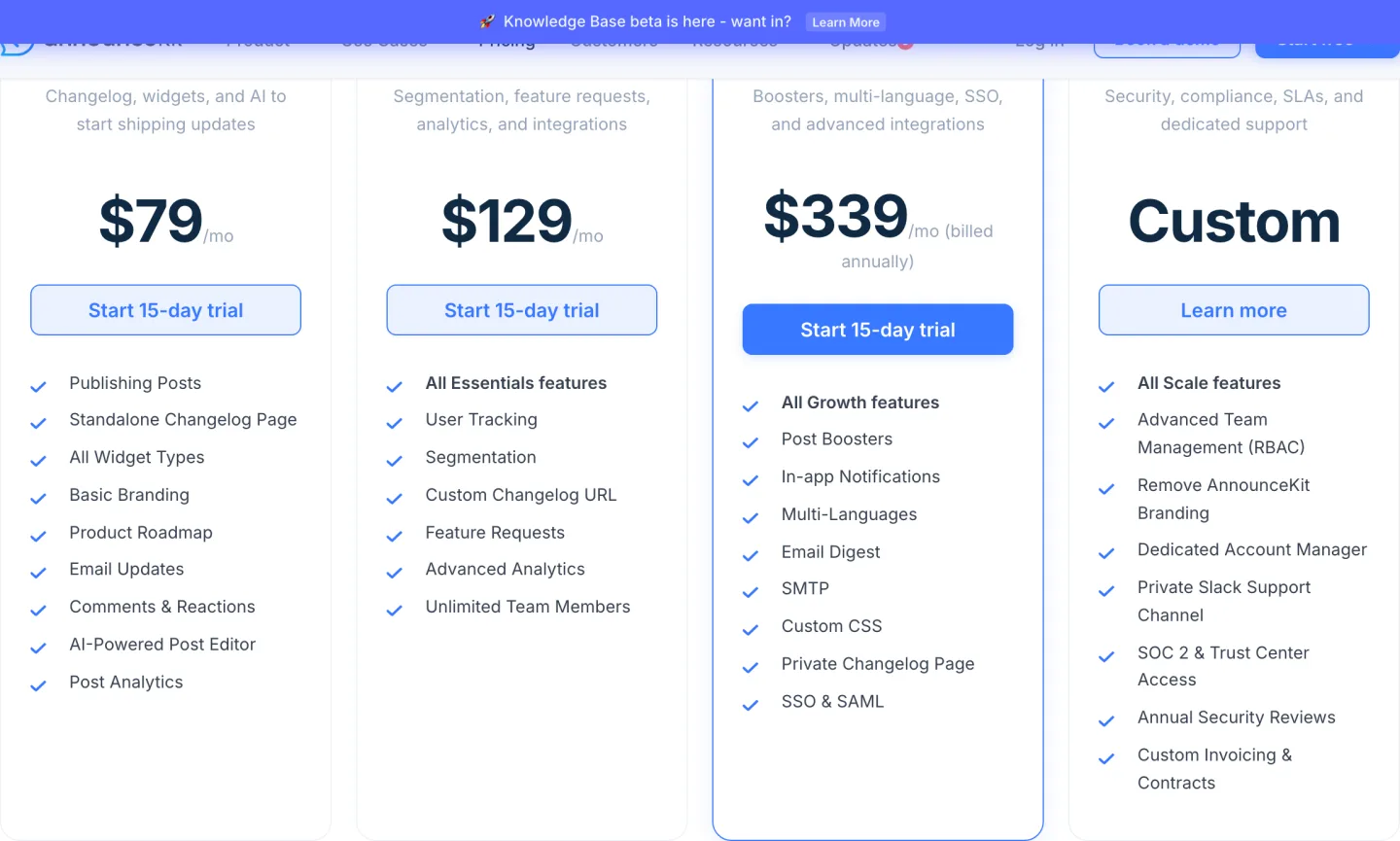
| Plan | Paid yearly | Paid monthly |
|---|---|---|
| AnnounceKit NPS | $42 | $49 |
| Essentials | $79 | $89 |
| Growth | $129 | $149 |
| Scale | $339 | $399 |
| Enterprise | Custom | Custom |
- AnnounceKit NPS is for net promoter score on its own.
- Essentials is for changelog, widgets and publishing.
- Growth is for adds feature requests, and colleagues we do not include at nine dollars.
- Scale is for boosters, multi language, SSO.
- Enterprise is for everything above.
Their own framing is worth quoting because it is a real commitment. There are no per seat fees, no monthly active user costs, and no cap on colleagues from Growth upward.
The trial runs fifteen days. There is no free plan.
You can check this on a board of your own rather than take the table's word for it, and a trial is 14 days with a card at signup.
Which plan has the voting board?
Growth, at a hundred and twenty nine dollars a month billed annually.
Feature requests appear on their Growth tier, alongside advanced analytics, a custom changelog URL and no cap on colleagues. Essentials at seventy nine is publishing, the standalone changelog page, all widget types, roadmap and email updates.
So if the voting board is what you came for, their entry price for it is a hundred and twenty nine dollars a month billed annually rather than the forty two on the top line. That is the number to compare, and it is the single most useful fact on this page.
Is their changelog better than ours?
For announcing to everybody, almost certainly yes. For telling the right people, no.
They are a dedicated announcement product with in app widgets, boosted announcements, multi language and analytics. We have none of that depth.
What ours does instead is narrow. When you publish a release, we write only to the people whose own vote is in it, naming the headings they personally voted for.
Somebody who voted anonymously gets nothing because there is no address, somebody who voted for two things in one release gets one email, and a release cannot be announced twice.
That is a smaller message to a smaller list, and it is deliberately not a broadcast. If your goal is the largest possible announcement, theirs is the right purchase.
Do they weight votes by revenue?
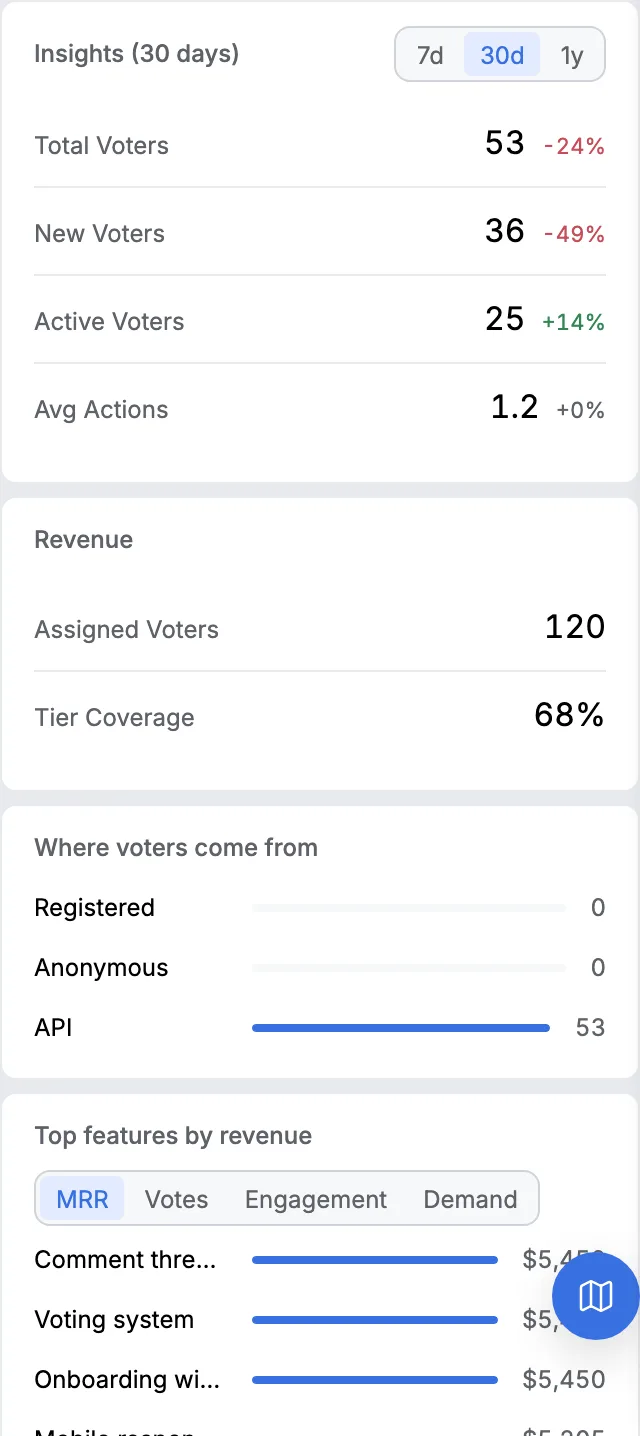
No. Nothing on the pages we read on 9 September 2026 mentions vote weight, MRR or customer tier.
That is an absence on their marketing pages rather than proof about their software. Seven of the twenty one tools we checked ship a form of it.
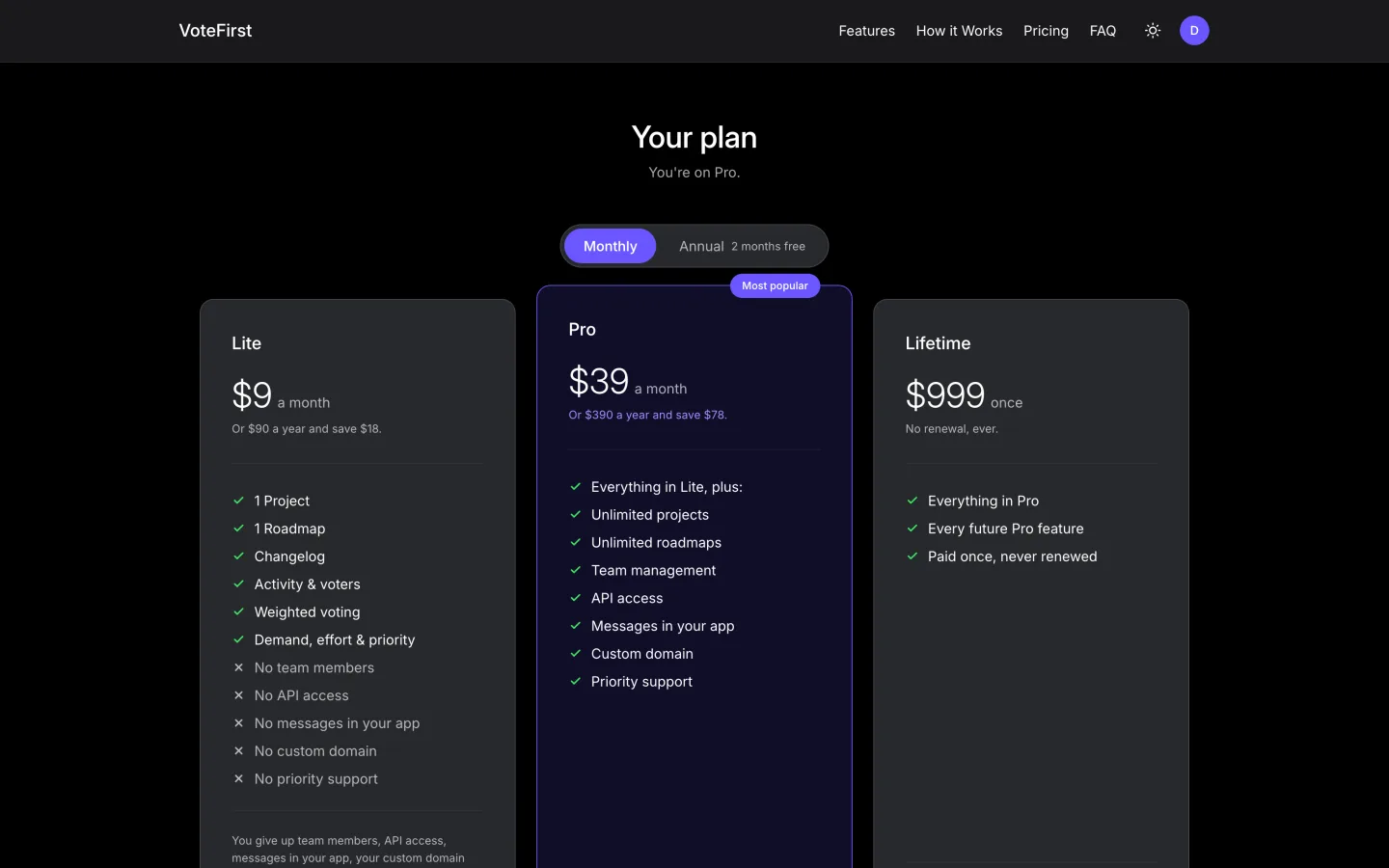
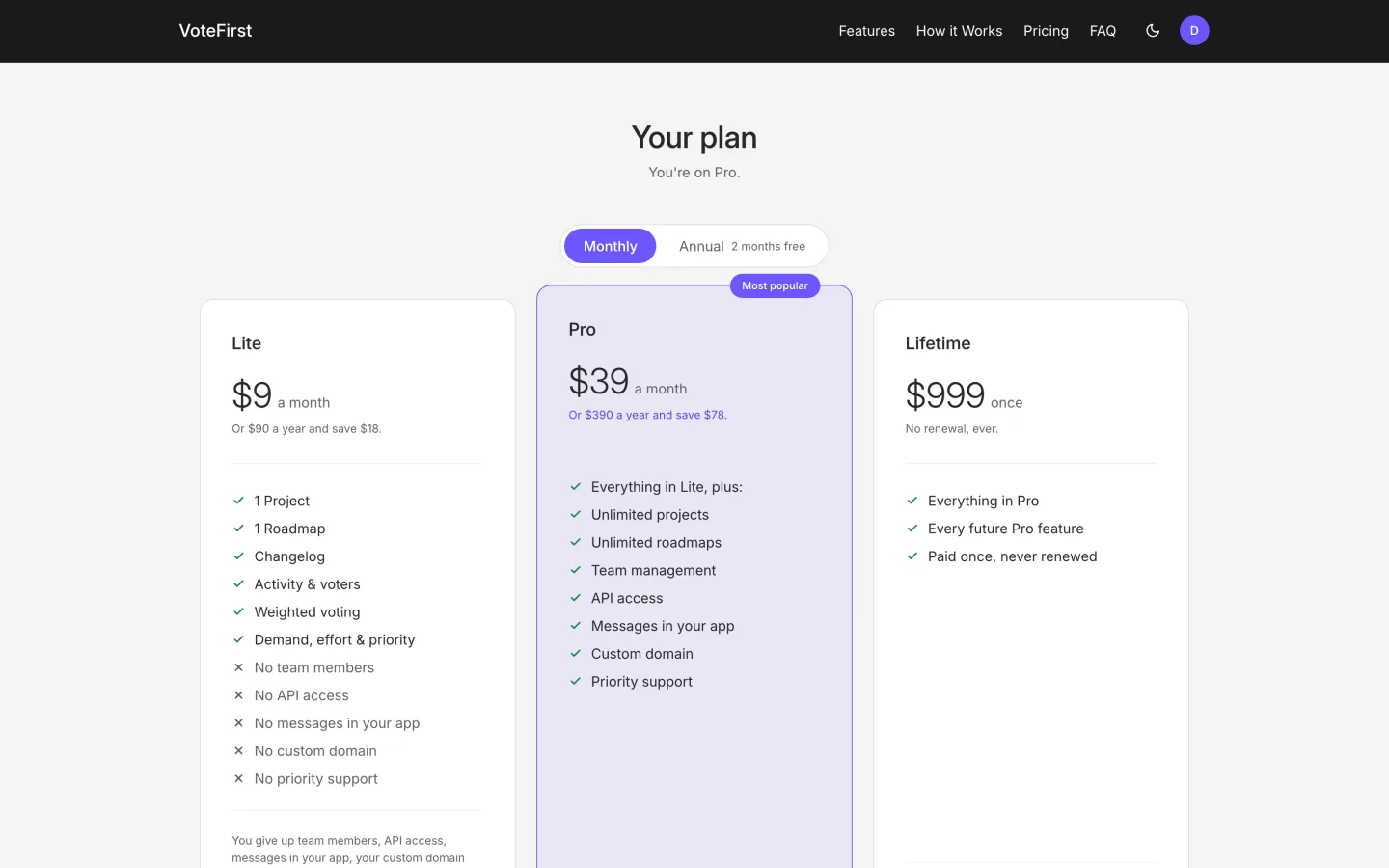
14 days, a card at signup, then $9 or $39 a month.
Do they charge per seat or per user?
No, and they say so directly.
Their pricing page states there are no per seat fees and no monthly active user costs, and every plan on it is written out on our AnnounceKit pricing page.
That puts them on the same side as us on the pricing unit question, which is a point in their favour worth making on a page that is otherwise about cost.
The cap on colleagues does not lift until Growth, so the entry plans are for one or two people.
Does AnnounceKit have a free plan?
No. Their pricing page read on 14 September 2026 offers a fifteen day trial and nothing free after it. The entry plan is the seventy nine dollar one.
Does AnnounceKit have a public roadmap, single sign on and an API?
AnnounceKit carries a roadmap module its own page says your users can shape. AnnounceKit puts single sign on, SAML included, on its Scale plan. The AnnounceKit API is GraphQL, with eleven webhook events beside it.
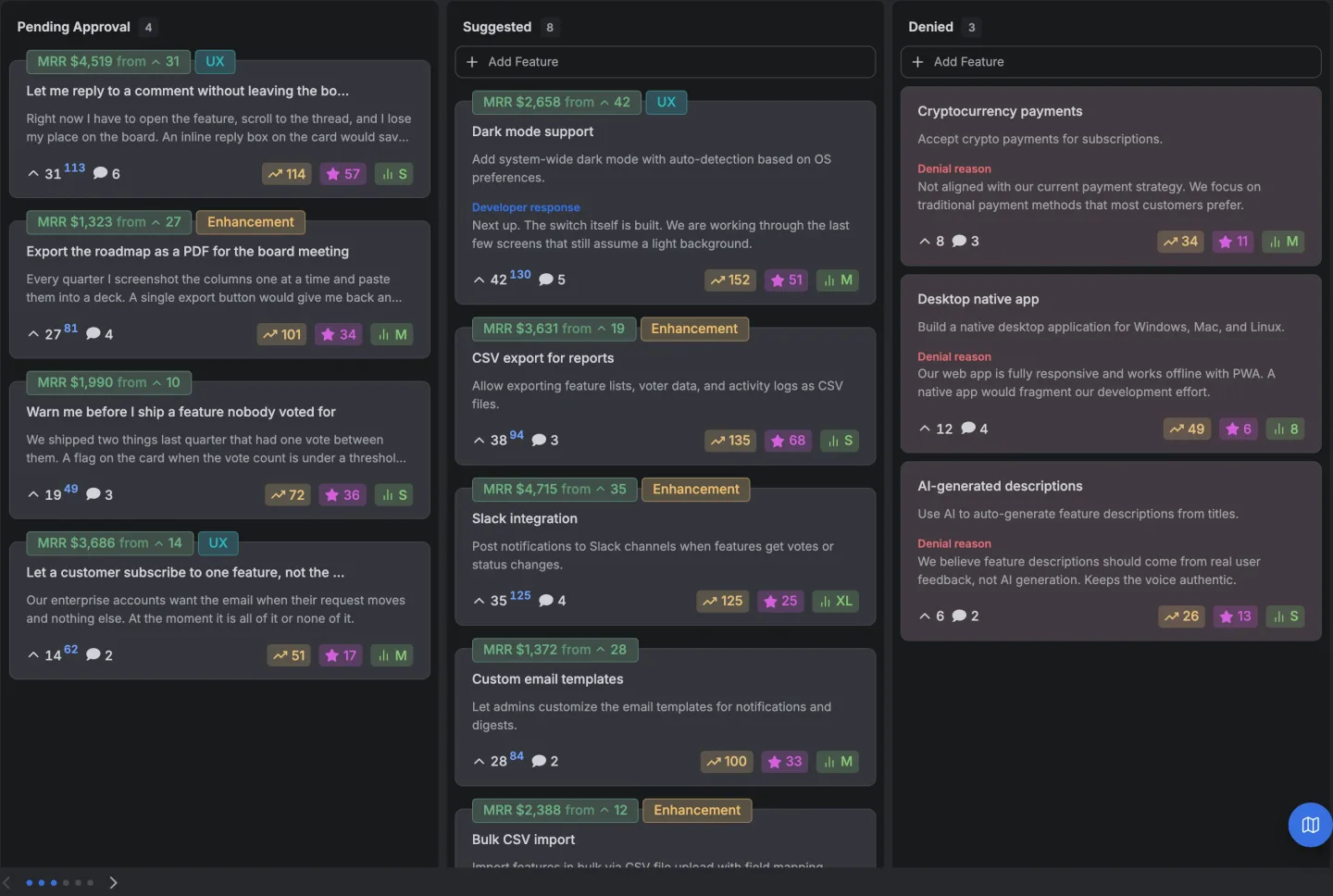
Ours publishes a public roadmap with a Denied column on every plan, and signs a voter in with a token from your own application on the thirty nine dollar plan rather than with SAML.
Is there a free AnnounceKit alternative?
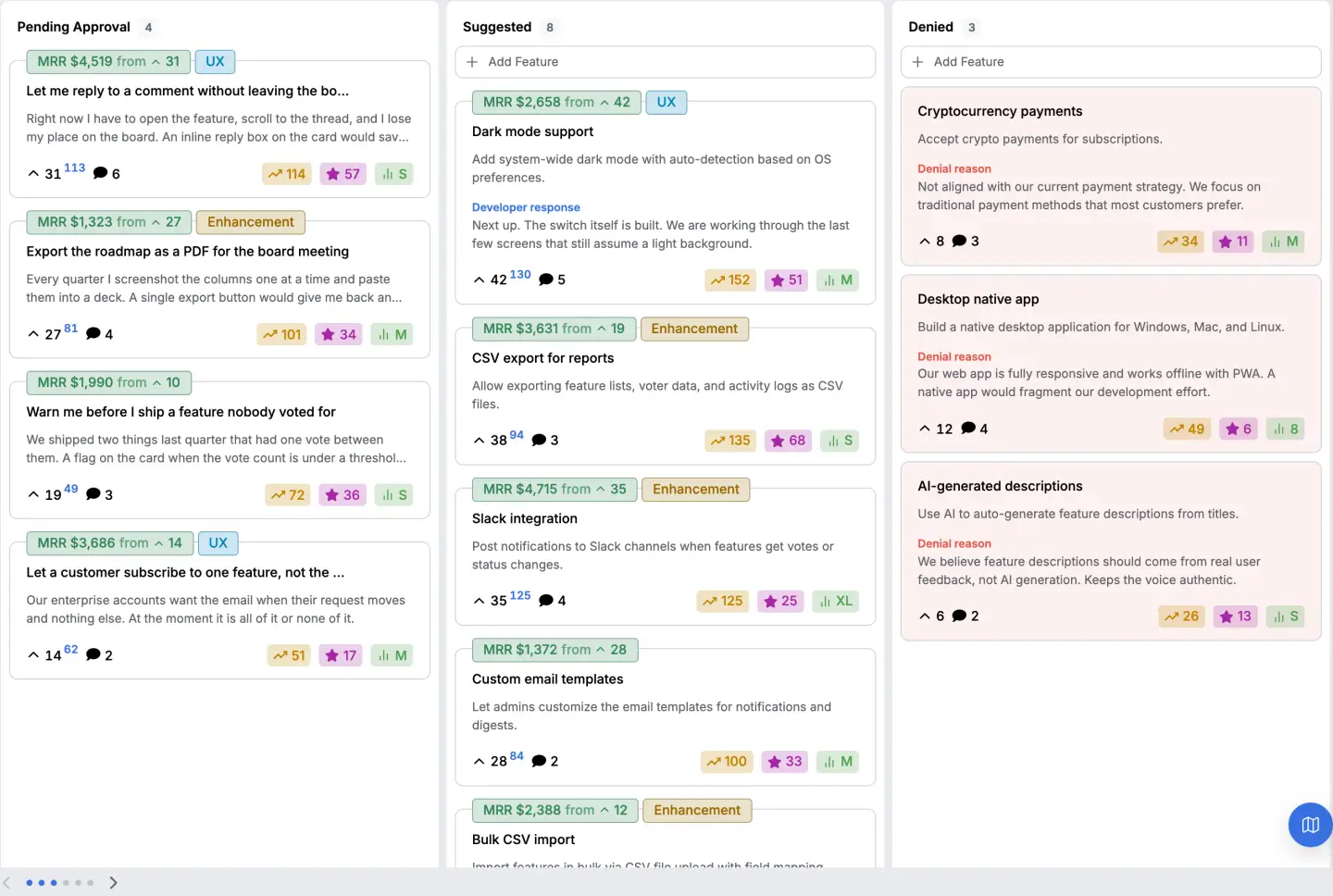
Yes, several, and none of them is AnnounceKit. Headway's free tier carries unlimited changelogs, and Beamer's runs to a thousand monthly active users with one teammate.
Both were read on their own pages on 14 September 2026, and both are announcement tools rather than places customers ask for things. This product is not one of them. There is no free plan here, only a fourteen day trial that asks for a card at signup.
Is AnnounceKit worth it, and when is it the better answer?
Three cases, and the first is the honest one.
Announcing releases is your actual problem. In app widgets, boosters and multi language exist because reaching everybody is the job. Our changelog is deliberately the opposite of that.
You want NPS. They sell it as its own plan at forty two dollars. We do not have it.
You need many colleagues in the tool. Growth and above lifts the cap, where our nine dollar plan does not give you any and our thirty nine dollar plan adds them.
What does ours cost?
Nine dollars a month for one project, and the voting board is on that plan rather than three tiers up.
That is the comparison in one line. Their board starts at a hundred and twenty nine dollars a month billed annually and ours starts at nine, and their announcement tooling is far deeper than ours. Which of those two sentences matters more is entirely about which job you are buying for.
Our plan is one project, one roadmap and every widget, with weighted voting included, and no API, no custom domain and no team members. Thirty nine dollars adds those. Every price and unit in the category is on one page.
What moving actually involves
More work than a button, and the honest version is short. There is no importer for requests or votes on our side.
Voters and the revenue behind them come in from a CSV or from a billing connection, which is the part the weighting needs. The requests themselves are rebuilt by hand or by a script against the API, and the vote counts start again.
That is a real cost and it is worth naming before anybody moves. The five steps, with the endpoint each one uses, are written out in full, and they are the same five whatever you are leaving.