LoopedIn charges nothing for the crowd. Tracked users are unlimited on every plan including the free one, which puts them on the right side of the argument this whole site is about.
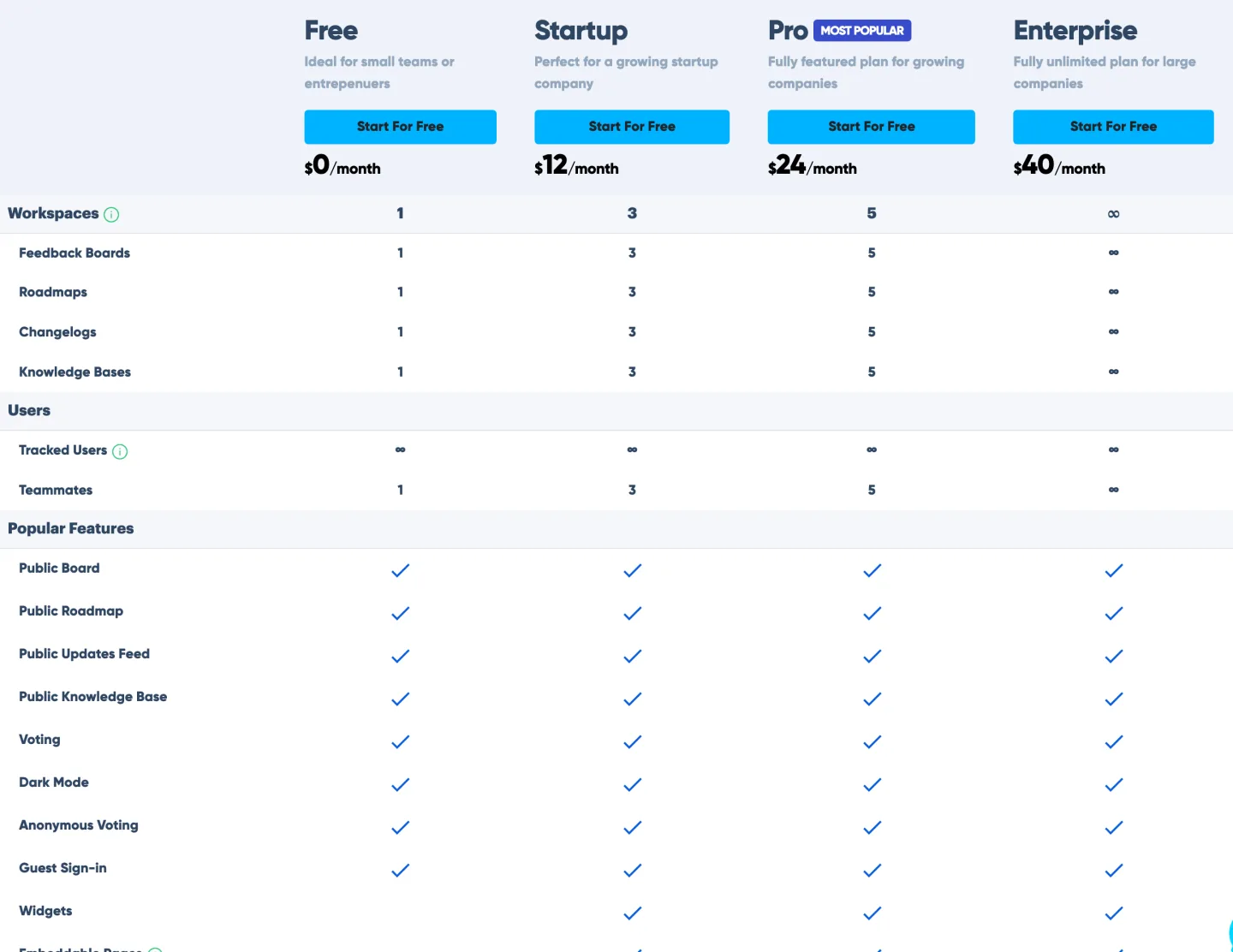
What they count instead is the furniture. Workspaces, feedback boards, roadmaps, updates feeds and knowledge bases all ladder one, three, five and unlimited across the four plans, and teammates ladder with them.
Everything on their side of this page was read on loopedin.io/pricing on 14 September 2026.
What does LoopedIn cost?
Four plans, flat monthly prices, twenty percent off if you pay annually.
| Plan | Price | Of each | Teammates | Tracked users |
|---|---|---|---|---|
| Free | $0 | 1 of each | 1 | unlimited |
| Startup | $12 | 3 of each | 3 | unlimited |
| Pro | $24 | 5 of each | 5 | unlimited |
| Enterprise | $40 | unlimited | unlimited | unlimited |
Which plan holds commenting, email notifications and the API is worked through on the pricing page for them. Free carries a public board, a public roadmap, a public updates feed, a public knowledge base, voting, dark mode, anonymous voting and guest sign in. Startup adds your logo, widgets, embeddable roadmaps, custom categories, emoji reactions, commenting and following. Pro adds whitelabelling, custom fonts, a custom domain, integrations, pinned posts, email notifications, webhooks, social sign in and password protection on public pages. Enterprise adds API access, user segmentation and single sign on.
If you would rather try this product than read about theirs, a trial runs 14 days and asks for a card at signup, and it is $9 or $39 a month after that.

Why do people look for a LoopedIn alternative?
Because of where the ladder puts three ordinary things.
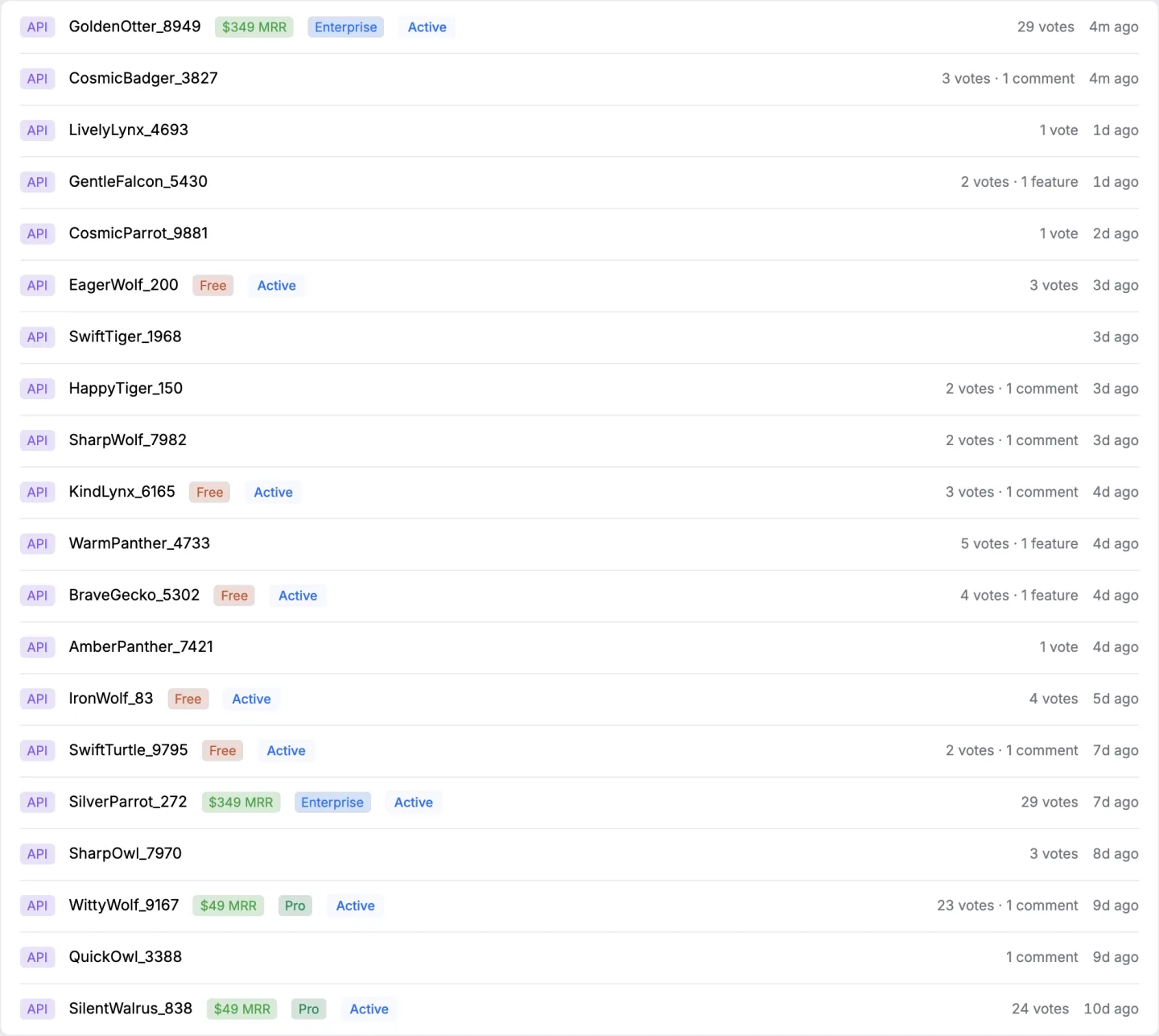
Commenting is not on the free plan. A board where nobody can reply is a suggestion box, and the reply is usually the useful half. It arrives at twelve dollars.
Email notifications are on Pro. Twenty four dollars a month before the people who voted hear that their request shipped. Telling them is the whole reason the changelog exists.
The API and single sign on are on Enterprise. LoopedIn puts its API on Enterprise at forty dollars a month, which is the plan for the two things a developer needs to make the board part of the product rather than a link in the footer.
None of that makes their prices bad. Twelve dollars for three boards is cheap. It means the plan you actually need is usually one step further up the ladder than the one you first price.
What is LoopedIn?
A feedback board, roadmap, changelog and knowledge base sold together, priced by how many of each you want rather than by how many people use them.
That bundle is the thing to weigh. Four products in one subscription is genuinely useful if you want all four, and it is why their tiers ladder on counts of objects rather than on features alone.
Where do the public roadmap and single sign on sit?
At opposite ends of their ladder.
LoopedIn puts a public roadmap on every plan including the free one, next to a public board, a public updates feed and a public knowledge base. Single sign on is the last thing on LoopedIn's list, on the forty dollar Enterprise plan, beside the API and user segmentation.
Here the public roadmap is on the nine dollar plan and single sign on is not sold at all, which makes the forty dollar plan the wrong comparison unless single sign on is the reason you are shopping.
Does LoopedIn weight votes by revenue?
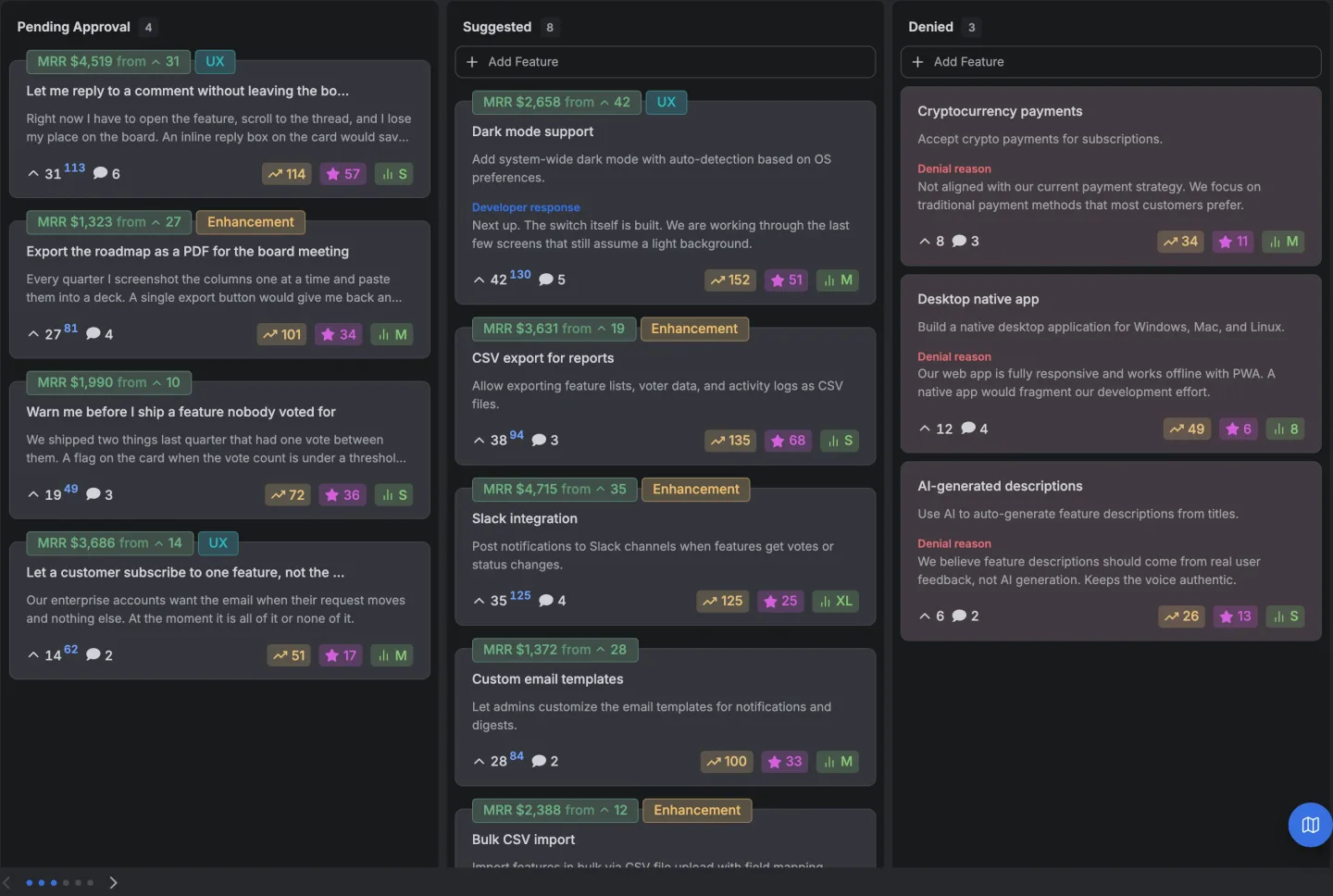
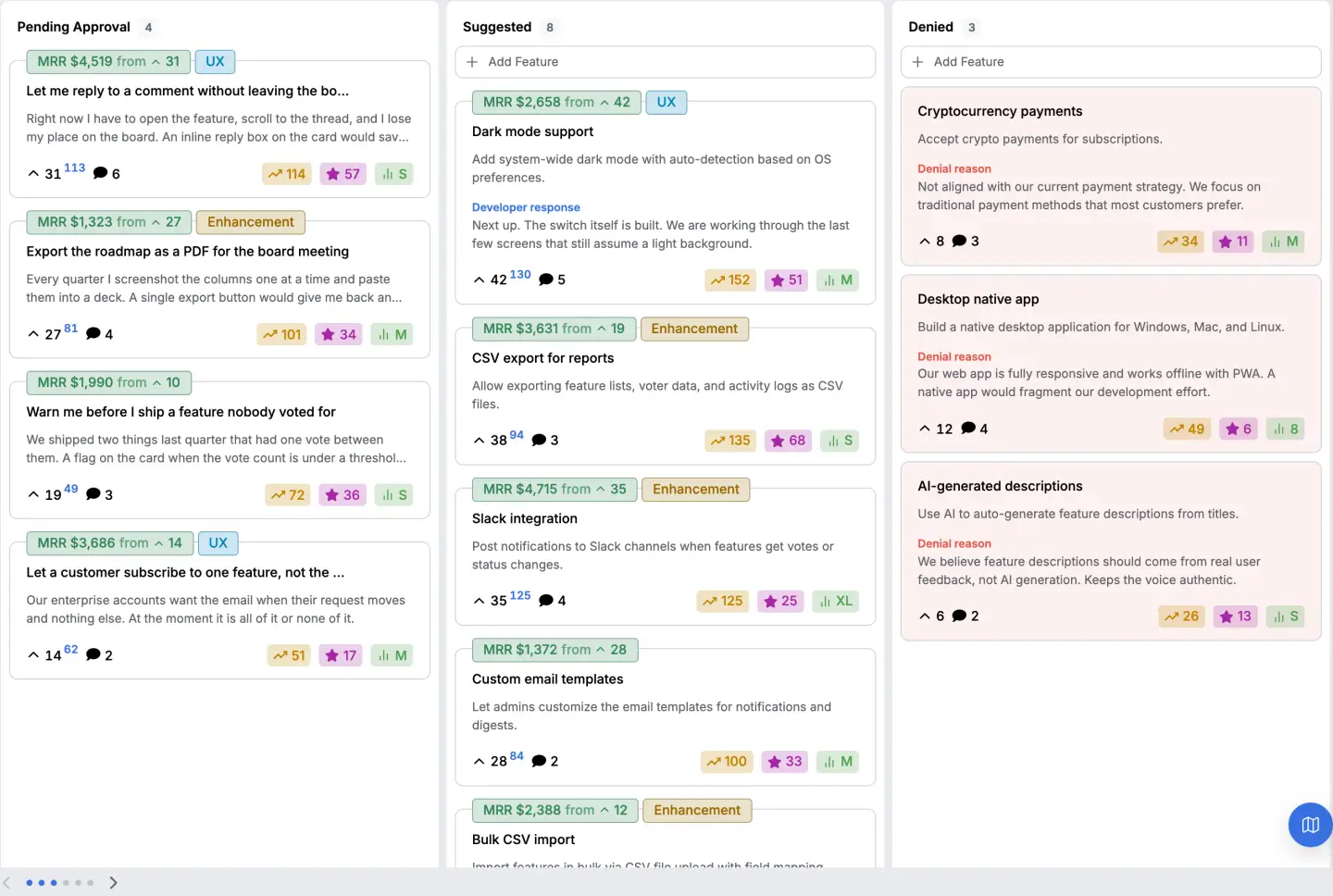
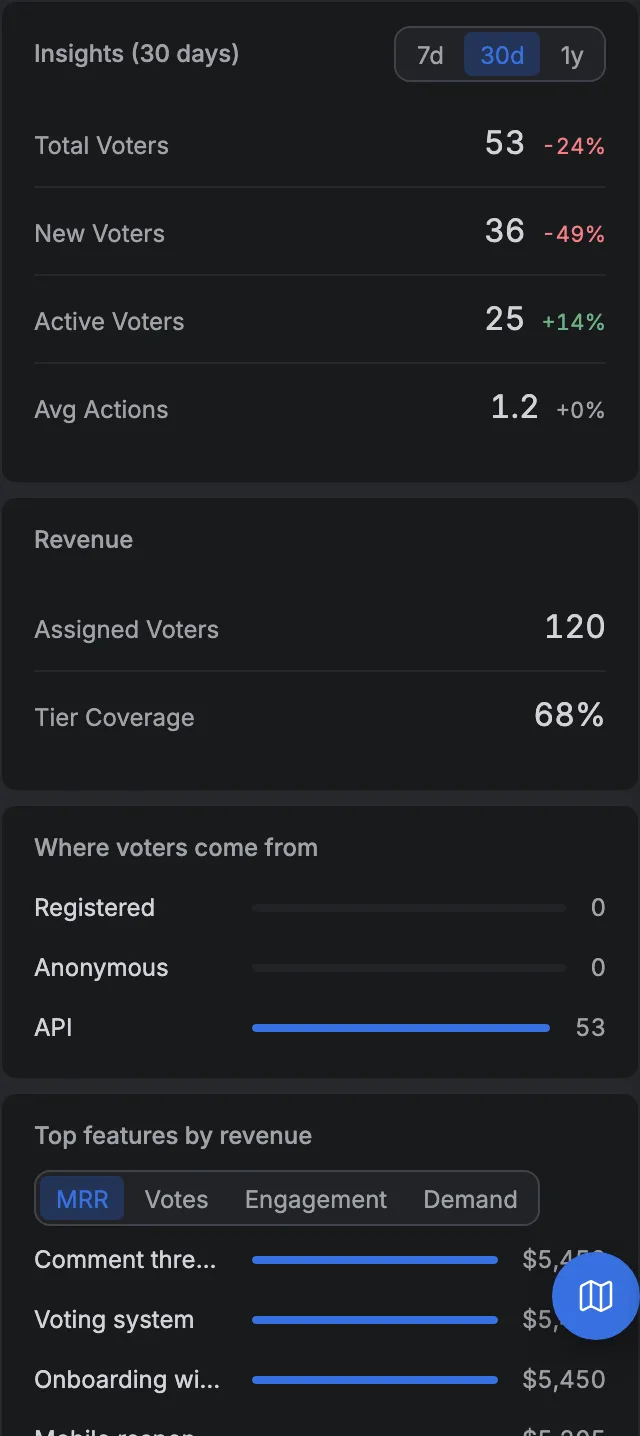
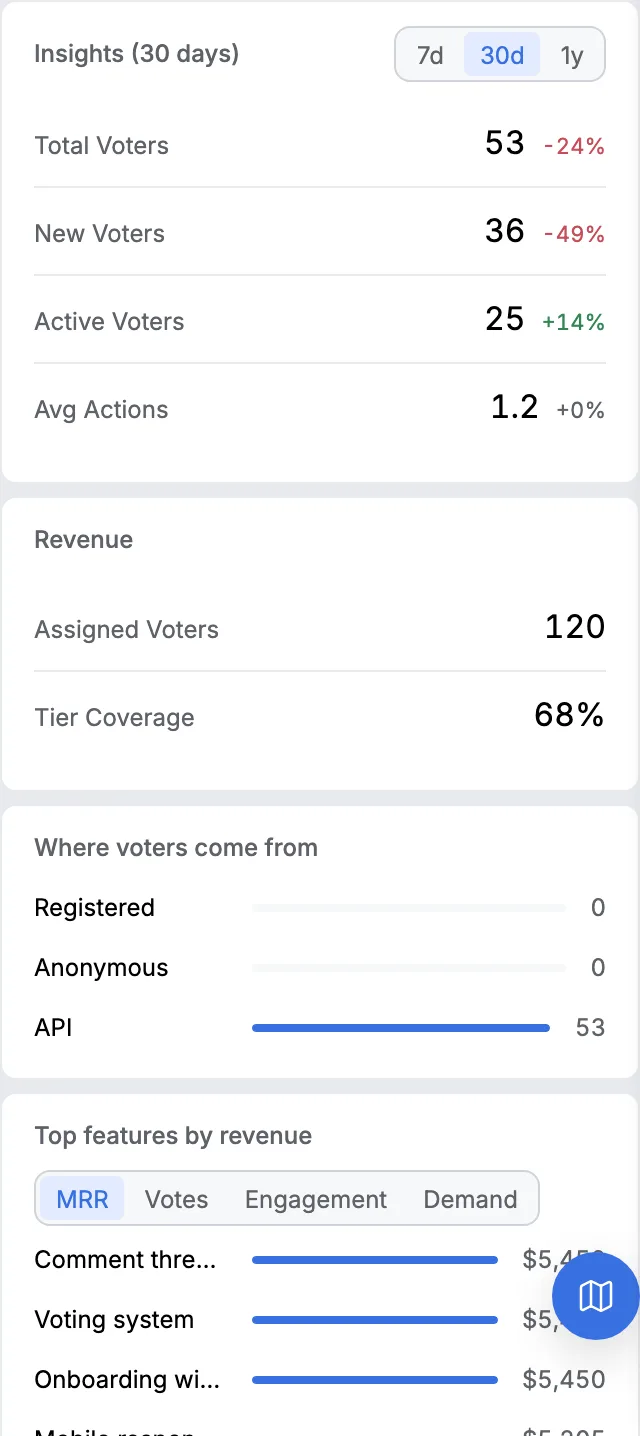
Nothing on their pricing page read on 14 September 2026 mentions vote weight, MRR or a customer tier. User segmentation appears on the Enterprise plan, which is a way of filtering who you look at rather than a way of changing what a vote is worth.
That is an absence on their published page rather than proof about their software, and this page says it that way on purpose. Seven of the twenty one tools we checked do ship some form of revenue weighting, so this is not a thing only we have.
Does LoopedIn have a free plan?
Yes. One workspace, one board, one roadmap, one updates feed and one knowledge base, with unlimited tracked users, voting, anonymous voting and guest sign in. No card, because there is nothing to pay.
We have no free plan, and on that point they win outright. Fourteen days with a card at signup is the whole trial here.
Is there a free LoopedIn alternative?
Yes, and their own free plan is one of the better ones in the category, so the question is really which free plan.
Fider is open source and free if you host it yourself. UserJot publishes a free tier with two boards, Supahub and Featurebase each publish one with a single board. All three were read on their own pages on 14 September 2026. None of them is this product, which has no free plan at all.
Is LoopedIn worth it?
At twelve dollars for three boards with unlimited voters, yes, if the four products in the bundle are four products you want.
The case against is narrower. If what you need is one board where the votes carry revenue, you are buying three products you will not open, and the features that make a board work for a team, being email notifications and the API, sit at twenty four and forty dollars.
What does ours cost, and where is LoopedIn the better answer?
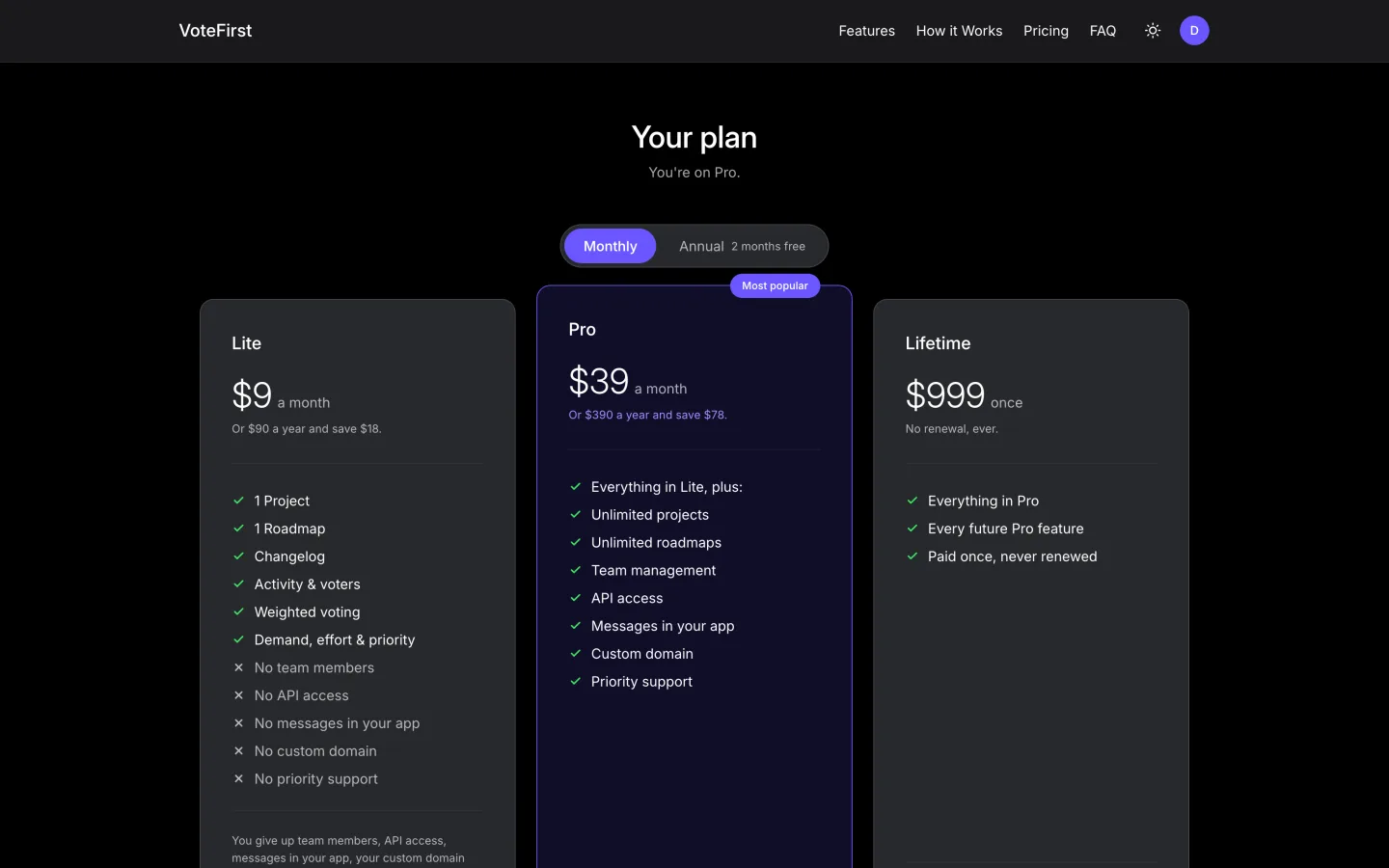
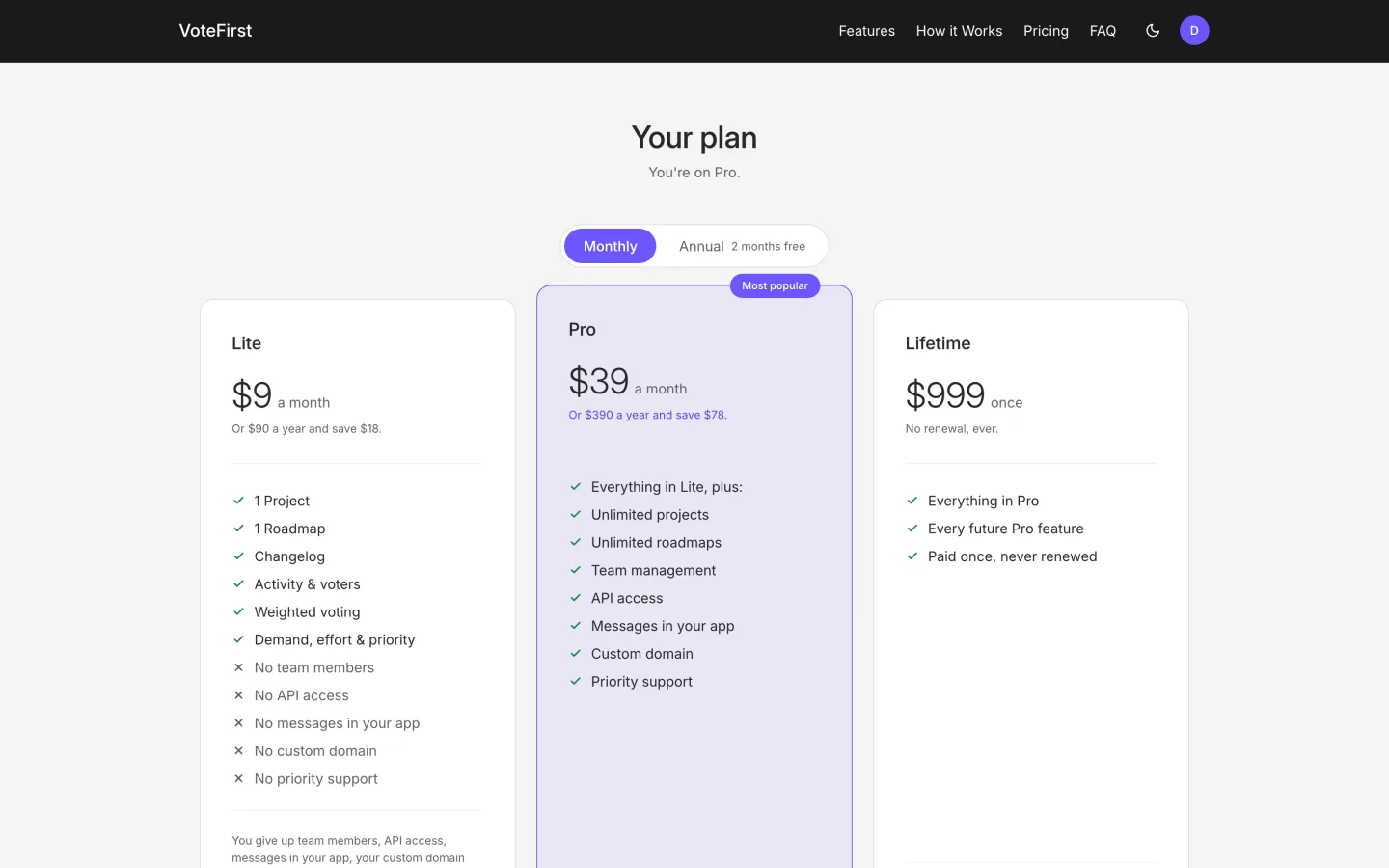
Nine dollars a month for one project, thirty nine for unlimited projects, the API, a custom domain and colleagues.
Theirs is the better answer twice. If you need nothing beyond one public board and you want to pay nothing, their free plan does that and ours does not exist. If you need several separate knowledge bases alongside the board, they sell that and we do not sell a knowledge base at all.
Ours is the better answer when the votes need to carry money, when the API matters at nine dollars rather than at forty, and when a colleague should not change the price of the board. The category table has both of us in it with every published figure.
14 days, a card at signup, then $9 or $39 a month.
What moving actually involves
More work than a button, and the honest version is short. There is no importer for requests or votes on our side.
Voters and the revenue behind them come in from a CSV or from a billing connection, which is the part the weighting needs. The requests themselves are rebuilt by hand or by a script against the API, and the vote counts start again.
That is a real cost and it is worth naming before anybody moves. The five steps, with the endpoint each one uses, are written out in full, and they are the same five whatever you are leaving.