Savio and VoteFirst both let you sort feature requests by what the customer pays. That is where the similarity stops, because we start from a public board and they start from your support tickets.
If you are comparing the two, the question is not which is better. It is where your feedback actually arrives from today.
Everything below was read on their own pricing page on 9 September 2026.
What is Savio?
Savio is a feature request tracker that starts from your support tools rather than from a public board. Requests are logged out of Intercom, Help Scout, Zendesk, HubSpot or Salesforce and attached to the account that asked.
What does Savio cost?
Per paid user, with one included in every plan.
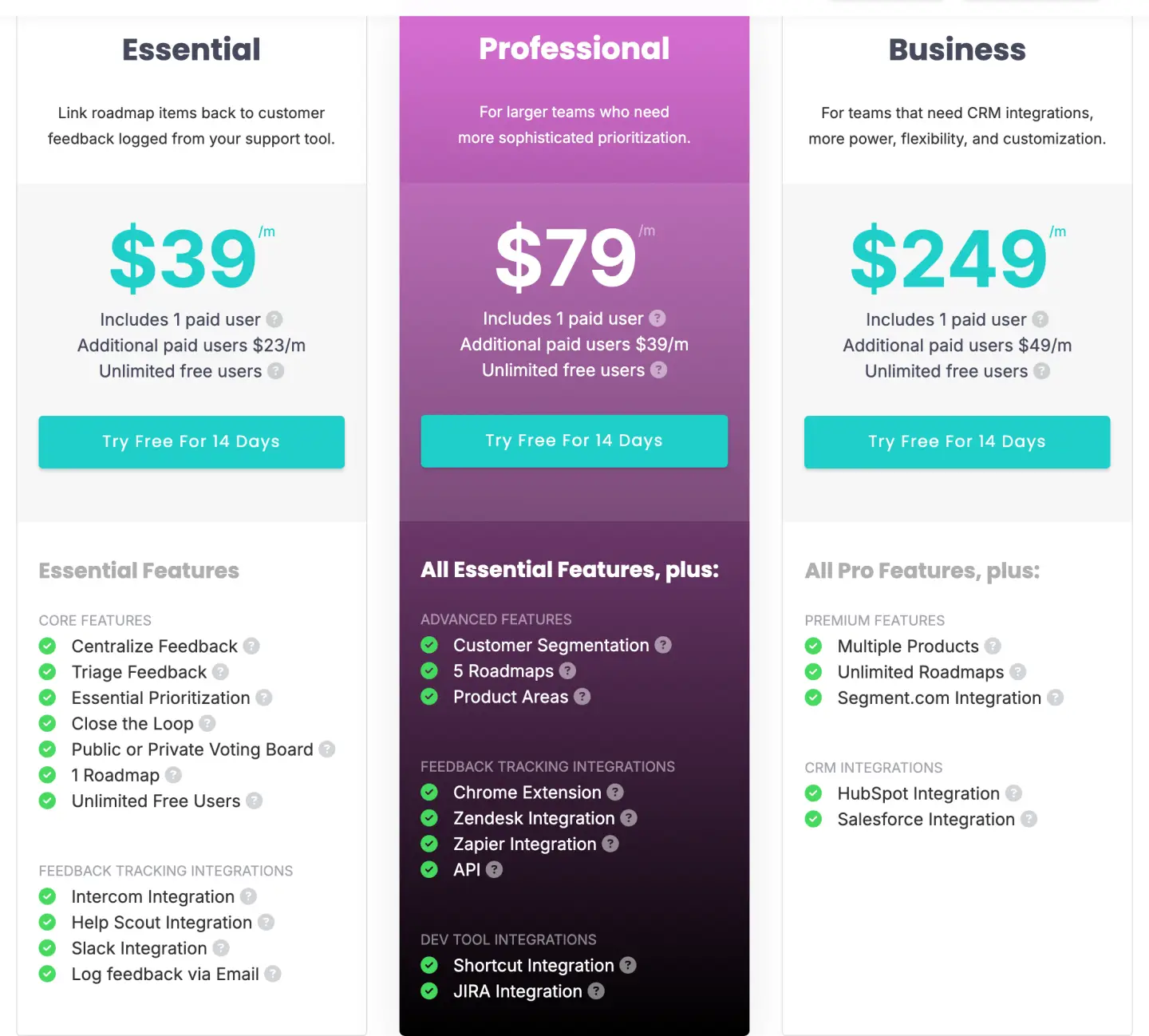
| Plan | Paid yearly | Paid monthly | Extra user, yearly | Paid monthly |
|---|---|---|---|---|
| Essential | $39 | $49 | $23 | $29 |
| Professional | $79 | $99 | $39 | $49 |
| Business | $249 | $299 | $49 | $59 |
Unlimited free users are included on every plan, so only the people doing the work are counted rather than everybody who looks.
The step between plans is worth reading twice. The second paid user costs twenty three dollars on Essential and thirty nine dollars on Professional, so the per person rate goes up as the plan does rather than down.
That is the reverse of what most volume pricing does and it is easy to miss. Every plan, both billing periods and the arithmetic for a team of three and of six are written out on the pricing page for them.
One thing about their page is worth flagging because it caught us. The billing switch arrives already set to annual, so the first prices you see are the annual ones and clicking the switch puts the price up.
Every figure in the first column above is what you pay on a yearly commitment, and the annual saving is two months. The trial runs fourteen days and their own page says you do not need a credit card to try Savio.
None of the above is hard to verify, because the trial is 14 days and the price after it is $9 or $39 a month.
What does two people actually cost?
Their own published rate, added up.
| Team | Essential | Professional |
|---|---|---|
| One paid user | $39 | $79 |
| Two paid users | $62 | $118 |
| Three paid users | $85 | $157 |
That is arithmetic on their annual figures rather than a table from their page, and it is the number most readers are actually trying to work out. On monthly billing the same three rows read forty nine, seventy eight and a hundred and seven on Essential.
Is Savio a public voting board?
No, and this is the difference that decides it.
Savio is built around feedback that arrives through your support tools. Their own positioning is about linking roadmap items back to customer feedback logged from your support tool, and they integrate with Intercom, Help Scout, Slack, Zapier, Jira and Shortcut, plus logging feedback by email.
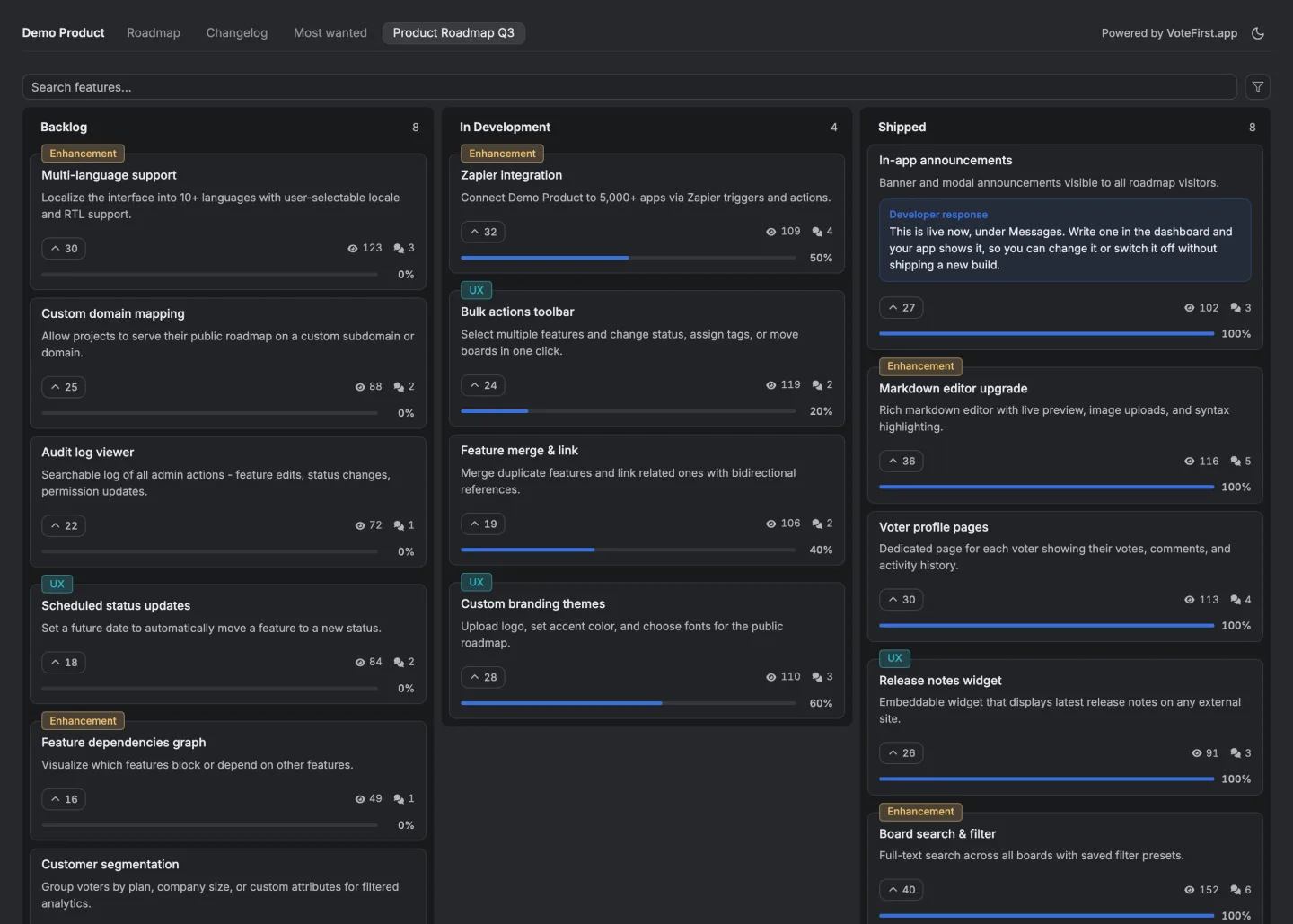
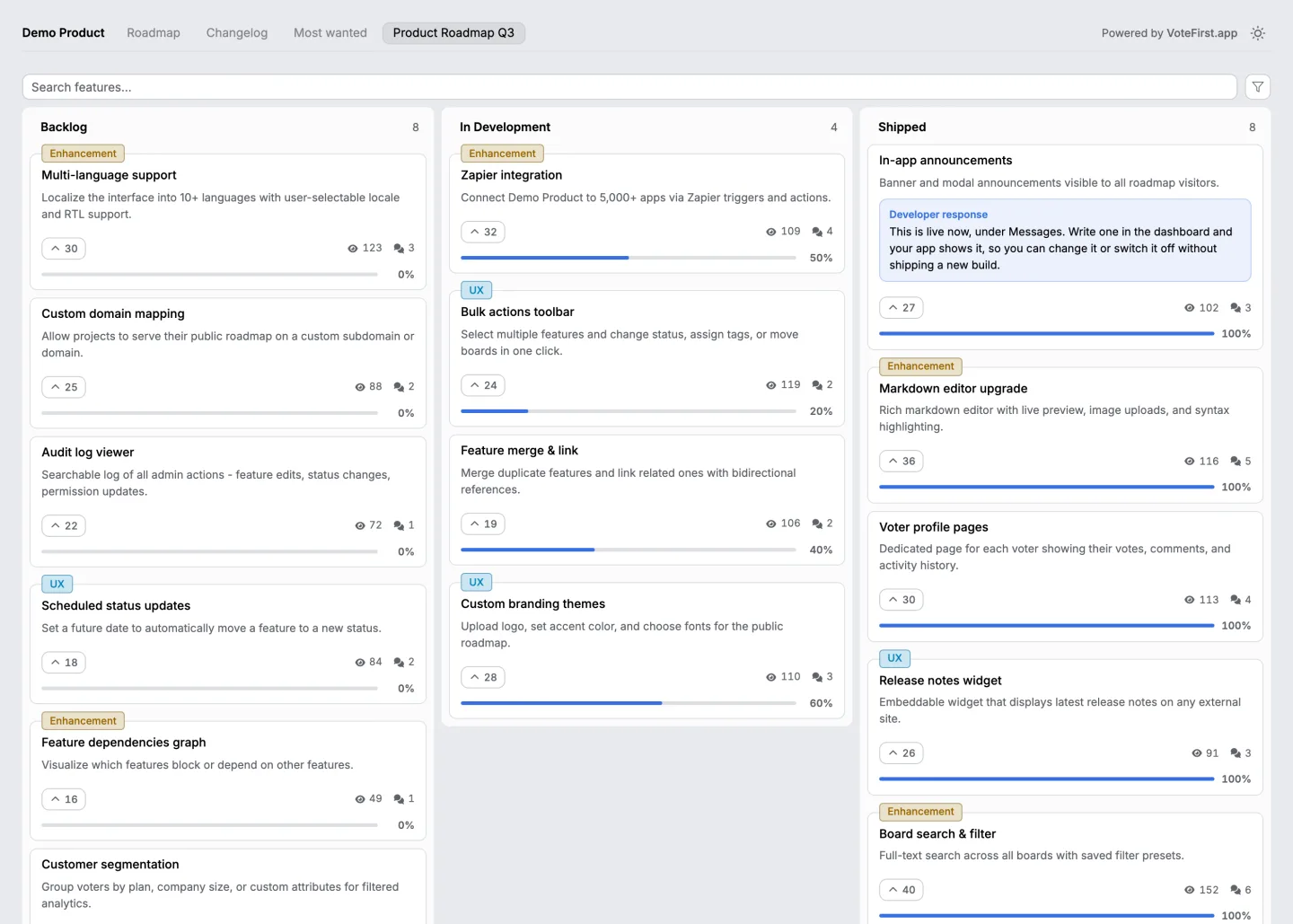
Ours is a public page. Your users arrive, see what other people have asked for, and vote. Those are two genuinely different ways of collecting the same information, and each misses what the other catches.
A public board hears from people motivated enough to visit it. A support inbox hears from people with a problem today. If your customers already write to you constantly, Savio is collecting something real that a board would never see.
Do they weight by revenue?
Yes, and it works differently from ours.
Their own wording is that when you save customer data along each request, you can later slice and dice your requests by revenue, by plan, or by other data stored with the feedback. One of their sentences is explicitly a filter, seeing all feature requests above a specific revenue.
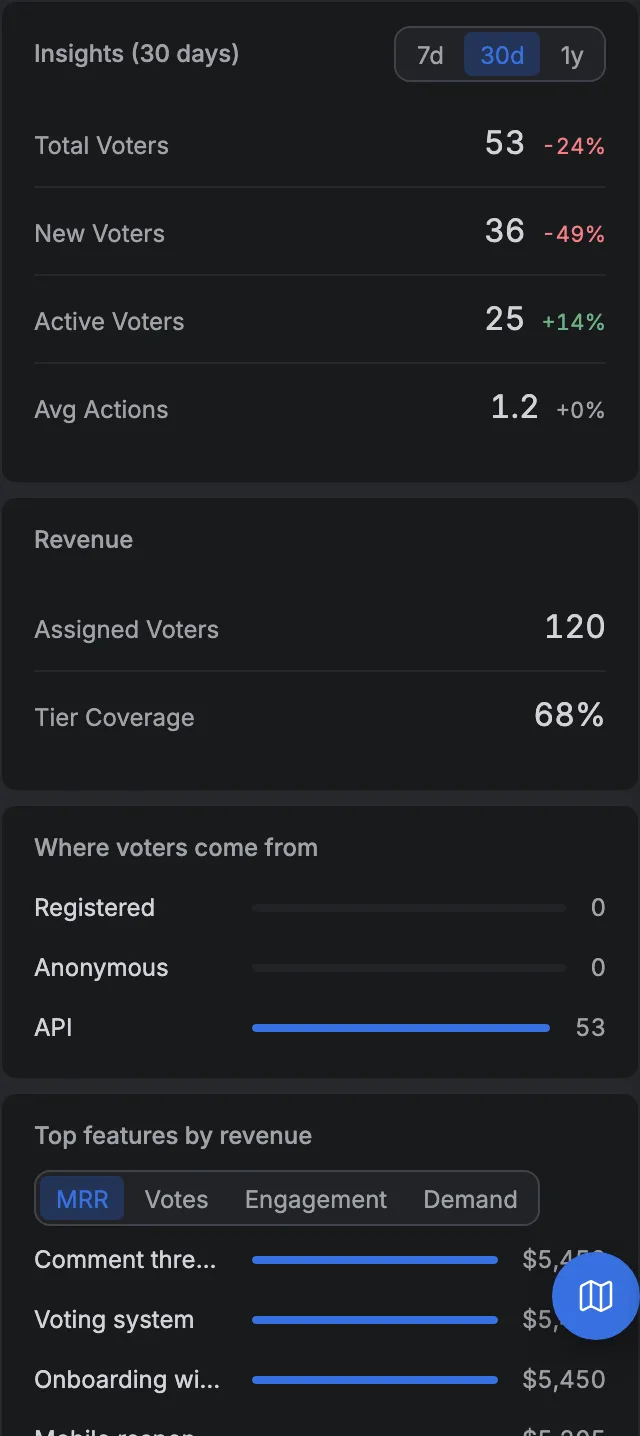
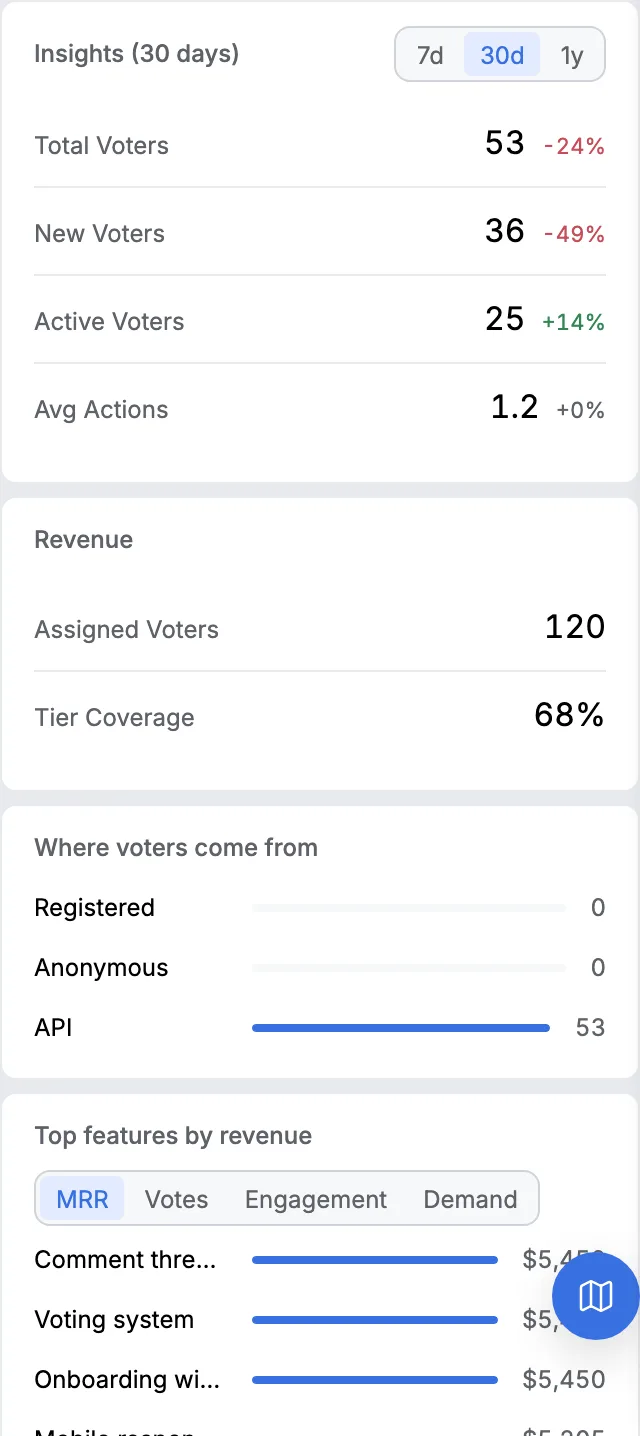
So theirs stores the money against the request and lets you sort and filter by it. Ours multiplies the vote itself by the voter's tier, so the order of the board changes rather than the order of a report. The mechanism is here.
Seven of the twenty one tools we checked ship some form of this and Savio is one of the clearest about it.
14 days, a card at signup, then $9 or $39 a month.
Can your customers vote on Savio?
Not in the way they can on a public board, as far as their pricing and feature pages describe it.
Their model is that your team logs and triages what customers said. That is a real difference in who does the work, and it is a reason to buy them rather than against them, because a public board asks your customers to do something and many of them will not.
We could not establish from the pages we read whether they offer any customer facing voting surface, so this page does not claim they have none.
Does Savio have a free plan?
No. Their pricing page read on 14 September 2026 carries a fourteen day trial that asks for no card. Free users are unlimited on the paid plans, which is a different thing and is the part of their model worth understanding.
Does Savio have a public roadmap, single sign on, an API and an export?
Savio builds an evidence based roadmap linked back to the feedback logged from your support tools. Savio carries single sign on for the voting board on every plan. Savio puts its API on Professional, and Savio exports your data on demand on every plan it sells.
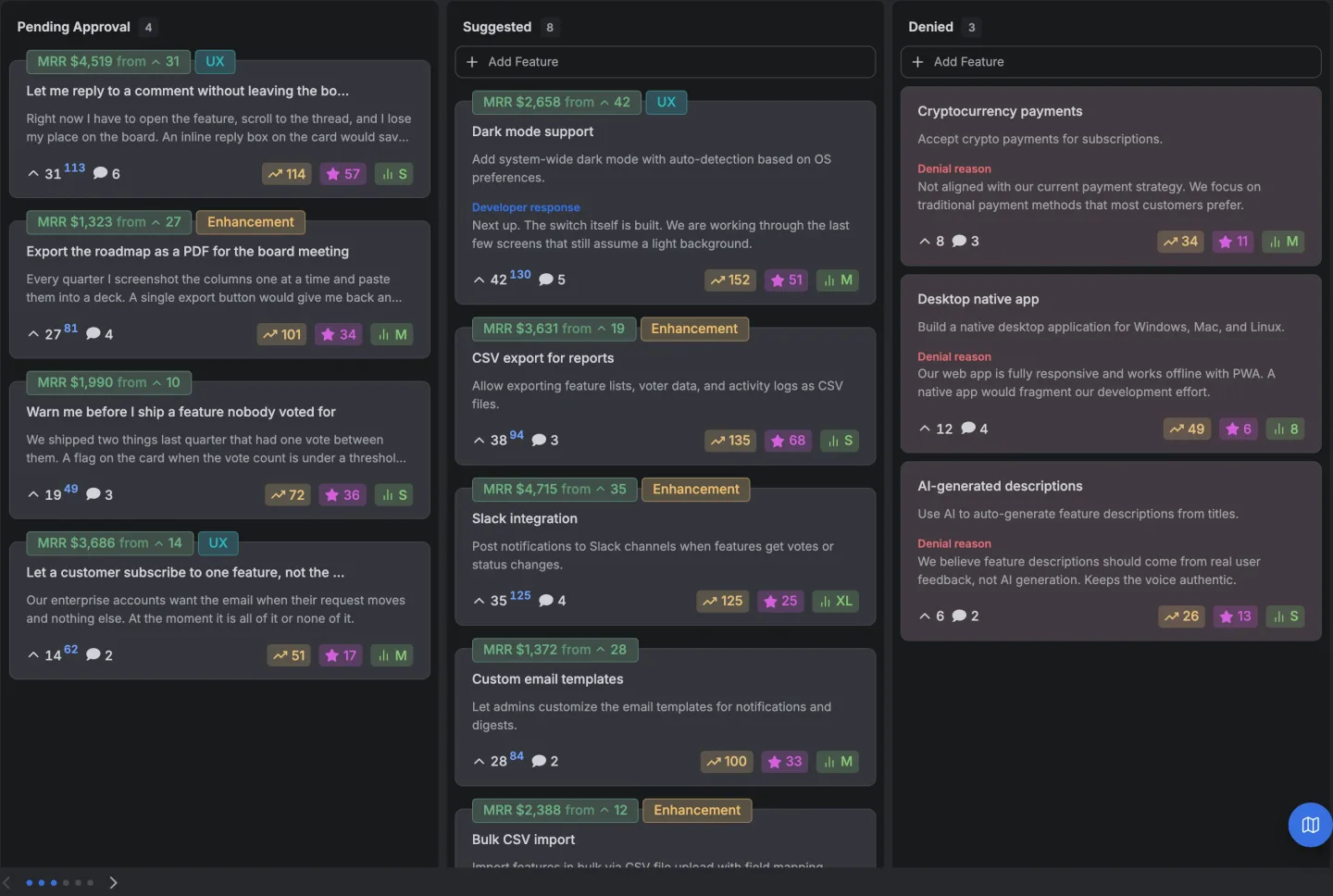
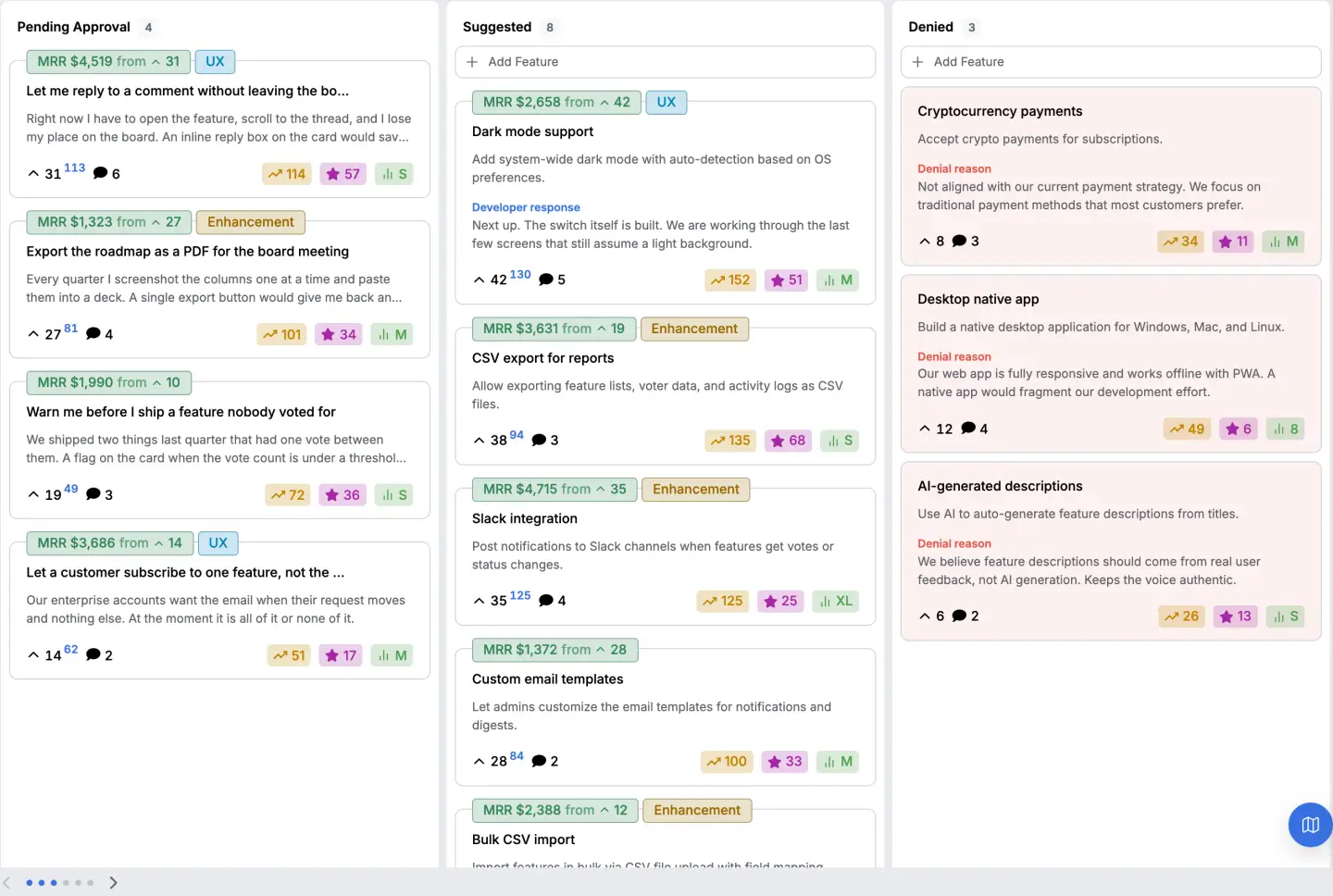
Ours publishes a public roadmap with a Denied column on every plan, and signs a voter in with a token from your own application on the thirty nine dollar plan rather than with SAML.
Is there a free Savio alternative?
Yes, several, and none of them is Savio. Fider is the free one to know about, because it is open source and its hosted tier runs to two hundred and fifty feedback items.
UserJot gives two boards and three admin roles, Supahub gives one board and one admin, Featurebase gives one seat, and Sleekplan's Indie tier is a single admin workspace that does not expire.
All five were read on their own pages on 14 September 2026. This product is not one of them. There is no free plan here, only a fourteen day trial that asks for a card at signup.
Is Savio worth it, and when is it the better answer?
Three cases, and they are all the same shape.
Your feedback arrives in Intercom or Help Scout. They connect to those and pull it in. We do not.
Your customers will never visit a board. For a B2B product with fifty accounts and a support relationship, that is often just true, and a public voting page will sit empty while the tickets keep coming.
You want to close the loop from a CRM. That is what they built.
What does ours cost?
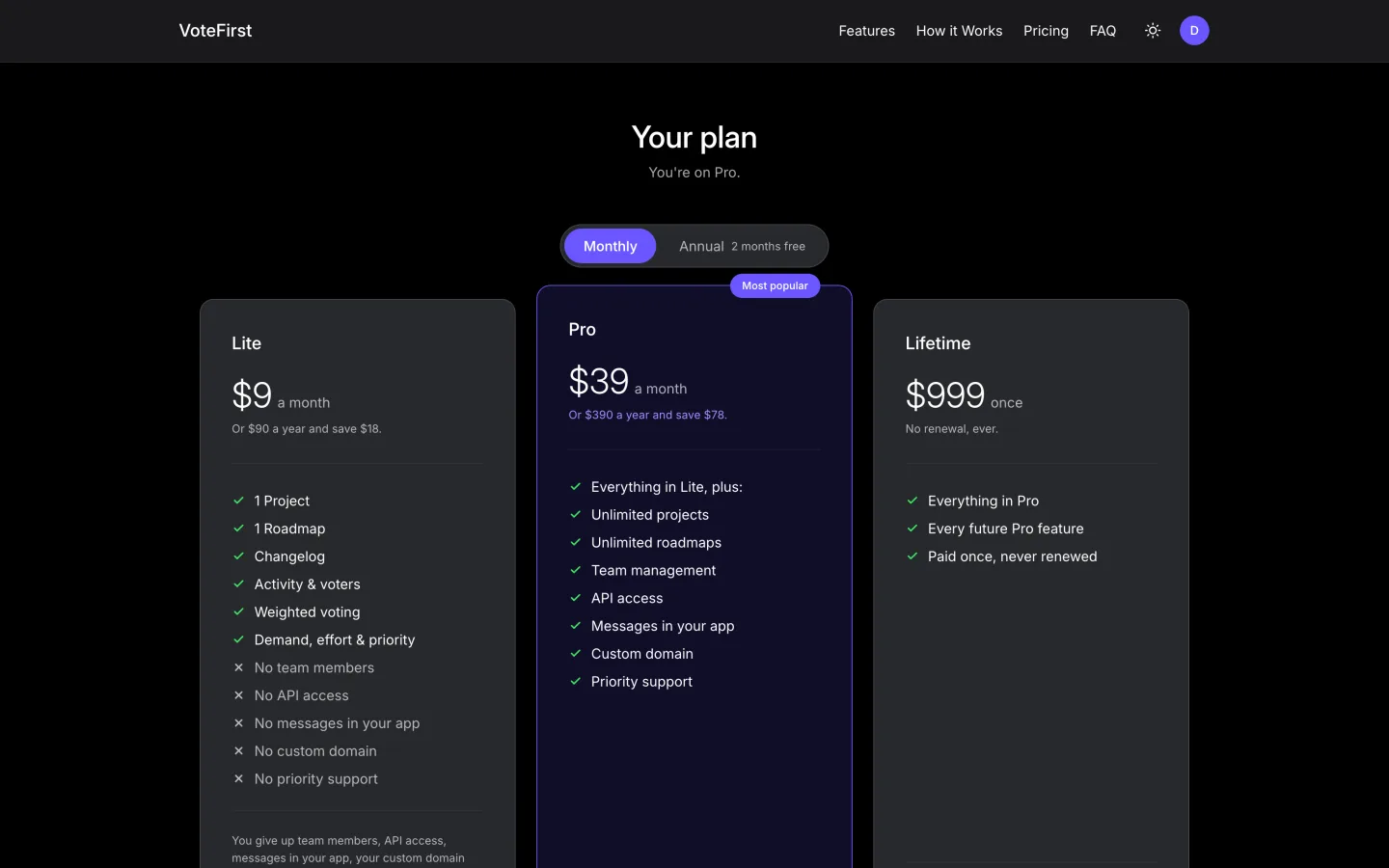
Nine dollars a month for one project, with no per user charge of any kind.
Our thirty nine dollar plan adds team members, the API and a custom domain. Against their per paid user model the comparison depends entirely on how many colleagues need access, and at three paid users on Essential their eighty five dollars is more than double our thirty nine.
But price is the wrong axis here and we would rather say so. If your feedback lives in a support inbox, we are the wrong shape of tool at any price. The full category comparison is here.
What moving actually involves
More work than a button, and the honest version is short. There is no importer for requests or votes on our side.
Voters and the revenue behind them come in from a CSV or from a billing connection, which is the part the weighting needs. The requests themselves are rebuilt by hand or by a script against the API, and the vote counts start again.
That is a real cost and it is worth naming before anybody moves. The five steps, with the endpoint each one uses, are written out in full, and they are the same five whatever you are leaving.