Using a Trello board as a public roadmap is one of the most sensible free ideas in this category. It takes ten minutes, it costs nothing, and for a lot of teams it is genuinely enough.
Two facts about it are not obvious from inside Trello, and both of them are published by Atlassian rather than argued by us. If you are about to build a roadmap this way, they are worth knowing first.
Everything below was read on Atlassian's own documentation and pricing page on 9 September 2026.
Can search engines find a public Trello board?
No, and Atlassian says so themselves.
Their documentation on board visibility says that public boards are visible to anyone on the internet but are not indexed by search engines such as Google. That is one sentence in their own help centre and it is the whole answer.
It is also independently checkable, which is why we checked it. Trello's robots file disallows the board path outright, along with the card path, the member path and the workspace path. So the instruction is not an accident of how boards render. It is a deliberate rule sitting at the top of the domain.
For an internal roadmap that changes nothing. For a public one it changes a lot, because a roadmap is one of the few pages where somebody searching for a feature you have not built yet can find you. On a Trello board they cannot, and no amount of writing on the cards will help.
None of the above is hard to verify, because the trial is 14 days and the price after it is $9 or $39 a month.
Can your customers vote on it?
Only the ones who have a Trello account.
Atlassian's own sentence is that making a board public allows anyone with a Trello account to vote or comment on it. The permission settings agree. The most open commenting option on a board is any Trello member, and that option only appears on public boards at all.
So the flow for somebody who wants to ask for a feature is to click your link, read the board, decide they care, create an Atlassian account, confirm an email, come back and then vote.
Most people stop somewhere in the middle of that, and the ones who do not are not a random sample of your customers. They are the most motivated ones, which is precisely the bias you were trying to remove by counting votes in the first place.
There is a related detail worth knowing. An observer, which is Trello's read only board role, is a Premium feature at ten dollars a user a month. Read only participation is a paid tier rather than a default.
14 days, a card at signup, then $9 or $39 a month.
What does Trello cost?
Free to start, and per user after that.
| Plan | Paid yearly | Paid monthly |
|---|---|---|
| Free | $0 | $0 |
| Standard | $5/user/mo | $6/user/mo |
| Premium | $10/user/mo | $12.50/user/mo |
| Enterprise | $17.50/user/mo | Yearly only, at $210 a user each year |
Free carries up to ten collaborators per workspace, up to ten boards, and unlimited power ups per board. For a roadmap board that is usually plenty, and the voting power up runs on it.
One line in their comparison table is worth reading if you care about who can publish what. Public board management, meaning the administrative control over which boards may be made public, is an Enterprise feature.
On every plan below it, any board admin can make a board public from the board menu, and there is no central setting that stops them. That is a governance question rather than a pricing one, and it tends to arrive later than people expect.
Does Trello have a free plan?
Yes, and for a public board it is usually enough. Their pricing page read on 14 September 2026 carries a free tier, and the reasons to leave it are the two on this page rather than the price.
Does Trello have a public roadmap, single sign on and a CSV export?
Trello has roadmap features on an ordinary board rather than a roadmap product. Trello carries single sign on on Enterprise, through Atlassian Guard. Trello puts its data export on Premium and its own page calls it a simple one.
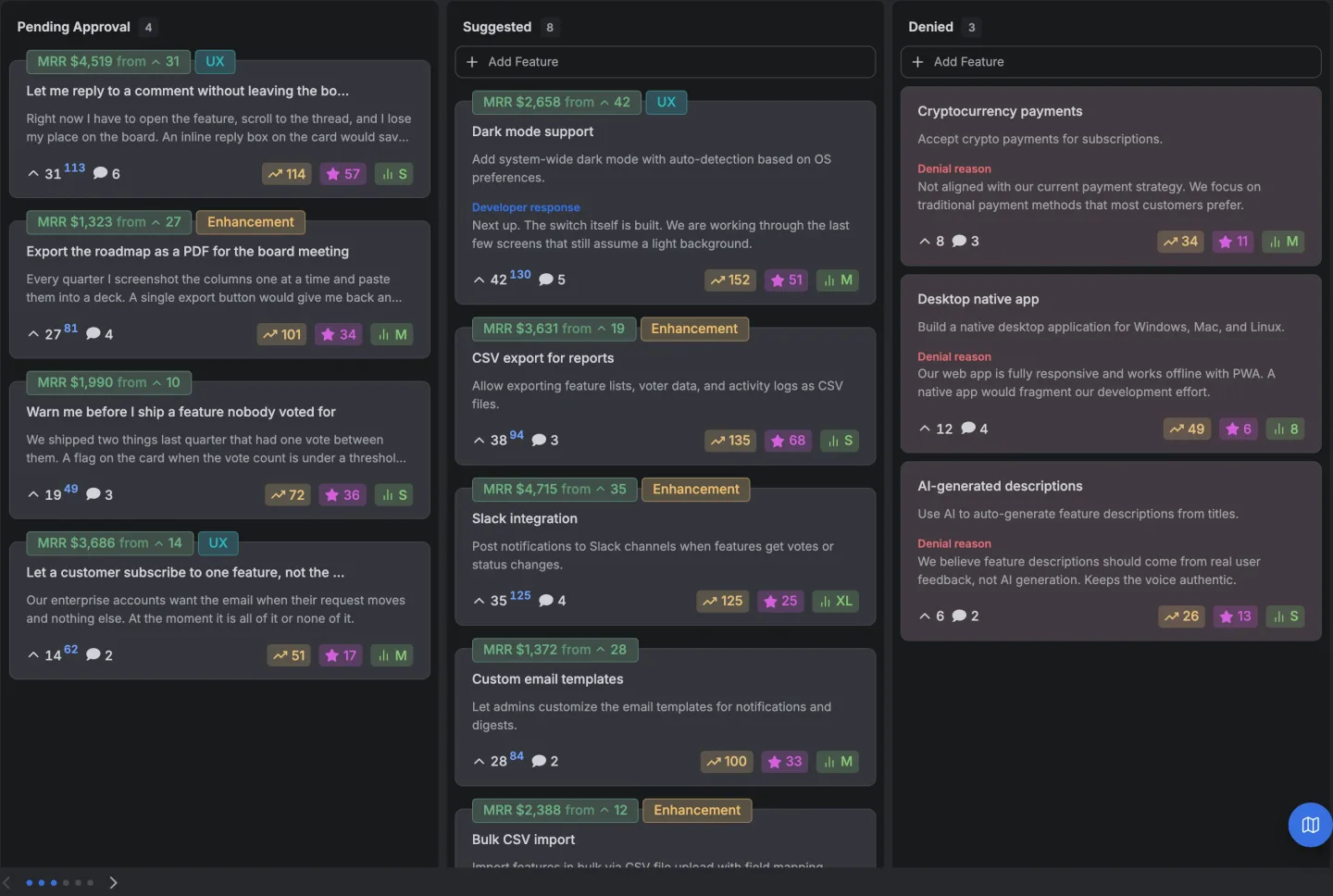
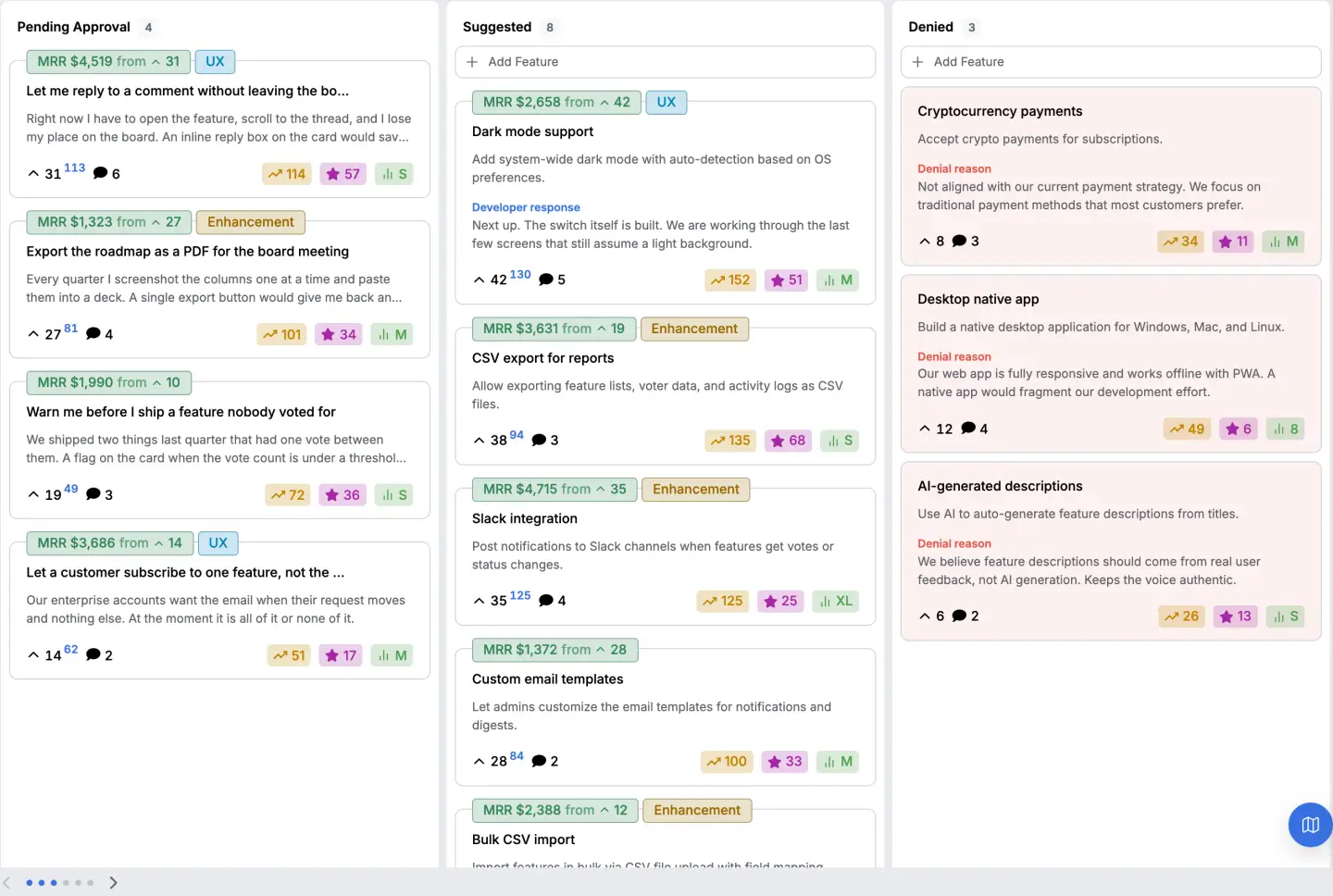
Trello does not weight votes by revenue. Ours publishes a public roadmap with a Denied column on every plan, and signs a voter in with a token from your own application on the thirty nine dollar plan rather than with SAML.
Is there a free Trello alternative?
Yes, and Trello is one of them, which is why this page is about what its free tier does not cover rather than about price. Fider is the free one to know about, because it is open source and its hosted tier runs to two hundred and fifty feedback items.
UserJot gives two boards and three admin roles, Supahub gives one board and one admin, Featurebase gives one seat, and Sleekplan's Indie tier is a single admin workspace that does not expire.
All five were read on their own pages on 14 September 2026. This product is not one of them. There is no free plan here, only a fourteen day trial that asks for a card at signup.
Is Trello worth it, and what is it better at?
A great deal, because it is not really the same kind of tool.
It is free and it is already open. If your team lives in Trello, the roadmap board costs nothing and needs no new login for anybody internal. That is a real advantage and no feedback tool matches it.
It is a general work tool. Lists, cards, checklists, due dates, automation, two hundred or more power ups, calendar and timeline and table views on Premium. We do one thing and that is not it.
It is Atlassian. SOC2 Type 2, ISO 27001 and PCI DSS by their own account, single sign on through Atlassian Guard, and a procurement path your security team has probably already been through.
If what you actually want is a place for your team to track work, Trello is the answer and a feedback board is not.
Who should not move to ours?
Anybody whose roadmap board is internal.
If the people reading the board all work at your company, none of the two findings above costs you anything. Search indexing is irrelevant and everyone already has an account. Keep the Trello board, it is free and it works.
The case for moving is narrow and specific. You want people outside your company to find the roadmap, read it and add to it, and you want the ones who cannot be bothered to create an account to count.
What does ours do instead?
A page anybody can open and anybody can vote on, with one thing wrong with it that we should say before the rest.
Voting needs no account at all. An anonymous cookie is set on the first page load, the visitor gets a stable identity from it, and they can vote, comment and suggest from that moment.
That is the whole design of the board, and it exists because the sign up step is where most of your feedback disappears.
The roadmap is an ordinary public page rather than an app screen shared by link. It has its own address, its own description, its own canonical link and no instruction in the markup telling a crawler to stay away. The canonical link was missing until we checked it for this page, which is the sort of thing writing a comparison turns up about your own product.
Now the correction, because an earlier version of this page said the instruction blocking it does not exist on our side, and that was wrong. It does.
The application serves one robots file for every host it answers on, a customer's own domain included, and that file disallows every path. So a crawler that obeys it does not read a board of ours today.
The rest of it is stranger and worth having. A page that is never fetched can still end up in results, because an address can be indexed from the links pointing at it rather than from its own contents, and one customer board of ours sits in Google's results right now without its page ever having been read.
So the page you wanted found is not being read, and the address can surface anyway, which is the worst arrangement of the two rather than the better one.
That is different from what is described above in a way that matters. Theirs is a rule in their own documentation, applied to the board path on purpose, and it is a decision about their product.
Ours is a blanket line on a host that also serves boards whose owners may not want them public, so the fix is not simply deleting the file. We are telling you where it stands rather than selling you the contrast, because on this particular question we are not the better answer today.
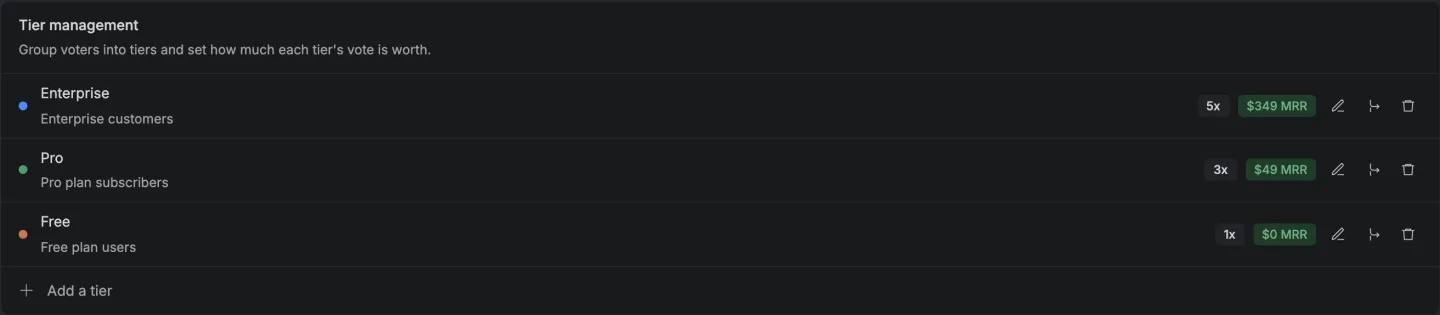
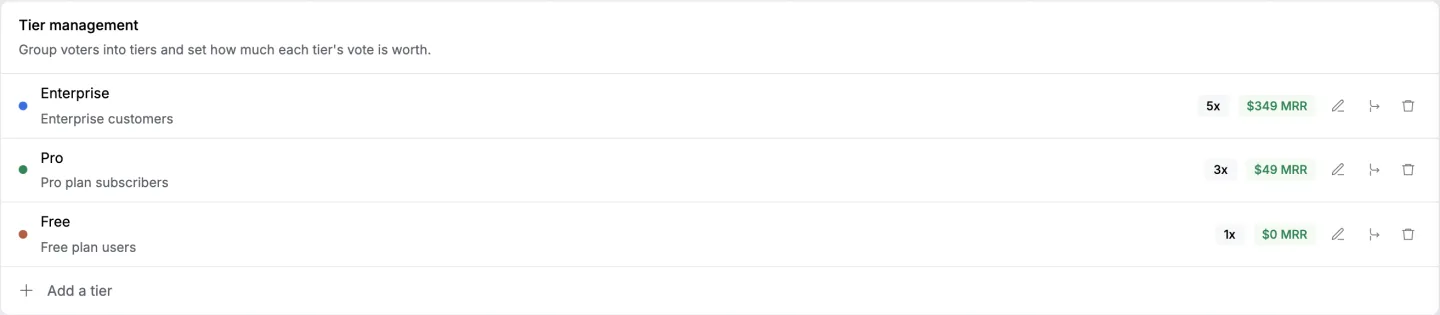
A vote can also carry the weight of the customer who cast it, so three paying customers can outrank thirty who are not. That mechanism has no equivalent on a card, where every vote is one vote and the board cannot know who is paying you.
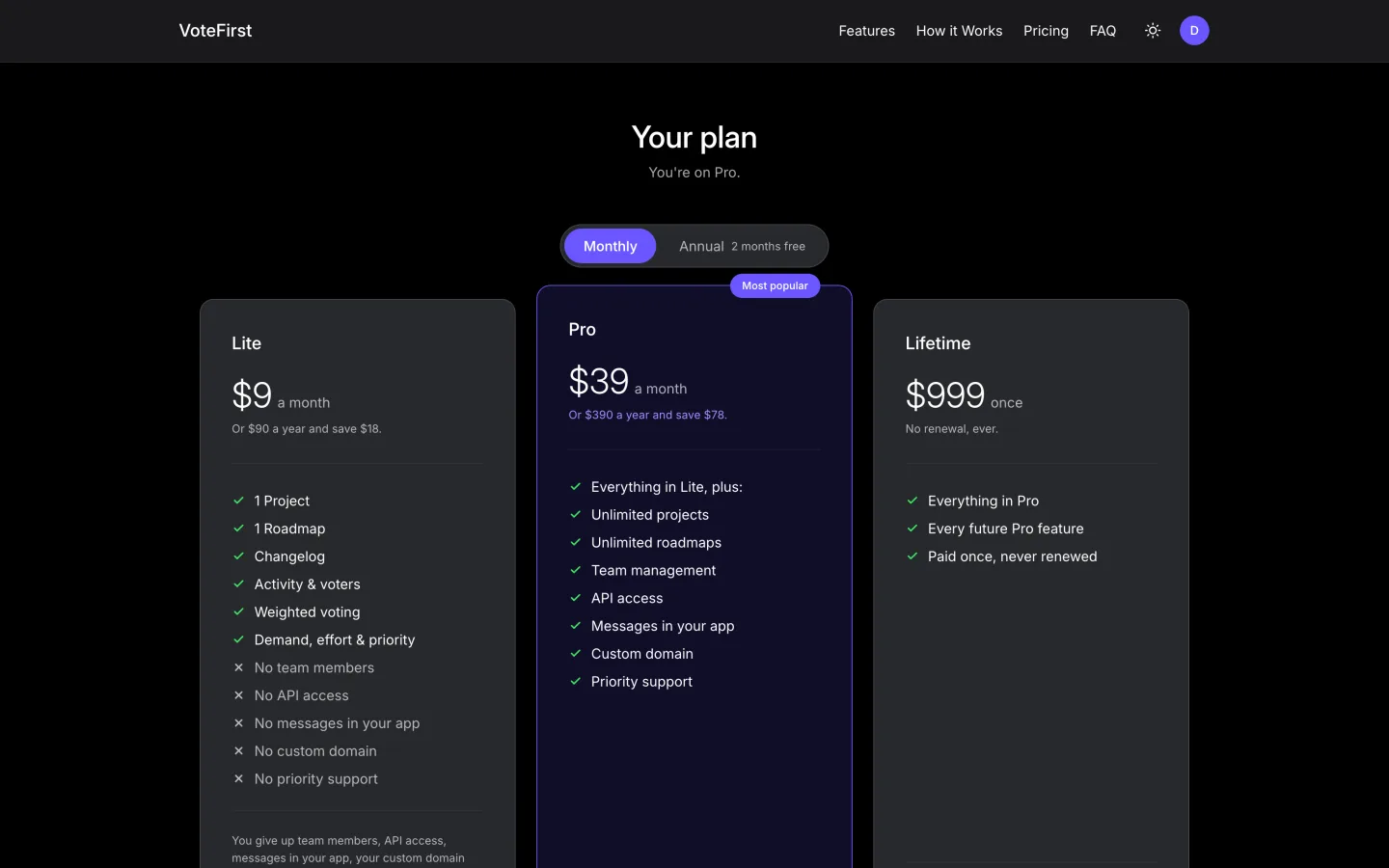
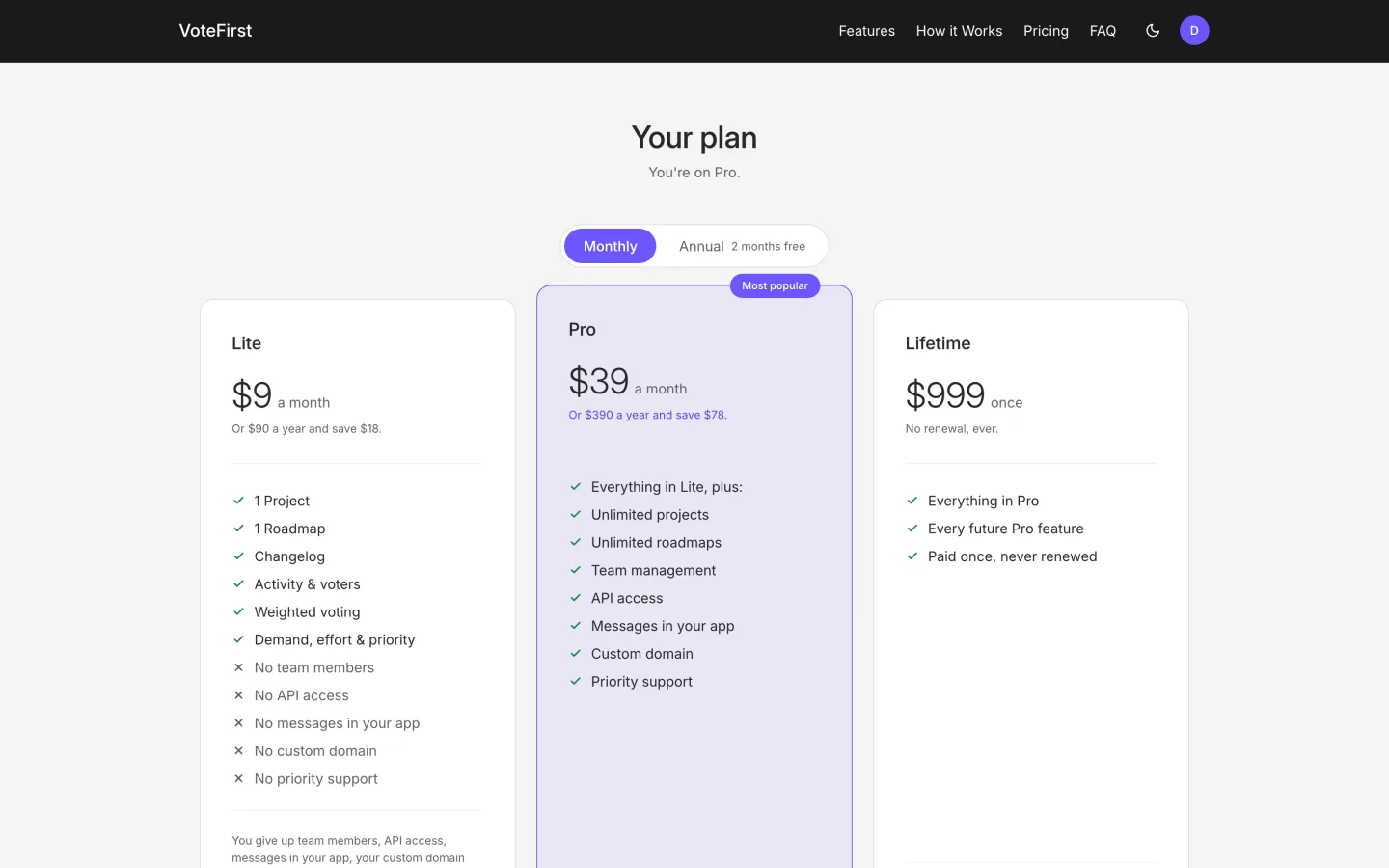
Nine dollars a month for one project and one person, and thirty nine if you want colleagues, with no count on either the voters or the team.
Both figures are published and a card is required for the fourteen day trial. If you are weighing several of these, the real billing unit of every tool in the category is on one page.