Upvoty and Feature Upvote do the same job and their entry prices differ by almost four times. That gap is the whole of this page, and the answer is not that one of them has four times the features.
Everything below was read on each vendor's own pricing page on 14 September 2026. Neither vendor has written this comparison, and both write plenty of others.
What does each one charge?
Forty nine dollars a board, thirteen fifty dollars a project, and nine a plan, and none of the three counts the people who vote.
| Vendor | From | Billed per | Free plan | Trial |
|---|---|---|---|---|
| VoteFirst | $9/mo | plan | – | 14 days, card |
| Upvoty | $13.50/mo | project | – | 14 days |
| Feature Upvote | $49/board/mo | board | – | 30 days |
Read on each vendor's own pricing page on 2026-09-14.
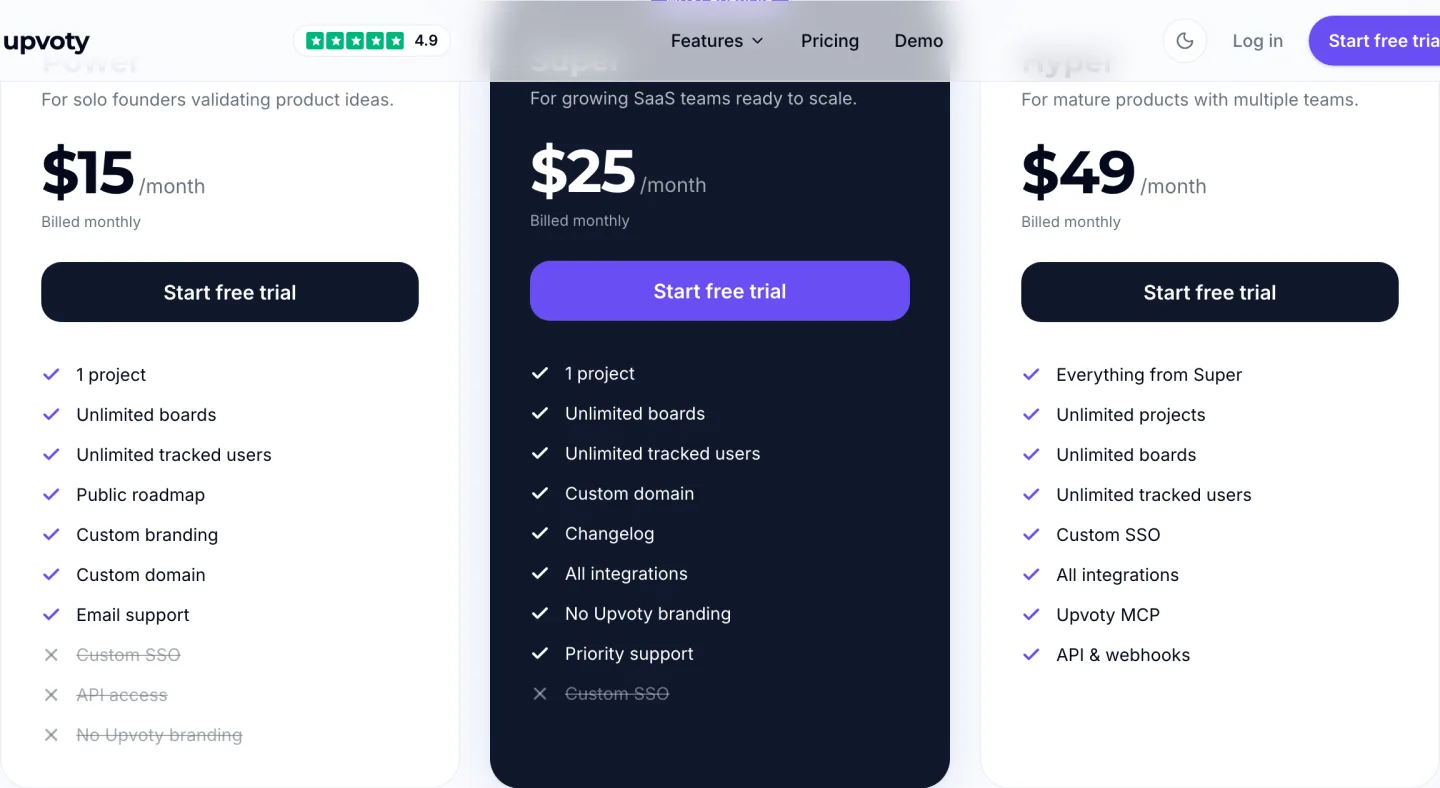
Both meters count things you own rather than people who show up, which is unusual in this category and good for both of them. Neither charges by tracked users, so a board that suddenly works does not produce a bill.
The difference is what the unit is. Upvoty's is a project and boards inside it are unlimited. Feature Upvote's is the board itself, so a second product doubles the bill to ninety eight.
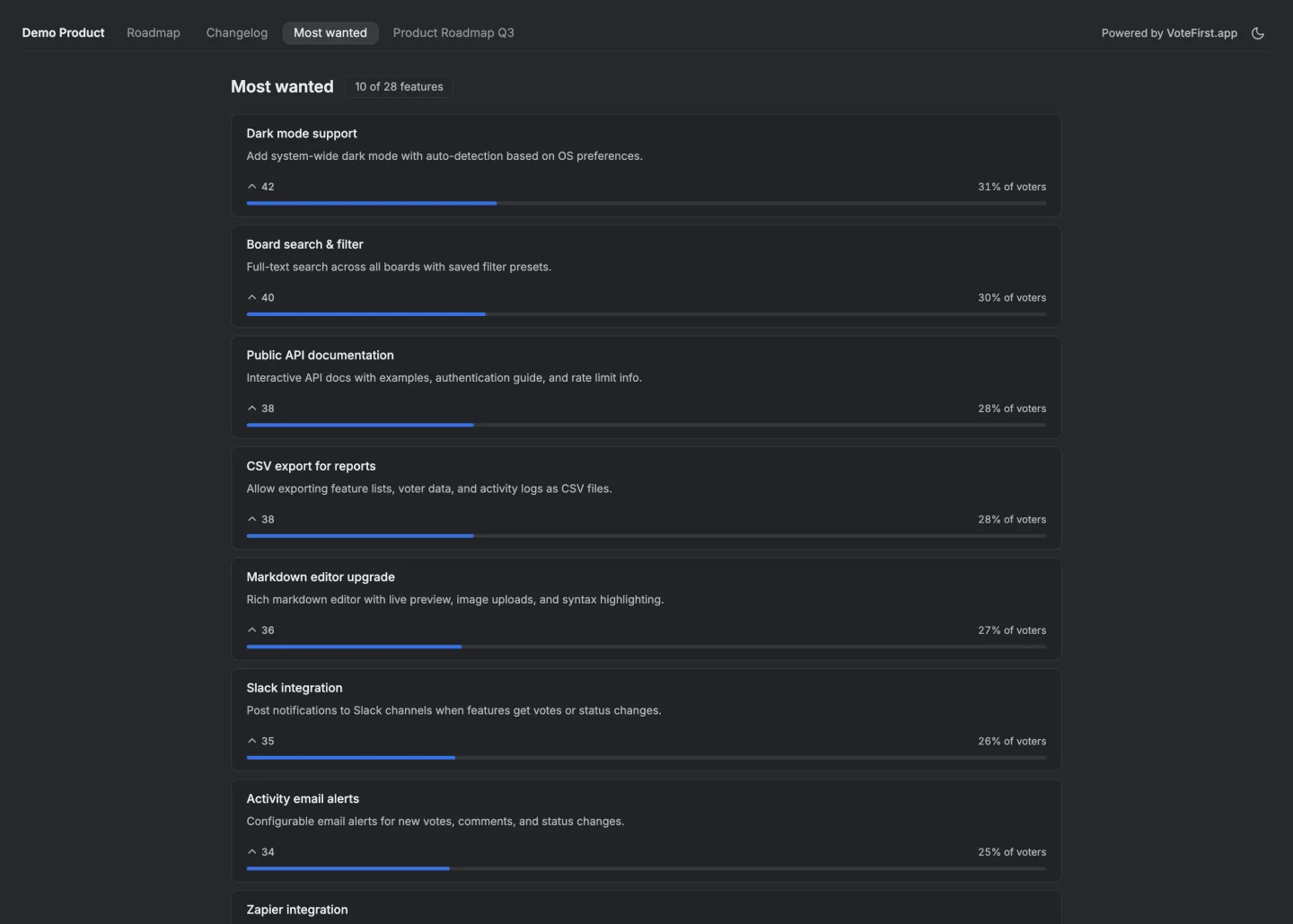
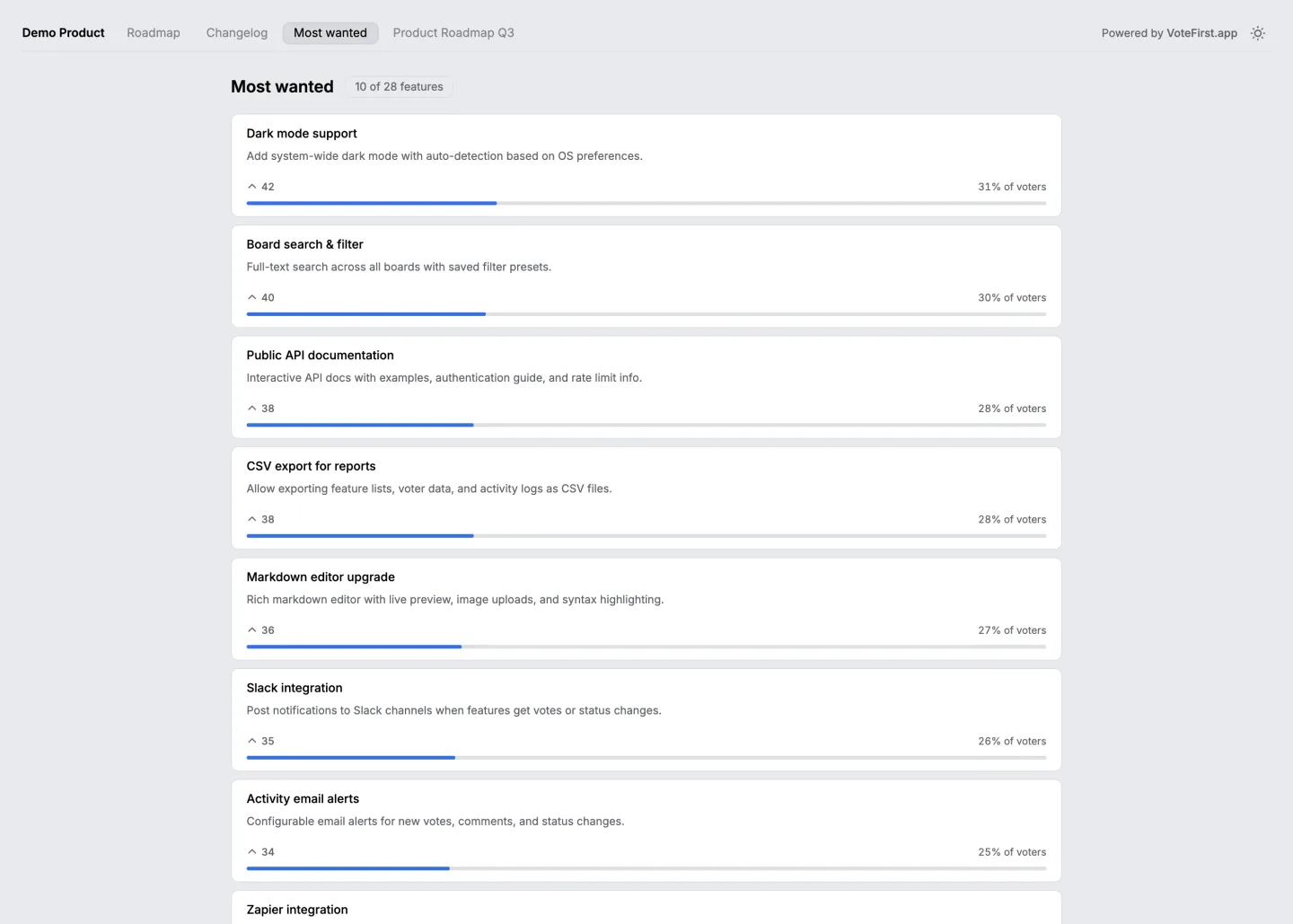
If you would rather look at a board than read about billing, the demo is open without an account.
What does four times the price buy?
SAML single sign on and private boards, which are the two rows Upvoty does not print.
| Vendor | Weighting by revenue | Single sign on | API | Changelog | Private board |
|---|---|---|---|---|---|
| Feature Upvote | – | Indie | – | – | Indie |
| Upvoty | – | Power | Power | Super | – |
| VoteFirst | All plans | Pro, no SAML | Pro | All plans | No |
Read on each vendor's own pricing page on 2026-09-14.
A dash means nobody could read it on the pages opened that day, never that the capability is absent.
Feature Upvote's forty nine dollars buys two things Upvoty does not print, SAML 2.0 single sign on and private boards, both on the entry plan. SAML is the row that explains the price. A company that needs its feedback board behind its identity provider is a company with a procurement process, and it is the customer Feature Upvote is priced for. Upvoty's single sign on is described as custom rather than SAML.
Upvoty's thirteen fifty buys a changelog and an API that Feature Upvote does not publish. The changelog is on Super at twenty five, and the API is on the entry plan.
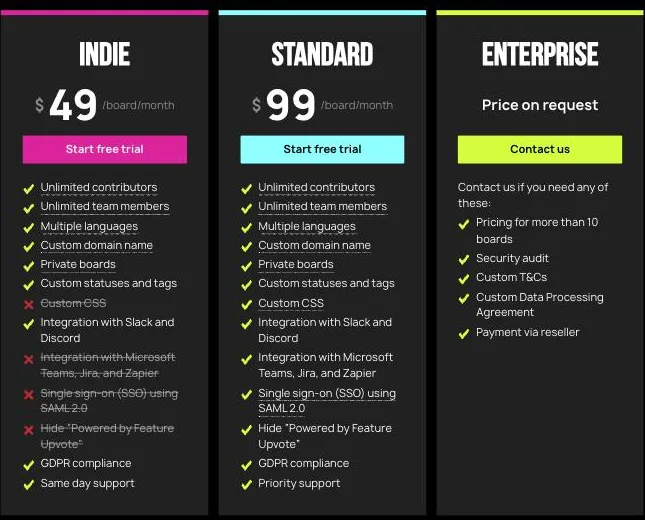
So it is a different buyer rather than four times the product. Feature Upvote also sells unlimited contributors and unlimited team members on both tiers, which matters when the alternative charges per seat, and asks for a thousand dollars a year minimum before it will take a bank transfer.
How many boards do you actually need?
This is the question that decides it, and both vendors answer it in their own pricing.
| Your situation | Upvoty | Feature Upvote |
|---|---|---|
| 1 product | $13.50/mo | $49/mo |
| 3 products | $13.50/mo, boards are unlimited inside a project | $147/mo |
| 3 products, and one board must be private and behind SAML | 13.50, without the private board or SAML | $147/mo, with both |
Feature Upvote's own page suggests using one board with tags for two similar products, which is an honest workaround from a vendor with an incentive not to offer one.
Why choose Upvoty over Feature Upvote, or Feature Upvote over Upvoty?
Because one sells you boards and the other sells you a way to put a board behind your identity provider.
Choose Upvoty when you run more than one product, because boards are unlimited inside a project and a second product does not change the bill.
Choose Feature Upvote when somebody in your company needs SAML single sign on or a private board on the entry plan, because those are the two rows the cheaper tool does not print and they are what the four times difference buys.
Is there a cheaper alternative to both?
Upvoty is already the cheaper of the two, and the field below it is thin.
Below thirteen fifty dollars a month the options are a free tier or an open source install rather than a cheaper paid plan.
Fider is free to two hundred and fifty feedback items, Supahub is free for one board and one admin, and UserJot is free for two boards, all read on their own pages on 14 September 2026. This product is nine dollars a month with no free plan at any point.
The full field with the unit each vendor bills on is one page.
What does neither of them do?
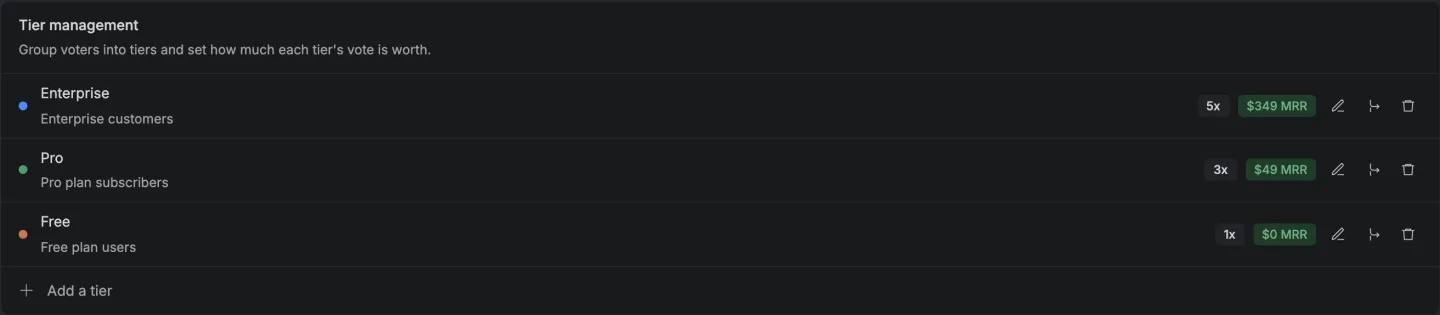
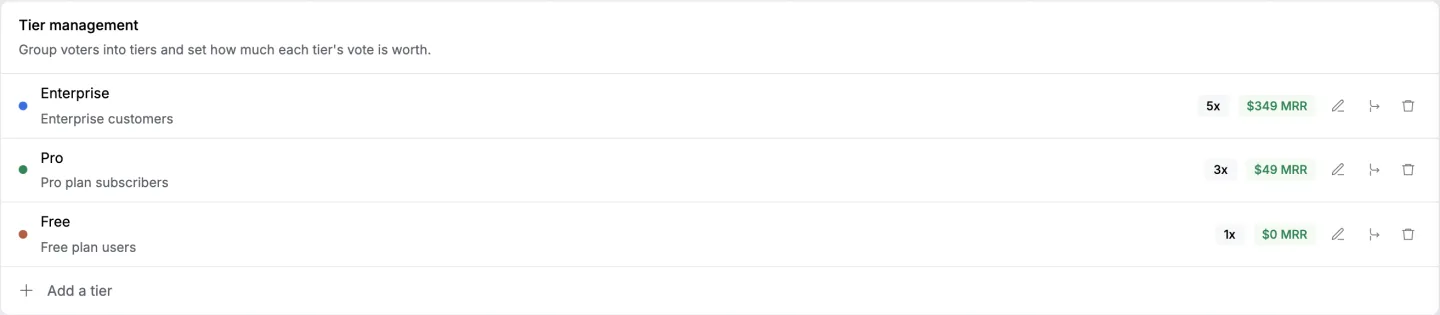
Weight a vote by what the voter pays.
Neither vendor's pages mention vote weight, customer revenue or a tier multiplier. That is an absence on their published pages rather than proof about their software, and twenty one of the twenty eight products we read on 14 September publish nothing at all about customer revenue.
This product puts each voter in a tier with a whole number multiplier, writes that weight onto the vote when it is cast, and shows the plain count beside the weighted total on the same card. How that works is written up in full.
Where we lose to both
Two rows, and they are real.
Feature Upvote has SAML and we do not, at any price. Our single sign on is a signed token your own server hands us, which is right for a board embedded in a product you built and useless to an IT department that wants Okta.
Neither of them, and not us, has a private board in the sense people mean. Feature Upvote does. A board of ours is published to everybody or to nobody, with no password and no invite list, so if your feedback has to sit behind a login, buy theirs and stop reading here.
What is Upvoty, and what is Feature Upvote?
Upvoty is a feedback board with a roadmap and a changelog, priced per project at a flat rate with no meter on voters. Feature Upvote is a single public board priced per board, with no roadmap layer and no changelog, and it is deliberately narrower.
Does either one have a free plan?
Neither does. Both pricing pages read on 14 September 2026 offer a trial that asks for no card, fourteen days on Upvoty and thirty on Feature Upvote, and there is nothing free at the end of either.
Which one should you choose, and how do they compare on the things that are not price?
Choose Upvoty if you want the roadmap and changelog in the same subscription and you run one product.
Choose Feature Upvote if you need single sign on or a private board on the entry plan, which is the row that explains the four times difference. On everything else the two are close, and the comparison above is the honest version of it.
The honest summary
Upvoty is the cheaper of the two by a distance and gives you unlimited boards inside one project, a changelog and an API. Feature Upvote costs four times as much for one board and the money buys SAML, private boards and a sales relationship. Neither weights a vote by revenue.
The Upvoty alternative page and the Feature Upvote one carry each side on its own.
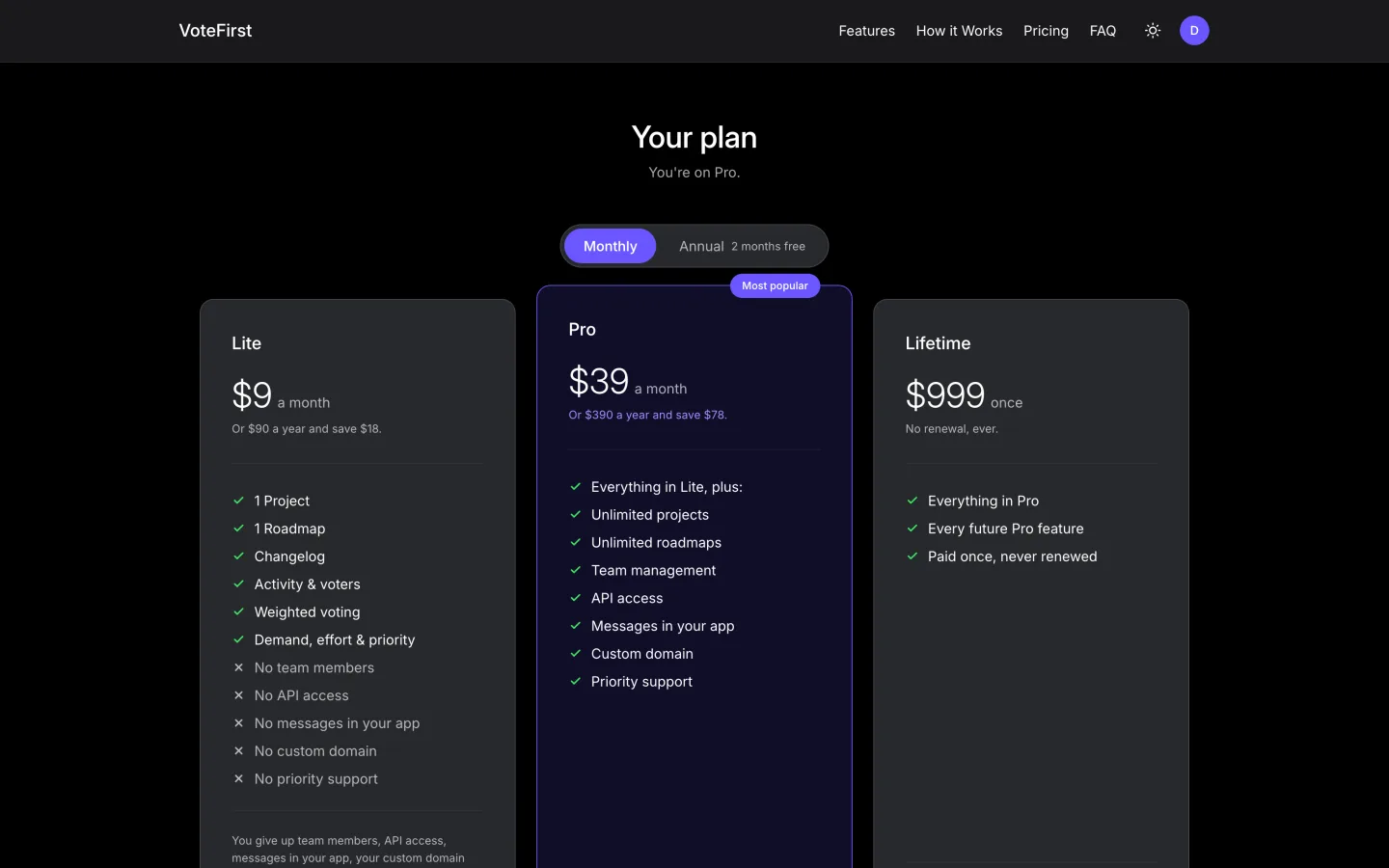
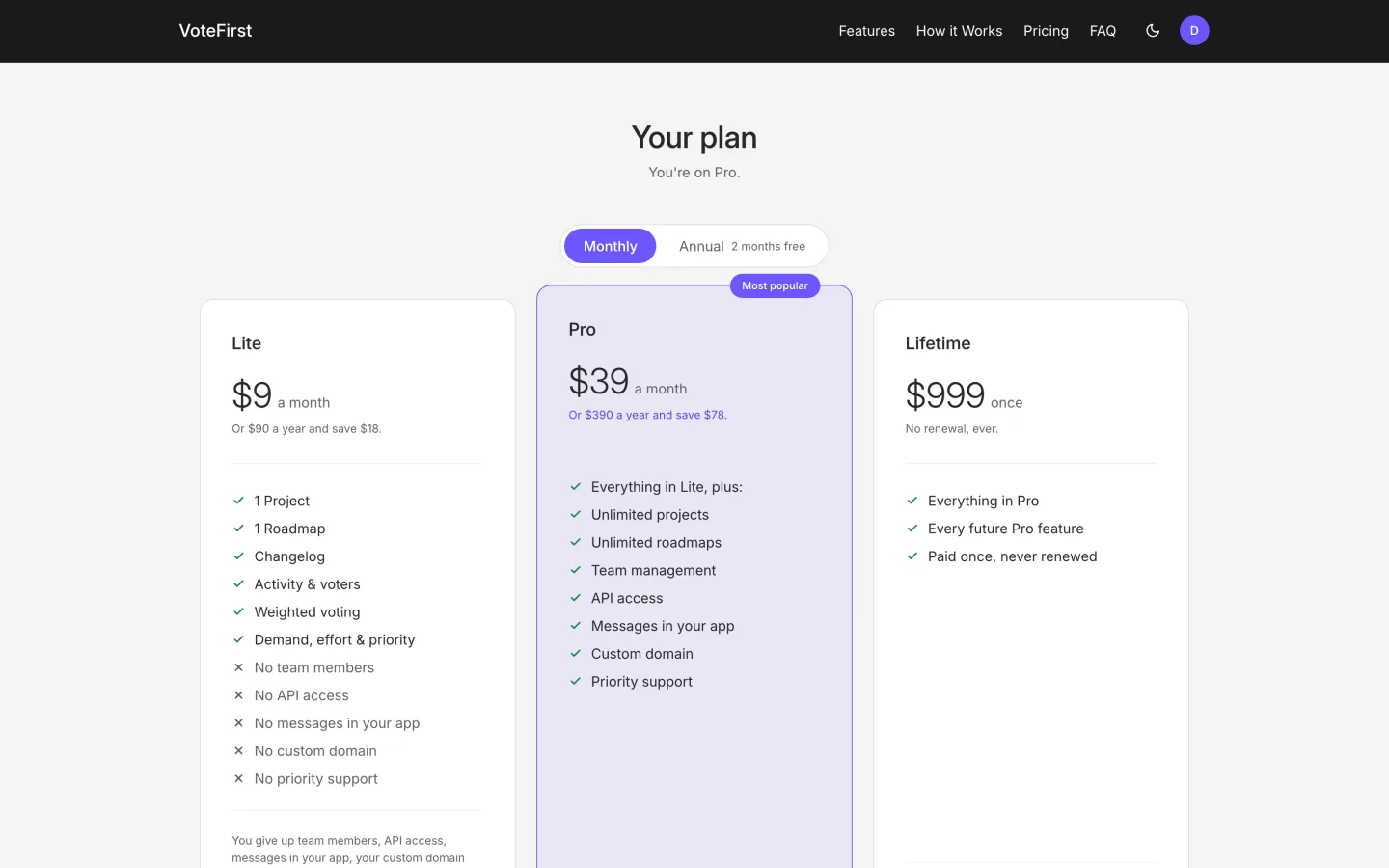
14 days, a card at signup, then $9 or $39 a month.