Innovation management is the practice of running everything a company does to turn new ideas into things it actually ships, as one programme rather than as scattered efforts.
Idea management is the first part of it. That is not our opinion, it is what the vendors who sell innovation management software say on their own pages, and all three of the ones read for this entry say it the same way.
Where they stop agreeing is everything after the first part.
What is innovation management, in one sentence?
A programme that takes an idea from somebody having it to the company having shipped it, with a named process in between.
The named process is the whole of the claim. Collecting ideas is idea management and everybody does that. What innovation management adds is the part where an idea is screened, turned into a business case, funded, built, launched and then measured, with somebody accountable at each handover.
That is a real thing large companies need and it is a large thing to buy. It is also, on the evidence below, a thing nobody has agreed the shape of.
Where do the vendors disagree about it?
On how many stages it has, which is not a detail when the stages are what you are buying.
Three vendors who sell innovation management software were read on their own pages on 15 September 2026.
| Vendor | The shape they name | How many |
|---|---|---|
| Viima | stages, being search, build, scale, expand and sustain | five |
| IdeaScale | process steps, from idea generation through to continuous improvement | nine |
| Qmarkets | pillars, being the process, the programme, the platform, the culture and the strategy | five |
All three put idea management inside innovation management and none of the three describes the same process. Two name stages and one names pillars, which is not even the same kind of list, and the two that name stages differ by four of them.
Our side of that is simple. When the category's own vendors cannot agree whether the thing has five parts or nine, the definition is not the useful answer, and the useful answer is which of the two things the reader in front of you actually needs.
What is the difference between innovation management and idea management?
Scope, and who the ideas come from.
Idea management is collecting suggestions, sorting them and deciding which become work. It ends at the decision. Innovation management starts there and carries the thing through funding, building and launching, and it usually gathers ideas from employees across a whole company rather than from the customers of one product.
So they are not competitors and one is not a lighter version of the other. A company running an innovation programme still needs somewhere ideas arrive. A product team collecting feature requests from customers almost never needs stage gates, a portfolio view or an idea contest.
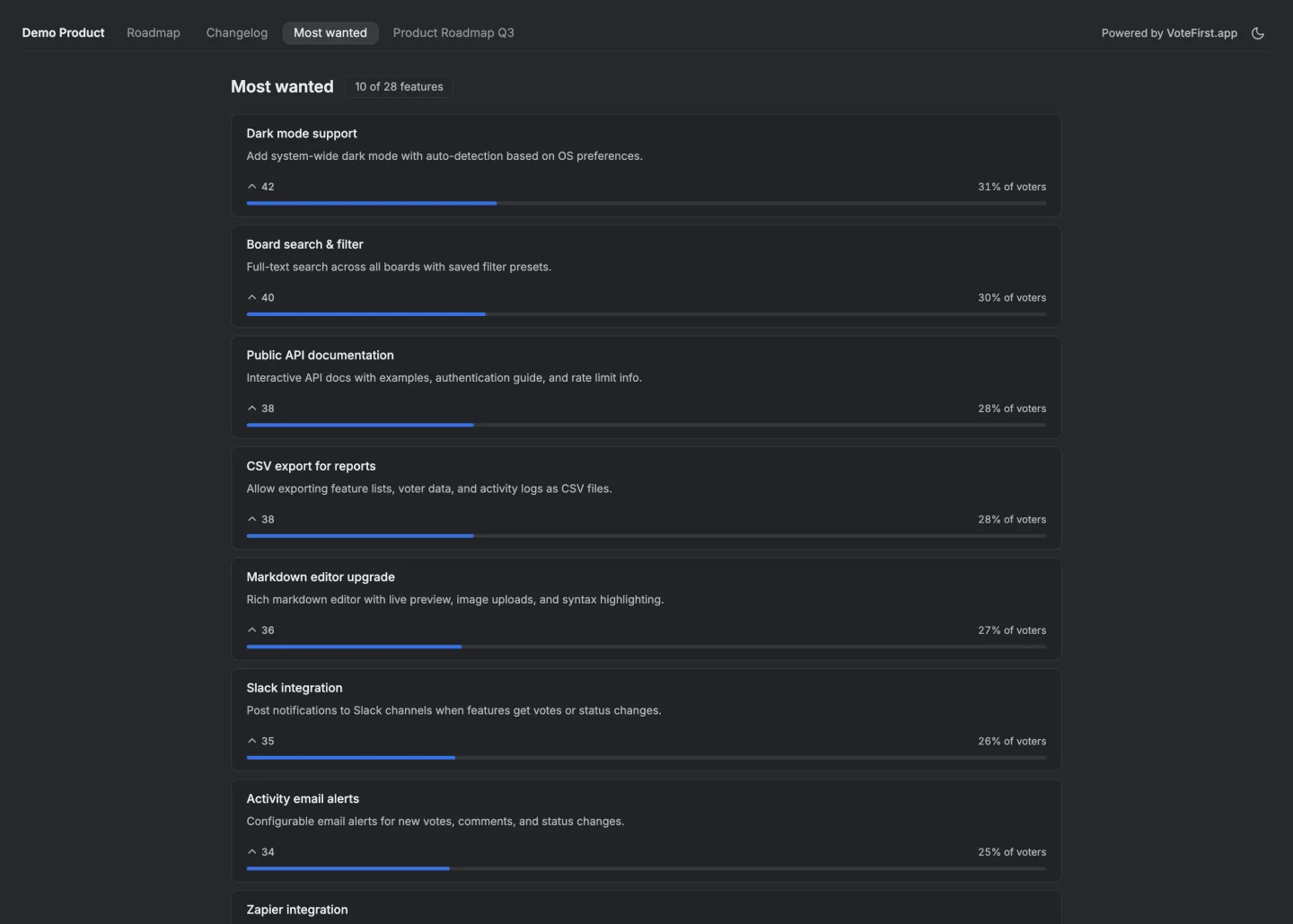
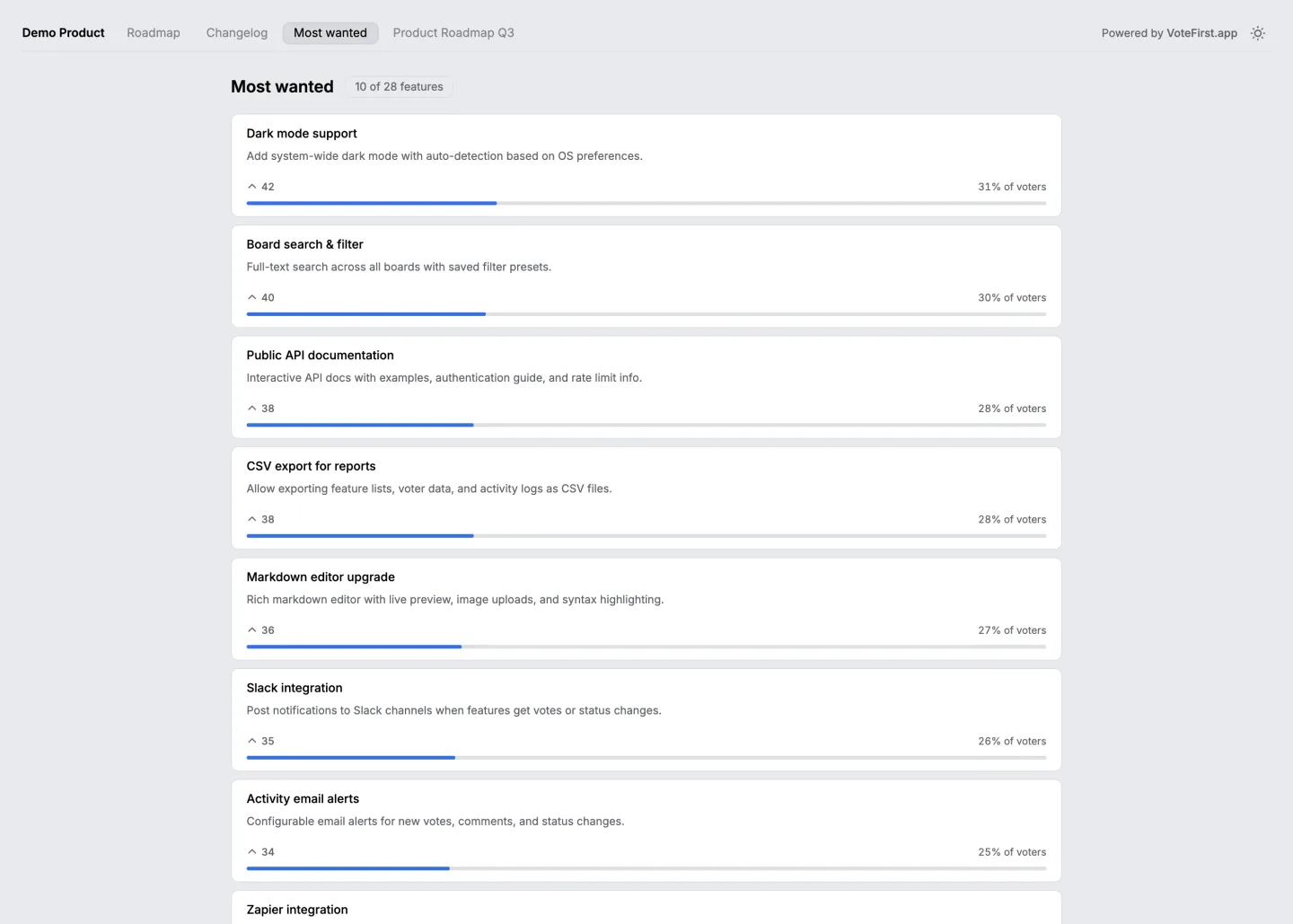
Is this product innovation management software?
No, and it is worth saying plainly rather than letting the word sit there.
This is a feedback board with a public roadmap and a changelog. Customers post requests, other customers vote on them, the votes can carry the weight of what each customer pays, and a release tells the people who asked.
There is no stage gate, no business case field, no funding step, no innovation portfolio and no idea campaign with a closing date.
If your problem is that a thousand employees have ideas and nobody knows what happened to them, buy innovation management software. If your problem is that customers keep asking for things and you cannot tell which ones matter to the people paying you, that is what this is for.
Which one does a product team actually need?
The smaller one, nearly always, and the reason is where the ideas come from.
An innovation programme is built to gather ideas from inside the company, from people who are not the ones paying for the product. A feedback board gathers them from outside, from people who are. Those two populations want different things often enough that a tool built for one is poor at the other.
The twenty request board worked through five prioritisation methods is what deciding looks like at product scale. There are no stage gates in it, and it still takes a real argument to get from twenty requests to an order.
14 days, a card at signup, then $9 or $39 a month.