There are three ways to run a free online suggestion box for employees, and they fail in three different places. This page names all three before it says a word about the product on this site, because two of them are probably right for you.
Then the part most pages in this category leave out, which is what free costs you in six months.
What is the free way to do this?
A form, a shared document, or software somebody else hosts for nothing.
A form feeding a spreadsheet. Every workplace already has this. It takes ten minutes, it costs nothing, and it collects suggestions perfectly well. What it cannot do is show anybody else what was suggested, which means nobody can agree with an existing idea and nobody can see that anything was done. It is a bin with a good lid.
A shared page everybody can edit. Visible, free, and it does the one thing the form cannot. What it loses is the count, because agreement turns into a pile of comments, and any sense of status, because a page nobody owns drifts.
Software with a free tier. The middle ground. Several products in this category publish one, and the free tiers are usually one board with a cap on something. That is enough for a single office box and it is genuinely free until you outgrow it.
What does free actually cost?
Attention and momentum, and both bills arrive at about the same time.
The form and the spreadsheet cost you the second suggestion from the same person. Nobody writes twice into something that never answers. You will not see the cost, because what you lose is the thing that never arrived.
The free tier costs you at the boundary, which is usually a second board, a second team or the feature that lets people reply. It is a real cost and it arrives later, which is fine as long as you know it is coming.
The shared page costs you the count. Without a number beside each idea, the loudest voice sets the order, and the whole point of a box is to find out how many people quietly agree.
What should a staff suggestion box actually do?
Four things, and the free versions manage two of them at best.
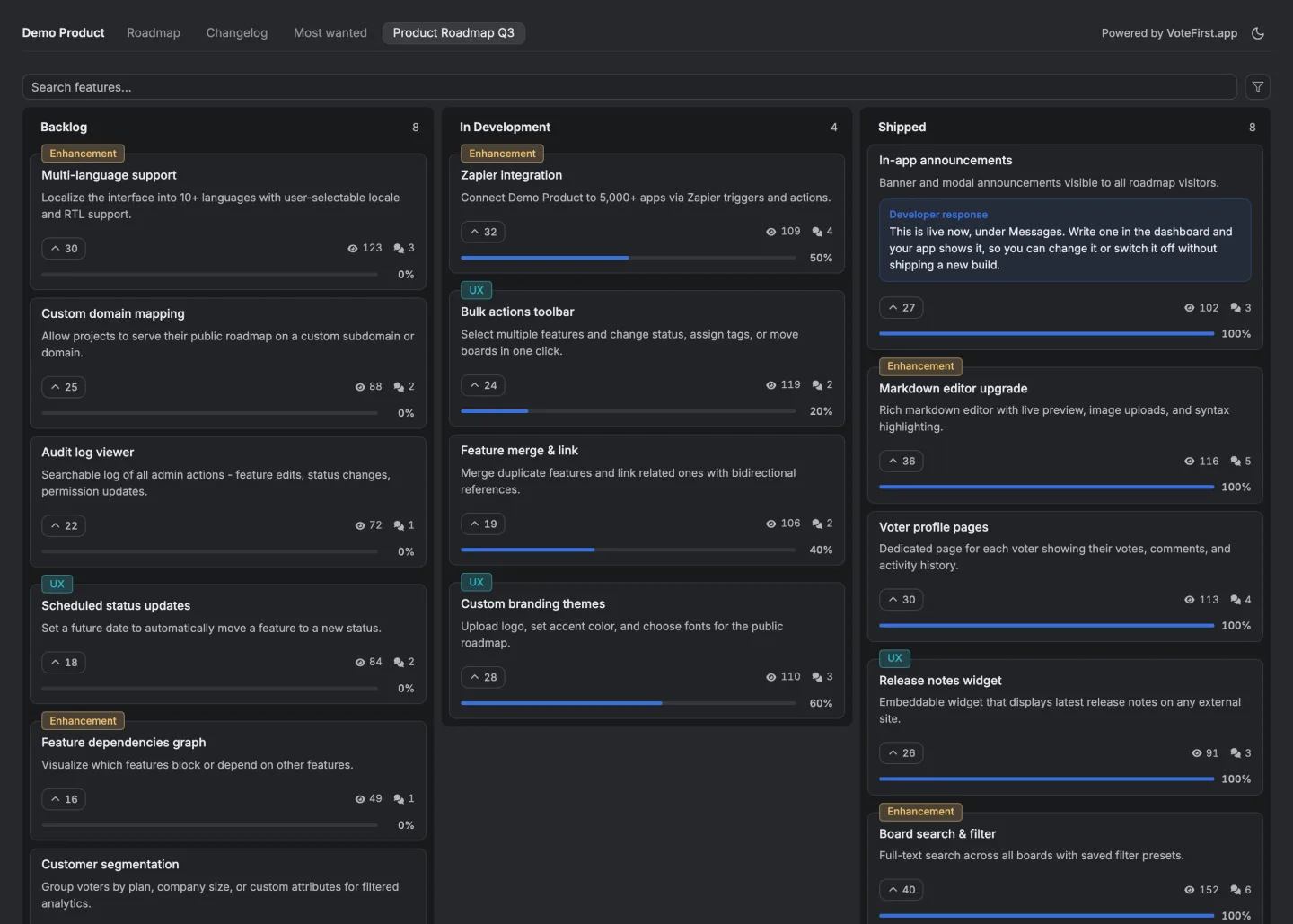
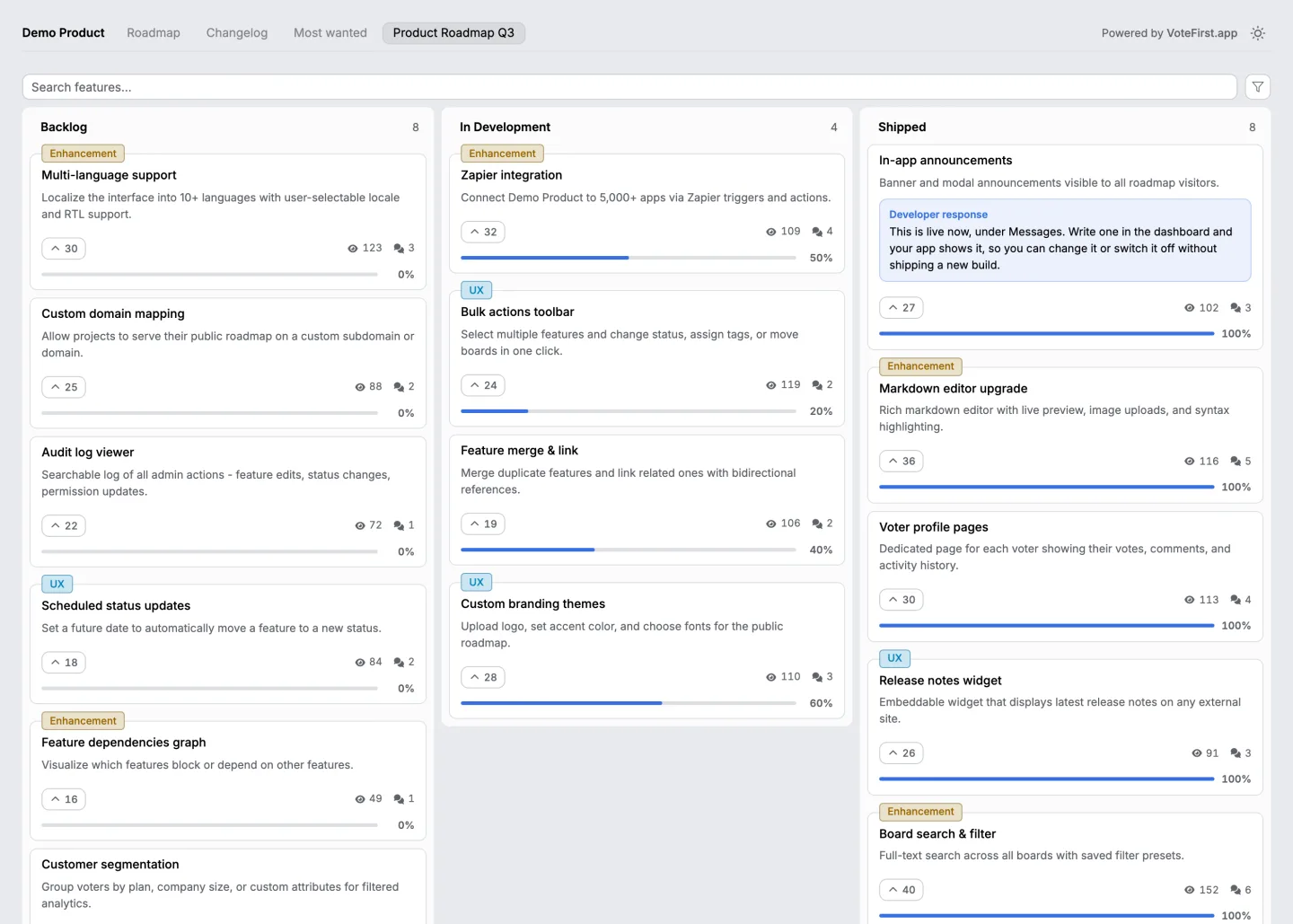
Collect without friction, which means no login if you can avoid it. Show what was suggested, so people can see they are not alone. Count agreement, so size is visible. Say what happened, including no, with a reason.
The fourth one is the whole game. A box that answers is used. A box that does not answer is emptied once a year by somebody who then wonders why it stopped filling up. The ideas that make the difference are listed separately.
Can people suggest anonymously?
Yes on this product, and it is worth thinking about before you turn it on.
Anonymous suggestions surface the things nobody will put their name to, which is often the most useful material in the box.
The cost is that you cannot go back and ask a clarifying question, and that a small number of people will use the anonymity for something other than a suggestion. Anonymous voting is written up with both halves of that trade.
The middle position most workplaces land on is anonymous suggestions allowed and a named reply encouraged, which keeps the door open without requiring a badge to walk through it.

Is this product free, and is it right for staff?
No, and read this part before you try it.
There is no free plan here. It is nine dollars a month for one board, with a fourteen day trial that asks for a card at signup. If free is the requirement, the three routes at the top of this page are the answer and this product is not.
The second honest thing is who this is built for. It is a customer facing suggestion board for a company collecting feature requests from the people who pay it.
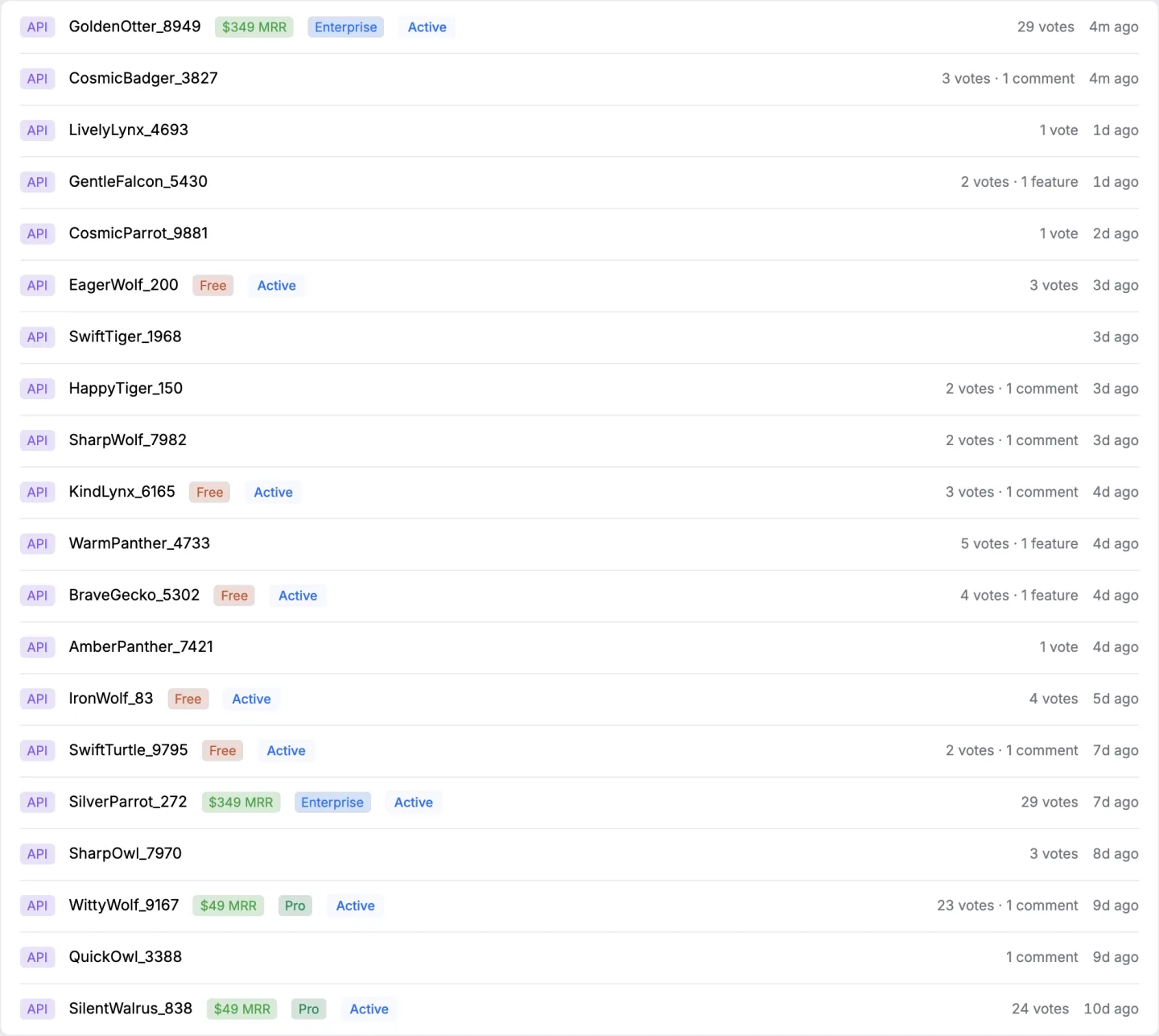
For staff use, one detail matters more than any feature. A board that is not published is not a private board. It exists, it is simply not listed, and there is no password and no invite list on it.
If your staff suggestions must be genuinely restricted to people inside the company, this is the wrong tool and an internal one is the right one.
Where it does fit is a workplace that is comfortable with the box being readable by anybody who has the address, which is a great many small companies and almost no large ones.
What is the honest recommendation?
Start free, and move when the thing that is missing costs you more than nine dollars.
For a first box in a small office, a form and a shared page will teach you what people actually suggest, which is information you do not have yet.
When the missing piece is a count, a status or an answer, that is the point where a tool earns its price, and the category page names the products with a free tier alongside this one.
14 days, a card at signup, then $9 or $39 a month.