Three of the twenty one tools we checked bill you by how many people use your product rather than by anything you control. Beamer is one of them, and its meter is the widest of the three.
That distinction is the whole reason this page exists, because a monthly active user and a tracked user are not the same population and the gap between them can be an order of magnitude.
Everything below was read on their own pricing page on 9 September 2026.
What does Beamer cost?
Four plans, each shown as a monthly rate and a lower annual one.
| Plan | Paid monthly | Paid yearly | MAU |
|---|---|---|---|
| Free | $0 | $0 | 1,000 |
| Starter | $59 | $49 | 5,000 |
| Pro | $119 | $99 | 10,000 |
| Scale | $299 | $249 | 50,000 |
Starter includes the in app and standalone changelog, boosted announcements, appearance customisation and analytics. Additional monthly active users can be added above the plan allowance. The five tiers in both billing states, the feedback add on and its free tier are on the pricing page for them.
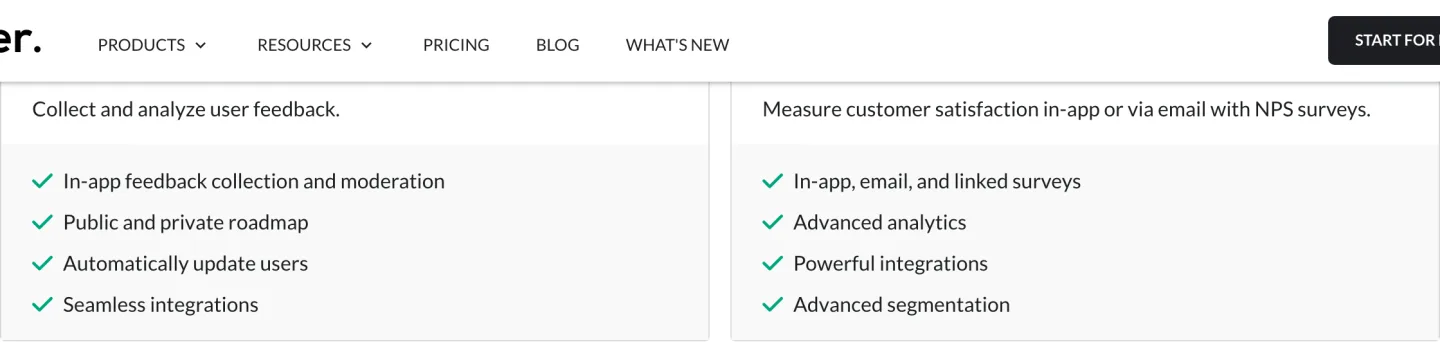
Feedback is not in that price. It is a separate product with its own free tier and its own paid one at ninety nine dollars a month billed yearly, and every plan card above lists it as an add on.
So if the voting board is what you came for, the number to compare is ninety nine rather than forty nine, and the free feedback tier is the one to try first.
Their trial runs fourteen days. Whether the free plan requires a card is not stated on the page we read, so we are not going to say either way.
The version of this argument worth having is the one you run yourself, and a trial takes 14 days and a card.
What is a monthly active user here?
Somebody who saw the widget, not somebody who did anything with it.
That is the important sentence on this page. On Canny and Convas the meter counts a tracked user, which is somebody with a post, a vote or a comment attributed to them.
Beamer counts monthly active users, which is a wider net by design, because the widget is meant to be seen by everybody who opens your product.
So the two models are not comparable even though both are metered. If ten thousand people open your app each month and forty of them ever comment on a release, a tracked user meter counts forty and a monthly active user meter counts ten thousand.
That is what the product is for rather than a trick, since Beamer is an announcement tool and the point is reach. But it means the bill is driven by your total product usage rather than by anything happening on a feedback board.
Is Beamer even the same kind of tool?
Not really, and half the readers of this page want something we do not sell either.
Beamer is a changelog and in app announcement product. You publish a release, it appears in a widget inside your product, and the people using your product see it. Feedback and NPS are add ons around that core.
Ours is a voting board first. We have a changelog and a changelog widget, and they are built to notify the people who voted for the thing that shipped rather than to broadcast to your whole audience. Those are different jobs.
If your problem is announcing releases to a large logged in audience, they built the tool for that and we did not.


Does Beamer weight votes by revenue?
No. Nothing on the pages we read on 9 September 2026 mentions vote weight, MRR or customer tier.
That is an absence on their marketing pages rather than proof about their software. Seven of the twenty one tools we checked do ship a form of revenue weighting.
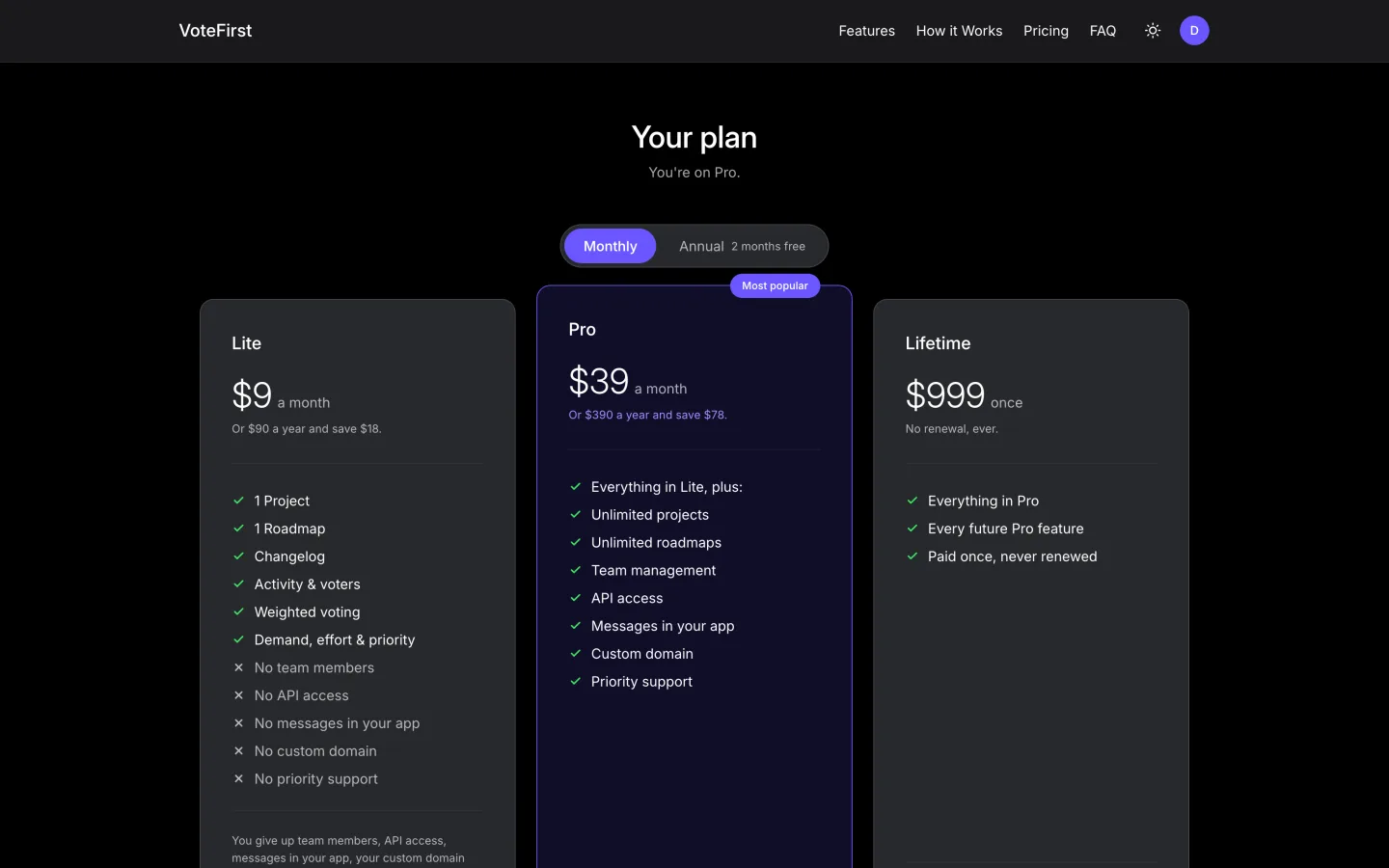
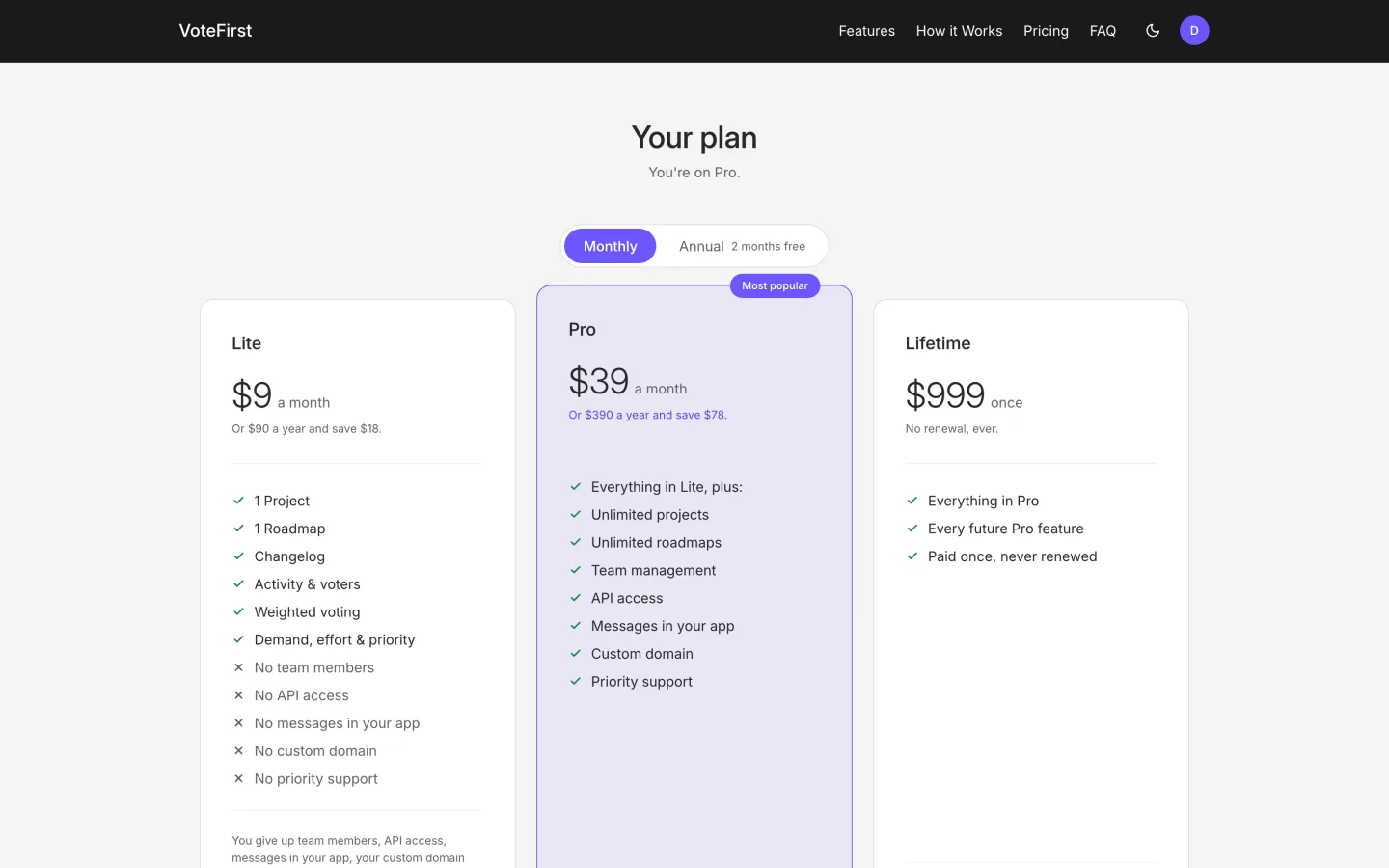
14 days, a card at signup, then $9 or $39 a month.
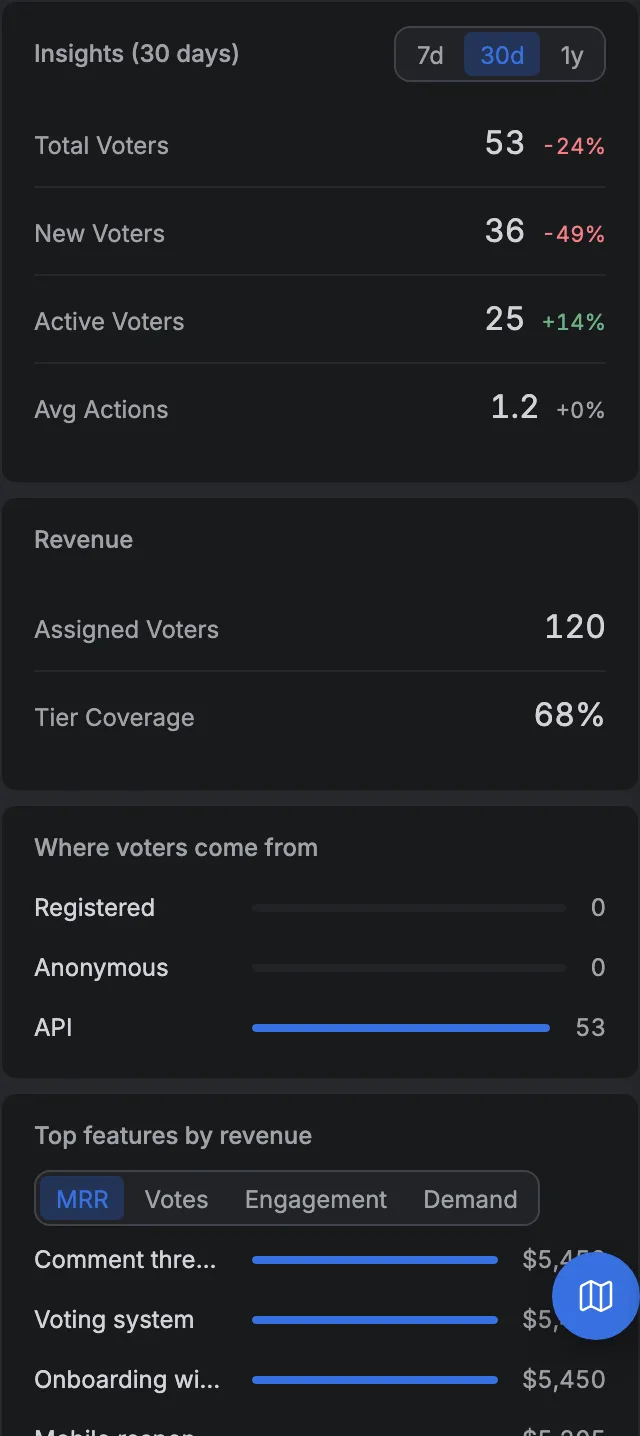
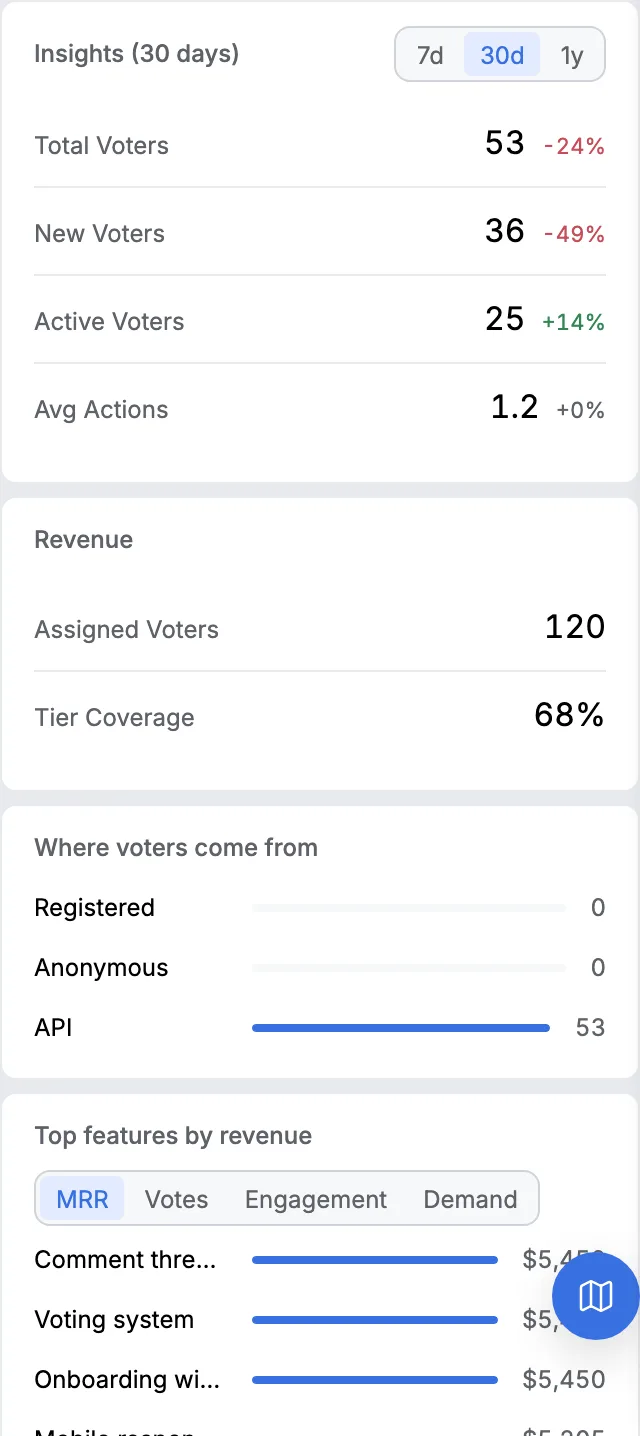
Does Beamer have a free plan?
Yes, and it is a real one. Their pricing page read on 14 September 2026 gives a thousand monthly active users and one teammate at no cost. The ceiling is the audience rather than the feature list, so it runs until the product is being read by more than a thousand people a month.
Does Beamer have a public roadmap, single sign on and an API?
Beamer builds a public or private roadmap out of the feedback it collects. Beamer's own pages say it does single sign on without naming the plan it sits on. The Beamer API sits on the paid side of their split, beside the private ideas and the moderation their free tier leaves out.
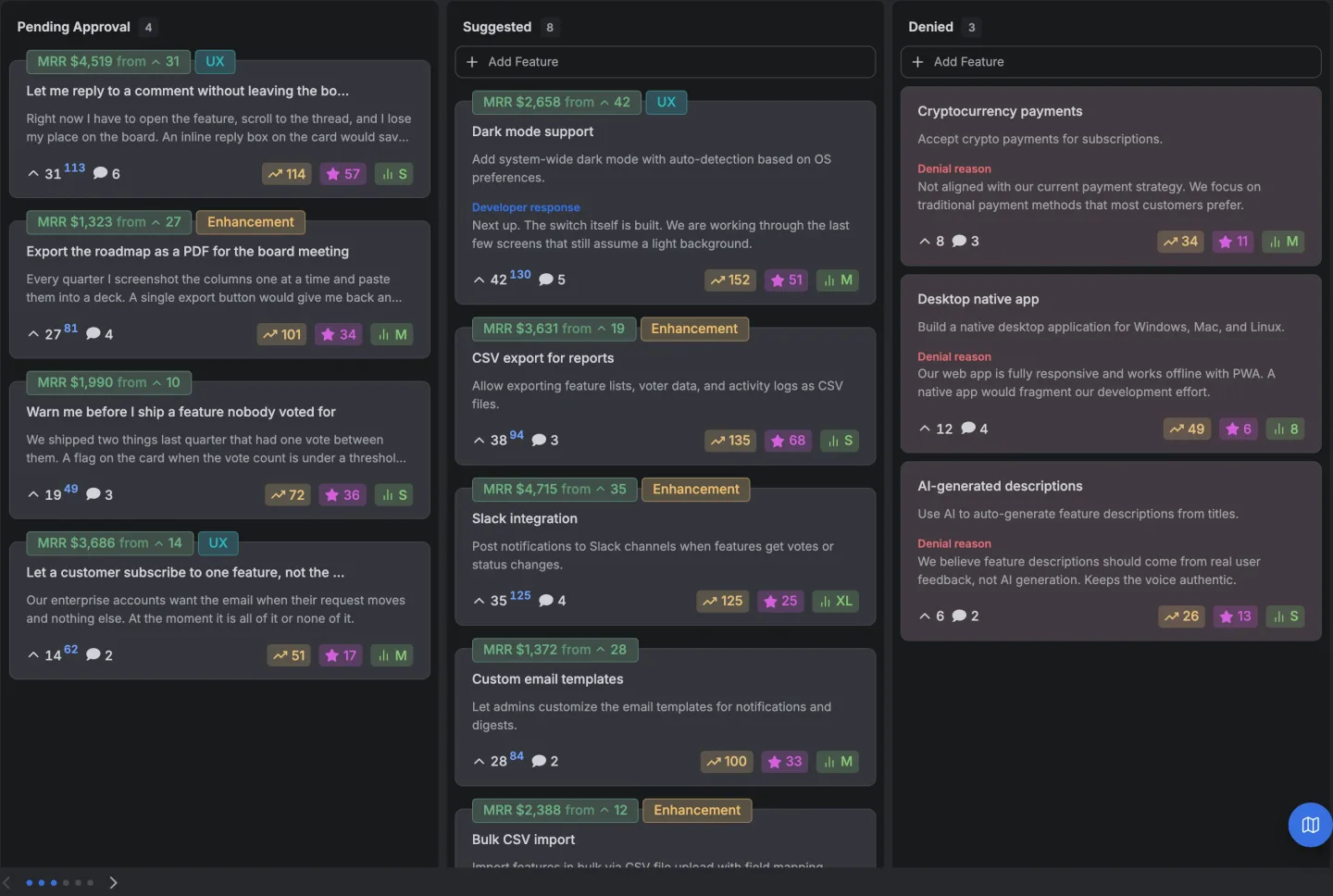
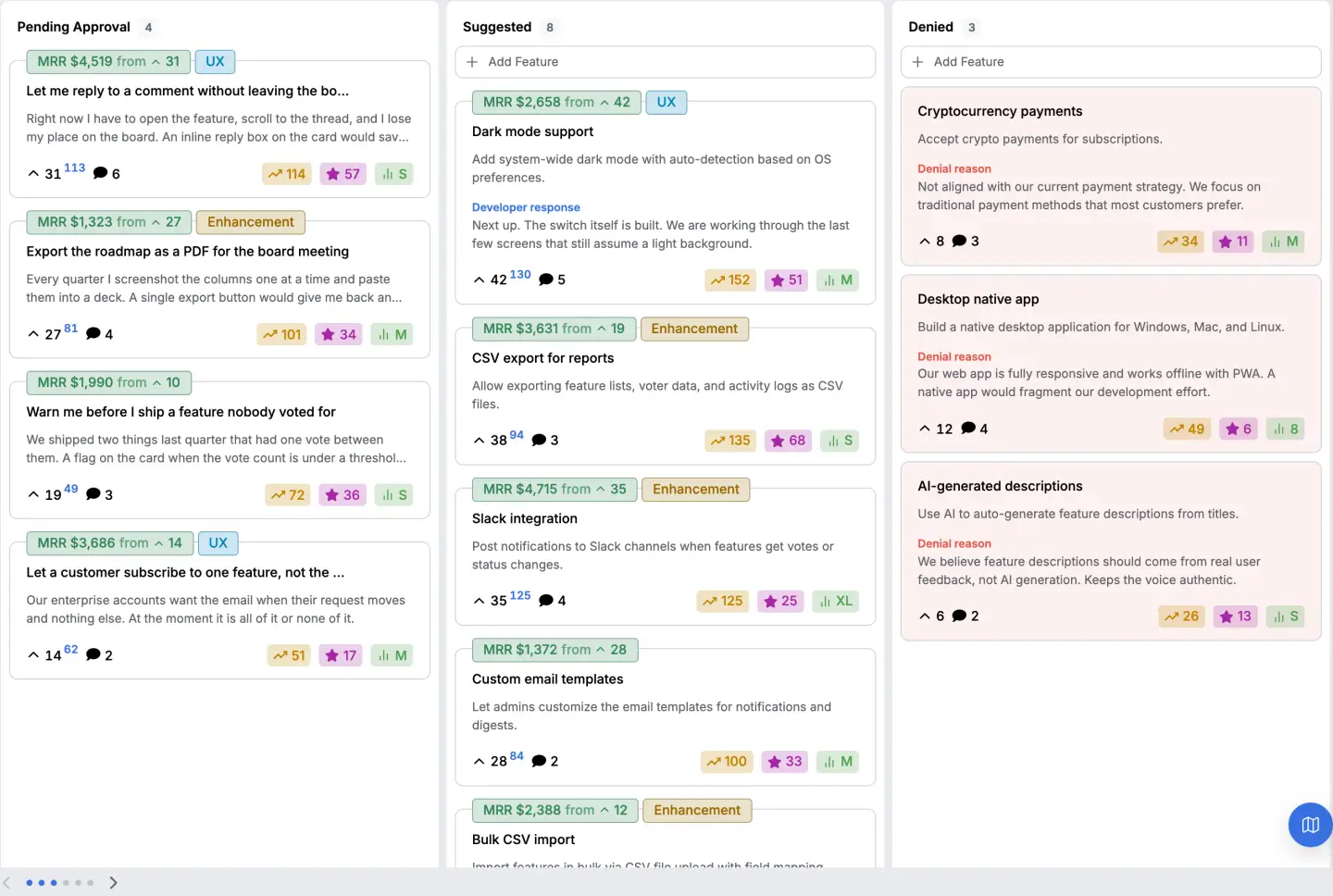
Ours publishes a public roadmap with a Denied column on every plan, and signs a voter in with a token from your own application on the thirty nine dollar plan rather than with SAML.
Is there a free Beamer alternative?
Yes, several, and none of them is Beamer. Headway's free tier carries unlimited changelogs, and Beamer's runs to a thousand monthly active users with one teammate.
Both were read on their own pages on 14 September 2026, and both are announcement tools rather than places customers ask for things. This product is not one of them. There is no free plan here, only a fourteen day trial that asks for a card at signup.
Is Beamer worth it, and when is it the better answer?
Three cases, and the first is most people who search for them.
Your job is announcing releases in app to a big audience. That is what they are for and our changelog widget is a smaller thing.
You want NPS and announcements from one vendor. They sell both. Neither NPS nor announcement boosting is on sale here.
You want a free tier. A thousand monthly active users at zero. We have no free plan at all.
What does ours cost?
Nine dollars a month, and it does not move with how many people open your product.
There is no meter of any kind in our billing, so the bill is the same whether your app has a hundred users or a hundred thousand. Against a monthly active user model that is the entire difference, and it matters most for exactly the products Beamer is aimed at.
That plan is one project, one roadmap and every widget, with weighted voting included, and no API, no custom domain and no team members. Thirty nine dollars adds those. The full table of what every tool bills on is here.
What moving actually involves
More work than a button, and the honest version is short. There is no importer for requests or votes on our side.
Voters and the revenue behind them come in from a CSV or from a billing connection, which is the part the weighting needs. The requests themselves are rebuilt by hand or by a script against the API, and the vote counts start again.
That is a real cost and it is worth naming before anybody moves. The five steps, with the endpoint each one uses, are written out in full, and they are the same five whatever you are leaving.