The headline reads like an entry price for a team and it is not. Gleap's Starter plan carries one seat and one project, so the second colleague and the second product both cost the same thing, a step to a hundred and forty nine.
Everything below was read on Gleap's own pricing page on 14 September 2026. What the second colleague costs, and why there is no rung between the two plans, are worked out separately.
What does Gleap cost?
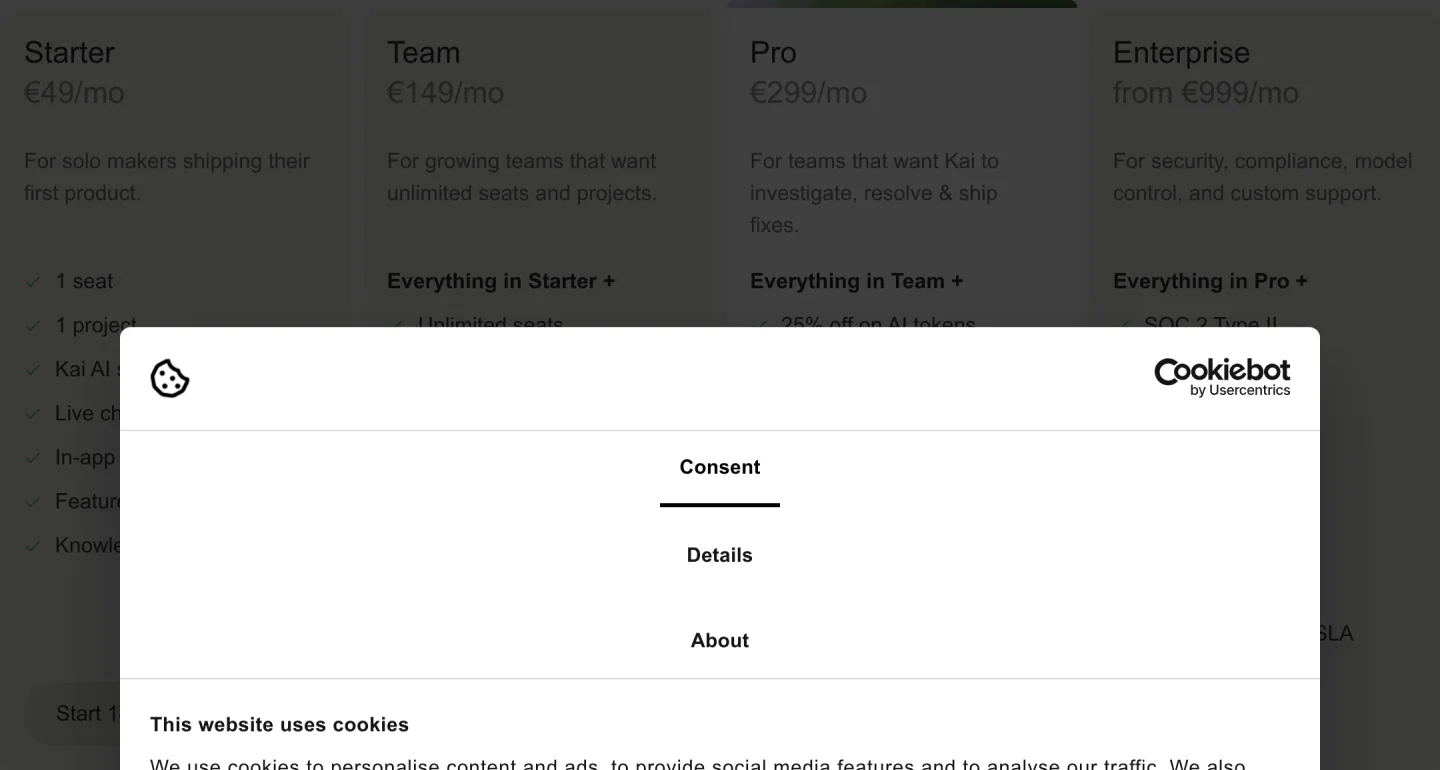
Four plans, billed annually with twenty percent off.
| Plan | Paid yearly | Paid monthly |
|---|---|---|
| Starter | $49/mo | $59/mo |
| Team | $149/mo | $179/mo |
| Pro | $299/mo | $359/mo |
| Enterprise | from $999/mo | Custom |
- Starter adds 1 seat, 1 project, their AI support agent, live chat, in app bug reporting, a feature roadmap and a knowledge base.
- Team adds unlimited seats, unlimited projects, all support channels, custom domains, third party integrations, outbound messaging.
- Pro adds all their AI models, custom agents, and their AI product, code and resolution agents.
- Enterprise adds SOC 2 Type II, HIPAA, single sign on, bring your own key, payment by invoice, a dedicated success manager and an SLA.
The trial is fourteen days on their own page. There is no free plan.
If that arithmetic came out badly, a trial here is 14 days with a card at signup and the bill after it is $9 or $39 a month.
What is the step from Starter to Team?
Three times the price, and the two things that trigger it are the two most ordinary things a company does.
A second person who needs to log in takes you there. So does a second product. Starter is one seat and one project and Team is unlimited on both, with no per seat rate published in between, so there is no gentle middle. Forty nine becomes a hundred and forty nine.
Team is also where custom domains, third party integrations and outbound messaging arrive. That makes the hundred and forty nine easier to justify once you are there, and it makes the forty nine a genuinely solo plan rather than a small team one.
Is Gleap a feedback board?
It has one, and it is not what the product is.
Gleap is a customer support and bug reporting suite. Live chat, in app bug reports with session replay, a knowledge base, surveys, workflows, in app banners and an AI agent that answers and resolves.
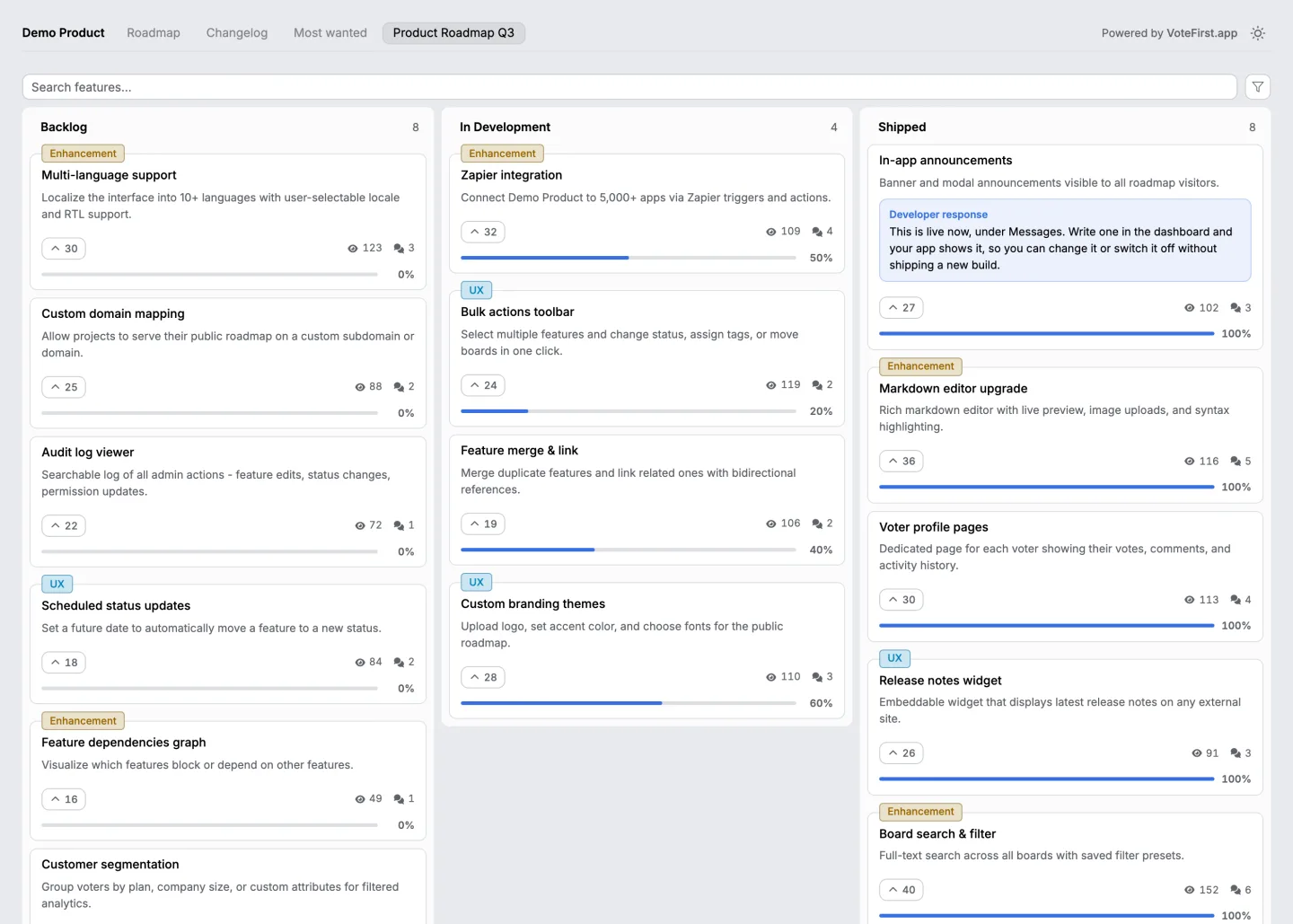
Gleap's public roadmap and its news and changelog modules sit inside that, and the roadmap is one row on a long list.
That is a real difference in kind. If your problem is that support conversations, bug reports and feature requests all arrive in different places and nobody joins them up, a suite is the right answer and this product is not a suite.
If your problem is deciding what to build next, most of what you would be paying for is not that.
Does Gleap weight votes by revenue?
Nothing on the pages we read on 14 September 2026 mentions weighting a vote by what the voter pays.
That is an absence on their published pages rather than proof about their software.
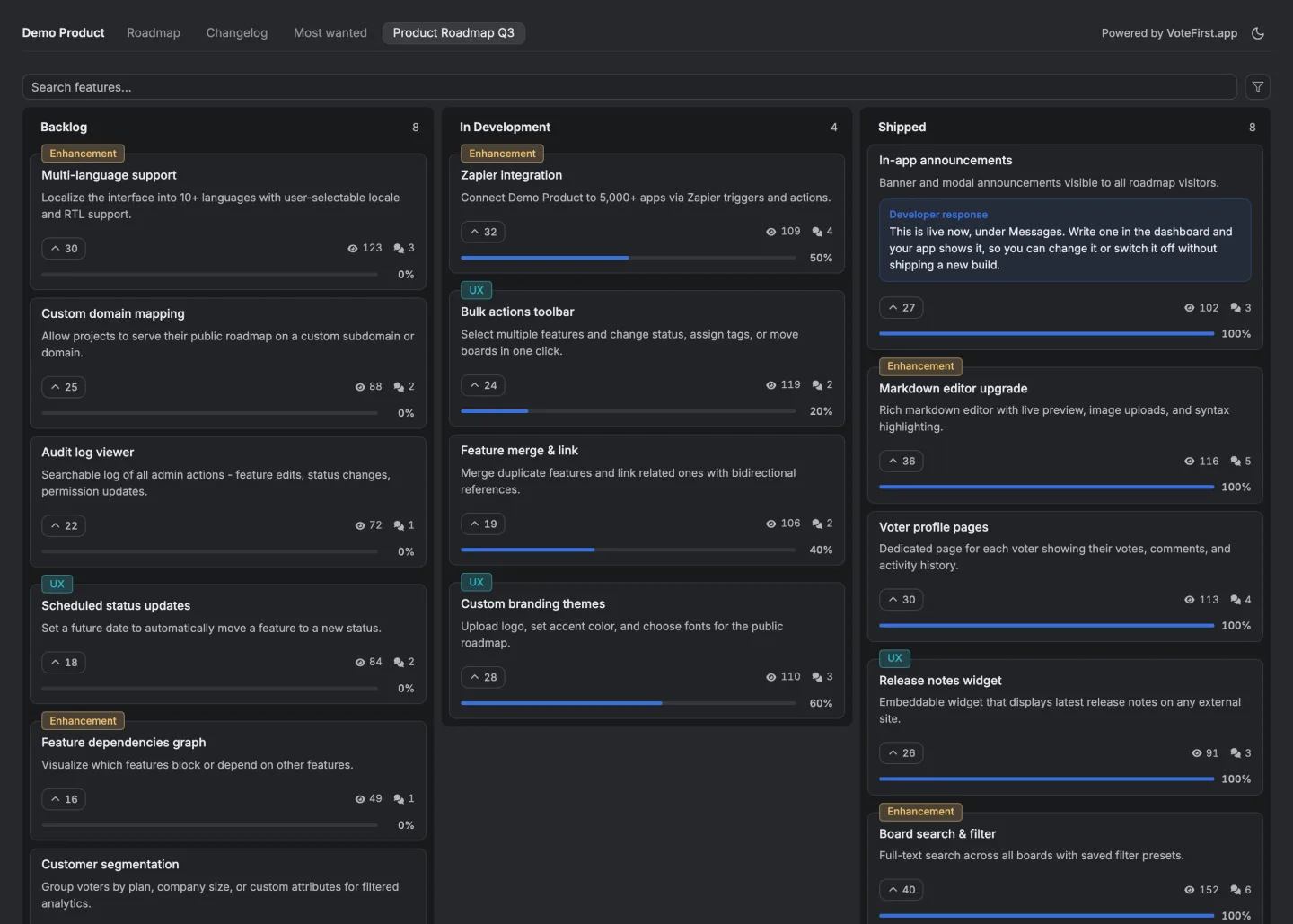
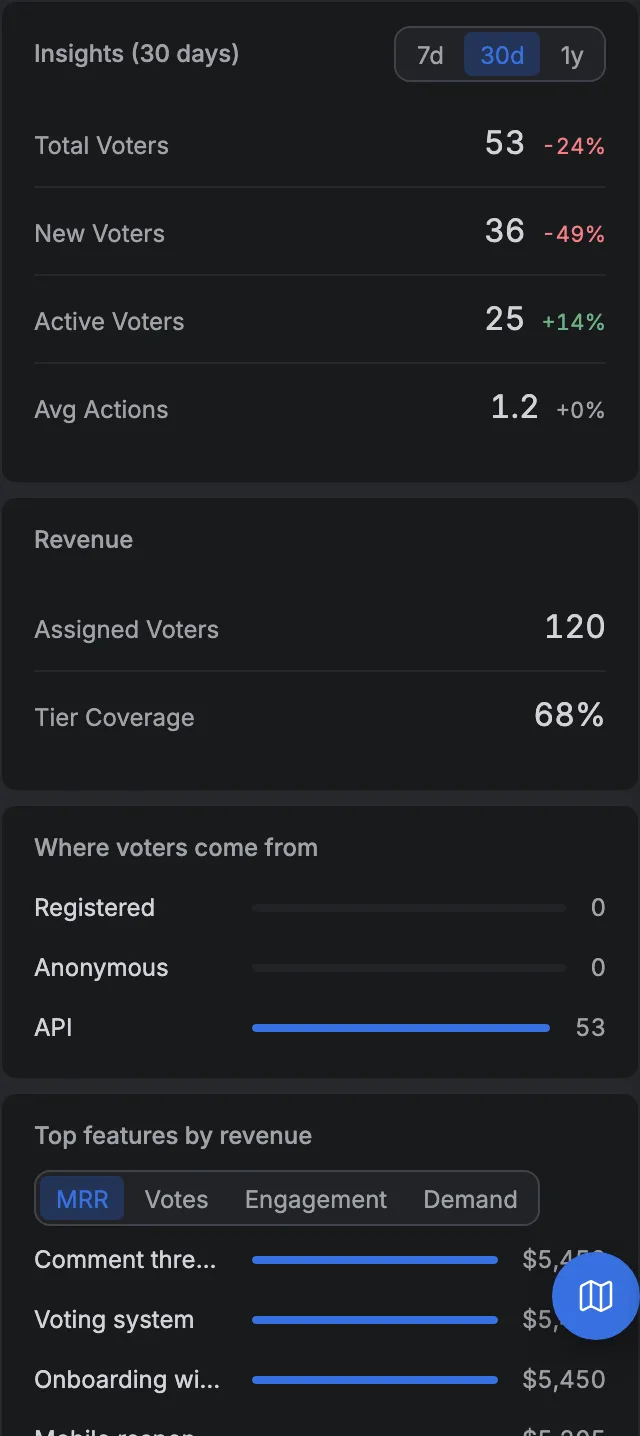
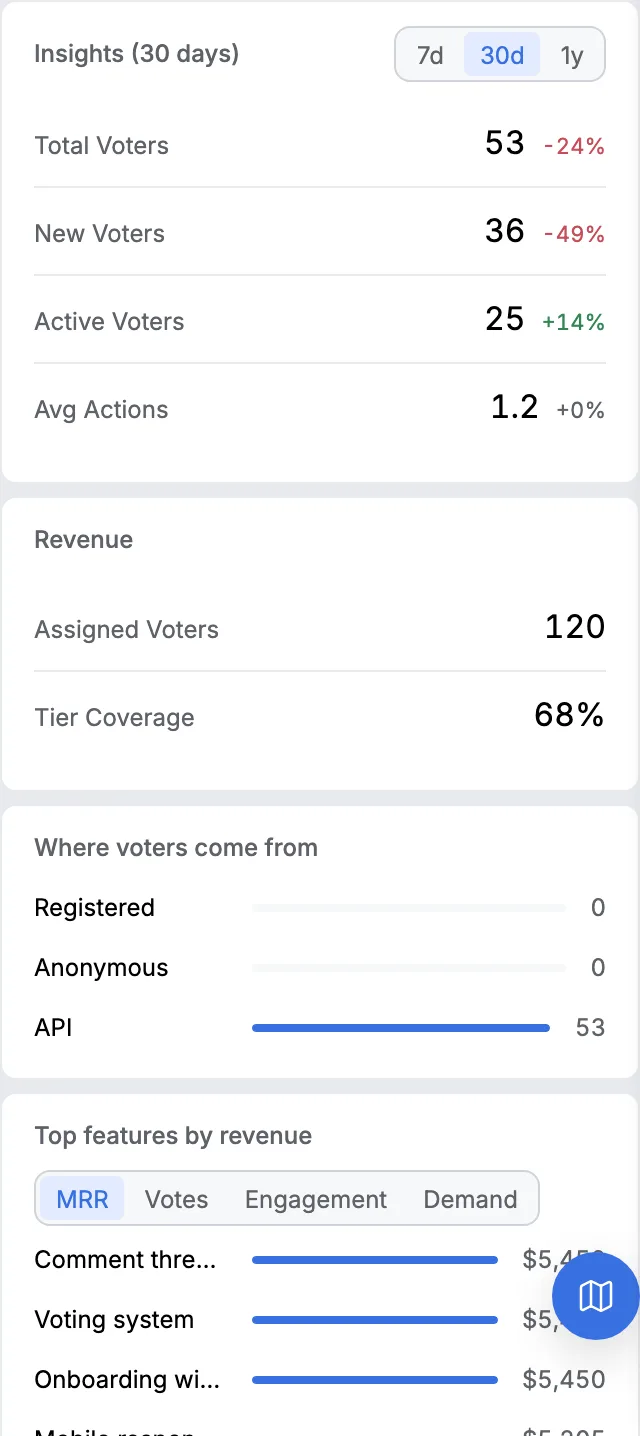
Ours puts each voter in a tier with a whole number multiplier, writes the weight onto the vote when it is cast, and keeps the plain count beside the weighted total. The mechanism is here.
Does Gleap have a public roadmap, single sign on and an API?
Gleap carries a public roadmap the feature requests feed. Gleap puts single sign on on Enterprise, which starts at nine hundred and ninety nine dollars a month. Gleap opens its API on Team, the hundred and forty nine dollar plan.
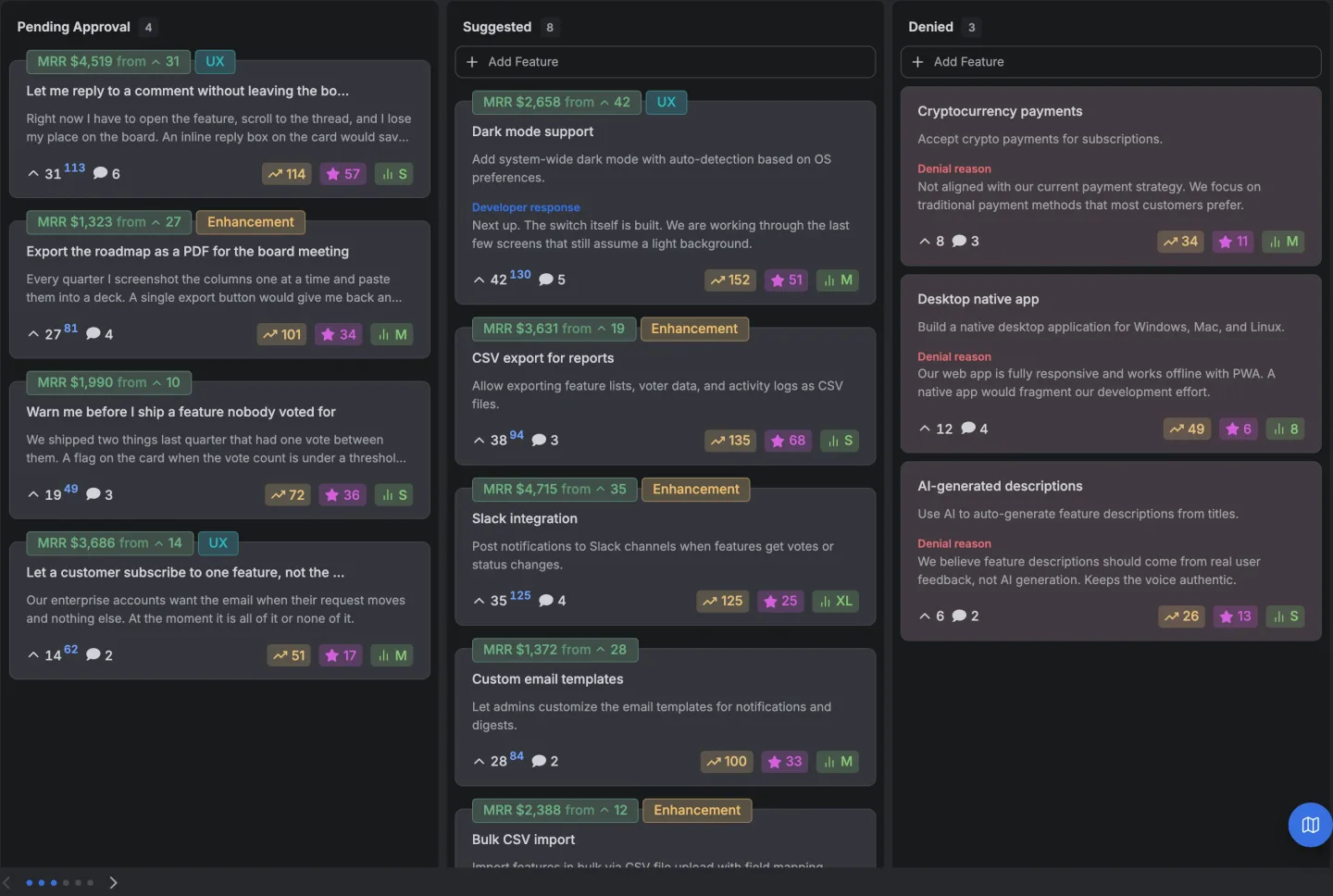
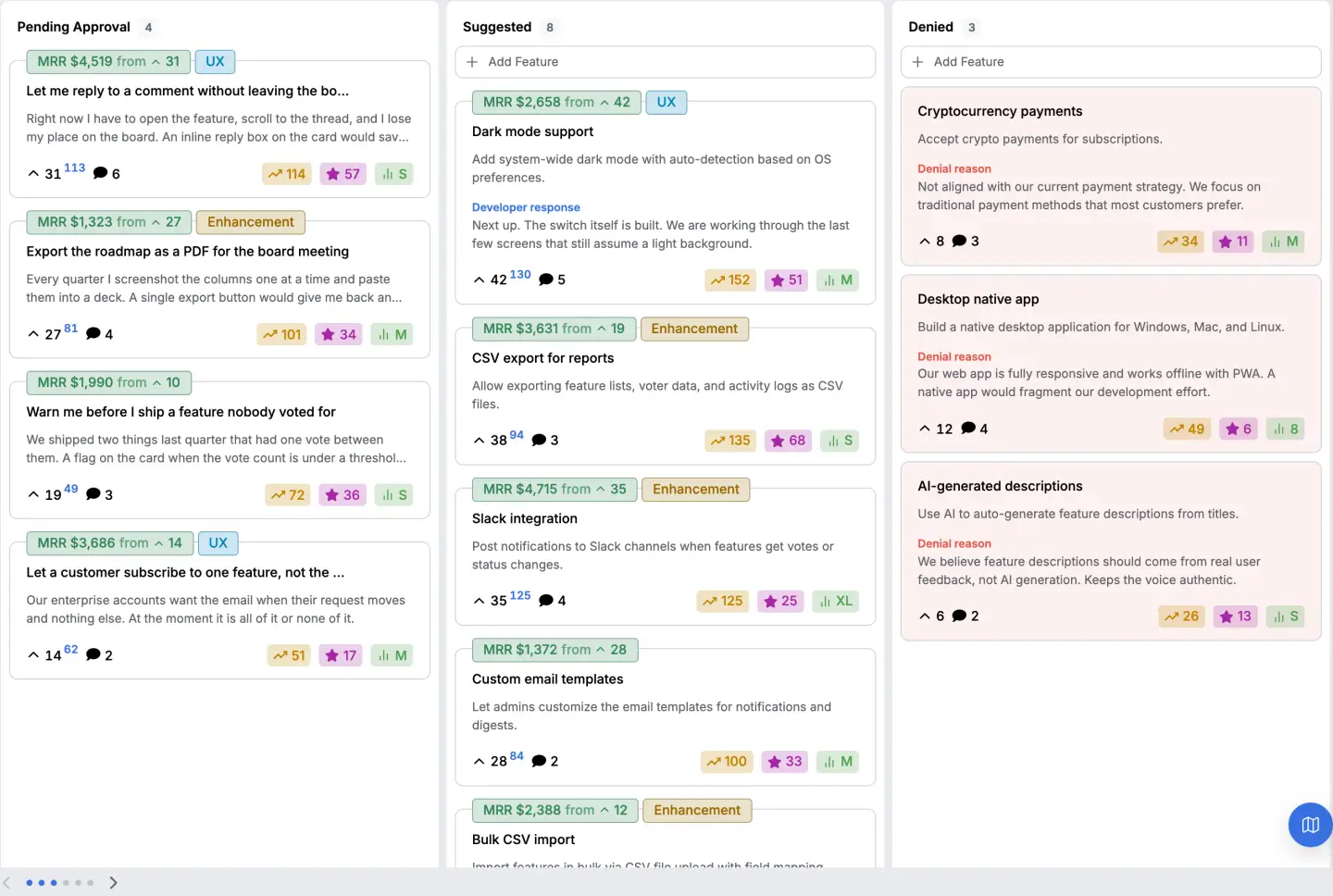
Ours publishes a public roadmap with a Denied column on every plan, and signs a voter in with a token from your own application on the thirty nine dollar plan rather than with SAML.
Is there a free Gleap alternative?
Not from us, and the honest answer names the ones there are.
This product has no free plan at any point, so if free is the requirement then stop reading here and go to the whole field's table.
Fourteen of the thirty two tools we read on 14 September 2026 publish one, and the ones whose cap sits on your side of the board rather than on the people using it are Sleekplan, UserJot, Supahub, Featurebase and Jira Product Discovery.
WishKit caps what you can see rather than what you collect, and Fider caps the board at two hundred and fifty feedback items.
None of those is a support suite. If what you wanted from Gleap was the live chat, the bug reporting with the session attached and the AI agent, no free tool in this category replaces it, and the nearest honest answer is that you are shopping in the wrong category rather than at the wrong price.
Is Gleap worth it, and when is it the better answer?
Support and product are the same team. One inbox, one knowledge base, one roadmap and one bill.
You want bug reports with the session attached. In app reporting that captures what the user did is a genuinely hard thing to build and they have built it.
You want AI answering first. Their whole product line is built around that and this one ships no AI features at all.
When is ours?
You already have support tooling. Then a suite is a second one, and the roadmap inside it is the only part you wanted.
Two people need to log in. Ours is thirty nine for a team with no seat count. Theirs is a hundred and forty nine.
The vote should carry the money. That is the whole of why this product exists.
What does ours cost?
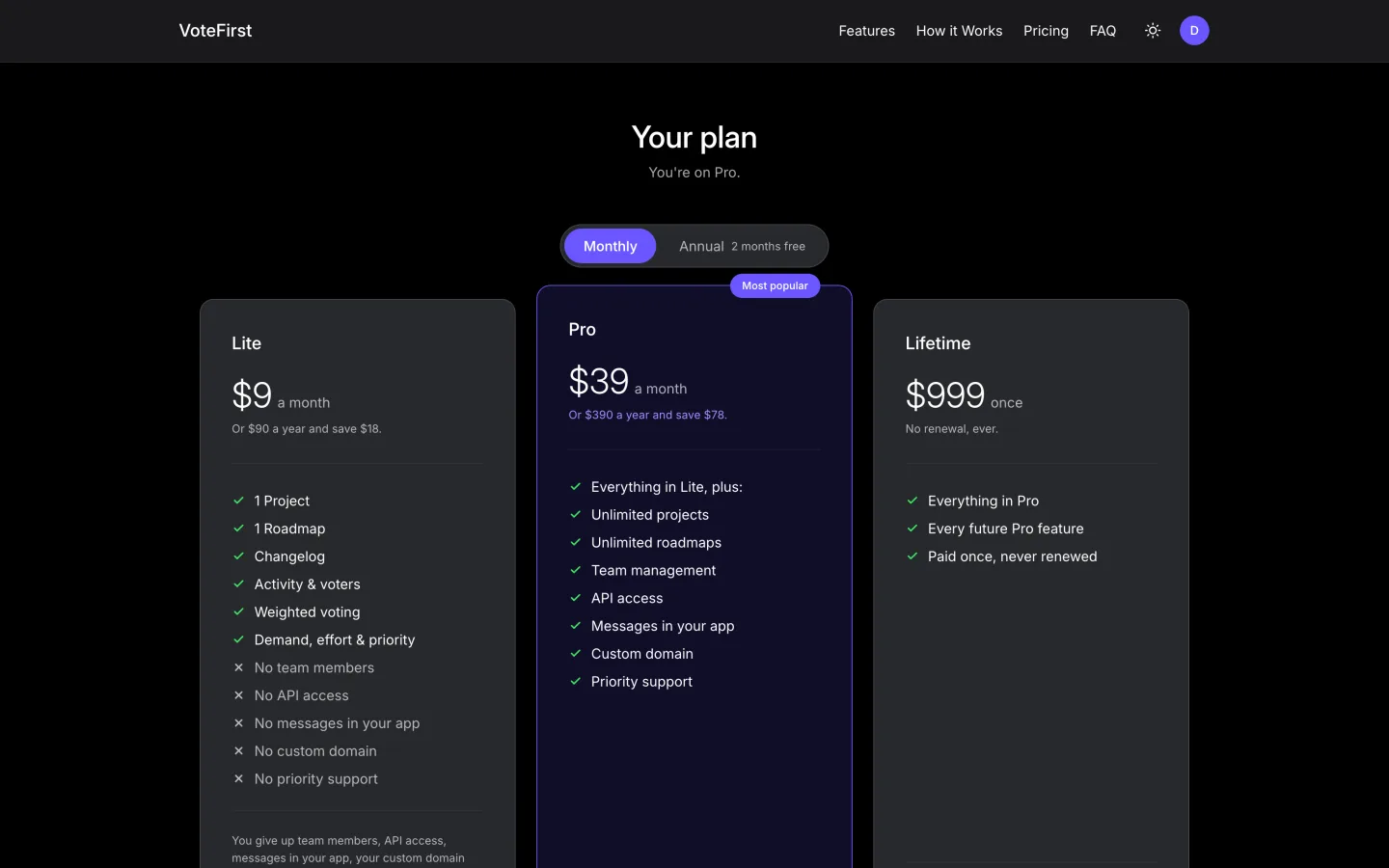
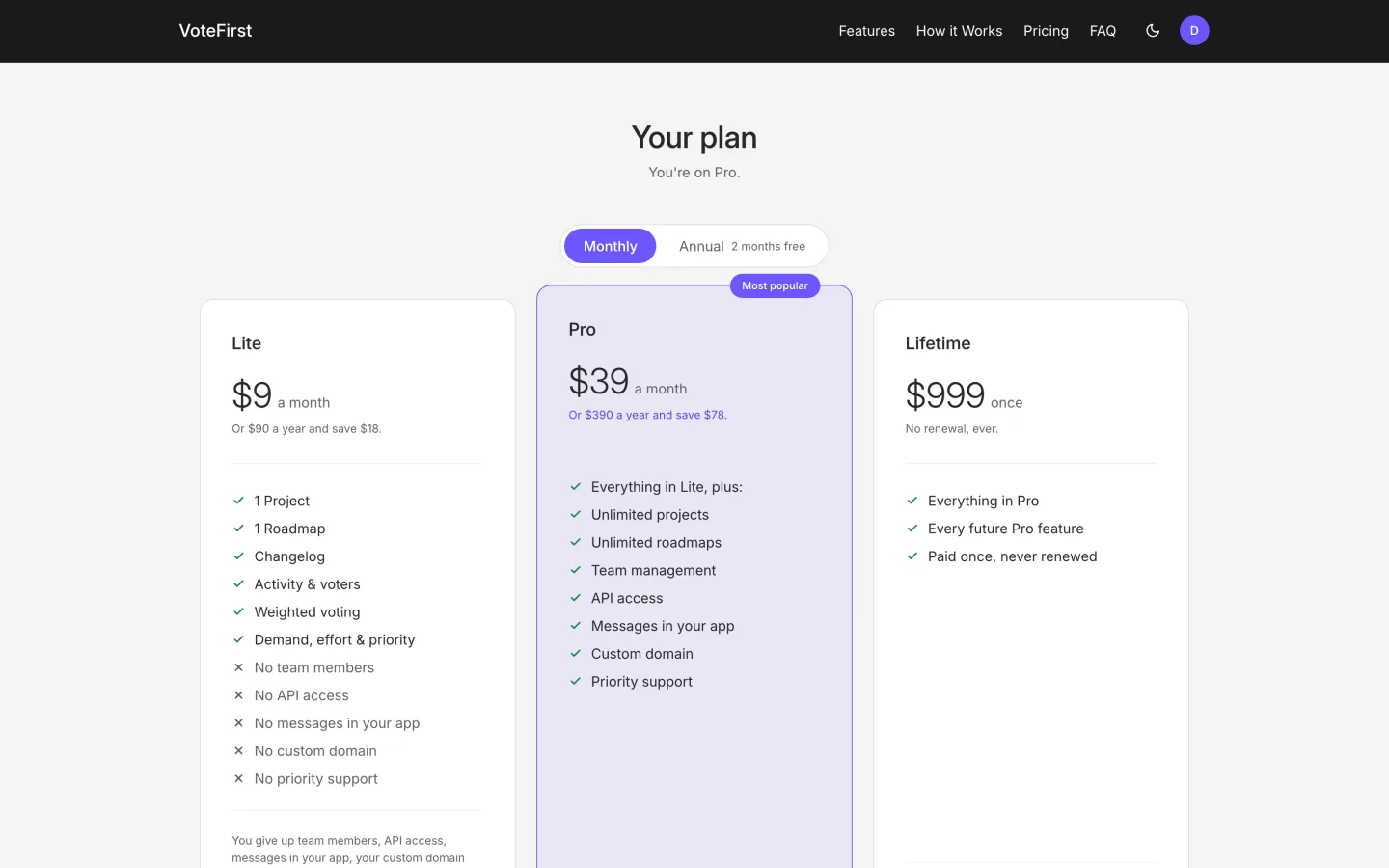
Nine dollars a month for one project, thirty nine for unlimited projects, a team, the API and a custom domain.
Against Starter we are forty dollars a month cheaper and they give you live chat, bug reporting and a knowledge base we do not have at any price. Against Team we are a hundred and ten cheaper and the gap is the rest of the suite.
The honest summary is that these products overlap on one module out of eight. The whole field's prices and units are on one page.