The short version
- Six systems end to end, with where each one leaks.
- The first leak is the one that kills the system: nobody is told what happened.
- The first three shapes need no software at all, only discipline.
- Post, approve, vote, move, tell. That's the whole sequence.
The six feedback system examples below have one thing in common, which is that none of them is a form. It's everything that happens between somebody typing a sentence and that person finding out what came of it, and the part that breaks is almost never the form.
The six below are described end to end, because the end is where they differ. Every one of them collects. Only two of them close.
What is customer feedback software?
Software that does three jobs. It collects what people say, it keeps the same thing from being counted twice, and it tells the people who said it what happened.
That third job is the one that separates the category from a form builder or a shared inbox. Anything can collect. Very little closes the loop, and closing the loop is what keeps the collecting worth doing, because a channel that never answers anybody dries up within a quarter.
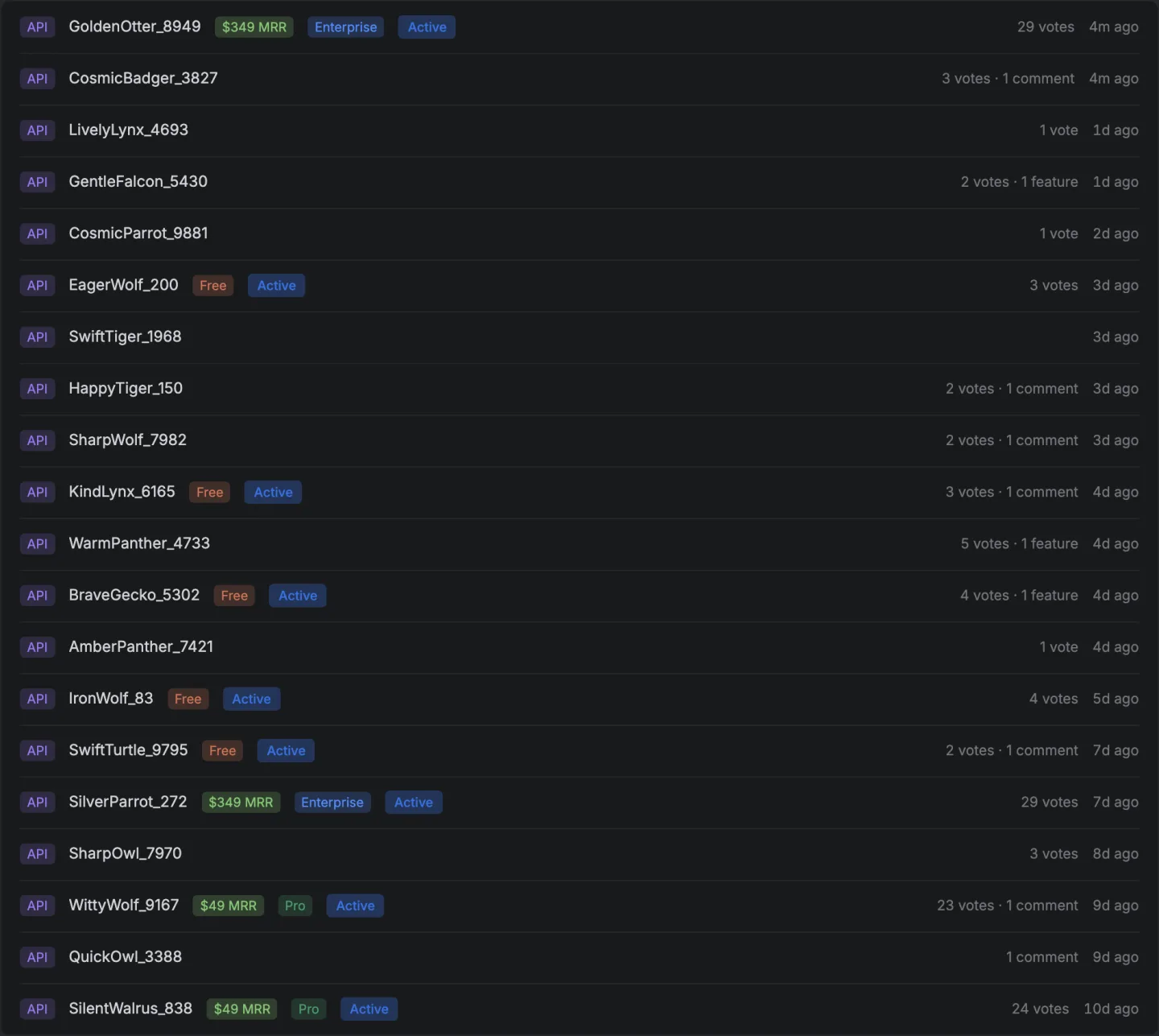
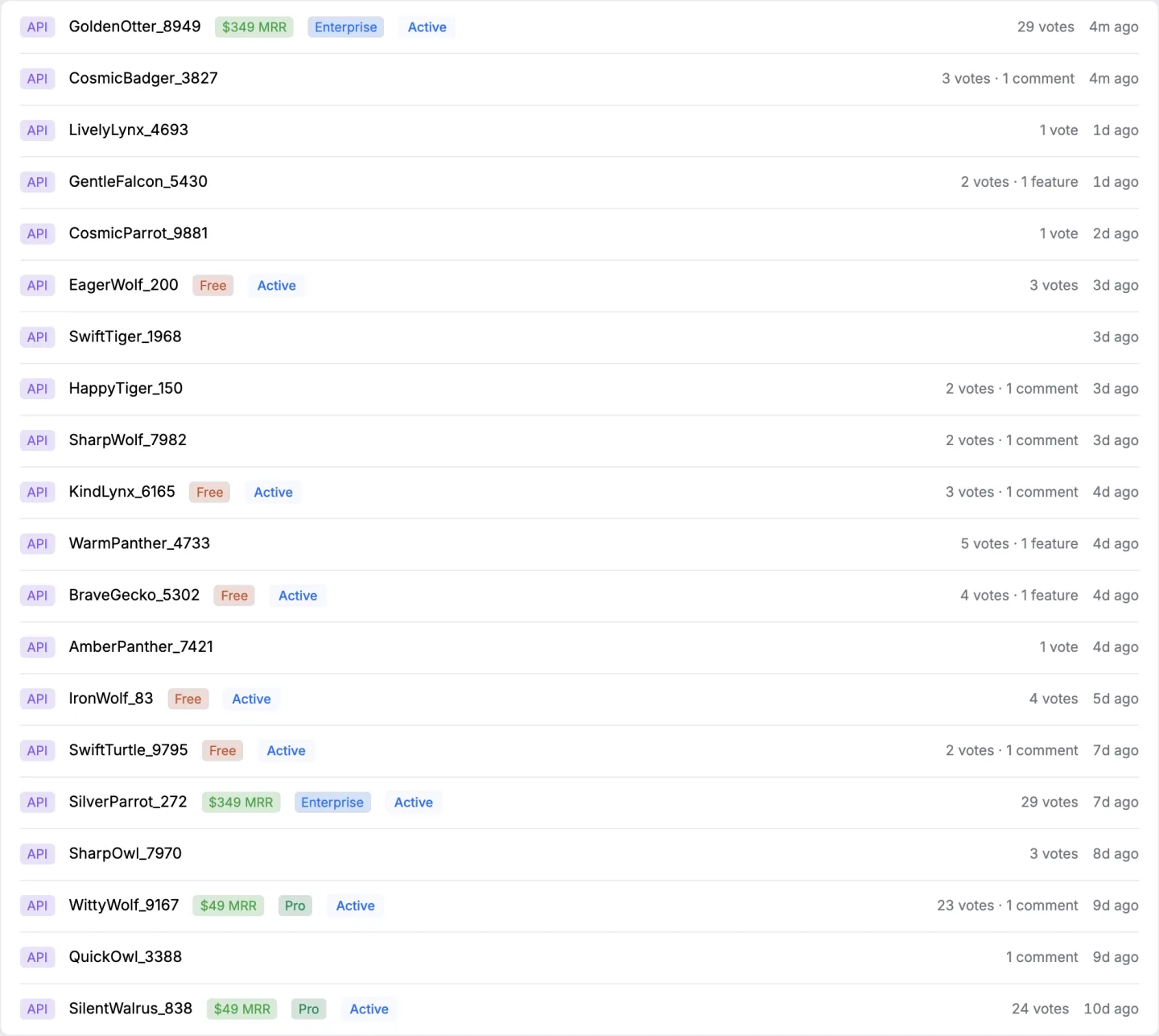
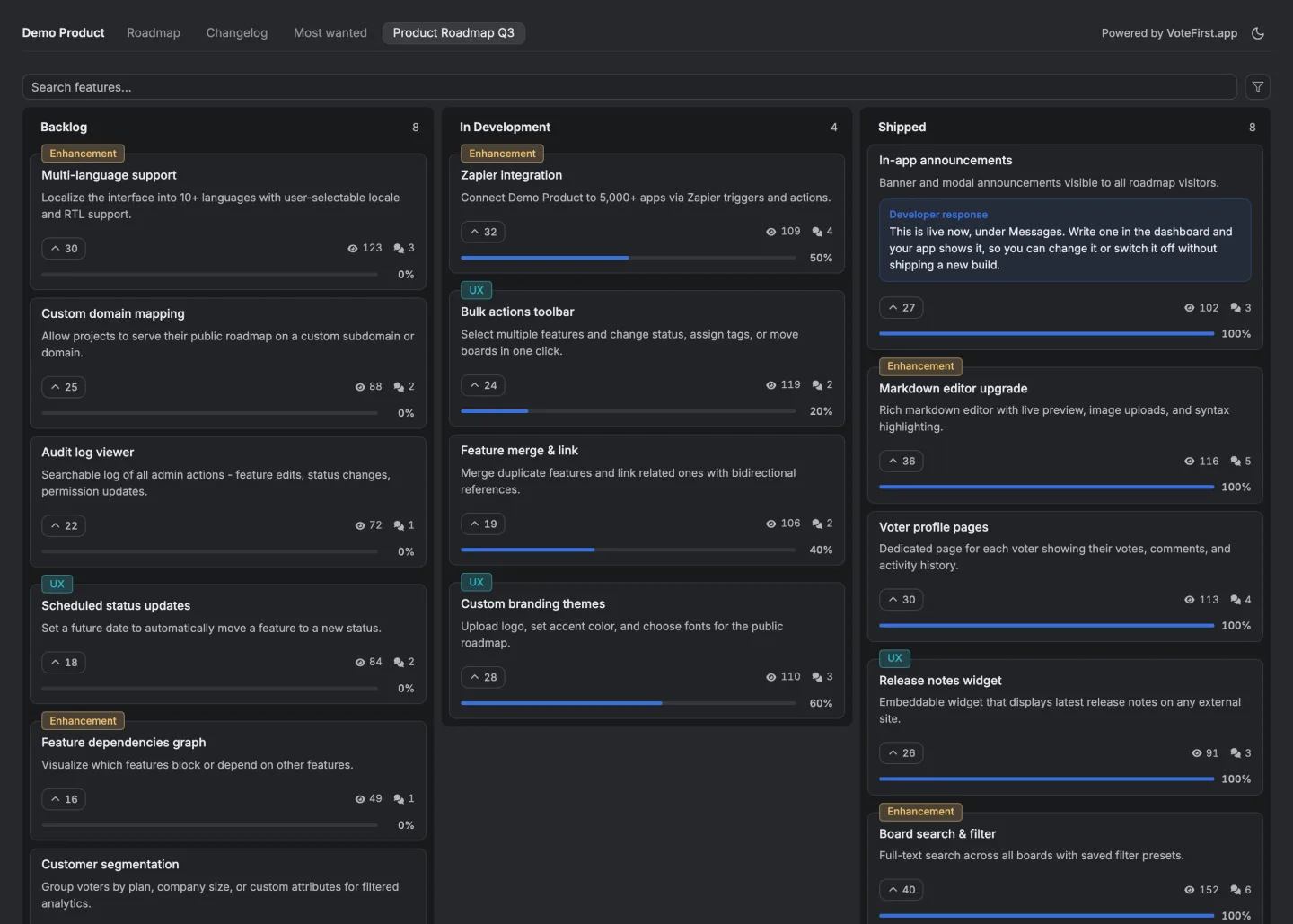
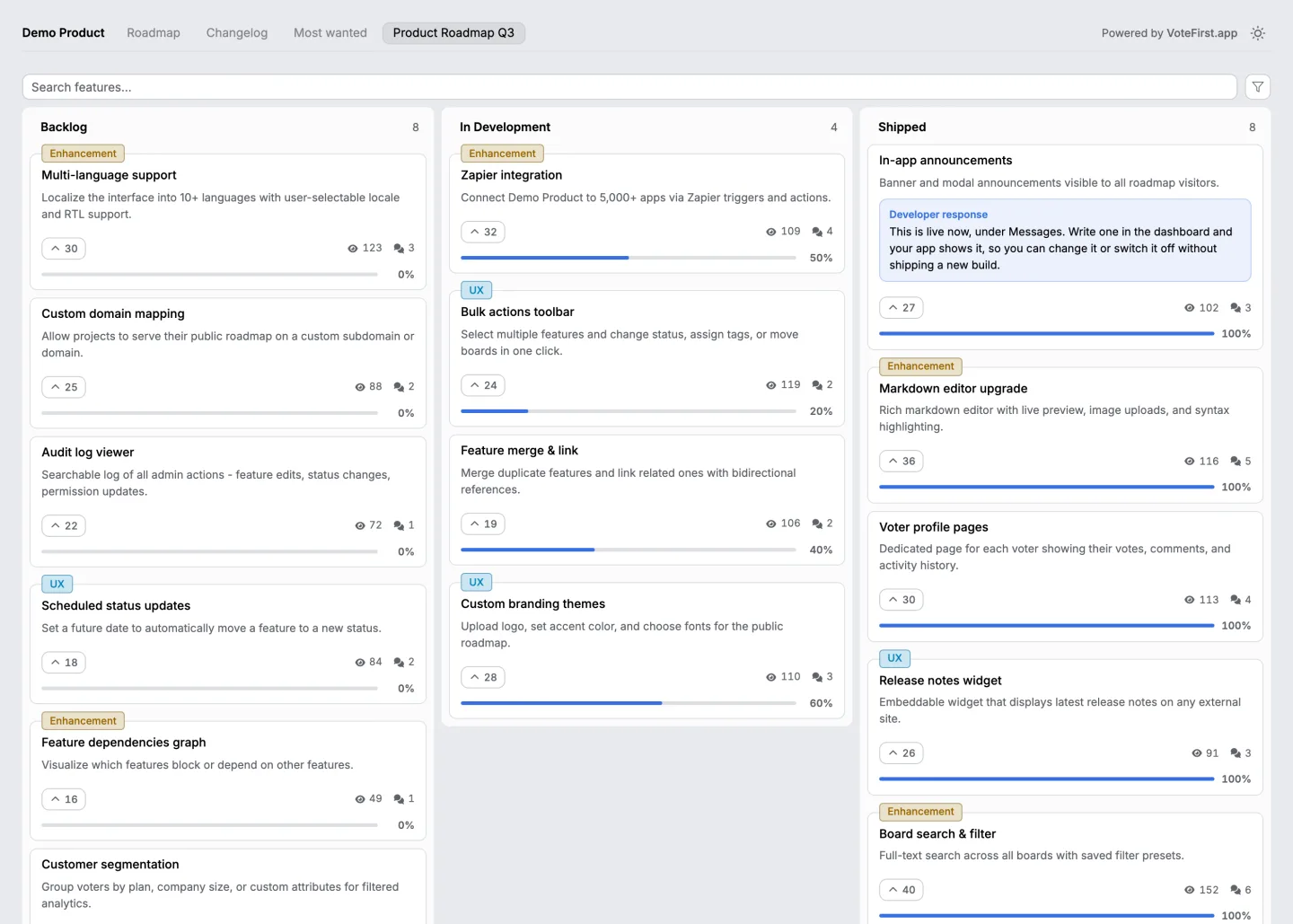
There's a board doing all three open without an account if you would rather see one than read about the category.
Want the counting done for you? Twenty eight feedback tools, the price and the unit each one bills on, read on one day.
The six, end to end
| The system | The path a message takes | What it costs to run | Where it leaks | |
|---|---|---|---|---|
| 1 | A shared inbox | Customer writes, somebody replies, the thread closes | Nothing new. It already exists | Nothing is counted. The tenth person to ask gets the same answer as the first and nobody knows it was the tenth |
| 2 | A form into a spreadsheet | Form, row, weekly read | An hour a week and a form | Nobody ever hears back. The row has no address attached to it |
| 3 | A tracker ticket per request | Support raises a ticket, it enters the backlog | The triage meeting | Customers cannot see it, so support is asked for updates forever |
| 4 | A public board | Customer posts, others vote, a status changes, voters are told | Moderation, about ten minutes a day | Only reaches the people who turn up. The ones who cancel silently never post |
| 5 | A board plus support filing on behalf | Support files what they hear, the customer's name on the card | The same moderation, plus a habit | Needs somebody to own the habit or it decays in a month |
| 6 | A board plus a cancellation question | Everything above, plus one question asked when somebody leaves | Ten minutes a week reading the answers | Arrives too late to act on for that customer, and is still the best material any of the six produces |
Rows one to three collect without closing, and they're what most companies have. Rows four to six close, and the cost difference between them and the others is smaller than it looks. It's a habit, not a budget.
A system you can stand up this week
Row four, with two settings and one habit.
The two settings are that anybody may post, and that nothing appears publicly until somebody approves it. An open front door with a moderator behind it. Requiring an account produces an empty board. Publishing everything instantly produces forty versions of the same request, each with a count of one.
The habit is that every card which moves tells the people who voted for it. That's the whole loop, and it's the reason the board still has posts on it in month six.
Monday        read the new posts, approve, merge duplicates
Wednesday     move anything that shipped to done
Friday        one line on anything that will not be built, with the reason
Fifteen minutes, three times a week. A system that needs more than that won't survive a busy month, and a feedback system that dies in a busy month was never a system.
Where does each of the six leak?
Four leaks, and the first is the one that kills the system.
Nobody hears back. People file once, hear nothing, and never file again. The channel looks alive because posts arrive, and it's actually running on a shrinking pool of people who haven't yet learned that posting does nothing.
The same want is counted many times. Without moderation the request forty people want arrives under forty titles. The board is then actively misreporting demand, which is worse than not counting at all.
The system only hears from people who turn up. Thirty six public feedback boards belonging to real companies were read on 27 August 2026, and on the median one the median request on page one had nine votes. A board is a sample of the loudest slice of your audience, and it's a small sample. The measurement, with everything it can't tell you, is here.
Old things stay at the top. On twenty six of those thirty six boards, page one still carried a request from 2021 or earlier. A visitor reads that as an answer about whether posting works.
Can you run a feedback system without software?
The first three rows of the table need nothing but discipline, and for a small customer base they're genuinely enough.
One shared address, one spreadsheet, one weekly hour. Rows for the situation, not the request, a column for who said it, a column for what you told them and when. That last column is the one nobody keeps, and it's the entire difference between a system and a pile.
Two things a spreadsheet can't do. It can't stop one person counting as ten, and it can't tell forty people at once that the thing they asked for shipped. Those two are what the software in this category exists for, and everything else it does you could do by hand.
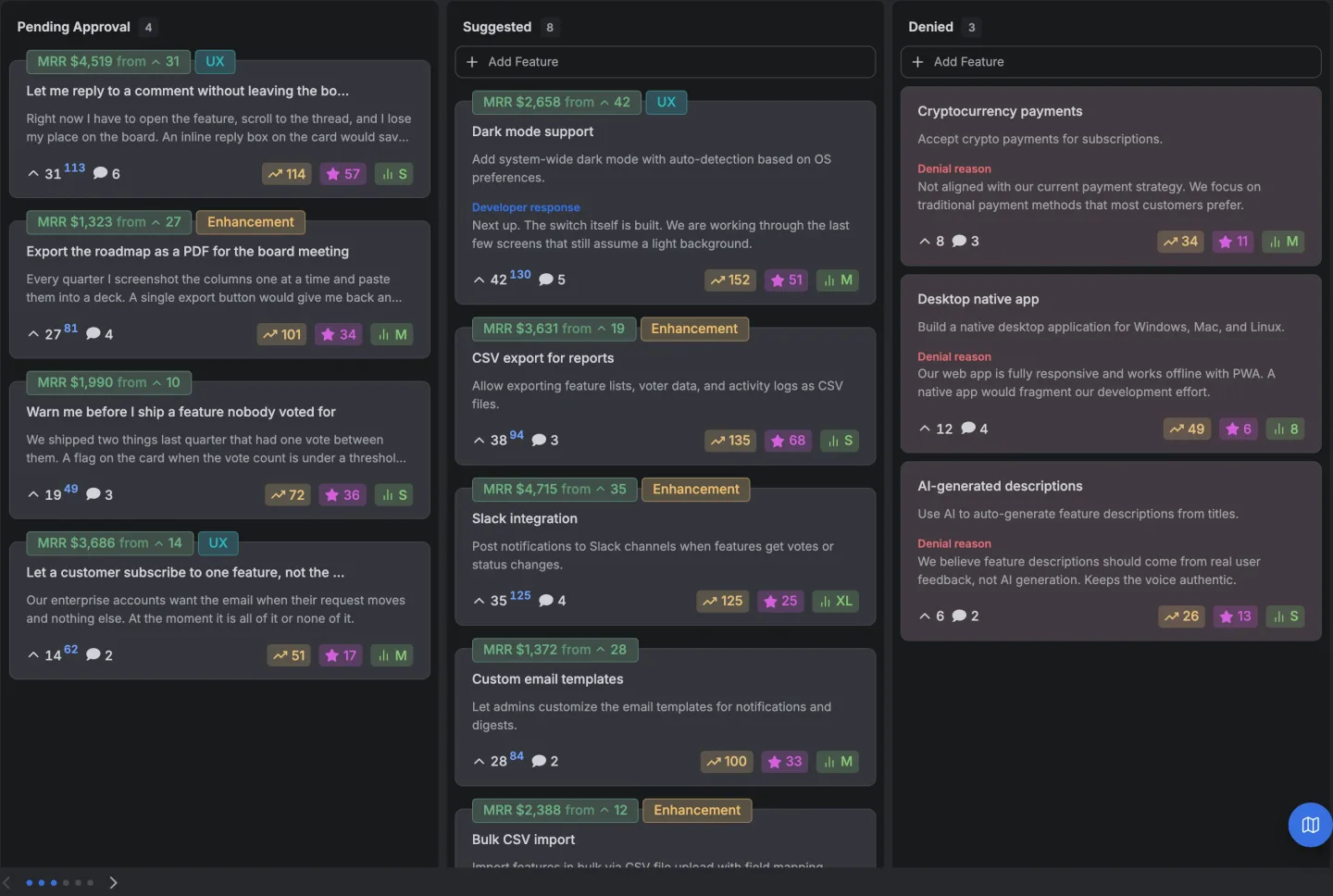
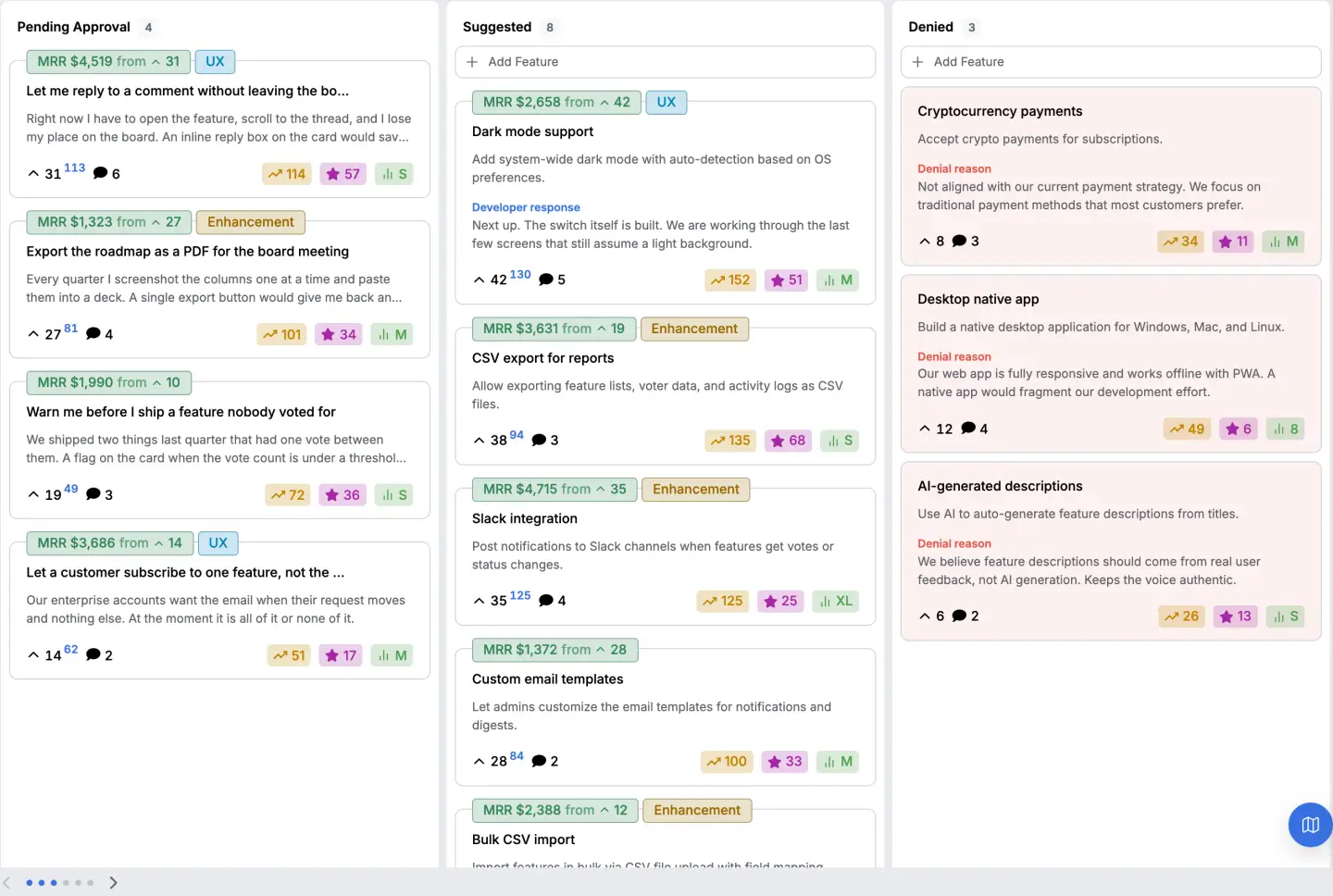
How our own system runs end to end
Post, approve, vote, move, tell. Five steps, and the last one is automatic.
Nothing a visitor writes appears publicly until somebody approves it, so duplicates are merged before they split a count rather than after. Each card carries a plain vote count and a weighted total beside it.
The voters themselves are a list, not a number, and each of them can be put in a tier whose votes weigh more.
That list is what makes the closing automatic, not a chore. When a request moves to done, the people on it are the people who get told, and nobody has to keep a record of who asked for what.
Everything that happened to the board is on one timeline, which is the part row five of the table needs if support is going to file on behalf of customers.
The honest limit is row four's limit and no feature removes it. A board hears from people who turn up, and the people who cancel quietly aren't among them.
That's why row six exists and why the cancellation question is worth more than anything else on this page. How the board is wired is written up here, and what arrives through a mobile app and where it lands has its own page.
14 days, a card at signup, then $9 or $39 a month.