The short version
- Several forms with every field shown, and what each field costs you in answers.
- Ask as little as possible, plus one thing that's not obvious: what were you trying to do.
- Four things go wrong, in order of how much they cost.
- A board counts, and it answers everybody at once. A form does neither.
The six website feedback form examples below are each a trade. Every field you add gets you better data from fewer people, and most forms are built as though only the first half of that sentence were true.
The six below are written out field by field, in order, with what each is optimised for. They're written for this post, not copied off anybody's site.
What should a feedback form ask?
As little as possible, and one thing that's not obvious, which is what the person was trying to do.
Every form asks what went wrong. Almost none asks what the person was attempting, and that single field is the difference between a message you can investigate and a message you can only agree with. It's the cheapest improvement available to any form on this page.
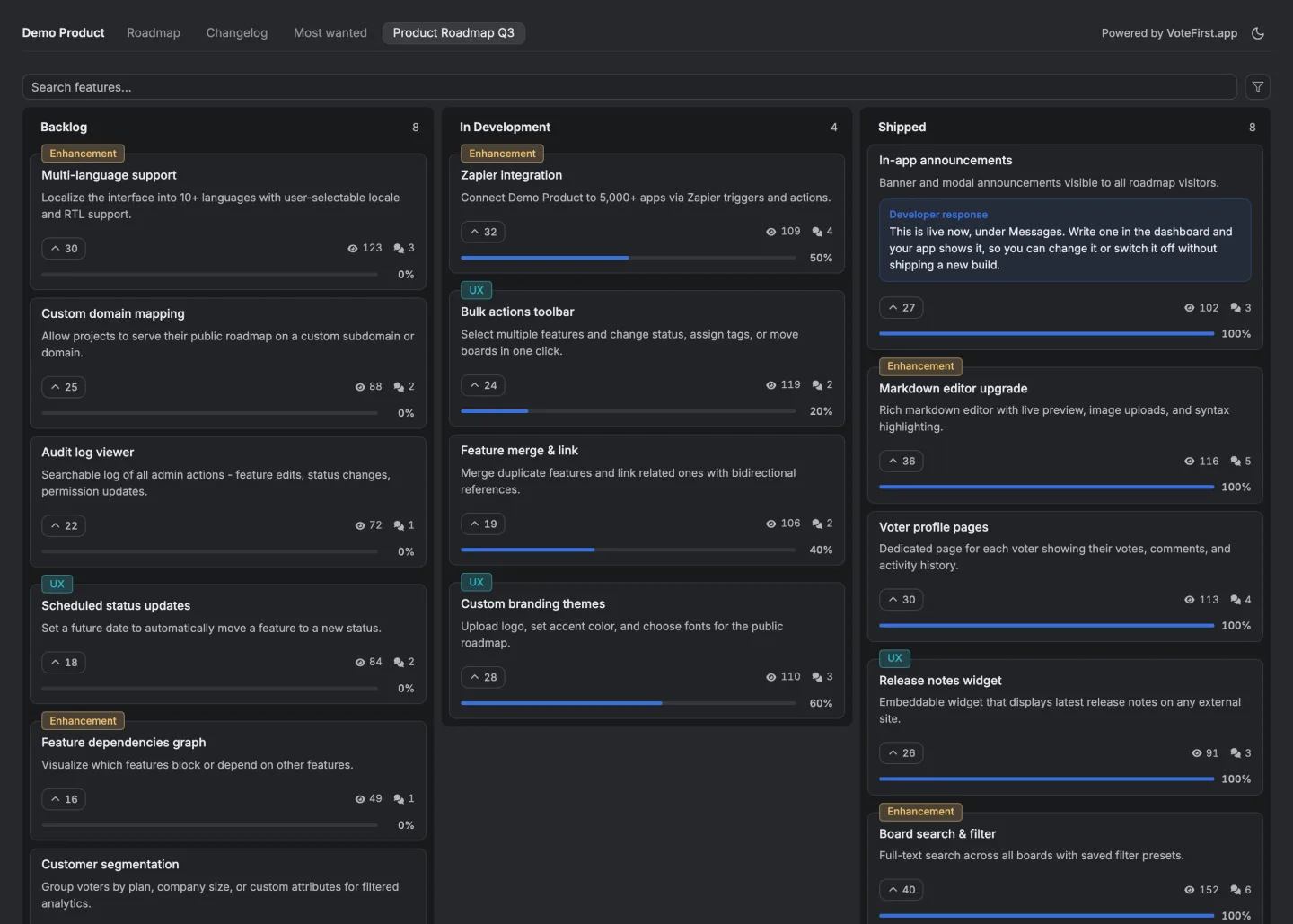
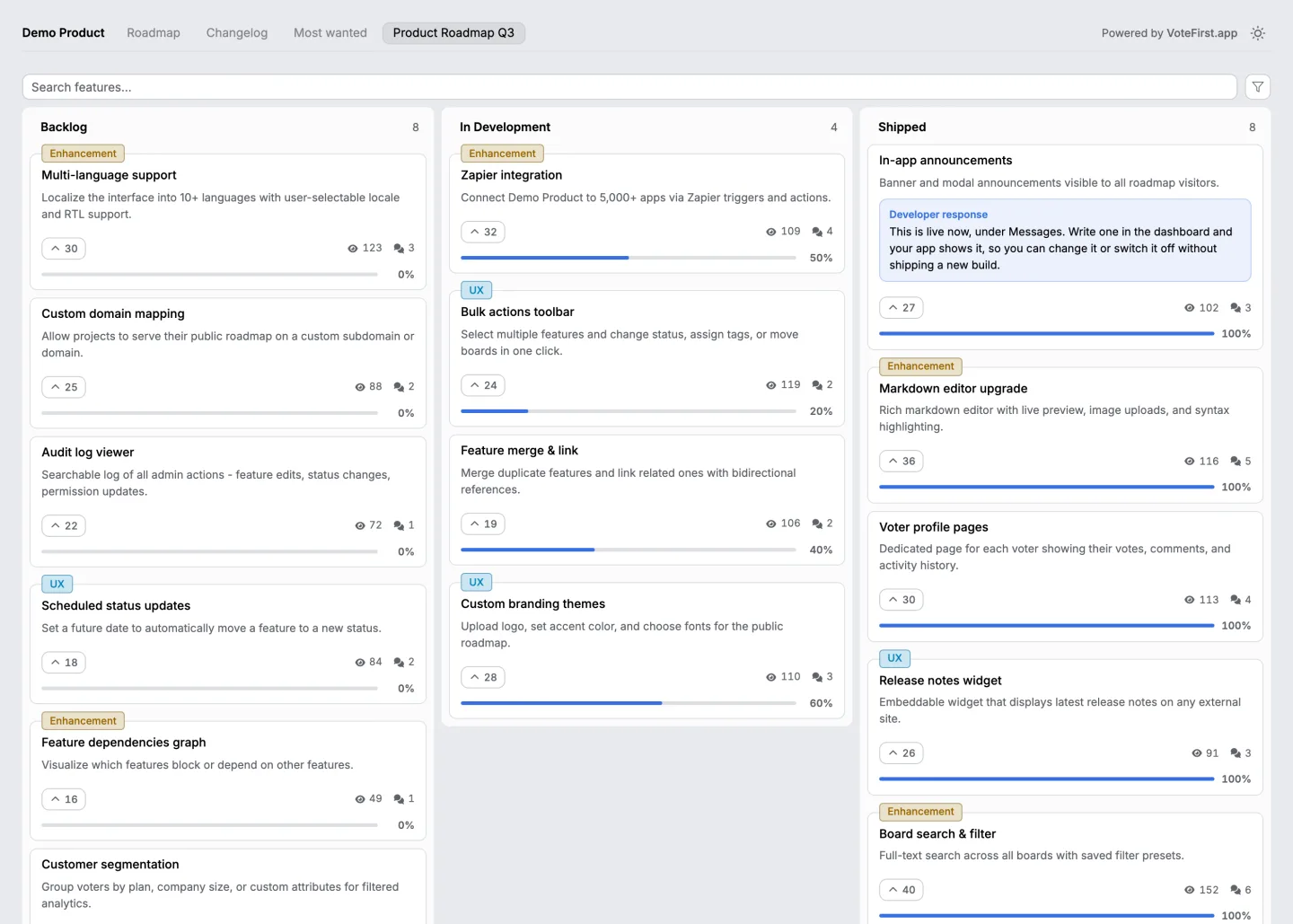
There's a form on a live board you can type into without an account.
Want the form to feed a board people can vote on? Twenty eight feedback tools, the price and the unit each one bills on, read on one day.
The six forms, field by field
| The form | The fields, in order | Optimised for | What it gives up | |
|---|---|---|---|---|
| 1 | The one box | A single text box, and a send button | The highest number of submissions of any form here | Every message needs a follow up question before it can be acted on |
| 2 | The two box | What were you trying to do, what happened | Actionable messages, at a small cost in volume | Nothing. This is the shape to copy |
| 3 | The request form | Title, description, an optional email | Requests that can be counted and answered later | Not suited to defects, which need a page and a browser |
| 4 | The bug form | Page, what you did, what happened, browser, email | Reproducible defect reports | Volume. Five fields halves the number of people who finish |
| 5 | The rating plus comment | One to five, then a box that appears if the score is low | A number for a dashboard, plus words on the bad end | The comment box appearing only on low scores means you never learn why anybody is happy |
| 6 | The survey | Rating, several multiple choice questions, an optional comment | Comparability over time | Almost everything. It measures answers to questions you wrote, and nothing you did not think to ask |
Row two is the recommendation, and row six is the one that collects the least useful data per person who fills it in.
A survey can only return answers to the questions somebody already thought of, so it's a poor instrument for discovering anything and a decent one for tracking something you already know to watch.
The fields worth having, and the ones that cost you
Worth it. What were you trying to do. What happened. A way to reply.
Worth it when it's free. The page address, the browser and the account, all of which your own code knows already and none of which should be typed by a person.
Costly. Name. Company. Category dropdowns, which people get wrong and which then have to be corrected by the person triaging. Priority, which everybody sets to high.
A quiet mistake. Making the email address mandatory. It converts anonymous complaints into no complaints. Ask for it, say plainly what it's for, and let people skip it.
A form you can copy today
What were you trying to do?
[                                    ]

What happened?
[                                    ]

Email, if you would like an answer (optional)
[                                    ]

                              [ Send ]
Three fields, one optional, and the page address captured silently by your own code, not typed. That form outperforms the five field version on both counts that matter, which are messages received and messages that can be acted on without a follow up.
One more thing worth adding underneath, in small text, is what happens next. A sentence saying that somebody reads these every Monday, and that you'll hear back if you left an address, raises completion more than any field change does.
What goes wrong with feedback forms?
Four things, in order of how much they cost.
Nobody hears back. The form works, the messages arrive, nothing is ever answered, and submissions decay quarter by quarter. Every other problem on this list is smaller than this one.
The form is in the settings menu. Feedback comes from people who are annoyed, and annoyed people don't go looking through menus. Put the link where the annoyance happens.
Too many fields. Each one costs submissions. A category dropdown in particular buys nothing, because whoever reads the messages re categorises them anyway.
Nothing counts. Twelve people write the same thing in twelve different sentences and it arrives as twelve unrelated messages. This is what turns a working form into a pile nobody reads.
How do you run a form without a tool?
Any form builder into a spreadsheet, plus one weekly hour and a fourth column.
The columns are the situation, the page, who said it, and what you told them and when. The fourth is the loop, and the loop is the only part that's genuinely difficult by hand. It means keeping a list of who asked for what and writing to each of them when something changes.
What a public board does that a form does not
It counts, and it answers everybody at once.
A request posted on a board is visible, so the next person with the same thought adds to it instead of writing it again.
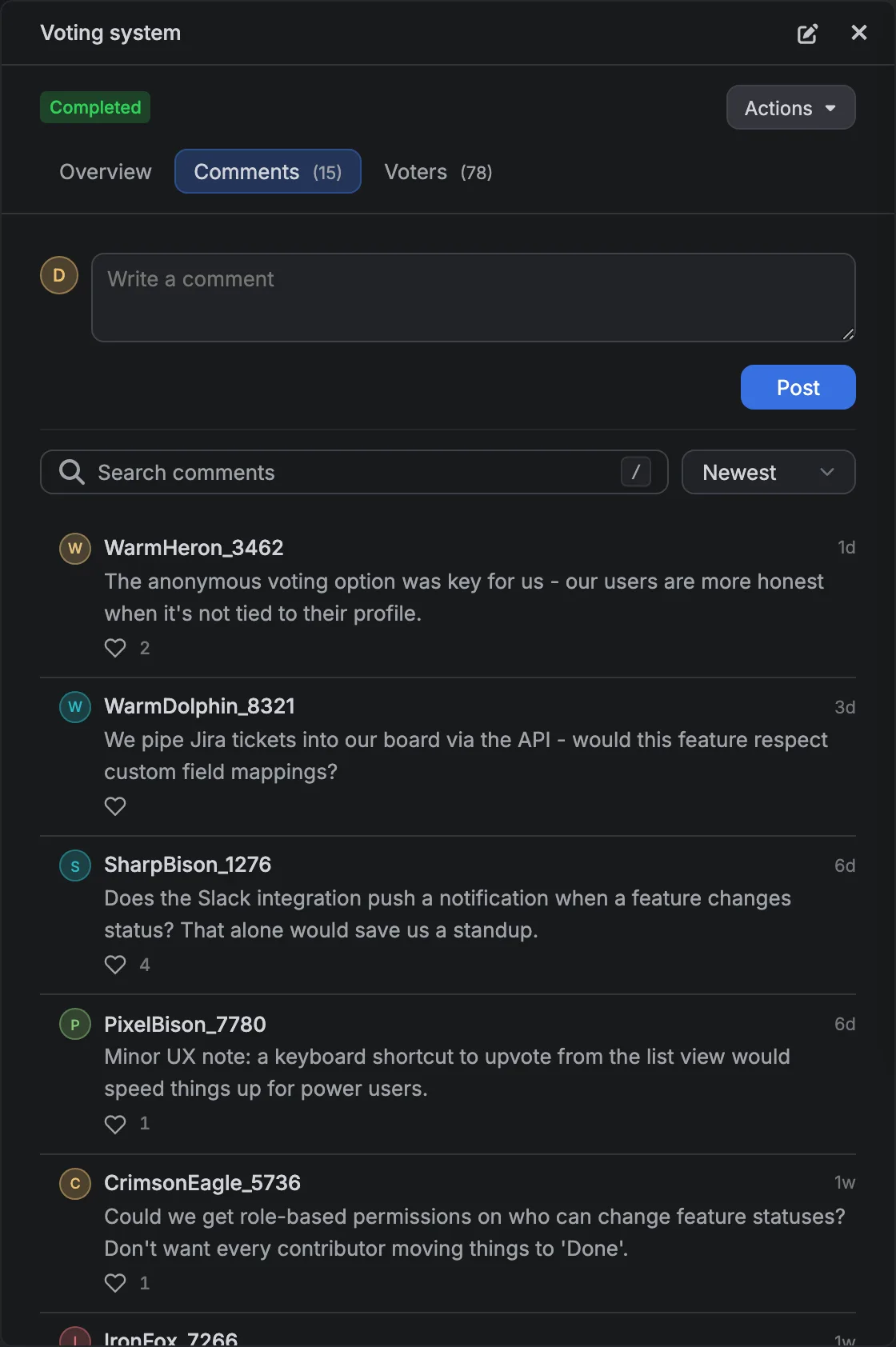
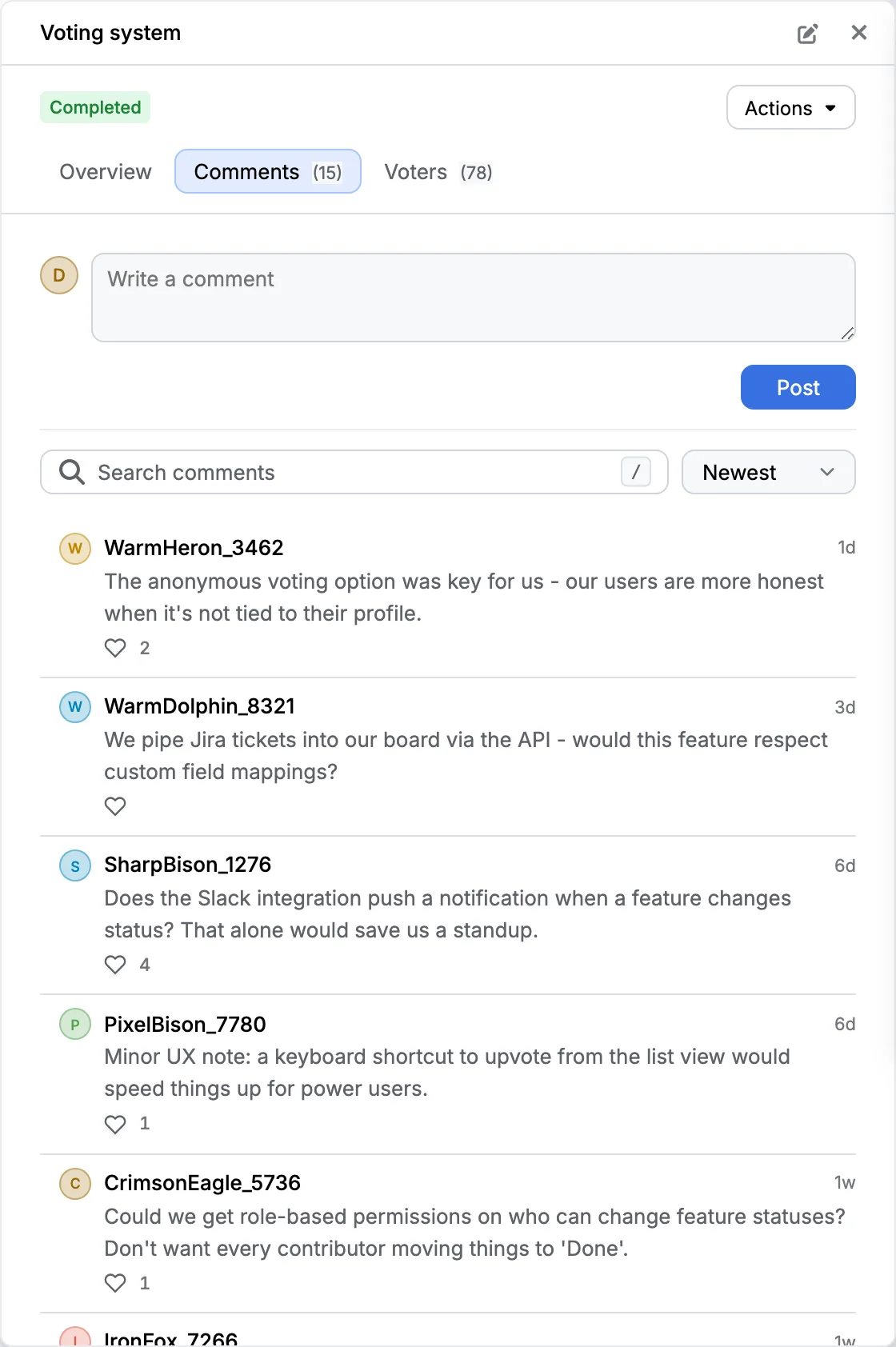
That's the difference between twelve messages and one request with twelve people on it. Those people are a list, not a number, and each of them can be put in a tier whose votes weigh more.
When the request moves, everybody on that list is told, without anybody keeping a record. Every change sits on one timeline.
Two limits, plainly. A public board is the wrong place for the bug form in row four, because a defect report doesn't want an audience or a vote count. And board numbers are modest.
Thirty six public boards belonging to real companies were read on 27 August 2026, and on the median one the median request on page one had nine votes.
The measurement and its limits are here. How the board is wired is written up here, and twelve real shapes of website feedback with the reply to each are on their own page.
14 days, a card at signup, then $9 or $39 a month.