The short version
- Ideation produces candidate answers and nothing that's ready to build.
- It fails when the step before it was skipped, because it can't survive a vague problem.
- Four sources of ideas, and they're not equally good.
- You can do it without a workshop by reading the last hundred support conversations.
Ideation in design thinking is the third step of the usual five, after empathising and defining and before prototyping and testing. Its job is narrow. Take one problem statement that has already been agreed, and produce more possible answers to it than anybody intends to build.
The quantity is the point. Ideation isn't the step where you decide, and every failure of it comes from somebody deciding too early inside it.
What does ideation produce?
A list of candidate answers, and nothing that's ready to build.
That's worth saying plainly because it's the most common misunderstanding of the step. The output of ideation isn't a plan, a specification or a decision. It's a set of options, most of which are meant to be discarded, and the discarding happens in the steps after it.
What makes a good output is spread, not quality. Twenty variations on one idea is a worse result than eight genuinely different approaches, because the following steps can only choose between things that differ.
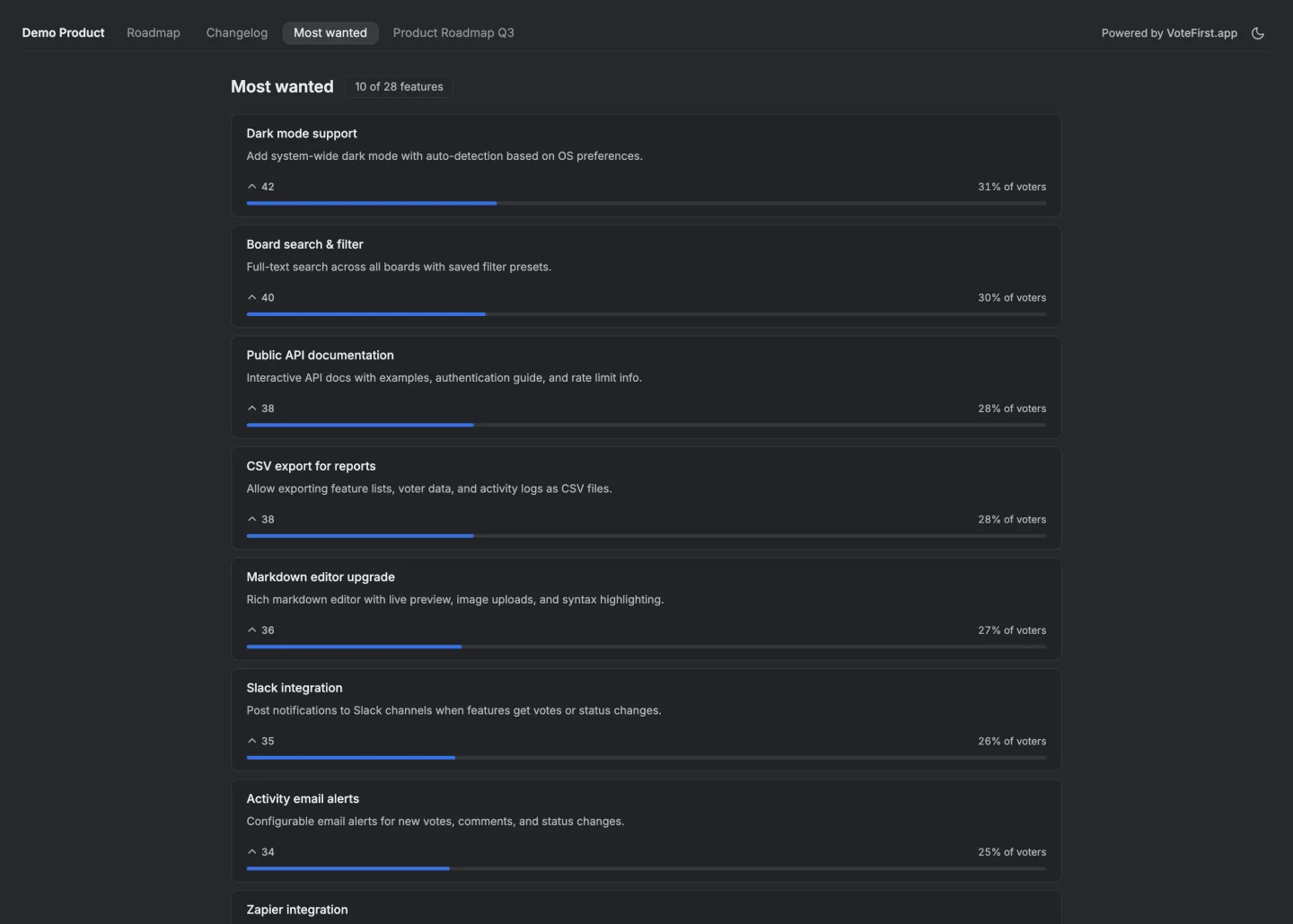
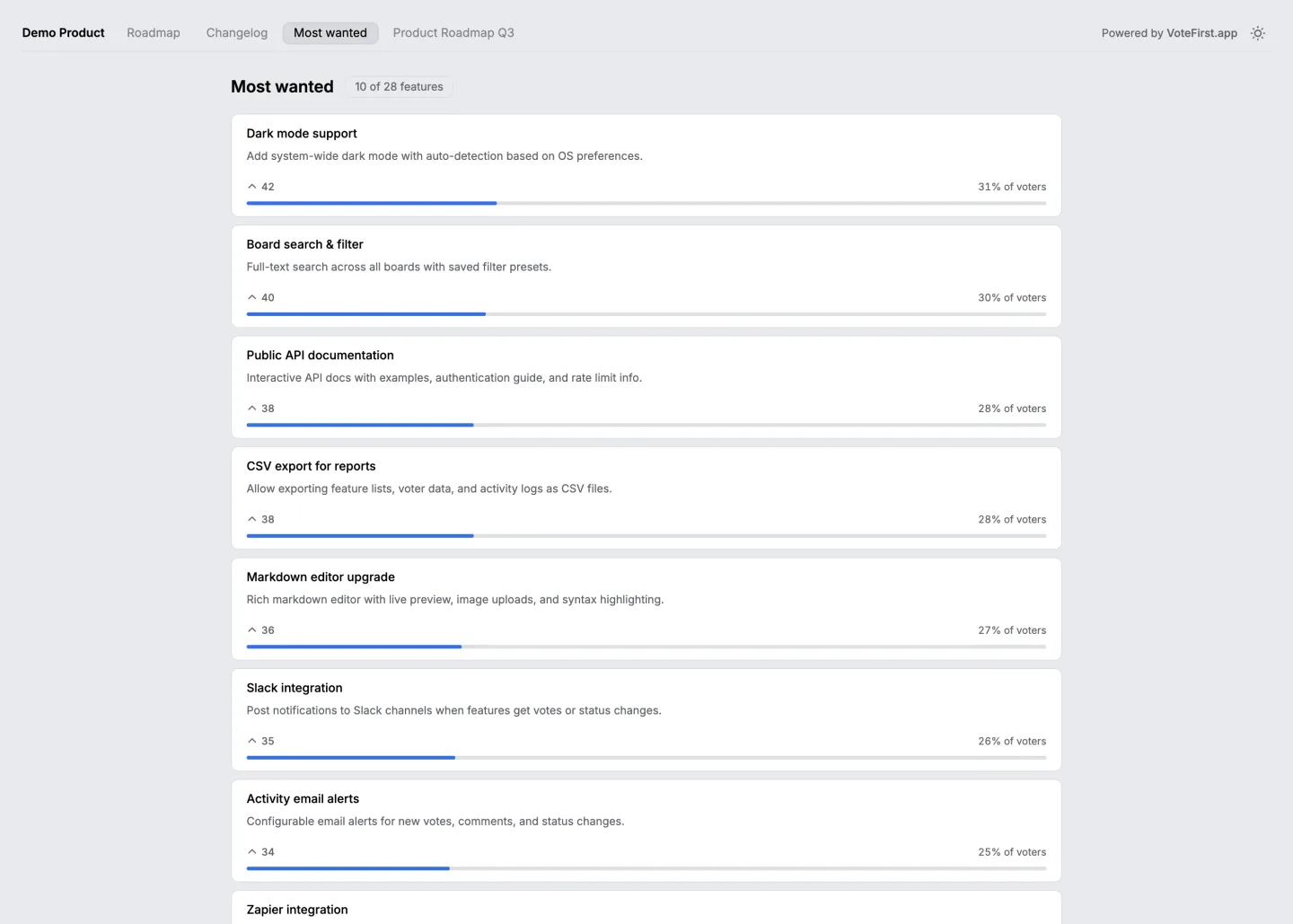
There's a board full of candidate answers you can read without an account, which is a different source of them from a workshop and usually a better one.
Want a board rather than a list? Seven idea management tools, what each bills on and what it costs.
Why does ideation fail so often?
Because the step before it was skipped, and ideation can't survive a vague problem.
The defining step is supposed to hand ideation one sentence that everybody agrees on. Make onboarding better isn't that sentence. New accounts stop before they invite a second person is. The first produces a room full of unrelated suggestions, the second produces suggestions that can be compared.
The second cause is that the room decides as it goes. Somebody proposes, somebody objects, the proposal dies, and forty minutes later there are three surviving ideas which are the three nobody had an objection to.
That's not a set of options, it's a consensus, and a consensus reached in forty minutes is usually the most obvious answer with the risk sanded off it.
The third cause is the input. A room of people who work on the product every day will produce ideas about the product they work on every day. Where that room is the only input, ideation reliably produces incremental variations and calls them a spread.
Where do the ideas actually come from?
Four sources, and they're not equally good.
| Source | What it produces | What it costs | The catch |
|---|---|---|---|
| A workshop | Many ideas fast, in one room, on one day | Half a day of several people | Bounded by who is in the room, and the room is your team |
| Support conversations | Ideas attached to a person and a situation | Nothing. They already happened | Somebody has to read them, and nobody owns that job |
| Cancellation conversations | The clearest statements a product ever receives | Nothing, and the price is already paid | They arrive when it is too late to act on them for that customer |
| A standing request board | Ideas people wrote unprompted, with a count of who agreed | The moderation | Only reaches the part of your audience that turns up |
The two free rows are the ones teams skip. A workshop feels like work being done, so it gets scheduled. Reading six months of support tickets doesn't, so it doesn't.
The tickets contain the better raw material almost every time, because each one is an idea attached to a real situation, not an idea produced to fill a silence.
The fourth row deserves an honest note about its size. Thirty six public feedback boards belonging to real companies were read on 27 August 2026, and on the median one the median request on page one had nine votes.
A standing board is a good source of candidate answers and a weak measure of how many people want each one. The measurement, with its limits, is here.
A session that works
One problem sentence, silent writing, then grouping, then a vote, then no decision.
Write the problem statement at the top where everybody can see it, and end the session with it still visible. If the ideas at the end don't answer the sentence at the top, the session produced nothing regardless of how many notes are on the wall.
Everybody writes alone first, for about ten minutes, before anybody speaks. This is the single largest improvement available to most sessions. Talking first anchors the room on whatever the first confident person said. Writing first produces genuinely independent starting points.
Then group the duplicates, and only then talk. Grouping before discussing keeps the loud voice from deciding which idea gets discussed, because the count of who independently wrote the same thing is already on the wall.
Finish with a vote that ranks, not selects. The session's output is an ordered list of options, and the decision belongs to the prototyping step where a thing can be tried cheaply.
How to do this without a workshop at all
Read the last hundred support conversations and write one line each.
The line is the situation, not the request. Somebody could not find where to change their billing address is the line. Add a billing address field to settings isn't, because that's already a decision and it arrived before anybody looked at the spread of options.
Then count how many lines say roughly the same thing. That count is better evidence than any workshop produces, because each one is a person who hit a problem while trying to do something, not a person imagining what somebody might hit.
The reason this is rare isn't that it's hard. It's that nobody owns it, and it has no meeting in the calendar.
What a standing board changes about ideation
It moves the step from an event to something that's always running.
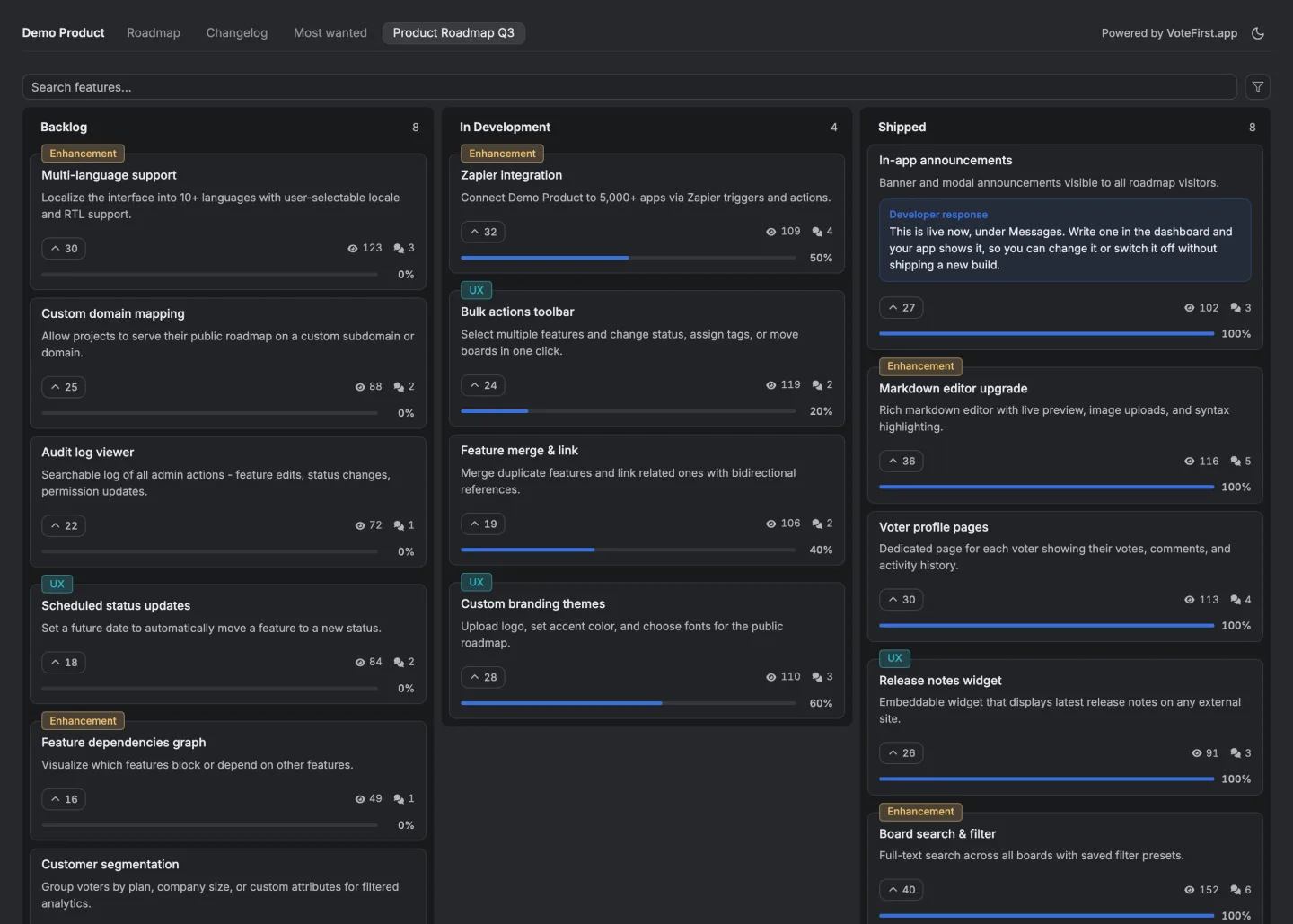
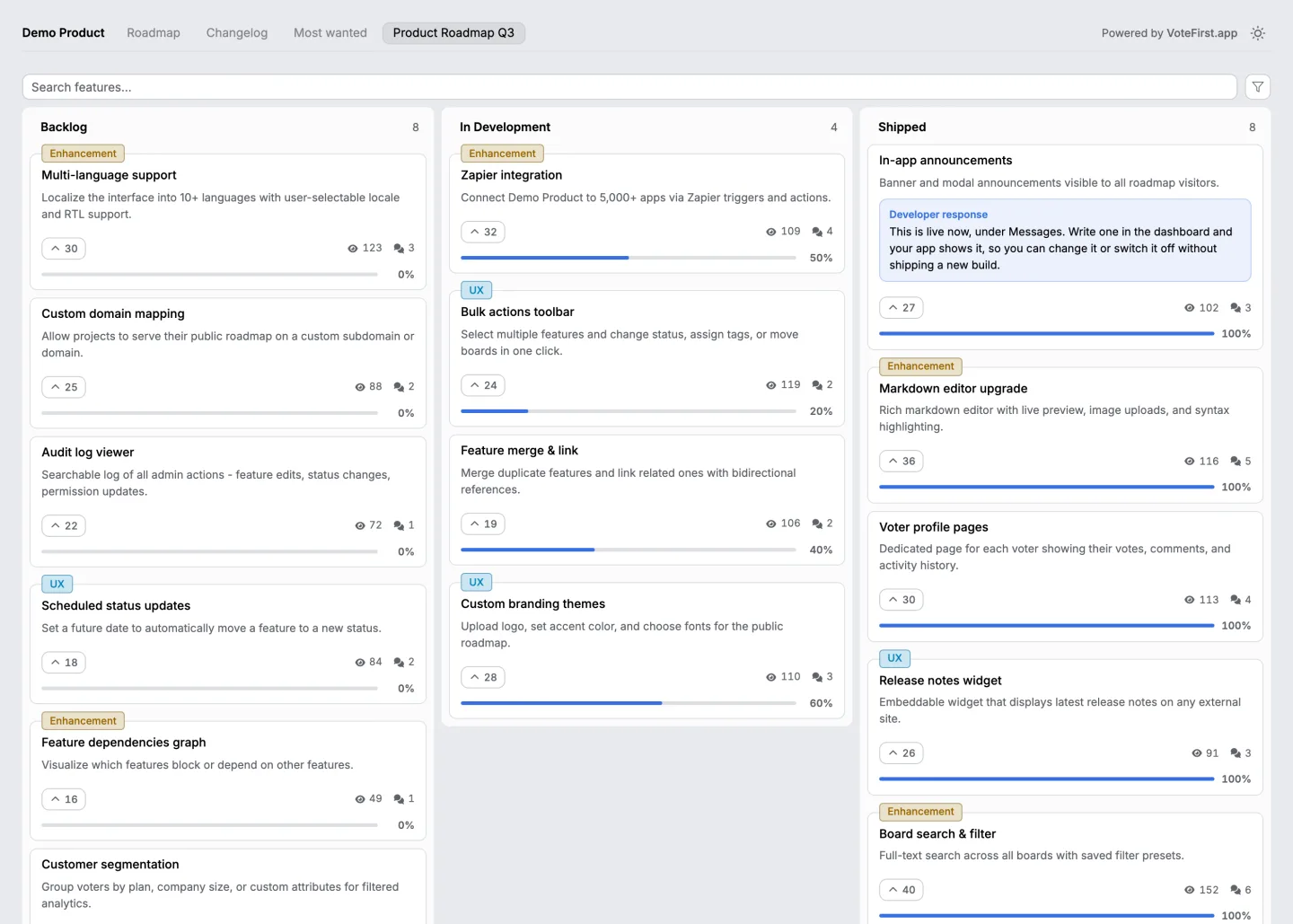
A board collects candidate answers continuously, from people who aren't in your building, attached to counts of who else agreed.
That doesn't replace the workshop for a genuinely new problem, and this post isn't going to claim it does. What it replaces is the version of the workshop where a room invents problems it thinks customers have.
Two counts sit on each card, the plain one and one weighted by what the person voting pays, and having both is what stops a board turning into a popularity contest. The multiplier per tier is set on one screen.
The limit is the same one every measurement on this page carries. Weighting doesn't manufacture a signal out of nine votes, and if everybody voting pays you roughly the same it has nothing to weigh.
How the board is wired is written up here, and seven ideation techniques with a worked example each are on their own page.
14 days, a card at signup, then $9 or $39 a month.