Aha! Ideas and airfocus sell to the same buyer: a product organisation that wants ideas collected, scored and turned into a roadmap. They are close enough on capability that the evaluation usually comes down to something else.
That something else is the pricing page. One of them publishes a rate, a minimum and a multiplication you can do yourself. The other publishes two plans and a form. Everything below was read on each vendor's own pages on 14 and 15 September 2026.
What does each one charge?
| Vendor | From | Billed per | Free plan | Trial |
|---|---|---|---|---|
| VoteFirst | $7.50/mo | plan | – | 14 days, card |
| Aha! Ideas | $39/user/mo | user | – | Yes |
| airfocus | Not published | quoted | – | – |
Read on each vendor's own pricing page. Where a vendor publishes nothing we say so rather than estimating.
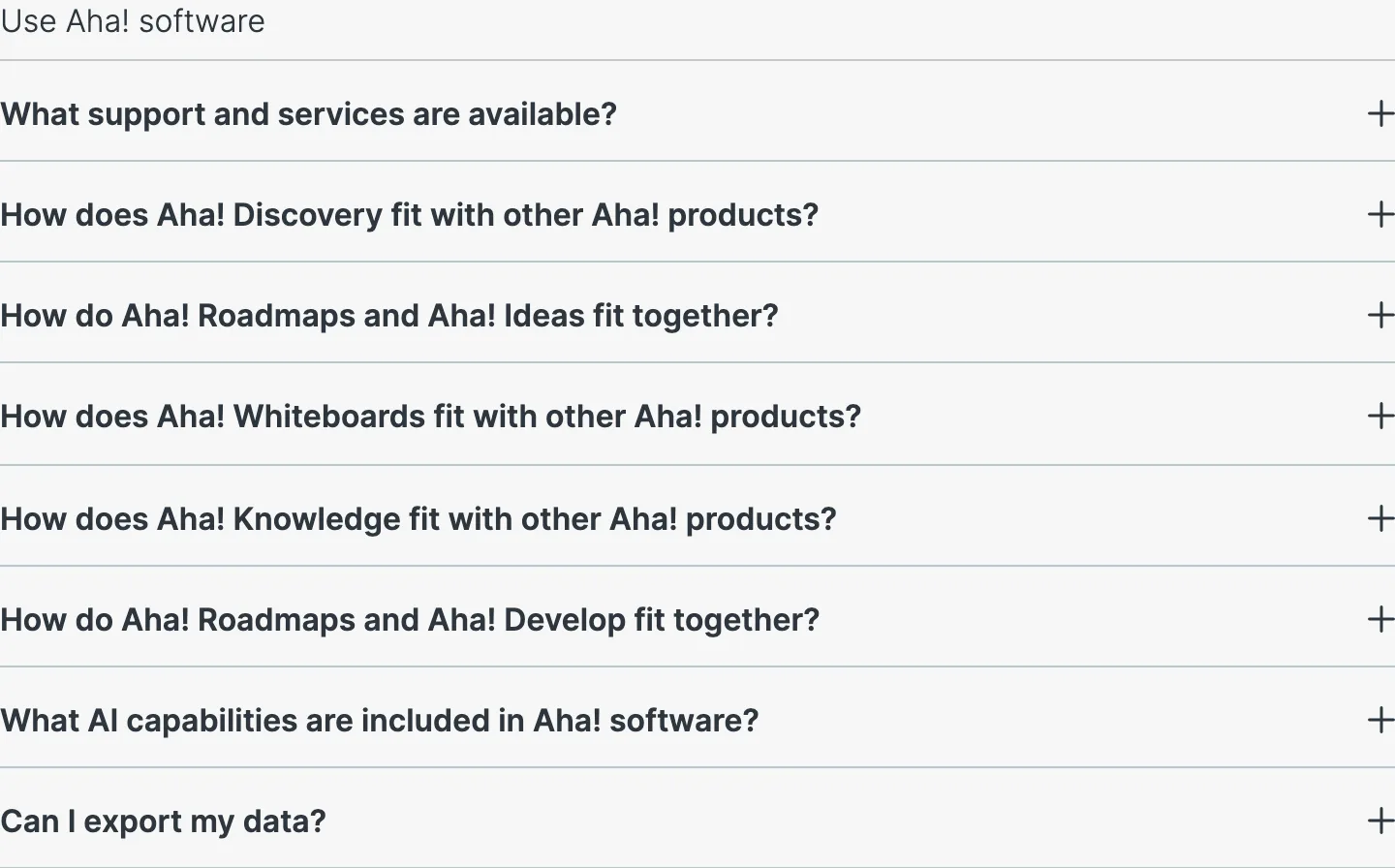
Aha! Ideas is per user, per month, with a floor written under the price on both cards.
| Plan | Paid yearly | Paid monthly |
|---|---|---|
| Ideas Essentials | $39/user/mo | $49/user/mo |
| Ideas Advanced | $59/user/mo | $74/user/mo |
Both plans carry a minimum of three paid users, so the entry price is the multiplication rather than the rate.
| Plan | Floor, yearly | Floor, monthly |
|---|---|---|
| Ideas Essentials | $117/mo | $147/mo |
| Ideas Advanced | $177/mo | $222/mo |
airfocus publishes two plans and no number on either.
| Plan | Price |
|---|---|
| Professional | Not published |
| Enterprise | Not published |
There is no published trial on the airfocus page either, which is the second thing a reader usually looks for after the price.
How much does Aha! Ideas cost compared to airfocus?
The comparison cannot be finished, and the reason it cannot be finished is itself the finding.
| Your team | Aha! Ideas Essentials | airfocus Professional |
|---|---|---|
| 1 person | $117/mo, because of the three user floor | Unknown until a call |
| 3 people | $117/mo | Unknown until a call |
| 8 people | $312/mo | Unknown until a call |
| 20 people | $780/mo | Unknown until a call |
The one unit airfocus does publish is the interesting half, and it is genuinely in their favour. Contributors and workspaces are unlimited and free, so their meter sits on the people who make decisions rather than on the people who look. A subscription covers multiple workspaces under one account.
So the shape is probably similar to Aha!'s, priced on the small group who run the product function, with everybody else free. The rate is the part nobody outside a sales call knows.
Nine dollars a month for one project, with weighted voting on it.
What is each one actually for?
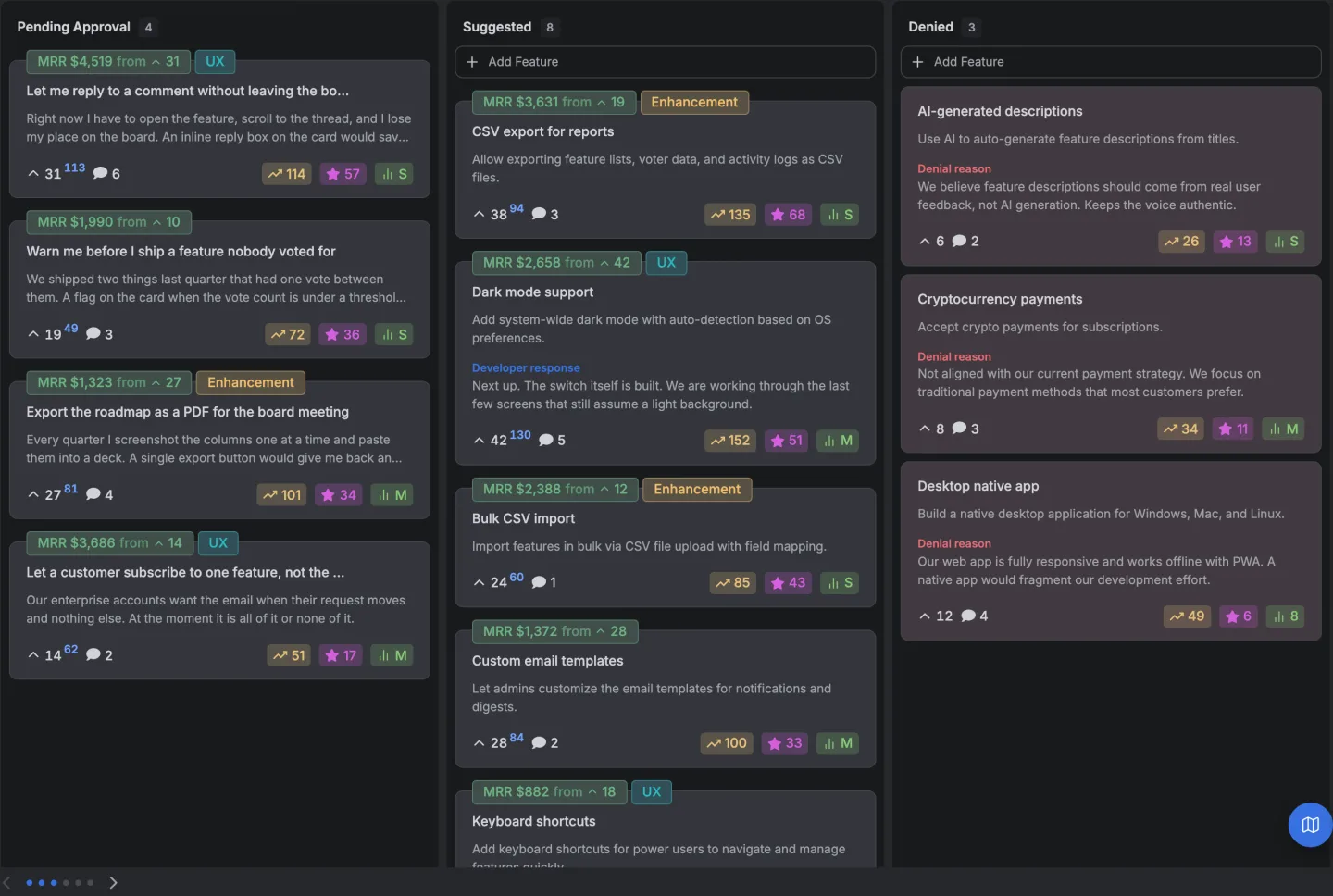
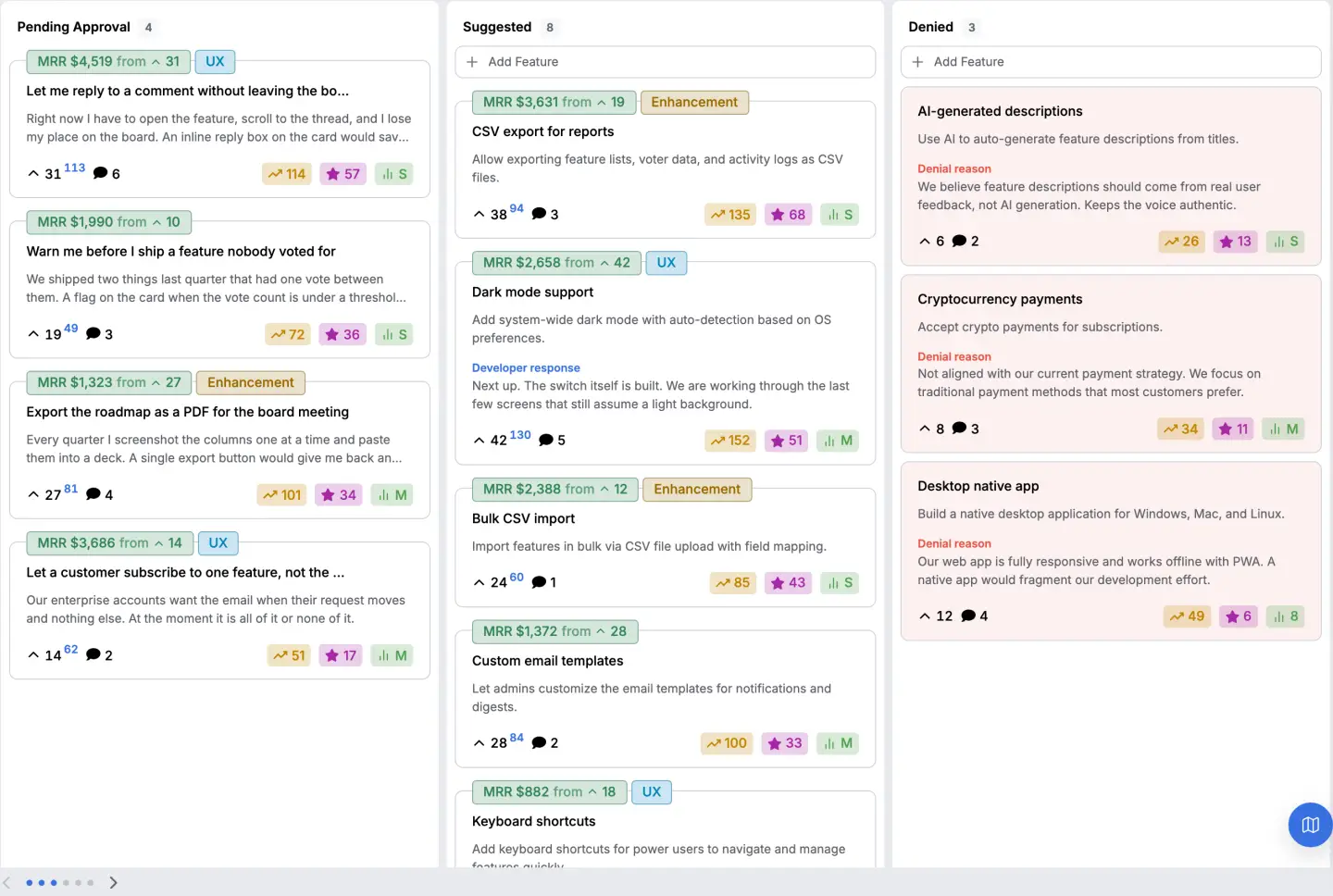
Aha! Ideas is the ideas module of a much larger suite. It gives you an ideas portal, scoring, and a route from a customer request into the roadmap products beside it. Buying it usually means buying into the rest of the family eventually, which is either the point or the objection depending on who is asking.
airfocus is a product management platform sold by Lucid, built around prioritization, roadmaps and a feedback and insights module, with a branded customer or stakeholder portal on top. Their own plan list carries portfolio management, capacity planning, objectives and OKRs, a three level product hierarchy and governance features.
Both are organisation sized tools. Neither is a feedback board, and a founder who wants customers voting in public is buying a platform in order to get one screen out of it.
Does either one publish a trial?
Aha! does. airfocus does not publish one on the pricing page read for this comparison.
That matters more than it sounds, because a product with no published price and no published trial can only be evaluated by talking to somebody. If the reason you are reading a comparison page at all is that you would rather not do that yet, the evaluation is already decided.
Which one should you choose?
Aha! Ideas, if the company is large enough that a hundred and seventeen dollars a month is a rounding error and the ideas portal has to feed a roadmap the whole company reads. It is a mature product with a published price and a published trial, and the three user floor is honest about who it is for.
airfocus, if you need portfolio management, capacity planning and governance alongside the prioritization, and a procurement call is part of your process anyway. The free unlimited contributors are a real advantage at scale.
Neither, if the whole job is a public board where customers post and vote and see what shipped. That is nine dollars a month here for one project and thirty nine for unlimited ones, with a price on the page and a fourteen day trial that asks for a card at signup.
Why choose Aha! over airfocus, or airfocus over Aha!?
Choose Aha! when you want to know the bill before the meeting. The rate, the minimum and the multiplication are all printed.
Choose airfocus when the free contributor model matters more than the unknown rate, which is the case once the number of people who only look is large.
Choose neither when a hundred and seventeen dollars a month is the whole budget for collecting feedback, because at that price here you are buying the product twelve times over.
What this costs
Lite
$9 /mo
Pro
$39 /mo
Lifetime
$999 once
Fourteen day trial of Pro, card asked for at signup. Nothing here counts the people who vote, so the bill does not move when the board starts working. The long version, with what happens if you stop paying.