A customer feedback rating turns an opinion into a number on a fixed scale, so it can be counted, averaged and compared across people and over time. What the scale looks like, and what the number can and cannot tell you afterward, is the whole subject of this page.
What is a customer feedback rating?
A customer feedback rating is a number a customer assigns to an experience, a product or a single interaction, taken from a fixed scale rather than written in their own words.
The scale is the whole method. Stars, a number from one to five or one to ten, a face, or a scale from strongly disagree to strongly agree all do the same job: they trade the detail of a written comment for something you can average.
That trade is deliberate and it costs something every time. A rating tells you how somebody felt, not what happened, and the two are easy to confuse when a dashboard shows only the average.
What is a feedback rating?
A feedback rating is the same thing under a shorter name, a single number standing in for a longer opinion. It is used loosely for a star rating on a review, a numeric score on a survey question, or the value somebody picks on any scale a form puts in front of them.
What are feedback ratings?
Feedback ratings, plural, usually means the set of numbers collected across many people or many questions, before anyone has averaged them into one figure.
Looking at the spread rather than the average matters here. A product with an even mix of very high and very low ratings and one with everybody clustered in the middle can land on the same average, and they are describing two completely different situations.
What is a feedback form rating?
A feedback form rating is the scale question built into a feedback form itself, usually sitting above or below the open text box where somebody explains their answer.
Its job is narrow. It gives you something to sort and trend on without reading every comment first, and it works best as a filter into the comments rather than as a replacement for them.
What is an example of rating feedback?
A customer picks four out of five stars on a checkout page and adds a line saying the delivery date was hard to find. The number is the rating. The line underneath is the feedback that explains it.
Read together they are useful. The number alone tells you almost nothing about what to change on that checkout page.
What is a customer feedback score?
A customer feedback score is a rating that has been through some arithmetic, an average, a percentage, or a formula that combines more than one question into a single figure meant to represent a wider pattern.
Net Promoter Score is the best known example, built from one question and a subtraction. Any score built this way carries the same limits as the rating underneath it, just wrapped in a formula that makes it look more precise than it is.
What is a feedback rating scale?
The set of options a person can choose between, and the two choices that matter most are how many points it has and whether it has a middle point.
An even numbered scale, four or six points, forces a lean toward positive or negative. An odd numbered scale, five points being the common one, gives people a neutral middle to hide in, which is honest but produces more shrugging answers than a forced choice does.
What are the feedback best practices worth following?
The feedback best practices that matter are about the question, not the scale: ask at a fixed moment, keep the words the same every time, and always leave room to write.
Change the wording between one survey and the next and the comparison over time is gone, because you no longer know whether the number moved or the question did. Pick one moment, right after the interaction, ninety days into using the product, whatever fits, and keep asking at that same moment.
Never turn the rating into a target for a team, because the moment somebody's bonus depends on the number, the survey quietly starts going out to the customers most likely to answer well, and the number stops describing anything real.
The open text box is where the practice earns its keep. A number without a reason attached tells you a rating moved; the sentence underneath tells you toward what, and that sentence is worth reading before the average is.
Why doesn't a rating tell you what to build?
Because a rating is a temperature reading, and a temperature reading has never told anyone how to fix what is making the patient run hot.
A falling average score tells you something got worse. It does not name the screen, the step or the sentence that caused it, and a team can spend a week arguing about the number instead of reading what customers actually asked for.
This is the gap a ranked feedback board is built to close. Instead of a scale, a customer writes the specific thing they want and other customers vote for it, so the list that comes out the other end is not a score, it is a set of named, ranked requests you can act on directly.
Run both if the business can support it. Use a rating to notice that something changed, and use a feedback board to find out what. Two of thirty two boards read for that page refused the browser on the day they were checked, and needed an older reading instead, which is worth knowing before you trust any single number they publish.
What does the alternative look like on a page?
A ranked list of named requests, with the number of people behind each one, instead of a single figure.
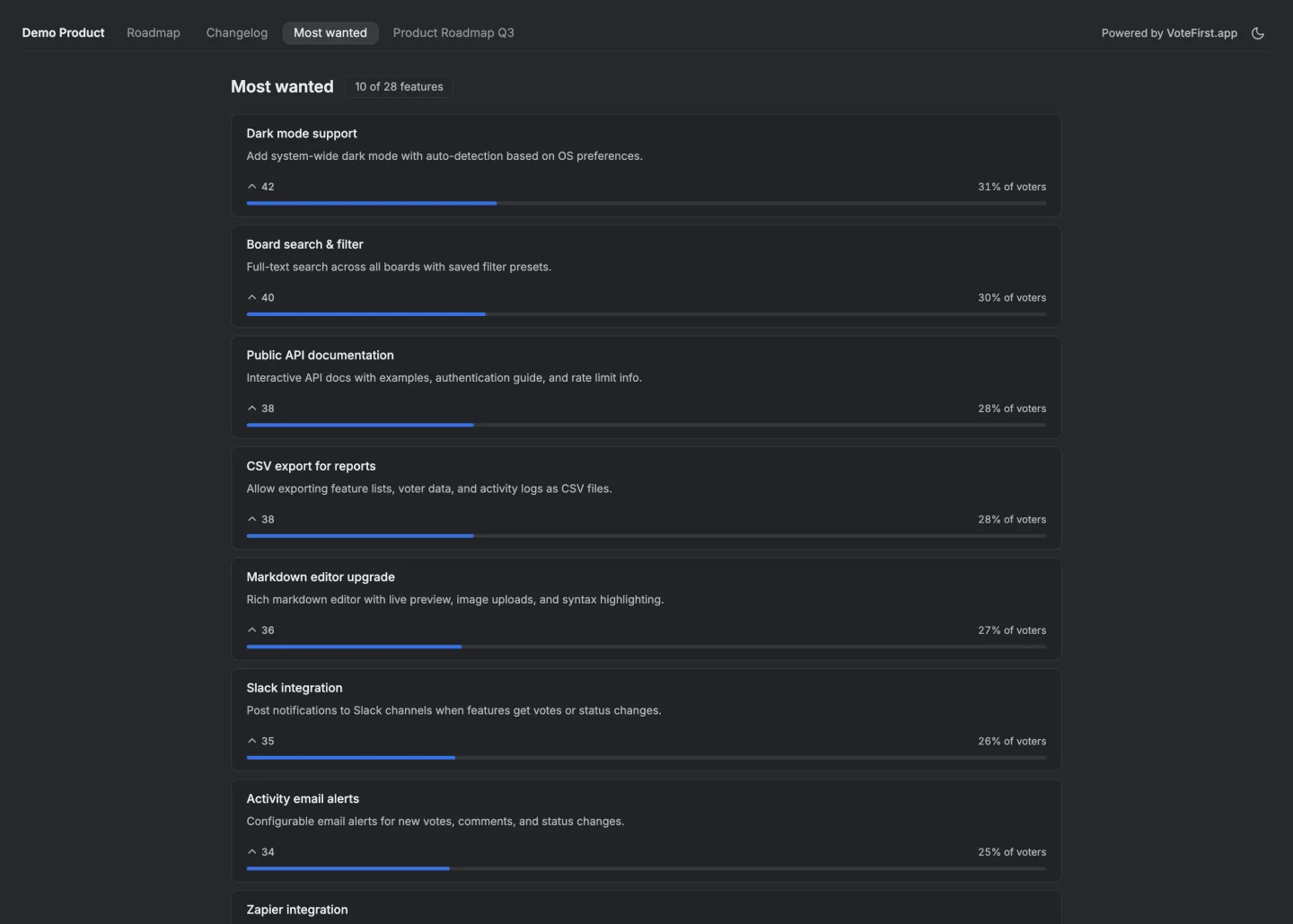
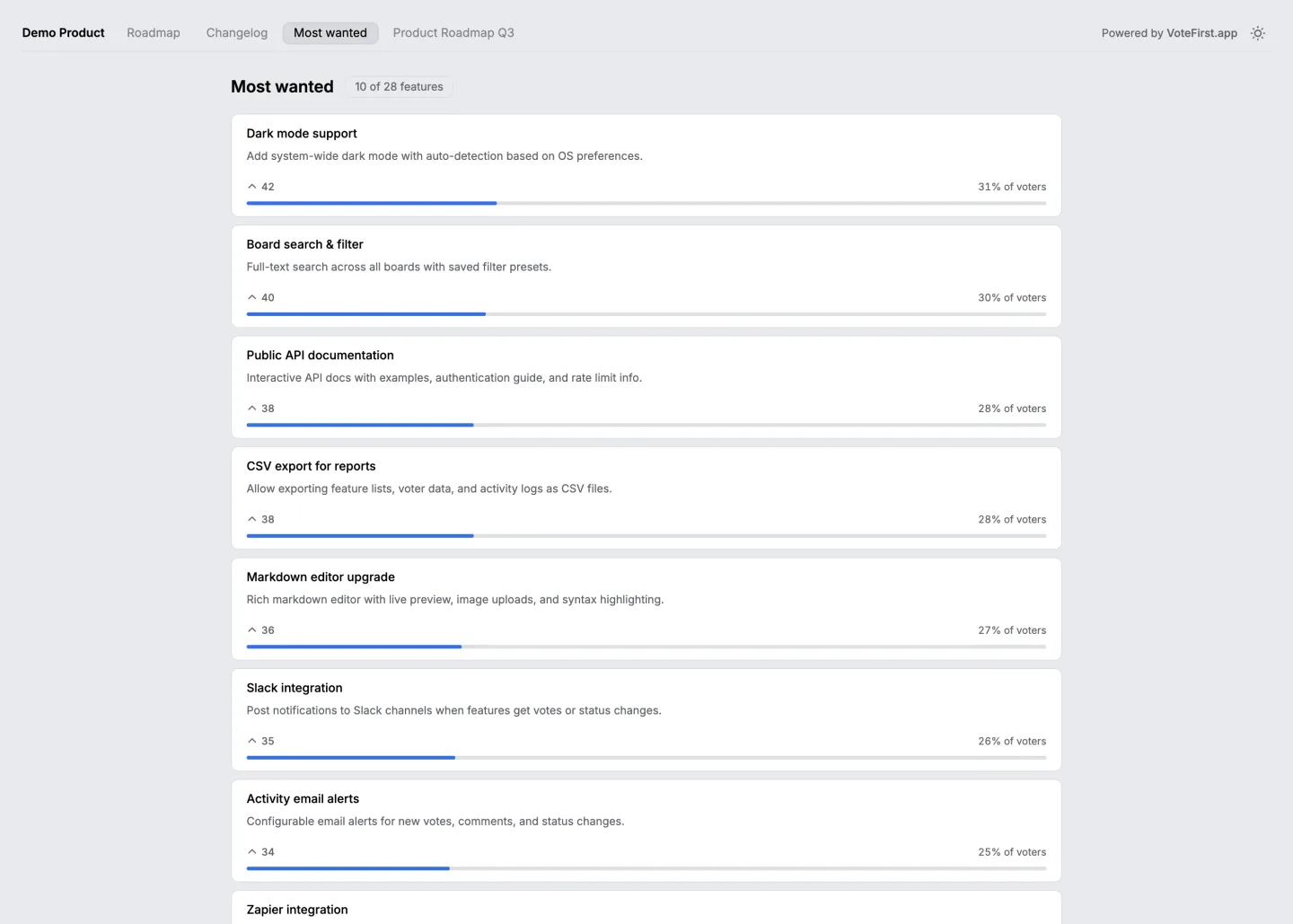
The difference is what you can do on Monday morning. A score of thirty two tells you to investigate. A request at the top of this list with forty one people behind it tells you what to open first, and the comment thread under it tells you why they want it.
Neither replaces the other. A rating is the cheaper instrument and it notices a change faster, because one question answered on a scale takes four seconds and writing out a request takes a minute.
What this costs
Lite
$9 /mo
Pro
$39 /mo
Lifetime
$999 once
Fourteen day trial of Pro, card asked for at signup. Nothing here counts the people who vote, so the bill does not move when the board starts working. The long version, with what happens if you stop paying.