Net Promoter Score is one question with an eleven point scale and one number at the end of it. Ask how likely somebody is to recommend you, from nought to ten, then subtract the share who answered nought to six from the share who answered nine or ten.
That is the whole method. The result runs from minus a hundred to a hundred and it is a temperature, not a diagnosis.
What is an NPS survey?
One question, optionally followed by a second asking why.
The first question is fixed by convention: how likely are you to recommend this to a friend or colleague, on a scale of nought to ten. The answers split into three groups that everybody uses the same way.
| Answer | Group | Counted as |
|---|---|---|
| 9 to 10 | Promoters | Positive |
| 7 to 8 | Passives | Ignored |
| 0 to 6 | Detractors | Negative |
Passives are thrown away, which is the part people find surprising and it is deliberate. A seven and an eight are treated as neither good nor bad, so a product where everybody answers eight scores nought.
The second question, the open one asking why, is where all the actual information is. The number is a headline; the free text is the story.
How is NPS calculated?
Percentage of promoters minus percentage of detractors. Nothing is divided and nothing is averaged.
A hundred responses: fifty nines and tens, thirty sevens and eights, twenty scores of six or below. That is fifty percent promoters minus twenty percent detractors, so the NPS is thirty.
The score is not a percentage even though it is made of two percentages, and writing it with a percent sign is the most common error in reporting it.
What is a good NPS score?
There is no single good NPS score, because the number only means anything next to your own past readings, taken the same way.
A score is a subtraction between two percentages, so its range depends entirely on how your own respondents happen to split between promoters and detractors, which differs by industry, by how the question was worded, by who was asked and by when in the relationship they were asked. Anyone who states a single cutoff as universal is comparing populations that were never the same population.
What is worth watching is the direction, not the level. A score that has moved for three quarters running, measured the same way each time, is telling you something real about sentiment even if you never learn the number itself is high or low by anyone else's standard.
What are good NPS survey questions for customers?
The standard one, and then one open question that does the work.
Ask the recommend question exactly as it is written, because the whole value of a standard metric is that it is standard, and the moment you rewrite the wording you can no longer compare yourself to anybody, including yourself last quarter.
Then ask one of these, and only one:
- What is the main reason for your score?
- What is the one thing we could change that would matter most to you?
- What nearly stopped you recommending us?
The second of those is the most useful for a product team, because it produces a request rather than a feeling. It is also the one whose answers you will want somewhere better than a spreadsheet.
What are NPS survey questions for employees?
The same question with the word changed, and it is a different metric with a different name.
Employee Net Promoter Score asks how likely somebody is to recommend the company as a place to work. The arithmetic is identical and the benchmarks are not comparable to the customer version, so the two numbers should never appear in the same chart.
If what you actually want is ideas from your own staff rather than a score, that is idea management rather than a survey. The tools built for that are a different category and they are priced per employee rather than per response.
NPS vs CSAT vs CES, what is the difference?
Three questions asked at three different moments, measuring three different things.
| Metric | The question | When it is asked | What it tells you |
|---|---|---|---|
| NPS | Would you recommend us | Periodically, or after a milestone | Overall sentiment about the relationship |
| CSAT | How satisfied were you | Right after one interaction | Whether that one thing went well |
| CES | How much effort did that take | Right after one task | Whether the product got in the way |
CSAT and CES are about a moment. NPS is about the whole relationship. A company can have excellent CSAT on every support ticket and a terrible NPS, and the usual explanation is that support is good at apologising for a product that keeps needing apologies.
Is NPS worth it?
Yes as a trend line, no as a target, and never as the only thing you collect.
As a trend it is genuinely useful. One number, measured the same way every quarter, that tells you whether sentiment is moving. Cheap to run and easy to explain to anybody.
It fails in three specific ways.
Only the loud answer. Response rates on NPS surveys are low, and the people who answer are the ones with a feeling strong enough to act on. The quiet middle of your customer base is invisible in the number.
No weight on the answer. The customer paying you two hundred a month and the one on the free plan each move the score by exactly the same amount. For a business where revenue is concentrated, that is the wrong arithmetic.
It does not say what to do. A score of thirty one quarter and twenty six the next tells you something got worse. It does not tell you what, and every hour spent arguing about the number is an hour not spent reading the free text under it.
What is better than NPS?
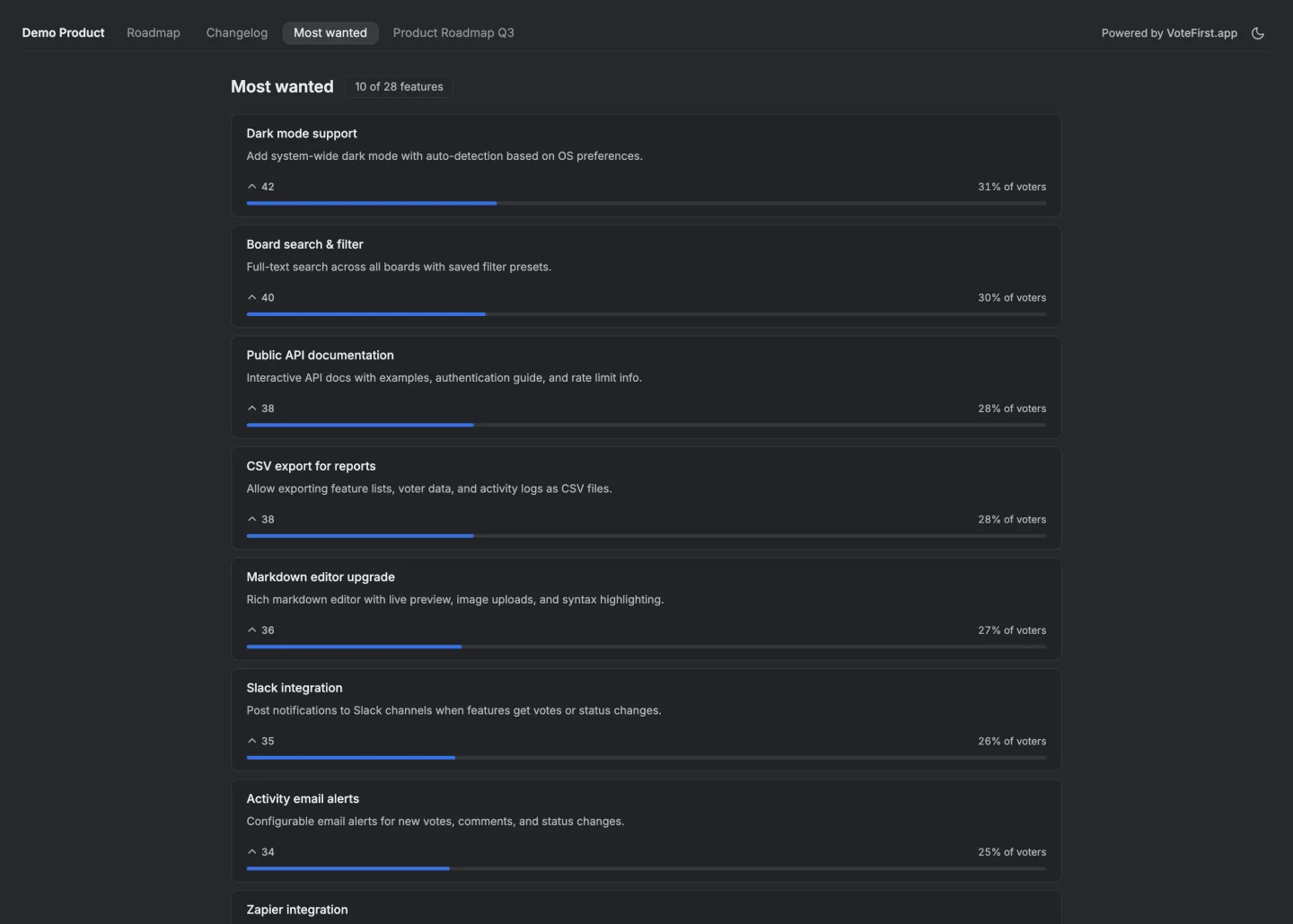
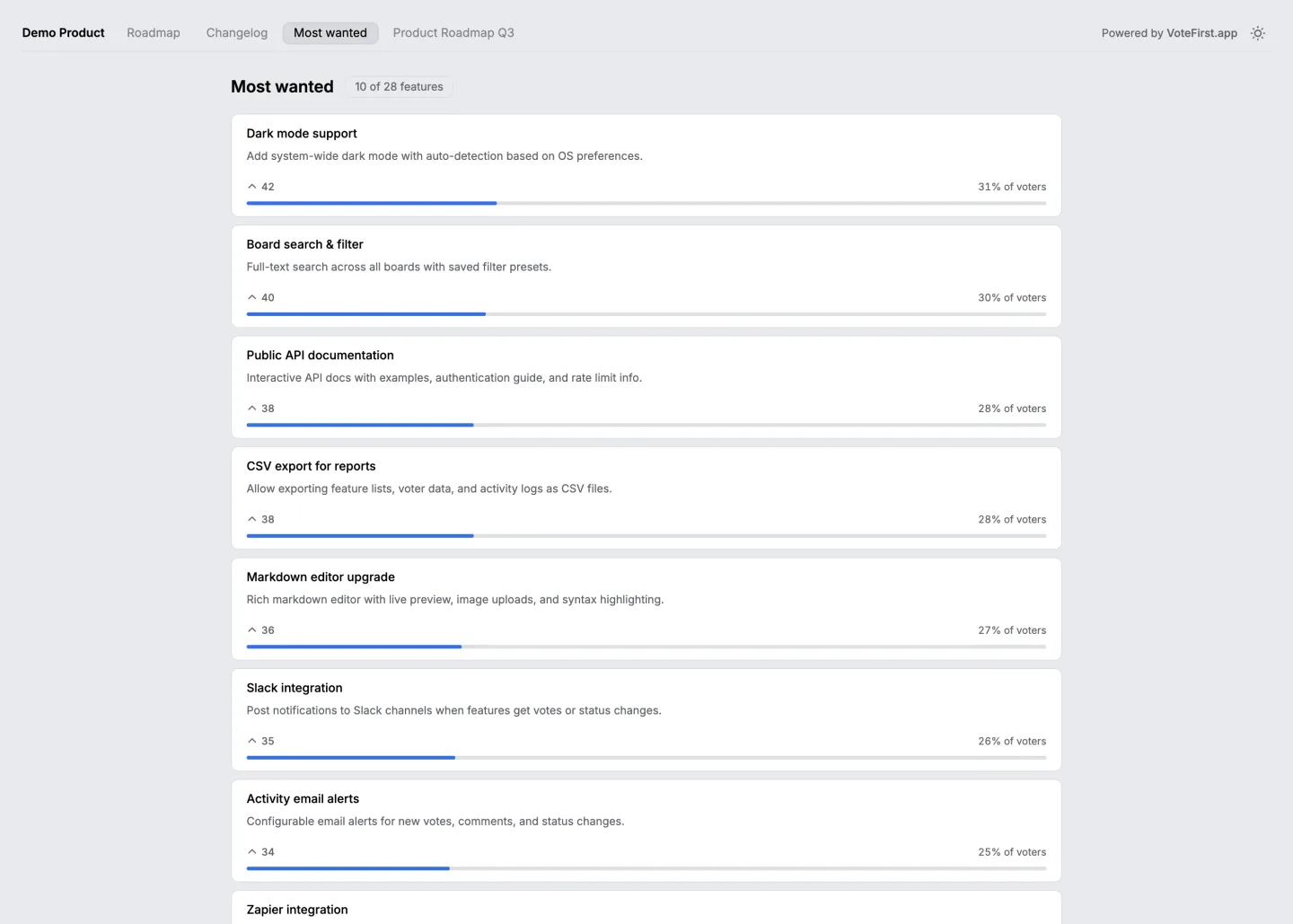
Nothing replaces it as a trend. What replaces it as a decision is a list of requests, ordered, with the money behind each one visible.
The two answer different questions and the confusion between them costs teams a lot of time. NPS answers how do they feel. A feedback board answers what do they want, in their words, ranked.
The practical difference is what happens on Monday morning. A score gets reported. A ranked list gets built from.
On a board, each customer tier carries a multiplier, the weight is written onto the vote at the moment it is cast, and the plain count stays beside the weighted total. So the top of the list is not what most people asked for, it is what most of your revenue asked for, and those are different lists more often than anybody expects.
Run both if you can. Use the score to notice that something changed and the board to work out what.
What are the NPS best practices worth following?
Four, and the fourth is the one most often skipped.
Do not change the wording. The comparison is the whole point.
Ask at a consistent moment. Asking after a support ticket measures support. Asking ninety days after signup measures the product. Pick one and keep it.
Never set it as a target. The moment a team's bonus depends on the number, the survey starts being sent to happy customers and the number stops meaning anything. That is not cynicism, it is the predictable consequence of measuring people by a metric they control the sampling of.
Read every free text answer, and put the requests somewhere they accumulate. A request that arrives in a survey response and dies in a spreadsheet was worse than not asking, because somebody took the time to write it. Where those requests should land is the whole argument for a feedback board.
What is corporate NPS versus normal NPS?
Corporate NPS asks the account, normal NPS asks the person, and the two questions produce numbers that cannot be swapped for each other.
Ordinary NPS is sent to an individual and reflects one person's experience at the moment they answer. Corporate NPS, sometimes called account level or B2B NPS, is asked of a whole customer account, often several contacts inside the same company, and it is used to judge the health of the relationship rather than one person's mood on a Tuesday.
The practical difference shows up in who gets asked and what the answer is used for. A normal NPS reading tells a product team how one user feels right now. A corporate reading is closer to an account health signal, read alongside renewal risk and usage, because a single contact's answer inside a company can move for reasons that have nothing to do with the product, such as who happens to be the one filling in the survey that quarter.
Averaging several contacts inside one account into a single corporate score hides exactly the disagreement that matters. A champion and a frustrated end user inside the same company can cancel each other out in the average, and the number that comes out the other end looks calm while the account is not.
What are NPS software companies, and what do they actually do?
NPS software companies build the survey, the send schedule and the dashboard; they do not tell you what to build next.
The category covers a fairly narrow job: ask the recommend question at the right moment, collect the number and the free text answer, group respondents into promoters and detractors, and chart the result over time. Some tie the survey to a support platform, some to a product analytics tool, and the difference between them is mostly about where the trigger to send the survey comes from.
What none of them do, because it is not the same job, is turn a low score into a specific fix. A dashboard can tell you the number went down. It cannot tell you which screen, which step or which missing feature is behind it, because that information was never in the number to begin with; it is in the free text answers and in the requests customers make separately.
That is the honest way to pick between them: ask what triggers the survey and how well it surfaces the open text answer, not which one promises the highest score. A tool that runs the survey well is still only running a temperature check, and a feedback board is the separate piece of software for the part a survey tool was never built to do.
What does NPS have to do with churn?
Detractors leave more often, which is the reason anybody tracks it, and the score cannot tell you which detractor is about to go.
The number that can is revenue. A detractor paying you nothing and a detractor paying you four hundred a month are the same data point in NPS and completely different problems for the business.
Churn has its own page, and the connection worth making here is that a board which knows what each voter pays can show you the requests that came from customers who have already left. That is a much sharper signal than a score going down.
What this costs
Lite
$9 /mo
Pro
$39 /mo
Lifetime
$999 once
Fourteen day trial of Pro, card asked for at signup. Nothing here counts the people who vote, so the bill does not move when the board starts working. The long version, with what happens if you stop paying.