Typing roadmunk.com/pricing today lands you on tempo.io, on a page titled Strategic Roadmaps (Roadmunk). The product is still there and it is still sold, and it is now one of about a dozen things Tempo sells around Jira.
That matters before any feature argument, because the pricing you find is Tempo's pricing, on Tempo's unit, and the unit is the editor.
Everything about their side of this page was read on tempo.io/pricing/roadmaps on 14 September 2026. The two meters and what five people cost at three different splits are worked out separately.
What does Roadmunk cost?
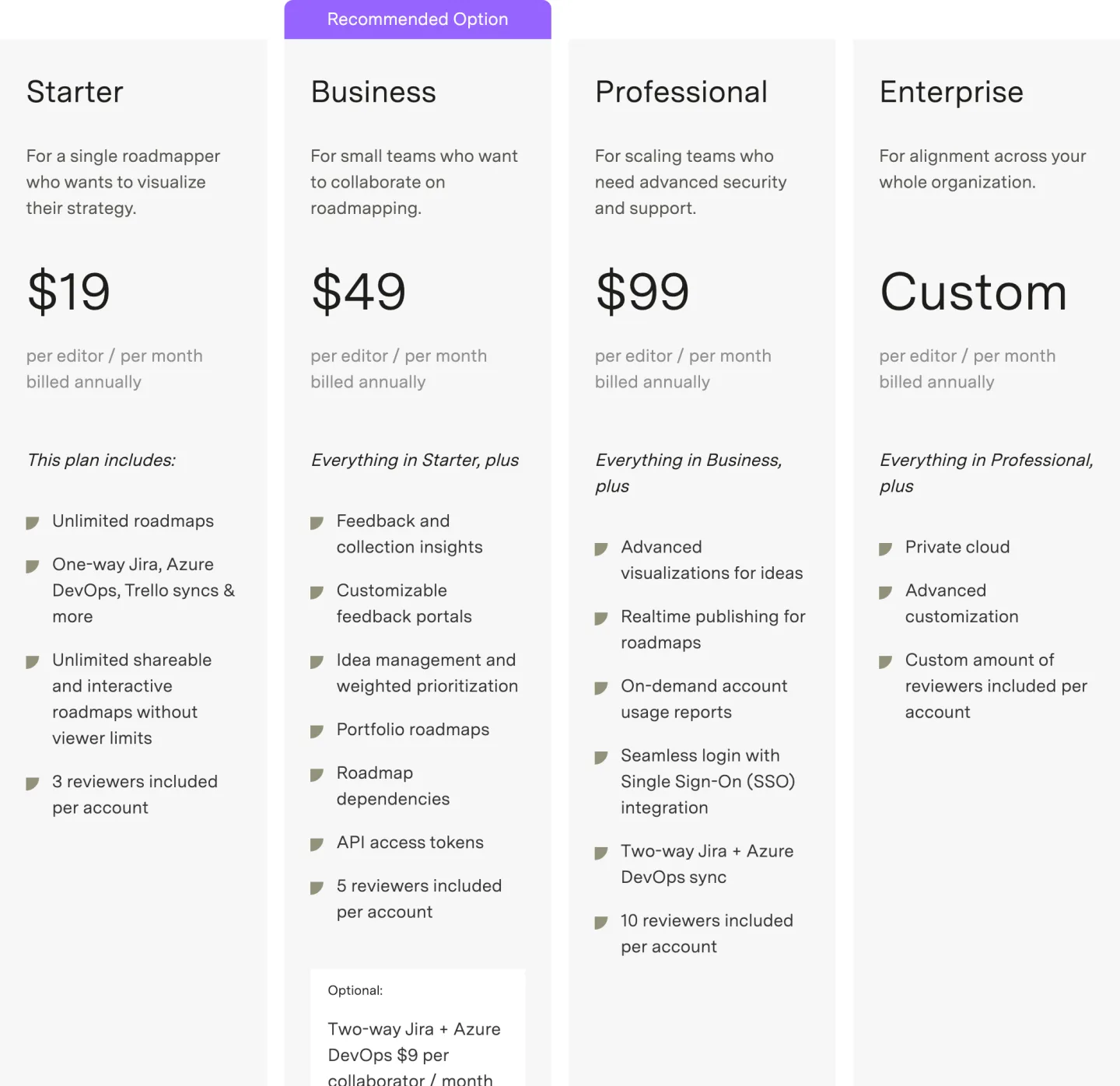
Four plans, all priced per editor per month and all billed annually.
| Plan | Per editor | Reviewers included |
|---|---|---|
| Starter | $19 | 3 |
| Business | $49 | 5 |
| Professional | $99 | 10 |
| Enterprise | Custom | custom |
- Starter adds unlimited roadmaps, one way Jira, Azure DevOps and Trello syncs, unlimited shareable and interactive roadmaps without viewer limits.
- Business adds feedback and collection insights, customizable feedback portals, idea management and weighted prioritization, portfolio roadmaps, roadmap dependencies, API access tokens.
- Professional adds advanced visualizations for ideas, realtime publishing for roadmaps, on demand account usage reports, SSO, two way Jira and Azure DevOps sync.
- Enterprise adds private cloud, advanced customization.
Two things are metered rather than fixed. An additional reviewer past the included count is five dollars a month each. Two way Jira and Azure DevOps sync is nine dollars per collaborator a month as an option on Business, and is included from Professional upward.
Roadmunk puts its API access tokens on Business, at forty nine dollars per editor a month. Their trial is fourteen days and their own page says it covers the Business package minus API tokens, with the native Jira integration included.
If you would rather try this one than read about it, a trial runs 14 days and asks for a card at signup, and it is $9 or $39 a month after that.


Why do people look for a Roadmunk alternative?
Three reasons show up in the way the questions are typed, and only one of them is about features.
The name moved. People search for a product that now answers under a different name inside a bigger suite. That is unsettling on its own, and it is the reason the most common companion query is about the license cost rather than about a feature.
The unit is the editor. Nineteen dollars is one person who builds roadmaps. Two people who both edit is thirty eight, three is fifty seven, and the reviewer seats that let everybody else look are counted separately and run out at three on the entry plan.
The reader wanted the board, not the roadmap. Roadmunk's centre of gravity is a roadmap you present to stakeholders. Feedback collection and idea management start at forty nine dollars, and a public place where customers vote is not what the product is for.
What is a reviewer, and why is it a second meter?
Somebody who can read roadmaps and comment, and cannot edit them.
Their page describes the role for customer facing teams and executives, with comment rights on feedback, ideas and roadmaps, read only access to roadmaps and prioritization models, and the ability to submit customer feedback to the product team.
Packages include up to ten free reviewers depending on the plan, and past that each one is five dollars a month.
So the honest way to price a team of five people who all need to see the roadmap, on Starter, is nineteen dollars for the editor plus two reviewers past the included three, which is twenty nine dollars a month.
On this product the same five people are nine dollars a month, because nobody is counted at all.
Where do the public roadmap and single sign on sit?
One of them is not really on the list and the other is at the top of it.
Roadmunk does not sell a public roadmap in the sense a feedback board means it, only unlimited shareable and interactive roadmaps without viewer limits, which is a link you send rather than a page your customers browse and vote on.
Roadmunk puts single sign on at ninety nine dollars, on the Professional plan, and their security answer adds SAML single sign on for companies whose procurement asks for it.
Here the public board and the public roadmap are both on the nine dollar plan, and single sign on is not sold at all.
Does Roadmunk weight votes by revenue?
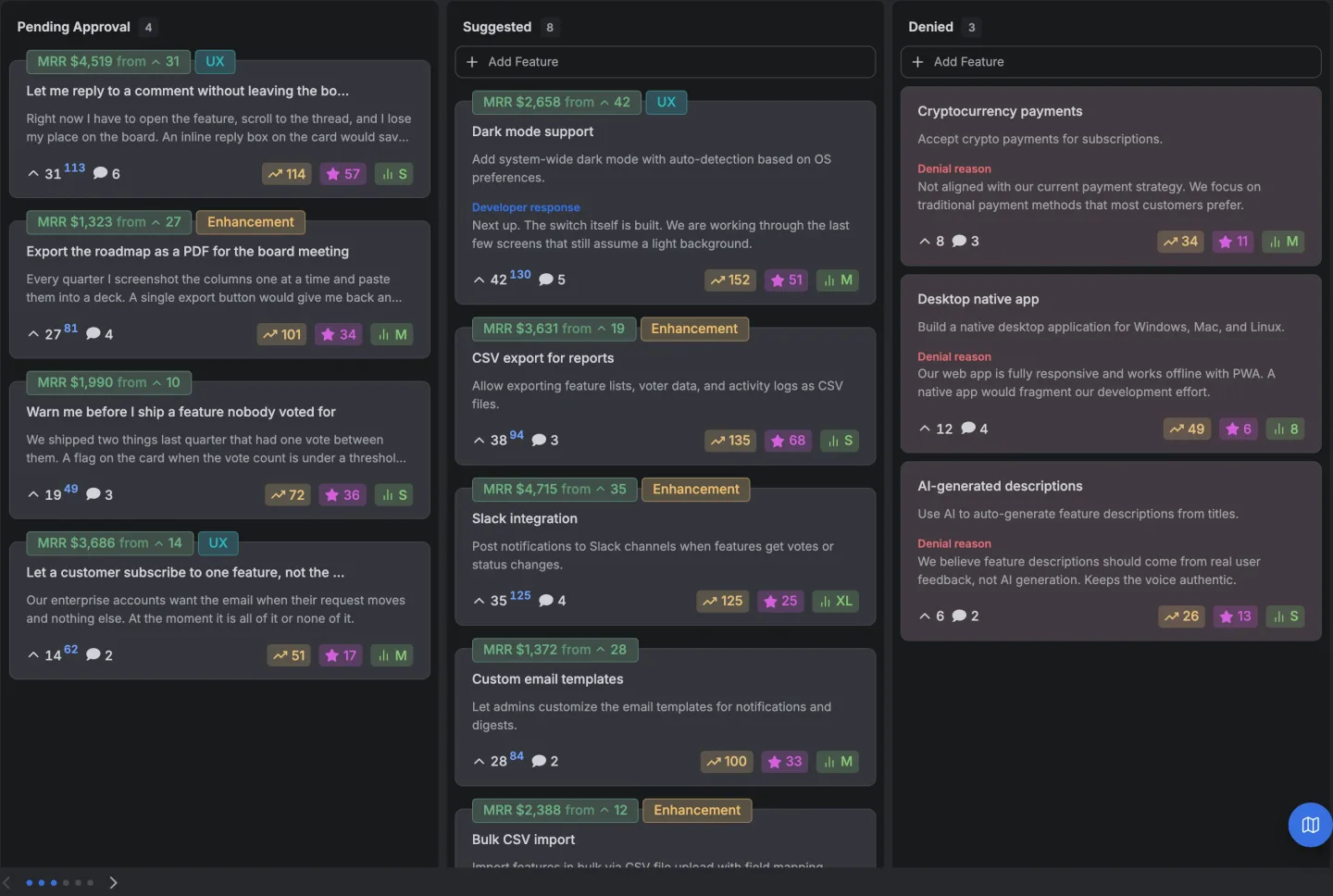
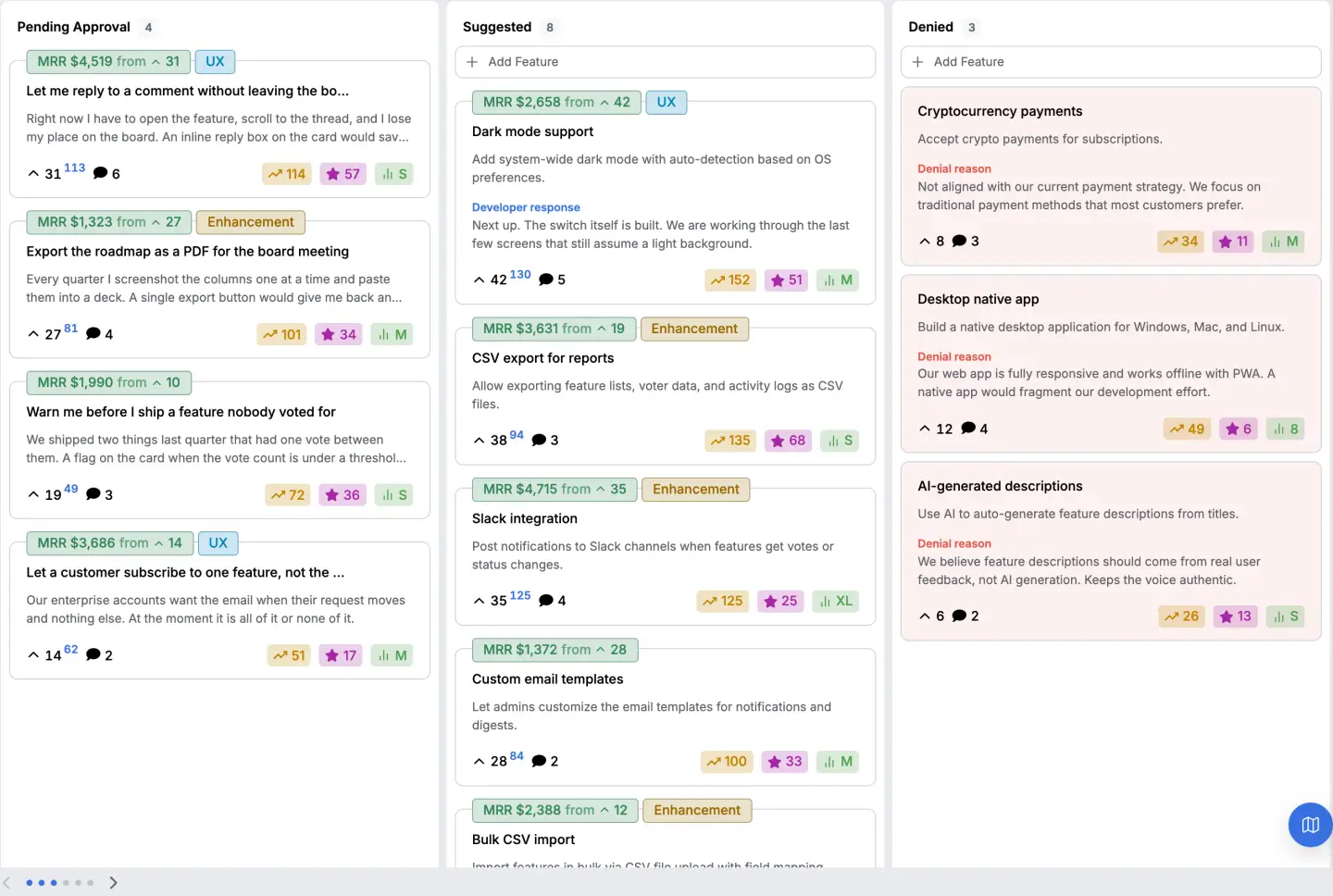
Their Business plan lists idea management and weighted prioritization, which is a scoring model over ideas rather than a vote that carries money.
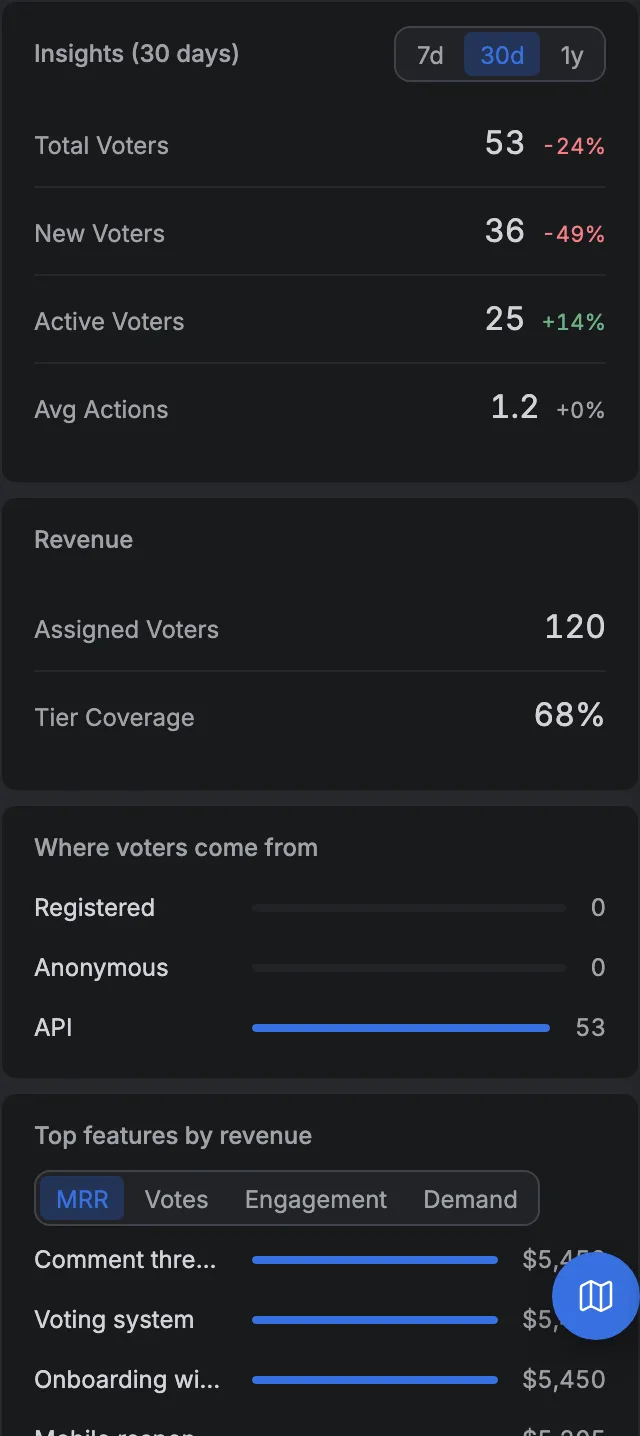
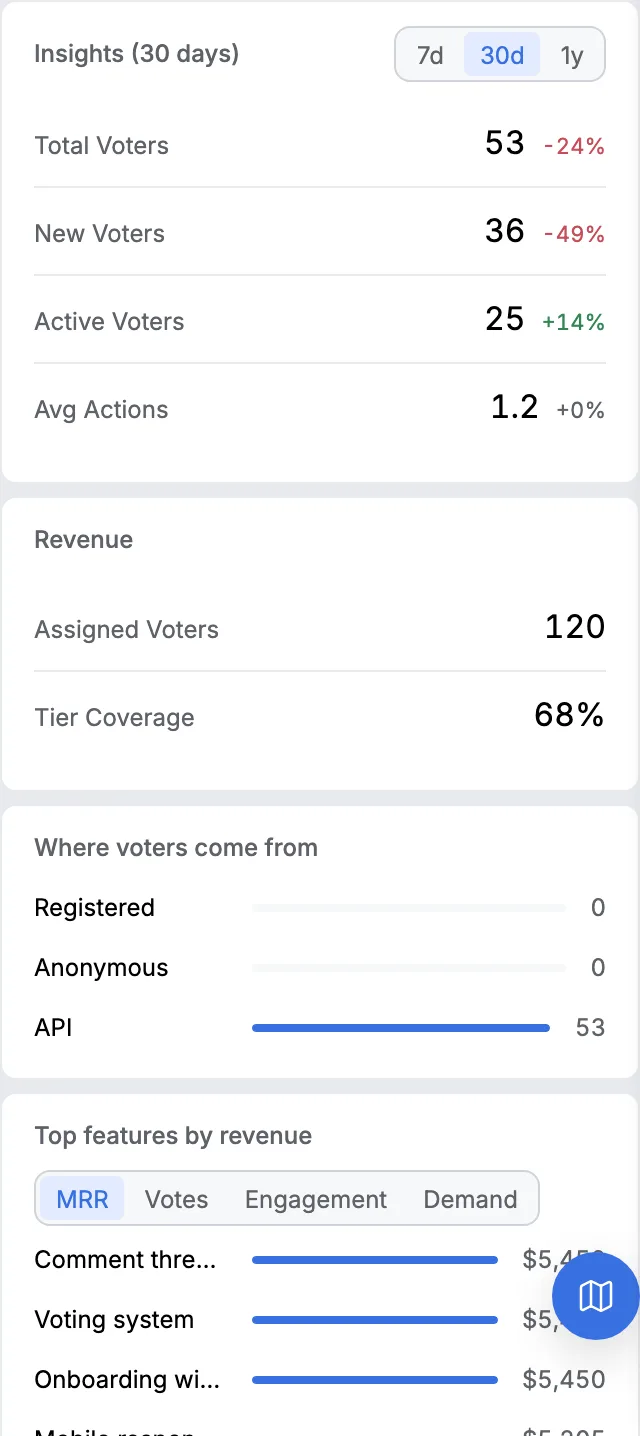
The difference is the input. A prioritization model weighs criteria you choose, typically reach, effort and confidence, and a person sets the numbers. Weighted voting here takes the plan a voter is on and multiplies their vote by it, so the ordering changes when your customers vote rather than when somebody edits a score.
Both are defensible. They are not the same mechanism, and a page that called them the same would be doing you no favours. How the weighting works here is written out in full, including where the revenue comes from.
Is Roadmunk worth it?
Two cases, and both are real.
You present roadmaps to people who do not use the tool. Unlimited shareable and interactive roadmaps without viewer limits on the entry plan, plus timeline and portfolio views, is what nineteen dollars buys, and this product has none of it. For a product manager whose weekly output is a roadmap other people read, that is the product.
You are already inside Tempo. If your team runs Jira with Tempo's timesheets or capacity planner, the roadmap sitting in the same account with a two way Jira sync is worth more than any feature list comparison.
It is the wrong buy when the people you need to hear from are customers rather than colleagues. Feedback collection starts at forty nine dollars a month per editor there, and a public board where anybody can vote is not what the product is shaped around.
Does Roadmunk have a free plan?
No. Their pricing page read on 14 September 2026 carries a fourteen day trial and no free tier.
Neither do we. There is no free plan here either, only the same fourteen day trial with a card at signup. If free is the requirement, the category page names the five tools that publish one and we are not among them.
Is there a free Roadmunk alternative?
Yes, and the honest answer names other people's products. Fider is open source and free to host yourself. UserJot has a free tier with two boards. Supahub and Featurebase both publish a free plan with one board.
All four were read on their own pages on 14 September 2026, and all four are feedback boards rather than roadmap presentation tools, which is the trade you are making.
What does ours cost?
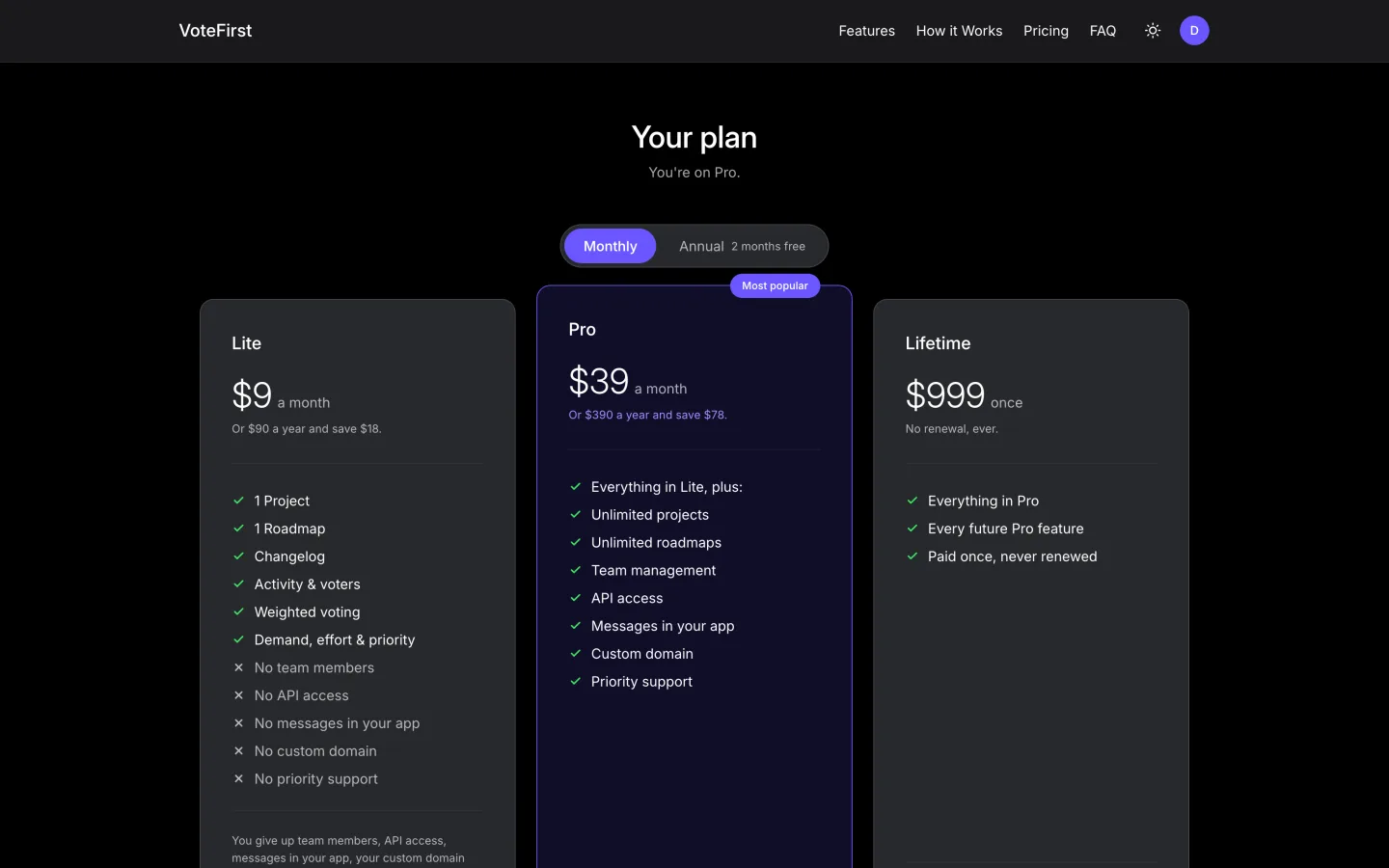
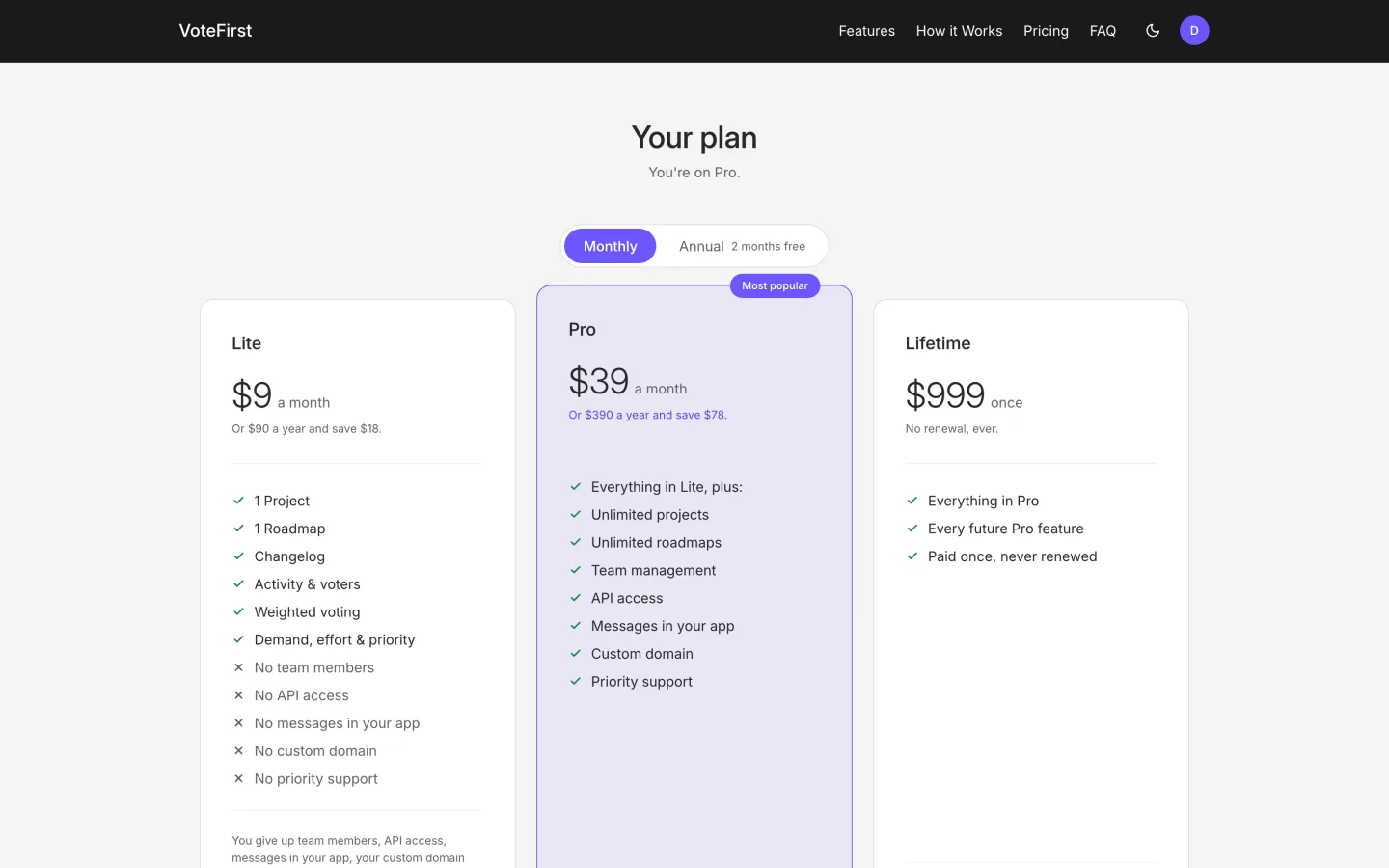
Nine dollars a month for one project, thirty nine for unlimited projects, the API, a custom domain and colleagues.
The comparison that matters is the second person. Here they cost nothing until you need the team plan, and then everybody is inside thirty nine dollars. On Strategic Roadmaps the second editor is another nineteen, forty nine or ninety nine dollars depending on the plan, and the people who only read are metered separately.
Where they are better is the roadmap itself. Portfolio roadmaps, dependencies, timeline and swimlane views built for a presentation to a leadership team, and a two way Jira sync that this product does not have at any price.
If the deliverable is a roadmap slide rather than a public board, they are built for that and we are not.
14 days, a card at signup, then $9 or $39 a month.
What moving actually involves
More work than a button, and the honest version is short. There is no importer for requests or votes on our side.
Voters and the revenue behind them come in from a CSV or from a billing connection, which is the part the weighting needs. The requests themselves are rebuilt by hand or by a script against the API, and the vote counts start again.
That is a real cost and it is worth naming before anybody moves. The five steps, with the endpoint each one uses, are written out in full, and they are the same five whatever you are leaving.