The short version
- A wall board collects in a room. An online board collects from everywhere and counts.
- Six steps either way, and step five is the one everybody skips.
- Seed it before anybody sees it. An empty board reads as an abandoned board.
- One rule keeps it alive: every idea gets an answer, including no.
An idea board is a surface where suggestions are collected in one place so they can be seen together rather than one at a time.
There are two kinds and the choice between them is not about budget. A board on a wall works on the people in the room. A board on a page works on everybody else, and it can count.
Most teams need one of each and get confused when one is asked to do the other's job.
What do you need to make one on a wall?
A flat surface, something to write on, and a rule about who is allowed to move things.
The materials are the least interesting part and the reason wall boards fail is never the materials. Two things decide it.
Where it is. A board in a meeting room is read during meetings, which is four hours a week. A board on the route to the kettle is read constantly. Pick the corridor over the conference room every time.
Whether anything ever comes off it. A wall board with no removal ritual becomes wallpaper in about three weeks. Once people stop seeing it, adding to it stops too, and nobody will tell you it happened.
The honest limit of a wall board is that it collects from the people who walk past it. That is your team, not your customers, and the two want different things.
What do you need to make one online?
A page anybody can reach, a way to add an idea without an account, and something to sort by.
Those three are the whole requirement and the third is the one that separates a board from a suggestion box. A list that can only be sorted by how recently something was added tells you nothing about which idea matters.
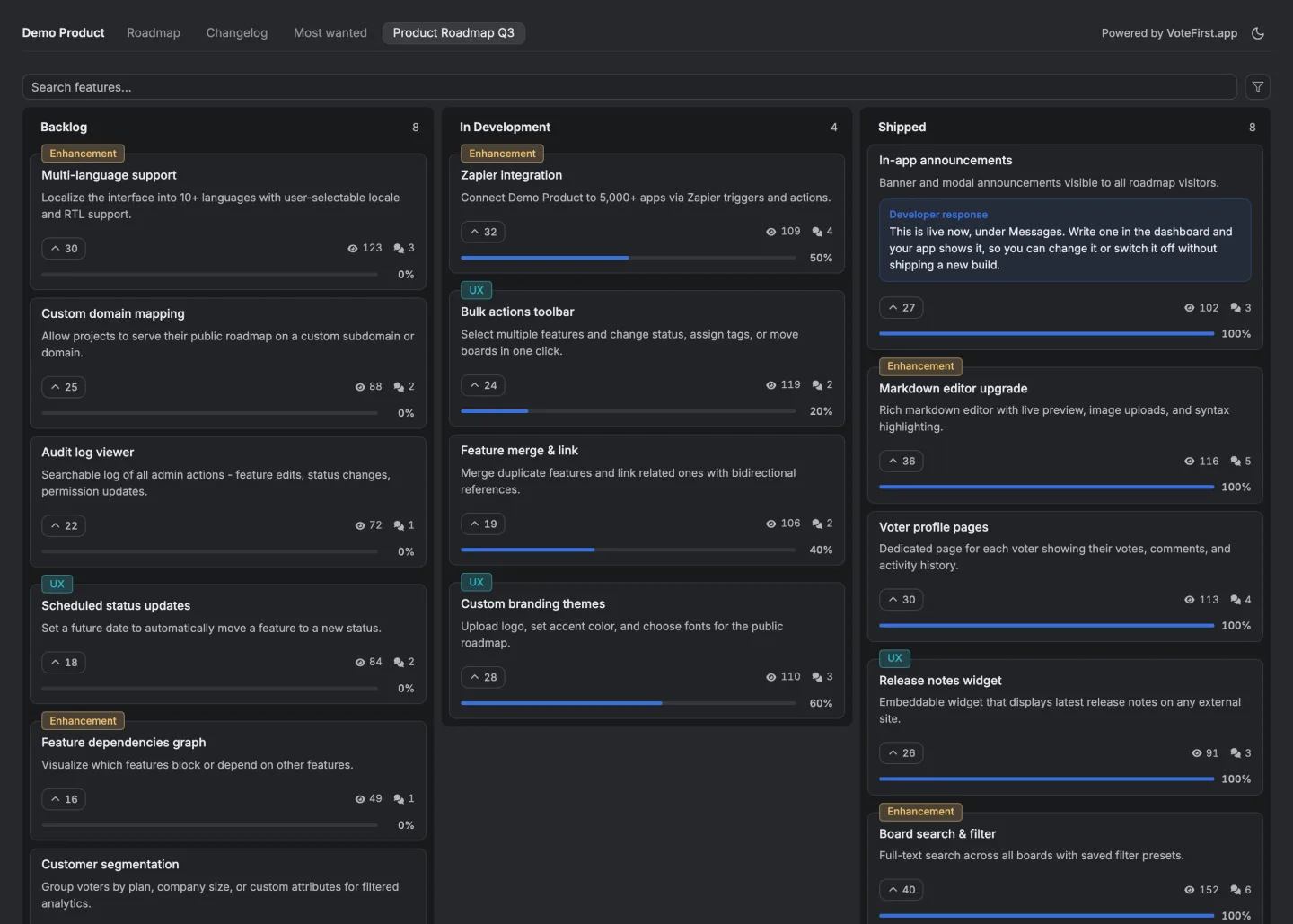
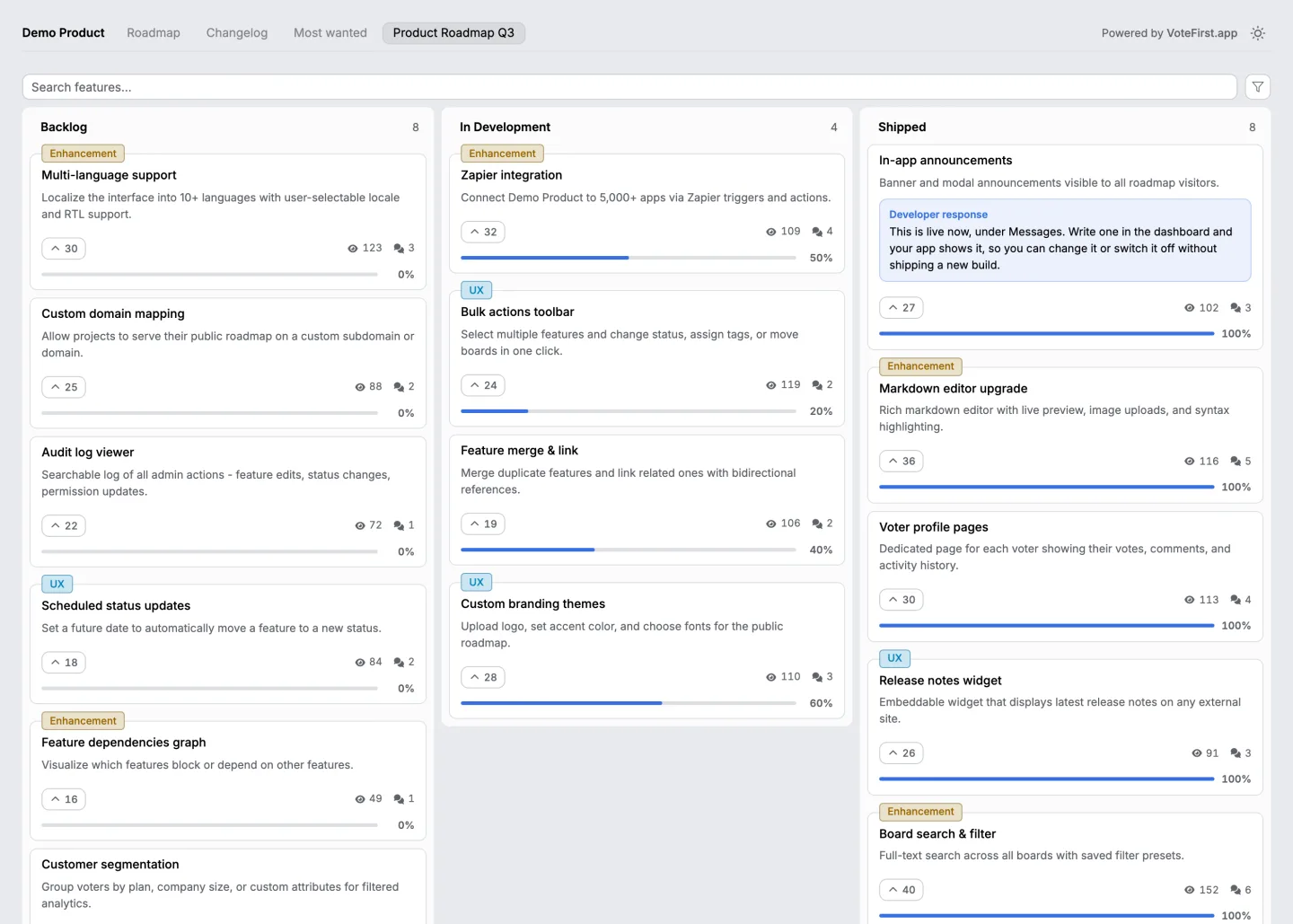
The sort is what makes an online board worth the setup. If eleven people want the same thing, that is one card with an eleven on it, and eleven is an argument that does not depend on who spoke last.
Can you make an idea board online for free?
Yes, and what free costs you is usually the count or the capacity rather than the board.
Free plans in this category are real and most of them stop somewhere specific: a number of ideas, a number of boards, a single administrator, or the removal of the thing that lets you organise what you collected. The limit is never hidden, it is just further down the page than the word free.
Every published free plan in the field, with the exact thing each one stops at, is the page that answers this properly, because the answer changes whenever somebody edits their pricing.
A spreadsheet shared with edit access is also free and genuinely works for the first few weeks. What it cannot do is show the count to the person who suggested the idea, which is the mechanism that makes people suggest a second one.
We are not a free option ourselves. Nine dollars a month for one project, with a card required to start the fourteen day trial, and if your board will stay very small a free plan elsewhere is cheaper than us.
The six steps, either kind
Six, and the order matters more than any individual one.
One. Decide who it is for. A board for your team and a board for your customers cannot be the same board. The first can hold half formed thoughts, the second is a promise you are making in public.
Two. Write the one sentence rule. What belongs on this board, in a sentence, at the top of it. Without it you get a board that is half feature requests, half complaints and half event planning, and nothing can be compared with anything.
Three. Seed it with ten. Never open an empty board. Seed it from four places you already have: your support inbox, the reasons the last few people gave when they left, notes from calls, and work you decided on but never announced.
Four. Make adding take under thirty seconds. Every field between having an idea and recording it loses some of the people, and the ones who push through are the unusually motivated rather than a representative sample.
Five. Answer everything, including no. This is the step that gets skipped and it is the one that decides whether the board is alive in month three. A written no with a reason keeps people adding. Silence and refusal look identical from the outside and only one of them is an answer.
Six. Take things off it. Ideas that shipped move off. Ideas refused move to a column that says so. A board where nothing ever leaves is a board nobody reads.
What do you put on it when it is empty?
Ten items, drawn from things people have already told you rather than from things you invented.
Rewrite each one as a single sentence request rather than as a complaint, because a complaint cannot be voted on and a request can. "The export is useless" becomes "Export the list as a file that opens in a spreadsheet", and the second one is a thing eleven people can agree with.
Put the seeds up before anybody outside the team sees the board. A board with ten items on it reads as a place where things happen. A board with none reads as a place somebody set up and forgot, and the first visitor's reaction to that is to leave.
What keeps it alive after the first month?
One habit, and it is not collecting.
The board dies when the people adding to it stop believing anybody reads it, and that belief is set entirely by what happens after somebody adds something. Three moments are worth reporting: when you decide not to, when the work starts, and when it ships.
On our own board that last one is wired to the vote rather than to a mailing list. The changelog emails the people whose own vote is in the release and nobody else, so the person who suggested it in March finds out the week it ships and the people who never wanted it are not told anything.
Six worked idea board examples, each organised around a different thing, is the page to read next if you want to see finished ones before you build yours.